Toy breeds pack a lot of dog into a very small body. A Chihuahua that fits in a tote bag will still guard your sofa like a much bigger animal. These dogs are easy to carry and easy to love, and they are also easy to underestimate.
This guide explains what toy breeds are, lists the sizes of sixteen popular dogs using American Kennel Club figures, shows where kennel clubs disagree, and covers the health risks, gear and daily care that matter most at this size. Veterinary details come from board-certified surgeons and animal hospitals, and your own vet can tailor them to your dog.
In This Article
- Quick Answer: What Are Toy Breeds?
- What Are Toy Breeds?
- Which Dogs Count as Toy Breeds?
- Do Kennel Clubs Agree on What a Toy Dog Is?
- What Is Life With a Toy Breed Really Like?
- Which Health Problems Are Common in Toy Breeds?
- Why Do Toy Puppies Need Frequent Meals?
- Should a Toy Breed Wear a Harness or a Collar?
- Why Do Flat-Faced Toy Breeds Need Extra Care?
- How Do You Protect a Toy Breed's Teeth?
- What Toys Are Safe for Toy Breeds?
- Are Teacup Dogs a Real Toy Breed?
- How Do You Choose the Right Toy Breed?
- What Do Owners Ask Most About Toy Breeds?
- Sources
Quick Answer: What Are Toy Breeds?
Toy breeds are the smallest companion dogs, grouped by kennel clubs rather than by a strict weight limit. In the AKC Toy Group they run from Chihuahuas under six pounds to Pugs near eighteen. They suit small homes, but tiny bodies bring real risks: fragile knees, weak windpipes, crowded teeth and low blood sugar in puppies.
Updated October 30, 2026- Size: AKC toy breeds range from Chihuahuas under six pounds to Pugs near eighteen.
- Health: knees, windpipe, teeth, heart and puppy blood sugar need the most attention.
- Gear: a light harness and soft, well-sized toys beat anything built for bigger dogs.
- Buying: "teacup" is a sales label, so ask for vet records and meet adult dogs.
What Are Toy Breeds?
Answer: Toy breeds are very small dogs kept mainly as companions. The term comes from kennel club groupings, not from one official size rule. The AKC has a Toy Group, and the FCI has a Companion and Toy Dogs group. Their lists overlap but differ, so a breed can be a toy in one registry and not another.
People use "toy" in two ways. Loosely, it means any tiny dog that fits on a lap. Formally, it means a breed listed in a kennel club's toy group. The American Kennel Club describes its Toy Group as affectionate, sociable and adaptable to a wide range of lifestyles, and it notes that these dogs are smart, energetic and often strongly protective. Their size also makes them popular with city dwellers and apartment owners. Source: AKC, Toy Group.
That description matters because it pushes back on the idea of a toy dog as an accessory. These are real dogs with real needs for exercise, training and mental work. A Chihuahua still wants a job, even if the job is patrolling a sofa, and a Toy Poodle is as sharp as its larger relatives.
The word also gets stretched by marketing. "Toy" versions of bigger breeds are sold under names the kennel clubs do not use, which we cover in the teacup section below. If you only want to know which dogs officially count, start with the breed table in the next section.
Which Dogs Count as Toy Breeds?
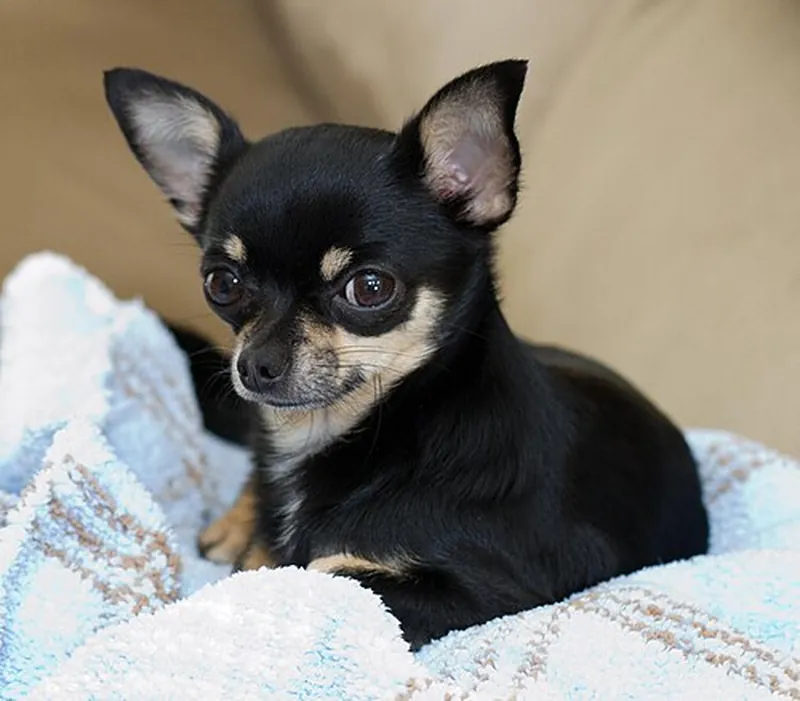
Answer: Well-known AKC toy breeds include the Chihuahua, Pomeranian, Yorkshire Terrier, Maltese, Papillon, Toy Poodle, Havanese, Shih Tzu, Cavalier King Charles Spaniel and Pug. Sizes vary more than most buyers expect. A Pug can weigh three times as much as a Chihuahua, so always compare the individual breed rather than the group.
The table below lists 16 popular dogs from the AKC Toy Group, sorted roughly from lightest to heaviest. Every figure comes from the height, weight and life expectancy shown on that breed's AKC page, and each name links to it. Life expectancy is a typical range, not a promise. For every breed in the group, plus the main coat and body types, see our types of toy dogs guide; this article focuses on size, health and daily care. Source: AKC, Chihuahua.
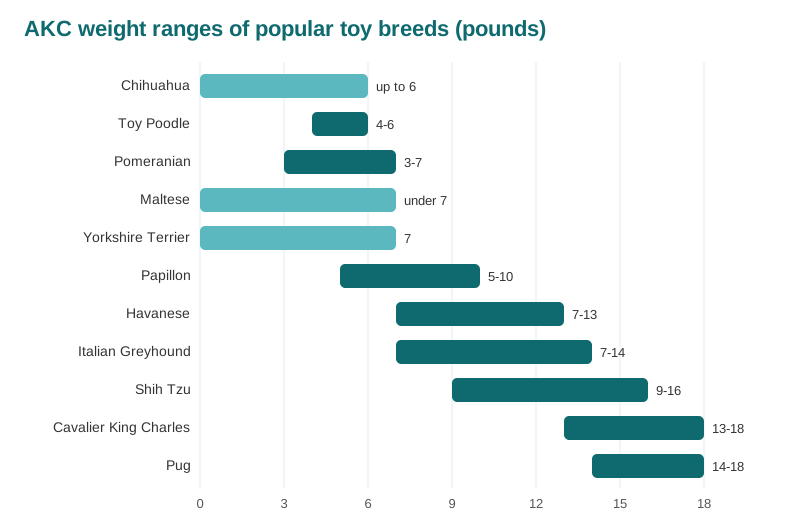
Two things stand out. First, "toy" does not mean fragile in the same way across the group. A Pug at 14-18 pounds is a sturdy little dog, while a Chihuahua that must not exceed 6 pounds needs much more care around stairs and bigger pets. Source: AKC, Pug.
Second, the lightest dogs are not the shortest-lived. Chihuahuas and Papillons show some of the highest ranges in the table, while the Japanese Chin sits lower. Size alone tells you little about lifespan, so ask about the health of the actual parents.
Do Kennel Clubs Agree on What a Toy Dog Is?
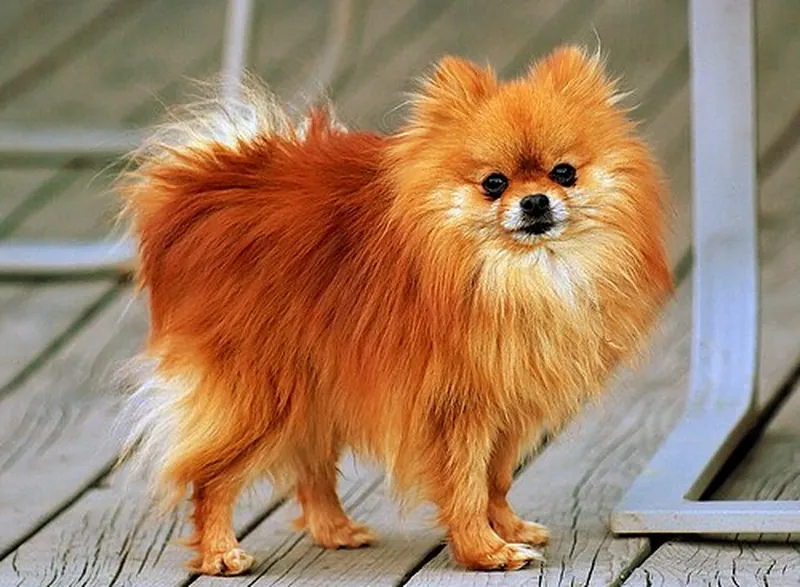
Answer: Not fully. The American AKC and the international FCI sort breeds by different logic, so some dogs change category when you cross a border. A Yorkshire Terrier is a toy in the AKC but a terrier in the FCI, and a French Bulldog sits in the FCI companion group but outside the AKC Toy Group.
The FCI, which covers kennel clubs in many countries, puts most toy-type dogs in Group 9, Companion and Toy Dogs. It also keeps some tiny dogs with their working ancestors, so the Yorkshire Terrier stays in Group 3 with the other terriers. Source: FCI, Group 3: Terriers.
The practical takeaway is simple: if you read a breed list from another country, check which registry it follows. The dog is the same either way. Only the filing system changes. Source: FCI, Group 9: Companion and Toy Dogs.
What Is Life With a Toy Breed Really Like?
Answer: Life with a toy breed is close, busy and surprisingly active. These dogs need daily walks, training and play, plus extra care around falls, big dogs and rough handling. They fit apartments well and travel easily, but many are alert barkers, and they do best with owners who treat them as dogs, not babies.
Small size makes everyday life easier in some ways. Food bills are lower, a dog bed takes up little room, and carrying your dog through a crowd is possible. Small size also makes everyday hazards bigger. A jump off a sofa is a long way down for a dog this size, and a dropped dog can be badly hurt.
Training is where many toy dogs get short-changed. Owners let small dogs get away with jumping, nipping or barking because it seems harmless, and the habits stick. Use the same reward-based training you would use with a Labrador, with tiny, soft dog treats cut small enough to suit a tiny stomach.
Young children need a plan as well. Toy dogs can be hurt by being squeezed, stepped on or dropped, and a frightened small dog may snap. Teach children to sit on the floor to hold the dog, and always supervise. Our new puppy essentials list covers the first-week setup, and puppy stairs for the bed can spare small joints from repeated jumps.
- Exercise: short daily walks and indoor play, adjusted for age, breed and weather.
- Handling: support the chest and rear end when lifting, never the front legs alone.
- Other pets: supervise play with larger dogs until you know they are gentle.
- Weather: many thin-coated small dogs appreciate a warm layer on cold days.
Which Health Problems Are Common in Toy Breeds?
Answer: The main risks are slipping kneecaps, collapsing windpipes, dental disease, mitral valve heart disease, and low blood sugar in young puppies. None of these is guaranteed, and many are manageable when caught early. Regular veterinary checks and a lean body weight do more for a toy dog than any single product.
The table summarizes what to watch for. It is a guide for conversations with your veterinarian, not a diagnosis tool.
Patellar luxation means the kneecap slides out of its groove. The American College of Veterinary Surgeons calls it one of the most common orthopedic conditions in dogs, diagnosed in 7% of puppies, and mainly in small dogs. Source: ACVS, Patellar Luxations.
Owners usually notice a brief skip, as if the dog stepped on something, then normal walking again. About 50% of affected dogs have the problem in both knees, so mention any skipping at your next visit, even if it stops. Source: VCA Animal Hospitals, Luxating Patella in Dogs.
Tracheal collapse is a weakening of the windpipe. Veterinary surgeons grade it from a 25% narrowing (mild) to 100% (severe), and about 70% of dogs treated with medical management alone show some improvement. A harsh, honking cough is the usual clue. Coughing when lifted, or when a collar is pulled, is another. Source: ACVS, Tracheal Collapse.
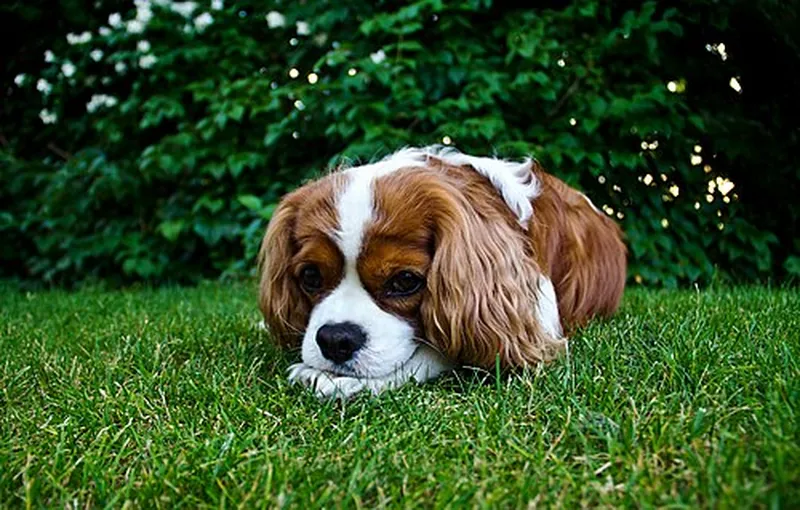
Mitral valve disease is more common in small dogs than large breeds, and it is often first found as a murmur during a routine exam. A murmur does not mean heart failure is near, so ask your vet what monitoring your dog needs. Cavaliers are one of the breeds most often named, along with Chihuahuas, Toy Poodles and Pomeranians.
Why Do Toy Puppies Need Frequent Meals?
Answer: Toy puppies have little fat or muscle and an immature liver, so they cannot store much glucose. If they go too long without food, especially when active, stressed or cold, blood sugar can crash. Feed small, frequent meals as your veterinarian directs, and treat sudden weakness or wobbling as an emergency.
The AKC's chief veterinarian describes the typical emergency case as a newly acquired toy puppy, often under 12 weeks old, that arrives lethargic, uncoordinated, unconscious or seizing. Travel stress and parasites can both play a part, so a tiny puppy's first days in a new home deserve extra attention. Canine hypoglycemia is defined as blood glucose below 60 mg/dL, which only a vet can measure. Source: AKC, Hypoglycemia in Dogs.
If your puppy suddenly seems weak or unsteady, use these steps from the same AKC guidance:
- Check that the puppy is conscious and able to swallow.
- Give a little light corn syrup or honey by mouth, or rub it on the gums. This is temporary help, not treatment.
- Go to a veterinarian immediately, even if the puppy perks up. Emergency care may include intravenous glucose.
- Ask your vet how often to feed, and why the drop happened.
Prevention is mostly routine. Choose a complete diet made for small dogs, as explained in our small breed puppy food guide. Keep the puppy warm, avoid long gaps between meals, and stay on top of parasite control.
Should a Toy Breed Wear a Harness or a Collar?
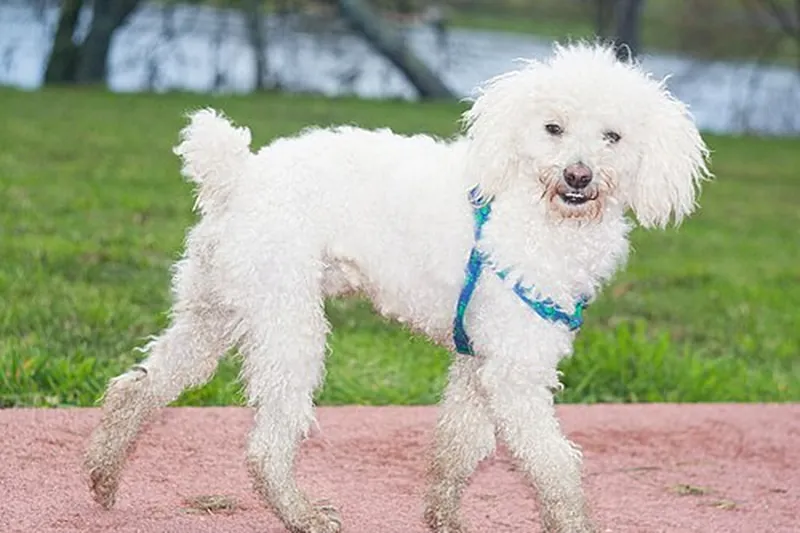
Answer: For walking, a well-fitted harness is usually the safer choice for a toy breed. Veterinary sources advise a harness rather than a collar for dogs with tracheal collapse, because neck pressure can trigger coughing. A light collar can still carry an ID tag, as long as the leash clips to the harness.
A delicate neck takes a lot of force from even a small tug. VCA Animal Hospitals and the American College of Veterinary Surgeons both recommend a harness over a neck lead for dogs with tracheal collapse. Many owners of tiny dogs choose one from the start rather than waiting for a cough to appear.
Look for a light harness that sits on the chest, not across the throat, and that your dog cannot back out of. You should be able to slide a finger or two under each strap. Our dog harness guide explains the main styles, and the no-pull dog harness article helps if your small dog drags you toward every squirrel.
Why Do Flat-Faced Toy Breeds Need Extra Care?
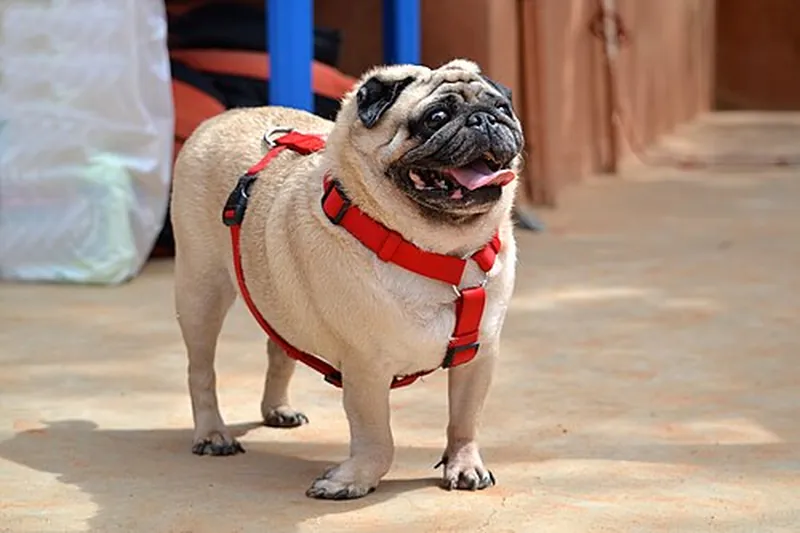
Answer: Short-nosed toy breeds such as the Pug and Pekingese often have narrowed airways. Noisy breathing, poor stamina and collapse can follow over-activity, excitement, or heat and humidity. Keep them lean, walk them in cool hours, use a harness, and ask a veterinarian about any loud breathing rather than treating it as normal.
Veterinary surgeons use the word brachycephalic, meaning short-headed, for these dogs. The Pug and Pekingese are named examples, and their throats and breathing passages are frequently undersized or flattened. Obesity makes the problem worse, so portion control matters even more than it does for other small dogs.
Snoring may sound cute, but it can be a sign that a dog is working hard to breathe. On warm days, plan walks for early morning or evening, carry water, and stop at the first sign of distress. Treatment exists when the problem is severe, and veterinary surgeons report that young dogs tend to do well after it. Source: ACVS, Brachycephalic Syndrome.
How Do You Protect a Toy Breed's Teeth?
Answer: Brush daily, schedule professional cleanings when your vet advises, and pick chews that bend under pressure. Small breeds are more prone to periodontal disease because their teeth are crowded into tiny jaws. Avoid bones, antlers, ice and hard nylon chews, which can break teeth, and choose chews sized for a very small mouth.
VCA Animal Hospitals estimates that more than two-thirds of dogs over three years old have some degree of periodontal disease, and notes that small breeds and short-nosed dogs are more prone to it. Brushing is the best form of plaque control, and starting in puppyhood makes it far easier. Source: VCA Animal Hospitals, Dental Disease in Dogs.
Use a simple test for any chew or dental treat: it should bend and give when you press it. Our dog dental chews guide explains what to look for on the label, and a small amount of puppy grooming practice each week gets your dog used to having its mouth, ears and paws handled.
What Toys Are Safe for Toy Breeds?
Answer: Choose soft, light toys sized for a tiny mouth, and skip anything small enough to swallow or heavy enough to strain the jaw. Plush toys, small rope toys and gentle puzzle toys suit most toy breeds. Supervise chewing, check toys for damage each week, and replace anything with loose parts or exposed stuffing.
A toy that suits a Labrador can overwhelm a four-pound dog. Weight matters as much as size: if your dog cannot carry a toy comfortably with its head up, it is too heavy. Our small dog toys guide and the breed-specific toys for Chihuahuas article give detailed picks, and toys for small breed puppies covers the teething stage.
Toy dogs are clever and bore easily, so mental play is just as useful as fetch. Snuffle games and food puzzles let a small dog work indoors without stressing its joints. See our interactive dog toys for small breeds roundup for ideas, or browse the Livehappypet dog shop for plush and rope options.
Are Teacup Dogs a Real Toy Breed?
Answer: No. "Teacup" is a sales label, not a breed. The AKC breed list has no teacup breed or size. Sellers use the word for unusually tiny dogs, often Chihuahuas, Poodles and Yorkshire Terriers. Smaller than the breed norm can also mean less room for error with blood sugar, falls and care.
Search the AKC's full breed directory and you will find no teacup entry. You will find the Chihuahua, the Toy Poodle and the Yorkshire Terrier, each with its own listed size. If a seller promises a dog far below those figures, ask why, and ask to see veterinary records.
The same caution applies to "toy" versions of larger breeds. AKC lists the Australian Shepherd and the Miniature American Shepherd, but no toy Aussie. We explain what buyers are really getting in our Australian Shepherd toy breed guide, and in the breed-specific pages on the teacup Chihuahua, the teacup Poodle and the toy cup Yorkie.
How Do You Choose the Right Toy Breed?
Answer: Start with your daily life, not the look of the dog. Consider who lives at home, how much grooming you will do, how much noise you can accept and how much weight you are comfortable handling. Then meet adult dogs of the breed, and ask for health records before committing to a puppy.
Work through these steps before you fall for a photo:
- Set your size limit. With young children or larger pets at home, a sturdier dog is often a better fit than the very smallest breeds.
- Be honest about coat care. Long, flowing coats such as the Yorkshire Terrier's and the Maltese's need regular grooming or a shorter pet clip.
- Think about climate. Flat-faced dogs struggle in heat, and thin-coated dogs may need a layer in winter.
- Ask about health. Request vet records, and ask how the parents' knees and hearts were checked.
- Meet the adults. A breeder or rescue should let you see how grown dogs behave.
- Budget for the vet. Dental care and knee problems can be costly, so plan for them from the start.
Adoption is worth a look too, because many small adult dogs need homes and their size and personality are already known. If you are torn between sizes, compare our guides to the Toy Poodle and the Miniature Poodle to see how one step up in size changes daily life.
What Do Owners Ask Most About Toy Breeds?
Answer: Owners most often ask which toy breed is smallest, whether these dogs suit children and beginners, how much they bark, how long they live and how much exercise they need. The answers below draw on AKC, FCI and veterinary guidance, and your own veterinarian can adjust them for your dog.
What is the smallest toy breed?
The Chihuahua is generally treated as the smallest. The AKC lists it at not exceeding six pounds and five to eight inches tall. The Pomeranian and the Toy Poodle come close, with AKC weights starting around three and four pounds. Individual dogs vary, so judge the dog in front of you.
Are toy breeds good for first-time owners?
Many can be, because they are portable and need less space and food than large dogs. They still need training, grooming, daily exercise and careful handling. First-time owners often do well with a calm adult dog from a rescue or breeder, since its size and temperament are already known.
Do toy breeds bark a lot?
Many toy breeds are alert and quick to announce visitors, and the AKC notes that many have strong protective instincts. Barking varies by breed and by individual dog. Early socialization, reward-based training and plenty of daily activity all help. Ask your vet or a trainer if the barking is sudden or constant.
How long do toy breeds live?
AKC life expectancy ranges for the breeds in this guide run from about ten to eighteen years. Chihuahuas and Papillons are listed at fourteen to sixteen years, while the Japanese Chin is listed at ten to twelve. Genetics, weight, dental care and regular veterinary checks all influence how long a dog lives.
Are toy breeds good with children?
They can be, with supervision. A tiny dog can be hurt by being squeezed, dropped or stepped on, and a frightened dog may snap. Sturdier toy breeds such as the Pug or Cavalier may suit families better than the very smallest dogs. Teach children to sit on the floor to hold the dog.
Is a Pug really a toy breed?
Yes, in both major systems. The AKC places the Pug in its Toy Group, and the FCI lists it in its Companion and Toy Dogs group. At fourteen to eighteen pounds it is among the heaviest dogs in the group, which is a good reminder that toy is a category, not a weight limit.
Do toy breeds need walks?
Yes. Most toy breeds need daily walks and play, although the distance can be shorter than for large dogs. Walks give them exercise, smells and social practice. Use a harness, adjust the pace for age and weather, and carry your dog over rough ground, hot pavement or anything else that looks unsafe.
What is the difference between toy and miniature dogs?
Toy usually refers to the smallest size or to a kennel club's toy group, while miniature describes a small variety of a larger breed. The Poodle shows this clearly: the AKC Toy Poodle stands no more than ten inches tall, and the Miniature Poodle is a separate, larger variety in another group.
Sources
- American Kennel Club: Toy Group
- American Kennel Club: Chihuahua breed page (other breed pages are linked in the table)
- American Kennel Club: Hypoglycemia in Dogs
- FCI: Group 9, Companion and Toy Dogs
- FCI: Group 3, Terriers
- FCI: Group 5, Spitz and Primitive Types
- FCI: Group 10, Sighthounds
- American College of Veterinary Surgeons: Patellar Luxations
- American College of Veterinary Surgeons: Tracheal Collapse
- American College of Veterinary Surgeons: Brachycephalic Syndrome
- VCA Animal Hospitals: Tracheal Collapse in Dogs
- VCA Animal Hospitals: Luxating Patella in Dogs
- VCA Animal Hospitals: Mitral Valve Disease in Dogs
- VCA Animal Hospitals: Dental Disease in Dogs