Dog treats are probably the most powerful tool a dog owner has. A tiny reward at the right moment teaches a puppy to sit, keeps a nervous dog calm at the vet and turns a rainy afternoon into a puzzle game. The same treats, handed out without counting, are also one of the quickest ways to an overweight dog. This guide explains the main kinds of dog treats, how many your dog can have, how to judge chews such as rawhide and bones, which ingredients are dangerous, and how to get the most training and enrichment value from every piece. The guidance comes from veterinary nutritionists and regulators, and your vet can tailor it to your dog.
In This Article
- Quick Answer: What Are the Best Dog Treats?
- What Counts as a Dog Treat?
- What Types of Dog Treats Are There?
- How Many Treats Can a Dog Have per Day?
- Are Rawhide, Bones and Bully Sticks Safe for Dogs?
- Which Ingredients Make a Dog Treat Dangerous?
- How Do You Use Treats for Training and Enrichment?
- Do Dental Chews and Treats Really Work?
- What Do Dog Owners Ask Most About Dog Treats?
- Sources
Quick Answer: What Are the Best Dog Treats?
The best dog treats are small, clearly labeled rewards with known calories, sized for your dog and used for training, enrichment or dental care. Tufts veterinary nutritionists advise keeping treats under about ten percent of daily calories. Supervise chews, avoid anything with xylitol, grapes or chocolate, and look for the VOHC seal on dental claims.
Updated October 29, 2026- Portion rule: treats are extras; count them against the daily total and trim meals when training is heavy.
- Training: pea-sized soft pieces work better than big biscuits.
- Chews: choose the right size, supervise, and remember many chews carry no calorie label.
- Danger list: xylitol, grapes and raisins, onions and garlic, chocolate and macadamia nuts.
What Counts as a Dog Treat?
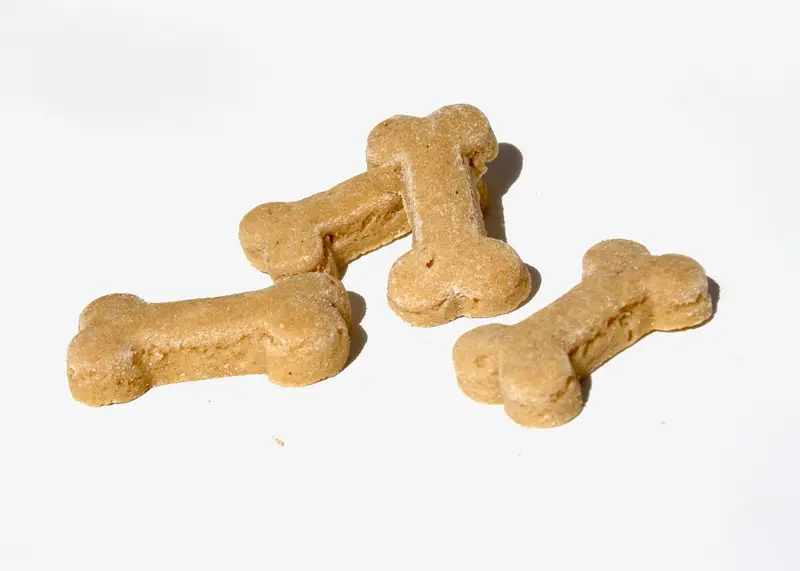
Answer: A dog treat is any food given as a reward rather than as a meal. AAFCO model rules do not require treats to be complete and balanced, but the front label must say treat or snack. Chews made of hide, bone, hooves or ears are often exempt from full labeling, so they may not show calories or a guaranteed analysis.
The Association of American Feed Control Officials describes treats as a subset of pet food that is primarily for rewarding pets, not for complete nutrition. The package must show the word "snack" or "treat" on the front panel, and AAFCO notes that such products should be given sparingly, because too many can both upset an otherwise balanced diet and add unneeded calories. Source: AAFCO, Treats and Chews.
Some biscuits are actually formulated to be complete and balanced, and AAFCO points out that "biscuit" is simply a shape, not a legal category. If a biscuit meets nutritional standards, it is still extra food, so the meal portion should shrink to make room for it.
Chews are a different story. AAFCO lists chews, bones, toys and exercisers made of animal skin, hide, wood or manmade materials, along with hooves, ears, animal bones, ligaments, snouts and pizzles, as exempt from registration and labeling unless the maker claims a nutritional benefit. That is why many long-lasting chews have no calorie statement, even though AAFCO warns that some can be quite high in calories. Jerky strips made of poultry meat do not qualify for this exemption and must be fully labeled.
What Types of Dog Treats Are There?
Answer: The main types are soft training bites, baked biscuits, jerky, freeze-dried meat, dental chews, long-lasting chews such as rawhide or bully sticks, and simple vegetables. Each suits a different job. Small soft pieces are best for training, chews keep a dog busy, and dental chews only carry a reviewed claim with a VOHC seal.
Matching the treat to the job keeps you from overfeeding. A training session can use dozens of rewards, so each one has to be tiny. A chew, on the other hand, is one item that may carry a whole day's treat allowance.
If your dog lives for food, you can also turn part of each meal into rewards. Tufts nutritionists suggest giving a portion of the regular food as treats through the day, or putting kibble into dispensing toys so dogs earn their meals. Our dog treat dispensing toys and puzzle feeders for dogs guides compare designs, and a lick mat stretches a small spoonful of soft food into a long, calming activity.
How Many Treats Can a Dog Have per Day?
Answer: Keep treats under about ten percent of your dog's daily calories, the limit veterinary nutritionists at Tufts recommend. For many dogs that is only a handful of small biscuits or one chew. Ask your vet for your dog's daily calorie target, check the calories per treat, and reduce meals on heavy training days.Source: Tufts Petfoodology, What are safe and healthy treats for my pet?.
The clinical nutrition team at Tufts University's Cummings School puts the numbers plainly. Too many treats, meaning more than 10% of a pet's daily calories, add unnecessary calories, can unbalance the diet and could be harmful if the pet has a medical condition. They estimate that a palm-sized rawhide holds about 100 kcal, that some chew bones can be over 1,000 kcal, and that an average Labrador retriever needs only about 1,000 kcal a day. Source: Tufts Petfoodology, What are safe and healthy treats for my pet?.
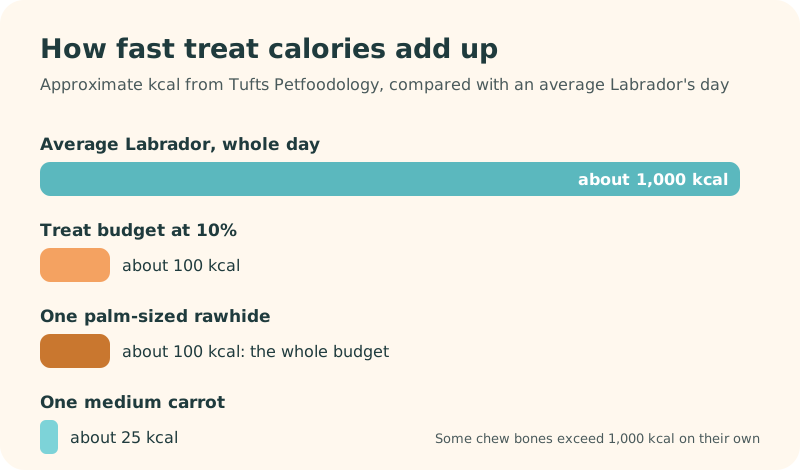
Low-calorie swaps help a lot. Tufts lists crunchy vegetables with their approximate calories as treat options, which makes it easy to keep a food-motivated dog happy without adding much to the day. Source: Tufts Petfoodology, What are safe and healthy treats for my pet?.
- Ask your veterinarian for your dog's daily calorie target.
- Set the treat allowance below about a tenth of that target.
- Read the calories per treat on the bag, or ask the maker; Tufts suggests avoiding brands that will not share nutrition information.
- Put the day's treats in a jar each morning so every family member uses the same allowance.
- On heavy training days, use more of the regular kibble as rewards and serve a slightly smaller dinner.
Are Rawhide, Bones and Bully Sticks Safe for Dogs?
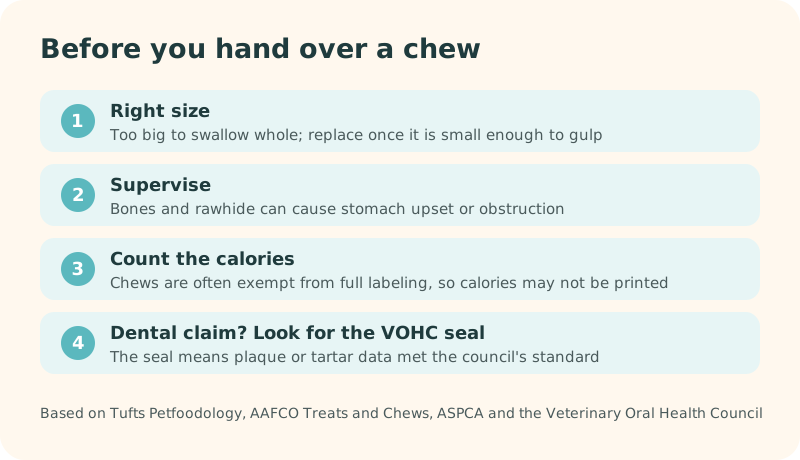
Answer: They carry real risks. Tufts nutritionists note that bones and rawhide can cause stomach upset or obstruction, and the ASPCA warns that bones can injure or block the digestive tract. Chews are also calorie dense. If you use them, pick the right size, supervise every session and take the chew away once it is small.
Chewing is normal and satisfying for dogs, which is why long-lasting chews are so popular. The trouble is what happens when a dog bites off or swallows a large piece. Tufts nutritionists write that bones and rawhides can cause stomach upset or obstruction, and they cite research by their own Dr. Lisa Freeman finding that bully sticks contained many more calories than people think, as well as potentially harmful bacteria. The ASPCA adds that dogs and cats may sustain injury or obstruction of the gastrointestinal tract from bones, which can be serious and require surgery.
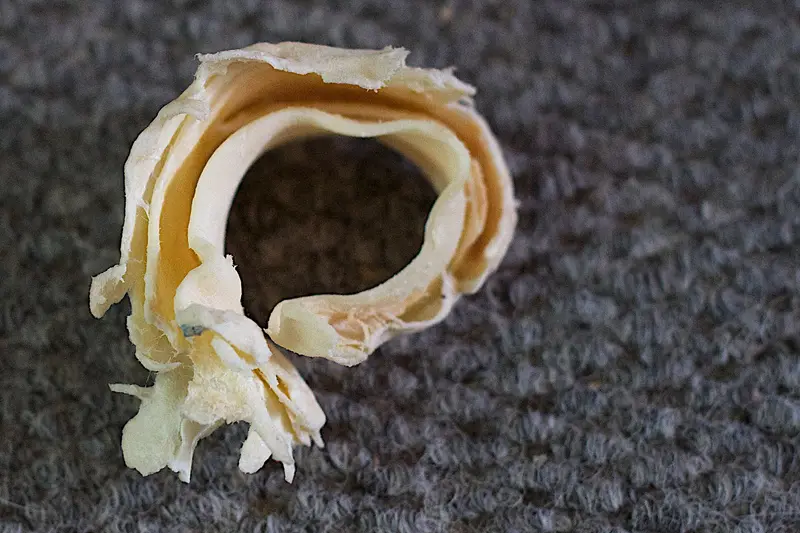
There is a quieter problem too. Because hide and bone chews are often exempt from labeling, AAFCO notes that many do not show a calorie statement or guaranteed analysis at all. You may be giving a big share of the day's calories without knowing it.
If your dog needs to chew, a durable toy often does the job with less risk and no calories. Our guides to the best chew toys for dogs, dog toys for aggressive chewers and KONG dog toys cover sturdy options, and a stuffable rubber toy filled with a little canned food and frozen, a trick Tufts recommends, keeps a dog busy for a long time.
Which Ingredients Make a Dog Treat Dangerous?
Answer: The biggest one is xylitol, a sweetener the FDA warns can cause a rapid, dangerous drop in a dog's blood sugar. Grapes and raisins can damage the kidneys, onions and garlic can damage red blood cells, and chocolate and macadamia nuts are toxic too. Check the ingredients of peanut butter and human snacks before sharing.
The FDA explains that when dogs eat xylitol, it is absorbed quickly and may trigger a potent release of insulin, which can cause a rapid and profound drop in blood sugar within 10 to 60 minutes. Signs include vomiting, weakness, staggering, collapse and seizures, and because effects can be delayed up to 12 to 24 hours, a dog that ate xylitol may need hospital monitoring. Xylitol turns up in some nut butters, gum, candy, mouthwash and toothpaste. Source: FDA, Paws Off Xylitol; It's Dangerous for Dogs.
The ASPCA Animal Poison Control Center adds several common foods. Grapes and raisins can lead to kidney damage in dogs. Onions, garlic and chives can cause stomach irritation and red blood cell damage leading to anemia. Chocolate, coffee and caffeine contain methylxanthines, which can cause vomiting, tremors, abnormal heart rhythm and seizures, with darker chocolate carrying more risk. Macadamia nuts can cause weakness, vomiting, tremors and overheating in dogs. Source: ASPCA, People Foods to Avoid Feeding Your Pets.
If your dog eats any of these, call your vet or an animal poison control line right away and keep the packaging. Homemade treats are safe when you use plain, dog-safe ingredients, but double-check every label, especially sugar-free products.
How Do You Use Treats for Training and Enrichment?
Answer: Use tiny, soft, high-value pieces and deliver them the instant your dog does the right thing. Keep sessions short and fun, then fade treats into occasional rewards once a behavior is reliable. Between sessions, hide treats or kibble in puzzle toys so your dog uses its nose and brain to earn them.
Treats are the heart of reward-based training. The faster a reward follows a behavior, the faster a dog connects the two, which is why trainers favor soft pieces a dog can swallow in a second instead of a biscuit it needs to crunch. Our positive reinforcement dog training guide explains timing, markers and how to phase out food rewards.
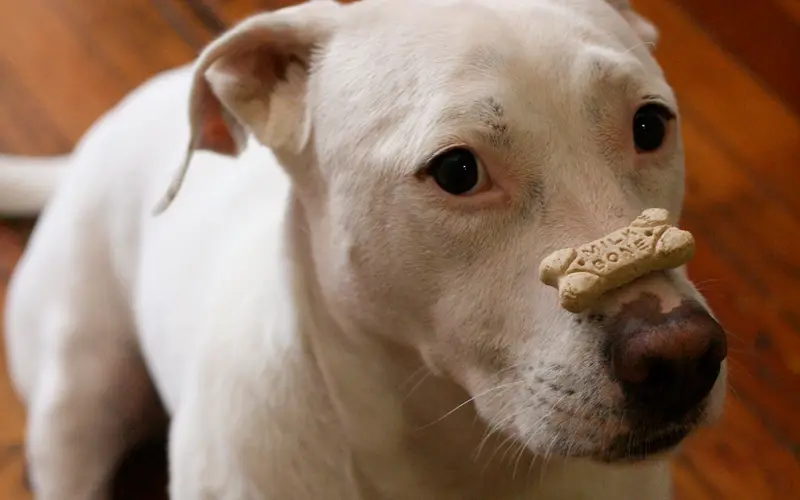
- Pick a soft, strong-smelling treat and cut it into pieces about the size of a pea, smaller for tiny dogs.
- Choose one behavior, such as sit or come, and practice for a few minutes at a time.
- Mark the moment with a word like "yes," then give the treat immediately.
- Once your dog responds reliably, reward every second or third time, then occasionally, and mix in praise and play.
- Subtract training treats from the day's allowance so your dog's weight stays steady.
Enrichment is the other half. Food puzzles, snuffle games and stuffed toys give dogs a job, which helps with boredom and some anxiety. Our guides to dog enrichment toys, canine puzzle toys and separation anxiety treats for dogs show how to put treats to work when you are out, and a slow feeder dog bowl turns everyday meals into a gentler puzzle. Browse sturdy treat toys in our dog shop.
Do Dental Chews and Treats Really Work?
Answer: Some do. The Veterinary Oral Health Council reviews company test data and awards its seal to products that meet its standards for plaque or tartar control. A sealed dental chew can help between brushings, but Tufts nutritionists note that brushing is still the best way to keep a dog's teeth and gums healthy.
The VOHC does not test products itself. It sets the trial protocols, reviews the submitted data and awards a seal for plaque, tartar or both when a product shows dental benefit. Tufts adds that companies need results from two trials in healthy pets using the product as marketed, with at least a 15% difference, and that the seal says nothing about a product's nutrient profile. Source: Tufts Petfoodology, What are the best foods and treats for my pet's dental health?.
Dental chews still count as treats, so include them in the daily allowance. Pair them with regular brushing using a dog toothbrush and see our dog dental chews guide for how to choose a size and texture. For small dogs and growing puppies, our small breed puppy food guide explains why tiny pieces and regular meals matter.
What Do Dog Owners Ask Most About Dog Treats?
Answer: Owners most often ask how many treats are safe, whether rawhide and bones are okay, which human foods are dangerous, what makes a good training treat, and whether dental chews work. The short answers below draw on Tufts, AAFCO, FDA, ASPCA and VOHC guidance, and your own veterinarian can adjust them for your dog.
How many treats can I give my dog a day?
Keep treats under about ten percent of your dog's daily calories, the limit veterinary nutritionists at Tufts recommend. For many dogs that means a handful of small treats or a single chew. Ask your vet for your dog's daily calorie target and check the calories per piece on the package.
Is rawhide safe for dogs?
Rawhide carries risks. Tufts nutritionists note that bones and rawhides can cause stomach upset or obstruction, and a palm-sized rawhide holds roughly the whole treat budget of a Labrador. If you give one, choose a size your dog cannot swallow, supervise the session and take it away once it gets small or soft.
Are bones safe dog treats?
Bones are risky. The ASPCA warns that dogs can suffer injury or obstruction of the digestive tract from bones, which can be serious and require surgery, and AAFCO notes questions about splintering in bone products. A durable chew toy or a frozen stuffed rubber toy is a safer way to satisfy chewing.
Can dogs eat peanut butter as a treat?
Plain peanut butter is a common treat, but read the label first. The FDA warns that xylitol, a sweetener found in some nut butters, can cause a rapid and dangerous drop in a dog's blood sugar. Choose a product without xylitol and use only a small amount, since nut butters are high in calories.
What are the best treats for training a dog?
Small, soft, strong-smelling pieces your dog can swallow in a second. Cut them to about the size of a pea, smaller for tiny dogs, and count them toward the daily treat allowance. Pieces of your dog's regular kibble work well for easy behaviors and keep calories down on long training days.
Do dental chews clean a dog's teeth?
Some help. The Veterinary Oral Health Council reviews company data and awards its seal to products that meet its standards for plaque or tartar control. Tufts nutritionists note that brushing is still the best way to keep teeth and gums healthy, so treat a sealed chew as extra help, not a replacement.
Which human foods should never be dog treats?
Avoid anything with xylitol, plus grapes and raisins, onions, garlic and chives, chocolate, coffee and caffeine, alcohol and macadamia nuts, according to the FDA and the ASPCA. If your dog eats any of them, call your veterinarian or an animal poison control line right away and keep the packaging.
Are vegetables good treats for dogs?
Many crunchy vegetables make excellent low-calorie treats. Tufts nutritionists list carrot, cucumber, celery and zucchini as options, each with only a small number of calories per serving. Cut them to a safe size for your dog, introduce them slowly, and never use onions or garlic.