Choose a dog toothbrush with soft bristles, a small head that fits comfortably, and a handle you can control. Introduce it through brief, rewarded steps before gently brushing the outer tooth surfaces with pet toothpaste. Never pry the mouth open or brush a painful mouth. A repeatable routine should protect your dog's comfort as well as support dental hygiene.
Which dog toothbrush fits your dog and your hands?
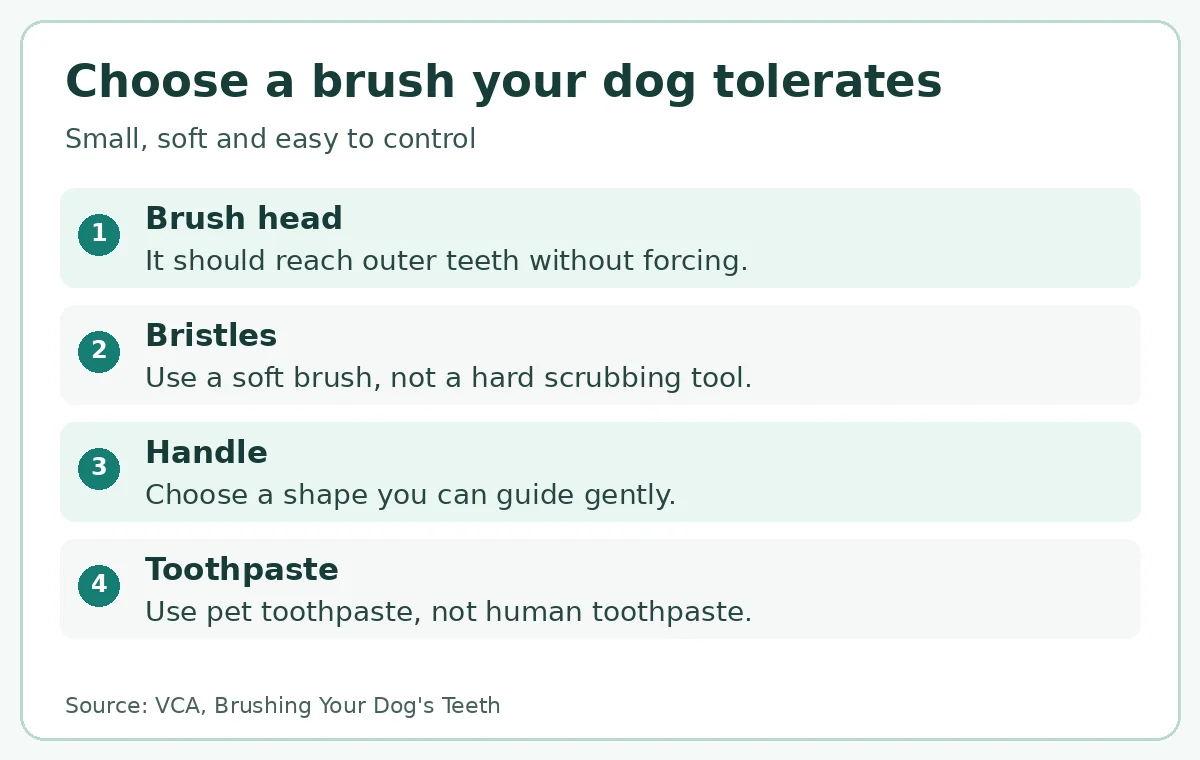
Start with fit, not a promise on the packaging. The head should reach the cheek-side teeth without crowding the mouth. Soft bristles and controlled movements matter more than a complicated design. A small dog may need a particularly compact head, while your grip should let you move it without wobbling.
A long or angled handle can help you reach toward the back while keeping your hand outside the mouth. Check that it feels manageable before approaching your dog. VCA's guide to brushing dogs' teeth describes several brush styles, including soft baby toothbrushes for some dogs, and recommends matching the brush to your dog's size and your dexterity.
A finger brush can make early contact feel easier to control, but it has limitations. A covered fingertip may crowd a small mouth, and reaching rear teeth can be awkward. It doesn't protect you from a bite. If your dog snaps or grabs at hands, stop rather than trying a finger brush as a workaround.
What belongs at your brushing station?
Keep the setup simple: your dog's own brush, pet toothpaste, a towel, and a small reward your dog can safely eat. Choose a quiet spot with secure footing. Sit beside a larger dog or use a comfortable, supported position for a smaller one, without pinning the body or trapping the head.
Use toothpaste formulated for pets and follow its label. Human toothpaste isn't suitable for swallowing and may contain xylitol, which is toxic to dogs. Baking soda is not a substitute. Offer a little pet toothpaste separately first, so an unfamiliar flavor doesn't arrive together with an unfamiliar brush.
Store dental equipment separately from coat tools. Our dog grooming tools guide is a related starting point for organizing other supplies; a fur brush never belongs in a mouth. Pick a repeatable time when your dog is settled and you aren't rushing.
First, teach your dog to arrive and stay willingly
For the first sessions, success can mean simply approaching the chosen spot. Leave the toothbrush aside, reward a comfortable pause, then release your dog. You're building a predictable invitation, not testing how long you can hold the dog still. Let leaving remain possible throughout the routine.
An optional chin rest on your open palm gives you a useful signal. Reward the dog for placing the chin there briefly. If the chin lifts away, stop touching and pause. This practical start-and-stop arrangement helps you notice withdrawal before you accidentally turn a short handling exercise into restraint.
The approach follows VCA's cooperative toothbrushing training guidance: break the task into tiny steps and pair each with something pleasant. For related reward-based handling ideas, see positive reinforcement dog training. Progress depends on relaxed participation, not a deadline.
Next, separate lip contact from actual brushing
Introduce one sensation at a time. Briefly touch the outside of the cheek, remove your hand, and reward. Once that is easy, gently lift a lip for a moment and release it. Don't pull the lips tight, hold the jaw shut, or pry the mouth open to inspect every tooth.
Let your dog investigate the brush before bringing it near the teeth. Offer a little suitable lickable reward on it, then introduce pet toothpaste separately. When both are accepted, touch an accessible outer tooth with the bristles, withdraw immediately, and reward. Only later add a gentle stroke or two.
Pulling away, tightened lips, trembling, freezing, or retreating from the brush means the step is too difficult. Go back to an easier version next time. Stillness alone isn't permission: a stiff dog may be worried. Keep hands out of the mouth if there is any risk of snapping or biting.
How do you brush the outer tooth surfaces gently?
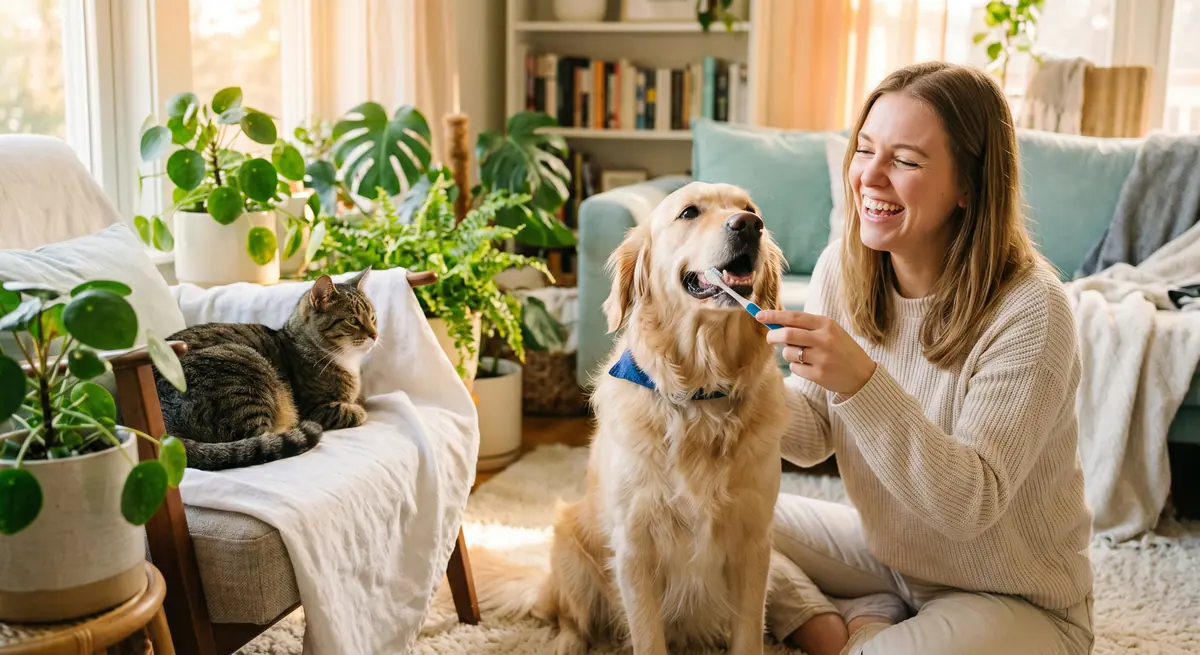
Begin brushing only when your dog comfortably accepts the earlier steps and there are no suspected signs of oral pain. Follow the same short route each time, so you aren't improvising while holding the brush. At first, a few reachable teeth are enough; the full route is a later goal.
- Offer the setup. Invite your dog to the station and wait for relaxed participation. Put a small amount of pet toothpaste on the brush.
- Lift a lip lightly. Expose accessible cheek-side teeth without forcing the jaws apart. Start where contact is already comfortable.
- Use light strokes. Move the bristles gently along the outer tooth surfaces, focusing where tooth and gum meet. Don't jab the gums or scrub harder when a deposit remains.
- Extend the route gradually. Work toward the canine teeth and large cheek teeth, then other accessible outer teeth. Withdraw and reward before your dog becomes tense.
- Switch sides only if welcomed. Repeat the gentle sequence, then finish. Leave inner surfaces alone unless your veterinarian advises otherwise and your dog comfortably cooperates.
Don't use tools to scrape hardened deposits. Toothbrushing helps manage plaque, but existing tartar and disease need veterinary assessment, not stronger pressure.
How long should your own routine become?
Aim to make brushing a daily habit, but build duration around tolerance. VCA suggests approximately 30 seconds per side for an established routine. That isn't a target to impose on a beginner. A tiny successful brushing session is a training step toward broader coverage, not equivalent to cleaning every tooth.
Keep a simple note: which side was comfortable, which teeth you reached, and where your dog asked for a pause. Next time, repeat the easy part before extending one detail. If you miss a day, resume gently instead of compensating with a longer, more forceful session.
Dental chews may be discussed with your veterinarian as an addition, not a replacement for brushing or treatment. Our dog dental chews guide covers the related category. Keep this routine focused on brush handling rather than adding several unfamiliar dental products at once.
Finish by cleaning the equipment, not just the teeth
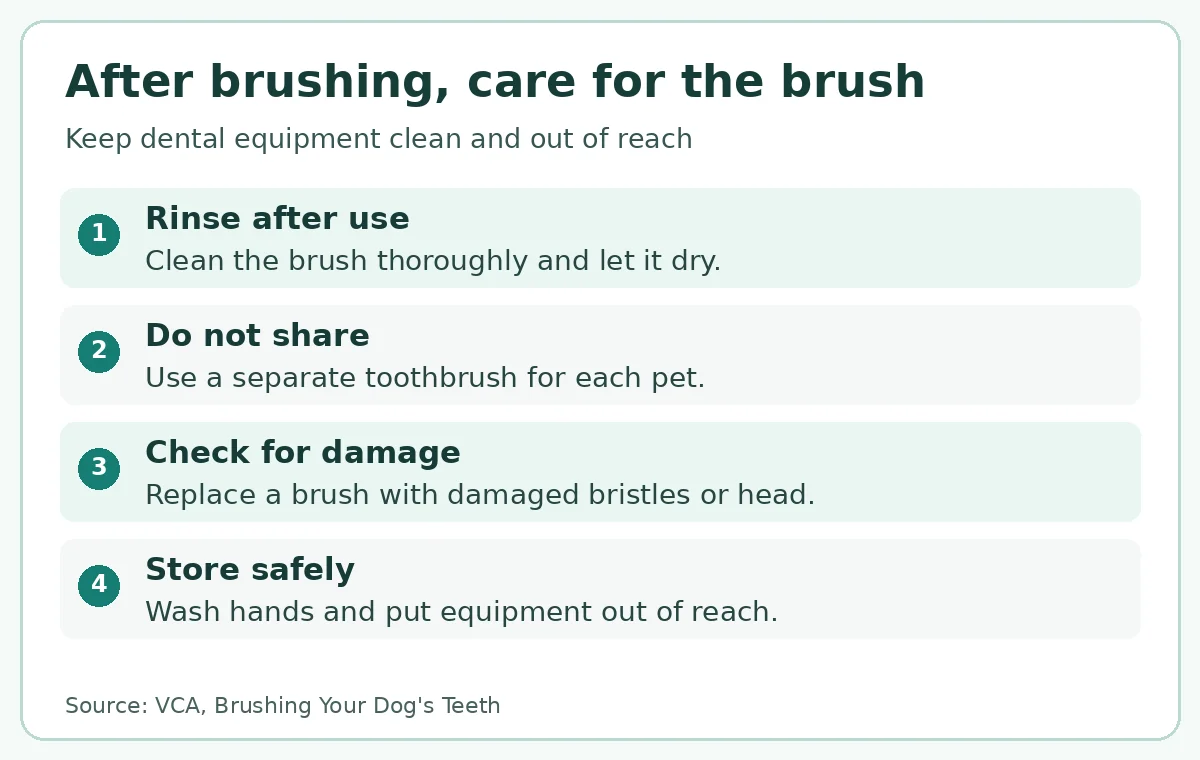
Rinse the toothbrush thoroughly after every use, wash your hands with soap and water, and leave the brush somewhere clean to dry. Give each pet a separate toothbrush. In a household with several dogs, labeling the handles helps prevent accidental sharing when someone else takes over the routine.
VCA recommends replacing the brush every three months. Replace it sooner if bristles become damaged or the head is chewed. Inspect finger brushes too, rather than assuming flexible material lasts indefinitely. Keep brushes and toothpaste out of reach between sessions: the equipment is for supervised care, not chewing or play.
When should you simplify training or call the veterinarian?
Separate uncertainty from possible pain. A dog that dislikes the brush approaching may need a smaller training step. A dog that suddenly resists previously comfortable brushing needs a health check, particularly with bleeding, persistent bad breath, drooling, food dropping, or uncomfortable chewing. Don't label that change stubbornness.
VCA's dental disease guidance lists several of these warning signs and explains that disease can be hidden. Stop brushing a painful or bleeding mouth and contact your veterinarian. Don't repeatedly lift the lips to investigate, try to remove a loose tooth, or replace assessment with a different toothpaste.
For a dog without suspected pain, simplify one thing: use a smaller head, shorten contact, or return to rewarding voluntary arrival. If gentle training isn't progressing after several weeks, seek professional guidance from someone experienced in cooperative care. Your veterinary team can also demonstrate technique. Finish with a relaxed dog, not a completed checklist at any cost.
Frequently Asked Questions
Can I use a soft baby toothbrush for my dog?
A soft baby toothbrush can suit some dogs if the head fits comfortably and the handle lets you reach without poking the gums. Keep it exclusively for that dog and use pet toothpaste. Ask your veterinarian about fit if you cannot comfortably reach the outer cheek teeth.
Is a finger brush better than a handled dog toothbrush?
Neither style is best for every dog. A finger brush may feel easier during introductory contact, while a handled brush can make rear teeth more accessible. A covered finger can be bulky in a small mouth and offers no bite protection. Choose according to fit, control, and relaxed cooperation.
Do I need to open my dog's mouth to brush?
No, don't pry or force the mouth open. Gently lift a lip and brush accessible outer tooth surfaces while your dog cooperates. If reaching a particular tooth requires restraint or causes distress, stop there. Ask your veterinary team to demonstrate a comfortable approach rather than forcing access at home.
How often and how long should I brush my dog's teeth?
Work toward a daily routine, with approximately 30 seconds per side once your dog comfortably accepts brushing. Early training may involve only a brief touch and reward. Increase coverage gradually, not by holding your dog still longer. Ask your veterinarian whether your dog's dental needs require a different schedule.
Can dental chews replace toothbrushing?
Dental chews may supplement a veterinary dental plan, but they aren't a reason to stop brushing a cooperative dog. Product suitability depends on your dog's teeth, chewing behavior, and other needs. Neither chews nor a home toothbrush remove the need for assessment when pain or existing dental disease is suspected.
What if my dog bleeds or suddenly refuses brushing?
Stop the session and contact your veterinarian, especially if there is pain, bad breath, drooling, food dropping, or difficulty chewing. Don't brush through discomfort or assume harder brushing will fix it. A painful mouth needs assessment before you restart; your veterinary team can advise on treatment and safe reintroduction.
Put this guide in context
Choose the next guide for the care question you actually have: dog claw trimmer; how to trim dog nails; dog shampoo; how often to bathe a dog; canine grooming tools. These pages cover different decisions, rather than interchangeable products or a prescribed schedule.