Choose a shampoo labeled for dogs, then decide whether you need ordinary cleaning or veterinary help for a skin problem. Persistent itching, redness, sores, or recurring odor should not become a search for a stronger fragrance. Read the directions and restrictions before buying, and use medicated shampoo only under your veterinarian's instructions for that dog.
What needs cleaning, and what needs a vet?
A muddy coat on a comfortable dog presents a different decision from skin that is sore or repeatedly itchy. Before comparing bottles, look beneath the fur and consider what has changed. A cleanser can remove ordinary dirt; its smell and packaging cannot tell you why your dog is scratching.
| What you notice | Product decision |
|---|---|
| Dirt on an otherwise comfortable coat | Consider a regular dog cleanser with suitable directions. |
| Repeated itching, redness, flakes, or recurring odor | Ask your veterinarian about the cause before choosing treatment. |
| Open sores, painful skin, or discharge | Arrange veterinary assessment rather than experimenting with shampoo. |
These observations do not identify a disease. The ASPCA's dog grooming guidance lists several possible causes of skin trouble and recommends veterinary examination for abnormalities or excessive scratching. Notice where symptoms occur and whether they began before or after a product change. That history is more useful than choosing an antifungal label because a coat smells unusual.
Read the back label before the front claim
Start with the intended species. A bottle should explicitly include dogs, not simply look appropriate because it sits beside pet accessories. Then check suitability for your dog's age and any restrictions related to health or other products. If the instructions leave an important question unanswered, contact the manufacturer or your veterinarian before use.
- Purpose: Is this an ordinary cleanser, a conditioner, a leave-in product, or a medicated treatment?
- Application: Does it require dilution, a wet coat, or a specified contact time?
- Removal: Must it be rinsed out, or is it specifically labeled to remain on the coat?
- Warnings: Which areas, ages, or circumstances are excluded?
Keep the original packaging so everyone caring for the dog can read the same directions. Do not transfer a concentrate into an unmarked bottle or borrow dilution instructions from another shampoo. When shopping online, look for a readable photograph of the full label, not just a seller's short description. A listing that omits directions leaves you unable to confirm suitability. If two ordinary cleansers appear comparable, prioritize clear instructions and a formulation your dog has previously tolerated over a dramatic promise on the front. VCA's bathing and skin-product advice specifically emphasizes checking the bottle's contact instructions and removing residue thoroughly.
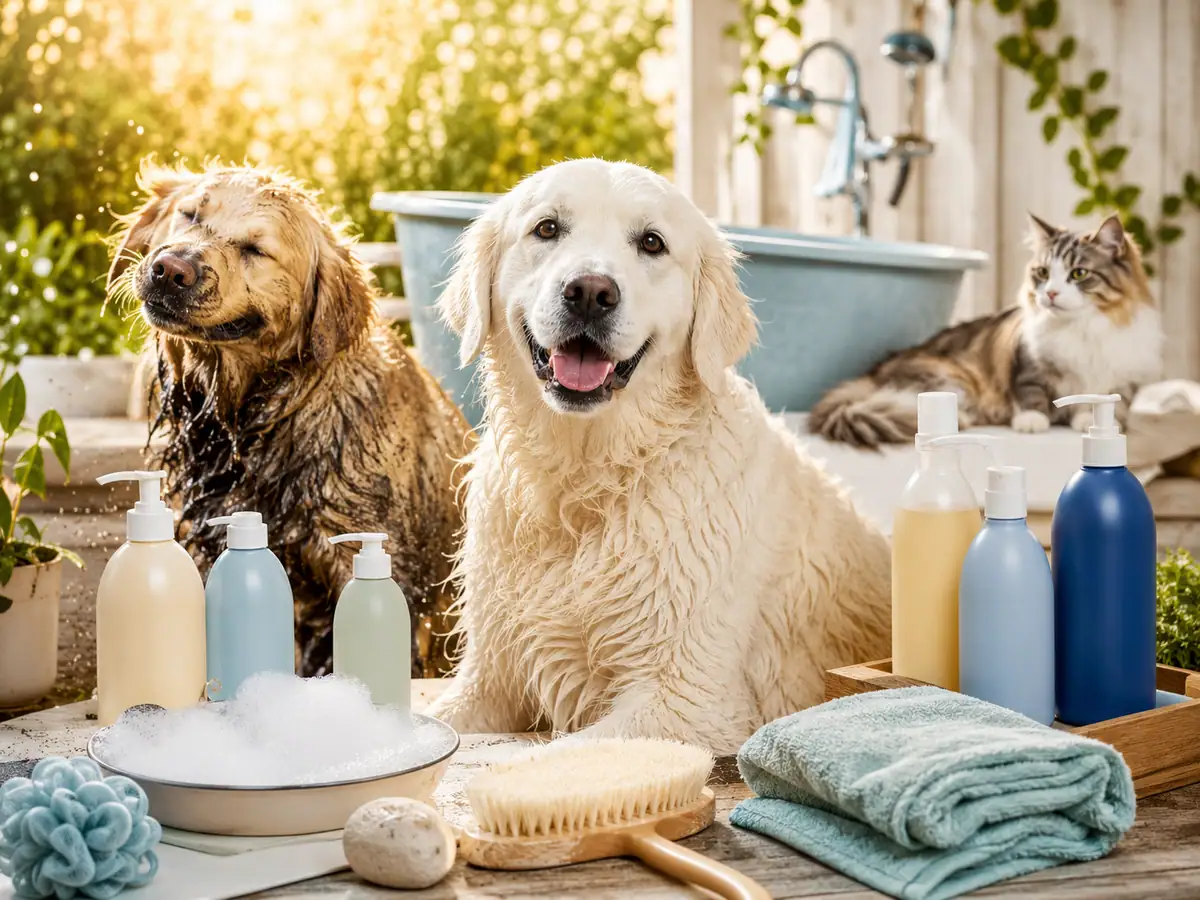
Translate marketing words into practical questions
Words such as gentle, sensitive, natural, and soothing are starting points for questions, not a diagnosis or a promise that a product will suit every dog. Ask what the product is intended to do, whether its directions fit your dog, and whether your dog has reacted to it before.
An ingredient name alone does not establish how a finished formula will perform. Avoid choosing by a blanket list of supposedly dangerous chemicals, and do not assume a botanical name proves safety. A recognizable fragrance is not evidence that a shampoo treats the cause of odor. Keep cosmetic goals separate from medical ones: a softer-feeling coat, a scent you like, and control of a diagnosed skin condition are different outcomes. A product description should not persuade you that achieving the first two confirms the third.
If your dog has a history of reactions, bring the complete ingredient list to your veterinarian rather than guessing which component was responsible. Our sensitive-skin shampoo guide covers that narrower product category. For a dog with ongoing symptoms, a different front-label claim is not a substitute for assessment.
Keep human toiletries out of the routine
Use a dog-specific cleanser instead of routinely reaching for human or baby shampoo. A product marketed as mild for people is not automatically the right choice for canine skin. This is a suitability decision, not a claim that every accidental exposure is poisoning.
The ASPCA recommends species-appropriate shampoo and notes that some fragrances or other substances in human products can irritate pets. There is no need to turn that advice into a universal ingredient blacklist or a claim that every human shampoo causes infection.
If you run out, do not improvise a recipe with dish detergent, vinegar, or essential oils. Ask your veterinarian what is appropriate for the particular mess and your dog's skin. Suspected exposure to a chemical or unknown substance needs specific advice, not a household shampoo substitution.
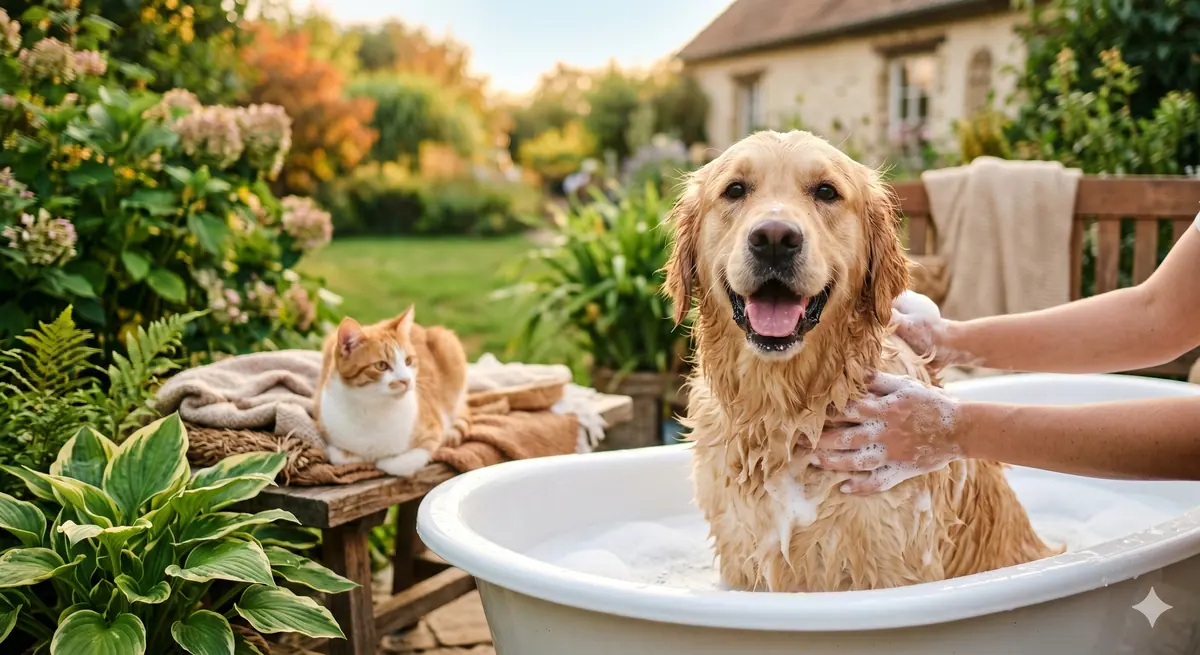
Medicated shampoo belongs to a specific care plan
Medicated is not another word for extra-clean. In VCA's medicated-shampoo guidance, the product is selected for a particular skin condition by a veterinarian. Different conditions can require different care, even when the visible signs seem similar to an owner.
Do not diagnose a yeast infection from smell, select an antibacterial strength yourself, or use another pet's treatment. A bottle left from a previous episode may not match a new problem. Our medicated dog shampoo explainer provides context, but it cannot choose a treatment for your dog.
Get clear instructions for the exact product: whether preliminary cleaning is needed, how to apply it, its contact time, how to rinse, and when to report changes. Use it only as directed by your veterinarian and the applicable label. If instructions appear inconsistent, ask before proceeding. Do not extend contact time, increase concentration, or repeat treatment more often in pursuit of faster results. Improvement and follow-up expectations also belong to that individual plan. If a groomer will apply the treatment, provide the exact bottle and written veterinary directions rather than asking for a generic medicated wash. Confirm who will contact the clinic if the skin looks worse or the instructions cannot be followed.
Check age, coat handling, and existing products
A puppy needs an age-appropriate product, not simply less of an adult dog's medicated shampoo. Read any minimum-age restriction and ask your veterinarian when suitability is unclear. The puppy grooming starter guide can help with equipment planning without replacing product-specific advice.
For a dense or long coat, consider whether you can reach the skin gently and rinse the product completely. Shampoo does not resolve painful mats. Use the dog brush guide to understand coat-appropriate tools, and get professional help for tight matting rather than pulling at skin.
Tell your veterinarian about conditioners, sprays, and any flea or tick products already in use. Read their bathing restrictions too. In a household with several pets, check each bottle against the animal receiving it rather than treating the grooming cupboard as interchangeable. A product that includes dogs on its label does not automatically authorize its use on your cat, and a shared scent is not a suitability check. Do not assume a new shampoo can be layered over an existing treatment without checking compatibility. Keeping this information together makes the purchase decision simpler: one suitable cleanser with clear directions, rather than several products solving an unidentified problem.
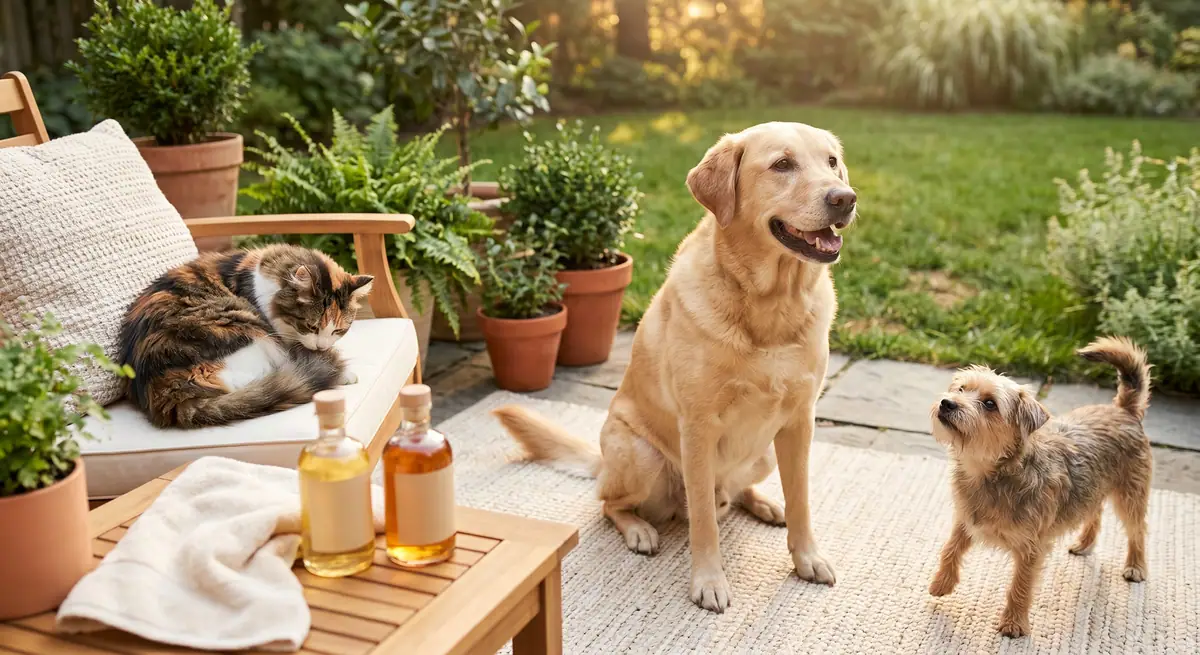
A suitable bottle still needs complete removal
Before using a rinse-out shampoo, have lukewarm water and clean towels ready. Follow the product's directions rather than aiming for the most foam. Keep shampoo away from eyes, ears, and nose; a damp cloth is preferable to lathering the face. Stop if safe, comfortable handling is not possible.
Rinse thoroughly, including areas beneath the coat where residue can be missed. Do not leave an ordinary rinse-out shampoo behind as an improvised conditioner. A leave-in product is a separate formulation with its own instructions, not a shortcut for incomplete rinsing.
VCA recommends towel drying after a medicated bath and keeping the dog warm until completely dry. The ASPCA also emphasizes thorough drying, including skin folds. For a coat you cannot comfortably rinse or dry at home, seek a groomer's help and share any veterinary directions. These handling checks support product selection; they are not a universal bathing timetable.
Stop irritation and keep a useful product record
If the dog becomes uncomfortable during application or develops worsening irritation, stop using the product. For a rinse-out shampoo still on the coat, rinse it away thoroughly and contact your veterinarian for advice. Do not add another shampoo or a home remedy to counter the suspected reaction.
Record the product name, ingredient list, dilution used, approximate application time, and what you noticed. Photos of the bottle and affected skin can help the veterinary team understand the sequence, without proving what caused the change. VCA advises contacting a veterinarian when skin consistently worsens with medicated bathing.
Keep an uncomplicated decision rule for the next purchase: ordinary dirt calls for a suitable dog cleanser; recurring skin signs call for investigation; medicated products follow an individual veterinary plan. There is no single bath interval or strongest formula that makes those different situations equivalent.
Put this guide in context
Choose the next guide for the care question you actually have: dog claw trimmer; how to trim dog nails; how often to bathe a dog; dog toothbrush; canine grooming tools. These pages cover different decisions, rather than interchangeable products or a prescribed schedule.
Frequently Asked Questions
What is the best shampoo for a dog with healthy skin?
Start with a cleanser specifically labeled for dogs that fits your dog's age and has clear application and rinsing directions. No single formula is best for every coat. Consider previous tolerance and ask your veterinarian about any restrictions, especially if your dog uses other skin products.
Can I use baby shampoo instead of dog shampoo?
Do not make baby shampoo your routine substitute. Mildness for human skin does not establish suitability for your dog. Choose a dog-labeled product and ask your veterinarian if you have run out or need to remove an unusual substance. Avoid replacing one uncertain product with a homemade mixture.
Does hypoallergenic dog shampoo treat skin allergies?
The word hypoallergenic does not diagnose an allergy or establish that a shampoo treats its cause. Repeated scratching, redness, or licking needs veterinary assessment. Bring the full product label and any reaction history so your veterinarian can advise on a suitable cleanser or a condition-specific treatment plan.
How long should medicated shampoo stay on my dog?
Use the contact time given for that exact product by your veterinarian and its applicable label. Do not copy a time from another bottle or extend it for stronger results. Ask the clinic to clarify conflicting instructions, and follow the same product-specific approach to dilution and rinsing.
What should I do if shampoo makes my dog itch?
Stop using the product. If rinse-out shampoo remains on the coat, remove it thoroughly with water and contact your veterinarian, particularly if signs persist or worsen. Keep the packaging and note when symptoms began. Do not test additional shampoos or apply an essential-oil mixture to irritated skin.
Can a deodorizing shampoo fix a repeatedly smelly coat?
A cleanser may remove ordinary dirt, but recurring odor is not a diagnosis and a stronger scent does not address every cause. The ASPCA advises veterinary consultation when grooming does not resolve persistent smell. Mention itching, ear changes, or skin abnormalities instead of choosing an antifungal product by odor alone.