Puppy grooming tools should make early care calm, comfortable, and easy to repeat. A useful starter kit includes a coat-appropriate brush and comb, dog shampoo, towels, a nail tool, and basic dental supplies. The exact choices depend on coat texture, size, skin health, and how your puppy responds to handling. This guide explains what each tool does, what can wait, and when a groomer or veterinarian is the safer choice.
Grooming is more than making a young dog look tidy. Gentle brushing lets you check the skin, nail care supports comfortable movement, and gradual handling prepares a puppy for veterinary exams and professional grooming. Start small, reward cooperation, and never turn routine care into a wrestling match.
Choose a practical puppy grooming starter kit
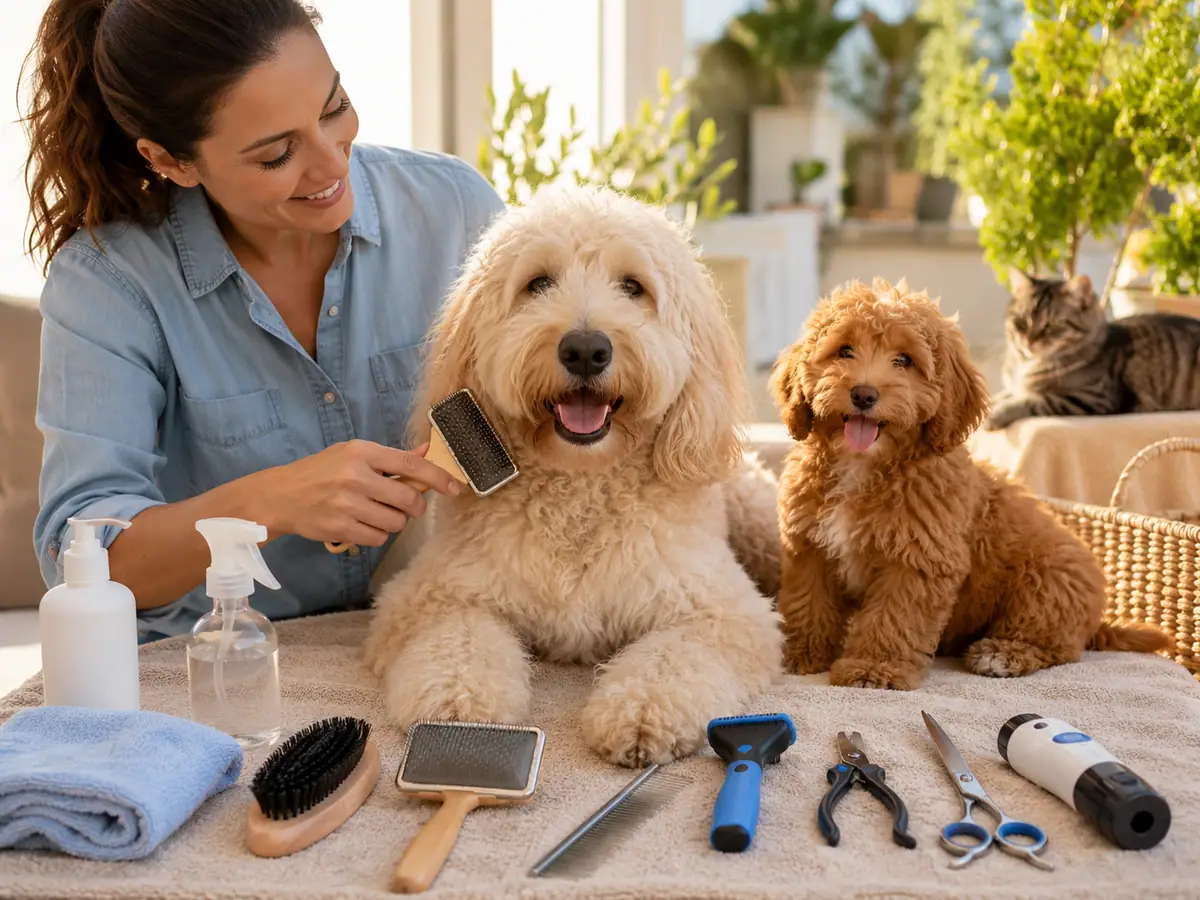
Begin with versatile basics rather than a large bundle of specialty gadgets. Your first kit should cover coat care, bathing, nails, and teeth. Add an ear product only after your veterinarian shows you what is appropriate. Add clippers, a deshedding rake, or dematting equipment only when the coat and your skill level justify them.
- Brush and metal comb: the brush loosens debris and hair, while the comb checks whether you reached through the coat without snagging.
- Dog shampoo and towels: choose a mild product labeled for dogs, plus absorbent towels and a nonslip bath mat.
- Nail clipper or grinder: pick a puppy-sized tool that feels stable in your hand. Keep styptic powder nearby and learn how to use it before trimming.
- Dog toothbrush and toothpaste: select a small, soft brush or finger brush and toothpaste made for dogs.
- Small support items: a spray bottle of water, washable cloths, a grooming mat, and high-value rewards help sessions run smoothly.
This compact approach leaves room to learn what your dog actually needs. Our broader dog grooming tool guide covers adult and specialty equipment, while the new puppy essentials checklist can help organize the rest of your setup.
Livehappypet tip: Ask your breeder, rescue, veterinarian, or groomer to identify the puppy's coat type before you buy a specialty brush. A quick professional recommendation can prevent an uncomfortable mismatch.
Introduce grooming without creating fear
The most important tool is a patient training plan. Let the puppy investigate an inactive brush, clipper, dryer, or grinder. Reward a glance or sniff, then put the item away. In later sessions, touch the shoulder with the back of the brush, make one gentle stroke, and reward again. Build duration only while the body stays loose and the puppy can take food normally.
Practice handling away from a full groom. Briefly touch a paw, lift an ear flap, hold the chin, and part the coat. Pair each action with a reward. This cooperative foundation is consistent with the positive reinforcement approach: reinforce the behavior you want instead of punishing avoidance.
Watch for lip licking, repeated yawning, a tucked tail, freezing, trying to escape, growling, or refusing a normally valued treat. These signals mean the session is too difficult. Pause, simplify the next attempt, and seek qualified help if fear escalates. The American Kennel Club's grooming overview also recommends introducing grooming early and making it a positive experience.
Match puppy brushes and combs to the coat
No single brush is best for every puppy. Bristle softness, pin length, and head size should suit the coat and the dog's body. Rounded or protected tips are friendlier for a beginner, but technique still matters. Brush in small sections with the coat's growth, support longer hair near the skin, and never drag a tool through resistance.
A metal comb is the useful final check for long, curly, and feathered coats. After brushing, pass it gently from the hair ends toward the roots in sections. If it stops, return to the brush and work around the tangle. Do not cut a tight mat with household scissors. Skin can be pulled into a mat, making it hard to see where hair ends and skin begins.
| Coat type | Good starting tool | Follow-up tool | Use with caution |
|---|---|---|---|
| Short and smooth | Soft rubber curry or grooming mitt | Soft bristle brush | Aggressive deshedding blades on delicate skin |
| Medium or double coat | Pin brush or gentle slicker | Metal comb; coat rake only with guidance | Sharp rakes or repeated passes over one spot |
| Long or feathered | Pin brush with long, rounded pins | Wide-tooth then finer metal comb | Pulling through knots behind ears or legs |
| Curly or wool coat | Soft slicker sized to the puppy | Stainless steel greyhound-style comb | Surface brushing that leaves tangles near skin |
| Wire coat | Soft slicker or pin brush | Comb selected with a groomer | Stripping knives without training |
The ASPCA dog grooming tips recommend regular brushing and using the session to look for fleas, flea dirt, and ticks. Also check for redness, bumps, scabs, or tenderness. Persistent skin changes need veterinary attention, not harder brushing.
Build a safe bathing and drying setup
A basic bath station needs a nonslip mat, lukewarm water, a dog-specific shampoo, a cup or gentle sprayer, washcloths, and two or more towels. Brush out loose tangles before the coat gets wet because water can tighten existing knots. Keep water and shampoo out of the eyes and ear canals, rinse thoroughly, and support the puppy on the slippery surface at all times.
Do not substitute human shampoo. Choose a mild product labeled for the puppy's age and follow the label for dilution and contact time. The dog shampoo guide explains routine product choices. Flea, medicated, and antifungal shampoos treat specific problems and should be used only with veterinary direction for a young dog.
Towel blot instead of rubbing vigorously. If you use a dryer, select cool or low heat, keep air moving, and avoid aiming it into the face or ears. Check the temperature against your own skin frequently. Stop if noise or airflow causes distress. The goal is a dry, comfortable coat, not a salon finish at any cost.
Bath safety tip: Put every item within reach before turning on the water. Never leave a puppy alone in a tub or on an elevated surface, even for a few seconds.
Choose nail and paw tools carefully
Scissor-style or plier-style clippers make a quick cut, while a grinder removes small amounts with a rotating surface. Clippers are quiet but can take too much nail if positioned poorly. Grinders offer gradual control but produce noise, vibration, and heat. Neither option is automatically best. Choose the tool your puppy accepts and that you can control confidently.
Before trimming, handle each paw and briefly touch the inactive tool to a nail. For a grinder, introduce sound at a distance before contact. Use bright light and remove only a small amount. The quick contains blood vessels and nerves, and it can be difficult to identify in dark nails. The AKC nail trimming guide describes both clipper and grinder techniques and advises gradual acclimation.
Do not squeeze a struggling puppy or force a leg into an awkward angle. A veterinarian or groomer can demonstrate safe positioning and establish a baseline trim. Compare tool styles in our dog toenail trimmer guide and canine nail trimmer overview. Check paw pads for cuts or lodged debris, but leave hair clipping between pads to a professional until you have been trained.
Handle ears, eyes, and teeth safely
Ear care starts with observation. Lift the flap and look at the visible outer ear. Do not insert cotton swabs or tools into the canal. Use a canine ear cleaner only when your veterinarian recommends it and demonstrates the process. Odor, discharge, redness, swelling, repeated head shaking, or pain calls for an exam. The VCA ear cleaning instructions explain why cotton-tipped applicators can push debris deeper or injure the ear.
For the eye area, use a clean, damp, soft cloth to wipe the fur around the eye without touching the eyeball. Do not use human eye drops, stain removers, or scissors near a moving puppy's face. Squinting, cloudiness, swelling, or colored discharge deserves prompt veterinary advice.
Begin dental training with a finger along the outside of the lips, then introduce dog toothpaste for a taste, and finally add a soft dog toothbrush. Never use human toothpaste. The American Veterinary Medical Association's dental care guidance recommends regular home care and veterinary dental checks. Our dog toothbrush guide compares common brush shapes and sizes.
Use grooming tools in the right order
A predictable sequence keeps the session efficient and helps the puppy know what comes next. Separate nail care or toothbrushing into another short session if attention fades. A first full routine can follow this order:
- Prepare: choose a quiet, well-lit area, place a nonslip mat, gather tools and rewards, and inspect each tool for damage.
- Check: run your hands over the body and look at the skin, ears, paws, and coat. Stop before grooming any sore area.
- Brush and comb: work in sections, starting where the puppy is comfortable. Save sensitive feet, tail, and face for later.
- Bathe only when needed: protect the ears and eyes, rinse fully, and towel blot. A bath is not required every time you brush.
- Dry and recheck: use towels and gentle airflow, then check folds and dense areas for retained moisture.
- Finish positively: reward, offer a break, clean the equipment, and note any skin or behavior changes.
For quick cleanup between full baths, read our dog wipes guide, but do not use wipes to cover up an ongoing odor or skin problem. The Merck Veterinary Manual's routine care overview explains that owners should regularly examine the coat, skin, ears, mouth, feet, and nails and seek veterinary help for abnormalities.
Short-session rule: Stop while your puppy is still successful. One calm paw, one body section, or a few tooth strokes can be a complete training session.
Clean, store, and replace grooming equipment
Hair, skin oils, shampoo residue, and moisture shorten tool life. Remove hair from brushes and combs after use, then wash them according to the manufacturer's directions and let them dry completely. Do not soak electric parts. Empty and clean a clipper or grinder only after unplugging it and following its manual.
Store sharp items closed or guarded in a dry container that the puppy cannot reach. Keep dental tools separate from coat tools. Replace cracked handles, missing comb teeth, bent pins, rusty metal, frayed cords, or a grinder that vibrates unpredictably. Dull nail clippers can crush or split a nail instead of making a clean cut.
| Tool | After use | Before next use | Replace or service when |
|---|---|---|---|
| Brush and comb | Remove hair; clean as directed; dry fully | Check pins, teeth, and handle | Teeth are missing, pins bend, or rust appears |
| Nail clipper | Wipe clean and lock closed | Check alignment and sharpness | Cutting edges nick, loosen, or crush the nail |
| Nail grinder | Unplug; remove dust as directed | Inspect cord, guard, and sanding surface | Motor stalls, cord frays, or vibration changes |
| Toothbrush | Rinse and air-dry separately | Check bristles and cleanliness | Bristles spread, handle cracks, or illness warrants replacement |
| Towels and cloths | Launder and dry completely | Check for odor or residue | Fabric stays musty or cannot be cleaned |
Frequently asked questions
What puppy grooming tools do I need first?
Start with a coat-appropriate brush, a stainless steel comb, dog shampoo, absorbent towels, a nail clipper or grinder, a dog toothbrush and toothpaste, and any ear cleaner your veterinarian recommends. Add clippers or specialty deshedding tools only if the puppy's coat requires them.
What is the best brush for a puppy?
The best brush depends on coat type. A soft rubber curry suits many smooth coats, a pin brush or gentle slicker helps longer coats, and a soft slicker plus metal comb works for many curly coats. Ask a groomer to confirm the choice if you are unsure.
When should I start grooming my puppy?
Begin gentle handling and very short brushing sessions soon after your puppy settles in. Pair calm touches of the paws, ears, mouth, and coat with rewards. Ask your veterinarian when public grooming visits are appropriate for your puppy's vaccination and health status.
Can I use human shampoo on a puppy?
No. Use a mild shampoo labeled for dogs and follow its directions. Human shampoo is not formulated for canine skin. Ask your veterinarian before using medicated, flea, antifungal, or strongly fragranced products on a puppy.
Are nail clippers or a grinder better for puppies?
Either can work. Clippers are quick and quiet, while a grinder removes small amounts gradually but adds noise and vibration. Choose the method your puppy tolerates, introduce it without trimming first, and learn the safe technique from a veterinarian or groomer.
Do puppies need electric clippers at home?
Not always. Many puppies only need brushing, combing, bathing, nail care, and professional haircuts. Clippers require training, clean and cool blades, coat knowledge, and a calm dog. Leave tight mats and sensitive areas to a professional.
When should a puppy see a professional groomer or veterinarian?
Use a professional groomer for tight mats, breed-specific clipping, or a puppy you cannot handle safely. Contact a veterinarian for painful skin, sores, parasites, ear odor or discharge, broken nails, bleeding, swelling, or intense fear that makes routine care unsafe.
Conclusion: build skills before adding tools
The best puppy grooming kit is small, coat-specific, and comfortable for both handler and dog. Start with a suitable brush and comb, bath basics, one nail method, and dog-safe dental supplies. Introduce each item gradually, clean it after use, and add specialty equipment only when there is a clear need.
Keep safety limits clear. Tight mats, painful skin, ear symptoms, nail injuries, and severe fear are reasons to stop and call a professional. Thoughtful early practice gives your puppy a foundation for calmer care throughout life.
Explore Pet Care Essentials
Browse practical supplies for a happier everyday routine. Free worldwide shipping on every order.
Shop Pet Supplies →