A safe grooming routine starts with tools that fit your dog's coat, health, and stress tolerance. Buying one brush, one clippers, and one clipper guard can still leave owners unprepared when the dog has dense undercoat, anxious behavior, painful joints, ear sensitivity, or repeated skin irritation. A good home system is not a bigger pile of gadgets. It is a clear workflow with safe defaults, check points, and a direct plan for when professional care is needed.
This guide is written for US owners who want practical home grooming for dogs and a conservative approach to risk. We cover coat tools, mat prevention, nail care, clipper limits, bathing and drying setup, ear and oral care boundaries, maintenance, and shopping priorities for a beginner kit. Use this as a framework and keep your veterinarian or professional groomer in the loop when your dog shows pain, bleeding, infection signs, or severe fear.
Why tool quality changes grooming outcomes
The right tools reduce pain and reduce stress. The wrong tool can cause pulling, avoidable skin friction, burns, and fear that can make future care much harder. Grooming tools should reduce force, not increase it. You are trying to move hair, clean coat, and check skin, not fight with a tool.
For home care, a system with this order is more reliable than owning every tool: prepare, inspect, choose tool by coat type, process in short sessions, and pause at first clear discomfort signal. The AKC grooming overview supports this idea by encouraging frequent inspection and matching grooming steps to the individual dog.
Plan before you groom. Confirm no obvious skin wounds, tick lesions, fresh ear discharge, or severe fear behaviors. If any of these are present, pause and call a professional. This includes owners with new pets, seniors, dogs with known pain conditions, and dogs recently treated for skin infection.
Brush and comb tools by coat and body area
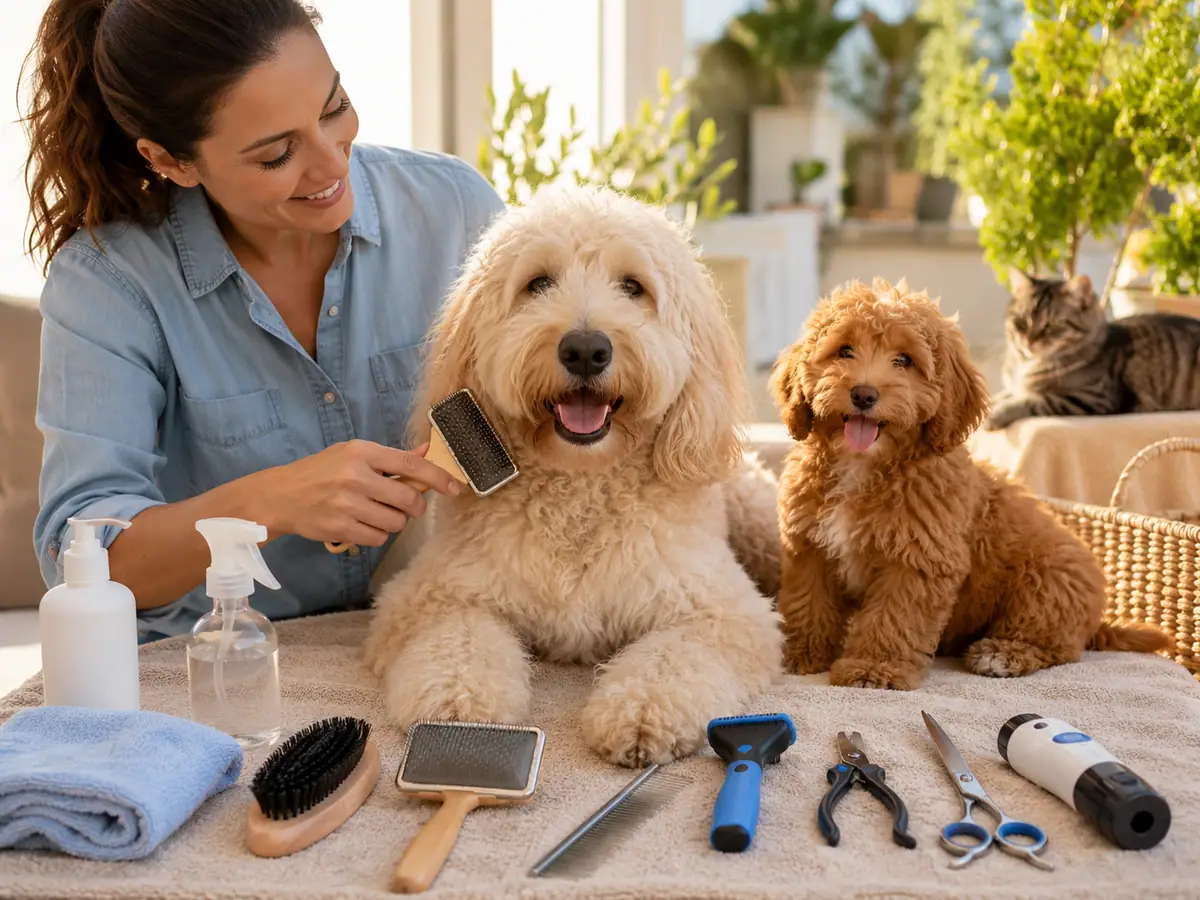
Coat type drives most grooming mistakes. Dogs groom poorly at home when owners use tools for the wrong body region. If a brush is too fine or too aggressive for a curly or sensitive coat, the owner can create tangles and pain. The wrong comb angle can pull skin at skin folds, especially in older dogs.
Use your main brush on the body and the follow up comb for undercoat or tangles behind the ears, around armpits, and at the rear thigh transition. These areas usually hide knots first in thick coats. In curly, feathered, or wire coats, split sessions into shorter passes and avoid dry combing through tight curls.
Mat prevention is easier than mat rescue. If a knot has not reached the skin yet, brush from the skin outward with a wide tooth or pin brush, then lift from the surface with a broad paddle to open the knot. If the mat is hard, painful, or near skin, do not dig aggressively. Make a pro appointment and book a mat specialist groomer.
| Coat type | Primary brush | Secondary tool | Best cue to stop |
|---|---|---|---|
| Short, smooth coat | Rubber grooming brush or deshedding glove | Wide paddle | Skin reddens or dog turns away repeatedly |
| Dense or medium double coat | Soft pin brush | Fine comb and undercoat rake | Tight knots return or hair breaks along undercoat |
| Long, wavy, or curly coat | Large comb, then wide slicker in one direction | Detangling spray approved by veterinarian | Skin pulls back, scratching starts, or knot resistance rises |
| Wire or brittle coat | Soft brush with slow strokes | Wide comb and light hand comb only | Pain signs in armpits, groin, and around tail base |
Nail, paw, and pad safety
Nail care should start with a stable setup, not with force. A calm surface, good light, and a short routine are safer than one long attempt with poor restraint. Dark nails are harder to read, so begin with micro trimming and conservative angles.
For many dogs, a single hand trimmer plus a fine file is enough at first. If the dog is trembling, repeatedly shifts weight backward, or shakes the leg, stop and reassess. The AKC trimming safety guidance also emphasizes short sessions and frequent breaks.
A practical home rule is: trim only the portion you can clearly see, and if you cannot visually see where safe tissue begins, do not continue. Instead, use a rotary grinder after a short rest with a professional trainer or groomer. This is safer for dogs with dark nails, thin pads, and prior nail trauma. Never force a struggling leg to stay still. For uncertain owners, a groomer can train first, then switch to maintenance at home.
Learn to identify the pain point before trimming more. If your dog has chronic claw injuries, arthritis pain, missing toes, severe fear, or a recent orthopedic issue, refer to a veterinarian before continued trimming.
Clippers and scissors: where home clipping is optional
Clippers are powerful and can be used safely only when the owner respects limits. They are useful for coat thinning and specific grooming plans, but they are not required for every dog every week. Some dogs are better served by hand brush and brush-out grooming only.
When you do use clippers, use guarded lengths only until tolerance improves. Keep hair direction short and smooth, keep the blade cool, and keep airflow moving. If your dog is nervous, older, has sensitive skin, or has a known allergy, stop at the first clear discomfort cue and switch to a professional session.
Use scissors only for tiny touch up tasks in low risk areas and only if you are confident with angle control. Never do broad body contour shaping at home for untrained owners. A veterinary clinic or experienced groomer should handle full body clipping, dense undercoat bulk jobs, and hair between pads for dogs with pain or severe anxiety. The VCA coat-care guidance reinforces that grooming includes regular skin checks and condition-based changes in routine.
Bathing and drying tools for home comfort
Bathing is often the riskiest part of home grooming because people rush. A complete setup includes a stable surface, anti slip mat, low scent canine shampoo only, squeeze cup or shower attachment, towels, and airflow control. Avoid fabric conditioners, human shampoos, and disinfectants for daily use.
Drying does not cause illness by itself. Risk rises when dogs are over-dried with hot air, left damp in deep skin folds, or blown directly into the face for too long. For fold areas, keep temperature low and let towels remove most moisture first. Then use smooth passing airflow. If a dog shakes repeatedly, avoid strong airflow around the ears and eyes. This is especially important for sensitive skin breeds and senior dogs.

If you are treating skin issues or flea products are needed, compare plans from dog shampoo options, flea shampoos, and antifungal bathing plans. Use only one product path at a time until you know the dog's response. Redness, foul odor, repeated scratching, or pain means stop and use veterinary advice.
Ear care and oral care limits
Ear and mouth care need hard boundaries at home. The safest approach for ears is to clean only the visible fold, never force material into the canal, and never use hard swabs. The ASPCA grooming tips and many veterinary resources remind owners to avoid deep ear insertion for most home routines.
If there is pain, odor, dark discharge, shaking, repeated scratching, or head tilt, pause home ear care and make a veterinary check a priority. The VCA ear cleaning guidance is useful for owners and supports referral when signs persist.
For teeth, brushing and rinsing products can help daily oral upkeep, but home care is maintenance, not a replacement for dental exams. The VCA dental page is clear that dogs with gum bleeding, foul breath changes, or pain should be examined by a veterinarian. If you want home products, avoid whitening claims and pick dog specific products only when used as prescribed.
Home ear and oral mistakes are common. If your dog is fearful around ear touch or mouth opening, reduce home work to observation only and ask a clinic to guide care. This is a strong and safe choice for puppies, seniors, and dogs with prior medical history.
Beginner kit and smart shopping path
For most first time owners, buy by function and add tools only after skill improves. The goal is a short kit that can be cleaned and maintained consistently.
Start with five items:
- One brush set with one brush and one fine tooth comb.
- One clip-safe trimming method such as a safe trimmer or grinder.
- One bathing kit with safe shampoo and at least two absorbent towels.
- One drying method with low heat device or fan.
- One ear and paw wipe protocol with veterinarian approved products.
Then add these only if your dog tolerates sessions well:
- Additional clipper guard for specific coat lengths.
- Second clipper blade for texture control.
- Nail file or grinder for finish work.
For product context, compare options in pet accessories, dog toenail trimmers, and dog clippers and nails tools. If the dog is anxious, check the safer tools first and build routine in short sessions only.
| Task | Check cadence | Replace or escalate |
|---|---|---|
| Brushes, combs, and pads | After each groom | Bristles misshapen, loose teeth on comb, or persistent odor after washing |
| Nail tools and file | Before each use | Grinding jerks, slipping clip blades, rough edges on file |
| Clipper setup | Monthly cleaning and cooling check | Hot blade sensation, burning smell, stalling motor |
| Bath and ear materials | Weekly cleaning and dry storage | Cracks, residue buildup, old sanitizer, uncertain expiry |
| Dog response log | After each session | Bleeding, fear flare, repeated scratching, ear pain, or appetite shift |
Maintenance and replacement checks
Add a referral rule so home grooming never becomes a risk. If any of the signs below continue for more than one full attempt, choose a professional groomer or vet before the next session:
- Bleeding from nails or toe pain after trimming.
- Deep mats or hard tangles close to skin.
- Persistent ear odor, discharge, or pain while touching.
- Burn marks, hot blade sensation, or clipped skin from clippers.
- Bad breath change with pain, gum bleeding, or poor chewing.
For daily product context and safe alternatives, review dog claw trimmer options, dog toothbrush basics, and dog wipes. For broader health context, Merck routine health guidance supports early veterinary follow up when home routines are not improving comfort.
Frequently asked questions
Do I need clippers for every dog?
Not necessarily. Many dogs stay comfortable with brushing, mat inspection, and occasional full baths. Home clipper use is more useful for breeds with dense coats, high growth rates, or grooming plans from a vet or groomer. If your dog is anxious or skin sensitive, ask a groomer for a safety-first plan first.
How often should I brush a dog?
Many long coated dogs benefit from short sessions two to five times weekly. Dense coats may need more frequent checks. Never force long sessions. If your dog changes position or tenses often, reduce session length and build slowly.
How do I avoid bleeding on nail trim day?
Trim very small sections, keep the tip visible, and stop as soon as sensitive tissue appears. Use bright lighting, a firm table surface, and steady support. If your dog has dark nails or prior clips, use a grinder and professional coaching first.
Can I dry with a normal home hair dryer?
Yes with low heat and constant movement. Focus on towels first. Never keep airflow near eyes, ear openings, or deep folds for long periods. If the dog shivers or shows panic with noise, pause and shorten the session.
Should I use a cotton swab in ears?
No. Only clean the visible ear flap area. Do not insert swabs past the ear opening. If odor, pain, head shaking, or redness continues, treat this as a veterinary issue and avoid home interventions inside the canal.
Can daily home teeth brushing replace vet cleanings?
Daily brushing supports oral health for many dogs, but it does not replace professional exams and scaling when needed. Sudden mouth pain, red gums, or bleeding needs a veterinary exam.
When should I hand off to a professional?
When your dog shows repeat distress, blood, unresolved mats, chronic odor, or visible skin and ear changes after home care. Veterinary and grooming professionals can complete safe full grooming without escalating pain.
Conclusion
Safe dog grooming is less about the newest gadget and more about matching tools to your dog's coat and comfort in the right order. A practical routine uses coat tools, conservative nail care, controlled clipping, predictable bathing steps, and strict ear and mouth boundaries.
Keep your kit lean, keep each tool clean, and keep a firm referral plan for fear, bleeding, recurring skin issues, pain, or severe matting. For related home care reading, explore dog claw trimmer basics, dog toothbrush guidance, and dog wipe hygiene routines. Reliable home care grows by consistency, not by adding more products too early.