Antifungal dog shampoo can help manage a veterinarian-confirmed yeast or fungal skin problem by delivering active ingredients directly to the coat and skin. It is not the right answer for every itchy dog, however. Allergies, parasites, bacterial infection, and ringworm can look similar, and some dogs have more than one problem. The safest approach is to ask your veterinarian what is causing the signs, select the active ingredients they recommend, and follow the label or prescription for contact time and bathing frequency.
This guide explains how medicated shampoos work, what common ingredients do, how to bathe a dog correctly, and when home care should stop and veterinary care should begin. It offers selection criteria rather than unverified product rankings, so you can make a better decision with your dog's veterinary team.
What antifungal dog shampoo does
A medicated antifungal shampoo combines cleansing agents with ingredients intended to reduce fungi or yeasts on the skin. One common target is Malassezia pachydermatis, a yeast that normally lives on canine skin but can overgrow under favorable conditions. VCA's overview of yeast dermatitis in dogs explains that this overgrowth can inflame the skin.
Shampoo can distribute medication across broad or hard-to-spot areas while removing oil, scales, crusts, and debris. That is different from an ordinary cleansing product. For routine coat care, see our general dog shampoo guide and canine shampoo overview. A medicated formula should be chosen for a specific skin problem, not simply because a dog smells musty or scratches.
Signs that need a closer look
Yeast dermatitis may cause itching, redness, a musty odor, greasy or flaky skin, darkening, and thickening. Those clues are useful, but they do not prove a fungal problem. Fleas, environmental or food allergies, mites, contact irritation, and bacterial pyoderma can overlap. VCA notes that pyoderma in dogs may require skin cytology, culture, or other tests, especially when it recurs.
Ringworm is another important distinction. Despite its name, it is a contagious fungal infection, not a worm. Patchy hair loss, scaling, or crusting may occur, but appearance alone is unreliable. Veterinary examination, fungal culture, PCR, or other testing may be needed. Read VCA's guidance on ringworm in dogs, particularly if people or other animals in the home develop skin lesions.
Do not assume that every itch calls for more shampoo. A veterinary workup can identify yeast under a microscope and look for bacteria, parasites, allergy, or an underlying hormonal condition. For flea-specific questions, our flea shampoo guide explains why parasite control is a separate decision.
| What you notice | Possible explanation | Best next step |
|---|---|---|
| Musty odor, greasy scaling, redness | Yeast overgrowth may be involved | Arrange an exam and skin cytology before choosing treatment |
| Pimples, pustules, crusts, painful skin | Bacterial infection may be present | Seek veterinary assessment rather than relying on antifungal shampoo |
| Circular or patchy hair loss and scale | Ringworm is one possibility | Limit sharing of grooming items and ask about fungal testing |
| Sudden intense itch or visible fleas | Parasites or flea allergy may be involved | Discuss species-appropriate parasite control with a veterinarian |
Understanding active ingredients
Read the active ingredient panel, not just words such as "medicated" or "antifungal" on the front. Miconazole and ketoconazole are azole antifungals commonly used against yeast. Chlorhexidine is an antiseptic with activity against many bacteria and some yeasts, so combination chlorhexidine and miconazole formulas may be selected when mixed microbial overgrowth is suspected. VCA lists chlorhexidine, miconazole, and ketoconazole among topical options used for yeast dermatitis.
Other ingredients serve different purposes. Benzoyl peroxide can remove oil and flush follicles, but it may be drying. Selenium sulfide may provide strong degreasing action, yet it should be used only when a veterinarian specifically advises it. Moisturizers and skin-barrier ingredients can improve tolerability, but fragrance and essential oils are not substitutes for proven actives and may bother sensitive skin.
A product's concentration, formulation, and directions all matter, so comparing ingredient names alone is incomplete. Never use a human dandruff or antifungal shampoo unless your veterinarian instructs you to. Dogs have different skin needs, lick their coats, and may be exposed through eyes and mouth.
How to choose a suitable shampoo
Start with the diagnosis and your veterinarian's plan. Next, check that the label clearly says it is for dogs and matches your dog's age or life stage. Confirm the active ingredients, directions, warnings, expiration date, and an accessible manufacturer contact. Avoid a formula that promises a guaranteed cure or does not disclose what makes it medicated.
Coat density, skin oiliness, lesion location, and bathing tolerance affect the choice. A very thick coat may need careful clipping by a veterinary or grooming professional so medication reaches the skin. Puppies, pregnant or nursing dogs, medically fragile dogs, and dogs already taking medication deserve specific veterinary guidance. Our new puppy essentials guide can help with the rest of a young dog's setup, but medicated skin care should remain individualized.
| Check | What to look for | Why it matters |
|---|---|---|
| Veterinary fit | Recommended for the diagnosed organism or condition | Itching has many causes and the wrong active can delay care |
| Complete label | Dog use, ingredients, contact time, frequency, warnings | Safe use depends on the whole formulation and instructions |
| Skin tolerance | Appropriate cleansing strength and supportive moisturizers | Overdrying or irritation can make a sore dog less comfortable |
| Quality signals | Sealed package, lot number, expiration date, manufacturer contact | These details support traceability if a problem occurs |
How to use medicated shampoo correctly
Use the exact schedule and contact time on the label or from your veterinarian. More frequent bathing and longer contact are not automatically better. VCA's yeast dermatitis article describes a ten-minute contact time for the antifungal shampoos discussed there, but your product's directions may differ.
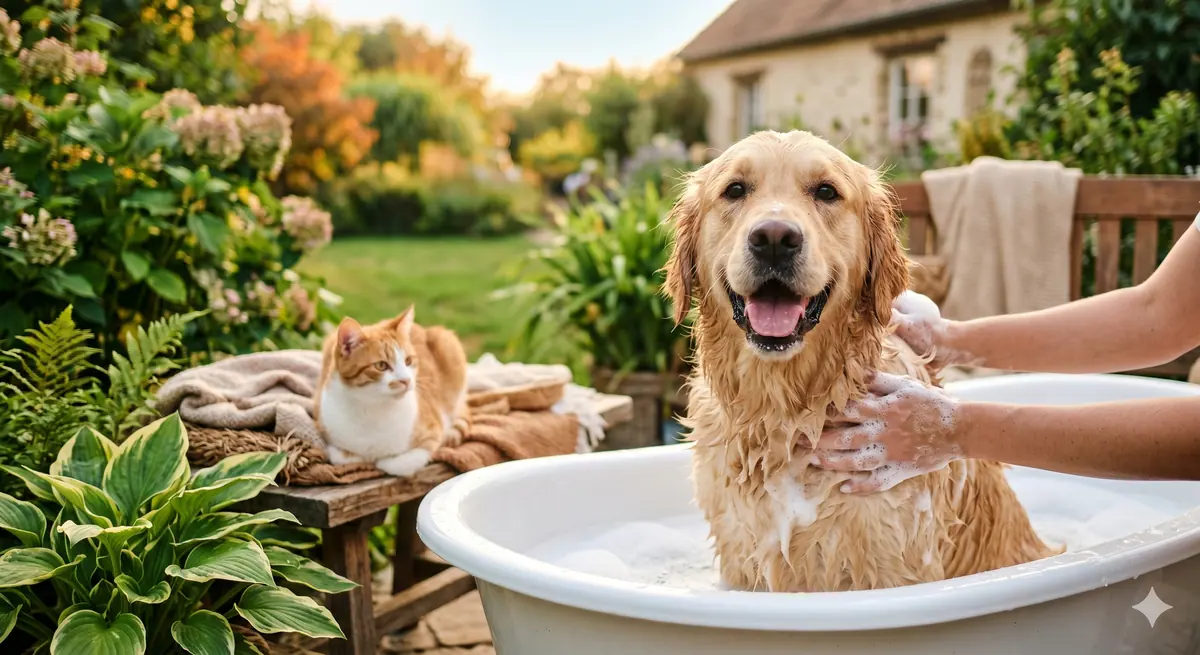
- Prepare first. Place towels, a timer, the shampoo, and a cup or sprayer within reach. Use lukewarm water and a nonslip mat.
- Brush if appropriate. Gently remove loose debris and tangles without scraping sore skin. Our dog grooming tools guide covers basic tool selection.
- Wet to the skin. Saturate the coat thoroughly while keeping water and product away from the eyes, inside the ears, nose, and mouth.
- Apply and time. Work the directed amount into affected areas and then the rest of the prescribed region. Start timing only after coverage is complete. Prevent licking.
- Rinse and dry. Rinse until the water is clear, then towel dry gently. Unless instructed otherwise, avoid a hot dryer on inflamed skin.
Wash towels after use and clean the tub and reusable grooming equipment. If ringworm is suspected or confirmed, follow the veterinarian's environmental plan because infected hairs can spread contamination. Keep bath time calm and reward cooperation. Browse the Livehappypet blog for more everyday care guides, while remembering that grooming accessories do not replace medical care.
Safety and when to call a veterinarian
Stop, rinse thoroughly, and contact a veterinarian if bathing causes marked redness, swelling, hives, breathing difficulty, weakness, vomiting, or a sudden increase in pain or itching. Urgent care is appropriate for breathing trouble, facial swelling, collapse, extensive open wounds, or rapidly spreading painful skin. If product is swallowed or gets into an eye, follow the label and call your veterinary clinic or an animal poison service promptly.
Schedule an exam for persistent odor or itch, hair loss, oozing, pus, crusting, bleeding, ear pain, repeated infections, or no improvement on the expected timeline. Repeated self-treatment can mask a bacterial infection or an underlying allergy. VCA's information on allergies in dogs shows why controlling secondary infection may be only one part of a broader plan.
Use one medicated topical plan at a time unless the veterinarian approves combinations. Do not layer shampoo, wipes, sprays, dips, and home remedies simply because each is sold for skin care. Record the product, lot number, when it was used, and any reaction. The FDA's Animal Health Literacy resources can help owners find reliable guidance on animal products and reporting concerns.
Reducing recurrence and supporting skin health
Recurring yeast often means that a favorable skin environment or underlying condition remains. Allergic skin disease, moisture trapped in folds, excess oil, hormonal disease, or prolonged medication effects may contribute. A veterinarian may repeat cytology, adjust topical care, investigate allergy, or recommend additional tests rather than simply increasing shampoo use.
At home, dry skin folds and paws after swimming, keep bedding clean and dry, and follow a sensible grooming routine. Do not overbrush inflamed areas. Clean tools between dogs and never share them during a suspected contagious infection. Regular oral care matters too, but use dedicated products from our dog toothbrush guide, not medicated skin shampoo.
Keep a brief log of bathing dates, contact time, odor, itch, lesions, and medications. Photos taken in similar lighting can help the veterinary team judge change. Finish the prescribed course and attend rechecks even when the coat looks better, especially with ringworm, chronic disease, or repeated flare-ups. If you need general pet supplies while following the treatment plan, visit the dog shop, but choose medicated products through your veterinarian.
Frequently asked questions
What is antifungal dog shampoo used for?
Antifungal dog shampoo is used as topical care for certain veterinarian-diagnosed fungal or yeast skin problems. Its active ingredients and cleansing action reduce organisms and remove oil or debris. It does not address every cause of itching, odor, redness, or hair loss.
How often should I bathe my dog with antifungal shampoo?
Use the frequency on the product label or prescribed by your veterinarian. Schedules vary with the diagnosis, formulation, and response. Bathing more often than directed can dry or irritate skin, while bathing too rarely may make the plan less effective.
How long should antifungal shampoo stay on a dog?
Follow the label or veterinary directions exactly. Some medicated shampoos require about ten minutes of skin contact, but products differ. Time the contact period after the shampoo covers the prescribed area, prevent licking, and then rinse completely.
Can I use human antifungal shampoo on my dog?
Do not use a human antifungal or dandruff shampoo unless your veterinarian specifically directs it. Human formulations may contain unsuitable concentrations or other ingredients, and dogs can ingest residue while grooming. Choose a canine-labeled product that fits the diagnosis.
Will antifungal shampoo treat ringworm in dogs?
A veterinarian may include a medicated shampoo in a ringworm plan, but shampoo alone is not always sufficient. Ringworm can spread to animals and people and often requires testing, additional medication, environmental cleaning, and follow-up to confirm control.
Can antifungal and antibacterial dog shampoo be combined?
Some canine products are already formulated with antifungal and antiseptic active ingredients, such as miconazole and chlorhexidine. Use a combination only when it matches veterinary findings. Do not mix separate shampoos or topical treatments unless your veterinarian approves the combination.
When should an itchy dog see a veterinarian?
Arrange veterinary care for persistent or severe itching, odor, hair loss, crusts, discharge, open sores, pain, ear problems, repeated flare-ups, or poor response to shampoo. Seek urgent care for breathing trouble, facial swelling, collapse, or rapidly worsening painful skin.
A practical next step
The best antifungal dog shampoo is not a universal brand or ingredient. It is the canine-safe formulation that matches a confirmed problem and comes with clear directions your dog can tolerate. Begin with veterinary evaluation, use the prescribed contact time and schedule, rinse thoroughly, and monitor the response. Keep brief notes on odor, redness, scratching, and tolerance so your veterinarian can judge progress accurately. That careful process protects your dog's comfort while reducing the chance that a different or underlying condition goes untreated.