The day you bring a new puppy home ranks among life's most joyful moments - and one of the most overwhelming. Between the excitement, the puppy breath, and the sudden reality that a small animal is now depending on you entirely, it's easy to realize mid-afternoon that you're missing half the things you need. That's exactly what this new puppy essentials checklist is here to prevent.
We've put together a comprehensive guide covering everything from puppy-proofing your home and choosing the right food to setting up the perfect sleep space and building a foundation for lifelong training. Whether you're a first-time puppy parent or you just want to make sure you haven't forgotten anything, this checklist covers all 30+ essentials your new pup will need in those critical first weeks and months.
This article is for general informational purposes only and is not a substitute for professional veterinary advice, diagnosis, or treatment. Always consult your veterinarian about any health concerns, dietary changes, medication, or product safety questions specific to your pet. If your pet shows signs of distress, illness, or injury, contact a licensed veterinarian or emergency animal hospital immediately.
Before Your Puppy Comes Home
The work starts before your puppy even sets a paw in your home. A little preparation goes a long way toward making the transition smooth for both of you - and preventing the kind of panicked shopping trips that happen at 10 PM when you realize you forgot something important.
We've looked at a lot of puppy essentials options over the past year, and our short answer is that the differences between quality tiers matter more than the price tags suggest. We unpack how to read those differences below.
For breed-specific recommendations, see our new kitten essentials picks.
Puppy-Proofing Your Home
Puppies explore the world with their mouths, which means they will chew, swallow, or destroy anything within reach. Get down on your hands and knees and look at your home from a puppy's-eye view. You'll be surprised what hazards appear at that level.
Secure or bundle all electrical cords - a chewed power cord is both a fire hazard and a severe shock risk. Store household chemicals, medications, and cleaning supplies in cabinets with childproof locks. Remove or elevate any toxic houseplants (the ASPCA maintains a comprehensive list of plants toxic to dogs). Block staircases with baby gates, especially for small breeds or puppies under 4 months whose joints are still developing.
Set up a designated puppy zone - a playpen or exercise pen in a low-traffic area of your home where your puppy can safely explore without constant supervision. This becomes your secret weapon during the first few weeks.
The five most common household puppy hazards are electrical cords, small objects that can be swallowed, toxic foods (chocolate, grapes, xylitol), cleaning products, and unsecured trash cans. Deal with all five before bringing your puppy home.
Schedule a Vet Appointment
Book your first veterinary appointment before your puppy arrives, ideally for within 48–72 hours of bringing them home. Early exams catch health issues that breeders or shelters may have missed, establish a vaccination schedule, and start your puppy on parasite prevention. According to the American Kennel Club, puppies typically need a series of core vaccinations starting at 6–8 weeks, with boosters every 3–4 weeks until 16 weeks of age.
Ask your vet about microchipping at this first visit if it hasn't already been done. Microchipping is a permanent form of identification and takes just seconds to complete.
Family Preparation
If you have children or other pets, prepare them before the puppy arrives. Teach children how to properly hold and interact with a young puppy (always seated, never reaching overhead). Introduce resident pets slowly - keep the puppy and existing dog or cat in separate areas initially, swapping bedding so they can get used to each other's scent before a face-to-face meeting.
Establish house rules as a family before day one: which rooms are off-limits, who is responsible for feeding and walks, and what training commands you'll all use consistently. Inconsistency is one of the top reasons puppies develop behavioral problems, so alignment early makes a huge difference.
Feeding Essentials
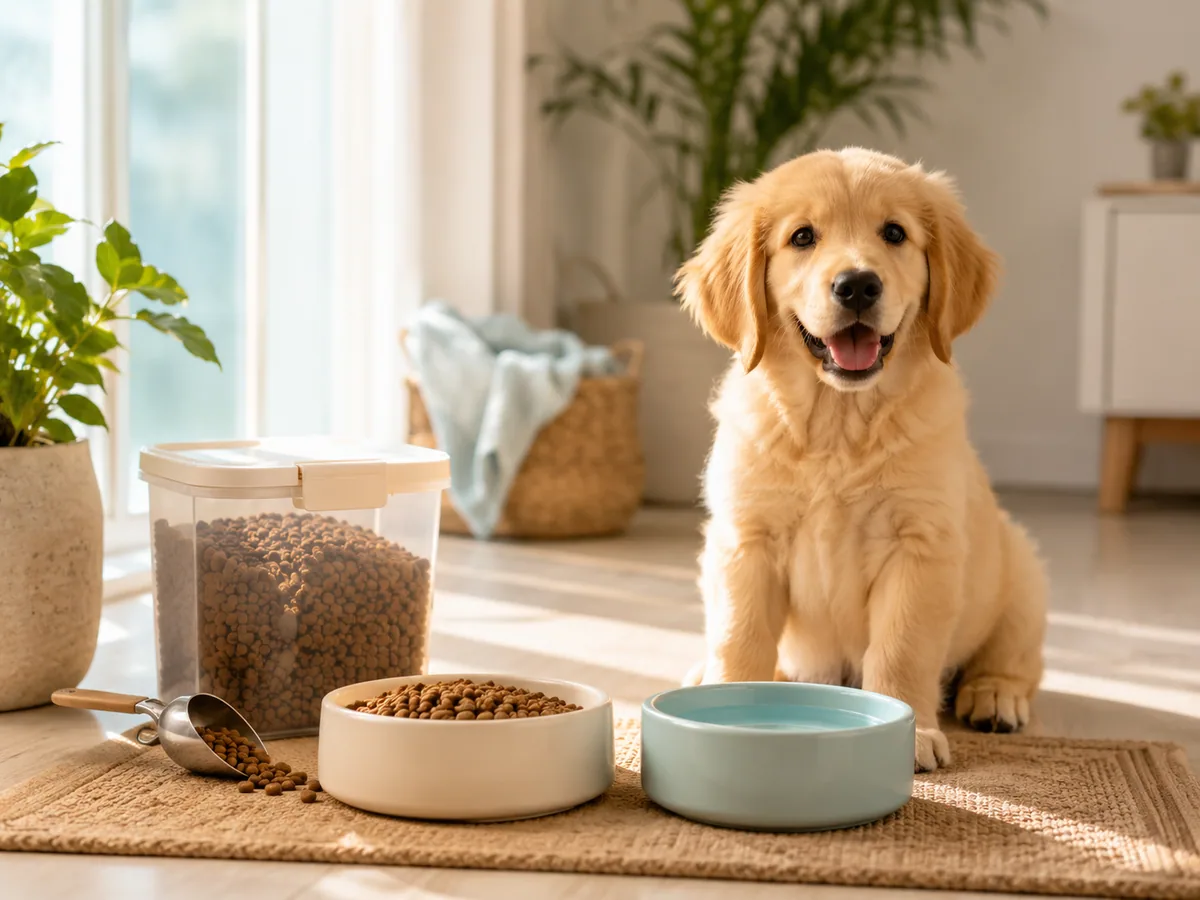
Good nutrition is the foundation of a healthy puppy. Getting the feeding setup right from day one prevents everything from digestive upset to resource guarding behaviors that can develop if mealtimes feel chaotic or stressful.
Food and Water Bowls
Choose stainless steel or ceramic bowls - both are easy to clean, dishwasher safe, and don't harbor bacteria the way plastic bowls can. Avoid deep, narrow bowls for flat-faced (brachycephalic) breeds like Bulldogs or Pugs, who do better with wide, shallow dishes. Size the bowl to your puppy: it should hold a full meal without overflowing, but not be so large that the puppy has to strain to reach the food.
Honestly, when readers ask us how to shop for puppy essentials, we tell them to ignore marketing language and focus on the spec sheet. We've found that filter cuts most regret purchases.
A non-slip mat under the bowls saves your floors and prevents sliding that can annoy or stress puppies during mealtimes. Elevated stands are popular but aren't recommended for most puppies - research suggests they may increase bloat risk in large breeds.
Choosing Puppy Food
Ask the breeder or shelter what food your puppy has been eating and continue with that food for at least the first week. Switching foods abruptly causes digestive upset. When you're ready to transition, do so gradually over 7–10 days, mixing increasing amounts of the new food with decreasing amounts of the old.
Look for food with a named protein (chicken, beef, lamb, salmon) as the first ingredient. The label should say "complete and balanced for puppies" or "all life stages" and meet AAFCO nutritional standards. Large-breed puppies (expected adult weight over 50 lbs) specifically need food formulated for large breeds, as regular puppy food can cause their bones to grow too quickly. Small-breed puppies benefit from food with smaller kibble sizes and higher caloric density.
Puppies have small stomachs and fast metabolisms. Most need to eat 3–4 times per day up to 12 weeks, then 3 times per day up to 6 months, then transitioning to 2 meals per day. Free-feeding (leaving food out all day) makes house training significantly harder because you can't predict when they need to go outside.
Slow Feeder Bowl
Many puppies eat too fast, gulping down food with barely a chew. This causes regurgitation, bloating, and discomfort. A slow feeder bowl - with raised ridges or mazes that make the puppy work for each bite - can reduce eating speed by up to 10 times. Slow feeders also provide a small amount of mental stimulation at mealtimes, which is a bonus for high-energy breeds.
Training Treats
Stock up on small, soft training treats before your puppy arrives. Treats should be pea-sized or smaller - large treats add up in calories quickly with a puppy who's getting multiple training sessions per day. Soft treats are preferred because they can be consumed quickly, keeping training momentum going without long chewing breaks. Keep treats under 10% of your puppy's daily caloric intake.
Sleep & Comfort Essentials
Sleep is when puppies grow and consolidate what they've learned. Young puppies need 16–20 hours of sleep per day - dramatically more than adult dogs. Setting up the right sleep environment from the start shapes your puppy's sense of security and directly impacts how quickly they settle into their new home.
The Crate
A crate is the single most important purchase you'll make for a new puppy. Used correctly, it becomes your puppy's safe haven - a den where they feel secure, not a punishment. The crate also dramatically speeds up house training because puppies instinctively avoid soiling their sleeping area.
Our best toys for old dogs guide is tailored to the unique needs of specific breeds.
Choose a crate sized so your puppy can stand, turn around, and lie down - no bigger. If you buy a crate sized for your dog's adult weight, use the included divider panel to reduce the space while they're young. Wire crates allow for maximum airflow and easy cleaning. Plastic travel crates feel more den-like, which some puppies prefer. Heavy fabric crates are not recommended for young puppies who may chew through them.
For more guidance on choosing and sizing a sleeping setup, see our dedicated guide to the best dog beds for every breed and life stage.
Crate Training Tips
Never push your puppy into the crate or use it as punishment. Instead, make it inviting: put a piece of worn clothing inside so it smells like you, toss treats just inside the door, and feed meals near the crate so your puppy forms positive associations. Gradually extend the time the door is closed, always pairing crate time with something positive. Most puppies accept their crate within a week when the introduction is done patiently.
Expect crying on the first few nights - it's normal. Resist the urge to open the crate door every time your puppy vocalizes, as this teaches them that crying equals freedom. Instead, place the crate in your bedroom so the puppy can hear and smell you, which significantly reduces nighttime anxiety.
Puppy Bed and Blankets
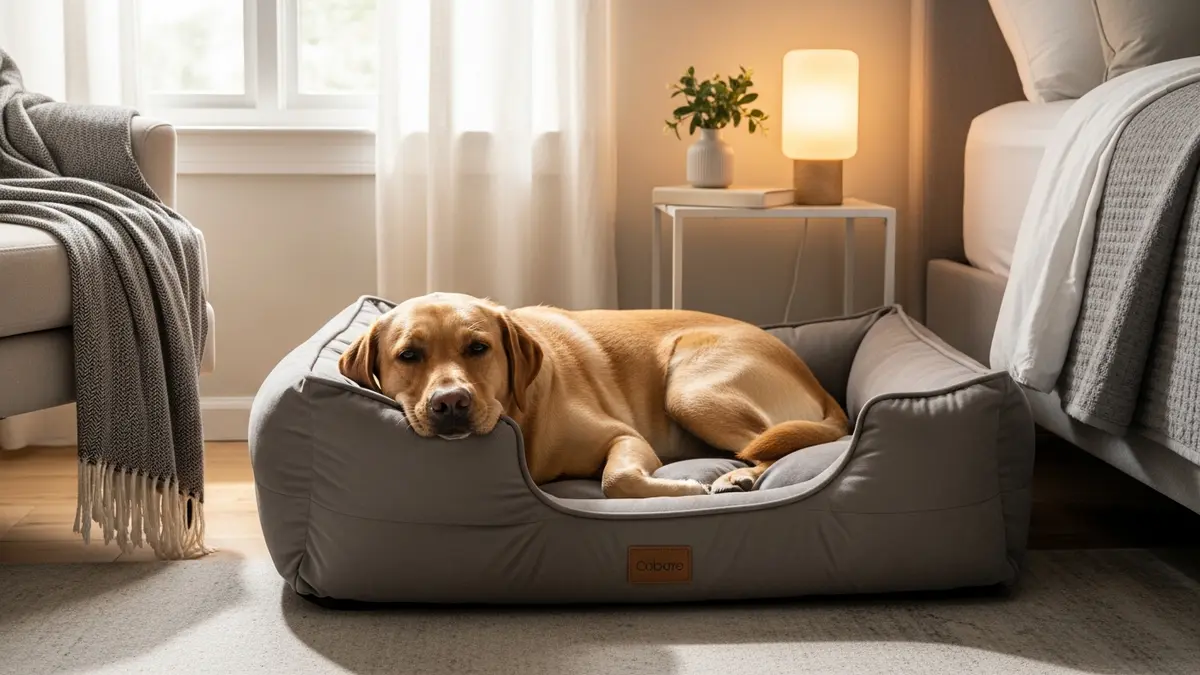
Place a soft bed or thick blanket inside the crate for comfort. Choose washable materials - accidents will happen. Avoid beds with loose fill that can be shredded and swallowed; opt for flat mats or beds with removable, machine-washable covers instead. A ticking clock wrapped in a towel can help puppies feel less alone by mimicking their mother's heartbeat.
Keep a spare blanket in your car - the first car ride home can be stressful, and a familiar-smelling blanket from the breeder's facility goes a long way toward calming a nervous pup.
Play & Enrichment Essentials
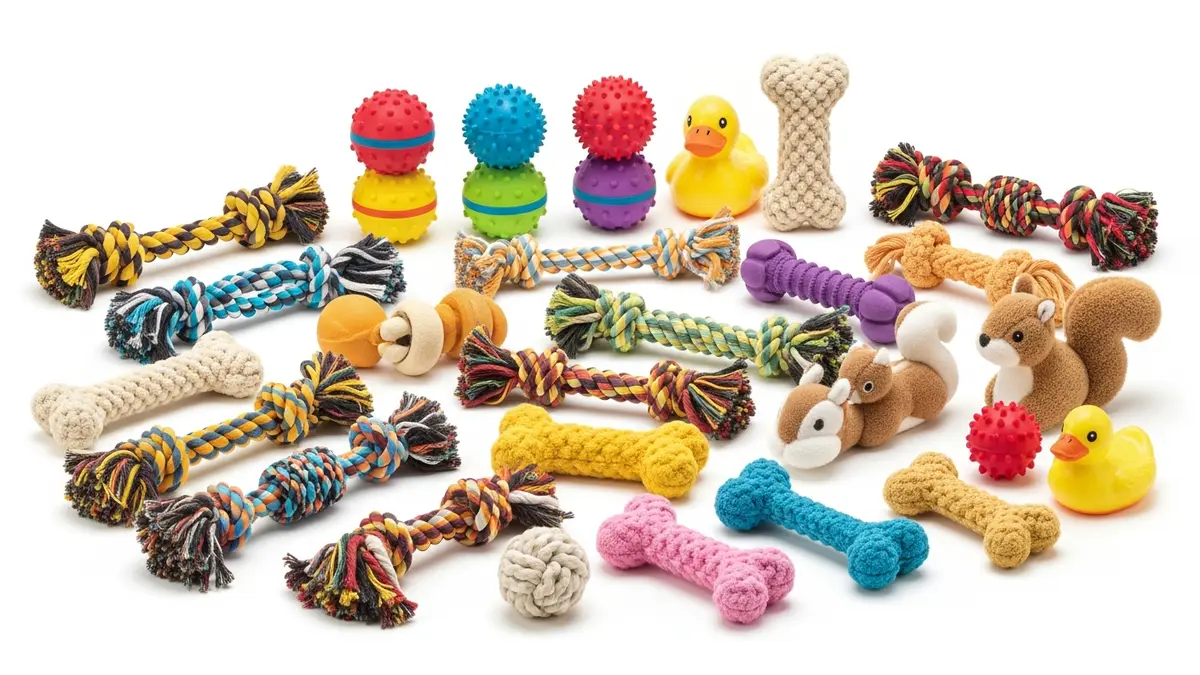
Play isn't optional for puppies - it's essential for physical development, social skills, and emotional wellbeing. The right toys at the right developmental stage help your puppy learn appropriate bite inhibition, keep their minds busy, and build the bond between you. Explore our full collection of dog toys and accessories to find the right match for your breed and age.
Teething Toys
Between 3 and 6 months, your puppy will lose all 28 baby teeth and grow 42 adult teeth. This process is painful, and puppies chew intensely to relieve the discomfort. Without appropriate teething toys, they'll redirect to your furniture, shoes, and hands.
Rubber teething rings and chew toys designed specifically for puppies offer the right amount of resistance - enough to feel satisfying, soft enough not to damage developing adult teeth. Freezing a damp washcloth or a rubber teething toy provides extra soothing relief. Avoid hard nylon chews or real bones for young puppies; their teeth are too fragile. Check out our complete roundup of the best dog toys for every play style for age-specific recommendations.
Soft Plush Toys
Soft toys serve a comfort function as well as a play function. Many puppies carry a soft toy as a transitional object, especially in the first few weeks in their new home. Choose plush toys without small parts (button eyes, plastic noses) that can be chewed off and swallowed. Machine-washable options make life easier.
Supervise your puppy with plush toys initially - some puppies disembowel stuffed animals immediately and may ingest the filling. If your puppy tends to destroy stuffed toys, look for ones with minimal stuffing or with a squeaker embedded in a rubber casing.
First Fetch Toy
Fetch is one of the most efficient ways to exercise a high-energy puppy in a small space. Start with a small, soft ball - nothing hard or heavy enough to damage puppy teeth. Tennis balls are popular but can be slightly abrasive on puppy enamel with prolonged chewing; use them for active fetch sessions rather than as chew toys.
Don't worry if your puppy doesn't understand fetch immediately. Most puppies learn the game within a few weeks of gentle, patient sessions. The goal at this stage is just to build positive associations with playing together, not to exhaust your puppy with intense exercise (puppy joints aren't ready for that until growth plates close around 12–18 months depending on breed size).
Puzzle Feeders
Mental enrichment is just as tiring as physical exercise for puppies. A 15-minute puzzle session can be more exhausting than a 30-minute walk, because the puppy's brain is working at full capacity. Start with beginner-level puzzle feeders - ones where the puppy slides or lifts pieces to reveal hidden kibble. As your puppy's problem-solving skills develop, introduce more complex puzzles.
Lick mats are another excellent enrichment tool. Spread a thin layer of peanut butter, plain yogurt, or wet food on the mat and let your puppy lick it clean. The repetitive licking motion has a proven calming effect, making lick mats perfect for settling an overstimulated puppy or keeping them occupied during grooming sessions.
Toy Starter Kit: What to Have on Day One
- 2 rubber teething toys (can be frozen for extra relief)
- 1 soft plush toy for comfort
- 1 small fetch ball
- 1 beginner puzzle feeder or lick mat
- 1 tug toy for interactive play and bite inhibition training
Health & Grooming Essentials
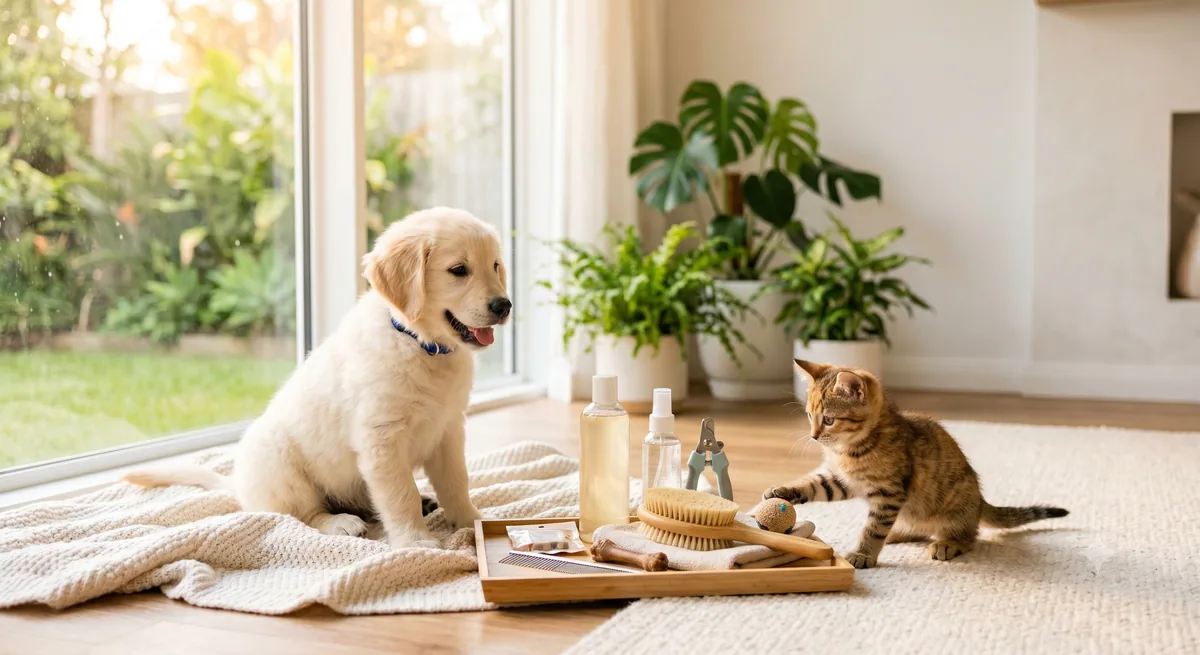
Starting grooming routines early is one of the best things you can do for your puppy's long-term wellbeing. Puppies that are handled regularly, touched on their paws, ears, and mouth, and introduced to grooming tools early accept these activities as normal for life. Adult dogs that were never groomed as puppies often find the process stressful and can become reactive or difficult to handle at the grooming salon or vet.
Brush
Even shorthaired breeds benefit from regular brushing - it removes loose hair, distributes skin oils, and gives you an opportunity to check for lumps, parasites, or skin irritations. Longhaired and double-coated breeds need daily brushing to prevent matting. Choose a brush appropriate for your puppy's coat type: slicker brushes for most coat types, deshedding tools for heavy-shedding breeds, and fine-toothed combs for silky coats.
Brush sessions should be brief (2–5 minutes) and positive. Pair them with treats and praise so your puppy grows to enjoy, or at least tolerate, the process.
Different breeds have different needs. Our best interactive dog toys for small breeds guide helps you choose.
Nail Clippers
Puppy nails grow fast and can scratch you, your children, and your furniture. More importantly, overgrown nails alter the way a puppy walks, potentially causing joint problems over time. Start touching your puppy's paws from day one and gradually introduce the clippers before you actually use them. Trim just the tips of the nails to avoid cutting the quick (the blood vessel inside the nail), and always have styptic powder on hand in case of accidental cuts.
If nail trimming feels daunting, ask your vet to demonstrate the first time, or use a scratch board (a piece of sandpaper glued to a board that the puppy learns to scratch on) as a nail-filing alternative.
Toothbrush and Puppy Toothpaste
Dental disease is the most common health problem in adult dogs, affecting over 80% of dogs by age 3 according to the American Veterinary Medical Association. Daily tooth brushing is the single most effective way to prevent it - and puppies who learn to accept toothbrushing early never develop the resistance that makes it a battle with adult dogs.
Use a soft-bristled puppy toothbrush or a finger brush and puppy-specific enzymatic toothpaste in a flavor your pup enjoys (poultry and beef flavors are common). Never use human toothpaste - it contains xylitol, which is toxic to dogs. Start by letting your puppy lick toothpaste off your finger, then gradually introduce the brush motion over several sessions.
Puppy Shampoo
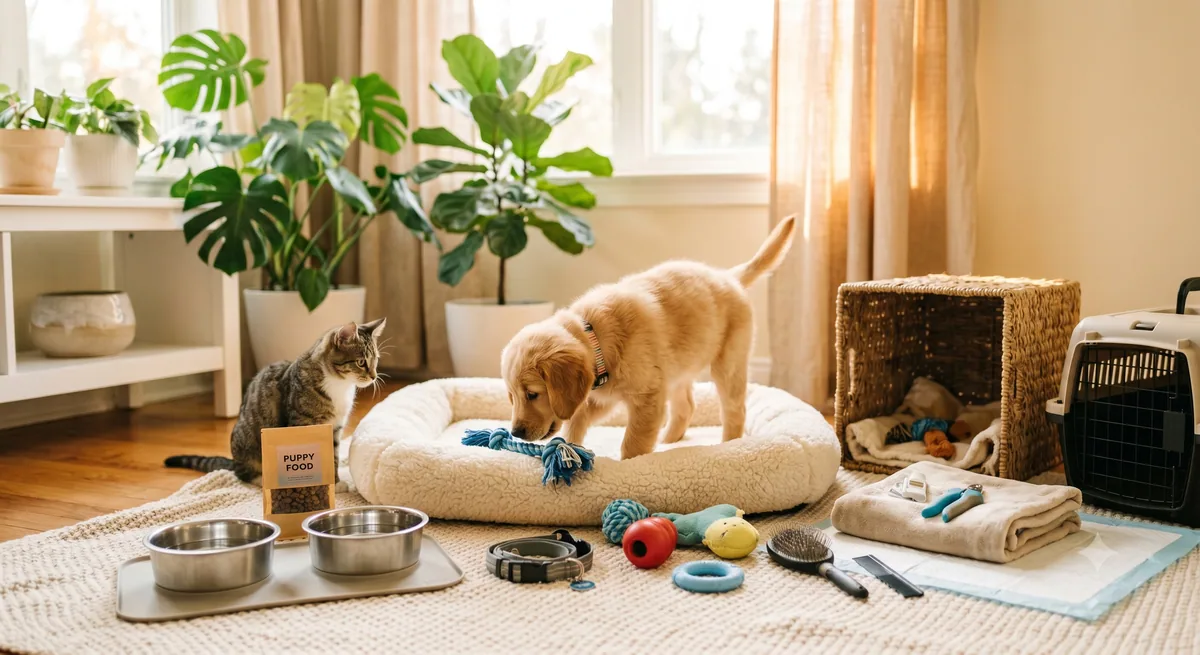
Keep a gentle, puppy-formulated shampoo on hand for inevitable muddy adventures and accidents. Human shampoo and adult dog shampoo can irritate a puppy's more sensitive skin. Look for a tearless formula for the first baths - splashing water in puppies' faces is inevitable, and a tearless formula prevents stinging that can make puppies dread bath time.
Basic First Aid Kit
A basic pet first aid kit should include gauze, adhesive tape, cotton balls, antiseptic wipes, styptic powder, digital thermometer, and the number for your vet and local emergency animal hospital. Keep it somewhere accessible. You won't need it often, but the one time you do, you'll be very glad it's there.
Training Essentials
The training foundation you establish in your puppy's first few months shapes their behavior for the next decade or more. Puppies are remarkably receptive to learning - their socialization window (8–16 weeks) is when positive experiences have the most lasting impact. Getting the right equipment in place makes early training sessions more effective and more enjoyable for everyone.
Collar and ID Tag
Your puppy needs a collar with an ID tag from day one. Even indoors, accidents happen - doors get left open, gates don't latch. An ID tag with your phone number is the fastest way to get a lost puppy home. Choose a flat, breakaway safety collar for young puppies so it releases under pressure and doesn't pose a strangulation risk. Measure snugly, but leave enough room to slide two fingers underneath.
Update the ID tag immediately if your phone number or address changes. Add the tag to your keychain during any house moves so you don't forget.
Harness
For most puppies, a front-clip or Y-shaped no-pull harness is preferable to a collar for walks. Collars put pressure on the trachea and cervical spine when a puppy pulls - which puppies do constantly, especially in the first few months. A properly fitted harness distributes pressure across the chest and shoulders, which is far safer for developing bodies. Small and toy breeds are particularly prone to tracheal collapse from collar pressure.
Measure your puppy carefully and expect to buy 2–3 harnesses as they grow through their first year.
Leash
Start with a standard 4–6 foot flat nylon or leather leash. Retractable leashes are not recommended for puppies - they provide inconsistent feedback, can teach puppies to pull (since pulling extends the lead), and the thin cord poses an injury risk. Once your puppy has a solid loose-leash walking foundation, you can introduce a long line (15–30 feet) for recall training in open areas.
Treat Pouch
A clip-on treat pouch keeps rewards accessible during training sessions and walks. The speed at which you can deliver a treat matters enormously in training - a reward delivered 5 seconds after the desired behavior is dramatically less effective than one delivered within 1–2 seconds. A treat pouch eliminates fumbling through pockets and keeps training sessions flowing.
Clicker
Clicker training is one of the most scientifically validated training approaches available. The click provides a precise, consistent marker that tells your puppy exactly which behavior earned the reward. This precision accelerates learning and reduces confusion for both puppy and owner. Clickers are inexpensive and can be found at any pet store. Start by "charging" the clicker - clicking and immediately delivering a treat 20–30 times until your puppy's eyes light up at the sound of the click alone.
Keep training sessions short: 3–5 minutes maximum for puppies under 12 weeks, up to 10 minutes for older puppies. End every session on a success - even if that means going back to something easy the puppy already knows. Short, positive, and frequent beats long and exhausting every time.
Complete New Puppy Essentials Checklist
Use this at-a-glance reference to make sure you have everything covered before your puppy arrives. Items marked High Priority should be in place on day one; Medium can be acquired in the first week; Nice to Have are valuable additions for the first month.
| Item | Category | Priority |
|---|---|---|
| Crate with divider panel | Sleep & Safety | High Priority |
| Collar with ID tag | Safety & Training | High Priority |
| Food and water bowls | Feeding | High Priority |
| Puppy food (same brand as breeder) | Feeding | High Priority |
| Enzymatic cleaner for accidents | Housetraining | High Priority |
| Baby gate(s) | Safety | High Priority |
| Harness | Training & Walks | High Priority |
| Standard leash (4–6 ft) | Training & Walks | High Priority |
| 2 teething chew toys | Play & Enrichment | High Priority |
| Training treats (small & soft) | Training | High Priority |
| Soft puppy bed or crate mat | Sleep & Comfort | Medium |
| Slow feeder bowl | Feeding | Medium |
| Puppy shampoo | Grooming & Health | Medium |
| Soft slicker brush | Grooming | Medium |
| Nail clippers + styptic powder | Grooming & Health | Medium |
| Puppy toothbrush + toothpaste | Dental Health | Medium |
| Treat pouch | Training | Medium |
| Clicker | Training | Medium |
| Exercise pen / playpen | Safety & Confinement | Medium |
| Beginner puzzle feeder | Enrichment | Nice to Have |
| Lick mat | Enrichment & Calm | Nice to Have |
| Soft plush toy | Comfort | Nice to Have |
| Tug toy | Play & Training | Nice to Have |
| Fetch ball (small, soft) | Play | Nice to Have |
| Pet first aid kit | Health & Safety | Nice to Have |
New Puppy Week-by-Week Checklist
Having the right supplies is only half the equation. Knowing what to focus on at each stage of your puppy's development keeps you from trying to do everything at once - which usually leads to doing nothing well. Here's a week-by-week and month-by-month roadmap for the first three months.
Days 1–3: The Arrival Period
- Introduce the crate with positive associations (treats, meals nearby, your scent inside)
- Begin house training immediately - take outside every 1–2 hours and after every meal, nap, and play session
- Keep the environment calm and quiet - limit visitors, no loud gatherings
- Let your puppy explore their designated area at their own pace
- Attend first vet appointment within 48–72 hours
- Begin "handling" exercises: touch paws, ears, mouth, and tail gently with treats
Week 1–2: Building Routines
- Establish consistent feeding schedule (3–4 times per day for puppies under 12 weeks)
- Begin sleeping in the crate overnight - expect some crying, stay consistent
- Start first basic commands: "sit" and name recognition using treat luring
- Introduce the collar - let puppy wear it for short periods, always supervised
- Begin socialization: safe exposure to different sounds, surfaces, and household objects
- Introduce the brush - short, positive sessions with treats
Week 2–4 (First Month): Foundation Training
- Add more commands: "stay," "come," "leave it," "down"
- Begin loose-leash walking practice in the backyard or driveway (before vaccinations are complete)
- Start bite inhibition training - yelp and pause play when teeth touch skin
- Introduce puzzle feeders and rotate toys to prevent boredom
- Schedule second vet appointment / booster vaccinations
- Ask your vet about puppy socialization classes (usually start accepting pups after first boosters)
Month 2–3: Expanding the World
- Begin outdoor walks once vaccinations allow (check with vet)
- Enroll in puppy kindergarten or positive-reinforcement training class
- Broaden socialization: new people, gentle dogs, different environments
- Continue daily tooth brushing and grooming routines
- Begin teaching calm greeting behaviors (no jumping) consistently
- Introduce more complex puzzle feeders as problem-solving skills develop
- Schedule spay/neuter consultation with vet if applicable
At every stage, remember that consistency and patience are more important than any individual piece of equipment. The gear in this guide sets the stage - but the real work is in the daily repetition of positive experiences, clear boundaries, and the bond you're building one interaction at a time. For more gift ideas and accessories for new puppy parents, see our curated list of best gifts for dog owners.
Frequently Asked Questions
Should I consult a veterinarian about my pet's play and enrichment needs?
Yes, especially if your pet shows signs of anxiety, sudden behavior changes, or destructive habits that may indicate a medical issue. A licensed veterinarian or veterinary behaviorist can rule out pain, dental problems, or cognitive decline before you adjust toys or routines. The guidance in this article is educational, not a substitute for professional veterinary advice.
Conclusion
Picking the right option for your puppy is less about finding a single "best" product and more about matching the choice to your puppy's size, age, play style, and your home environment. The recommendations above cover the main scenarios most pet owners run into, so use them as a checklist when comparing options.
Start with one or two changes, watch how your puppy responds for a week or two, then iterate. Pets show you very quickly what works for them. If a toy, feeder, or routine is ignored or causes stress, swap it out without hesitation. The goal is a happier, healthier puppy every day.