Your dog spends between 12 and 14 hours asleep each day. That's more than half their life curled up, sprawled out, or burrowed into whatever comfortable surface they can find - and if that surface is your couch or the cold hardwood floor, both of you probably know something better is needed. Finding the best dog bed for your pup isn't just about keeping them off the furniture; it's a genuine investment in their long-term health, comfort, and happiness.
We've researched dozens of options and consulted veterinary guidance to bring you the 15 best dog beds across every category - from ultra-durable orthopedic foam to anxiety-calming donut beds. Whether you have a 5-pound Chihuahua or a 130-pound Great Dane, a restless senior, or a bouncy puppy, there's a perfect bed in this list. Browse the full dog accessories collection at Livehappypet for even more options.
Why Your Dog's Bed Matters More Than You Think
It's tempting to think a dog can sleep anywhere - and many do. But just because a dog can sleep on a hard floor doesn't mean they should. The surface your dog rests on has real, measurable effects on their physical and mental wellbeing.
When we evaluate dog beds for the Livehappypet readers, we focus on three things we wish more buying guides flagged: material safety, sizing accuracy, and supervision requirements. We've found those decide the buying outcome more than brand alone.
For more expert recommendations, check out our best cat bed guide.
Joint health is the most critical factor. Sleeping on hard, unsupported surfaces puts direct pressure on bony prominences - elbows, hips, shoulders, and hocks. Over time, this repeated pressure can contribute to the development of calluses, hygroma (fluid-filled swellings), and aggravated arthritis. According to the American Kennel Club's guide on canine arthritis, proper orthopedic support is one of the most effective non-pharmacological interventions for dogs with joint disease - and prevention is even better than treatment. Large and giant breeds, dogs over seven years old, and breeds genetically predisposed to hip dysplasia (Labradors, Golden Retrievers, German Shepherds) benefit most from orthopedic support starting early in life.
Sleep quality directly affects behavior and cognition. Dogs cycle through REM and non-REM sleep just as humans do. Disrupted or poor-quality sleep - caused by discomfort, inadequate temperature regulation, or feeling exposed and vulnerable - can manifest as irritability, reduced trainability, increased anxiety, and even immune suppression. Research on canine sleep architecture shows that dogs who sleep deeply and undisturbed exhibit better learning retention and lower stress hormone levels.
Anxiety and emotional security. Many dogs, particularly those with separation anxiety or a history of trauma, benefit enormously from having a defined "safe space." A bed with raised bolster walls or a deep donut shape creates an enclosed, den-like environment that mimics the instinctive comfort of a burrow. This simple design feature can meaningfully reduce nighttime restlessness and anxiety behaviors. If your dog shows signs of anxiety, pair a good bed with enrichment - check out our guide to the best dog toys for ideas.
Veterinarians consistently recommend that dogs with arthritis, hip dysplasia, or any musculoskeletal condition sleep on certified orthopedic memory foam. The foam grade matters - look for 4-inch minimum thickness with at least 1.8 lb/ft³ density for meaningful support.
Best Dog Beds by Type
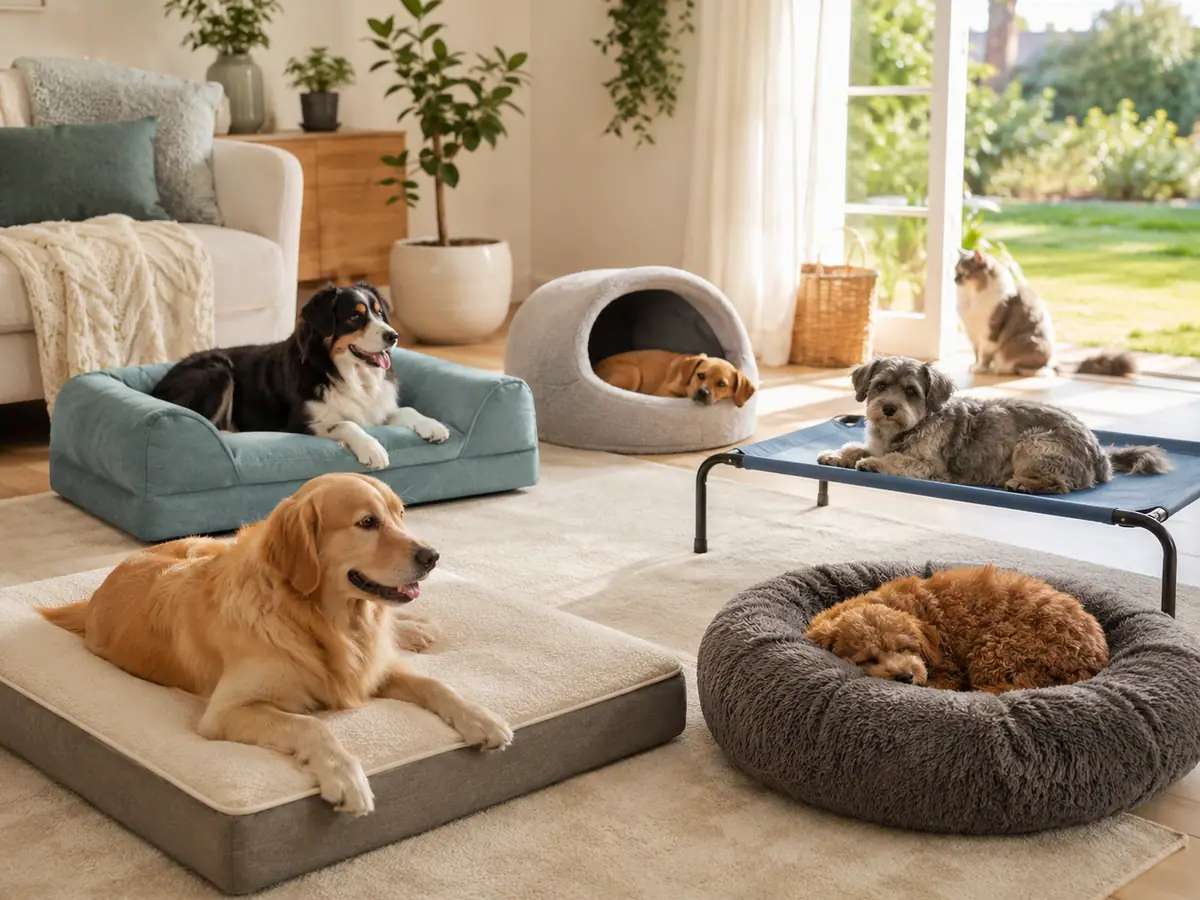
The "best" dog bed is entirely dependent on your individual dog. The picks below represent the top choice in each category, selected for quality, durability, value, and real-world performance.
Best Overall: Big Barker Orthopedic Dog Bed
Big Barker has built an exceptional reputation among large-breed owners and veterinary professionals alike, and it earns the top overall spot without question. The bed uses a proprietary three-layer American-made foam system: a supportive base, a pressure-distributing mid-layer, and a plush comfort topper - all encased in a microfiber cover that feels genuinely luxurious. What sets Big Barker apart is their 7-year guarantee that the foam will not flatten by more than 10%, backed by an independent clinical study from the University of Pennsylvania showing measurable reduction in pain, stiffness, and joint damage scores in arthritic dogs. Available in Large, XL, and Giant sizes (up to 60" x 48"), this is the bed to buy if your large-breed dog's joint health is a priority. It's pricier than competitors, but the longevity and health benefits make it excellent value.
Honestly, we've reviewed enough dog beds listings to know that the cheapest option is rarely the best value once durability is factored in. We weigh longevity in our recommendations.
Best Budget: AmazonBasics Rectangle Dog Bed
For dog owners on a tight budget, or those who just need a secondary bed for a crate or travel, the AmazonBasics Rectangle Bed delivers reliable comfort at a price that won't cause sticker shock. The bolster walls provide light head support, the polyester fiberfill is soft and plush, and the entire cover is machine washable. It won't provide orthopedic-grade joint support and will compress more quickly than premium options, but for young, healthy small-to-medium dogs it's perfectly adequate. The non-slip base keeps it in place on hard floors, and the neutral color options blend into most home décor. Replace annually for best results.
Best Orthopedic: Furhaven Orthopedic Dog Bed
Furhaven hits the sweet spot between orthopedic quality and accessible pricing, making it one of the best-selling dog beds on the market for good reason. The egg-crate foam base distributes weight across a larger surface area than flat foam, reducing concentrated pressure points on hips and elbows. The plush top provides immediate comfort while the foam underneath does the structural work. The zippered, machine-washable cover is a thoughtful touch - a feature some far more expensive beds lack. Furhaven offers the bed in an impressive array of sizes, shapes, and cover materials, including a waterproof option. For senior dogs or medium breeds who need better support than a pillow bed but whose owners aren't ready to invest in premium orthopedic pricing, this is the go-to recommendation.
Best Donut/Cuddler: Best Friends by Sheri OrthoComfort
The Best Friends by Sheri OrthoComfort Donut Bed has become one of the most recognizable dog beds for a reason: it works exceptionally well. The round, raised-wall design creates a nest that dogs instinctively want to curl into, and the ultra-soft shag faux-fur exterior triggers a calming, snuggling response that reduces anxiety. Unlike many donut beds that use plain fiberfill, the OrthoComfort version features a denser orthopedic fill in both the walls and the base, providing meaningful joint support even as your dog curls. The entire bed is machine washable and dryer safe. Available in sizes from small (23") to Jumbo (45"), it accommodates dogs up to about 100 pounds. This is consistently the top recommendation for anxious dogs, curling sleepers, and puppies who need the security of enclosed walls.
Best for Large Dogs: K9 Ballistics TUFF Elevated Dog Bed
Large and giant breeds present unique challenges for dog bed manufacturers: they're heavy, they may chew or scratch their bed, and they need genuinely robust support. The K9 Ballistics TUFF Elevated Bed solves all three problems. The powder-coated steel frame supports up to 250 pounds and won't warp or flex. The sleeping surface is made from K9 Ballistics' proprietary TUFF fabric - a ballistic nylon weave that resists chewing, scratching, and moisture. The elevated design promotes airflow underneath, which keeps large dogs significantly cooler in warmer weather and makes the bed simple to wipe clean. It's available in sizes up to 54" x 37" for truly giant breeds. For large, active, or destructive dogs who've destroyed previous beds, this is the most practical and durable choice available.
Best Cooling: Coolaroo Elevated Pet Bed
For dogs who overheat easily - thick-coated breeds, dogs in hot climates, or dogs who simply run warm - the Coolaroo Elevated Bed is purpose-built for temperature regulation. The breathable HDPE mesh sleeping surface allows air to circulate beneath and around your dog from every direction, preventing the heat buildup that plagues foam and fiberfill beds. The mesh is also naturally resistant to fleas, mold, and mildew, which makes it particularly practical for outdoor patios, garages, or mudrooms. When it gets dirty, simply hose it down and let it air dry. The powder-coated steel frame is rust-resistant. This bed won't provide the cushioned softness of a plush or foam option, but for dogs who prioritize cool air over soft padding, it's unmatched.
Best Waterproof: Frisco Plush Orthopedic Dog Bed
Waterproof beds are essential for older dogs with incontinence, dogs who are still being house-trained, or any dog who tends to track in mud and moisture. Frisco's Plush Orthopedic option threads this needle better than most: the waterproof barrier is built into the inner lining rather than the exterior cover, so the sleeping surface still feels soft and plush. Beneath the cover, a genuine memory foam base provides solid orthopedic support. The cover unzips fully and is machine washable. Frisco offers this bed in a generous range of sizes up to XXL, and the price point is competitive for what you get. For senior dogs who need both joint support and waterproofing, this is the most complete solution in its price range.
You might also enjoy our recommendations for dog toys that last long.
Best for Anxiety: Calming Shag Fur Donut Cuddler
The deep, round design of calming donut beds specifically addresses anxiety-driven sleep disruption. The raised bolster walls allow anxious dogs to rest their head and feel fully enclosed, mimicking the security of sleeping pressed against a littermate or a mother's body. The ultra-plush shag faux fur is self-warming - it reflects and retains your dog's own body heat, creating a consistently warm microenvironment that's naturally calming. The sunken center encourages the curling posture that most anxious dogs naturally prefer. When paired with other calming strategies - consistent routine, adequate enrichment from quality dog toys, and positive training - this style of bed can make a meaningful difference in overall anxiety levels. Also check our resource on dog toys for anxious and destructive chewers.
Best Travel: Kurgo Loft Dog Bed
For dogs who travel with their owners - whether camping, staying in hotels, or visiting friends - a portable, packable bed is indispensable. The Kurgo Loft Dog Bed folds completely flat for packing, unfolds quickly into a generously sized sleeping pad, and rolls up compactly with an included strap. The top surface is a high-loft fleece that provides warmth and cushioning, while the waterproof underside protects against damp ground, wet floors, or dirty surfaces. Weighing under two pounds and compressing to a manageable bundle, it fits in a large backpack or luggage. It's machine washable for easy post-trip cleanup. For the traveler dog, this is the perfect companion to a good quality home bed - check out our US shipping if you're ordering from outside the US.
Dog Bed Size Guide
Choosing the right bed size is as important as choosing the right type. A bed that's too small forces your dog into an uncomfortable sleeping position; a bed that's dramatically too large may not provide the security that dogs, especially anxious ones, prefer.
How to measure your dog: With your dog lying down in their natural sleep position, measure from the tip of their nose to the base of their tail. For dogs who sprawl out, this is your critical dimension. Add 6-12 inches to that measurement to get your minimum bed length. For dogs who curl tightly, you can use the shoulder-to-hip length as your guide instead. Also consider height - bolster walls should be tall enough for your dog to comfortably rest their head over the edge.
| Dog Weight | Bed Size | Approx. Dimensions | Example Breeds |
|---|---|---|---|
| Under 15 lbs | Small | 18" - 24" | Chihuahua, Yorkie, Pomeranian |
| 15 - 30 lbs | Medium | 24" - 30" | Beagle, Cocker Spaniel, Corgi |
| 30 - 60 lbs | Large | 30" - 40" | Labrador, Boxer, Pit Bull |
| 60 - 100 lbs | XL | 40" - 50" | German Shepherd, Rottweiler, Husky |
| 100+ lbs | XXL / Giant | 50" - 60" | Great Dane, Mastiff, Saint Bernard |
Always size up if your dog is between sizes. For puppies, measure their expected adult size rather than their current size - they'll grow into a larger bed faster than you expect, and buying a new bed every few months becomes expensive quickly.
Types of Dog Beds Explained
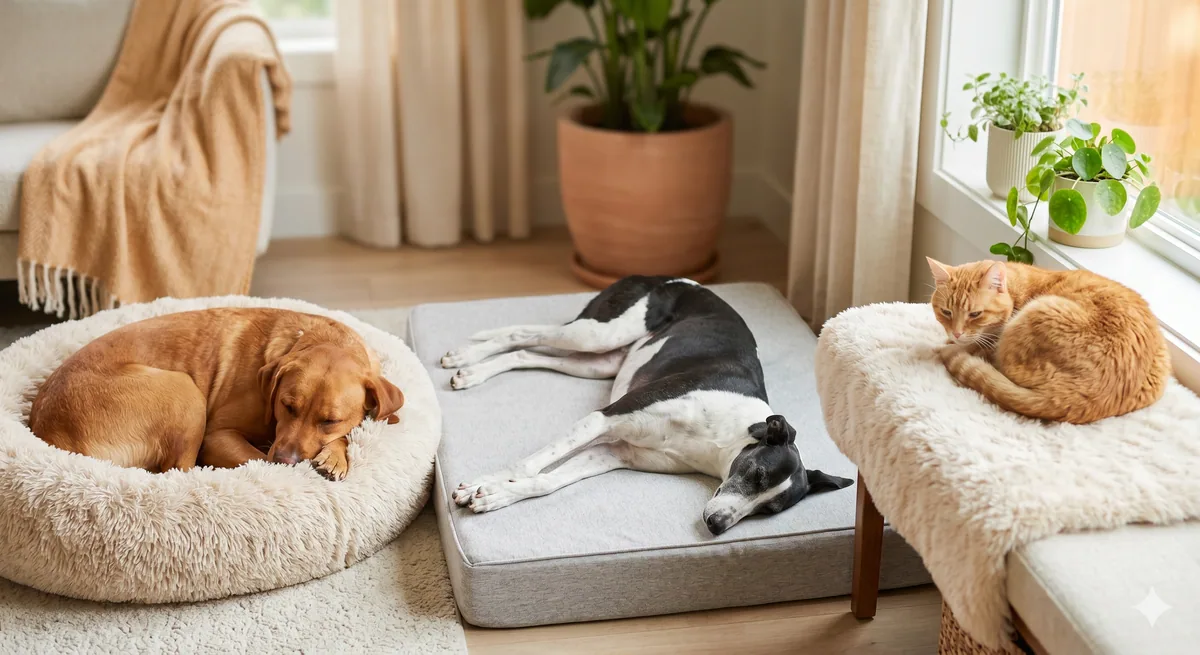
The dog bed market has expanded enormously over the past decade. Understanding what each style is designed to do helps you match the bed to your dog's actual needs rather than just picking the most visually appealing option.
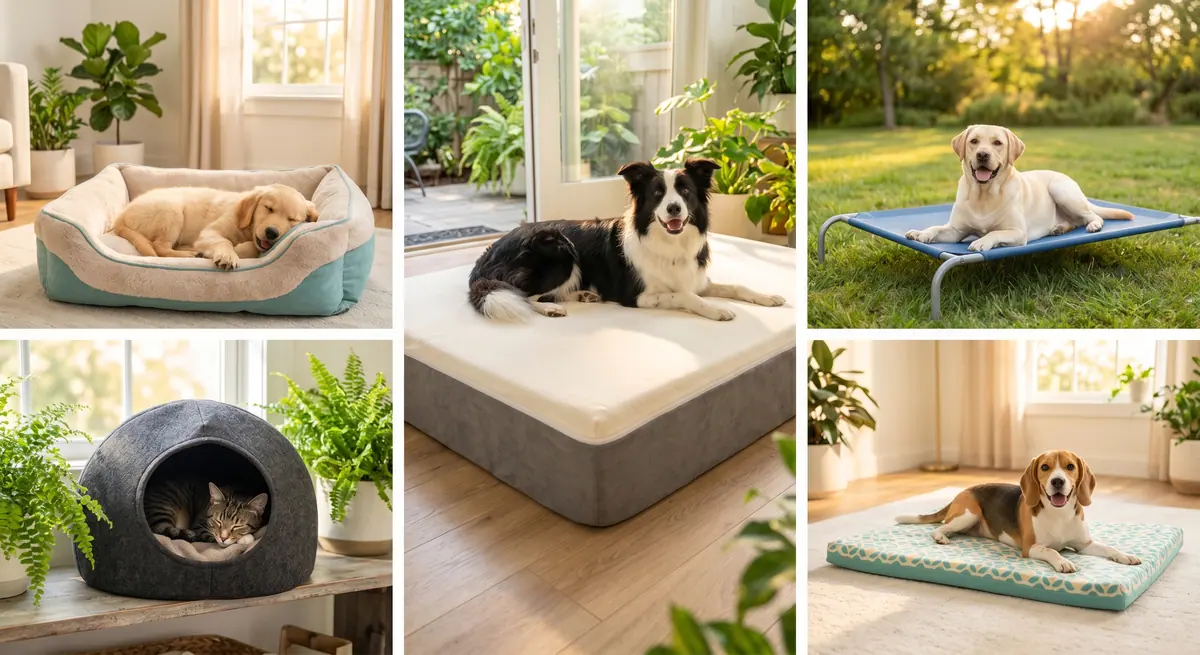
Bolster beds feature raised edges on three or four sides, creating a pillow-like border. Dogs that like to rest their heads on a raised surface or lean against a wall while sleeping thrive on bolster designs. They provide light joint support and a sense of security without the full enclosure of a donut bed.
Donut / cuddler beds are fully round with deep, enclosed sides that form a nest shape. These are designed for dogs who curl tightly when sleeping and are especially effective for anxious dogs. The enclosed design reduces environmental stimulation and promotes deeper, more restful sleep.
Flat mat / pillow beds are the simplest style: a flat, padded rectangle or oval. They work well for dogs who sprawl completely flat or change positions frequently during the night. They're easy to move between rooms and typically the most affordable category. Quality varies enormously - avoid cheap fiberfill options that compress after a few weeks.
Elevated / raised beds feature a suspended mesh or fabric surface on a raised frame. They're excellent for cooling, outdoor use, and dogs who prefer a firm sleeping surface. They also reduce exposure to cold floors in winter and hot floors in summer. Particularly well-suited for large breeds and dogs with skin conditions that benefit from better airflow.
Orthopedic beds are defined by their foam core rather than their shape - they can be flat, bolster, or any other style. True orthopedic beds use high-density memory foam, egg-crate foam, or specialty foam blends engineered to distribute body weight and reduce pressure on joints. According to the American Veterinary Medical Association, orthopedic support is particularly important for dogs with arthritis, hip dysplasia, or any degenerative joint condition. Avoid beds labeled "orthopedic" that use only fiberfill - this is a marketing term with no regulatory standard.
Cave / hooded beds feature a partial or full cover that creates a completely enclosed space. These are ideal for small breeds and dogs who love to burrow under blankets. The enclosed environment is naturally calming and particularly popular with Dachshunds, Terriers, and other tunnel-oriented breeds.
For related picks, take a look at our best dog toys roundup.
How to Choose Based on Your Dog's Sleep Style
Every dog has a distinct sleep personality. Observing how your dog naturally chooses to sleep - before they've been trained to use a bed - is the most reliable guide to which style they'll actually use and love.
The Sprawler
Completely flat on their side or stomach, legs extended, taking up maximum space. Often a sign of deep relaxation and comfort. Sprawlers need large flat surfaces and will feel restricted by high bolster walls.
Best Match: Flat mat or XL orthopedic padThe Curler
Tightly curled in a ball, nose near tail. This is a warmth-conserving and protective posture - common in dogs who feel slightly anxious or cold. Curlers love deep, round beds that hold their shape around them.
Best Match: Donut or cuddler bedThe Leaner
Always pressed against a wall, sofa edge, or against you. Leaners crave the sensation of contact along their back. They'll naturally gravitate to beds with raised bolster sides they can press against.
Best Match: Bolster or L-shaped bolster bedThe Burrower
Digs at the bed surface, pushes under blankets, and tries to tunnel into corners. A natural instinct in terriers and dachshunds. Burrowers need beds with materials they can move around, or cave-style beds with a built-in hood.
Best Match: Cave bed or hooded cuddlerSome dogs display hybrid behaviors - a dog might curl at night but sprawl during afternoon naps. If you're unsure which style dominates, observe your dog for a few days before committing to a bed style. You can also check out our full shop to compare multiple styles side by side, or visit the About page to learn more about how we select and test the products we recommend.
How to Clean and Maintain Dog Beds
Even the best dog bed becomes a health hazard if not properly maintained. Dog beds accumulate dead skin cells, oils, pet dander, bacteria, dust mites, and outdoor contaminants remarkably quickly - all of which can trigger or worsen allergies in both dogs and humans. A consistent cleaning routine extends the life of the bed and keeps your dog sleeping on a genuinely clean surface.
Weekly maintenance: Shake out or vacuum the bed surface at least once a week to remove loose hair, dirt, and debris. A lint roller or pet hair remover tool works well between vacuumings. This prevents buildup from becoming embedded in the fabric and makes full washes more effective.
Monthly washing: Most dog bed covers should be machine washed at minimum once a month. Use a pet-safe, fragrance-free detergent - heavily scented products can be irritating to dogs' sensitive noses and may discourage them from using the bed. Wash on a gentle cycle with warm or cold water, and check the label for specific temperature recommendations.
Foam inserts: Never put foam inserts in the washing machine or dryer - the agitation and heat will break down the foam structure. Spot clean with mild soap and a damp cloth, or fill a bathtub with cool water and gently hand-wash if the foam is heavily soiled. Squeeze (don't wring) out excess water and allow the foam to air dry completely in a well-ventilated space - this typically takes 24-48 hours. Reassembling with even slightly damp foam will cause mold growth.
Odor management: Baking soda is your best friend for between-wash deodorizing. Sprinkle generously over the bed surface, allow it to sit for 15-20 minutes, then vacuum thoroughly. For persistent odors, an enzymatic pet odor spray can be effective - apply, allow to dry fully, and air out before your dog uses the bed.
When to replace: A bed's foam should spring back when pressed and return to its original shape. If you press into the foam and it stays compressed, or if there's a visible body-shaped impression that doesn't recover, the support is gone and the bed should be replaced. Most fiberfill beds last 6-12 months; quality orthopedic foam beds can last 2-4 years. For dogs with joint conditions, don't wait until the foam is completely flattened - replace proactively to maintain joint health. If you're looking for replacement options, our contact page is always available for product recommendations tailored to your dog's specific needs.
Set a recurring calendar reminder for monthly bed washing. Dogs with allergies, skin conditions, or heavy outdoor activity may need washing every 2 weeks. If your dog has been ill, wash the bed immediately after recovery to eliminate any lingering pathogens.
Conclusion
Picking the right option for your dog is less about finding a single "best" product and more about matching the choice to your dog's size, age, play style, and your home environment. The recommendations above cover the main scenarios most pet owners run into, so use them as a checklist when comparing options.
Start with one or two changes, watch how your dog responds for a week or two, then iterate. Pets show you very quickly what works for them. If a toy, feeder, or routine is ignored or causes stress, swap it out without hesitation. The goal is a happier, healthier dog every day.
Frequently Asked Questions
Should I consult a veterinarian about my pet's play and enrichment needs?
Yes, especially if your pet shows signs of anxiety, sudden behavior changes, or destructive habits that may indicate a medical issue. A licensed veterinarian or veterinary behaviorist can rule out pain, dental problems, or cognitive decline before you adjust toys or routines. The guidance in this article is educational, not a substitute for professional veterinary advice.