There is something quietly profound about watching an old dog at play. The sprint has slowed to a trot. The leap has become a cautious step. The jaw, once powerful enough to demolish rubber toys in minutes, now favors something soft and giving. But the eyes - those eyes still light up. The tail still wags. The desire to engage, explore, and connect with you has not gone anywhere. It has simply changed its shape. According to the AKC expert health advice for dogs, choosing the right toys can support your pet's mental and physical wellbeing.
Finding the right best toys for old dogs is one of the most loving things you can do for a senior companion. Play in the senior years is not a luxury - it is a genuine health intervention. Research consistently shows that regular mental and physical enrichment slows cognitive decline, maintains joint mobility, reduces anxiety, and deepens the bond between dog and owner. But the approach needs to change. The same toys that thrilled your dog at two years old may be painful, frustrating, or even dangerous at ten. This guide gives you everything you need to keep your senior dog happy, engaged, and gently active for years to come.
This article is for general informational purposes only and is not a substitute for professional veterinary advice, diagnosis, or treatment. Always consult your veterinarian about any health concerns, dietary changes, medication, or product safety questions specific to your pet. If your pet shows signs of distress, illness, or injury, contact a licensed veterinarian or emergency animal hospital immediately.
Why Play Still Matters for Senior Dogs
It is tempting to assume that an older dog needs rest above all else. In reality, the opposite is often true. Controlled, appropriate activity is one of the most powerful tools available for maintaining a senior dog's quality of life. Veterinary researchers studying canine aging have found strong correlations between continued mental stimulation and delayed onset of canine cognitive dysfunction - the dog equivalent of dementia. Dogs that remain mentally active in their senior years show measurably slower cognitive decline than those left with nothing to engage them.
When we evaluate toys for old dogs for the Livehappypet readers, we focus on three things we wish more buying guides flagged: material safety, sizing accuracy, and supervision requirements. We've found those decide the buying outcome more than brand alone.
For breed-specific recommendations, see our new puppy essentials picks.
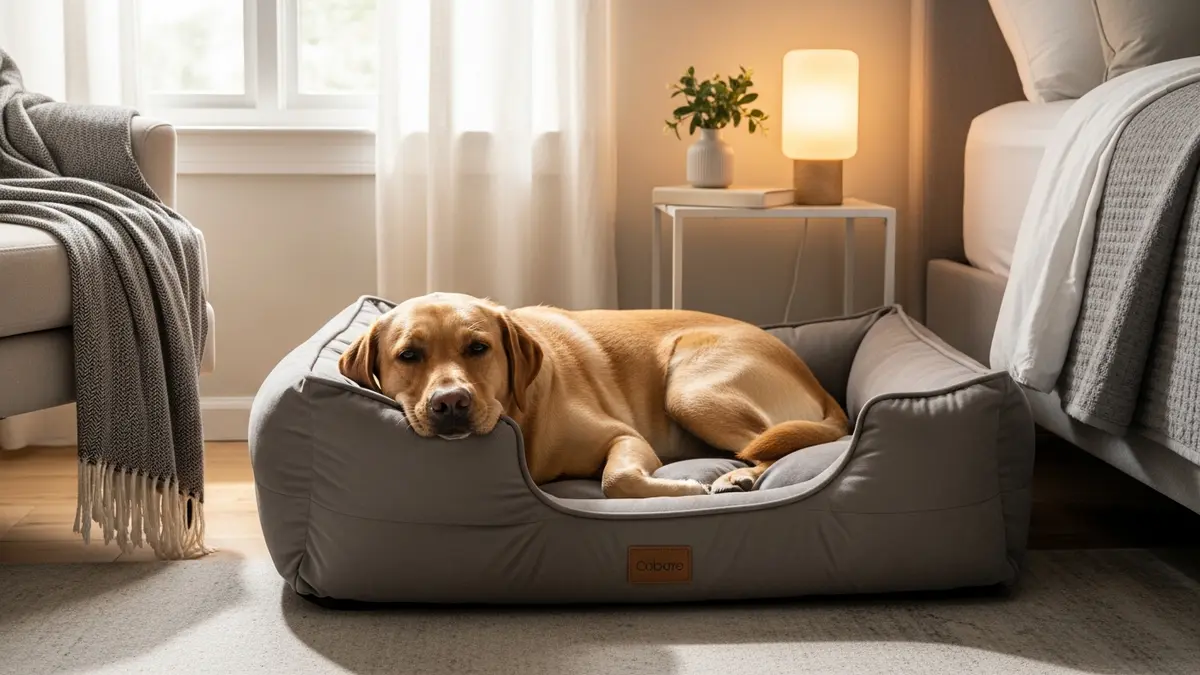
Physical play also plays a critical role in joint health. Gentle, low-impact movement keeps the synovial fluid circulating within joints, reducing stiffness and maintaining the range of motion that allows your dog to continue walking comfortably. Dogs with arthritis - one of the most common conditions in seniors - actually benefit from more gentle movement, not less. Complete rest causes muscles to atrophy and joints to stiffen faster. The goal is not vigorous exercise but consistent, gentle activity that keeps the body working at a sustainable level. Pair the right toys with a comfortable resting space - our guide to the best dog beds covers orthopedic options designed specifically for senior joint support.
Play also strengthens the human-dog bond during a time of life when that connection matters more than ever. Senior dogs can feel the shift in their own capabilities. They may become more anxious, more clingy, or more easily startled. Regular interactive play - even just ten minutes of gentle engagement - reassures your dog that they are still valued, still seen, still part of the daily rhythm of your life. That reassurance has measurable effects on stress hormones and overall wellbeing.
The goal with older dogs is not to replicate the play of youth - it is to find the version of play that fits who your dog is now. Gentle, consistent, and mentally rich beats intense and infrequent every time.
What to Look for in Toys for Senior Dogs
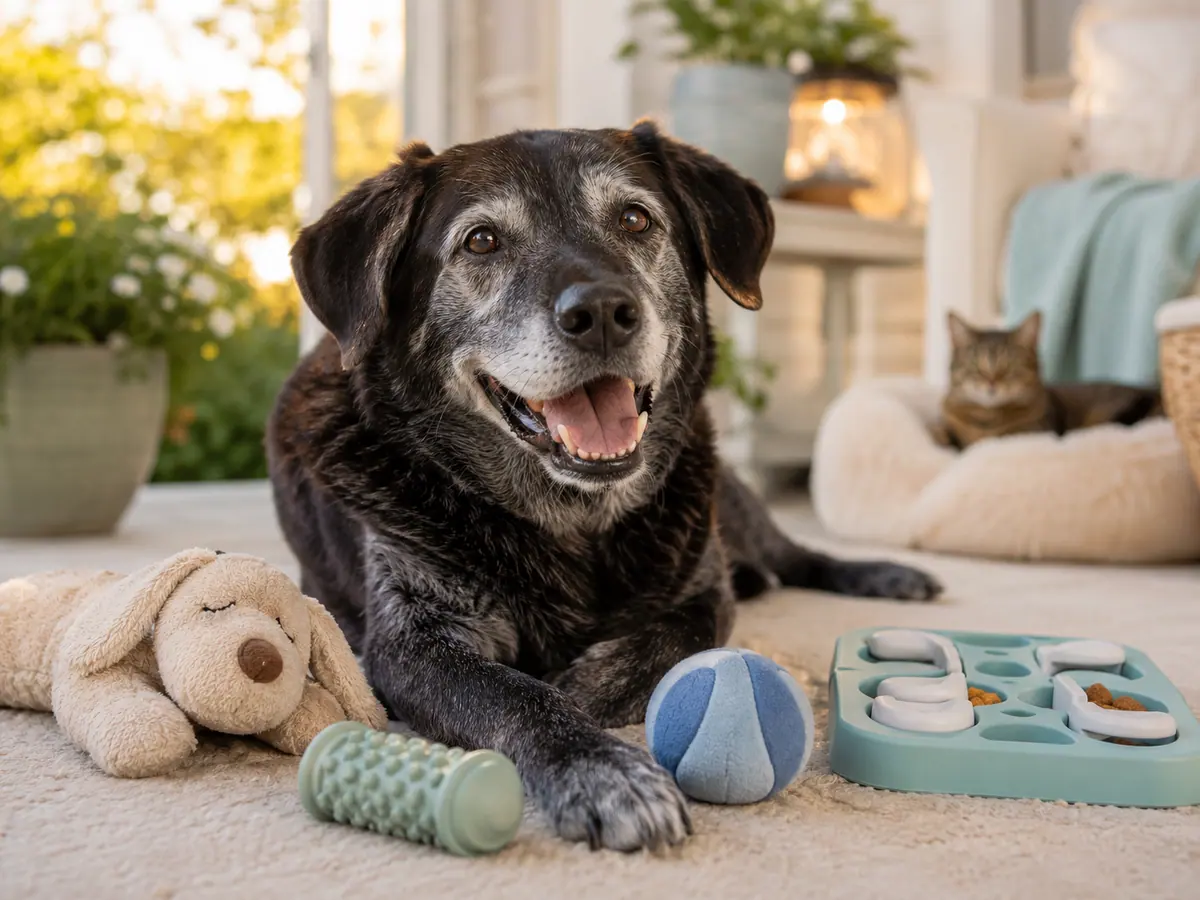
Selecting toys for a senior dog requires a different lens than shopping for a young adult dog. Five core principles should guide every choice you make.
Soft and Gentle Materials
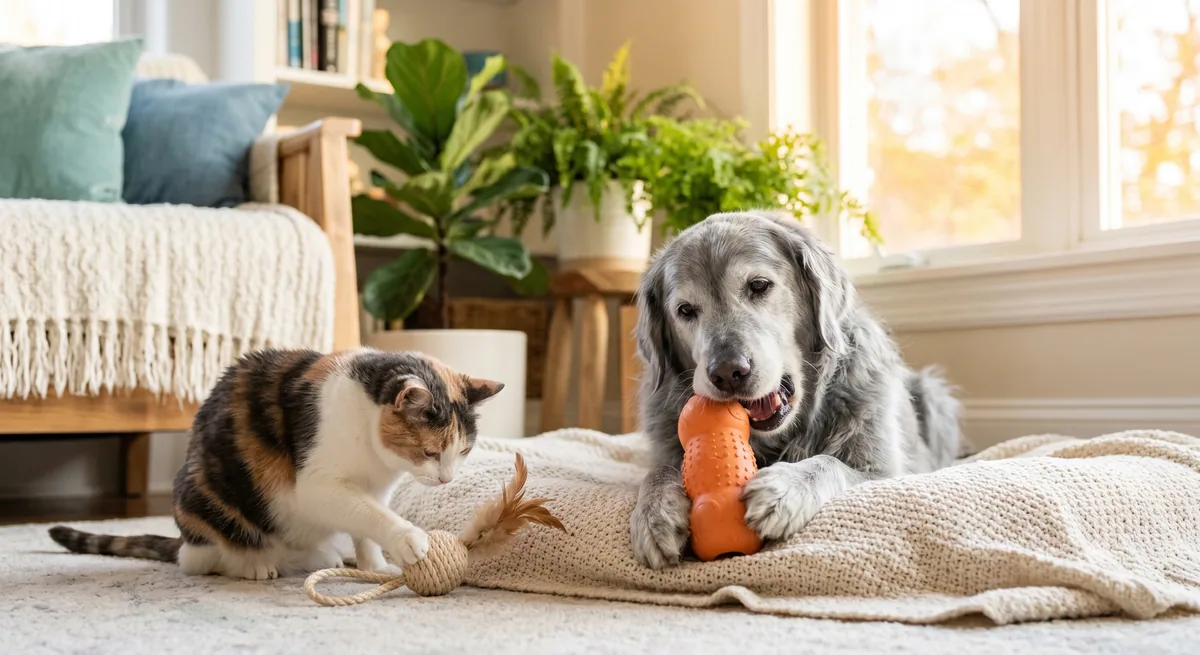
Senior dogs often experience dental wear, missing teeth, or gum sensitivity. The hard rubber toys that were perfectly appropriate at three can cause real discomfort at ten. Look for toys made from soft natural rubber, plush fabric, or flexible silicone - materials that give slightly under bite pressure rather than resisting it. A toy that your dog actively avoids or approaches hesitantly is almost always sending a signal about discomfort. Softer materials also reduce the risk of tooth fractures, which are painful and expensive to treat in older dogs already managing other health challenges.
Honestly, we've reviewed enough toys for old dogs listings to know that the cheapest option is rarely the best value once durability is factored in. We weigh longevity in our recommendations.
Low-Impact Design
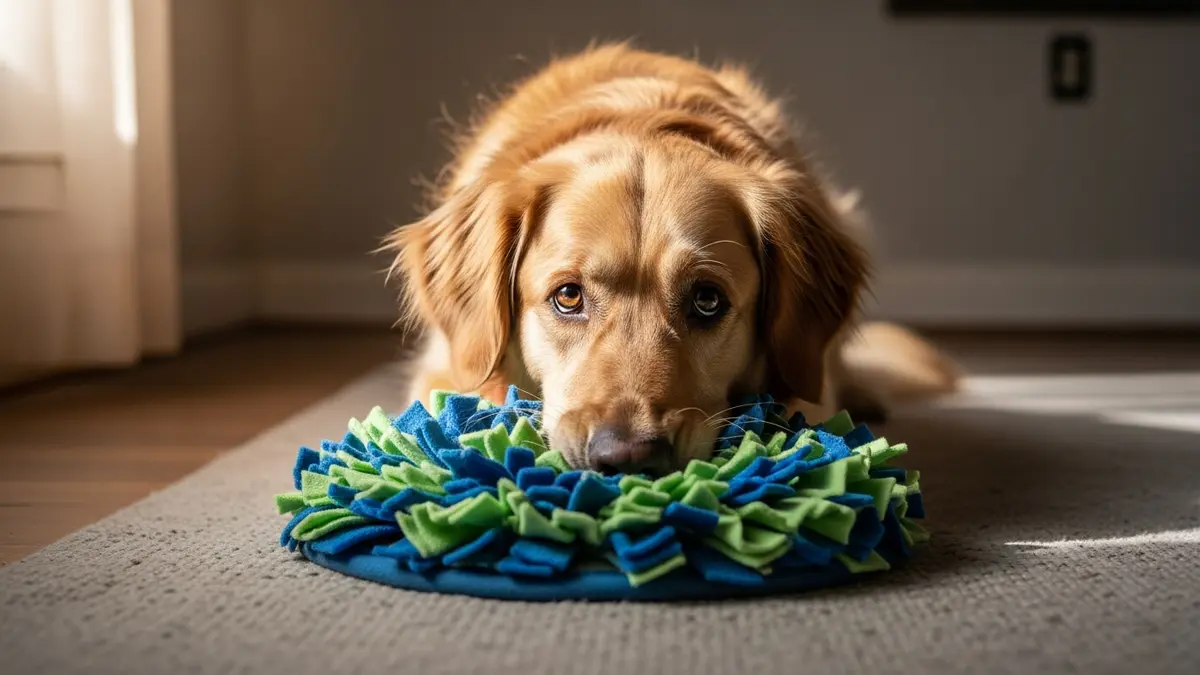
Toys that require jumping, sprinting, or sudden directional changes are high-risk for seniors with arthritis, hip dysplasia, or weakened hindquarters. The best senior dog toys keep your dog's activity at ground level - sniffing along a mat, licking from a flat surface, nosing puzzle pieces, or engaging in seated gentle tug. Low-impact does not mean low-engagement. A snuffle mat can occupy an arthritic dog for 20 minutes of focused mental work with zero joint stress.
Mentally Engaging Without Being Overwhelming
Mental stimulation is vital for senior dogs, but the difficulty level needs adjustment. A complex Level 4 puzzle that frustrates rather than challenges is counterproductive. Senior dogs - especially those showing early signs of cognitive decline - benefit most from activities with a clear, achievable reward structure. Easy puzzle feeders, snuffle mats, and lick mats all provide genuine cognitive engagement at a difficulty level that remains accessible and rewarding throughout the session.
Appropriate for Health Conditions
Always consider your individual dog's specific health profile when selecting toys. A dog with arthritis needs different toys than one with dental disease. A dog managing vision loss needs toys that rely primarily on scent rather than sight. A dog on a restricted diet needs toys that can be used without food, or with measured amounts of their regular kibble. The toy list below notes the specific health considerations most relevant to each pick, making it easier to match selections to your dog's individual needs.
No Jumping Required
This deserves its own category. Jumping places enormous strain on the hips, knees, and spine - precisely the structures most vulnerable in senior dogs. Any toy whose primary mechanic involves leaping - catching throws, jumping at a flirt pole, launching off furniture - should be retired or significantly modified for a senior dog. Throws can become gentle rolls along the ground. Flirt poles can be dragged at surface level. The play can continue; only the height needs to change.
12 Best Toys for Old Dogs
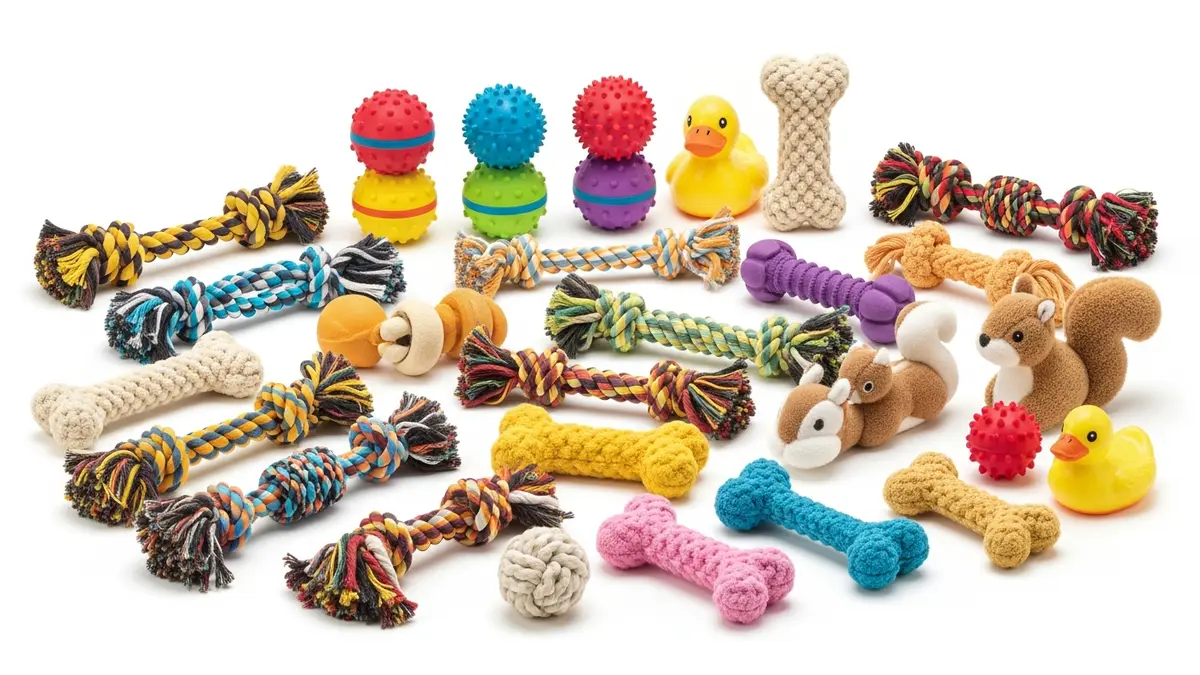
These picks are specifically selected to match the physical and cognitive needs of senior dogs - gentle on joints, engaging for aging minds, and rewarding enough to keep older dogs enthusiastically participating. For a broader overview of toy types across all ages, our guide to the best dog toys covers the full spectrum.
1. LickiMat Classic - Best Calming Toy
The LickiMat is one of the most underrated senior dog tools available. Spread with a thin layer of plain yogurt, pureed pumpkin, or a small amount of peanut butter, it delivers 15 to 30 minutes of focused licking activity that is completely joint-safe and profoundly calming. Licking triggers the release of endorphins in dogs, reducing cortisol and producing a measurable calming effect - research shows it functions almost like a slow-breathing exercise for the canine nervous system. For senior dogs experiencing increased anxiety, separation stress, or disorientation, the LickiMat provides reliable daily relief with zero physical strain. The textured surface also provides gentle tongue exercise and promotes saliva production, which supports oral health.
2. KONG Classic (Frozen) - Best Gentle Chew
The KONG Classic remains one of the best toys for old dogs when used correctly - and the key modification for seniors is freezing. A stuffed-and-frozen KONG is significantly softer on contact than a room-temperature one, making it far gentler on aging teeth and gums. Fill it with a mixture of kibble and soft food, seal the small end with a smear of dog-safe peanut butter, and freeze overnight. The result is a toy that self-rewards your dog with gentle chewing activity and slow treat dispensing for 20 to 40 minutes. Choose the appropriate size for your dog's breed - the regular red KONG is sized for most medium to large dogs, while the black KONG is firmer and better suited to occasional younger-mouth use only. For seniors, always opt for the standard red.
Our tough chew toys for large dogs guide is tailored to the unique needs of specific breeds.
3. Snuffle Mat - Best Nose Work Toy
A snuffle mat hides kibble or small treats within a dense forest of rubber and fabric strips, requiring your dog to use their nose methodically to locate each piece. For senior dogs, this is among the safest and most enriching activities possible. It requires no jumping, no running, and no complex manipulation - just the slow, absorbing work of scent tracking that dogs find instinctively satisfying. Research consistently finds that 15 minutes of active nose work produces the same level of mental fatigue as much longer physical exercise sessions. For dogs with canine cognitive dysfunction, the snuffle mat's reliance on scent - one of the last senses to decline - means it remains accessible and rewarding even as other cognitive abilities fade.
4. Outward Hound Nina Ottosson Dog Smart Level 1 - Best Puzzle Toy
The Nina Ottosson Dog Smart is a Level 1 puzzle specifically designed for dogs new to brain games - making it the ideal choice for seniors who may be experiencing cognitive slowing. It features a series of sliding compartment covers that hide treats underneath, requiring your dog to nose or paw each cover aside to reveal the reward. The mechanism is simple enough to remain solvable and satisfying, but complex enough to require genuine engagement. Unlike higher-level puzzles that can frustrate older dogs, the Dog Smart delivers consistent success - and consistent success is what keeps senior dogs motivated to engage. Load it with their regular kibble to turn it into a calorie-neutral enrichment meal.
5. Soft Squeaky Plush Toy - Best Comfort Toy
Never underestimate the power of a soft plush toy for a senior dog. Many older dogs develop a deep attachment to a particular plush companion - carrying it around, sleeping with it, and seeking it out during anxious moments. A well-made plush with a soft squeak satisfies the carry instinct common in many breeds and provides tactile comfort that has genuine calming effects. Choose a plush toy sized appropriately for your dog's mouth with no small detachable parts, and inspect it regularly for wear. Seniors often carry rather than destroy plush toys, making them surprisingly durable at this life stage. For dogs experiencing dog anxiety, a consistent comfort plush toy can become an important emotional anchor.
6. Slow Feeder Bowl - Best Mealtime Enrichment
A slow feeder bowl is one of the simplest and most consistently effective enrichment tools for senior dogs. By replacing the standard food bowl with a bowl that features raised ridges, mazes, or textured channels, you convert every meal into a 10-to-15-minute mental engagement session. Senior dogs eating too quickly are at elevated risk for bloat and digestive discomfort, making a slow feeder both a health and an enrichment investment simultaneously. Choose a model with gentler maze patterns - the deepest, most complex designs can frustrate older dogs whose muzzle strength or flexibility has reduced. Shallow ridges and wider channels remain engaging without becoming an obstacle that discourages eating.
7. Gentle Tug Rope - Best Interactive Play Toy
Tug does not need to retire with youth - it simply needs to adapt. For senior dogs, gentle tug with a soft rope or fleece toy is a wonderful way to maintain the interactive bond and provide light upper-body engagement without requiring running or jumping. The key is keeping intensity genuinely low: let your dog set the pace, offer gentle resistance rather than pulling hard, and end the session well before your dog shows any signs of fatigue. Keep sessions to five minutes maximum. A seated tug game - where your dog stands or sits while you hold the other end close to the ground - is particularly arthritis-friendly because it keeps the body stable and the movement controlled. Always supervise and put the rope away after play to prevent unsupervised chewing.
8. West Paw Tux - Best Easy Treat Dispenser
The West Paw Tux is shaped with a wider opening than the classic KONG, making treat stuffing and extraction significantly easier for dogs with reduced jaw strength or dental sensitivity. Its Zogoflex material is softer and more flexible than hard rubber, compressing gently under pressure rather than resisting it - ideal for seniors with worn teeth or gum tenderness. Fill it with soft food, a smear of plain pumpkin puree, or moistened kibble. The shape also makes it easy for arthritic dogs to hold between their paws without frustration. West Paw manufactures it from non-toxic, BPA-free materials and backs it with a satisfaction guarantee. A gentler, senior-friendly alternative to the standard KONG for dogs who find hard rubber uncomfortable.
9. Nylabone Senior/Puppy Soft Rubber Chew - Best Dental Chew
Nylabone's puppy and senior lines use the same softer rubber formulation - specifically designed for mouths that cannot safely handle firm chew pressure. For senior dogs with aging teeth, reduced jaw muscle mass, or a history of dental work, these softer chews provide the instinctive satisfaction of chewing activity without the fracture risk of harder nylon or rubber. The textured surface provides gentle dental abrasion that helps reduce tartar buildup during each chewing session. Choose a size appropriate for your dog's weight - always lean toward the larger size option when between categories, as undersized chews can be chewed down to swallowing-risk size faster than expected. Inspect regularly and replace when significantly worn.
10. Floating Fetch Toy - Best for Water-Loving Seniors
For senior dogs who love water, a soft floating fetch toy opens up one of the most joint-friendly exercise options available. Swimming and water wading are low-impact because buoyancy reduces effective body weight, dramatically decreasing stress on arthritic joints. Many physical rehabilitation veterinarians actively prescribe water exercise for dogs with hip dysplasia, arthritis, and post-surgical recovery. A brightly colored, lightweight floating toy motivates a water-loving senior to wade and swim gently without the hard ground impact of land-based fetch. Choose a soft foam or natural rubber float rather than hard plastic, and always supervise water sessions carefully - senior dogs may tire more quickly in water than they recognize.
11. Therapy Ball / Massage Ball - Best Light Play Toy
A soft therapy ball with a textured rubber surface serves double duty for senior dogs: it provides gentle rolling play that encourages slow walking movement, and its surface textures offer mild massage stimulation when the dog presses or rubs against it. For seniors with arthritis or reduced sensitivity in their paws, this tactile feedback can be genuinely stimulating and pleasurable. The soft construction means low-speed nudging and nosing is completely safe for dogs who can no longer safely engage with firm balls. Look for balls specifically marketed as dog therapy or rehabilitation balls - they are made to compress significantly under body weight without losing shape, unlike standard sports balls that present a deflation or chewing hazard.
12. Crinkle Flat Plush - Best Minimal-Movement Toy
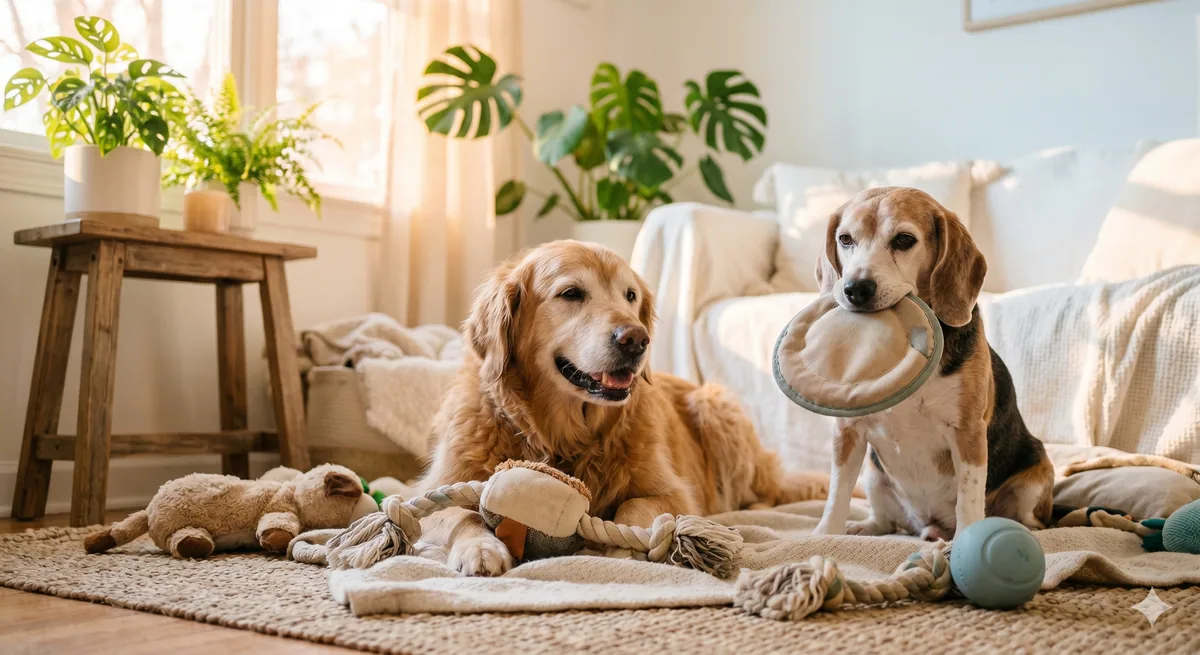
Crinkle flat plush toys - plush animals with crinkle material inside but no stuffing - are purpose-built for dogs who enjoy the sensory reward of a squeaky toy but cannot safely manage traditional stuffed toys. The crinkle sound triggers engagement with minimal bite force required, making it perfect for dogs with dental issues or reduced jaw strength. The flat design is lightweight and easy for arthritic dogs to pick up, carry, and interact with from a lying-down position. No stuffing means no ingestion risk if the outer fabric develops a tear. This is a toy that many senior dogs will use daily, carrying it from room to room as a comfort object and engaging with the crinkle sound for short, satisfying play bursts throughout the day.
Toys to Avoid for Senior Dogs
Knowing what to retire from your dog's toy box is as important as knowing what to introduce. Several toy categories that were perfectly fine in younger years become problematic - or dangerous - for senior dogs. For additional guidance, see the ASPCA general dog care resource.
High-Impact Fetch and Jumping Toys
Standard tennis ball fetch, disc catching, and any toy that requires your dog to leap, sprint, or land hard should be significantly modified or retired for senior dogs with joint issues. The repeated impact of landing from a jump places concentrated force on hips, knees, and the lumbar spine - precisely the structures that are most vulnerable with age. If your dog still loves fetch, convert to gentle ground-level rolls rather than throws, keep the retrieve distance short, and stop immediately at the first sign of limping or stiffness afterward.
Different breeds have different needs. Our new kitten essentials guide helps you choose.
Very Hard Rubber or Nylon Chews
Products marketed for aggressive chewers - extra-tough nylon bones, extra-firm rubber chews - are too dense for senior teeth. The slab fracture rule of thumb is useful here: if you cannot make a dent in the toy with your thumbnail, it is too hard for a senior dog's teeth. A fractured tooth in an older dog is not just painful - it is a surgical problem occurring in an animal who may have health factors that complicate anesthesia. Always choose age-appropriate chew hardness.
Senior dogs are significantly more vulnerable to tooth fractures than younger dogs. Avoid any chew toy harder than a carrot. The "thumbnail test" - if your thumbnail cannot dent the surface, the toy is too hard for a senior dog - is a reliable field guide for safe chew selection.
Toys That Require Jumping to Interact
Flirt poles held at shoulder height, toys dangled from door handles, or interactive gadgets mounted above floor level may seem harmless, but they encourage repeated vertical movement that stresses arthritic joints. All toy interaction for senior dogs should occur at floor level or very close to it. This is not a limitation - it is simply a different play paradigm, and one your dog will adapt to comfortably with consistent application.
Overwhelming Noise and Stimulation
Some toys - particularly battery-operated interactive toys with flashing lights and electronic sounds - can be overstimulating or anxiety-inducing for senior dogs, particularly those experiencing cognitive decline. Dogs with CDS (canine cognitive dysfunction syndrome) are often more easily startled and more sensitive to unpredictable stimuli. Prefer quiet, predictable toys: snuffle mats, soft plush, gentle chews, and manual puzzles. Save the electronic toys for younger housemates, if applicable.
Keeping Your Senior Dog Mentally Active
The right toys are only part of the equation. A practical enrichment strategy tailored to a senior dog's changing needs makes all the difference between toys that gather dust and ones that become daily anchors of your dog's wellbeing.
Prioritize mental enrichment over physical intensity. As physical capacity declines, mental engagement becomes proportionally more valuable. A snuffle mat session, a gentle puzzle at mealtime, and a lick mat in the afternoon can provide the same overall enrichment value as hours of high-energy play from the younger years - with none of the joint stress. Aim to include at least one dedicated mental enrichment activity every day, even on days when physical activity is limited by weather, pain flares, or fatigue.
Keep sessions short and frequent. Senior dogs tire more quickly - both physically and cognitively - than younger dogs. Two or three sessions of 10 to 15 minutes each are far more beneficial than one long session of 45 minutes. Watch your dog's engagement level actively during each session and end before they disengage or show frustration. A session that ends while the dog is still enthusiastic leaves them wanting more, which is exactly the motivational state you want to maintain for tomorrow's session.
Adjust for health condition changes. A dog whose arthritis flares after a cold night may need the gentlest possible activities - LickiMat, snuffle mat at floor level, crinkle plush from their bed - until they are moving more comfortably again. A dog recovering from a dental procedure should have all chew toys temporarily replaced with purely non-contact enrichment. Flexibility and observation are the most important tools in a senior dog owner's kit. Build an enrichment menu with options at multiple intensity levels so you always have an appropriate activity ready regardless of how your dog is feeling that day.
Use enrichment to manage cognitive decline. For dogs showing early signs of cognitive dysfunction - nighttime restlessness, apparent confusion, loss of housetraining, staring at walls - a consistent daily enrichment routine can be genuinely therapeutic. Predictable timing and consistent activity types provide structure that helps cognitively declining dogs navigate their day with less anxiety. The snuffle mat at the same time each morning, the frozen LickiMat each afternoon - these rhythms become cognitive anchors that support orientation and calm. For dogs managing anxiety, that predictable structure is particularly powerful.
Involve your senior dog in low-key social activities. Senior dogs often benefit from gentle socialization maintained throughout aging - calm visits, gentle greetings, quiet shared time with familiar people or animals. Pair new social experiences with a favorite enrichment activity to create positive associations. A dog who gets their snuffle mat every time a familiar visitor arrives quickly learns to associate arrivals with reward rather than stress, reducing the reactivity that some older dogs develop as their tolerance for unpredictability decreases.
Build a weekly enrichment rotation using at least five different activities - vary the format between licking, sniffing, chewing, gentle interaction, and puzzle-solving. Variety prevents habituation and keeps your senior dog's engagement consistently high across the full week.
Comparison: Budget vs Mid-Range vs Premium
This quick comparison helps you understand what you actually get at each price band, so you can decide where to spend and where to save without compromising safety.
Comparison reflects typical US retail ranges as of 2026. Always verify safety labels before purchase.
Conclusion
Picking the right option for your dog is less about finding a single "best" product and more about matching the choice to your dog's size, age, play style, and your home environment. The recommendations above cover the main scenarios most pet owners run into, so use them as a checklist when comparing options.
Start with one or two changes, watch how your dog responds for a week or two, then iterate. Pets show you very quickly what works for them. If a toy, feeder, or routine is ignored or causes stress, swap it out without hesitation. The goal is a happier, healthier dog every day.
Frequently Asked Questions
Should I consult a veterinarian about my pet's play and enrichment needs?
Yes, especially if your pet shows signs of anxiety, sudden behavior changes, or destructive habits that may indicate a medical issue. A licensed veterinarian or veterinary behaviorist can rule out pain, dental problems, or cognitive decline before you adjust toys or routines. The guidance in this article is educational, not a substitute for professional veterinary advice.
How long does it take to see results from new toys or enrichment?
Most pet owners notice small changes within a week (calmer evenings, less destructive chewing, more interest in mealtime puzzles) and clearer behavior shifts within 4 to 6 weeks of consistent rotation. Older pets and rescues may take 8 to 12 weeks to adjust. Keep a short weekly journal so you can track real progress instead of relying on memory.