Anxiety affects an estimated one in six dogs in some form - from the classic pacing and whining of separation anxiety to the trembling and hiding triggered by a thunderstorm. If your dog barks incessantly when you leave, destroys furniture, pants at the sound of fireworks, or simply can't seem to settle, you are far from alone. And while training and veterinary guidance remain the foundations of any serious anxiety management plan, dog anxiety toys play a genuinely powerful supporting role. According to the ASPCA separation anxiety in dogs resource, choosing the right toys can support your pet's mental and physical wellbeing.
The right toy can interrupt the stress cycle, redirect anxious energy, and trigger the body's own calming chemistry - all without medication, and all in the course of normal daily enrichment. This guide covers the 12 best dog anxiety toys available today, the science behind why they work, and how to match each toy to the specific type of anxiety your dog is experiencing. For a broader look at enrichment-focused picks across all categories, see our full roundup of best dog toys.
Understanding Dog Anxiety: More Common Than You Think
Dog anxiety is not simply a personality quirk or a sign of a badly trained dog. It is a genuine stress response driven by the same neurological and hormonal systems that govern anxiety in humans - primarily the activation of the hypothalamic-pituitary-adrenal (HPA) axis and the release of the stress hormone cortisol. When a dog feels threatened or distressed, cortisol floods the system, heart rate increases, muscles tense, and the dog enters a state of heightened arousal that can be difficult to self-regulate.
When we research dog anxiety toys, we lean on veterinary references and observed behaviour patterns rather than anecdote alone. We've found that combination produces the most actionable guidance for everyday owners.
If stress is a concern, our guide to toys for dogs with separation anxiety covers more solutions.
Chronic anxiety - the kind that is triggered repeatedly over days, weeks, and months - keeps cortisol levels persistently elevated. This creates a vicious cycle: an already-sensitized nervous system responds more intensely to smaller triggers over time, and the window of calm narrows. Left unaddressed, chronic anxiety can impact physical health as well, contributing to digestive issues, suppressed immune function, and behavioral problems that compound as the dog ages.
The three most common forms of dog anxiety seen by veterinarians and behaviorists are:
- Separation anxiety - distress triggered by the departure of, or absence from, a primary attachment figure. Affects an estimated 14 to 20 percent of the dog population.
- Noise phobia - intense fear responses to loud or sudden sounds: thunderstorms, fireworks, construction, or traffic. One of the most prevalent anxiety subtypes in dogs.
- Generalized anxiety - a persistent low-grade or high-grade state of anxiety that is not tied to a single identifiable trigger. Often seen in rescue dogs or under-stimulated dogs.
Toys do not cure any of these conditions. But used consistently and correctly, calming toys for dogs can meaningfully reduce the frequency and intensity of anxiety episodes, improve the dog's capacity for self-regulation, and make training and behavior modification more achievable by lowering the overall stress baseline.
Dog anxiety toys work best as part of a comprehensive management plan alongside positive-reinforcement training and, where appropriate, veterinary guidance. Always consult your vet if your dog's anxiety is severe, worsening, or causing self-harm.
Types of Dog Anxiety and Their Triggers

Before reaching for any toy, it helps to identify which type of anxiety your dog is experiencing. Different anxiety profiles respond to different toy strategies - a one-size-fits-all approach often underperforms because the wrong stimulus at the wrong time can actually increase arousal rather than reduce it.
Separation Anxiety
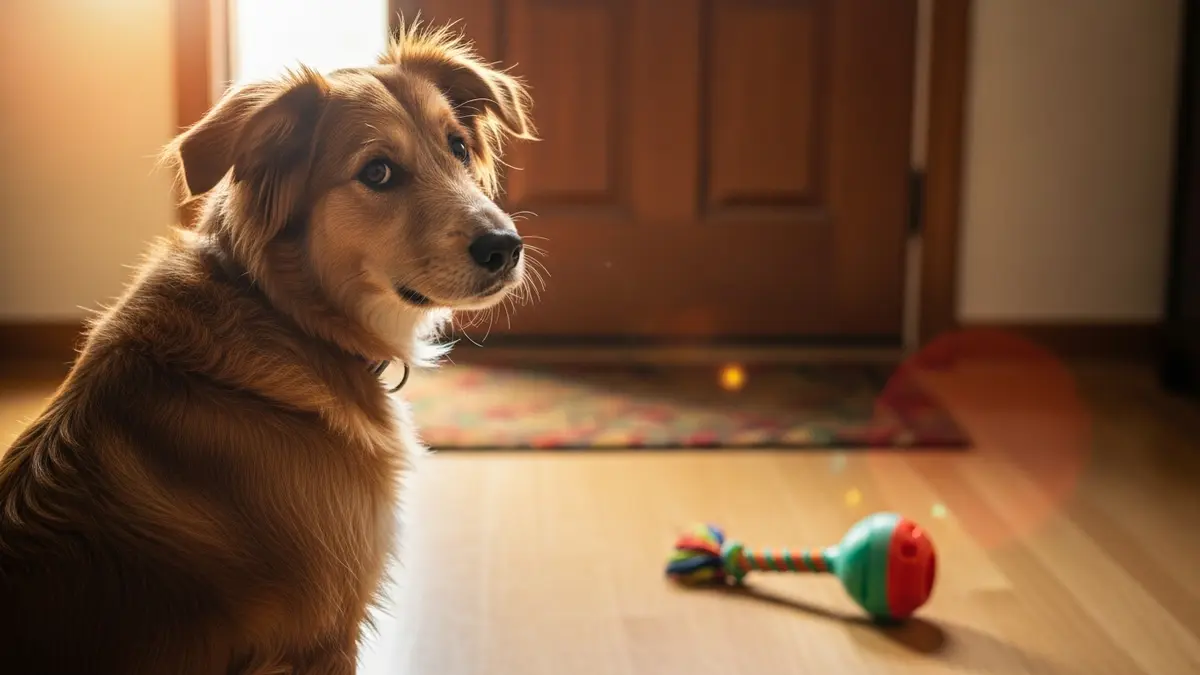
Separation anxiety is triggered specifically by the absence of an attachment figure - most commonly the primary owner. Symptoms include vocalization, destructive chewing, house soiling, pacing, and attempts to escape. It typically manifests within the first 20 to 30 minutes of the owner's departure and tends to peak quickly. Long-duration, self-directed enrichment toys - particularly frozen food toys and lick mats - are the most effective category here because they provide an immediate positive association with departure and sustain engagement during the most acute phase of distress.
Honestly, we revisit our dog anxiety toys guidance every few months because veterinary advice continues to refine. We've updated this piece to reflect current best practice as we understand it.
Noise Phobia and Thunderstorm Anxiety
Dogs with noise phobia experience acute fear in response to loud, unpredictable sounds. The anxiety often begins before the stimulus arrives - dogs with thunderstorm anxiety may react to barometric pressure changes 30 to 40 minutes before the storm. During the event itself, the dog's arousal is frequently too high for puzzle toys or food engagement. Comfort-oriented toys - heartbeat plush toys, weighted stuffed animals, and soft calming chews - are more appropriate here, providing tactile and sensory grounding rather than cognitive challenge.
Travel and Car Anxiety
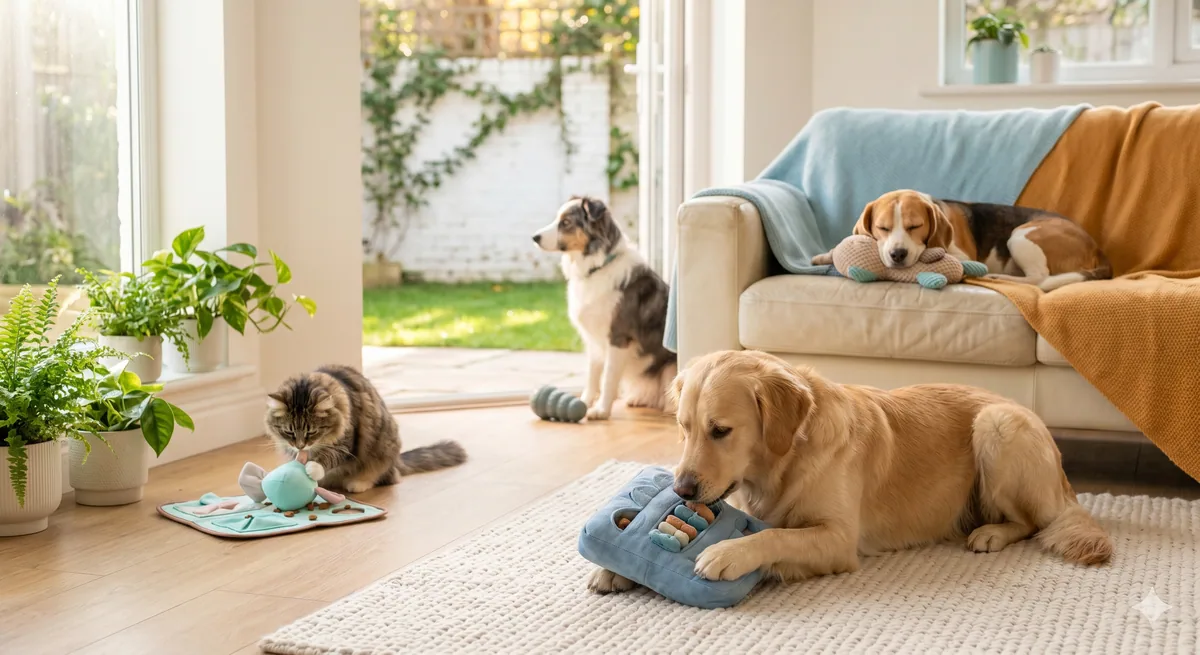
Car anxiety combines motion discomfort, confinement, and unpredictable sensory input. Dogs who experience it may drool excessively, pant, bark, or vomit. Pre-travel use of lick mats and long-lasting chews can reduce baseline arousal before the journey begins. During travel, a calming plush toy in the crate provides familiar scent and tactile comfort.
Social Anxiety
Socially anxious dogs feel threatened around unfamiliar people or other dogs. Interactive play toys used during carefully managed social encounters can redirect the dog's attention and create positive associations. A snuffle mat or LickiMat deployed in a neutral space before introductions helps lower the dog's cortisol baseline before the stressor arrives.
Generalized Anxiety and Under-Stimulation
Many dogs labeled as "anxious" are actually chronically under-stimulated. Without adequate mental and physical enrichment, excess energy and frustration manifest as anxiety-like behaviors - restlessness, barking, destructive chewing, and hyperreactivity. For these dogs, a consistent daily enrichment routine using puzzle toys, snuffle mats, and interactive play toys often produces dramatic improvements within one to two weeks. This is the most optimistic category: the right toys, consistently applied, can resolve the problem almost entirely.
12 Best Dog Anxiety Toys
These 12 picks span every anxiety type and play style, from long-duration solo enrichment to comforting plush companions. Browse our dog toys collection to find enrichment-focused options for your dog. For an expanded list of calming-specific picks, see our dedicated guide to calming toys for dogs.
1. LickiMat Classic - Best for Calming Through Licking
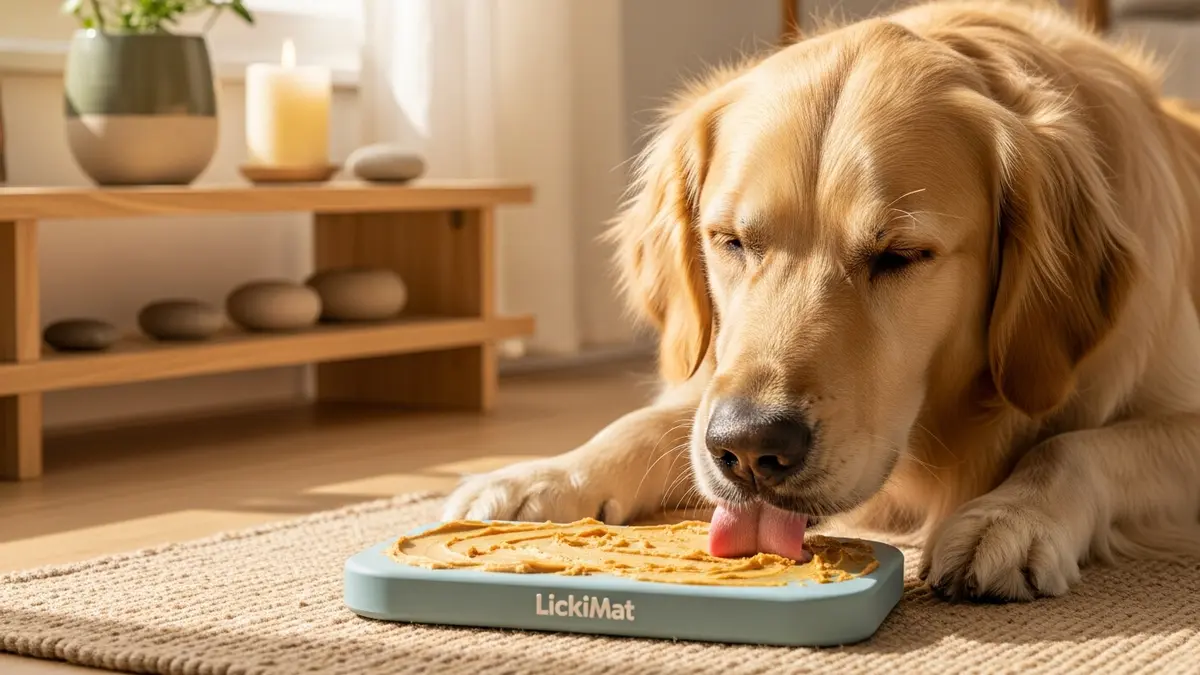
The LickiMat Classic is the single most effective toy for triggering the physiological calm response in anxious dogs. Its surface of raised bumps and channels holds spreadable foods - peanut butter, plain yogurt, canned dog food, or soft wet food - and requires sustained, repetitive licking to consume. This repetitive oral action activates the parasympathetic nervous system, suppresses cortisol production, and produces a measurable calming effect. Freeze the LickiMat overnight and the session extends to 15 to 25 minutes, covering the most acute phase of separation anxiety after departure. Use it daily as a pre-departure ritual and your dog will begin to associate the mat - rather than your leaving - with something genuinely good.
Anxious pets may also benefit from the products in our separation anxiety dog toys guide.
2. Snuffle Mat - Best for Nose Work and Mental Exhaustion
A snuffle mat hides kibble or small treats within a dense lattice of fabric strips, requiring your dog to use their nose intensively to locate and extract each morsel. Nose work is one of the most cognitively demanding activities available to dogs - the olfactory cortex processes scent information with a level of focus that is incompatible with sustained anxiety. Studies on scent-based enrichment consistently show that 15 to 20 minutes of active sniffing produces the equivalent mental fatigue of a 45-minute physical walk, along with a calm, settled state afterward. For generalized anxiety driven by under-stimulation, a daily snuffle mat session is one of the highest-return interventions available.
3. KONG Classic (Frozen and Stuffed) - Best Long-Lasting Calm
The KONG Classic is a rubber toy with a hollow core designed to be stuffed with food and frozen. When prepared correctly - layered with kibble, peanut butter, and a plug of canned food, then frozen solid overnight - a KONG delivers 30 to 45 minutes of sustained, self-directed engagement. The combination of repetitive licking, chewing, and problem-solving keeps the anxious dog occupied during the highest-risk departure window. Batch-prepare five or six KONGs at a time and rotate them from the freezer daily. Choose the correct size for your dog's weight and always supervise the first few sessions to ensure the right fit. The KONG is the workhorse of separation anxiety management and earns its place at the foundation of any anxious dog's toy rotation.
4. Petstages Calming Cuddle Bear - Best Comfort Plush
The Petstages Calming Cuddle Bear is a soft plush toy designed specifically for anxious dogs rather than play-drive stimulation. Its ultra-soft materials allow dogs to hold, knead, and nestle against it - behaviors that trigger the same nurturing and comfort responses associated with contact with a social companion. Unlike standard squeaky plush toys that are designed to excite arousal, the Cuddle Bear's purpose is sensory comfort and physical grounding. It is particularly effective for dogs with social anxiety or for dogs left alone for the first time. Introducing the toy with a worn item of your clothing initially helps transfer familiar scent and accelerates the comfort association.
5. Heartbeat Plush Toy - Best for New Puppies and Rehomed Dogs
Heartbeat plush toys contain a small battery-powered device that emits a soft, rhythmic pulse mimicking a mother dog's heartbeat. For puppies in their first nights away from their litter, or for newly adopted adult dogs adjusting to an unfamiliar home, this rhythmic stimulus triggers a deeply hardwired comfort response - the same neurological pathway activated by littermate contact during the neonatal period. The result is measurably faster settling at night and reduced nighttime vocalization. Place the toy in the puppy's crate or bed and replace the battery pack as needed. Many models also include a heat pack compartment for additional warmth during the initial adjustment period.
6. Level 1 Puzzle Toy - Best Gentle Mental Engagement
Puzzle toys redirect a dog's mental energy away from the anxiety trigger and toward a solvable problem. For anxious dogs, the key is to start with a Level 1 difficulty - one that provides regular, easy rewards and avoids frustration. A frustrated anxious dog that cannot solve a puzzle will spiral into higher arousal, not lower. A simple sliding-lid or flip-compartment puzzle delivers the cognitive engagement needed to interrupt the stress cycle while keeping success rates high and positive associations strong. Introduce puzzle toys during calm baseline periods first - not during an anxiety episode - to establish the positive association before relying on them for calming.
7. Thundershirt + LickiMat Combo - Best Multi-Tool for Noise Anxiety
While the Thundershirt is a pressure wrap rather than a toy, pairing it with a LickiMat creates a two-pathway calming intervention that significantly outperforms either tool used alone. The Thundershirt applies gentle, consistent pressure across the torso - an effect similar to swaddling in infants - which activates the parasympathetic nervous system and reduces the physiological arousal of fear. Simultaneously, the LickiMat triggers the calming licking response and provides a food-based positive focus. Deploy both 20 to 30 minutes before a predicted noise event - a storm, fireworks display, or construction - to establish calm before the trigger arrives. The combination works best as a preventive tool rather than a reactive one.
8. Rope Toy - Best for Interactive Play During Anxiety
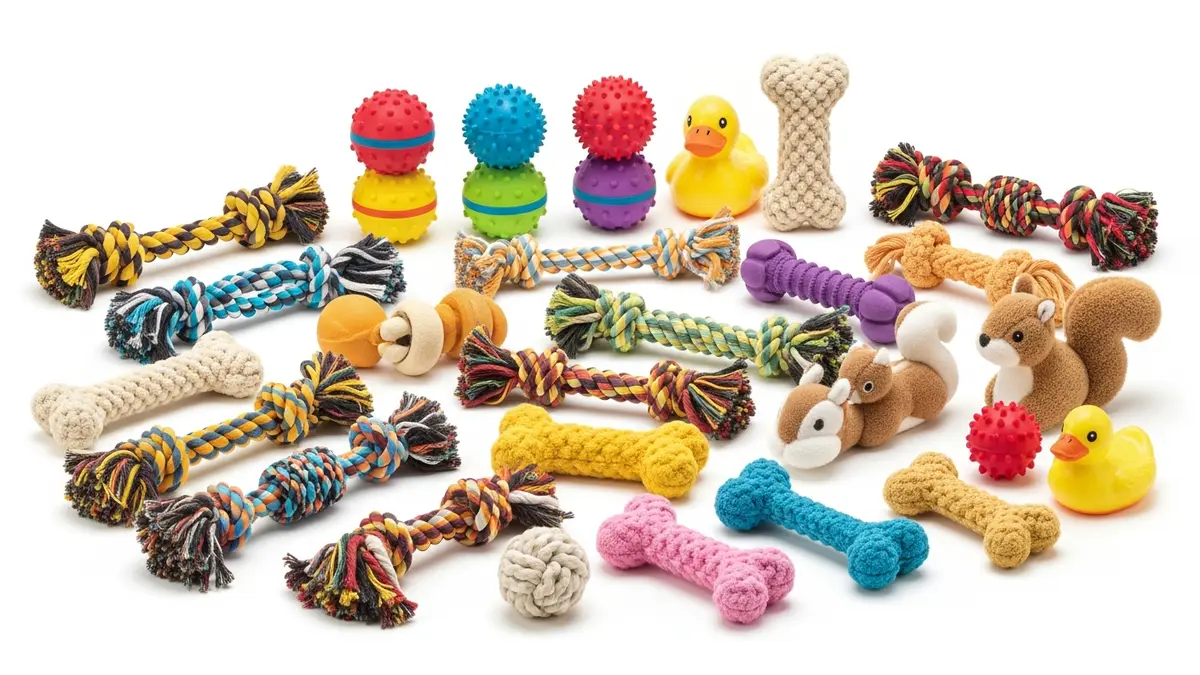
Anxious dogs benefit enormously from predictable, owner-led interactive play sessions. A rope tug toy allows you to engage your dog in a physically satisfying game that channels their arousal constructively, builds trust, and - when the session ends with a predictable wind-down routine - teaches the dog that high arousal has a reliable, positive resolution. Use tug sessions as part of a structured pre-departure or post-return ritual to create predictable behavioral anchors in an anxious dog's day. Keep sessions short - five to ten minutes - and always end with a calm "drop it" and a brief settle period before moving on. Rope toys should be used for supervised interactive play only; remove them after sessions to prevent unsupervised chewing.
9. West Paw Toppl - Best Frozen Long-Duration Feeder
The West Paw Toppl is a top-loading treat toy with a wider opening than a standard KONG, making it easier to stuff with chunky foods - banana, apple slices, cooked sweet potato, or raw food diets - that a KONG's narrow cavity cannot accommodate. Its wide base and slightly weighted feel make it satisfying for dogs to hold between their paws and work at methodically. Frozen solid, it provides 30 to 45 minutes of licking and chewing engagement. The Toppl also connects to its smaller counterpart to create a double-stacked toy with two chambers of varying difficulty. For dogs who have mastered the KONG, the Toppl provides a welcome variation that sustains engagement over long separation periods. For more separation anxiety-focused options, see our guide to separation anxiety dog toys.
10. Bully Stick Holder - Best Safe Long Chew
Chewing is one of the most powerful natural anxiety-relief behaviors available to dogs. The repetitive mechanical action of sustained chewing activates the jaw muscles' proprioceptive feedback loop, reduces cortisol, and releases serotonin - producing a genuinely calming effect that can last for hours after the chew session ends. Bully sticks are an ideal long-duration natural chew: fully digestible, protein-rich, and satisfying enough to hold a dog's attention for 20 to 45 minutes. A bully stick holder secures the stick safely as it shortens, preventing the dangerous end-piece swallowing risk that makes unattended bully sticks problematic. For anxious dogs who chew destructively, redirecting the chewing drive to an appropriate long chew is one of the fastest behavioral improvements you can make.
11. Calming Dog Bed + LickiMat Combo - Best Environment and Activity Pairing
A calming orthopedic or bolstered dog bed paired with a LickiMat creates a designated anxiety-relief station in your home. The raised edges of a bolster bed provide the same physical security as a den or enclosed space - triggering the natural canine comfort response to enclosed, safe environments. When you consistently pair the bed with the LickiMat and a wind-down routine, the bed itself becomes a powerful cue for calm: your dog learns that going to that specific location predicts a reliable, positive calming experience. This is the foundation of "place training" used in behavior modification for anxious dogs - and the physical tools that anchor it matter enormously. Position the bed away from high-traffic areas and never use it as a time-out or punishment location. For additional guidance, see the VCA Hospitals separation anxiety guidance.
12. Automatic Ball Launcher - Best for Independent Play When Alone
For dogs with mild separation anxiety driven primarily by boredom and excess energy - rather than true attachment-based distress - an automatic ball launcher provides meaningful physical and mental engagement during alone time. Most models launch a ball at randomized angles and intervals, sustaining a dog's chase interest for repeated sessions. The physical exercise burns energy, and the anticipation of each launch provides a low-level cognitive challenge. Automatic launchers work best for ball-motivated dogs in secure indoor or yard environments. Introduce the device while you are home first so the dog builds confidence and enthusiasm with it before relying on it during absences. Not suitable as the sole intervention for severe separation anxiety, but a powerful tool for the boredom-driven end of the spectrum.
The Science of Licking and Calm
Among all the toy mechanisms covered in this guide, licking stands out as having the most direct and well-documented physiological link to anxiety reduction. Understanding why this works helps you use licking-based toys with the precision they deserve.
For more calming solutions, see our detailed anxiety toys for dogs review.
When a dog licks repetitively - whether from a LickiMat, a frozen KONG, or even their own paw during self-grooming - the action stimulates sensory receptors in the tongue and jaw that feed into the vagus nerve, the primary pathway of the parasympathetic nervous system. Activation of the vagus nerve initiates the rest-and-digest response: heart rate slows, breathing deepens, muscle tension decreases, and the adrenal glands reduce cortisol output.
This is not a placebo effect or an owner projection. Canine cortisol studies measuring saliva samples before and after licking enrichment consistently show measurably lower cortisol concentrations following sustained licking sessions. The effect is most pronounced when licking is:
- Sustained for at least 10 to 15 continuous minutes
- Initiated voluntarily - not forced or anxiously compulsive
- Associated with a positive, food-reinforced context
- Performed in a calm physical environment without competing stressors
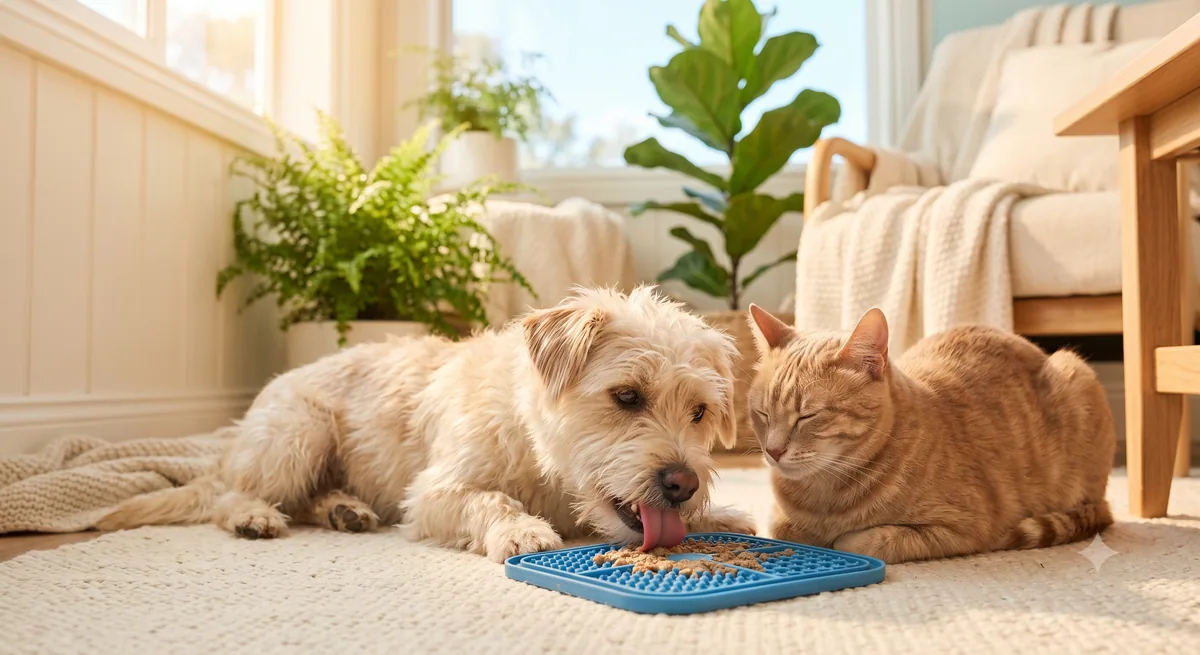
Freezing the LickiMat or KONG extends the session duration and slows the licking pace, both of which maximize the parasympathetic activation window. A quick two-minute lick produces noticeable relaxation; a 20-minute frozen LickiMat session can lower a dog's physiological arousal to near-baseline even in dogs with moderate anxiety histories.
Freeze your LickiMat or KONG for at least six hours before use. A frozen surface requires slower, more sustained licking - and it is the duration of the licking, not the speed, that drives the cortisol reduction. A 20-minute frozen session produces significantly more calm than a 3-minute room-temperature session of the same food.
Compulsive licking - where a dog licks a surface, object, or their own body repetitively without food stimulus and in an anxious or distressed state - is a different behavioral category and should be evaluated by a veterinarian. Healthy, food-directed licking from enrichment toys is a normal behavior that can be deliberately leveraged for its calming properties. Compulsive licking is a symptom of a problem that toys will not resolve.
When Toys Aren't Enough
Dog anxiety toys are a genuine, evidence-supported tool in the management of canine anxiety - but they have real limits. Knowing those limits helps you deploy them effectively and recognize when professional help is necessary.
Signs That Anxiety Requires Veterinary Attention
Enrichment toys will not adequately address anxiety that presents with any of the following features:
- Self-harm, including excessive licking to the point of lesion (acral lick granulomas), paw chewing, or tail chasing that causes injury
- Destructive behavior that causes significant property damage or poses escape risks
- Aggression or redirected biting during anxiety episodes
- Complete inability to eat, drink, or rest during anxiety periods
- Vocalization severe enough to cause neighbor complaints or significant owner distress
- Physical symptoms including vomiting, diarrhea, or sustained trembling during anxiety events
- Anxiety that is worsening over time despite consistent environmental management
The Role of Behavioral Therapy
A certified applied animal behaviorist (CAAB) or a veterinary behaviorist (DACVB) can design a systematic desensitization and counter-conditioning protocol specifically tailored to your dog's anxiety profile. These professionals work systematically to change the dog's emotional response to the trigger itself - not just manage symptoms. Enrichment toys support this process by lowering the dog's baseline arousal, making the behavioral work easier and faster. They are adjuncts to therapy, not replacements for it.
Medication as a Legitimate Tool
Veterinary-prescribed anxiety medication - including daily medications like fluoxetine or clomipramine, and situational medications for acute events like trazodone or gabapentin - is appropriate and evidence-based for moderate to severe canine anxiety. There is no benefit to withholding appropriate medication from a dog in genuine distress. In many cases, medication lowers the dog's anxiety to a level where behavioral therapy and enrichment toys can be effective - creating a path that eventually reduces or eliminates the need for medication over time.
Never attempt to use toys as the sole management strategy for a dog showing signs of severe anxiety, self-harm, or aggression. These conditions require professional veterinary assessment. Toys are a valuable supplemental tool - they are not a substitute for diagnosis and treatment.
For most dogs with mild to moderate anxiety - particularly those whose anxiety is driven by under-stimulation, unpredictable routines, or insufficient enrichment - consistent use of the right toys, combined with a structured daily enrichment schedule and positive-reinforcement training, produces meaningful and lasting improvement. The tools in this guide are genuinely effective when matched to the right dog and used consistently.
Comparison: Budget vs Mid-Range vs Premium
This quick comparison helps you understand what you actually get at each price band, so you can decide where to spend and where to save without compromising safety.
Comparison reflects typical US retail ranges as of 2026. Always verify safety labels before purchase.
Conclusion
Choosing the right approach for your dog comes down to matching the recommendations in this guide with the specifics of your situation. Pay close attention to age, breed, activity level, and any existing health concerns. When in doubt, talk to your veterinarian before making changes.
Use this guide as a starting point, observe your dog closely after any change, and update your routine as your dog's needs evolve. Small adjustments over time lead to the biggest improvements in well-being and behavior.
Frequently Asked Questions
Should I consult a veterinarian about my pet's play and enrichment needs?
Yes, especially if your pet shows signs of anxiety, sudden behavior changes, or destructive habits that may indicate a medical issue. A licensed veterinarian or veterinary behaviorist can rule out pain, dental problems, or cognitive decline before you adjust toys or routines. The guidance in this article is educational, not a substitute for professional veterinary advice.
What is a safe budget for high-quality pet toys per month?
For most households,