Dog anxiety is far more common than most owners realize. Studies estimate that up to 72% of dogs display anxiety-related behaviors at some point in their lives - and for millions of those dogs, the anxiety is chronic enough to affect their quality of life, their health, and the sanity of the humans who love them. Pacing, destructive chewing, excessive barking, house soiling, trembling, self-grooming to the point of injury: these aren't misbehaviors. They are distress signals from a nervous system that genuinely does not feel safe. According to the ASPCA separation anxiety in dogs resource, choosing the right toys can support your pet's mental and physical wellbeing.
The science of how toys reduce anxiety is grounded in behavioral biology. Repetitive licking activates the parasympathetic nervous system - the branch responsible for rest, digestion, and calm - which is why lick-based toys like LickiMats and stuffed KONGs are so consistently effective. Scent-based foraging through a snuffle mat engages the brain's reward pathways and produces post-activity neurological fatigue that closely resembles the calm of deep sleep. Heartbeat plush toys reduce the cortisol spike associated with isolation by triggering the same neurological comfort response as proximity to a living companion. Physical exertion through play drains the stress hormones - cortisol and adrenaline - that keep an anxious dog's body in a state of alert.
This guide is a buying guide designed to match the specific type of anxiety your dog experiences with the toy category most likely to help. Not all anxiety is the same, and not all toys work across all anxiety types. The right match makes a measurable difference. You'll find useful resources throughout in our broader coverage of dog anxiety toys, calming toys for dogs, and separation anxiety dog toys.
If stress is a concern, our guide to calming toys for cats covers more solutions.
Start by identifying your dog's primary anxiety type in Section 2, then jump directly to the matching toys in Section 3 and the quick-reference table in Section 4. If you are unsure which anxiety type applies, read Section 2 in full - many dogs experience more than one.
This article is for general informational purposes only and is not a substitute for professional veterinary advice, diagnosis, or treatment. Always consult your veterinarian about any health concerns, dietary changes, medication, or product safety questions specific to your pet. If your pet shows signs of distress, illness, or injury, contact a licensed veterinarian or emergency animal hospital immediately.
5 Types of Dog Anxiety (and Which Toys Help Each)
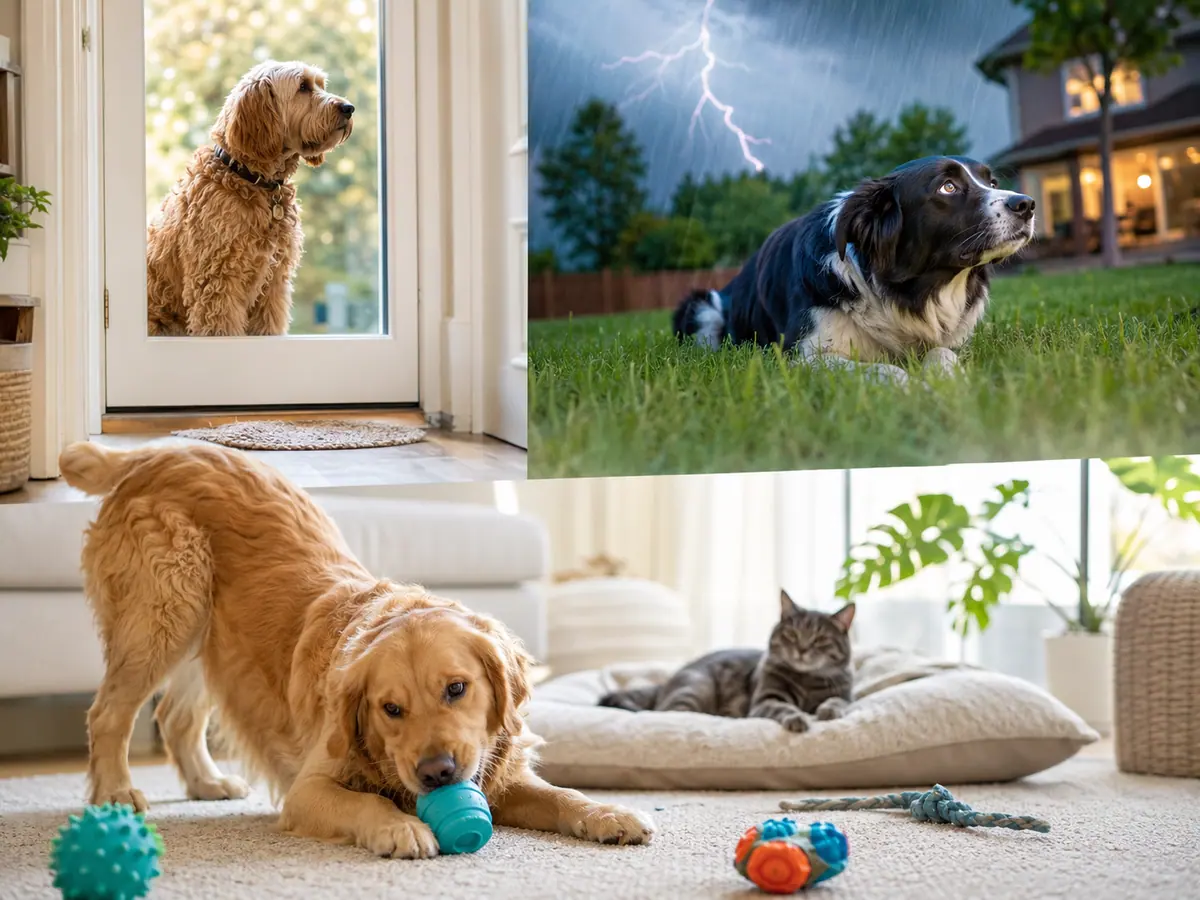
Dog anxiety is not a single condition. It is a family of related but distinct stress responses, each with different triggers, different physiological profiles, and different behavioral signatures. Matching the toy to the anxiety type - rather than selecting any "calming" product at random - is what separates effective enrichment from money spent on toys your dog will ignore.
In our experience writing about pet health topics like anxiety toys for dogs, we've found that owners benefit most when guidance separates clinical signs from normal variation. We try to flag that distinction clearly throughout this piece.
1. Separation Anxiety
Separation anxiety occurs when a dog becomes acutely distressed upon being left alone or separated from their primary attachment figure. Signs include destructive behavior within minutes of departure, excessive vocalization, house soiling despite being fully house-trained, and intense greeting behaviors when the owner returns. Separation anxiety is one of the most commonly diagnosed behavioral conditions in dogs. Toys that help: frozen KONG Classic, West Paw Toppl, heartbeat plush toys, bully sticks in holders, snuffle mats.
2. Noise and Storm Anxiety
Noise phobia - triggered by thunderstorms, fireworks, construction sounds, or sudden loud events - affects roughly one in three dogs. The physiological response is significant: heart rate doubles, cortisol spikes, and the dog enters a genuine fight-or-flight state. Noise anxiety often worsens with age as each exposure reinforces the fear response. Toys that help: tug toys used as owner-directed distraction during the event, frozen LickiMat started before noise begins, calming plush cuddle toys for comfort during recovery.
3. Social Anxiety
Some dogs are anxious around unfamiliar people or other dogs - not aggressive, but genuinely frightened. They may cling to their owner, refuse to engage with visitors, or shut down entirely in social settings. Social anxiety is distinct from fear aggression and requires a different management approach. Toys that help: slow feeder bowls and puzzle toys to occupy and self-soothe in social environments, snuffle mats to redirect focus, long-duration chews for grounding during visits.
4. Travel and Confinement Anxiety
Travel anxiety - stress during car rides, crate time, or being confined in unfamiliar environments - often manifests as whining, panting, drooling, or attempts to escape. It can be triggered by motion sickness, past negative associations, or the simple unfamiliarity of being in a moving or enclosed space. Toys that help: frozen KONG or Toppl (extended occupation during transit), heartbeat plush for crate comfort, calming cuddle toy for familiar scent and texture in unfamiliar environments.
5. Generalized Anxiety
Generalized anxiety describes dogs that are chronically and broadly anxious - reactive to novel stimuli, persistently vigilant, and unable to fully relax even in safe environments. This is often a combination of genetics, early socialization deficits, and learned hypervigilance. Toys that help: snuffle mats and puzzle toys (cognitive drain that induces calm), LickiMat (sustained parasympathetic activation), automatic ball launcher (energy drain), slow feeder bowl (reduces mealtime stress).
11 Best Anxiety Toys for Dogs
Every toy in this list was selected for its demonstrated effect on anxiety-related behaviors - not simply because it is popular or well-reviewed as a general dog toy. The picks span all five anxiety types, multiple price points, and a range of interaction styles. Browse our full dog toys collection to find these and similar picks.
1. LickiMat - Best Universal Calming Toy
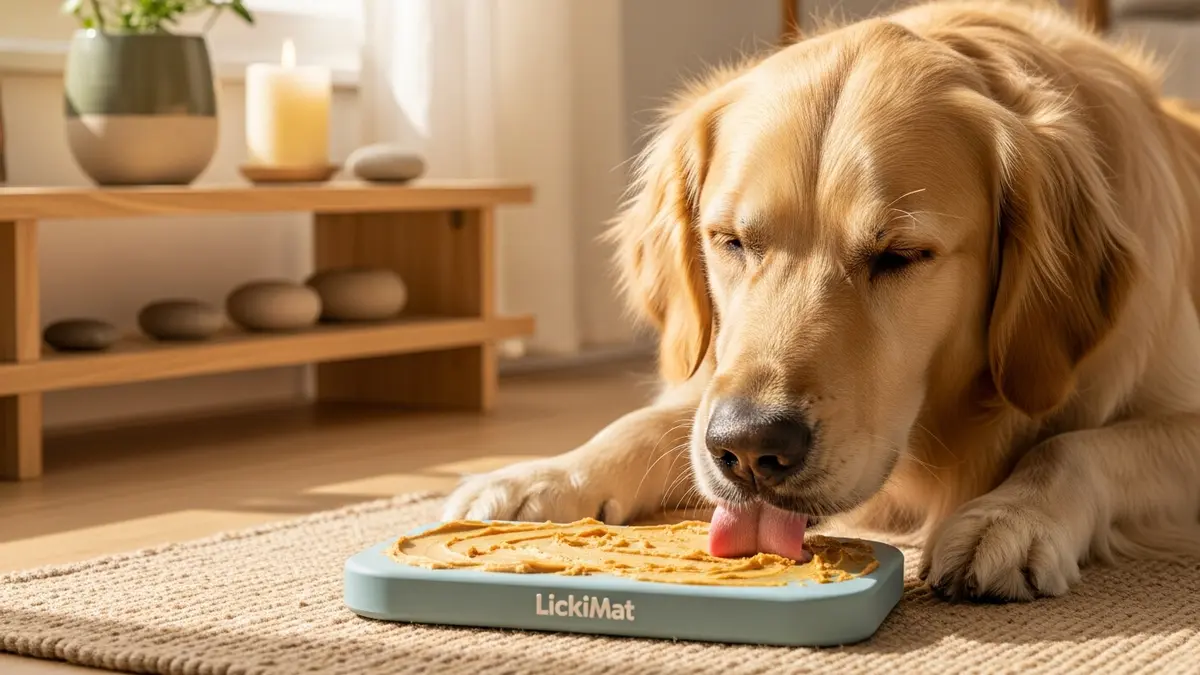
The LickiMat is the single most versatile anxiety toy available, and the science behind it is straightforward: repetitive licking releases calming neurotransmitters including serotonin, and activates the parasympathetic nervous system, which physically counteracts the stress response. Spread peanut butter, plain yogurt, canned pumpkin, or wet food across the textured surface and let your dog lick. A single loaded LickiMat provides 10 to 20 minutes of focused, calming engagement - and freezing it doubles or triples that duration. Use it before departure to front-load calm before separation anxiety sets in, before a storm, at the vet, or any time your dog needs neurological grounding. Available in multiple surface textures; "Buddy" and "Soother" patterns are ideal starting points.
Honestly, the most important takeaway we share with readers on anxiety toys for dogs is to involve a veterinarian early. We've seen how much smoother outcomes are when concerns are checked promptly.
Anxious pets may also benefit from the products in our dog anxiety toys guide.
2. KONG Classic Frozen - Best for Separation Anxiety
The KONG Classic stuffed with food and frozen overnight is arguably the most research-backed tool in separation anxiety management. The combination of food motivation, licking, pawing, and chewing creates a multi-sensory engagement that keeps a dog occupied for 30 to 60 minutes - far longer than they would spend on an unfrozen version. More importantly, when given consistently at departure time, the frozen KONG becomes a conditioned cue that predicts something good rather than something frightening. Over weeks, the pre-departure anxiety response weakens as the dog learns that your leaving means frozen KONG appears. Stuff with a mixture of kibble, peanut butter, and a smear of banana; prep five or six and keep them in the freezer. Size the KONG to your dog's breed weight - undersizing reduces the challenge and oversizing reduces access.
3. Snuffle Mat - Best for General Anxiety and Boredom-Driven Stress
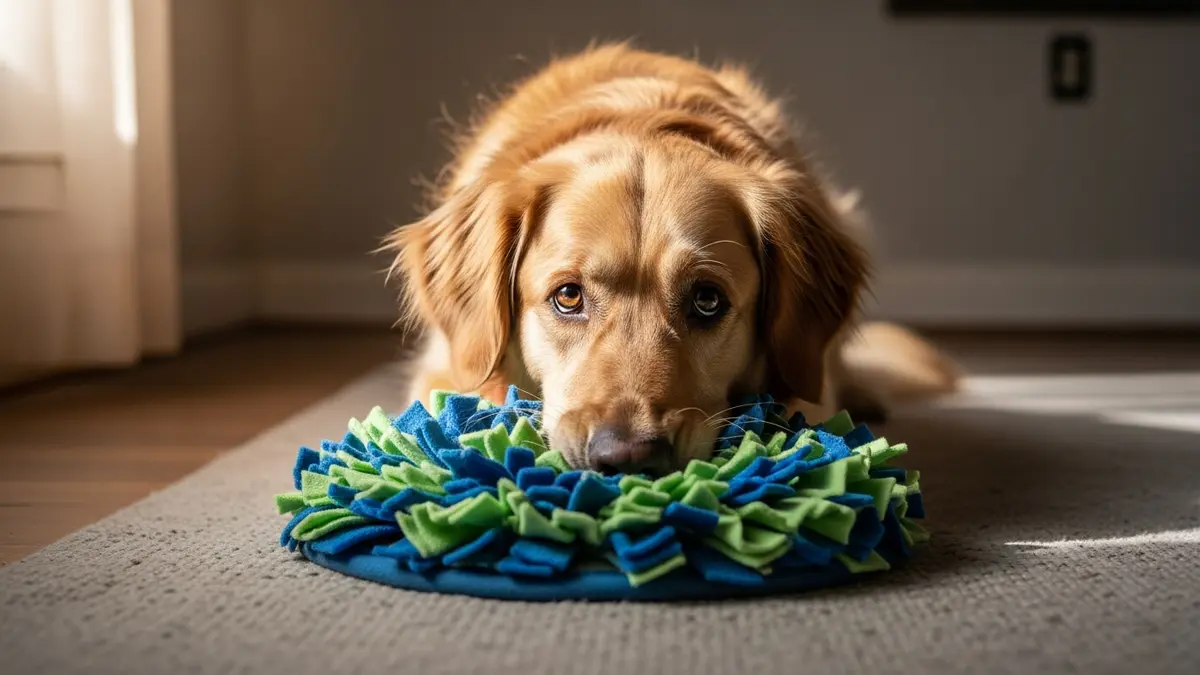
A snuffle mat hides food within layers of densely packed fabric strips, activating a dog's most powerful and calming sense: smell. Scent work engages the dog's brain far more deeply than fetch or tug - a 15-minute snuffle session can produce the same cognitive fatigue as an hour of physical exercise. For dogs with generalized anxiety, this cognitive drain translates directly to post-activity calm and reduced vigilance. The nose-down posture inherent to snuffle mat use also serves a calming signal function: dogs instinctively lower their head and slow their breathing when foraging, which feeds back into the nervous system as a calm signal. Scatter part of your dog's daily kibble across the mat at meal times to replace bowl-feeding with daily enrichment at no extra cost.
4. Heartbeat Plush Toy - Best for Separation Anxiety in Puppies and Young Dogs
Heartbeat plush toys - soft stuffed animals containing a battery-powered module that mimics the rhythm of a resting heartbeat - tap into the deeply wired comfort response dogs have to proximity with living companions. The heartbeat rhythm (around 60 to 80 beats per minute) closely matches the resting heart rate of another dog, which is why puppies in particular respond so strongly: the toy approximates the physical comfort of sleeping pressed against a littermate. Clinical studies of heartbeat plush devices have documented reductions in whining, restlessness, and cortisol in dogs with separation distress. Place the toy in your dog's crate or sleeping area before you leave. Warm the inner heat pack if the product includes one for additional comfort. Replace batteries regularly - a slow or irregular heartbeat can have the opposite effect.
5. West Paw Toppl - Best Frozen Treat Toy for Long Duration
The West Paw Toppl is the KONG Classic's closest rival for frozen treat toys, and in several respects it outperforms it for anxious dogs. The Toppl's wider opening makes stuffing - and your dog's access to the food - significantly easier, which means less frustration for dogs that are already mildly stressed. Frustrated food toys can worsen anxiety in dogs that are easily discouraged. The Toppl is also dishwasher-safe, BPA-free, and comes in two sizes that can be connected to increase the challenge. For dogs new to stuffed toys, start with a large Toppl packed loosely with wet food or a thin smear of peanut butter. As confidence builds, move to frozen content and harder stuffing. The Toppl is particularly well-suited for travel anxiety: it can be loaded at home and given in the car or crate to create a positive association with confined travel spaces.
6. Puzzle Toy Level 1 - Best for Mild Anxiety and Mental Focus
For dogs with mild or social anxiety, a Level 1 puzzle toy - sliding covers, simple flip mechanisms, or basic peg boards that hide treats - provides a focused task that competes with anxious rumination for the dog's attention. Cognitively engaged dogs cannot simultaneously monitor every sound, scan every corner of the room, and work through a puzzle feeder. The act of solving the puzzle also triggers a small dopamine reward for each successful reveal, which builds positive emotional momentum during what would otherwise be a stressful experience. Introduce puzzle toys during low-stress moments so your dog builds competence and confidence before encountering them during an anxious episode. A dog that has solved the puzzle forty times at home will approach it eagerly even when a guest is present.
7. Tug Toy with Owner - Best for Noise Anxiety During a Storm
During a noise anxiety event - a thunderstorm, fireworks display, or sudden loud disturbance - the single most effective thing you can do for a mildly to moderately anxious dog is redirect their attention to an activity that involves you. A tug toy used actively by the owner during the event does several things simultaneously: it provides physical outlet for arousal, it positions you as a source of safety and engagement rather than something your dog needs to seek comfort from by pressing against you, and the game itself is sufficiently engaging to break the hypervigilance cycle. Tug also allows your dog to make active choices about engagement - they can disengage if they need to, which gives them a sense of agency. Keep the game calm and controlled rather than high-energy; the goal is focus and grounding, not further arousal. End with a "drop it" and a slow settle.
8. Slow Feeder Bowl - Best for Mealtime Anxiety
Dogs that eat with anxious speed - gulping food in under a minute, competing with other pets, or visibly panicked at mealtime - benefit enormously from a slow feeder bowl. The raised ridges, mazes, and channels that define slow feeder designs force the dog to use their tongue and snout to extract kibble piece by piece, turning a 30-second anxious inhale into a 10 to 15 minute mindful engagement. The slowed pace reduces bloat risk, improves digestion, and - critically - gives the nervous system time to register satiety and calm. For socially anxious dogs that eat poorly in the presence of other pets or people, a slow feeder gives them a task to focus on rather than monitoring their environment. Feed anxious dogs in a separate, quiet space with a slow feeder to remove mealtime as a source of daily stress.
9. Calming Plush Cuddle Toy - Best Comfort Object
A calming plush cuddle toy - soft, generously sized, and durable enough to survive prolonged holding and gentle chewing - serves a different function than interactive anxiety toys. It operates as a comfort object and scent anchor rather than an engagement tool. Dogs establish strong positive associations with familiar objects that carry their own scent after repeated contact. A cuddle toy that has been in your dog's sleeping area for several weeks becomes a portable piece of their safe space - one that can travel with them to the vet, to a kennel, to a friend's house, or into a crate during a storm. Rub the toy against your own skin occasionally so it carries your scent as well. For dogs that mouth and carry their toys as a self-soothing behavior, a calming plush cuddle toy gives them something purposeful and safe to do with that impulse. For additional guidance, see the VCA Hospitals separation anxiety guidance.
10. Bully Stick in a Holder - Best Long-Duration Chew
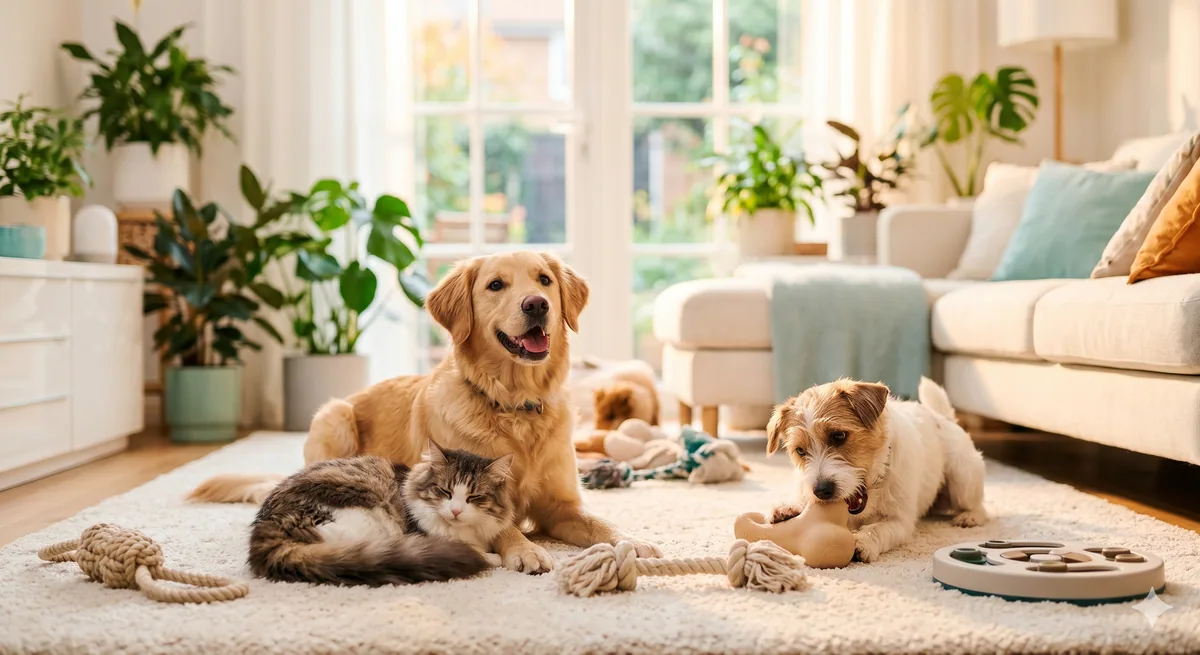
Chewing is one of the most powerful self-regulation behaviors available to dogs. The rhythmic, repetitive action of sustained chewing engages the jaw muscles and triggers the release of calming neurochemicals including endorphins and serotonin. Bully sticks (single-ingredient dried beef pizzle) are among the most digestible and long-lasting natural chews available, and pairing one with a bully stick holder - a device that locks the chew in place when it reaches a size that could become a choking hazard - makes them a safe, hours-long occupation. For dogs with separation anxiety, a bully stick begun at departure provides a compelling, food-motivated reason to stay calm long enough for the initial anxiety peak to pass. Introduce bully sticks in a calm environment before using them as an anxiety management tool so your dog has an established positive association with the chew itself.
For more calming solutions, see our detailed toys for dogs with separation anxiety review.
11. Automatic Ball Launcher - Best for Energy Drain Leading to Calm
For dogs whose anxiety is partly driven by excess unreleased energy - and many generalized anxiety cases are - an automatic ball launcher provides a genuine physical outlet for independent play without requiring owner participation. The unpredictability of the launch timing and direction holds attention more effectively than a stationary toy, and the sustained physical engagement produces genuine tiredness rather than frustration-driven arousal. Physically tired dogs sleep more deeply, recover faster from stressful events, and show lower baseline cortisol levels with consistent exercise. Start with the lowest power setting and shortest distance to introduce your dog to the launcher without startling them. Pair the launcher with a post-play settle routine - a mat cue or a short lick mat session - to teach your dog to transition from active play to rest on cue. That transition is itself a valuable anxiety management skill.
Match Your Dog's Anxiety Type to the Right Toy
Use this reference table to quickly identify which toys are the strongest match for your dog's primary anxiety type. Many dogs experience more than one type - in those cases, prioritize the toys that appear across multiple rows.
| Anxiety Type | Recommended Toy | Why It Helps |
|---|---|---|
| Separation Anxiety | Frozen KONG Classic, Heartbeat Plush, Bully Stick + Holder, West Paw Toppl | Creates a positive pre-departure association; provides occupation during the high-stress first 30 minutes; simulates companion presence |
| Noise / Storm Anxiety | LickiMat (pre-storm), Tug Toy with Owner (during storm), Calming Plush Cuddle Toy (recovery) | Front-loads calm before anxiety peaks; redirects to owner-directed engagement; provides comfort object post-event |
| Social Anxiety | Slow Feeder Bowl, Puzzle Toy Level 1, Snuffle Mat, Bully Stick + Holder | Gives dog a task to focus on rather than monitoring social triggers; builds confidence through successful problem-solving |
| Travel / Confinement Anxiety | West Paw Toppl (frozen, in crate), Heartbeat Plush, Calming Plush Cuddle Toy | Transfers familiar comfort objects into unfamiliar space; creates positive food association with crate and car |
| Generalized Anxiety | LickiMat, Snuffle Mat, Automatic Ball Launcher, Puzzle Toy, Slow Feeder Bowl | Addresses multiple physiological mechanisms - licking, foraging, energy drain, and cognitive engagement - that collectively reduce baseline anxiety |
The most effective anxiety management combines two or three toys that work through different mechanisms - for example, a frozen KONG (licking + food occupation) paired with a heartbeat plush (companion simulation) and a snuffle mat fed at breakfast (morning cognitive drain). Each addresses a different biological pathway, and the combined effect is greater than any single toy alone.
When to Get Professional Help
Toys, enrichment, and environmental management are powerful tools - but they are behavioral supplements, not treatments for severe anxiety. There is a meaningful line between anxiety that responds well to enrichment strategies and anxiety that requires professional intervention, and it is important for owners to know where that line is.
Consider speaking to a veterinarian or veterinary behaviorist if:
- Your dog self-injures during anxiety episodes - excessive licking to raw skin, biting paws, or head pressing
- Your dog cannot settle at all during triggering events, regardless of enrichment provided
- Destructive behavior during separation is severe enough to create escape risks or injury hazards
- Your dog's anxiety is worsening despite consistent enrichment and management
- Your dog has stopped eating, shows significant weight loss, or has developed physical symptoms alongside anxiety behaviors
- Your dog displays aggression - growling, snapping, or biting - as an expression of anxiety
A certified applied animal behaviorist (CAAB) or board-certified veterinary behaviorist (DACVB) can design a behavior modification plan that addresses the root causes of your dog's anxiety - not just the surface symptoms. Veterinary intervention may include anti-anxiety medication, which does not sedate or change your dog's personality but reduces the physiological intensity of the stress response enough that behavioral strategies and toys can actually take hold. Medication combined with environmental enrichment consistently produces better outcomes than either approach alone.
If your dog's anxiety developed suddenly or has intensified rapidly without an obvious environmental cause, schedule a veterinary appointment promptly. Sudden-onset anxiety in adult dogs can be a symptom of an underlying medical condition - pain, thyroid dysfunction, neurological changes, or cognitive dysfunction in older dogs. Rule out medical causes before attributing all changes to behavioral anxiety.
The goal of toys and enrichment is to build a daily environment where your dog's nervous system gets regular, consistent signals of safety and engagement. Think of anxiety toys not as a solution to reach for in a crisis, but as a daily investment in your dog's baseline emotional state - the kind of consistent enrichment that makes anxious episodes less frequent and less severe over time. Explore our full range of calming toys for dogs for additional options beyond this list.
Conclusion
Choosing the right approach for your dog comes down to matching the recommendations in this guide with the specifics of your situation. Pay close attention to age, breed, activity level, and any existing health concerns. When in doubt, talk to your veterinarian before making changes.
Use this guide as a starting point, observe your dog closely after any change, and update your routine as your dog's needs evolve. Small adjustments over time lead to the biggest improvements in well-being and behavior.
Frequently Asked Questions
Should I consult a veterinarian about my pet's play and enrichment needs?
Yes, especially if your pet shows signs of anxiety, sudden behavior changes, or destructive habits that may indicate a medical issue. A licensed veterinarian or veterinary behaviorist can rule out pain, dental problems, or cognitive decline before you adjust toys or routines. The guidance in this article is educational, not a substitute for professional veterinary advice.
How long does it take to see results from new toys or enrichment?
Most pet owners notice small changes within a week (calmer evenings, less destructive chewing, more interest in mealtime puzzles) and clearer behavior shifts within 4 to 6 weeks of consistent rotation. Older pets and rescues may take 8 to 12 weeks to adjust. Keep a short weekly journal so you can track real progress instead of relying on memory.