Cats have a reputation for being self-sufficient and unflappable - lounging in sunbeams, indifferent to the world. But beneath that cool exterior, domestic cats are remarkably sensitive creatures. They are territorial, routine-dependent, and wired for an environment they largely control. When that control slips - a house move, a new pet, a change in schedule, a trip to the vet - the feline nervous system feels it keenly. The result is anxiety that many owners miss entirely because it rarely looks like what they expect. According to the ASPCA cat care guidance, choosing the right toys can support your pet's mental and physical wellbeing.
Calming toys for cats work because they address the behavioral roots of anxiety rather than just masking symptoms. They channel the natural hunt-catch-eat sequence, engage the senses in soothing ways, and give a stressed cat something purposeful to do in their environment. Whether your cat is adjusting to a new home, dealing with a new kitten sibling, or simply bored and on edge, the right toy can make a measurable difference. Browse our full range of cat toys and accessories to complement the picks in this guide.
This article is for general informational purposes only and is not a substitute for professional veterinary advice, diagnosis, or treatment. Always consult your veterinarian about any health concerns, dietary changes, medication, or product safety questions specific to your pet. If your pet shows signs of distress, illness, or injury, contact a licensed veterinarian or emergency animal hospital immediately.
Why Cats Get Stressed - and Why Toys Help
Feline anxiety is far more common than most people realize. A study published in the Journal of Feline Medicine and Surgery found that a significant proportion of cats presenting to veterinary clinics with behavioral problems had underlying anxiety as the primary driver. Unlike dogs, cats rarely vocalize distress loudly or destructively - instead, they internalize it in ways that manifest as physical symptoms, subtle behavioral shifts, and slow-building problems that owners often attribute to age, mood, or stubbornness.
When we look at calming toys for cats from a practical pet-owner lens, we keep coming back to a simple rule: choose for your dog's chewing style first, aesthetics second. We've found that approach prevents most of the regrets.
If stress is a concern, our guide to dog anxiety toys covers more solutions.
The most common triggers for feline stress include environmental changes such as moving house or rearranging furniture, the introduction of a new pet or family member, alterations to the owner's routine or schedule, loud external noises, multi-cat tension in shared spaces, and boredom from insufficient environmental enrichment. Even a vet visit - with its foreign smells, sounds, and handling - can tip a sensitive cat into a state of prolonged elevated cortisol that takes days to resolve.
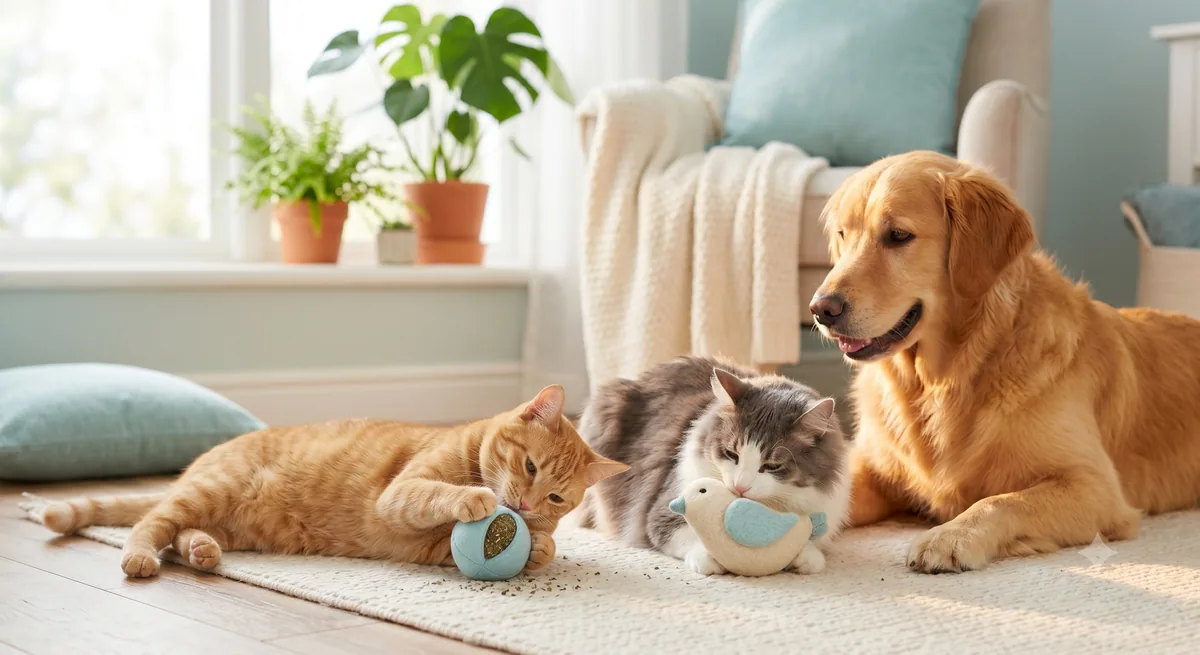
Toys help because they give the cat agency. A cat that is actively engaging with its environment - hunting, foraging, grooming, exploring - is a cat that is processing its world on its own terms. Purposeful play activates the mesolimbic dopamine system, reduces cortisol, and reinforces the cat's sense of competence and safety. The best cat toys don't just entertain; they genuinely regulate the stress response at a neurological level.
A cat that plays regularly is a cat that is managing its stress effectively. Two 10-to-15-minute play sessions per day lower baseline cortisol levels and reduce the incidence of anxiety-related behaviors within one to two weeks of consistent use.
Signs Your Cat Is Stressed or Anxious
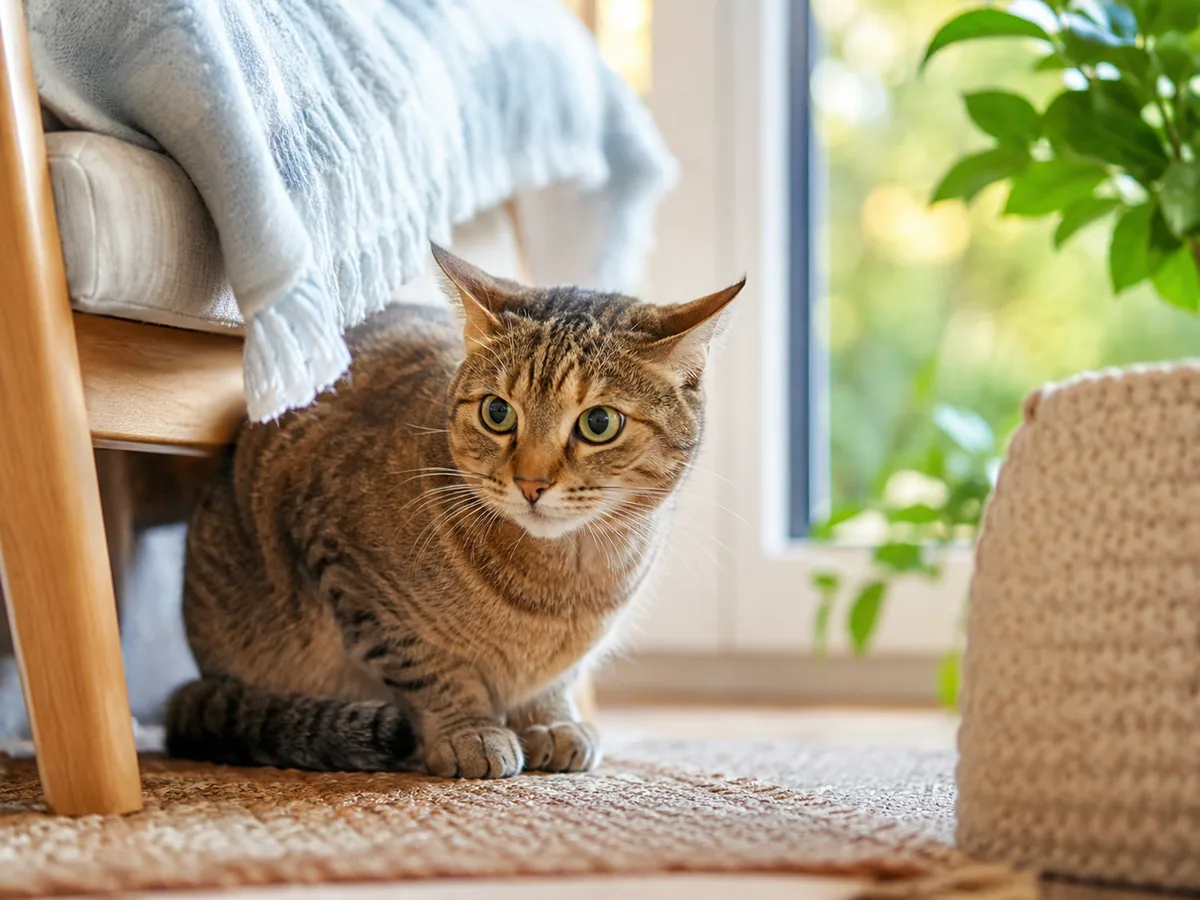
Before choosing calming toys, it helps to recognize what feline anxiety actually looks like. Cats are subtle communicators, and many stress signals are easy to overlook or misattribute.
Hiding More Than Usual
A cat that suddenly retreats to under-bed hiding spots or high shelves for extended periods - especially after an environmental change - is communicating that the world feels unsafe. Occasional hiding is normal. Persistent, prolonged withdrawal is a stress signal that warrants attention.
Honestly, we get asked about calming toys for cats more than almost any other category, and our answer has evolved over time as new research and product updates land.
Overgrooming or Barbering
Stress-induced excessive grooming - licking patches of fur away, particularly on the belly, inner thighs, or flanks - is one of the most clinically consistent signs of chronic feline anxiety. It is self-soothing behavior that escalates into a compulsive loop. If you notice symmetrical bald patches or thinning fur, anxiety is a leading cause.
Aggression Toward People or Other Pets
A cat that redirects stress into hissing, swatting, or biting - particularly when startled or when resource competition is involved - is operating from an elevated threat-response baseline. This is anxiety expressed outward rather than inward.
Litter Box Issues
Inappropriate elimination - urinating or defecating outside the litter box in the absence of medical causes - is one of the top behavioral presentations of feline stress. Cats use scent marking to reclaim perceived safety in their territory. Always rule out urinary tract infection first, but if the vet finds no physical cause, anxiety is the primary suspect.
Reduced Appetite
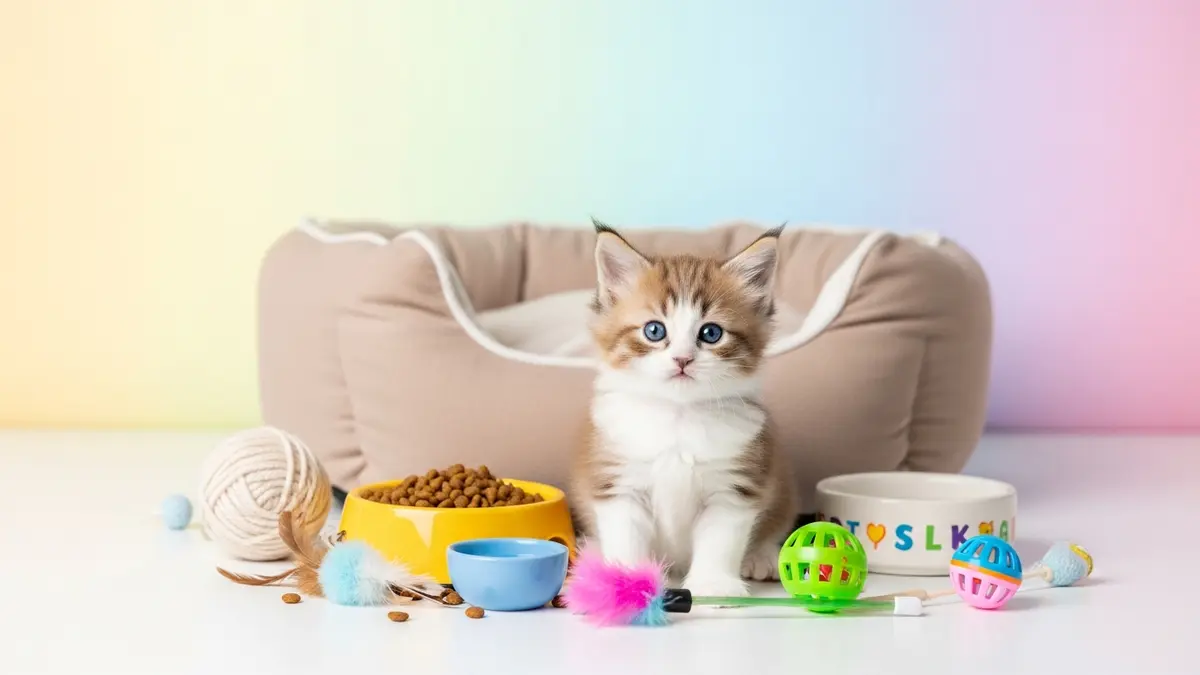
Chronic stress suppresses appetite. A cat that is consistently eating less, showing disinterest in food it previously enjoyed, or approaching the bowl then walking away is often experiencing anxiety-related appetite disruption. This is particularly common in cats adjusting to new households - as covered in our guide to new kitten essentials - where everything from the bowl location to the ambient sound is unfamiliar.
10 Best Calming Toys for Cats
These picks address feline anxiety from multiple angles: sensory soothing, behavioral enrichment, physical outlet, and instinctual satisfaction. Used consistently as part of a daily routine, they create the conditions for a calmer, more settled cat.
Anxious pets may also benefit from the products in our separation anxiety dog toys guide.
1. LickiMat for Cats - Best Overall Calming Toy
The LickiMat is the single most consistently effective calming tool available for cats, and the science behind it is well established. Repetitive licking stimulates the production of saliva and digestive enzymes, activates the parasympathetic nervous system, and triggers a measurable release of endorphins - the same neurochemical response that makes self-grooming so soothing for cats. Spread a thin layer of plain unseasoned wet food, a small amount of pureed pumpkin, or a scrape of tuna paste across the textured surface. Most cats will lick in a slow, focused rhythm for 10 to 20 minutes, exiting the session noticeably calmer and more settled. The LickiMat is particularly effective before known stress triggers - vet visits, fireworks, guests arriving - as a pre-emptive cortisol management tool. Choose the textured "Buddy" or "Playdate" pattern for cats; avoid honey or anything sweetened.
2. Feather Wand - Best Interactive Calming Toy
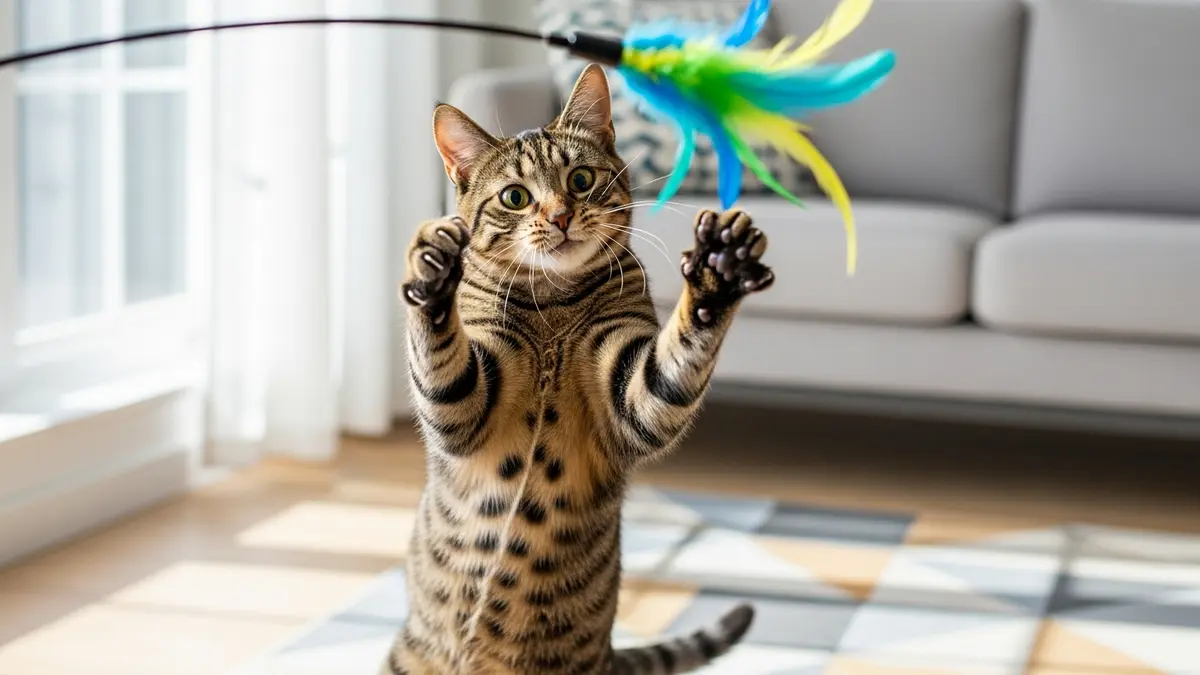
A high-quality feather wand - one with genuine feathers or realistic feather mimics attached to a flexible rod - is the most direct tool for completing a cat's natural hunting sequence. The sequence matters: stalk, pounce, catch, deliver the killing bite, then disengage. When a cat completes this arc in play, cortisol drops measurably and the cat enters a calm, satisfied state that behavioral researchers describe as post-hunt relaxation. For anxious cats, wand play operated at a distance (so the cat isn't pressured by hand proximity) builds confidence gradually. Move the wand in short, unpredictable bursts - not frantic sweeping - and let the cat catch it regularly. Each catch is a small win that reinforces the cat's sense of efficacy and safety in its environment. End every session with a small treat or meal to complete the hunt-eat sequence fully.
3. Cat Puzzle Feeder (Level 1) - Best Mental Enrichment
Puzzle feeders replace the passive, stress-neutral act of bowl eating with active foraging - a behavior cats are neurologically wired for. When a cat must work through sliding doors, rotating discs, or peg mazes to extract their kibble, they are engaging the prefrontal cortex in problem-solving while simultaneously satisfying a primal need to hunt for food. The result is a post-feeding state of calm that bowl-fed cats rarely achieve. For anxious cats, begin with a Level 1 puzzle - open troughs, shallow cups, or a simple sliding compartment - and increase complexity as the cat gains confidence. A cat that approaches a puzzle with interest and solves it successfully receives a small but genuine neurological reward, building exactly the kind of environmental confidence that reduces generalized anxiety over time.
4. Catnip Toys - Best Plant-Based Calming Option
Catnip (Nepeta cataria) contains nepetalactone, a volatile compound that binds to feline olfactory receptors and triggers a short burst of excited, playful behavior followed by a prolonged sedative-like calm. The initial excited phase lasts 5 to 15 minutes; the subsequent calm phase - characterized by relaxed posture, slow blinking, and reduced activity - can persist for 30 minutes or more. This two-phase response makes catnip toys exceptionally useful for anxious cats: the play phase burns off nervous energy, and the calm phase that follows provides genuine neurological rest. Approximately 65 percent of cats respond to catnip; the response is hereditary and non-addictive. Store catnip toys in an airtight bag between uses to preserve potency, and limit use to every few days to prevent habituation.
5. Silver Vine Sticks - Best Alternative to Catnip
Silver vine (Actinidia polygama) is a plant native to East Asia whose woody stems and dried leaves contain actinidine and dihydroactinidiolide - two compounds that trigger a calming euphoric response in cats through a different biochemical pathway than catnip. Crucially, silver vine works on approximately 80 percent of cats, including the roughly 35 percent that do not respond to catnip at all. For cats that have never reacted to catnip, silver vine sticks are often a revelation: the cat rolls, rubs its face against the stick, drools slightly, and enters a prolonged state of relaxed contentment. The stick format also provides a gentle chewing surface that supports dental hygiene. Silver vine is non-toxic and the response fades naturally within 20 to 30 minutes. An excellent tool for managing situational stress in non-catnip-responding cats.
6. Crinkle Ball - Best Gentle Sensory Toy
Crinkle balls - lightweight foil or mylar spheres that produce a soft rustling sound when batted - are one of the most underrated calming toys for cats. The sound mimics the auditory profile of small prey animals moving through dry leaves or grass, activating the cat's predatory attention in a low-intensity way that is engaging without being overwhelming. For anxious cats that are too stressed or shut down to engage with wand toys or puzzles, a crinkle ball placed near their resting spot often prompts a cautious first tap, then a gentle batting session that gradually builds confidence. The lightness of the ball ensures it responds to even a tentative paw with realistic movement, giving even a highly inhibited anxious cat a small, manageable hunting success. Keep a few accessible in quiet corners of the home so the cat can self-initiate play on their own terms.
7. Self-Grooming Arch Brush - Best Calming Grooming Accessory
In multi-cat households and wild feline groups, allogrooming - one cat grooming another - is a primary social bonding and stress-reduction behavior. The self-grooming arch brush replicates this experience for the solo cat, allowing them to rub their face, cheeks, and neck across bristles at their own pace. Cheek rubbing in particular deposits facial pheromones and is deeply self-soothing for cats; a cat that regularly grooms itself on an arch brush is actively managing its own stress chemistry. Mount the arch at cheek height near the cat's favorite resting zone or in a corridor they pass through frequently. Most cats adopt the arch within days and return to it multiple times per day as a self-directed calming ritual. This is a passive enrichment tool that works continuously without any required human input.
8. Snuffle Mat for Cats - Best Foraging Toy
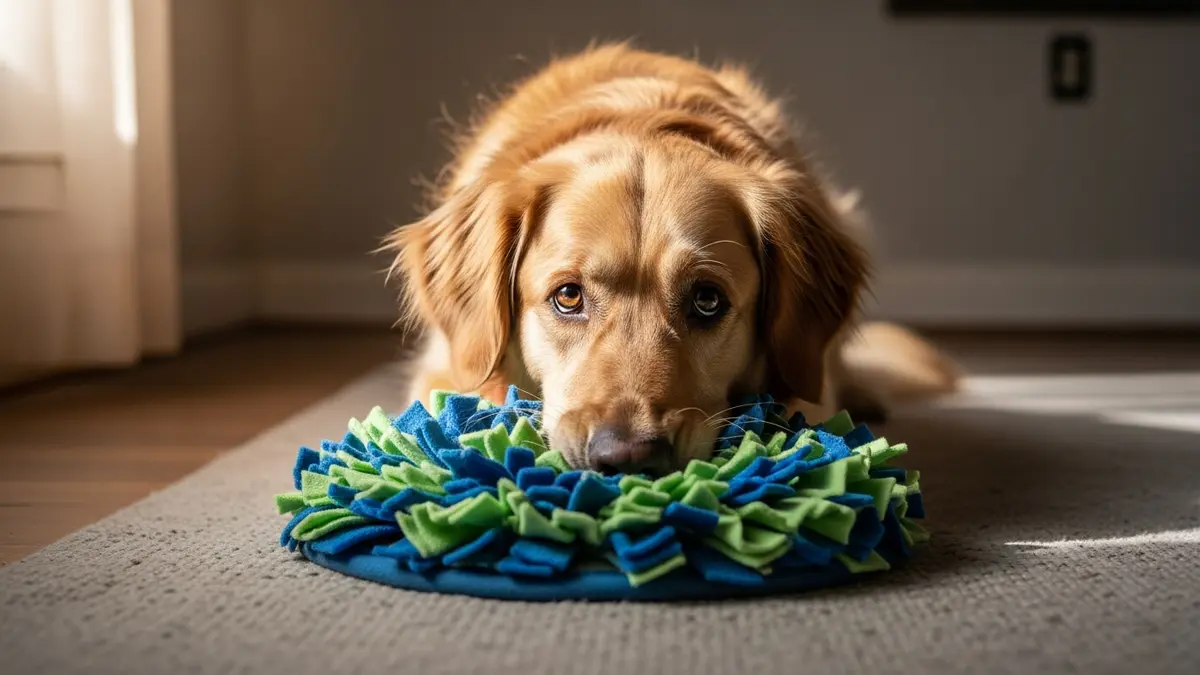
Cats are obligate hunters with a scent-driven foraging instinct that modern bowl feeding completely bypasses. A snuffle mat - a dense fabric surface with hidden channels, pockets, and folds in which small kibble pieces or treats can be buried - restores that foraging behavior in a safe, indoor-appropriate format. The olfactory engagement required to locate and extract each morsel is cognitively intensive: 10 to 15 minutes of focused snuffle mat foraging is neurologically equivalent to a much longer session of passive exercise, and the concentration required keeps stress-related rumination at bay. Post-snuffle-mat cats typically display the same relaxed, settled demeanor seen after successful outdoor hunting. Use a cat-specific snuffle mat (lower pile depth, smaller treat pockets) and scatter 20 to 30 pieces of kibble as part of the regular daily feeding routine.
9. Heated Cat Bed - Best Calming Environmental Companion
While not a toy in the traditional sense, a heated cat bed is one of the most powerful calming investments you can make for an anxious cat. Cats seek warmth instinctively - it regulates body temperature, activates the parasympathetic nervous system, and replicates the physical sensation of contact with a warm littermate or mother. An anxious cat given access to a consistent, comfortably heated retreat has a reliable physiological downregulation tool available at all times. Pair the heated bed with a consistent play-then-rest routine: finish a wand session or LickiMat session, then guide the cat toward the heated bed for recovery. Over time, the bed becomes a conditioned cue for calm, and the cat will self-direct there after stressful events. Look for beds with a low-wattage self-regulating heating element, chew-resistant cord, and machine-washable cover.
10. Cat Tunnel - Best Hiding-and-Play Combo
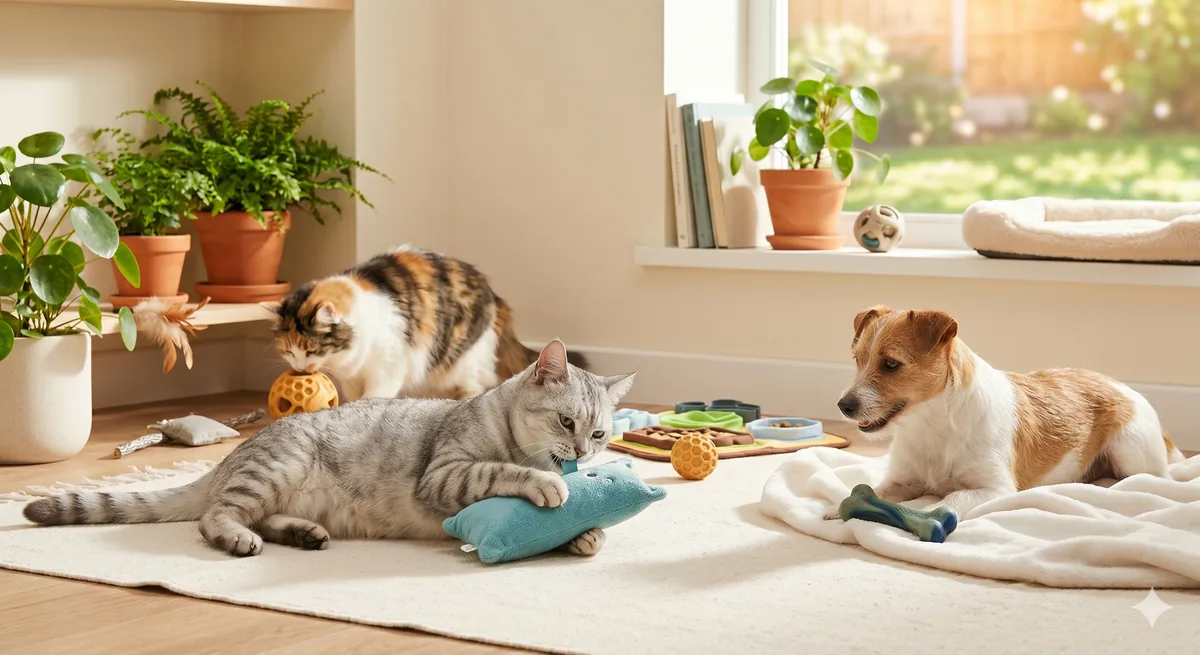
Cat tunnels serve two distinct anxiety-reducing functions simultaneously: they provide a secure hiding space that gives anxious cats a sense of invisibility and safety, and they facilitate ambush-style play that satisfies the cat's stalking and pouncing instincts. An anxious cat that would not approach an open play space will often enter a tunnel confidently - the enclosed environment removes the vulnerability of being seen, and that security is deeply calming. Tunnels with a central peek-a-boo hole allow cats to observe the room without being fully exposed, while crinkle-panel options add gentle sensory engagement. Use a feather wand trailed past the tunnel opening to invite play from within; many anxious cats who resist direct wand play will engage enthusiastically from the safety of their tunnel. A collapsible tunnel left permanently in a quiet corner becomes both a retreat and a regular play zone, meeting the cat's need for both safety and stimulation in a single object. For additional guidance, see the Cornell Feline Health Center.
For more calming solutions, see our detailed anxiety toys for dogs review.
Play Therapy for Anxious Cats
Knowing which toys to buy is only half the equation. How you use them - the structure, timing, and consistency of play - determines whether they actually reduce anxiety or just collect dust in a corner. Play therapy for anxious cats is a real behavioral intervention with documented efficacy, and it works best when applied with intention.
Schedule Sessions, Not Spontaneous Play
Anxious cats benefit enormously from predictability. Scheduled play at the same times each day - rather than ad hoc sessions whenever you remember - teaches the cat that stimulation is coming, reducing anticipatory anxiety and building a sense of routine control. Aim for two 10-to-15-minute sessions daily: one in the morning and one in the early evening. Consistency over two weeks produces measurable reductions in stress-related behaviors even in severely anxious cats.
Time Sessions Before Feeding
The most effective play therapy schedule mimics the natural feline hunt-eat sequence. A play session that ends 20 to 30 minutes before feeding time allows the cat to complete the full behavioral arc: stalk, hunt, catch, then eat, then groom, then sleep. Cats played-then-fed show significantly calmer post-meal behavior and reduced overnight restlessness compared to cats fed from static bowls without prior play. This is one of the most evidence-supported behavioral modifications available for anxious indoor cats.
Let the Cat Set the Pace
For highly anxious cats, never force interaction. Place the wand on the floor and let the cat approach it. Use slow, predictable movements before building to faster, more erratic prey mimicry. Allow the cat to disengage without pursuing them. The goal of each session is not maximum activity but maximum successful engagement - each confident stalk, each voluntary pounce, each self-initiated approach is a data point of progress. Pressure and forced play increase anxiety; patient, invitation-based play reduces it.
Two 15-minute sessions daily, scheduled at consistent times, concluding 30 minutes before feeding. Let the cat determine engagement intensity. Build complexity and proximity gradually over days and weeks. Consistency matters more than any single session.
Beyond Toys: Environmental Enrichment for Calm Cats
Calming toys work best when embedded in a broader environment designed for feline psychological wellbeing. Toys address behavioral needs in discrete sessions; environmental design addresses baseline anxiety continuously, 24 hours a day. These complementary strategies compound the effect of every toy you introduce.
Vertical Space
Cats feel safest when they have access to elevation. High perches - cat trees, wall-mounted shelves, top-of-wardrobe access - give anxious cats an oversight position from which the entire room is visible and they are not reachable from the ground. A cat that can observe its environment from height without being cornered is a significantly calmer cat than one confined to floor level. In multi-cat households, vertical space also reduces resource competition by multiplying the effective territory available to each cat.
Dedicated Hiding Spots
Every anxious cat needs at least one enclosed, private hiding space in each room they regularly occupy. This does not need to be elaborate - a box with a hole cut in the side, a covered bed in a quiet corner, or a cat tunnel in a low-traffic area all qualify. The critical requirement is that no one disturbs the cat when it is in its hiding spot. A retreat that is reliably safe teaches the cat that the environment contains genuinely predictable zones of safety, which reduces generalized threat-response activation even when the cat is not hiding.
Window Perches and Bird Feeders
Visual enrichment - watching birds, squirrels, or even passing pedestrians from a comfortable window perch - provides hours of low-intensity cognitive engagement that reduces boredom-based anxiety. Placing a bird feeder outside a window transforms a static glass pane into what behavioral researchers call a "cat television" - constantly refreshing, inherently interesting, and completely non-threatening. Window perches with a padded sleeping surface allow the cat to combine visual enrichment with rest, a combination that is particularly effective for cats whose anxiety presents as hypervigilance.
Maintain Routine Above All Else
The single most powerful anxiety management tool is not a toy, a supplement, or an environmental modification - it is routine. Cats that are fed, played with, and given access to their resources at consistent, predictable times show the lowest baseline anxiety levels of any indoor cat population. When changes are unavoidable - moving house, a new pet, a schedule shift - introduce them gradually, maintain as many existing routine elements as possible, and layer in additional calming tools (LickiMat, catnip, tunnel access) during the transition period. For households introducing a new kitten, our guide to new kitten essentials covers managing multi-cat stress in detail. If your household includes dogs as well, see our dedicated guide to dog anxiety toys for managing stress across species.
Comparison: Budget vs Mid-Range vs Premium
This quick comparison helps you understand what you actually get at each price band, so you can decide where to spend and where to save without compromising safety.
Comparison reflects typical US retail ranges as of 2026. Always verify safety labels before purchase.
Conclusion
Choosing the right approach for your cat comes down to matching the recommendations in this guide with the specifics of your situation. Pay close attention to age, breed, activity level, and any existing health concerns. When in doubt, talk to your veterinarian before making changes.
Use this guide as a starting point, observe your cat closely after any change, and update your routine as your cat's needs evolve. Small adjustments over time lead to the biggest improvements in well-being and behavior.
Frequently Asked Questions
Should I consult a veterinarian about my pet's play and enrichment needs?
Yes, especially if your pet shows signs of anxiety, sudden behavior changes, or destructive habits that may indicate a medical issue. A licensed veterinarian or veterinary behaviorist can rule out pain, dental problems, or cognitive decline before you adjust toys or routines. The guidance in this article is educational, not a substitute for professional veterinary advice.
How long does it take to see results from new toys or enrichment?
Most pet owners notice small changes within a week (calmer evenings, less destructive chewing, more interest in mealtime puzzles) and clearer behavior shifts within 4 to 6 weeks of consistent rotation. Older pets and rescues may take 8 to 12 weeks to adjust. Keep a short weekly journal so you can track real progress instead of relying on memory.