Bringing home a new kitten is one of life's greatest joys - and one of its more overwhelming shopping experiences. Between the litter boxes, kitten food, toys, beds, and vet appointments, it can feel like you need a degree in feline science before your tiny furball even sets paw in your home. Don't worry. This complete guide to new kitten essentials covers everything you need, in the order you need it, without the fluff (unless it squeaks).
Whether you're adopting from a shelter, getting a kitten from a breeder, or welcoming an unexpected stray, the fundamentals are the same. Get the right supplies before your kitten arrives, and those first weeks will go smoothly for both of you. Check out our cat toys and accessories collection for curated picks that cover many of these essentials.

This article is for general informational purposes only and is not a substitute for professional veterinary advice, diagnosis, or treatment. Always consult your veterinarian about any health concerns, dietary changes, medication, or product safety questions specific to your pet. If your pet shows signs of distress, illness, or injury, contact a licensed veterinarian or emergency animal hospital immediately.
Preparing Your Home Before Your Kitten Arrives
The single best thing you can do before bringing a new kitten home is kitten-proof your space and set up a dedicated "safe room." Kittens are curious, fragile, and surprisingly fast. A little preparation saves a lot of stress.
When we evaluate kitten essentials for the Livehappypet readers, we focus on three things we wish more buying guides flagged: material safety, sizing accuracy, and supervision requirements. We've found those decide the buying outcome more than brand alone.
For breed-specific recommendations, see our best toys for old dogs picks.
Kitten-Proofing Checklist
Think of kitten-proofing as baby-proofing, but for a creature that can jump six times its own height and squeeze through gaps the width of your fist. Work through each room and address these common hazards:
- Secure electrical cords - kittens love chewing them. Use cord covers or tuck them away completely.
- Remove toxic houseplants - lilies, philodendrons, pothos, and aloe vera are all poisonous to cats. Check the ASPCA's full list of toxic and non-toxic plants before your kitten arrives.
- Store chemicals and medications out of reach or behind locked cabinet doors.
- Cover open water sources - toilet lids down, fish tanks secured.
- Block small gaps behind appliances, under beds, and inside recliners where a kitten could get trapped.
- Put away small objects - rubber bands, hair ties, string, and twist ties are all choking hazards and intestinal obstruction risks.
Setting Up a Safe Room
New kittens should not have free run of the entire house on day one. The volume of new smells, sights, and sounds can overwhelm them and trigger hiding behavior that lasts for days. A safe room - typically a spare bedroom or bathroom - gives your kitten a manageable territory to explore first.
Your safe room should contain everything your kitten needs: food, water, litter box, a bed, and a few toys. Keep the door closed and let your kitten explore the rest of the house gradually over the first week or two. This controlled introduction dramatically reduces anxiety and helps your kitten bond with you faster.
Place a worn T-shirt or small blanket from your home in the safe room before your kitten arrives. Familiar scents help kittens feel secure in a new environment much faster than any toy or treat.
Feeding Essentials
Nutrition is one of the most important investments you'll make in your kitten's long-term health. The first year of a cat's life involves rapid growth, so the food you choose during this period genuinely matters.
Kitten Food: What to Look For
Always choose food labeled specifically for kittens or "all life stages" - never adult cat food for a kitten under 12 months. Kitten food contains higher levels of protein, fat, calcium, phosphorus, and taurine, all of which are critical for healthy development. According to Cornell University College of Veterinary Medicine, cats are obligate carnivores, meaning animal protein must be the foundation of their diet - not fillers like corn syrup or grain starch.
Honestly, we've reviewed enough kitten essentials listings to know that the cheapest option is rarely the best value once durability is factored in. We weigh longevity in our recommendations.
Wet vs. Dry Food
Both wet and dry food have a place in a kitten's diet, but most veterinarians recommend incorporating wet food, especially in the early months. Cats have a low thirst drive and naturally get most of their hydration from prey - in a domestic setting, wet food replicates this. Dry food is convenient and helps with dental health, but should not be the only food source for young kittens.
A good starting approach: offer wet food at scheduled mealtimes and keep a small amount of dry food available for grazing. As your kitten grows, you can adjust based on their preferences and your vet's guidance.
Feeding Supplies Checklist
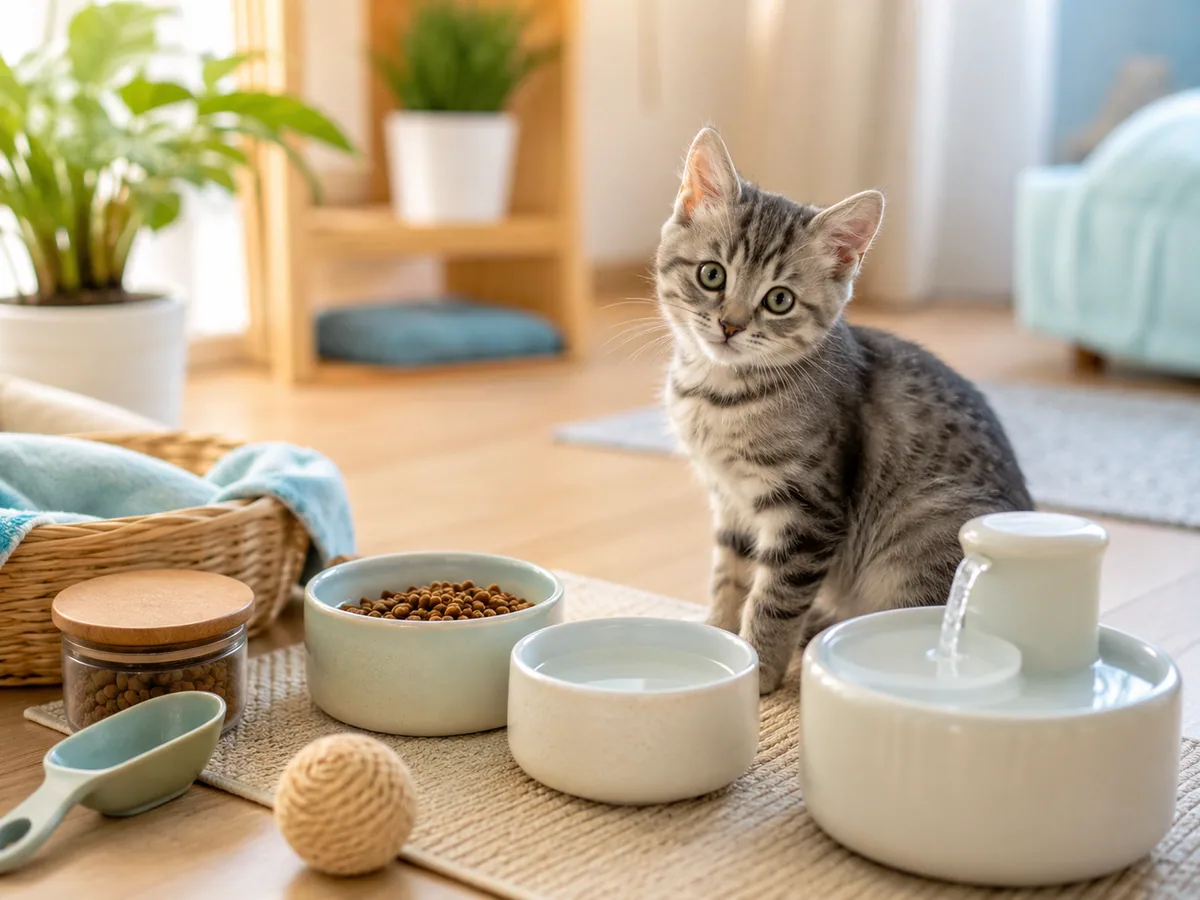
- Kitten-specific wet food (pate or minced textures are easiest for young kittens)
- High-quality kitten dry food as a supplement
- Shallow, wide food bowl - deep bowls press against whiskers, causing "whisker fatigue"
- Separate water bowl, placed away from the food bowl
- Optional: cat water fountain to encourage hydration
- Stainless steel or ceramic bowls (avoid plastic, which harbors bacteria and can cause feline acne)
Feeding Schedule
Kittens under 6 months need three to four meals per day. Their stomachs are small and their metabolism runs hot - skipping meals can cause hypoglycemia in very young kittens. From 6 to 12 months, two meals per day is appropriate. Keep mealtimes consistent; cats are creatures of habit and thrive on routine.
Litter Box Essentials
Litter box setup is where many new cat owners make mistakes that lead to ongoing accidents. Get this right from the start and you'll avoid one of the most common reasons cats are surrendered to shelters.
Choosing the Right Litter Box
For a new kitten, start with a low-entry, open litter box. Covered boxes may seem cleaner and more discreet, but many cats dislike the enclosed space, especially kittens who are still learning. A box with sides no higher than 3-4 inches at the entry point ensures your kitten can climb in and out easily. As your cat grows and you understand their preferences, you can experiment with covered or top-entry designs.
Size matters too. The general guideline is a litter box that is 1.5 times the length of your cat from nose to tail base. Most standard boxes are fine for kittens but may need to be upgraded as they grow into adults.
Litter Type
Unscented, clumping clay litter is the safest and most broadly accepted starting point. Kittens sometimes ingest litter during the learning phase, so avoid scented litters (which contain chemicals that can irritate respiratory tracts) and clumping litters with sodium bentonite if your kitten is under 3-4 months old - some vets recommend non-clumping litter for the youngest kittens to be safe. Once your kitten is reliably using the box, you can transition to your preferred litter type gradually.
Placement and Number of Boxes
The golden rule: one litter box per cat, plus one extra. For a single kitten, that means two boxes. Place them in quiet, private locations - not next to the food and water bowls and not in high-traffic areas. Cats need to feel safe and unhurried when using the litter box. If your home has multiple floors, put at least one box on each floor.
Our best interactive dog toys for small breeds guide is tailored to the unique needs of specific breeds.
Cleaning Schedule
Scoop at least once per day and do a full litter change with box washing once every 1-2 weeks. Cats are fastidious animals - a dirty litter box is the number one cause of elimination outside the box. Use unscented soap and water to clean the box; strong disinfectants can deter cats from using it.
Never punish a kitten for litter box accidents. If accidents are happening frequently, the cause is almost always a problem with the box setup - wrong location, wrong litter, too dirty, or too few boxes - not a behavior problem.
Sleep & Comfort
Kittens sleep between 16 and 20 hours a day. Quality sleep is not a luxury - it's essential for growth, immune function, and emotional development. Creating comfortable, safe resting spots throughout your home sets your kitten up for a calm, confident adulthood.
Kitten Bed
A soft, enclosed bed with raised sides or a "donut" shape gives kittens a sense of security by mimicking the feeling of being tucked against their littermates. Look for machine-washable options - they will need it. Place the bed in the safe room initially, then in a warm, draft-free spot once your kitten has settled in.
Cat Tree (Starter Size)
You don't need an enormous cat tree on day one, but a small two-to-three-level cat tree with a scratching post is one of the most valuable investments you can make early on. Vertical space is critical for cats - it gives them an elevated vantage point, which reduces anxiety, and provides an appropriate outlet for climbing and scratching. Browse our cat accessories collection for beginner-friendly cat trees that won't overwhelm a small kitten.
Hiding Spots and Cardboard Boxes
Never underestimate the power of a simple cardboard box. Kittens love enclosed spaces and will use them as retreat zones when overstimulated or tired. Leave a few boxes around the house - especially in quieter rooms - and your kitten will thank you with the kind of contentment that only cats can express (i.e., by ignoring you completely while clearly thriving).
Sleep & Comfort Checklist
- Soft donut or cave-style kitten bed
- Washable fleece blanket for warmth
- Small starter cat tree with 2-3 levels
- A few cardboard boxes as hideaways
- Window perch or shelf (optional but loved)
Play & Enrichment
Play is not optional for kittens - it's a biological necessity. Through play, kittens develop motor skills, build confidence, burn energy, bond with their owners, and learn impulse control. Under-stimulated kittens become bored, destructive adults. The good news: kitten toys don't have to be expensive. What matters is variety, interaction, and consistency.
Check out our guide on the best cat toys of 2025 for in-depth reviews, and browse our full range at cat toys and accessories.
Essential Toy Types
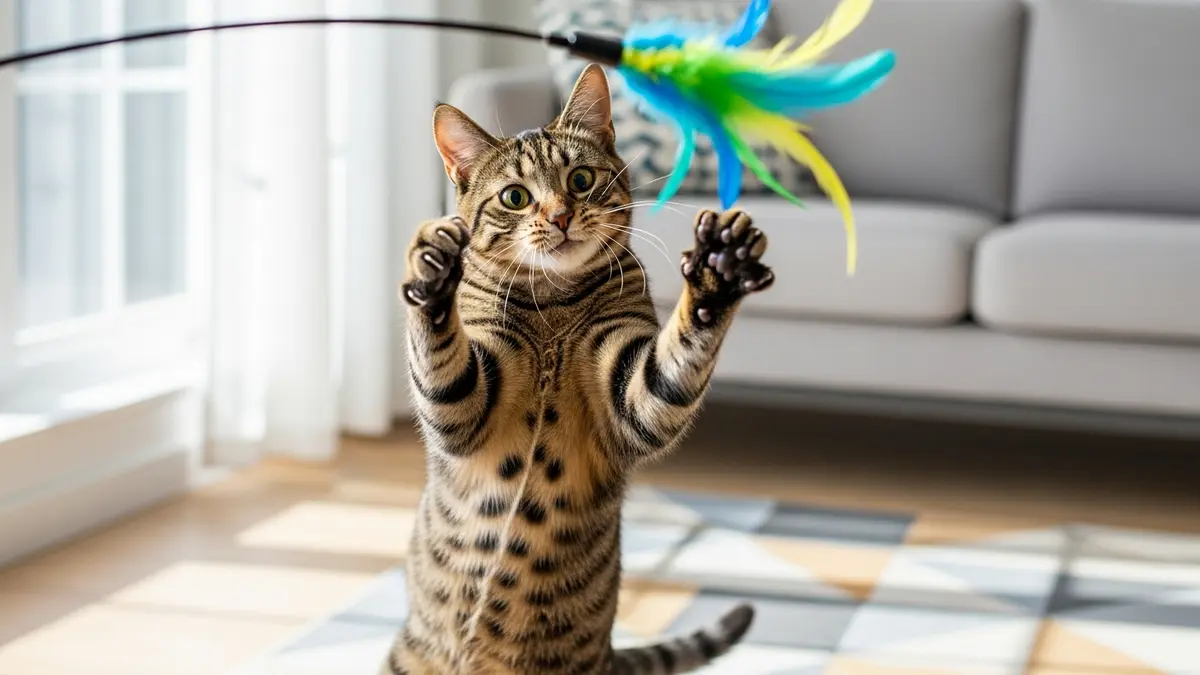
Wand/teaser toys are the single most important toy category for kittens. A wand with a feather, ribbon, or crinkle attachment mimics prey and activates a kitten's full predatory sequence: stalk, pounce, catch, and kill. Two to three 10-minute interactive play sessions per day is the minimum - more is better for high-energy kittens. Interactive wand play also strengthens your bond with your kitten and teaches them that hands are not prey (an important lesson that prevents play biting in adulthood).
Crinkle balls and foil balls are inexpensive, lightweight, and endlessly entertaining for solo play. The crinkle sound activates a kitten's prey drive, and the unpredictable rolling motion keeps them engaged. Keep a handful in a basket so your kitten always has something to bat around.
Catnip toys become effective around 3-6 months of age, once the catnip sensitivity gene expresses itself (about 50-70% of cats are responsive). A catnip-stuffed mouse or kicker toy provides a safe, stimulating enrichment burst. Note: kittens under 6 months may not react to catnip at all - this is normal.
Puzzle feeders and treat balls provide mental enrichment that goes beyond physical play. Hiding kibble inside a puzzle toy or treat-dispensing ball makes mealtime into a game that engages your kitten's problem-solving instincts. This is particularly valuable for kittens that will eventually be home alone for extended periods.
Scratching Posts
Scratching is not misbehavior - it's an essential feline behavior that stretches muscles, sheds dead nail sheaths, and marks territory. If you don't provide appropriate scratching surfaces, your kitten will find them on your furniture. Provide at least two scratching posts: one vertical (at least 28-30 inches tall, tall enough for a full stretch) and one horizontal. Sisal rope is the most popular and durable scratching material; cardboard is also well-liked and inexpensive.
End every wand toy play session with a "kill" - allow your kitten to catch and hold the toy for 30 seconds before putting it away. This completes the predatory sequence and prevents frustration. Follow playtime with a small meal to mimic the natural hunt-eat-groom-sleep cycle.
Different breeds have different needs. Our tough chew toys for large dogs guide helps you choose.
Health & Grooming
Veterinary care and basic grooming are not glamorous topics, but they are foundational to your kitten's long and healthy life. Starting good habits early makes every future vet visit and grooming session easier for both of you.
First Vet Visit
Schedule your kitten's first veterinary appointment within 72 hours of bringing them home. Even if your kitten came from a reputable breeder or shelter with a clean bill of health, an independent exam establishes a baseline and gives you a veterinary relationship before any health issues arise. According to the American Veterinary Medical Association, the first exam should cover a full physical assessment, fecal parasite screening, FIV/FeLV testing (if not already done), and the beginning of the vaccination schedule.
Vaccination Schedule
| Age | Core Vaccines | Notes |
|---|---|---|
| 6-8 weeks | FVRCP (first dose) | Often given by breeder/shelter |
| 10-12 weeks | FVRCP (second dose) | First visit if not already done |
| 14-16 weeks | FVRCP (third dose) + Rabies | Rabies often required by law |
| 12-16 months | FVRCP booster + Rabies booster | Then every 1-3 years thereafter |
Spay/Neuter
Most veterinarians recommend spaying or neutering between 4 and 6 months of age, before the first heat cycle in females. Early spay/neuter reduces the risk of certain cancers, eliminates heat-related behaviors, and prevents unwanted litters. Discuss timing with your vet based on your kitten's breed and individual development.
Parasite Prevention
Fleas, ticks, ear mites, and intestinal parasites are common in young kittens, even those raised in clean environments. Your vet will recommend a parasite prevention protocol based on your kitten's risk factors and your geographic location. Do not use dog flea treatments on cats - many are toxic to felines.
Basic Grooming Supplies
Grooming Kit Essentials
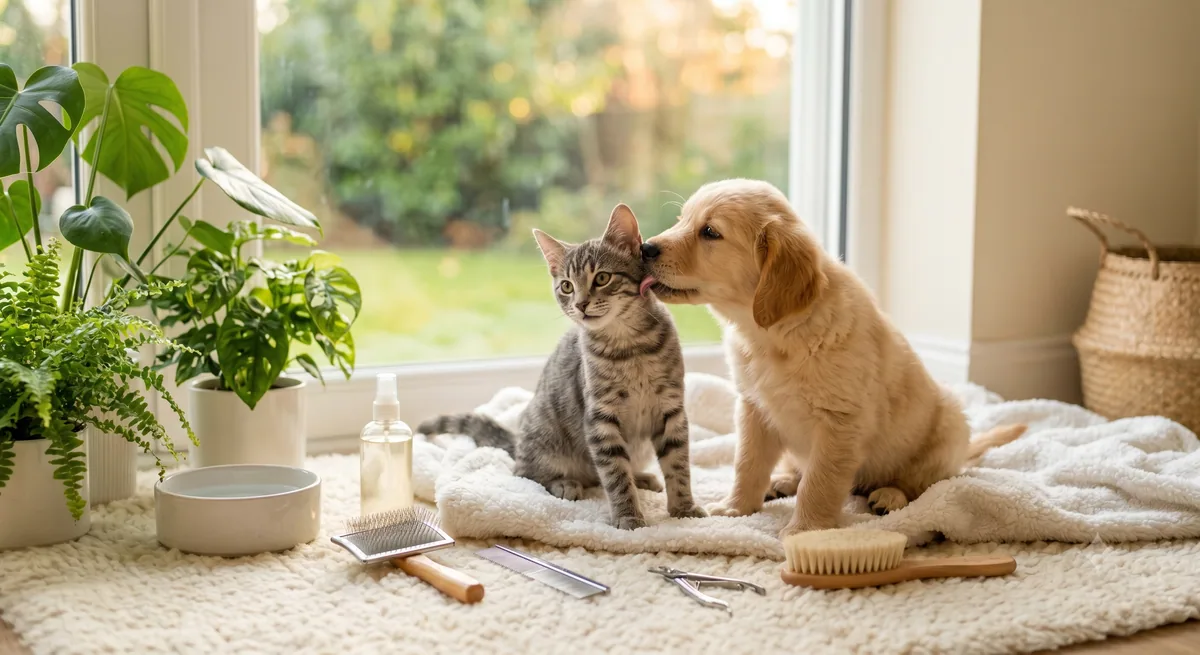
- Soft slicker brush or kitten-specific grooming mitt - start brushing from day one to normalize the sensation
- Nail trimmer (small scissor-style clippers work well for kittens) - trim every 2-3 weeks
- Ear cleaning solution and cotton balls for gentle monthly ear checks
- Cat toothbrush and enzymatic toothpaste - dental disease affects 70% of cats over age 3 per ASPCA guidance
- Unscented cat-specific shampoo for occasional baths (long-haired breeds may need more frequent bathing)
Start handling your kitten's paws, ears, and mouth from day one, even before you need to trim nails or clean ears. Kittens that are regularly handled grow into cats that tolerate grooming calmly - a gift that keeps giving throughout their 15-20 year lifespan.
First Week Survival Guide
The first seven days with a new kitten set the tone for your relationship and your kitten's confidence in their new home. Here's what to expect, day by day.
Days 1-2: The Adjustment Period
Expect your kitten to be quiet, cautious, and possibly invisible. Most new kittens spend the first day or two hiding. This is completely normal stress behavior - not a sign that something is wrong. Keep the house calm, minimize loud noises, and let your kitten set the pace for interaction. Sit on the floor near their hiding spot and read aloud, work on your laptop, or just be present. Your kitten will start associating your presence with safety.
Ensure food, water, and the litter box are all within easy reach of the safe room. Do not move these around in the first week - consistency is everything right now.
Days 3-4: First Explorations
By day three, most kittens start tentatively exploring their safe room and may approach you for the first time. Let them sniff your hand before attempting to pick them up. Short, positive interactions are better than long, overwhelming ones. Keep children and other pets away from the safe room during this phase.
Days 5-7: Expanding Territory
By the end of the first week, many kittens are ready to start exploring beyond the safe room under supervision. Open the door and let them venture out on their own terms - don't carry them out. Supervise all explorations and close off rooms with hazards you haven't fully kitten-proofed yet.
Introduce other household pets very gradually. Keep them separated with a closed door or baby gate for at least the first 1-2 weeks, allowing them to smell each other under the door before any face-to-face introduction.
The first vet visit should happen within 72 hours of bringing your kitten home. If you haven't booked the appointment yet, do it now. Early parasite screening and a health baseline exam are too important to delay, even if your kitten seems perfectly healthy.
What's Normal in Week One
- Hiding for extended periods, especially in the first 48 hours
- Not eating much on day one - stress suppresses appetite temporarily
- Soft stools due to diet change or stress (monitor; persistent diarrhea warrants a vet call)
- Sneezing - a small amount is normal; excessive sneezing or nasal discharge is not
- Sleeping 16-20 hours per day
- Playing intensely for 10-15 minutes and then crashing completely
If you have questions after the first week, our team is always here to help - contact us and we'll point you in the right direction. You might also find our roundup of best gifts for cat lovers useful if you're looking to expand your setup, and if you're also welcoming a puppy into the family, see our new puppy essentials guide for a companion checklist.
Frequently Asked Questions
Should I consult a veterinarian about my pet's play and enrichment needs?
Yes, especially if your pet shows signs of anxiety, sudden behavior changes, or destructive habits that may indicate a medical issue. A licensed veterinarian or veterinary behaviorist can rule out pain, dental problems, or cognitive decline before you adjust toys or routines. The guidance in this article is educational, not a substitute for professional veterinary advice.
How long does it take to see results from new toys or enrichment?
Most pet owners notice small changes within a week (calmer evenings, less destructive chewing, more interest in mealtime puzzles) and clearer behavior shifts within 4 to 6 weeks of consistent rotation. Older pets and rescues may take 8 to 12 weeks to adjust. Keep a short weekly journal so you can track real progress instead of relying on memory.
Conclusion
Picking the right option for your cat is less about finding a single "best" product and more about matching the choice to your cat's size, age, play style, and your home environment. The recommendations above cover the main scenarios most pet owners run into, so use them as a checklist when comparing options.
Start with one or two changes, watch how your cat responds for a week or two, then iterate. Pets show you very quickly what works for them. If a toy, feeder, or routine is ignored or causes stress, swap it out without hesitation. The goal is a happier, healthier cat every day.