A dog left home alone faces a fundamentally different challenge than a dog at a dog park or in a training class: no one is there to facilitate, monitor, or redirect. The toys you choose for solo time must therefore meet a higher bar than general-use toys, they must be genuinely engaging (not just ignored after 30 seconds), appropriately safe for extended unsupervised use, and durable enough to survive the chewing, batting, and throwing that will inevitably occur without your oversight. Choosing the right toys for dogs home alone means the difference between a dog who rests contentedly and one who redecorates your living room.
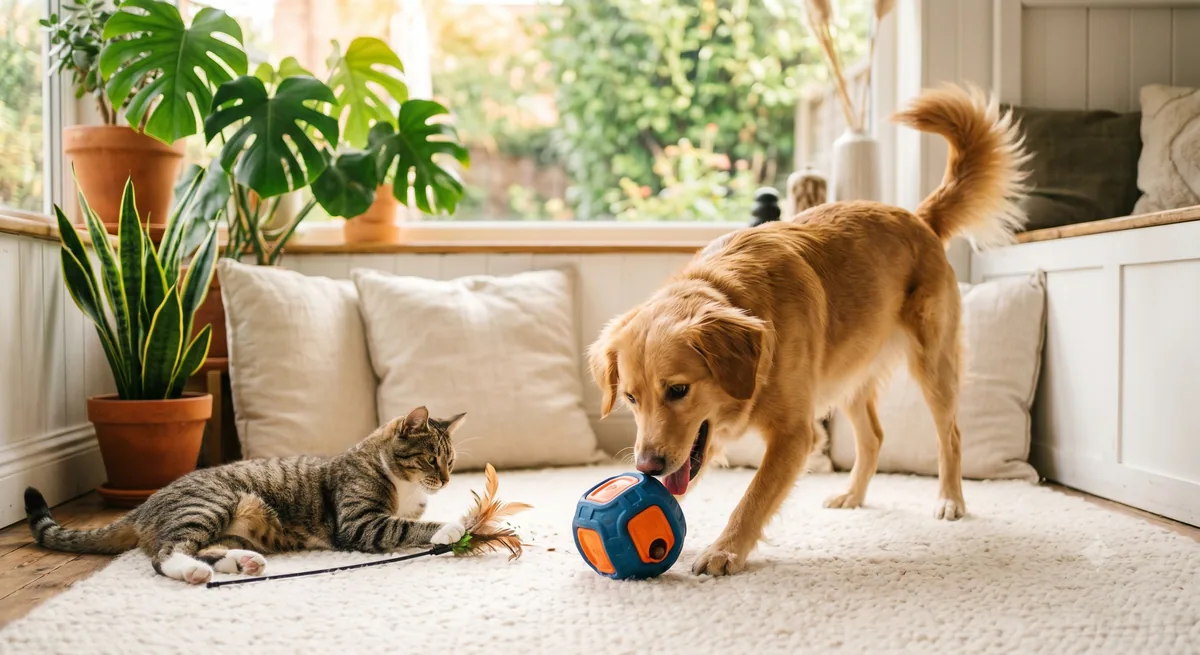
This guide focuses specifically on the solo-use context: toys that are safe without supervision, long-lasting enough to matter, and engaging enough to fill the critical first hour of alone time, when most dogs are at their most active and therefore most likely to find trouble if enrichment is not available. For background context, see the reference at ASPCA.
This article is for general informational purposes only and is not a substitute for professional veterinary advice, diagnosis, or treatment. Always consult your veterinarian about any health concerns, dietary changes, medication, or product safety questions specific to your pet. If your pet shows signs of distress, illness, or injury, contact a licensed veterinarian or emergency animal hospital immediately.
What Makes a Dog Toy Safe for Home-Alone Use
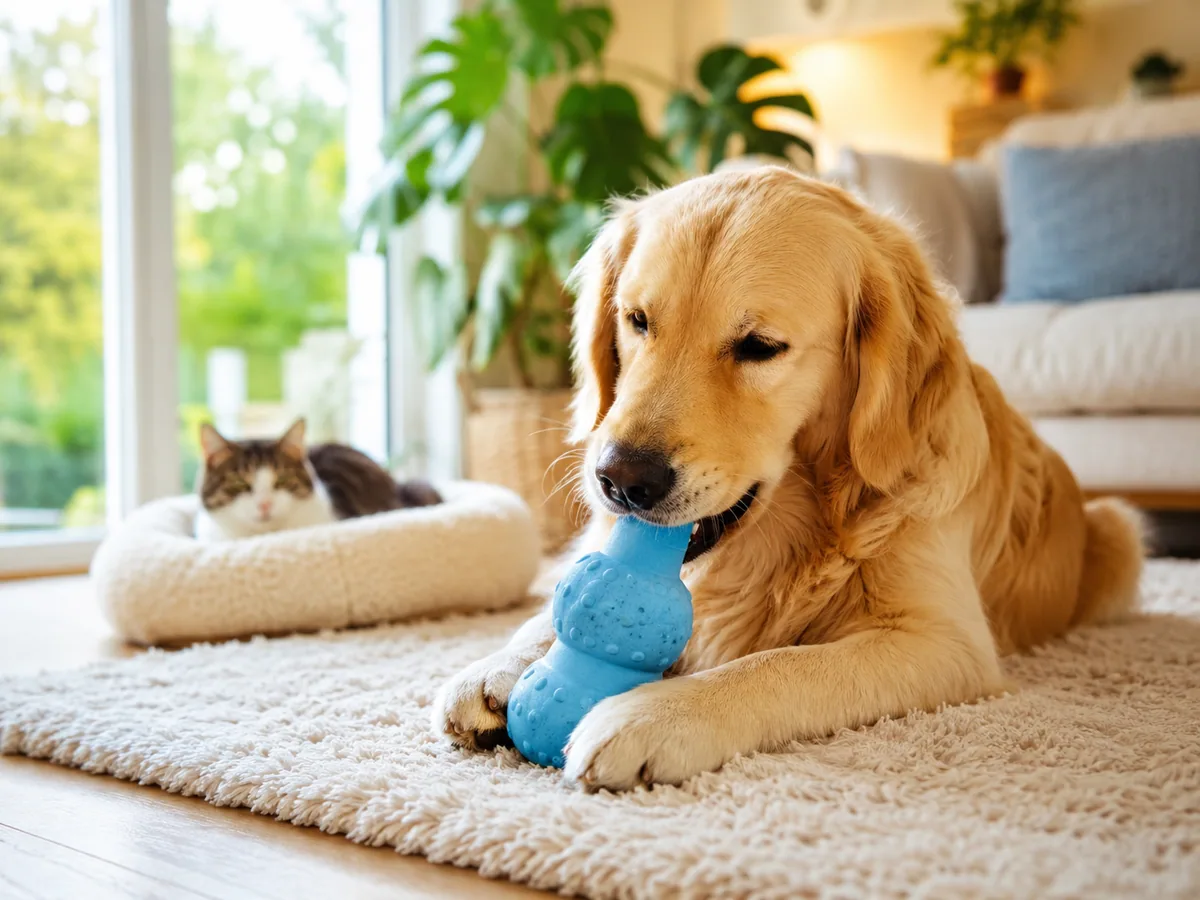
Safety for unsupervised use depends on four factors: size appropriateness (the toy cannot be fully taken into the mouth), material integrity (it cannot be broken into sharp or swallowable fragments), design completeness (no detachable small parts), and chew rating (the toy is rated for your dog's chewing strength). Test every toy in supervised sessions before leaving it with your dog unattended.
When we look at toys for dogs home alone from a practical pet-owner lens, we keep coming back to a simple rule: choose for your dog's chewing style first, aesthetics second. We've found that approach prevents most of the regrets.
If you want even more options, check out our guide to best toys for corgis.
Power chewers require special consideration. A dog capable of destroying a standard rubber toy in minutes should not be left alone with that toy, they can swallow large chunks that cause gastrointestinal obstruction. For heavy chewers, choose toys made from thick natural rubber (KONG Extreme), reinforced nylon or composite materials (Benebone, Nylabone Dura Chew), or hard natural chews that soften slowly (yak chews, elk antler). Always size up, choose the size rating for dogs heavier than your own as a safety margin.
Regularly inspect all toys used for home-alone sessions. Deep gouges in rubber, loose strands in rope toys, splinters in natural chews, or cracks in any material are signs to retire the toy immediately. The same toy that was safe six months ago may have degraded enough to be hazardous. A monthly toy inspection habit prevents hazards from developing unnoticed.
9 Best Toys for Dogs Home Alone
1. KONG Extreme (for Power Chewers): The thickest-walled KONG, made from extra-durable natural rubber designed for aggressive chewers. Stuff with wet food and freeze overnight. The frozen contents provide 30-45 minutes of intensive engagement, after which the dog typically rests. Prepare 5-6 weekly and rotate from the freezer. The Extreme version is appropriate for breeds like Pit Bulls, Rottweilers, and Malinois who destroy standard rubber toys.
2. Snuffle Mat (Machine Washable): Safe, engaging, and effortlessly loaded with a dog's regular kibble meal. The foraging session lasts 15-25 minutes, and the olfactory effort produces post-session rest. Choose a mat with a non-slip rubber base that will not slide on hard floors during energetic nosing, and a fabric that is machine washable for easy weekly cleaning.
Honestly, we get asked about toys for dogs home alone more than almost any other category, and our answer has evolved over time as new research and product updates land.
3. West Paw Zogoflex Toppl: Guaranteed against destruction (replace any broken toy, no questions asked). The wide opening makes loading straightforward and allows a variety of food types, wet food, peanut butter, veggies, kibble. Freeze loaded for extended engagement. Dishwasher-safe for easy cleaning. The interlocking design with a second Toppl doubles capacity and difficulty.
You might also enjoy our recommendations for boredom busters for dogs.
4. Benebone Wishbone (Nylon Chew): The curved wishbone shape holds itself in position while your dog chews, eliminating the frustration of a toy that slides away. Real bacon, chicken, or peanut butter flavor is worked into the nylon material, not coated on the surface, so it remains appealing throughout the chew's lifespan. Size up from the recommendation on the packaging for a safety margin.
5. Himalayan Yak Chew: Hard-pressed yak and cow milk with lime juice and salt: no artificial additives, fully digestible, and one of the safest long-lasting chews available for solo use. Hard enough that most dogs take weeks to finish one, and when the stub becomes too small to chew safely, it can be microwaved briefly to puff into a safe crunchy treat. Appropriate for most dogs including aggressive chewers.
6. PetSafe Busy Buddy Magic Mushroom: A durable rubber toy with multiple food compartments that dispense at different rates as the dog interacts with it. The irregular shape means it rolls unpredictably, maintaining the dog's engagement as they chase and bat it around the room. Load with kibble or small treats for the longest engagement.
7. Bob-a-Lot Interactive Feeder: A weighted wobble toy with an adjustable dispensing opening. Load with the dog's full meal; the dog bats and noses it to release food. Asymmetric weighting creates variable reward delivery that outperforms a simple rolling ball dispenser in sustained engagement. Food-motivated dogs typically spend 20-40 minutes on a full meal load.
8. Orbee-Tuff RecycleMe Ball (Planet Dog): Made from Planet Dog's proprietary Orbee material, non-toxic, minty scented, and rated for tough chewers, this ball bounces unpredictably and dispenses treats from a center chamber. It is more durable than most treat balls and the mint scent provides ongoing olfactory engagement beyond the food reward. Planet Dog is certified for social and environmental responsibility.
For related picks, take a look at our gifts for dog lovers roundup.
9. Tug-a-Jug: A translucent container that holds the dog's full meal and requires shaking, rolling, and tossing to dispense kibble through a rope-secured opening. Dogs quickly learn the general mechanism but are challenged by the variable rate of dispensing and the need to reposition the toy repeatedly. Noisier than most enrichment toys, worth noting for apartments, but the engagement duration is excellent.
Structuring Your Dog's Alone Time for Success
The first 30-60 minutes after you leave are the highest-risk period for most dogs. This is when the novelty of your departure is fresh and physical and emotional arousal is at its peak. Structuring the first hour is the single most important variable in preventing alone-time behavioral problems. Give your highest-value enrichment toy, a frozen KONG, a high-value chew, or a newly introduced snuffle mat, precisely at departure time, not before.
A departure ritual transforms the leaving experience from a source of stress into a reliable, positive sequence. Your dog learns that when the keys come out, a frozen KONG appears; when you put on your shoes, the snuffle mat gets loaded. The ritual itself becomes calming because it is predictable. Consistency is essential, a departure ritual that varies day to day does not produce the same calming effect as one that is exactly the same each time.
For dogs who are genuinely distressed when alone, who vocalize, pace, or destroy near exits rather than engaging with enrichment, toys alone are insufficient. True separation anxiety requires behavioral intervention: a systematic desensitization program, ideally guided by a certified veterinary behaviorist or separation anxiety trainer (CSAT). Enrichment toys are a component of treatment, not a cure.
Comparison: Budget vs Mid-Range vs Premium
This quick comparison helps you understand what you actually get at each price band, so you can decide where to spend and where to save without compromising safety.
Comparison reflects typical US retail ranges as of 2026. Always verify safety labels before purchase.
A frozen stuffed rubber toy is one of the safest things to leave with a dog, and it doubles as a way to keep cool, as our summer dog toys guide explains. For the rest of your dog's toy set, see which types made our best dog toys 2026 shortlist and how much supervision each one needs.
Conclusion
Choosing the right approach for your dog comes down to matching the recommendations in this guide with the specifics of your situation. Pay close attention to age, breed, activity level, and any existing health concerns. When in doubt, talk to your veterinarian before making changes.
Use this guide as a starting point, observe your dog closely after any change, and update your routine as your dog's needs evolve. Small adjustments over time lead to the biggest improvements in well-being and behavior.
Frequently Asked Questions
What is the best toy to leave a dog with when alone?
A frozen stuffed KONG is the most widely recommended single toy for home-alone dogs. The frozen contents provide 30-45 minutes of sustained engagement during the highest-risk first hour, the toy is safe for all but the most powerful chewers (use KONG Extreme for those), and the preparation is simple and consistent. After the KONG session, most food-motivated dogs rest, the combination of mental effort and calorie intake produces natural post-session rest. For heavy chewers who finish the KONG quickly, supplementing with a yak chew or Benebone for the remainder of the day covers the full alone-time period.
How do I stop my dog from destroying things when home alone?
Destructive behavior when alone is almost always rooted in insufficient exercise before departure, inadequate enrichment during alone time, or underlying anxiety triggered by your absence. Start with the morning exercise routine: a 30-minute walk or vigorous play session before you leave significantly reduces the arousal that drives destructive behavior. Add a high-value enrichment toy at departure time (frozen KONG, snuffle mat). If destruction persists and is concentrated near exits or in the first 30-60 minutes of your absence, separation anxiety may be a factor, consult a professional.
Can a dog be left alone for 9 hours?
Nine hours is at the outer limit of what adult dogs can manage comfortably, and it exceeds what is considered ideal for most dogs. Adult dogs should ideally have a bathroom break at least every 6-8 hours; 9 hours can be uncomfortable or even problematic for dogs with small bladders, older dogs, or those with medical conditions. If 9-hour absences are regular, a midday dog walker, dog sitter, or day-care attendance on some days substantially improves your dog's welfare. For occasional long days, leave high-value enrichment and ensure the morning exercise is longer than usual.
Should I leave toys out all day or put them away?
Leaving all toys out simultaneously reduces novelty, dogs habituate to consistently available items and stop engaging with them. A better approach: leave 2-3 strategic toys for the day (one at departure, one accessible mid-day, one for afternoon) and rotate the full toy collection across the week. This way, each toy is reintroduced after a 2-3 day absence and receives close to the same engagement as a new toy. The morning departure toy should be the highest-value option (frozen KONG, fresh yak chew) to cover the highest-risk first hour.
What can I do to help my dog feel less anxious when home alone?
For mild alone-time stress: establish a consistent departure ritual, provide high-value enrichment at precisely the moment you leave, ensure adequate morning exercise, and leave background sound (calm TV, classical music, or DogTV). For moderate-to-severe separation anxiety: these home management strategies help but are insufficient alone. Work with a certified separation anxiety trainer (CSAT) or veterinary behaviorist on a structured desensitization program. Your veterinarian may also recommend medication to reduce the anxiety baseline while behavioral modification takes effect.
Should I consult a veterinarian about my pet's play and enrichment needs?
Yes, especially if your pet shows signs of anxiety, sudden behavior changes, or destructive habits that may indicate a medical issue. A licensed veterinarian or veterinary behaviorist can rule out pain, dental problems, or cognitive decline before you adjust toys or routines. The guidance in this article is educational, not a substitute for professional veterinary advice.
How long does it take to see results from new toys or enrichment?
Most pet owners notice small changes within a week (calmer evenings, less destructive chewing, more interest in mealtime puzzles) and clearer behavior shifts within 4 to 6 weeks of consistent rotation. Older pets and rescues may take 8 to 12 weeks to adjust. Keep a short weekly journal so you can track real progress instead of relying on memory.
Shop Premium Dog Toys
Free US shipping on every order. No minimum purchase required.
Browse Dog Toys →