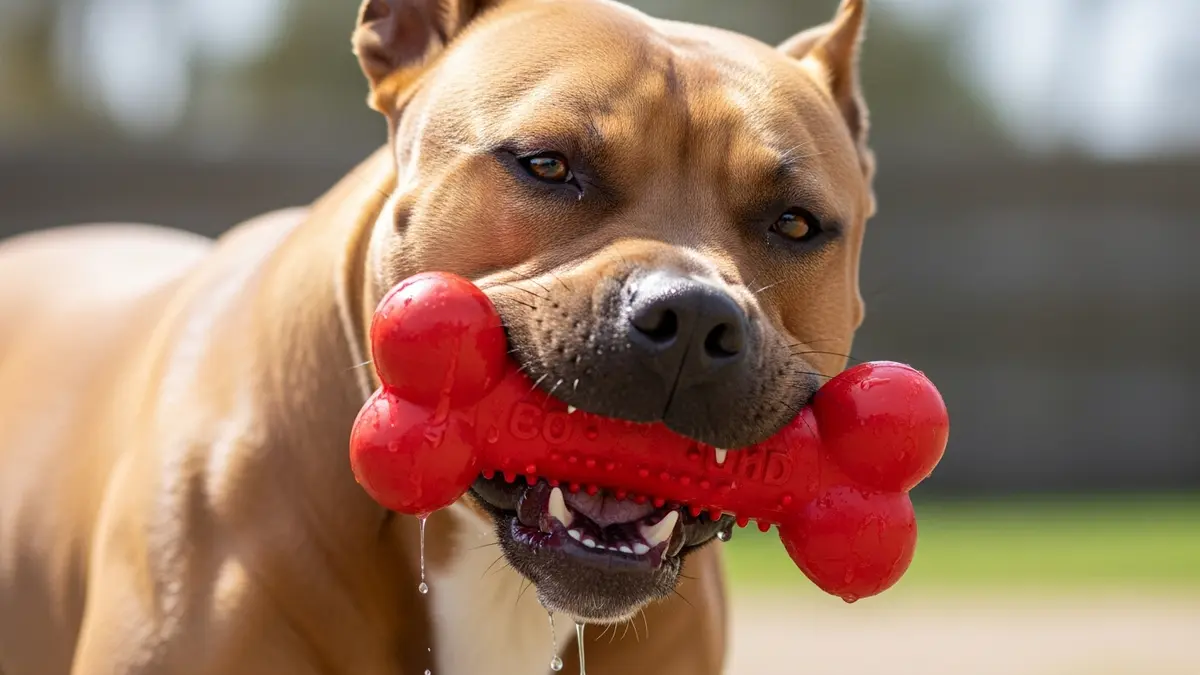
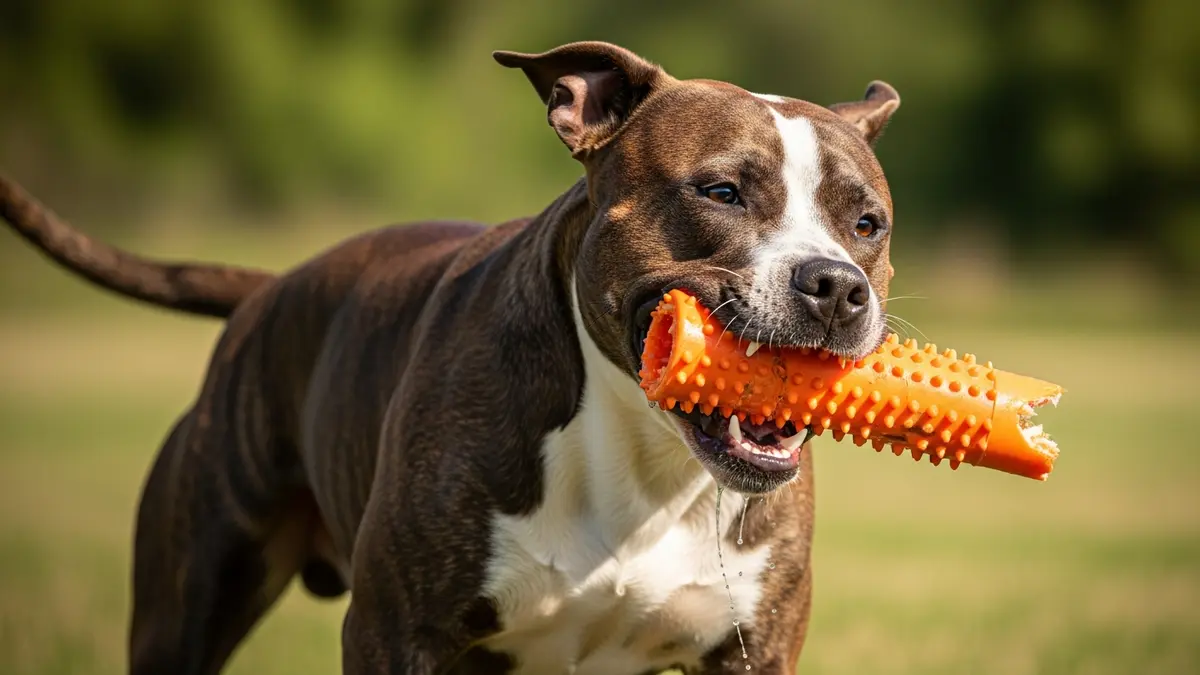
You've been through the plush squeaky toys that lasted twenty minutes. The rope toys unraveled in an afternoon. The "heavy-duty" rubber ball deflated by Tuesday. If you share your home with a dog who treats every toy like a demolition project, you already know: most toys for aggressive chewers are not actually built to survive an aggressive chewer. According to the ASPCA common dog behavior issues guide, choosing the right toys can support your pet's mental and physical wellbeing.
The difference between a toy that lasts a week and one that lasts months comes down to material science, density ratings, and a clear-eyed understanding of what your dog's jaw can actually do. This guide cuts through the marketing noise and focuses on what genuinely works - the materials, the designs, and the specific products that owners of powerful-jawed dogs consistently trust. For our full overview of durable options across all categories, see our guide to dog toys for aggressive chewers.
This article is for general informational purposes only and is not a substitute for professional veterinary advice, diagnosis, or treatment. Always consult your veterinarian about any health concerns, dietary changes, medication, or product safety questions specific to your pet. If your pet shows signs of distress, illness, or injury, contact a licensed veterinarian or emergency animal hospital immediately.
Why Most Toys Fail Aggressive Chewers
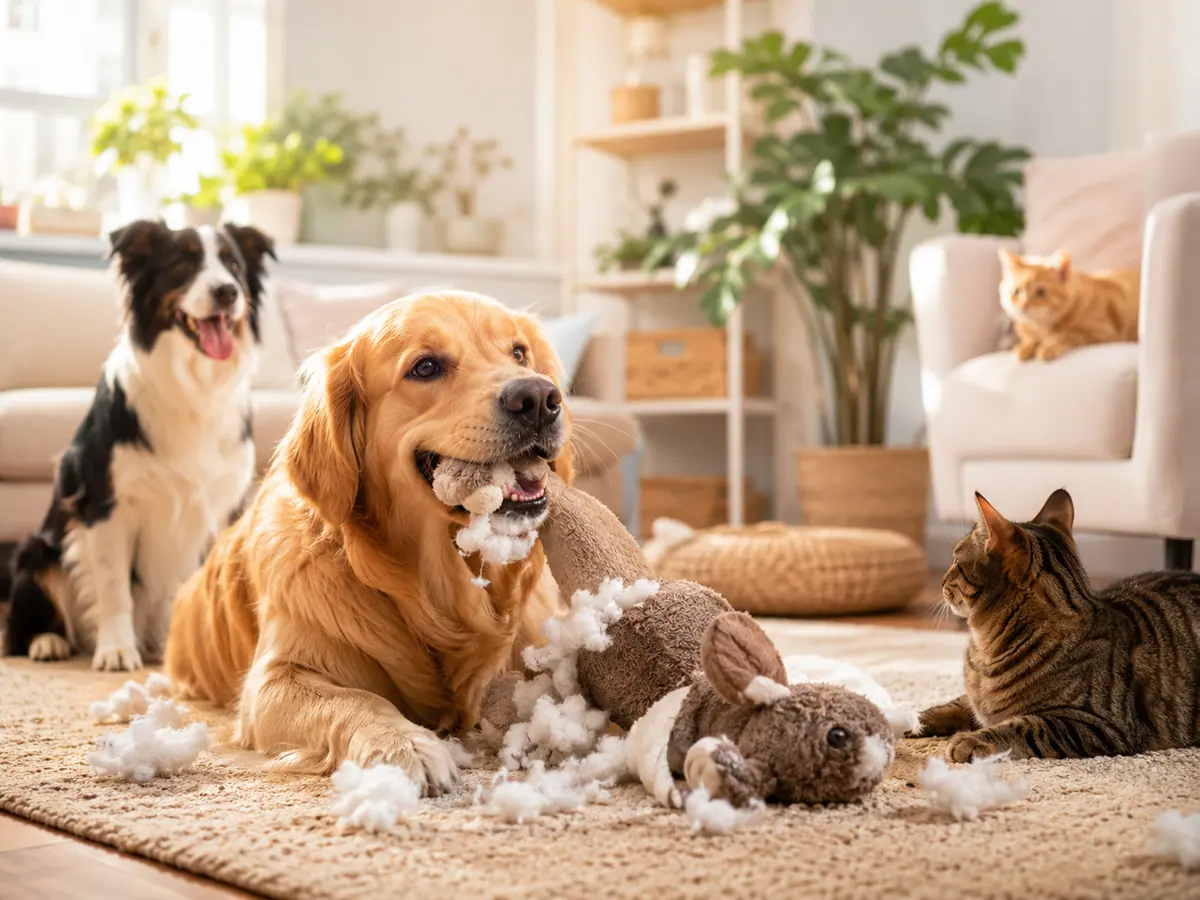
An aggressive chewer is any dog that applies sustained, powerful bite force to objects - not just chewing to explore, but chewing with the specific intent to break down, hollow out, or dismantle. The behavior is driven by a combination of jaw strength, prey drive, oral fixation, boredom, and sometimes anxiety. It is not a behavioral problem to be corrected; it is a physical and psychological need to be safely satisfied.
In our experience writing about pet health topics like toys for aggressive chewers, we've found that owners benefit most when guidance separates clinical signs from normal variation. We try to flag that distinction clearly throughout this piece.
If you want even more options, check out our guide to mental stimulation dog toys.
The real danger isn't just a destroyed toy - it's what happens after destruction. A standard plush toy dismembered by a powerful chewer leaves squeakers, stuffing, and fabric strips that can cause intestinal obstructions requiring emergency surgery. A rubber ball bitten through leaves sharp-edged fragments that can lacerate the throat and digestive tract. Even "durable" toys marketed to strong chewers often use thin rubber or hollow construction that fails quickly under genuine bite pressure, creating exactly the same risks.
The Material Problem
Most affordable dog toys are manufactured from materials optimized for cost, not durability. Thin thermoplastic rubber, recycled vinyl, and loosely bonded foam composites are the norm. These materials flex and tear under moderate bite force - they were never designed for dogs that apply 200 to 700 pounds of pressure per square inch to a single point. True aggressive-chewer toys use dense natural rubber, proprietary engineered compounds, or hardened nylon formulations that absorb and distribute bite force rather than concentrating it at the point of contact.
The Size Problem
A toy that is too small for the dog is always a hazard, regardless of material. When a dog can fit a toy entirely in its mouth, it can apply full bite force around the entire circumference simultaneously - the fastest path to destruction and swallowing. Every toy recommendation in this guide includes sizing guidance. When in doubt, always size up. For dogs on the larger end of the scale, our roundup of tough chew toys for large dogs covers size-matched options in detail.
Supervise all chewing sessions with aggressive chewers. No toy is truly indestructible. Inspect toys before each session and retire immediately if chunks are missing, edges are sharp, or the toy has been compressed to a swallowable size.
Is Your Dog an Aggressive Chewer?
Not every enthusiastic chewer qualifies as an aggressive chewer - the distinction matters because it determines which toy durability level you actually need. An aggressive chewer isn't simply a dog that chews; it's a dog whose chewing reliably destroys objects faster than normal wear and tear.
Signs Your Dog Is an Aggressive Chewer
- Standard toys are destroyed within hours or days, not weeks or months.
- The dog chews with sustained, focused intensity rather than mouthing or carrying.
- You regularly find chunks of material - rubber, fabric, foam - on the floor after a chewing session.
- The dog can compress or flatten toys that are labeled as durable or heavy-duty.
- Chewing escalates when the dog is bored, anxious, or under-exercised, suggesting the behavior is compulsive as well as instinctual.
Breed Tendencies
While any dog can be an aggressive chewer, certain breeds are far more likely to exhibit extreme chewing behavior due to jaw anatomy, prey drive, or the oral fixation common in working and sporting lineages. American Pit Bull Terriers, Rottweilers, German Shepherds, Labrador Retrievers, Belgian Malinois, Boxers, Mastiffs, and Siberian Huskies are the breeds that generate the most reports of toy destruction. Large breeds in general combine substantial jaw mass with strong prey drive - a combination that overwhelms standard toys quickly.
Honestly, the most important takeaway we share with readers on toys for aggressive chewers is to involve a veterinarian early. We've seen how much smoother outcomes are when concerns are checked promptly.
Give your dog a standard rubber KONG Classic (red). If it survives a week of daily chewing without significant visible damage, your dog is a moderate chewer. If it shows deep gouges, missing chunks, or structural compression within a few sessions, you have an aggressive chewer - and you need the toys in this guide.
10 Best Toys for Aggressive Chewers
Each pick here has been selected based on material durability, safety design, owner reports from high-jaw-pressure breeds, and - where available - manufacturer guarantees. For our broader assessment of the most resilient options on the market, see our guide to indestructible dog toys.
1. KONG Extreme - Best Overall
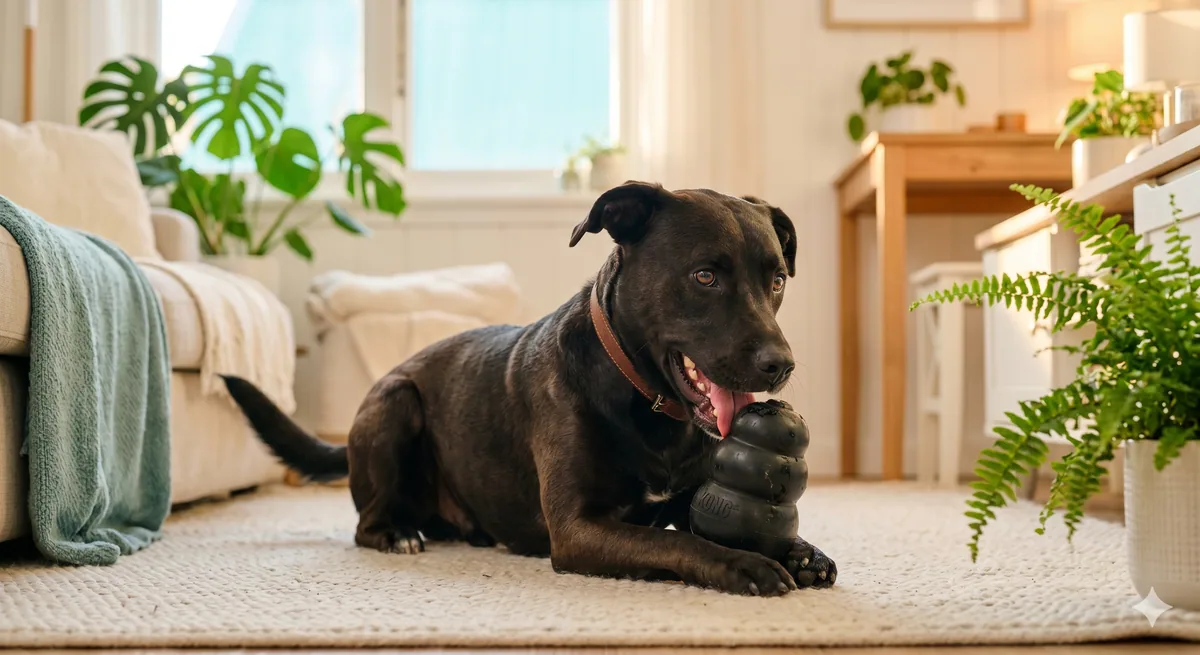
The KONG Extreme is the benchmark against which every aggressive-chewer toy is measured. Its signature black rubber compound is KONG's Level 5 - the densest, most bite-resistant formulation they produce, designed specifically for power chewers who destroy the standard red Classic. The hollow core allows stuffing with kibble, peanut butter, or wet food; freeze it overnight for an extended 30-to-60-minute engagement session. The irregular shape produces unpredictable bouncing during solo play, maintaining interest beyond pure chewing. KONG has been a veterinarian staple for decades, and the Extreme earns its place at the top of every durable-toy list for one simple reason: it reliably outlasts all alternatives for the vast majority of aggressive chewing dogs. Size up from the recommendation - if the label says XL, go XXL for Mastiff-class jaws.
2. Goughnuts Original Ring - Best Safety Indicator
The Goughnuts Original Ring is the most intelligently designed aggressive-chewer toy on the market. Made from a proprietary natural rubber compound developed by mechanical and polymer engineers (not toy designers), it incorporates a built-in red safety indicator core: if your dog chews through the outer black layer to reveal the red inner layer, that is your signal to retire the toy and contact Goughnuts for a replacement under their guarantee. This removes the guesswork from toy inspection entirely - you never have to wonder if the toy is still safe. The ring shape also makes it harder to get a full bite purchase compared to a ball, distributing force across a larger surface area. Available in Standard and MAXX versions; the MAXX is for genuinely extreme chewers like Rottweilers and Malinois.
You might also enjoy our recommendations for best dog toys for fetch.
3. West Paw Hurley - Best Guaranteed-Tough Chew
West Paw's Zogoflex compound is a proprietary thermoplastic elastomer developed specifically to withstand aggressive chewing. Unlike standard rubber, Zogoflex absorbs and disperses bite force rather than concentrating stress at the bite point, giving it exceptional resistance to puncture and tearing. The Hurley bone shape allows easy grip for dogs to hold between their paws and work from multiple angles, and the textured surface provides satisfying tactile feedback that keeps chewing sessions focused on the toy rather than furniture. West Paw backs every Hurley with their Love It Guarantee - if your dog destroys it, they replace it. It also floats, making it a dual-purpose fetch and chew toy for water-loving dogs.
4. Benebone Wishbone - Best Flavor-Infused Chew
The Benebone Wishbone addresses one of the most common aggressive chewer problems: dogs that lose interest in a toy once the novelty wears off and return to chewing furniture, shoes, or walls. The Wishbone is infused with real food ingredients - genuine bacon, chicken, or peanut butter - throughout the nylon composite, not just on the surface. This means every fresh bite delivers flavor, maintaining engagement sessions far longer than unflavored chews. The curved wishbone geometry is deliberately designed so dogs can pin one end of the arch under a paw and gain full leverage on the opposite end - a natural grip that keeps chewing productive and comfortable. Choose the appropriate size carefully: a Wishbone sized for small dogs will be destroyed quickly by large-breed jaws.
5. Chuckit! Ultra Ball - Best Fetch Ball for Strong Jaws
Standard tennis balls are not safe for aggressive chewers - the abrasive felt damages tooth enamel over time, and the thin rubber core compresses easily into a swallowable disc under sustained bite pressure. The Chuckit! Ultra Ball uses a two-layer thick rubber construction that resists compression far better than single-layer alternatives, bounces with significantly more energy than a tennis ball, and is sized in genuine large and XL formats that make it difficult for even Labrador-class mouths to apply full circumferential bite force. It floats for water retrieval and is fully compatible with all Chuckit! launchers for no-bend throwing. Not a pure chew toy - supervise use and put it away after fetch sessions.
6. KONG Wobbler - Best Interactive Treat Dispenser
The KONG Wobbler redirects an aggressive chewer's oral fixation into productive interactive play. Made from heavy-duty ABS plastic with a weighted base that causes it to bob and return unpredictably when batted, the Wobbler dispenses kibble or small treats through an adjustable opening as the dog nudges it across the floor. The key distinction here is engagement over pure durability: a dog occupied for 20 minutes pursuing a rolling treat dispenser is a dog not destroying other things. The Wobbler unscrews for easy loading and cleaning, and its thick plastic walls resist the kind of bite-through that happens with hollow rubber. Use it to replace one meal per day with enrichment feeding - the mental challenge burns energy and reduces the compulsive boredom-chewing that drives many aggressive chewing episodes.
7. Nylabone DuraChew Plus - Best for Solo Chewing Sessions
Nylabone has produced nylon chew products for decades, and the DuraChew Plus represents their most hardened formulation for power chewers. The dense nylon material is designed to slowly abrade rather than chunk off - the dog releases microscopic nylon bristles that are safe to pass through the digestive system, rather than large pieces that create obstruction risks. The raised nubs along the surface provide satisfying textural variety and deliver gentle mechanical cleaning along the gumline during chewing. The DuraChew Plus is a passive toy: give it to your dog during a calm downtime period. It is not interactive or stimulating beyond the chewing itself, making it ideal as a settle-and-chew option when you need your dog to self-occupy without supervision anxiety.
8. Jolly Ball - Best Indestructible Push & Chase Toy
The Jolly Ball is an unconventional entry: it is not designed to be chewed so much as pushed, nudged, and chased - but its solid-core construction means it cannot be deflated or bitten through, making it genuinely indestructible for most dogs. The appeal for aggressive chewers is that dogs who love to carry, mouth, and chase finally have a ball that doesn't collapse under bite pressure. Holes molded into the surface allow dogs to pick the Jolly Ball up by the perimeter - satisfying the carrying instinct without the usual deflation result. The 10-inch and 14-inch sizes are appropriate for medium to large breeds. Particularly popular with herding breeds and Pitbull-type dogs who are driven to chase and grip rather than dismantle.
9. West Paw Toppl - Best Stuffable for Power Chewers
The West Paw Toppl is the aggressive chewer's alternative to the KONG - using the same proven Zogoflex compound as the Hurley in a wide-mouth, top-loading design that makes stuffing far easier than the KONG's narrow channel. The wider opening also allows larger treats, frozen broth, or wet food to be packed in layers, creating a more complex puzzle for dogs who have mastered standard KONG stuffing. Two Toppls can be interlocked to create a larger, more challenging enrichment toy. As with all West Paw products, it carries the Love It Guarantee. The Toppl's thick walls and dense Zogoflex construction make it significantly more resistant to bite-through than standard rubber stuffable toys - an important consideration for dogs who have destroyed KONGs in the past.
10. StarMark Everlasting Treat Ball - Best Long-Duration Chew
The StarMark Everlasting Treat Ball pairs a hard thermoplastic outer shell - resistant to the bite-through that defeats softer rubber designs - with a replaceable treat insert in the center that the dog works to access. The treat refills are themselves compressed into a dense, long-lasting disc that takes most dogs 20 to 40 minutes to fully consume through the ball's channel openings. The outer shell survives repeated sessions and can be cleaned and reloaded. For owners whose aggressive chewer defeats standard stuffable toys quickly, the Everlasting Treat Ball's hard plastic exterior provides a meaningful durability step up. The combination of ball shape (rollable, chaseable) and food reward (sustained engagement) makes it one of the few toys that addresses both the physical and the motivational dimensions of aggressive chewing simultaneously.
Toys to Never Give Aggressive Chewers
Knowing what to avoid is just as important as knowing what works. Certain toy categories that are marketed as durable - or that seem sturdy to the eye - present serious hazards when given to dogs with powerful jaws.
Standard Plush and Squeaky Toys
Plush toys are designed for moderate chewers and curious dogs who like to carry and mouth objects gently. For aggressive chewers, they are hazards, not toys. The stuffing (typically polyester fiberfill) can clump into intestinal obstructions when swallowed, and the squeaker mechanism - a small plastic or metal disc - is a choking and perforation risk once extracted. Plush toys are the single most commonly implicated toy category in pet emergency visits. Do not give them to aggressive chewers unsupervised under any circumstances. For additional guidance, see the FDA Center for Veterinary Medicine safety information.
For related picks, take a look at our best tug toys for dogs roundup.
Thin Rubber Balls and Latex Toys
Latex toys and thin-walled rubber balls feel durable but fail quickly under sustained bite force. A ball compressed until it folds is the right size to lodge in the throat. Latex toys tear into strips and flaps that can wind around the intestines. The test for any rubber toy: if you can compress it significantly between your thumb and forefinger with moderate pressure, an aggressive chewer will compress it fully with their jaw - and you will shortly have a torn, potentially swallowed fragment problem.
Even the toughest toys on this list should not be left with an aggressive chewer completely unattended for extended periods. Check the toy before each session and remove it the moment significant damage appears. The risk is not the toy failing - it is a chunk being swallowed before you notice.
Rope Toys as Chew Objects
Rope toys are excellent for supervised tug sessions but should never be given to aggressive chewers as solo chew objects. Dogs with powerful jaws shred rope fibers into individual strands - and those strands are linear foreign bodies. When swallowed, linear foreign bodies can bunch and accordion the intestinal tract, causing a perforation emergency that is life-threatening and always requires surgery. Use rope toys for active, human-supervised tug sessions only, and remove them when play ends.
Rawhide and Processed Chews
Rawhide is particularly dangerous for aggressive chewers because they can bite off and swallow large chunks that swell dramatically in the stomach. The chunks do not digest predictably, and esophageal and gastric obstructions from rawhide are a documented veterinary emergency. Processed chews and bully sticks can be similarly risky when a powerful chewer bites off a length that forms a throat obstruction. Always supervise bully stick sessions and take the remnant away once it becomes short enough to swallow whole.
Safe Chewing Practices
The right toy is only part of the equation. How you manage chewing sessions determines whether even the best toys remain safe over time.
Always Supervise the First Session
Introduce every new toy with direct supervision for the first full session. This tells you how your dog approaches it - whether they chew methodically, how quickly they progress through the surface, and whether they are likely to try to bite off chunks or work the toy in a rolling or nosing style. A dog that immediately bites down with maximum force on a new object needs a higher durability tier than a dog that mouths and explores. Your first supervised session is your best data point for whether this toy is the right match for this dog.
Inspect Before Every Use
Make toy inspection a pre-chewing ritual. Before handing over any chew toy, visually check all surfaces for: chunks missing (swallowing hazard), sharp or jagged edges (laceration risk), cracks that penetrate through the wall (structural failure imminent), or compression to a smaller overall size (swallowing hazard). Any of these conditions means the toy is retired, not set aside for later. A visual inspection takes ten seconds and eliminates the most common causes of chewing-related emergencies.
Rotate Your Toy Inventory
Aggressive chewers often escalate their intensity when bored with a familiar toy - applying more force in an attempt to defeat the object's resistance. Keeping four to six toys in active rotation, with two or three stored out of sight at any time, preserves novelty and keeps engagement at a level where the dog is interacting with the toy rather than trying to destroy it. Rotation also gives you a regular inspection cycle: when a toy comes out of rotation, check it for damage before returning it to the active pool.
Retire Damaged Toys Immediately - No Exceptions
The most common mistake aggressive chewer owners make is keeping a damaged toy in service because the dog likes it, or because a replacement hasn't arrived yet. A compromised toy that was safe at full integrity becomes a hazard the moment structural failure begins. The fragments released by a crumbling toy are worse than no toy at all. Keep a backup of your dog's preferred toys so you're never in the position of making exceptions to this rule.
Buy two of every toy your aggressive chewer accepts. When one gets retired, the backup is already in hand. The per-toy cost is higher upfront but far lower than emergency vet costs - and far lower than replacing furniture.
Comparison: Budget vs Mid-Range vs Premium
This quick comparison helps you understand what you actually get at each price band, so you can decide where to spend and where to save without compromising safety.
Comparison reflects typical US retail ranges as of 2026. Always verify safety labels before purchase.
Conclusion
Picking the right option for your pet is less about finding a single "best" product and more about matching the choice to your pet's size, age, play style, and your home environment. The recommendations above cover the main scenarios most pet owners run into, so use them as a checklist when comparing options.
Start with one or two changes, watch how your pet responds for a week or two, then iterate. Pets show you very quickly what works for them. If a toy, feeder, or routine is ignored or causes stress, swap it out without hesitation. The goal is a happier, healthier pet every day.
Frequently Asked Questions
Should I consult a veterinarian about my pet's play and enrichment needs?
Yes, especially if your pet shows signs of anxiety, sudden behavior changes, or destructive habits that may indicate a medical issue. A licensed veterinarian or veterinary behaviorist can rule out pain, dental problems, or cognitive decline before you adjust toys or routines. The guidance in this article is educational, not a substitute for professional veterinary advice.
How long does it take to see results from new toys or enrichment?
Most pet owners notice small changes within a week (calmer evenings, less destructive chewing, more interest in mealtime puzzles) and clearer behavior shifts within 4 to 6 weeks of consistent rotation. Older pets and rescues may take 8 to 12 weeks to adjust. Keep a short weekly journal so you can track real progress instead of relying on memory.