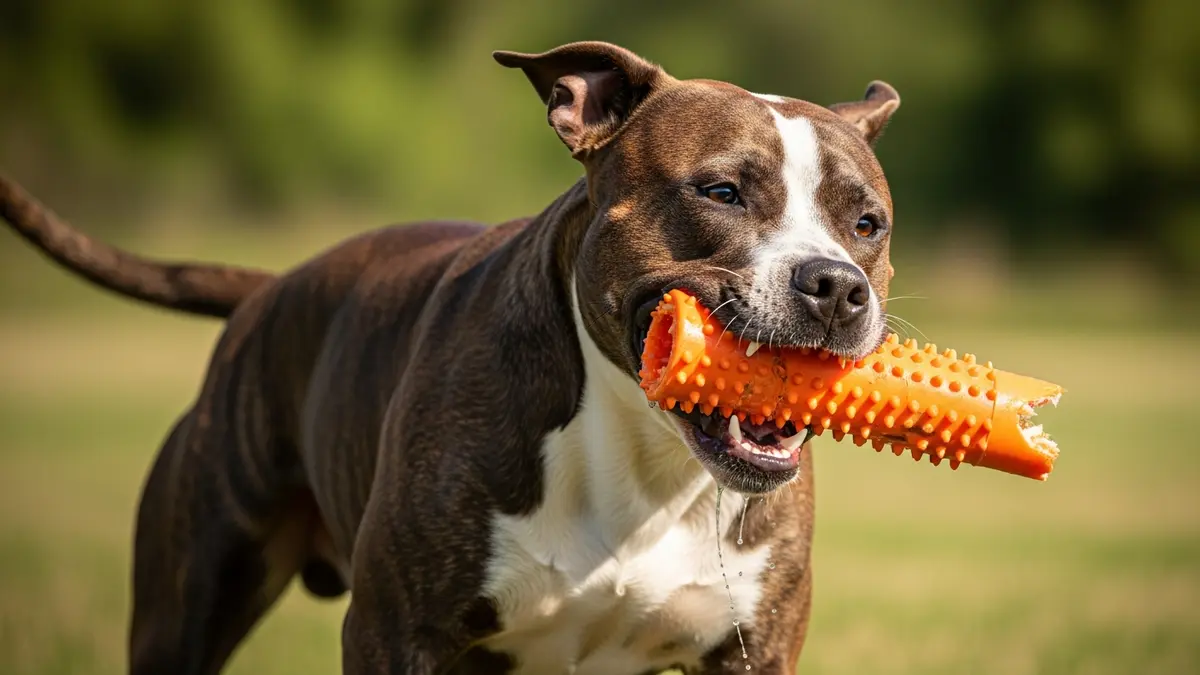
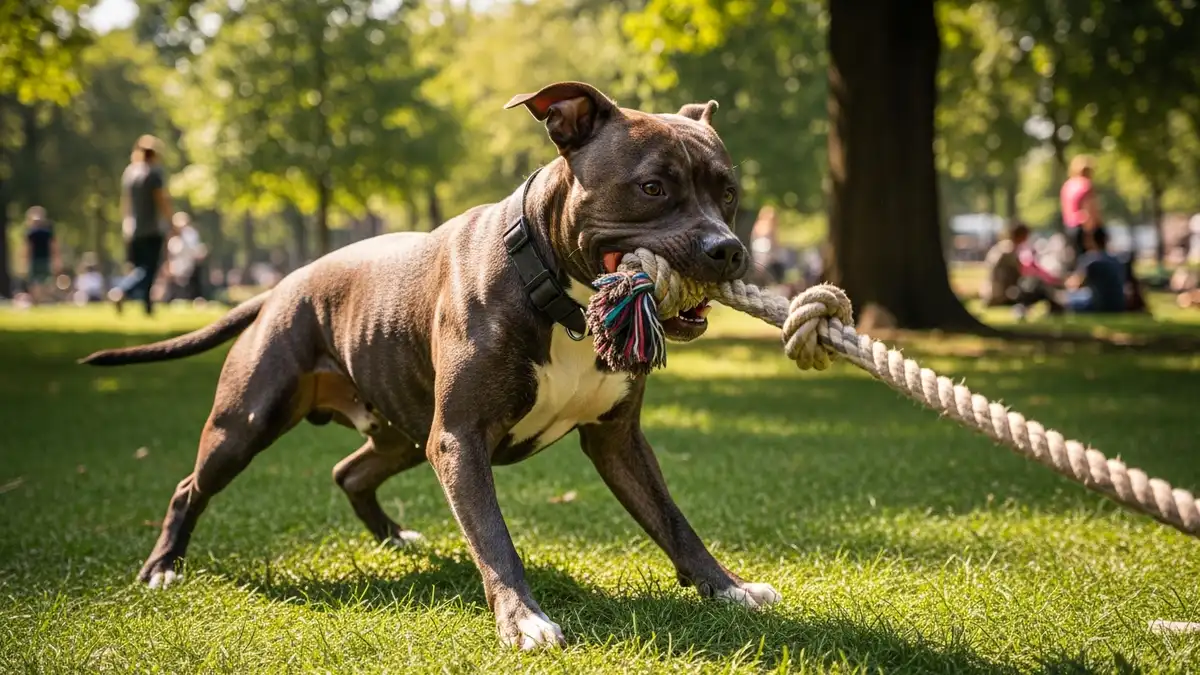
It happens fast. You hand your dog a new toy, turn away to pour a coffee, and return to find a pile of foam stuffing scattered across the floor and a squeaker lying ominously in the corner - with your dog looking entirely unbothered by the carnage. If this scene is familiar, you own an aggressive chewer, and you already know that most toys simply do not survive contact with them. According to the ASPCA common dog behavior issues guide, choosing the right toys can support your pet's mental and physical wellbeing.
The problem goes beyond wasted money. Toy debris is a genuine safety hazard. Ingested stuffing can cause intestinal blockages requiring emergency surgery. Swallowed squeakers are a choking risk. Shards of cracked plastic can lacerate the mouth, esophagus, or stomach. Picking the right toy is not a preference - for a powerful chewer, it is a matter of safety. Our broader guide to dog toys for aggressive chewers covers the full landscape; this article narrows the focus to the most durable, genuinely heavy-duty options available.
This article is for general informational purposes only and is not a substitute for professional veterinary advice, diagnosis, or treatment. Always consult your veterinarian about any health concerns, dietary changes, medication, or product safety questions specific to your pet. If your pet shows signs of distress, illness, or injury, contact a licensed veterinarian or emergency animal hospital immediately.
Understanding Aggressive Chewers
Not every dog that chews is an aggressive chewer. The term refers specifically to dogs whose bite force, chewing persistence, and jaw mechanics allow them to destroy standard-grade toys within minutes - or, in some cases, seconds. Aggressive chewers are not misbehaving; they are simply dogs with a strong biological drive to chew and the physical capability to act on it at full intensity.
When we research indestructible dog toys for aggressive chewers, we lean on veterinary references and observed behaviour patterns rather than anecdote alone. We've found that combination produces the most actionable guidance for everyday owners.
If you want even more options, check out our guide to best toys for golden retrievers.
How to Identify an Aggressive Chewer
Your dog is likely an aggressive chewer if they consistently destroy "durable" toys within an hour of first contact, if they are a large or muscular breed with a notably wide jaw (Pitbull, Rottweiler, Mastiff, Belgian Malinois, American Bulldog), or if previous toys have developed cracks, missing chunks, or torn seams despite being marketed as tough. Some medium breeds - particularly German Shepherds, Huskies, and Labrador Retrievers - are equally capable of demolishing toys that their size would suggest they should not be able to defeat.
The Real Danger of the Wrong Toy
Standard plush toys, squeaky latex toys, and thin rubber products were not designed for dogs who chew at high force. Once those toys fail, they fail fast - and the fragments they leave behind are hazardous. Polyfill stuffing forms compacted masses in the gastrointestinal tract. Rubber shards and hard plastic splinters cut soft tissue. Even the dye in some low-quality toys has been linked to gastrointestinal upset in dogs who ingest large quantities. For tough chew toys for large dogs, material selection and construction quality are the two most important variables to evaluate before any purchase. For breed-specific power chewers, our guide to toys for Pitbulls covers one of the most commonly cited aggressive-chewer breeds in depth.
If your dog breaks off and swallows a piece of any toy, treat it as a veterinary concern. Monitor for vomiting, lethargy, loss of appetite, or straining to defecate, and contact your vet immediately if any of these symptoms appear. Always retire a toy at the first sign of structural damage.

What Makes a Dog Toy Truly Indestructible
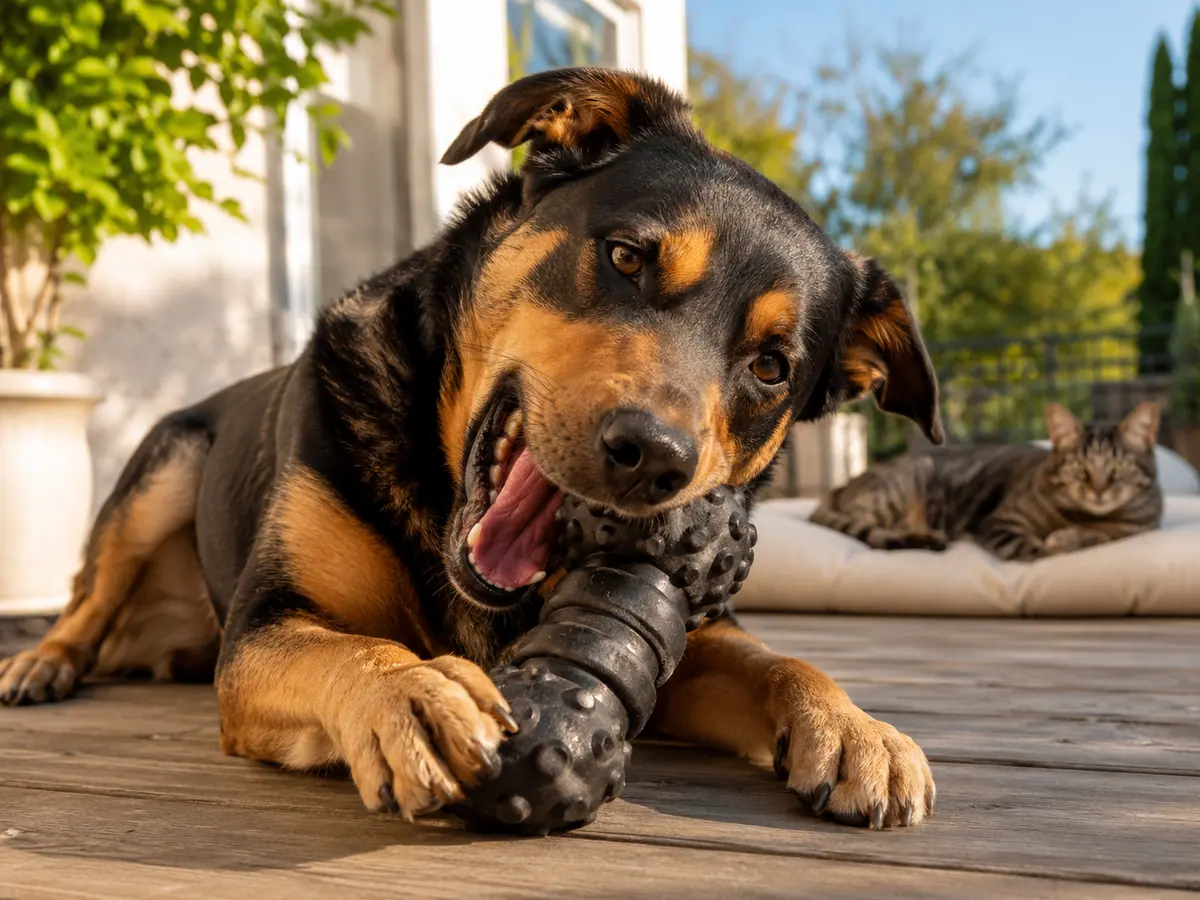
The word "indestructible" on toy packaging is marketing language, not a guarantee. But it does point to toys engineered to a higher standard - and understanding what that standard actually means helps you make smarter choices at the shelf.
Material: Natural Rubber
High-quality natural rubber is the gold standard for aggressive chewer toys. It flexes under bite pressure rather than cracking or shattering, which means it absorbs force rather than failing under it. The best natural rubber products - like KONG's black Extreme formula - use dense, vulcanized compounds that dramatically increase tear resistance compared to cheap latex alternatives. Natural rubber is also non-toxic and digestively inert, meaning small amounts inadvertently ingested are generally passed without issue, though toy pieces should still be prevented wherever possible.
Honestly, we revisit our indestructible dog toys for aggressive chewers guidance every few months because veterinary advice continues to refine. We've updated this piece to reflect current best practice as we understand it.
Material: Thermoplastic Rubber (TPR / Zogoflex)
Thermoplastic rubber compounds, including proprietary formulas like West Paw's Zogoflex, combine the flexibility of rubber with enhanced chemical stability. They are typically BPA-free, non-porous (bacteria cannot colonize the surface), and machine-washable. Zogoflex products are also backed by replacement guarantees, reflecting the manufacturer's confidence in the material's long-term durability. TPR materials perform similarly to natural rubber under aggressive chewing conditions and are an excellent choice for dogs with sensitivities to natural latex.
Material: Dense Nylon
Nylon-based chews occupy a different category - they are meant to be gnawed and gradually worn down rather than played with dynamically. Dense nylon products like the Nylabone DuraChew are effective at satisfying the chewing drive and are essentially impossible to tear apart in chunks. The tradeoff is that they shed fine nylon particles over time as the surface erodes, which most dogs pass without issue but which owners should monitor. Nylon chews are best suited to dogs who prefer sustained, methodical grinding rather than bite-and-shake play styles.
Structural Design: No Stuffing, No Squeaker Risk
For aggressive chewers, any toy containing internal stuffing or a squeaker mechanism has a built-in vulnerability. No matter how tough the outer shell, a determined aggressive chewer will eventually breach it, and what's inside is the hazard. The most durable options are solid or hollow one-piece designs with no internal components that can be excavated. Solid rubber, solid nylon, and hard-shell plastic treat dispensers all qualify. Toys with hollow chambers for treat stuffing (like the KONG family) are safe because the interior is accessible and empty rather than concealing a foreign-body risk.
Wall Thickness and Manufacturer Guarantees
A toy's physical wall thickness is one of the most reliable proxies for durability. A thin rubber wall that flexes easily under thumb pressure will not withstand a Rottweiler's bite. When evaluating a toy, press the surface firmly with your thumbnail - if it dents deeply, it is not appropriate for a power chewer. Look specifically for products with "Power Chewer" or "Extreme" designations, which indicate a thicker compound formulation. Manufacturer guarantees are another meaningful signal: brands like Goughnuts and West Paw that offer replacement programs have a financial incentive to ensure their products actually hold up.
Press your thumbnail firmly into any new chew toy before giving it to a power chewer. A toy that leaves a deep indentation under that pressure will likely be destroyed quickly. The ideal toy yields very slightly without denting deeply - firm and resilient, not rigid or spongy.
You might also enjoy our recommendations for toys for pitbulls.
11 Indestructible Dog Toys for Aggressive Chewers
The 11 picks below span rubber chews, nylon gnaws, treat dispensers, and hard-shell interactive toys - covering every play style and chewing personality among power chewers. Browse our full dog toys collection for even more heavy-duty options.
1. KONG Extreme - Best Overall Rubber Chew
The KONG Extreme is KONG's densest, most durable product and sits at the top of their Power Chewer range. Made from a proprietary black rubber compound significantly thicker and tougher than the red Classic formula, it is the go-to recommendation for most aggressive chewers. The hollow, snowman-shaped design serves a double function: it satisfies the chewing drive through the texture and resistance of the rubber itself, and it can be stuffed with peanut butter, wet food, or kibble-and-water paste and frozen overnight to create a long-lasting, enrichment-heavy treat dispenser. A frozen Extreme KONG can occupy even determined chewers for 30 to 45 minutes. Available in sizes XS through XL; choose one full size up from what you would normally select for your dog's weight to give the toy better longevity.
2. Goughnuts Maxx 50 Ring - Best for Extreme Power Chewers
Goughnuts builds their products with an engineering-first philosophy rare in the pet industry, and the Maxx 50 Ring is their most aggressive-chewer-rated product. The rubber compound is formulated to a specific hardness rating (50 on their scale) calibrated specifically for dogs with extreme bite force. What sets Goughnuts apart is the red dot safety indicator built into the core of the ring: if your dog chews through the black outer layer and the red inner layer becomes visible, the toy has reached its end of life and should be retired and replaced. That safety indicator removes guesswork from toy retirement decisions, a significant practical advantage. Goughnuts also backs the product with a guarantee - if your dog compromises the toy before the red dot appears, they will replace it.
3. West Paw Hurley - Best Fetch Toy for Power Chewers
The West Paw Hurley is a bone-shaped fetch toy made from Zogoflex, West Paw's proprietary thermoplastic rubber compound. Unlike standard rubber fetch toys that develop cracks under aggressive chewing, the Hurley flexes and rebounds without fragmenting, making it one of the safest fetch options for large, powerful dogs. It floats, cleans up in the top rack of the dishwasher, and is made from BPA-free, FDA-compliant materials. West Paw backs it with their Love It Guarantee: if your dog damages it, they replace it. The bone shape is grippable for interactive play and easy for dogs to pick up and carry. Available in Small and Large; most aggressive-chewer breeds will benefit from the Large.
4. Benebone Wishbone - Best Flavored Nylon Chew
The Benebone Wishbone takes the effective but often ignored nylon chew concept and solves the main reason dogs lose interest: flavor. Benebone infuses real ingredients - bacon, chicken, peanut, or maple - directly into the nylon material during manufacturing, so the scent and taste persist throughout the life of the product, not just as a surface coating that wears off in the first session. The wishbone shape is specifically designed for dogs to hold between their paws and work the ends at a natural chewing angle. It is a solo-use chew rather than an interactive toy, making it ideal for keeping a power chewer occupied and out of trouble during downtime. Replace when the chew develops sharp edges or thin sections.
5. Nylabone DuraChew - Best Long-Lasting Nylon Gnaw
The Nylabone DuraChew line is purpose-built for dogs who chew methodically and persistently at a single object. Made from extremely dense nylon, DuraChew products resist chunking and tearing - they erode very slowly rather than fracturing. The gnawing action also provides a passive dental benefit by mechanically removing plaque from tooth surfaces. Choose the size designated "Power Chew" or "Extreme Chew" for aggressive chewers; the standard DuraChew formula is designed for moderate chewers and will not hold up to the same level of force. Available in bone, stick, and ring shapes depending on your dog's preferred chewing posture. Check regularly for splinters or sharp edges as the toy wears down.
6. West Paw Toppl - Best Treat Dispenser
The West Paw Toppl is the most durable treat-dispensing toy available for aggressive chewers. Its wide opening and conical shape allow you to stuff it with soft food, peanut butter, wet kibble, or banana and freeze it solid - creating a lick-and-chew enrichment session that can last 30 minutes or more. Unlike many treat dispensers whose thin plastic housing fails quickly under aggressive chewing, the Toppl is made from Zogoflex, meaning it absorbs bite force rather than cracking. Two Toppls of different sizes can be stacked together (large and small connect firmly) to create an extended puzzle challenge. West Paw's Love It Guarantee applies here as well, making it one of the lowest-risk investments in a power-chewer toy collection.
7. Mammoth TireBiter - Best Rubber Ring
The Mammoth TireBiter is a ring-shaped toy modeled after a tire tread, made from thick natural rubber that provides genuine resistance to aggressive chewing. The ring shape makes it versatile: it works as a solo chew, a tug-of-war toy during interactive play, and a fetch ring for open-space games. The tread-pattern surface gives chewing dogs multiple grip points to work from, extending engagement across a session. For very large, powerful breeds, size up to the XL option to ensure the ring remains too large to be fully enclosed in the mouth, which reduces the risk of the dog generating maximum bite torque at a single chewing point. The TireBiter is a particularly effective tug option because the ring geometry distributes pull forces evenly and prevents the toy from deforming under tension.
8. Jolly Ball - Best Hard Chase Ball
The Jolly Ball solves a specific problem: dogs that destroy tennis balls and standard rubber balls immediately. Made from hard, thick polyethylene plastic, the Jolly Ball is effectively impossible for most dogs to chew through. The design is intentional - the ball is meant to be nosed, batted, and chased rather than carried in the mouth and chewed. Even when a dog bites down on the surface, the shell walls are thick enough that jaws cannot generate purchase sufficient to crack it. This makes it one of the most durable independent play toys available for large, powerful dogs with a strong chase drive. Available in multiple sizes and in a scented apple-scent variant that maintains dog interest during solo play sessions in the yard.
9. KONG Wobbler - Best Hard-Casing Treat Dispenser
The KONG Wobbler is a snowman-shaped treat dispenser made from ABS hard plastic - the same category of material used in safety helmets. The two-piece design screws apart for easy loading and is strong enough to survive repeated, hard batting from large dogs without cracking. As your dog noses and paws the Wobbler around the floor, kibble dispenses from an adjustable hole in the side. The weighted base creates the signature wobble motion that keeps dogs engaged and unpredictably rewards effort. Because the dispensing mechanic rewards movement rather than stationary chewing, the Wobbler keeps aggressive chewers active and mentally engaged rather than locked in a focused chewing posture that can lead to overworking a toy. Load it with your dog's full mealtime portion to replace bowl-fed meals entirely.
For related picks, take a look at our mental stimulation dog toys roundup. For additional guidance, see the FDA Center for Veterinary Medicine safety information.
10. StarMark Bob-A-Lot - Best Hard Polycarbonate Puzzle Toy
The StarMark Bob-A-Lot is made from high-impact polycarbonate - one of the toughest plastics available - and its two-chamber dispensing system adds genuine puzzle complexity beyond simple wobble toys. The upper chamber acts as a reservoir, feeding kibble into the lower dispensing chamber at a user-controlled rate. Adjusting the lower opening size controls how challenging each dispensing movement is, allowing owners to calibrate difficulty as a dog becomes more skilled. The weighted base creates irregular wobbling that resists predictable knock patterns, keeping dogs mentally active rather than settling into a rote routine. The polycarbonate construction means batting, biting, and dropping do not damage the shell under normal use conditions - making it appropriate for dogs who combine treat-seeking with aggressive mouthing behavior.

11. Chuckit! Ultra Ball - Best Durable Rubber Fetch Ball
The Chuckit! Ultra Ball occupies the gap between standard rubber balls (which aggressive chewers destroy) and hard plastic balls (which cannot be carried). Made from thick natural rubber with a textured surface, the Ultra Ball provides enough grip for dogs to carry and mouth between throws without the thin walls that make most rubber balls vulnerable to immediate puncture. The high-bounce design rewards outdoor fetch with unpredictable bounces, and the bright orange-and-blue color scheme makes it easy to spot in long grass. For large and extra-large aggressive chewers, choose the XL size - the greater wall thickness and mass makes it significantly more resistant to compression and puncture than the standard Large. Compatible with all Chuckit! launchers for extended throw distances without owner fatigue.
Comparing Chew-Toy Materials
Understanding material differences helps you match the right toy to your dog's chewing style and intensity. The table below summarizes the key characteristics of the three main categories used in heavy-duty chew toys.
| Material | Best For | Key Strengths | Limitations | Example Products |
|---|---|---|---|---|
| Natural Rubber | Bite-and-shake chewers, fetch players, treat stuffing | Flexible under bite force; non-toxic; absorbs impact; long-lasting with proper density | Very powerful jaws can eventually puncture thick sections; some latex-sensitive dogs react | KONG Extreme, Mammoth TireBiter, Chuckit! Ultra Ball |
| Thermoplastic Rubber (TPR / Zogoflex) | Fetch, tug, treat dispensing, latex-sensitive dogs | BPA-free; non-porous; machine washable; strong replacement guarantees; extremely resilient | Higher price point; limited shapes compared to standard rubber | West Paw Hurley, West Paw Toppl, Goughnuts Maxx 50 |
| Dense Nylon | Sustained, methodical grinders; dogs that prefer solo chewing | Virtually impossible to chunk; dental cleaning benefit; long lifespan; flavor-infusable | Not appropriate for fetch or interactive play; sheds fine particles over time; unsuitable for puppies under 6 months | Nylabone DuraChew, Benebone Wishbone |
| Hard Plastic (ABS / Polycarbonate) | Chase-and-nose players, treat dispensers, interactive puzzle toys | Extremely crack-resistant under normal use; easy to clean; precise dispensing mechanics | Not designed for sustained chewing; can crack under extreme focused bite force from very large dogs | KONG Wobbler, StarMark Bob-A-Lot, Jolly Ball |
No single material is optimal for all play styles. Most aggressive chewer households benefit from maintaining two to three options across different categories - a rubber chew for active gnawing, a hard-shell treat dispenser for mental enrichment, and a nylon chew for downtime grinding. Rotating between them prevents habituation and extends the functional life of each toy.
Safety Tips for Aggressive Chewer Toy Use
Even the best indestructible dog toys carry risk when used without proper supervision and maintenance practices. Following these guidelines significantly reduces the chance of a toy-related injury or veterinary emergency.
Supervise All New Toys
Never leave an aggressive chewer alone with a new toy during the first several sessions. Every dog interacts with toys differently, and the first few encounters reveal whether a toy is genuinely appropriate for your dog's specific bite force and play style. A toy rated for "extreme" chewers in general may still be inappropriate for your particular 120-pound Mastiff with a documented history of destroying products in that category. Supervision during early sessions lets you assess fit before committing to unsupervised use.
Inspect After Every Session
Spend 30 seconds examining every chew toy after each play session. Run your hands over the surface feeling for sharp edges, cracks, deep gouges, or missing sections. Compress rubber toys looking for internal weaknesses that have not yet broken through. Check the thickness of remaining nylon by pressing firmly - if the toy has worn thin enough to feel flexible where it was once rigid, it has reached end of life. For toys with safety indicators like the Goughnuts red dot, check visibility at the end of each session. Do not wait until a toy visibly fails; retire it at the first sign of meaningful structural compromise.
Retire Damaged Toys Immediately
A damaged toy is always more dangerous than no toy. The moment a toy develops a crack, a missing chunk, a loose flap, or an exposed sharp edge, it must be discarded immediately - not placed in a "maybe" pile to be reassessed later. Store retired toys out of reach to prevent re-access. This rule is non-negotiable for aggressive chewers, who will immediately exploit any structural weakness they find. The toy has served its purpose; the safety risk it poses after damage is not worth any remaining play value.
Rotate Toys Regularly
Keeping three or four toys in active rotation - and storing the rest out of sight - serves two purposes simultaneously. First, dogs naturally lose interest in toys they see every day; rotation maintains novelty and engagement without requiring constant new purchases. Second, rotation limits the cumulative wear any single toy accumulates over a week. A toy your dog interacts with for two sessions a week will last significantly longer than one that is available daily. For aggressive chewers, toy longevity matters both economically and from a safety standpoint - a toy that lasts longer is one that degrades more slowly and requires less frequent retirement.
Match Toy Size to Your Dog
Size selection is a safety consideration as much as a comfort one. A toy that is too small for your dog's mouth allows them to generate maximum bite force at a single concentrated point - exactly the geometry most likely to cause a failure. Choose toys that are large enough that your dog cannot fully enclose them in their mouth. For very large breeds (over 80 pounds), always size up to the XL or XXL option even if the standard large would technically fit. A slightly oversized toy is always safer than one that matches bite geometry too closely.
Maintain a set of four toys in active rotation - swap in a new one and retire the oldest every three to four days. A toy your aggressive chewer has not seen for a week will be met with the same enthusiasm as a brand-new one. This approach extends toy life, reduces cost, and keeps engagement consistently high.
2026 Search Intent Refresh: What to Check Before You Buy
Shoppers searching for indestructible dog toys for aggressive chewers usually want a quick product shortlist, proof that the toy fits their pet's size and play style, and a clear safety tradeoff. Use this section as a fast buying filter before comparing individual products.
Related searches we are answering on this page include aggressive chewer dog toys, heavy duty chew toys. The strongest pages in this topic cluster combine product comparisons, safety guidance, and internal paths to deeper dog toy categories.
| Option | Best role | Buyer check |
|---|---|---|
| Solid rubber toys | Primary match | Compare size, material, supervision needs, and replacement timing before buying. |
| Rope tug toys | Good alternative | Compare size, material, supervision needs, and replacement timing before buying. |
| Slow-feeder chew toys | Add-on pick | Compare size, material, supervision needs, and replacement timing before buying. |
Fast path: if you already know the toy type, go straight to Browse power chewer picks. If you are still comparing intent, read the adjacent guides on indestructible toys, interactive dog toys, and chew toys.
Conclusion
Picking the right option for your dog is less about finding a single "best" product and more about matching the choice to your dog's size, age, play style, and your home environment. The recommendations above cover the main scenarios most pet owners run into, so use them as a checklist when comparing options.
Start with one or two changes, watch how your dog responds for a week or two, then iterate. Pets show you very quickly what works for them. If a toy, feeder, or routine is ignored or causes stress, swap it out without hesitation. The goal is a happier, healthier dog every day.
Frequently Asked Questions
Should I consult a veterinarian about my pet's play and enrichment needs?
Yes, especially if your pet shows signs of anxiety, sudden behavior changes, or destructive habits that may indicate a medical issue. A licensed veterinarian or veterinary behaviorist can rule out pain, dental problems, or cognitive decline before you adjust toys or routines. The guidance in this article is educational, not a substitute for professional veterinary advice.
How long does it take to see results from new toys or enrichment?
Most pet owners notice small changes within a week (calmer evenings, less destructive chewing, more interest in mealtime puzzles) and clearer behavior shifts within 4 to 6 weeks of consistent rotation. Older pets and rescues may take 8 to 12 weeks to adjust. Keep a short weekly journal so you can track real progress instead of relying on memory.