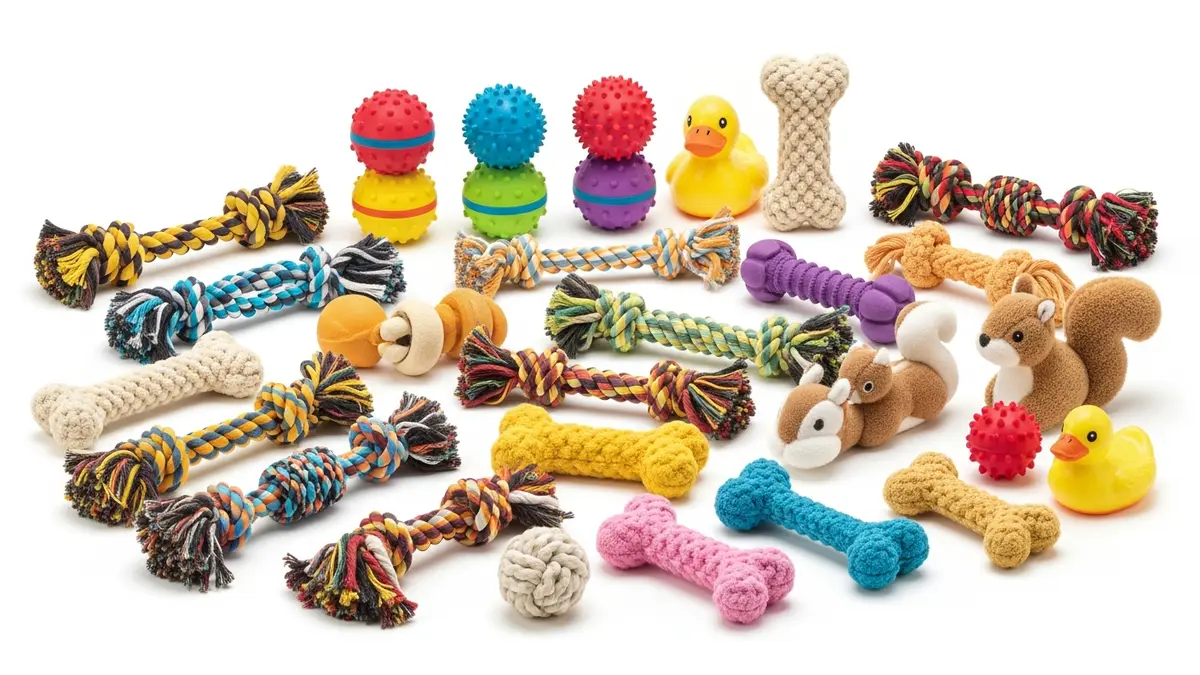
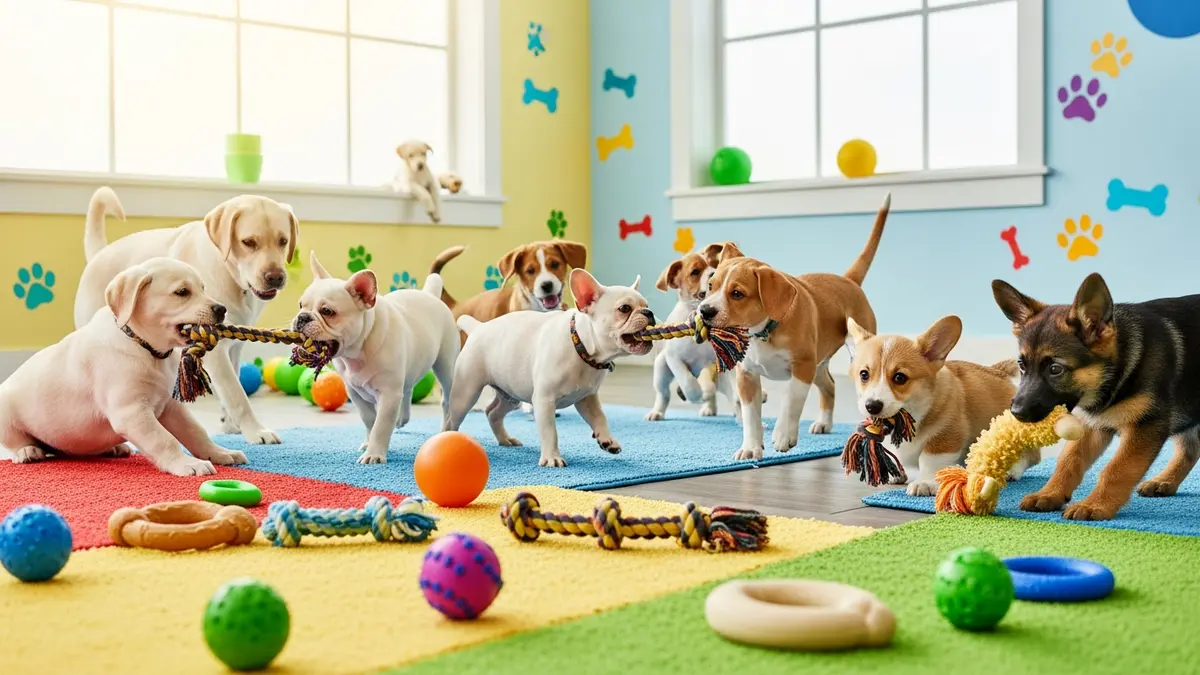
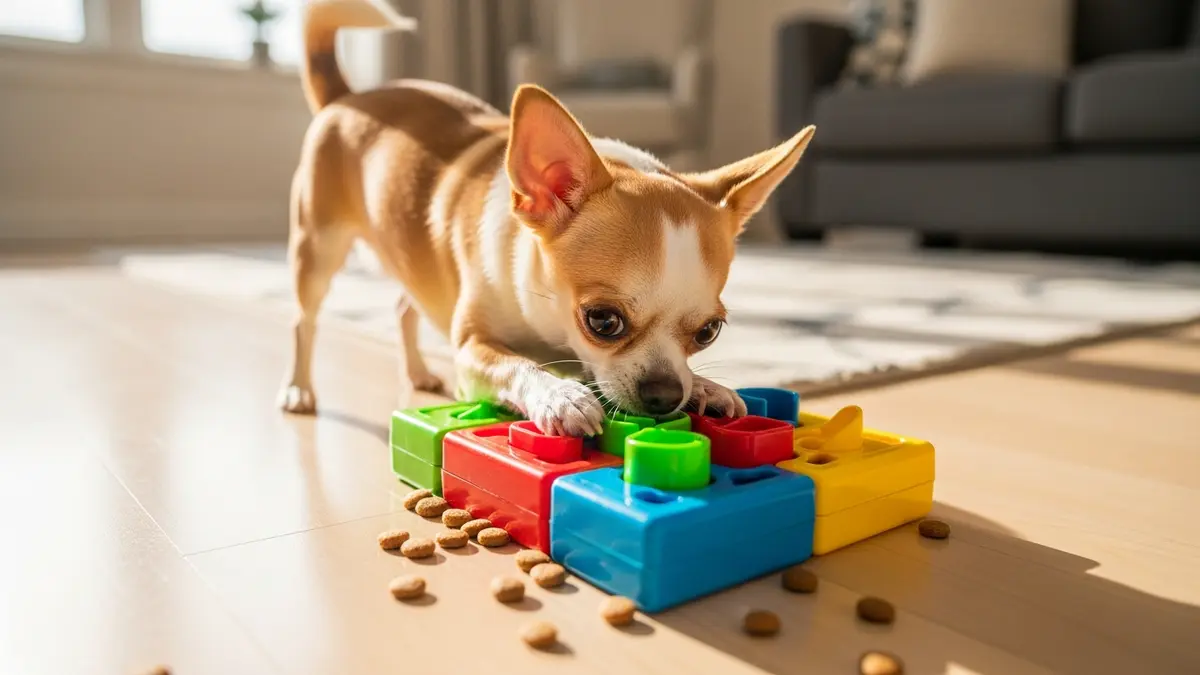
They've gone viral a thousand times over - those stubby legs pumping furiously, ears like satellite dishes swiveling at every sound, and a personality roughly ten times larger than their frame should allow. But if you own a Corgi, you already know the cute videos don't tell the whole story. Behind those short legs and the perma-smile is a working herding dog with a demanding brain, surprising stamina, and a strong opinion about everything - including whether your ankles need rounding up. According to the American Kennel Club breed standards directory, choosing the right toys can support your pet's mental and physical wellbeing.
Finding the best toys for Corgis isn't just about picking something small and adorable. It's about matching toys to a breed that is genuinely athletic, mentally complex, and prone to weight gain when under-stimulated. A bored Corgi will redecorate your furniture, herd your children, and develop a bark that carries several city blocks. The right toys prevent all of that - and make life a lot more fun for both of you. Explore our full range of dog toys and accessories to complement the picks in this guide.
This article is for general informational purposes only and is not a substitute for professional veterinary advice, diagnosis, or treatment. Always consult your veterinarian about any health concerns, dietary changes, medication, or product safety questions specific to your pet. If your pet shows signs of distress, illness, or injury, contact a licensed veterinarian or emergency animal hospital immediately.
Why Corgis Need the Right Toys
Corgis - both the Pembroke Welsh and Cardigan Welsh varieties - were developed over centuries as working cattle dogs in the rugged hills of Wales. Their job was to dart in and nip at the heels of cattle ten times their size, driving herds across rough terrain all day. The American Kennel Club ranks the Pembroke Welsh Corgi among the top 15 most intelligent dog breeds, and that intelligence didn't appear by accident. It was bred in specifically to help a small dog manage large livestock with minimal human direction.
When we evaluate toys for corgis for the Livehappypet readers, we focus on three things we wish more buying guides flagged: material safety, sizing accuracy, and supervision requirements. We've found those decide the buying outcome more than brand alone.
If you want even more options, check out our guide to summer dog toys.
What this means for you as an owner is that your Corgi has a big dog brain in a small dog body. They think quickly, problem-solve independently, and grow bored with repetitive or unchallenging activities faster than most breeds. Combine that cognitive horsepower with genuine herding-breed energy - these dogs can keep moving all day - and you have an animal that genuinely needs purposeful play, not just a squeaky toy tossed in a corner.
Surprisingly Athletic, Despite the Legs
Do not be fooled by the stumpy silhouette. Corgis are surprisingly fast, agile, and athletic. Their low center of gravity actually gives them excellent balance and turning ability. They can sprint, change direction quickly, and keep pace far longer than their appearance suggests. The catch is that their elongated spine and shortened legs create a structural vulnerability: Corgis are one of the breeds most at risk for intervertebral disc disease (IVDD), a painful and potentially serious spinal condition triggered or worsened by repeated high-impact jumping. This fact has real consequences for toy selection, as we'll cover later in this guide.
Weight Gain Is a Real Risk
Corgis love food almost as much as they love having opinions. Their metabolism can slow with age, and without consistent activity, they gain weight rapidly. Excess weight dramatically increases the strain on their already-vulnerable spine. This makes active play - the kind that genuinely burns calories - a medical priority, not just a lifestyle preference. Toys that get a Corgi moving, engaging, and working for their food are the single best investment a Corgi owner can make in their dog's long-term health.
Match the toy to both the brain and the body. Corgis need mental engagement just as much as physical exercise - and toys that deliver both at once are worth their weight in gold.
What Makes a Good Toy for Corgis
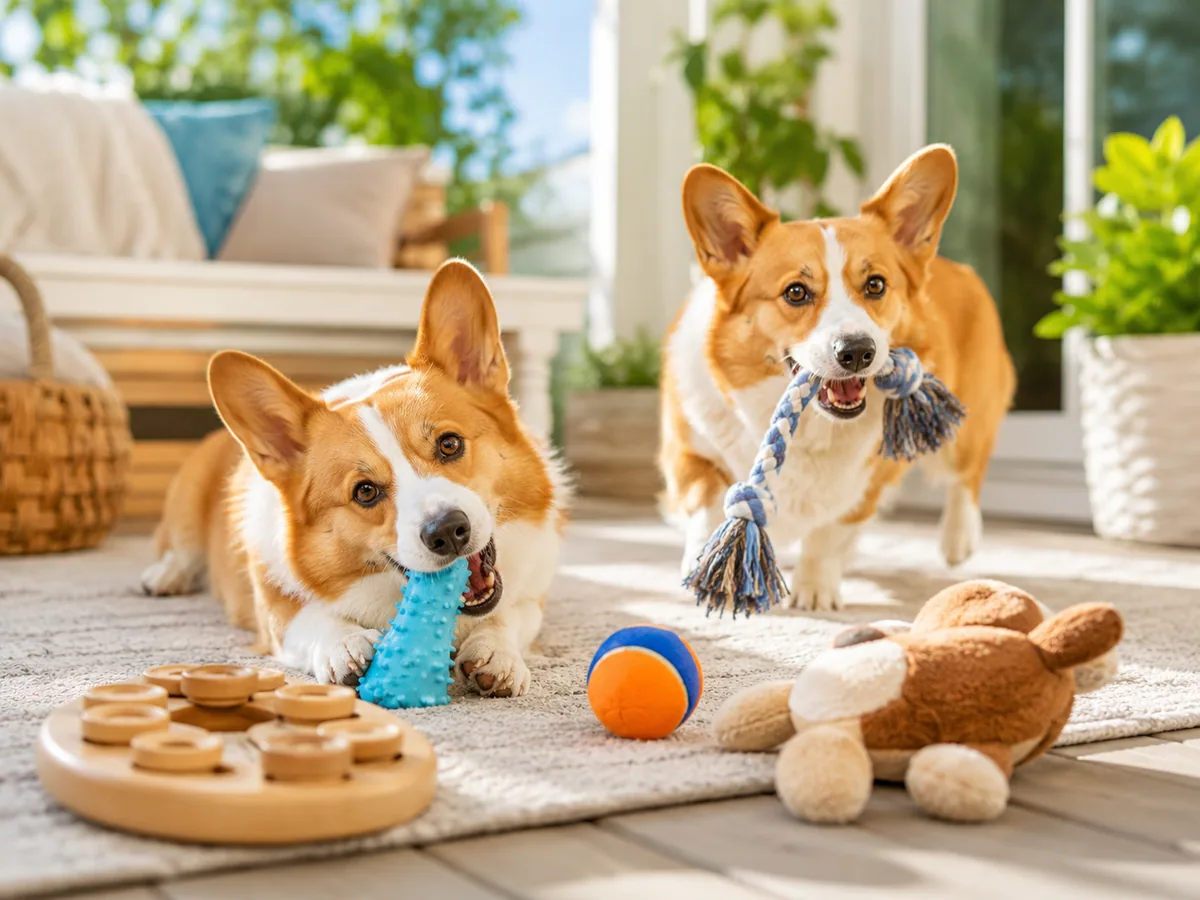
Before diving into specific picks, it's worth understanding the criteria that separate a great Corgi toy from a waste of shelf space. Four principles guide every recommendation in this list.
Right Size for a Corgi's Frame
Corgi mouths are medium-sized - not the wide gape of a Labrador, nor the tiny bite of a Chihuahua. Toys meant for large breeds are too bulky and frustrating to carry or interact with. Toys sized for small breeds can become choking hazards. The sweet spot is medium-sized toys suitable for dogs in the 25 to 50-pound range. Look for product descriptions that mention medium breeds, or check that the toy is no smaller than a tennis ball and no larger than a standard softball.
Honestly, we've reviewed enough toys for corgis listings to know that the cheapest option is rarely the best value once durability is factored in. We weigh longevity in our recommendations.
Mentally Engaging
A Corgi that is only physically tired but mentally bored will still find trouble. The breed's herding heritage means they need to think during play - to solve a problem, track a movement, search for a hidden reward, or figure out a mechanism. Puzzle toys, hide-and-seek games, snuffle mats, and interactive treat dispensers all serve this need. As a general rule, any toy that makes your Corgi use their nose or their problem-solving skills alongside their legs is a better choice than one that only delivers physical stimulation.
Durable Enough to Last
Corgis are not typically aggressive power-chewers, but they are persistent. A Corgi that decides to dismantle a toy will work at it methodically until the job is done. Choose toys built from durable natural rubber, tough nylon, or tightly woven rope - and inspect them regularly for wear. A toy with chunks missing or stuffing exposed is a hazard regardless of how indestructible it was at purchase. For harder-chewing Corgis, our roundup of the best dog toys covers durability ratings across all breeds.
Spine-Safe and Low-Impact
Given the IVDD risk, the best Corgi toys keep play low to the ground. Avoid designs that reward or encourage repeated high jumping - catching a thrown ball at shoulder height is fine occasionally, but it should not be the primary play mechanic. Flirt poles used at ground level, rolling treat dispensers, snuffle mats, and puzzle feeders are all naturally spine-friendly because they keep your Corgi's movement horizontal rather than vertical. This is a particularly important consideration when choosing interactive toys for small breeds with long backs.
11 Best Toys for Corgis
These picks cover every dimension of a Corgi's play needs: mental stimulation, physical activity, chewing satisfaction, and interactive bonding - all with their specific size requirements and spinal health in mind. Browse our full dog toys collection to complement these recommendations.
1. KONG Classic (Medium) - Best Overall
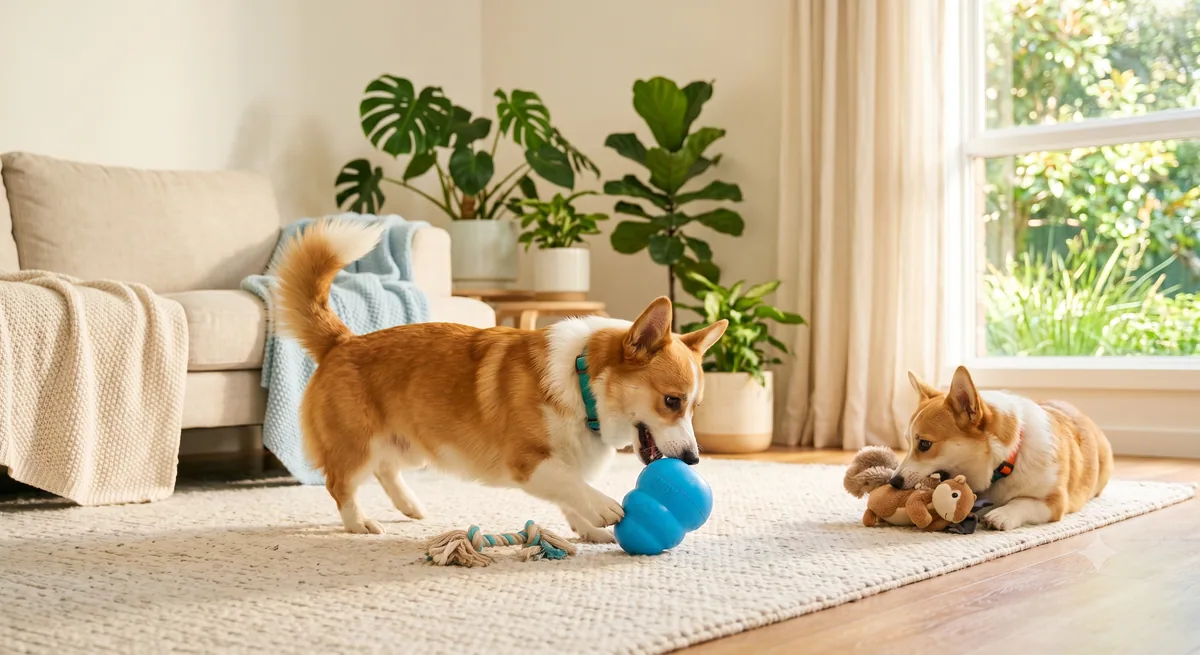
The KONG Classic is the most universally recommended toy for Corgis, and for good reason: it simultaneously satisfies the chewing instinct, rewards persistence, and delivers long-lasting mental engagement. The Medium size is the right fit for most adult Corgis - large enough to prevent swallowing, sized correctly for their muzzle, and easy to bat and chase around the floor. Stuff it with kibble mixed into peanut butter or a smear of plain yogurt, then freeze it overnight. A frozen KONG can occupy a Corgi for 30 to 45 minutes and doubles as an excellent slow-feeder to combat the weight-gain risk. Batch-prep five or six at a time and store them in the freezer for an always-ready enrichment tool.
You might also enjoy our recommendations for toys for pitbulls.
2. Outward Hound Fun Feeder - Best Slow Feeder
Corgis that eat too quickly are at risk for bloat and the digestive discomfort that comes with gulping air. The Outward Hound Fun Feeder transforms the daily meal into a 10-to-15-minute enrichment session by forcing your Corgi to use their tongue and snout to extract kibble from a maze of raised ridges and channels. The mental effort involved in navigating the feeder tires them out just as effectively as physical play - researchers consistently find that problem-solving at mealtime lowers cortisol and increases post-meal calm. Available in multiple maze complexities; the "Flower" or "Mini" patterns work well for Corgi muzzle sizes.
3. Chuckit! Mini Ball - Best Fetch Ball
Standard tennis balls are too large for a Corgi's mouth and their abrasive felt wears tooth enamel over time. The Chuckit! Mini Ball - sized for dogs in the small-to-medium range - fits perfectly in a Corgi's mouth, bounces unpredictably enough to hold attention, and is built from durable natural rubber that holds up to persistent chewing. Keep throws low and along the ground rather than launching high arcs that encourage jumping. The bright orange color makes it easy to spot in grass, and it floats for water play. Pair with a Chuckit! Mini launcher for no-bend throws that extend range without straining your shoulder.
4. Nina Ottosson Dog Brick (Level 2) - Best Puzzle Toy
The Nina Ottosson Dog Brick is the gold standard in puzzle feeders for intelligent breeds, and the Level 2 difficulty is the perfect starting point for Corgis. It features a combination of sliding bone covers and flipping brick pieces that hide treats underneath - requiring your Corgi to figure out different mechanics for different compartments. Most Corgis solve the beginner Level 1 version within a few minutes; the Dog Brick keeps them engaged for 10 to 20 minutes per session. As their skills improve, upgrade to Level 3 difficulty. Load it with part of their daily kibble allowance to turn puzzle time into mealtime and keep calories in check.
5. Hyperflite Pup Disc - Best Frisbee
Corgis enjoy the chase aspect of disc play but need a frisbee that flies low and flat rather than soaring high overhead. A low-arc disc keeps the Corgi running horizontally rather than leaping vertically, protecting their spine while still delivering an intense cardiovascular workout. Choose a soft rubber disc - not hard plastic - with edges that won't cut your Corgi's mouth on a fast catch. Roll it along the ground like a wheel for puppies or Corgis with back concerns; let it float low for adult dogs. Keep sessions to 10-15 minutes to prevent overexertion on those short legs working overtime.
6. Mammoth Flossy Chews Tug Rope - Best Tug Toy
Tug-of-war is one of the best activities for a Corgi because it channels their herding instincts - that strong, purposeful pulling and gripping - into a sanctioned, supervised game. A well-made rope tug from Mammoth or similar brands provides enough resistance to engage your Corgi's full body without requiring them to jump. Keep sessions to 5-10 minutes, always end on a "drop it" command to reinforce impulse control, and remove the rope after play. Corgis can fray rope fibers when left to chew solo, creating an ingestion risk. Used correctly, rope tug is one of the most satisfying and relationship-building games in your Corgi's rotation.
7. Snuffle Mat - Best Nose Work Toy
A snuffle mat hides kibble or small treats within a dense forest of fabric strips, requiring your Corgi to use their nose to hunt each morsel out. Scent work is one of the most cognitively demanding activities available to dogs - 15 minutes of active sniffing can be as mentally draining as a full hour of fetch. For Corgis, who are naturally nose-driven herding dogs, snuffle mats tap directly into their foraging instincts. The low-to-the-ground nature of the activity makes it completely spine-safe, and the focused engagement produces a notably calm, settled dog afterward. An excellent pre-departure tool for Corgis with mild separation anxiety.
8. West Paw Zogoflex Hurley - Best Durable Chew
The West Paw Zogoflex Hurley in Small or Medium size is the ideal durable chew for Corgis. Made from West Paw's proprietary non-toxic, fully recyclable compound, it absorbs bite force rather than cracking and is sized so a Corgi can hold it between their paws and chew from multiple angles without frustration. It floats for water play and cleans up in the dishwasher. West Paw backs it with their Love It Guarantee - if your dog damages it, they'll replace it. A quieter, calmer enrichment option than active chase toys, the Hurley is ideal for indoor chewing during downtime.
9. Outward Hound Hide-A-Squirrel - Best Plush Puzzle
The Hide-A-Squirrel puzzle toy - a plush log hiding several squeaky squirrels inside - is a Corgi favorite that combines the satisfaction of a plush toy with a genuine search-and-retrieve mechanic. Your Corgi must nose and paw each squirrel out of its hiding place in the log, triggering squeaks as a reward. This engages the herding and prey drive instincts in a gentle, mentally stimulating format. The squirrels themselves become individual toys after the puzzle is solved, extending the play session. Choose the "Large" version so the log is big enough to provide a genuine challenge without the individual squirrels being a choking risk.
10. Outward Hound Flirt Pole - Best Active Exercise Toy
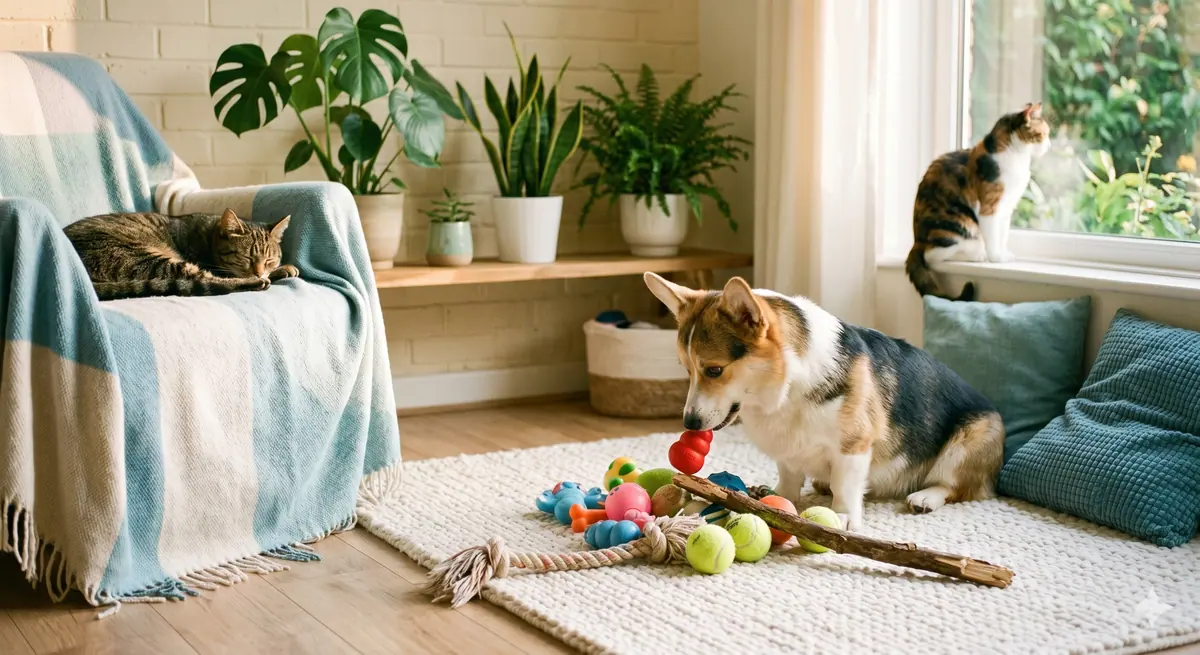
A flirt pole is one of the most efficient exercise tools available for Corgis, precisely because it keeps the movement horizontal. Unlike fetch balls that can go high, a flirt pole drags a lure along the ground or in tight low circles - exactly the kind of quick-direction, low-arc pursuit that suits a Corgi's anatomy. Ten minutes of serious flirt pole play will tire a Corgi more effectively than 30 minutes of leash walking, thanks to the explosive bursts and direction changes involved. Use it to reinforce "sit," "wait," and "drop it" commands simultaneously, turning exercise into training. Keep sessions short - 10 minutes maximum - to protect joints and prevent overheating.
11. Bob-A-Lot Interactive Treat Ball - Best Rolling Dispenser
The Bob-A-Lot by StarMark is a weighted wobble toy that dispenses kibble or treats as your Corgi bats and nudges it around the floor. The weighted bottom makes it bob and return unpredictably, encouraging continuous pawing and nosing. The dual-chamber design - with an adjustable inner opening - allows you to increase difficulty as your Corgi gets skilled at the game. It delivers both a physical workout (they're moving constantly) and a mental challenge (they're learning the right angles of approach). Load it with part of their daily meal allowance to keep food portions controlled while giving them up to 20 minutes of engaged solo play.
Toys to Avoid for Corgis
Knowing what not to buy is just as valuable as knowing what works. Several toy categories that are perfectly fine for other breeds present real risks for Corgis specifically. For additional guidance, see the ASPCA dog care guidelines.
For related picks, take a look at our best toys for huskies roundup.
Toys Designed for Large or Giant Breeds
Large-breed toys are typically too bulky for a Corgi to carry, interact with, or fit in their mouth comfortably. They can also be too heavy - a Corgi trying to lug an oversized rope toy or bone may overextend their back in the process. Always check the recommended weight range on toy packaging and stick to products sized for the 25-to-50-pound bracket.
Toys That Reward High Jumping
This is the most important category to avoid. Any toy whose primary play mechanic involves your Corgi leaping repeatedly into the air - catching a ball thrown high overhead, jumping at a flirt pole held at shoulder height, or launching off furniture - creates cumulative stress on the intervertebral discs. IVDD in Corgis can range from mild back pain to full hind-end paralysis in severe cases, and repeated high-impact jumping is one of the primary contributing factors. Keep all toy interaction at ground level or low arc.
Corgis are a chondrodystrophic breed with a genetic predisposition to intervertebral disc disease. Avoid any toys that require repeated high jumping or launching off elevated surfaces. Low-to-the-ground play is always the safest option for long-term spinal health.
Very Small Toys Meant for Toy Breeds
Toys marketed for Chihuahuas, Yorkies, or other toy breeds are often sized small enough to become a choking or swallowing hazard for a Corgi. Despite their compact frame, Corgis have medium-breed mouths and can easily pick up and swallow objects that would be appropriately sized for a much smaller dog. When in doubt, choose medium over small.
Unsupervised Rope Toys
Rope toys are excellent for supervised tug sessions but should never be left with a Corgi unsupervised. Corgis will chew rope fibers into loose strands, and those strands are a linear foreign body risk - the kind of intestinal obstruction that requires emergency surgery. Use rope toys only for interactive play and put them away when the session ends.
Keeping Your Corgi Mentally and Physically Engaged
The best toy collection in the world won't substitute for a solid daily enrichment routine. Corgis thrive on consistency and variety - they need to know that stimulating activity is a predictable part of their day, and they need enough variety to prevent habituation. Here's a practical framework that works.
Rotate toys every two to three days. Never leave every toy on the floor at once. Keep four or five in active rotation, storing the rest out of sight. A toy your Corgi hasn't seen in four days is nearly as exciting as a brand-new one. Novelty is a powerful engagement driver for intelligent breeds. Our guide to the best toys for puppies includes rotation strategies that apply equally well to adult Corgis building strong toy habits.
Feed meals as enrichment. Replace at least one bowl-fed meal per day with an enrichment format: snuffle mat, puzzle feeder, lick mat, or frozen KONG. This converts the calories your Corgi was going to consume anyway into 10 to 20 minutes of focused mental engagement, at zero extra cost. Over a week, this adds up to more than two hours of additional enrichment. It also slows intake, reducing the bloat risk common in food-enthusiastic breeds.
Use play for training simultaneously. Every tug session, every flirt pole game, and every fetch round is an opportunity to reinforce "sit," "wait," "drop it," and "leave it." Corgis trained through play develop faster, retain commands longer, and form stronger bonds with their owners than dogs trained through repetitive drills alone. A 10-minute play-training session burns energy, sharpens obedience, and deepens trust at the same time.
Schedule two daily activity windows. Aim for a morning session of 20 to 30 minutes - ideally combining physical movement and mental engagement - and an evening session of similar length. Corgis settle far better overnight when they've had both their body and brain fully worked during the day. The evening session should be lower intensity than the morning to support a calm transition to rest.
Add nose work for off days. On days when outdoor play isn't possible - bad weather, recovery from vaccination, or simply a busy schedule - nose work indoors is your best friend. Hide kibble around the house, under cups, behind furniture legs, or inside crumpled paper bags. A 15-minute hide-and-seek nose work session can settle a Corgi as effectively as a brisk outdoor walk. For more enrichment ideas tailored to compact, clever dogs, see our roundup of interactive toys for small breeds.
The most effective Corgi enrichment schedule combines at least one mental challenge (puzzle feeder, snuffle mat, or nose work) with one physical activity (fetch, flirt pole, or tug) every single day. Either alone leaves half of their needs unmet.
Comparison: Budget vs Mid-Range vs Premium
This quick comparison helps you understand what you actually get at each price band, so you can decide where to spend and where to save without compromising safety.
Comparison reflects typical US retail ranges as of 2026. Always verify safety labels before purchase.
Conclusion
Picking the right option for your dog is less about finding a single "best" product and more about matching the choice to your dog's size, age, play style, and your home environment. The recommendations above cover the main scenarios most pet owners run into, so use them as a checklist when comparing options.
Start with one or two changes, watch how your dog responds for a week or two, then iterate. Pets show you very quickly what works for them. If a toy, feeder, or routine is ignored or causes stress, swap it out without hesitation. The goal is a happier, healthier dog every day.
Frequently Asked Questions
Should I consult a veterinarian about my pet's play and enrichment needs?
Yes, especially if your pet shows signs of anxiety, sudden behavior changes, or destructive habits that may indicate a medical issue. A licensed veterinarian or veterinary behaviorist can rule out pain, dental problems, or cognitive decline before you adjust toys or routines. The guidance in this article is educational, not a substitute for professional veterinary advice.
How long does it take to see results from new toys or enrichment?
Most pet owners notice small changes within a week (calmer evenings, less destructive chewing, more interest in mealtime puzzles) and clearer behavior shifts within 4 to 6 weeks of consistent rotation. Older pets and rescues may take 8 to 12 weeks to adjust. Keep a short weekly journal so you can track real progress instead of relying on memory.