Summer changes what a good dog toy has to do. A ball that is perfect for a cool spring morning can lead a keen retriever into overheating by mid afternoon, and a plush toy that lives on the lawn turns soggy and grubby after one sprinkler session. The best summer dog toys help your dog play in water, cool down while chewing, and stay busy indoors during the hottest hours. This guide sorts them by job and pairs each one with the heat safety advice from the AKC and the ASPCA that matters most when the weather turns hot.
Quick Answer: What Are the Best Summer Dog Toys?
The best summer dog toys are floating fetch toys for supervised swims, rubber toys you can stuff and freeze, and puzzle feeders that keep dogs busy indoors during the hottest hours. Pick bright, rinseable materials, size every toy so it cannot be swallowed, and schedule active play for early mornings and evenings.
Updated October 4, 2026- Water toys: choose toys that float and are easy to spot, and only use them while you are watching.
- Cooling toys: freeze food inside a flexible rubber toy rather than handing over large ice cubes, which are hard enough to damage teeth.
- Indoor toys: puzzle feeders and snuffle games replace long walks on days when the pavement is too hot for paws.
- Heat first, toy second: stop the game at the first sign of heavy panting or drooling, whatever toy you are using.
What Makes a Toy Good for Summer?
Answer: A good summer toy survives water and sun, is easy to see on grass or in a pool, and suits shorter play sessions. Look for toys that float, rinse clean and dry quickly, or that can be stuffed and frozen. Avoid anything small enough to swallow, and toys with ribbons or eyes that chew off.
Summer play is wetter, dirtier and shorter than play in cooler months, so the toy has to cope with all three. Closed-cell foam, natural rubber and tightly woven rope dry far faster than stuffed fabric, and bright orange or yellow toys are much easier to find in long grass or open water than dark ones. Toys you use for fetch should be easy to throw a short distance, because the goal on a hot day is lots of small bursts with rest in the shade between them, not one long sprint after another.
The basic safety rules do not change with the season. VCA Animal Hospitals advises choosing toys that can never fit entirely in your dog's mouth and avoiding ribbons, eyes or other parts that can be swallowed or inhaled. That matters even more around water, where a waterlogged toy is heavier and harder to spit out.
Which Water Toys Work Best for Pools, Lakes and Beaches?
Answer: Floating fetch toys in bright colors work best because your dog can find and carry them without diving. Use bumpers, floating balls and soft rubber flying discs for retrieves, and a shallow paddling pool for dogs who just like to splash. Stay within reach, keep sessions short, and offer fresh drinking water.
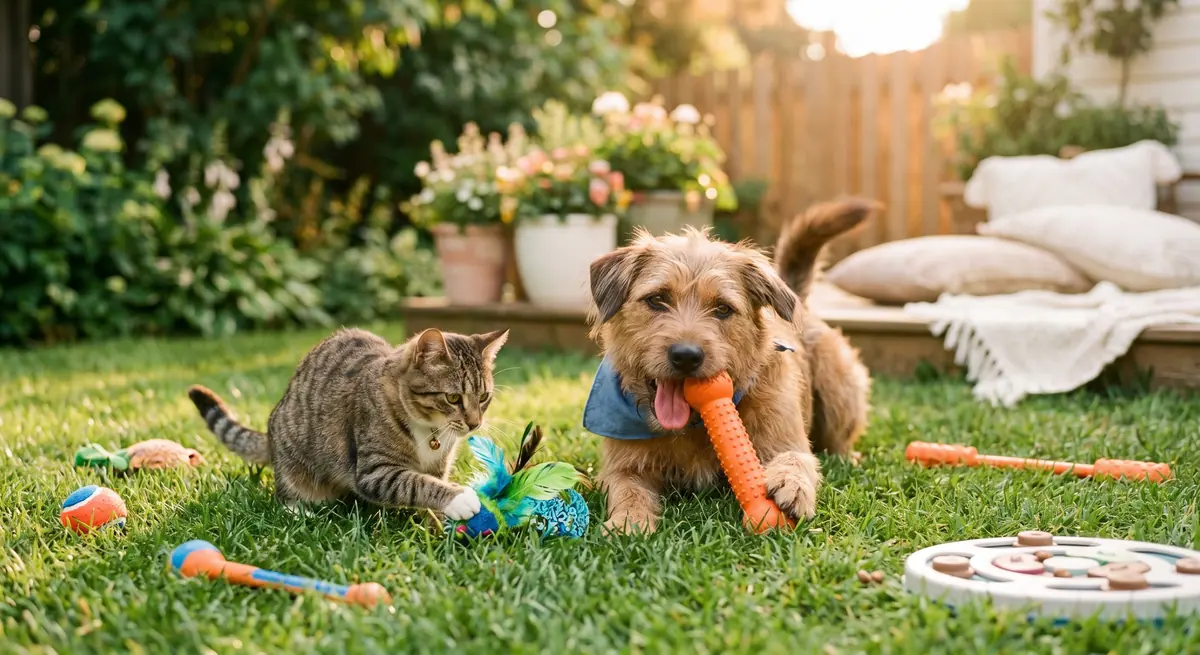
Floating fetch toys and bumpers
Retrieving dogs love a toy that sits high on the surface. Foam or rubber bumpers with a rope tail give your dog something easy to grab and give you something easy to throw. Keep throws short and close to the bank or the pool steps, so your dog never has to swim far to bring the toy back.
Soft flying discs
Hard plastic discs can hurt teeth and gums when a dog catches them at speed. A soft rubber or fabric disc is kinder to the mouth, and many float. Over grass, skim the disc low rather than throwing it high, so your dog is not leaping and twisting repeatedly in the heat.
Paddling pools and sprinkler play
Not every dog wants to swim. A sturdy paddling pool with a few floating toys lets cautious dogs cool their legs and belly at their own pace, and a garden sprinkler turns chasing water into a game. Empty and refill the pool regularly so it stays clean.
Water also brings its own risks. The ASPCA advises never leaving pets unsupervised around a pool, introducing them to water gradually, using flotation devices on boats, discouraging them from drinking pool, lake or ocean water, and rinsing chlorine or salt from their coat after a swim. For more outdoor ideas, see our guide to outdoor dog toys.
Which Cooling Toys Help a Dog Stay Comfortable?
Answer: The most useful cooling toys are flexible rubber toys stuffed with wet food or soaked kibble and frozen, plus lick mats spread with a thin layer of food and chilled. They give a calm, slow activity in the shade. Skip large ice cubes and other very hard frozen chews, which can chip teeth.
A frozen stuffed toy is the classic hot day project. Mix your dog's normal food with a little water, pack it into a hollow rubber toy, and freeze it. It turns a quick meal into a long, quiet chew in the shade, which is exactly the kind of activity you want when it is too hot for running. If you use peanut butter, Humane World for Animals reminds owners to check with the vet first and make sure it is not sweetened with xylitol, which is toxic to dogs.
Hardness is the main thing to watch. VCA's fingernail rule says a chew toy should be soft enough to dent with a fingernail, and it lists large ice cubes alongside bones and hooves as items hard enough to chip or fracture teeth. A frozen toy works because the rubber stays flexible around the frozen filling. Damp cotton rope toys chilled in the fridge, and cooling mats for resting, are gentler options. Our guide to the dog cooling mat covers the resting side.
How Do You Keep Summer Play Safe in the Heat?
Answer: Play in the cooler early morning and evening, keep sessions short, offer shade and fresh water, and keep dogs off hot asphalt. Learn the early signs of overheating, such as heavy panting, rapid breathing, excessive drooling and bright red gums. If they appear, stop play, cool your dog with tepid water and call your vet.
The American Kennel Club explains that dogs shed heat mainly by panting, with a little help from sweating through their paw pads, and that heatstroke can develop within minutes in humid weather or confined spaces such as cars. It lists heavy panting, rapid breathing, excessive drooling, bright red gums and tongue, skin that feels hot, and difficulty keeping balance as early signs. The AKC also advises cooling an overheated dog with tepid or cool water, not ice water, and getting to a vet even if the dog seems to recover. Source: AKC, Heatstroke in Dogs.
The AKC says a dog may suffer heatstroke once its internal temperature exceeds 105.8 degrees Fahrenheit, while the ASPCA lists a body temperature over 104 degrees among the symptoms of overheating. Either way, the time to stop the game is long before that point. Sources: AKC, ASPCA Hot Weather Safety Tips.
Some dogs need extra care. The ASPCA notes that flat-faced breeds such as Pugs cannot pant as effectively, and that elderly and overweight pets and those with heart or lung disease should be kept cool indoors as much as possible. The AKC adds puppies and dogs with conditions like hypothyroidism or laryngeal paralysis to the higher risk group. The ASPCA also warns that hot asphalt can burn paw pads, so on hot days, move fetch to the shade or swap it for an indoor puzzle game.
How Do Summer Dog Toy Types Compare?
Answer: Floating fetch toys suit confident swimmers, frozen stuffed rubber toys suit calm cooling down in the shade, puzzle feeders cover the hottest hours indoors, and rope toys work for short tug games. The table below compares each type by where it works best, the heat safety point to remember, and how much supervision it needs.
Most dogs only need one toy from each row they actually use. For dogs that live for fetch, our fetch toy guide goes deeper on balls and launchers.
Which Summer Toys Suit Puppies, Adults and Seniors?
Answer: Teething puppies enjoy soft, chilled rubber toys and short paddling pool sessions with close supervision. Healthy adults can handle floating fetch and tug games in the cooler hours. Seniors do best with lick mats, gentle sniffing games and a cool resting spot, because older dogs are more vulnerable to overheating in hot weather.
Puppies chew hardest while their adult teeth come through, and Humane World for Animals describes that stage as running from about twelve weeks to six months, so a cold, flexible teething toy is welcome in summer. Puppies tire quickly and do not know when to stop, so keep water play brief. Adult dogs are the ones most likely to overdo fetch, so decide on a set number of throws before you start. For seniors, swap distance for nose work: hide treats around a shaded room or scatter kibble in a snuffle mat. The how many toys should a dog have guide explains how to rotate a small set so each toy stays interesting.
How Should You Clean and Store Summer Toys?
Answer: Rinse water toys in fresh water after every swim to remove chlorine, salt and sand, then let them dry in the shade before storing. Wash rope and fabric toys and dry them fully so they do not turn musty. Retire any toy that is torn, frayed or cracked, because broken pieces can be swallowed.
Toys left lying in direct sun can get hot to the touch, and cheap plastics can turn brittle, so bring them in after play. Keep a shaded bucket by the back door for wet toys. Check each toy before it goes back into rotation. VCA's advice is simple: if stuffing is showing, rope is frayed or rubber is broken, retire the toy. Humane World for Animals adds that tennis balls are fine for fetch but should be thrown away once they have been chewed through, as the pieces can be a choking hazard.
What Questions Do Owners Ask About Summer Dog Toys?
Answer: Owners most often ask whether ice cubes are safe, how long a dog can play outside in summer, which toys float best, and what to do on days that are too hot for a walk. The short answers below cover each one, with the same heat safety guidance from veterinary sources used throughout this guide.
Are ice cubes safe toys for dogs in summer?
Large ice cubes are best avoided as chew toys. VCA Animal Hospitals lists them with bones and hooves as items hard enough to chip or fracture teeth. A safer way to give your dog something frozen is to stuff a flexible rubber toy with food and freeze it, or to chill a lick mat.
How long can my dog play fetch outside in summer?
There is no safe fixed time, because heat, humidity, breed, age and fitness all change the answer. Play in the early morning or evening, keep rounds short with shade and water between them, and stop at once if your dog shows heavy panting, excessive drooling or bright red gums.
What are the best floating toys for dogs?
Foam or rubber bumpers, floating balls and soft rubber discs work well because they sit high on the water and are easy to grab. Choose bright colors so your dog can see them, pick a size that cannot be swallowed, and keep throws short and close to the edge.
What can I do with my dog when it is too hot for a walk?
Move the activity indoors. Puzzle feeders, snuffle mats, hide and seek with treats, and frozen stuffed toys all tire a dog out mentally without exposing paws to hot asphalt. Save the walk for the coolest part of the early morning or late evening.
Can dogs drink pool or ocean water while they play?
The ASPCA advises discouraging pets from drinking pool water or swallowing ocean or lake water, and bringing fresh drinking water instead. Offer regular water breaks during play, and rinse your dog after swimming to remove chlorine or salt from the coat.
Which dogs are most at risk of overheating during summer play?
The AKC and the ASPCA both name flat-faced breeds, puppies, seniors, overweight dogs and dogs with heart, lung or other health conditions as higher risk. These dogs need shorter, gentler sessions, more shade, and indoor games on the hottest days.
Written by Ahmad Thariq Syauqi. This guide is general information, not veterinary advice. If you think your dog is overheating, contact your veterinarian straight away. Sources: AKC, ASPCA, VCA Animal Hospitals, Humane World for Animals. See also our guide to this year's best dog toys.