Every dog owner has been there: you sit down to work, take a call, or simply try to rest, and within minutes there is a nose nudging your elbow, a squeaky toy being dropped in your lap, or a pair of eyes boring into the back of your skull with the intensity of a dog who has decided that whatever you are doing is far less important than play. The right toys to keep dogs busy solve this problem elegantly: they give your dog a meaningful, engaging task that holds their attention long enough for you to focus, rest, or leave the house with a clear conscience.
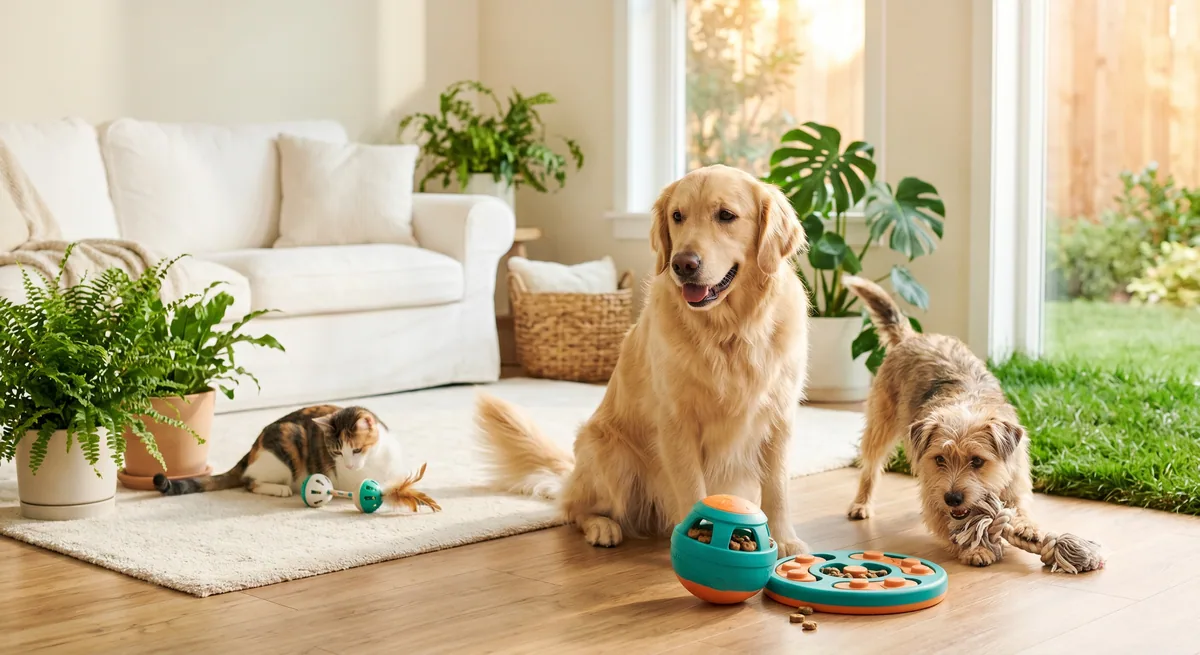
The challenge is finding toys that actually last more than a few minutes. A squeaky plush toy might buy 90 seconds of independent engagement; a well-loaded frozen KONG can hold a focused dog for 40. Duration of engagement is the key variable when selecting independent enrichment, and it is driven by difficulty, novelty, and the quality of the reward hidden inside. This guide covers the 10 longest-lasting, most consistently engaging toys to keep your dog occupied across all types, sizes, and chewing styles. For background context, see the reference at ASPCA.
This article is for general informational purposes only and is not a substitute for professional veterinary advice, diagnosis, or treatment. Always consult your veterinarian about any health concerns, dietary changes, medication, or product safety questions specific to your pet. If your pet shows signs of distress, illness, or injury, contact a licensed veterinarian or emergency animal hospital immediately.
What Makes a Dog Toy Last Long Enough to Matter
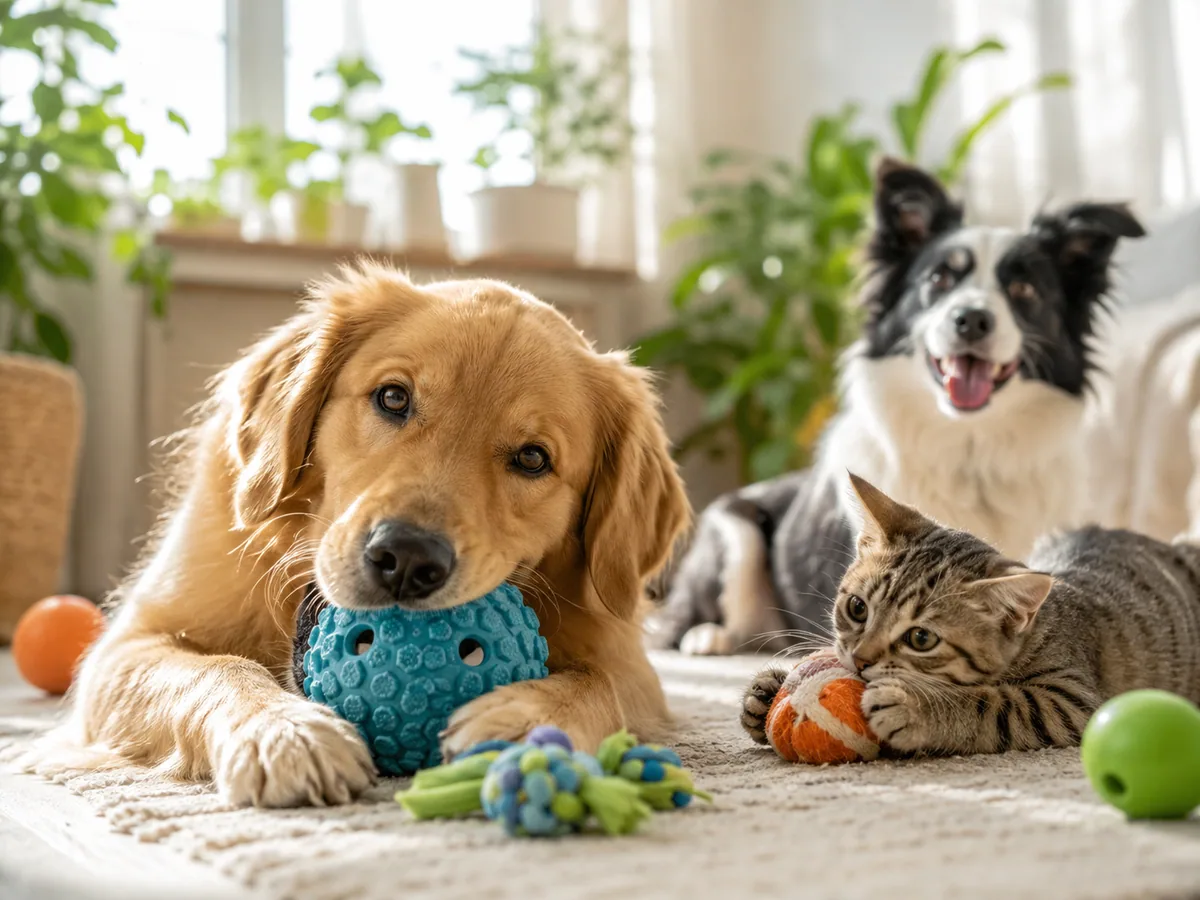
Sustained engagement with a toy requires three things: adequate difficulty, unpredictable reward delivery, and physical durability. Toys that deliver an immediate, fixed reward, think of a simple squeaky toy where the squeak is the entire value proposition, lose novelty within seconds or minutes. Toys that require effort, where the reward is sometimes large and sometimes small, and where the full benefit takes multiple sessions to extract, hold attention far longer.
When we look at toys to keep dogs busy from a practical pet-owner lens, we keep coming back to a simple rule: choose for your dog's chewing style first, aesthetics second. We've found that approach prevents most of the regrets.
If you want even more options, check out our guide to best rope toys for dogs.
Difficulty calibration is critical. A puzzle feeder set at a level too easy for your dog will be emptied in 90 seconds and abandoned. The same puzzle set one level higher may hold them for 20 minutes. Dogs who are new to enrichment toys should start with simple scatter feeders or filled rubber toys before progressing to multi-step puzzles. Difficulty should be increased incrementally as the dog masters each level.
Physical durability determines how long a toy survives in practice. A toy that keeps a dog busy for 20 minutes per day but lasts 3 months is a better investment than one that lasts 3 days of heavy use. For heavy chewers, look for toys rated for power chewing, thick-walled natural rubber, nylon-based products, or sturdy woven rope. Size the toy correctly: a toy that fits entirely in the dog's mouth is unsafe for unsupervised use.
10 Best Toys to Keep Your Dog Busy
1. Frozen Stuffed KONG: The benchmark for sustained engagement. Fill the KONG chamber with a mixture of wet food, kibble, peanut butter, or plain yogurt, seal the small hole with a soft treat, and freeze for 8 hours or overnight. Frozen contents take significantly longer to extract and keep your dog working for 30-45 minutes. Prepare 3-5 at a time and rotate from the freezer. The large and XL sizes work for most breeds; the KONG Extreme (black) is designed for power chewers.
2. Snuffle Mat: A snuffle mat is a textured fabric surface into which kibble or small treats are scattered and hidden among the loops and folds. To retrieve their food, the dog must use their nose intensively, a cognitive and olfactory task that most dogs find deeply satisfying and tiring. A 15-20 minute snuffle session produces measurable mental fatigue. Snuffle mats are machine washable and easy to reset between uses.
Honestly, we get asked about toys to keep dogs busy more than almost any other category, and our answer has evolved over time as new research and product updates land.
3. West Paw Toppl: The Toppl's wide, open design makes it easier to load than a KONG and equally effective frozen. It can be interlocked with a second Toppl to increase the challenge, and the shape allows a wider variety of food types. Its extra-tough rubber rating makes it appropriate for moderate chewers. Many dogs prefer the Toppl to a KONG because the wider access point lets them access food faster initially, then requires more persistence as the center empties.
You might also enjoy our recommendations for best toys for puppies.
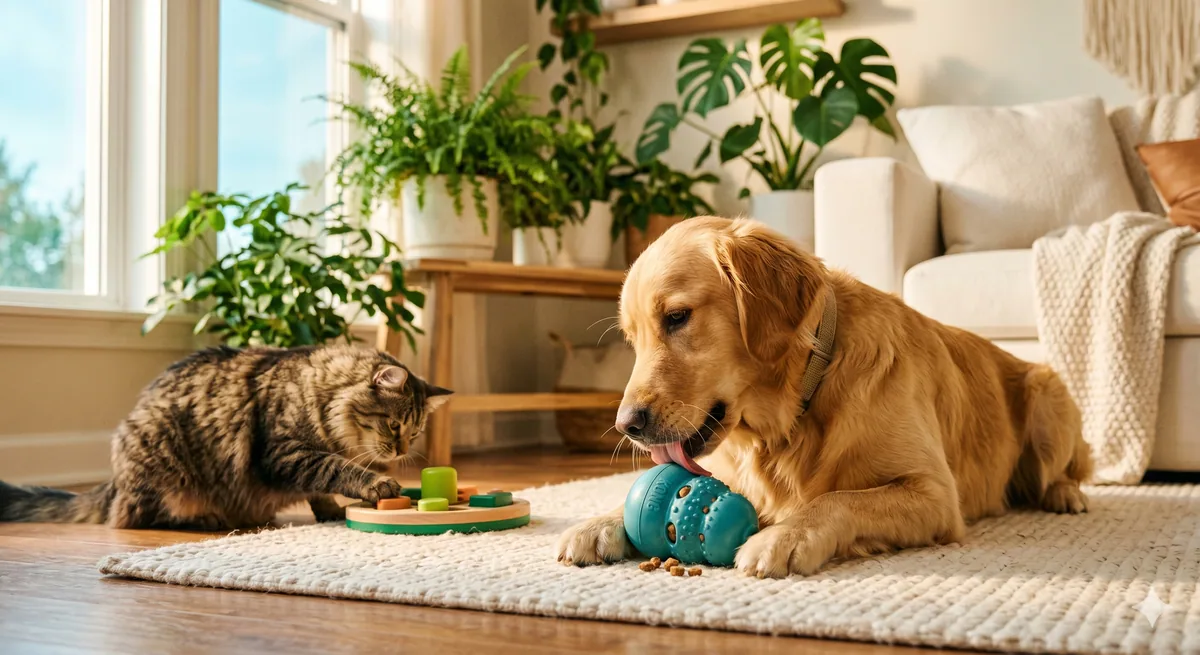
4. Puzzle Feeder Board: Multi-action puzzle boards with sliders, spinning discs, and lifting cups engage the dog's problem-solving ability directly. The dog must learn the specific sequence of moves required to reveal hidden food rewards. Starting difficulty: beginner boards with simple sliders. Progress to intermediate boards with multiple action types once the beginner level is consistently solved in under 10 minutes. Do not advance prematurely, frustration does not build persistence in dogs, it builds disengagement.
5. LickiMat Buddy or Tuff: Designed specifically for licking behavior, which activates the calming parasympathetic nervous system response. Spread wet food, peanut butter, plain yogurt, or mashed sweet potato into the textured surface and freeze. Frozen LickiMats hold engagement for 20-30 minutes. The Tuff version is designed for determined chewers who tend to fold the mat and consume the texture itself.
6. Benebone Chew: For dogs who need something to chew rather than problem-solve, a Benebone provides hours of safe, productive chewing with real bacon, chicken, or peanut butter flavoring worked into the nylon. The ergonomic curved design lets dogs hold the bone between their paws for effective chewing. Replace when the chew becomes small enough to swallow or when deep gouges appear.
7. Bob-a-Lot Interactive Feeder: A weighted wobble toy that dispenses kibble as the dog bats, noses, or rolls it. The asymmetric weight means the dispensing pattern is variable and unpredictable, which maintains engagement far better than a simple ball dispenser. Adjustable openings control how easily food comes out, set tighter for experienced dogs, looser for beginners. Load with the dog's full meal for the longest engagement.
8. Tug-a-Jug: A translucent jug that holds kibble and requires the dog to shake, roll, and toss it to dispense food through a rope-secured opening. The combination of physical effort and cognitive challenge makes it one of the higher-difficulty options. It is noisier than most enrichment toys, which matters in apartment environments, but the engagement duration is excellent for food-motivated dogs.
For related picks, take a look at our toys to keep dogs busy while at work roundup.
9. Rope Toy with Hidden Treat Pockets: Some braided rope toys include internal pockets designed to hold treats or kibble, combining the satisfying chewing texture of rope with a food reward motive. Dogs work through the braid to access the hidden food, adding duration and purpose to what would otherwise be a simple chew toy. Retire when braid sections are loose enough to swallow.
10. Automated Ball Launcher: For dogs who are physically oriented and need movement rather than foraging, an automated launcher lets dogs play fetch independently. Dogs can learn to drop the ball into the launcher themselves after a brief training period, creating a self-sustaining play loop. Set the launch distance short initially and increase once the dog is confident. These are energy-intensive rather than mentally intensive, so they complement rather than replace foraging enrichment.
Using Enrichment Toys When You Have a Busy Schedule
The most important habit for busy owners is preparation. Enrichment toys that require assembly or freezing need to be ready in advance, if you are running out the door in the morning, you do not have time to stuff a KONG from scratch. Batch preparation once a week (stuffing and freezing 5-6 KONGs at a time, pre-loading snuffle mats in zip-lock bags) removes the friction that causes even well-intentioned owners to skip enrichment on hectic days.
Rotate toys so your dog encounters something different each day. A snuffle mat on Monday, a frozen KONG on Tuesday, a puzzle feeder on Wednesday, and a Benebone on Thursday keeps each toy feeling novel. Dogs who get the same toy every day habituate quickly; a three-day absence restores most of the novelty value of any toy.
Match the toy to your schedule needs. A 30-minute work call is best bridged with a 30-minute enrichment toy, a frozen KONG or a LickiMat is perfectly calibrated for this. A full workday away requires multiple enrichment sources, ideally including exercise before departure, a high-value chew for the first hour, a foraging game for mid-morning, and a standard chew for mid-afternoon. Leave water accessible and consider a pet camera to monitor engagement and rest patterns.
Comparison: Budget vs Mid-Range vs Premium
This quick comparison helps you understand what you actually get at each price band, so you can decide where to spend and where to save without compromising safety.
Comparison reflects typical US retail ranges as of 2026. Always verify safety labels before purchase.
Conclusion
Picking the right option for your dog is less about finding a single "best" product and more about matching the choice to your dog's size, age, play style, and your home environment. The recommendations above cover the main scenarios most pet owners run into, so use them as a checklist when comparing options.
Start with one or two changes, watch how your dog responds for a week or two, then iterate. Pets show you very quickly what works for them. If a toy, feeder, or routine is ignored or causes stress, swap it out without hesitation. The goal is a happier, healthier dog every day.
Frequently Asked Questions
What toy keeps dogs busy the longest?
A frozen stuffed KONG consistently produces the longest independent engagement, typically 30 to 45 minutes for a food-motivated dog. Freezing the contents dramatically extends the extraction time compared to room-temperature loading. Load with wet food, peanut butter, and kibble, seal the small end, and freeze overnight. For dogs who finish a KONG quickly, interlocking two West Paw Toppl toys or using a puzzle feeder board rated above the dog's current skill level can extend engagement further.
Are enrichment toys safe to leave with dogs unsupervised?
Most quality enrichment toys are designed for unsupervised use, but you should always supervise the first 2-3 sessions with any new toy to confirm it does not produce hazards specific to your dog's chewing style. Power chewers may be able to break apart toys rated for moderate chewers. Always choose toys appropriately sized for your dog, a toy that fits entirely in the dog's mouth is a choking hazard. Once you have confirmed a toy is safe for solo use, it can be part of your dog's unsupervised enrichment rotation.
How do I stop my dog from losing interest in toys?
Rotate toys so your dog sees a different one each day. Storing 70-80% of your dog's toys out of sight and introducing them in small rotating sets prevents rapid habituation. The same toy reintroduced after 3 days feels nearly new to most dogs. Also ensure difficulty is appropriately challenging, a toy solved in 2 minutes will be abandoned quickly. Increase difficulty progressively as your dog's skill improves.
Can toys replace exercise for dogs?
Enrichment toys provide mental fatigue and partial physical stimulation, but they cannot fully replace structured physical exercise for most dogs. The ideal combination is physical exercise first, a walk, run, or active play session, followed by mental enrichment. Physical exercise reduces the arousal level that makes it difficult for some dogs to focus on a puzzle feeder. Think of enrichment as a complement to exercise, not a substitute.
What is the difference between a bored dog and an anxious dog?
A bored dog is under-stimulated and directs excess energy into self-generated activity: chewing furniture, barking, digging, or demanding attention. This behavior typically occurs throughout the day and is not specifically linked to your presence or absence. An anxious dog (specifically, a dog with separation anxiety) shows distress responses, destructive behavior, vocalization, escape attempts, that are triggered specifically by your departure and typically concentrated in the first 30-60 minutes after you leave. Boredom toys address under-stimulation effectively; separation anxiety requires behavioral intervention with toys as a component.
Should I consult a veterinarian about my pet's play and enrichment needs?
Yes, especially if your pet shows signs of anxiety, sudden behavior changes, or destructive habits that may indicate a medical issue. A licensed veterinarian or veterinary behaviorist can rule out pain, dental problems, or cognitive decline before you adjust toys or routines. The guidance in this article is educational, not a substitute for professional veterinary advice.
How long does it take to see results from new toys or enrichment?
Most pet owners notice small changes within a week (calmer evenings, less destructive chewing, more interest in mealtime puzzles) and clearer behavior shifts within 4 to 6 weeks of consistent rotation. Older pets and rescues may take 8 to 12 weeks to adjust. Keep a short weekly journal so you can track real progress instead of relying on memory.
Shop Premium Dog Toys
Free US shipping on every order. No minimum purchase required.
Browse Dog Toys →