Bringing a puppy home is one of life's greatest joys - and one of your first questions is almost always: what are the best toys for puppies? Get it right and you'll help your pup develop physically, mentally, and emotionally. Get it wrong and you risk choking hazards, destructive chewing, or a toy-phobic dog. This guide covers 18 vet-informed picks organized by age, plus everything you need to know about safety, sizing, and how many toys your puppy actually needs.
Whether you just brought home an 8-week-old Labrador or you have a 10-month-old Border Collie who destroys everything in sight, you'll find the right toys here. And when you're ready to shop, explore our full range of dog toys and accessories - with free shipping within the US.
This article is for general informational purposes only and is not a substitute for professional veterinary advice, diagnosis, or treatment. Always consult your veterinarian about any health concerns, dietary changes, medication, or product safety questions specific to your pet. If your pet shows signs of distress, illness, or injury, contact a licensed veterinarian or emergency animal hospital immediately.
Why Puppy Toys Are Different from Adult Dog Toys
Puppy toys are not just smaller versions of adult dog toys. They are purpose-built for a fundamentally different animal. A puppy's jaw muscles are still developing, their teeth are temporary, their immune system is immature, and their brains are in a critical socialization window. Each of these factors shapes what makes a toy safe and beneficial.
We've looked at a lot of toys for puppies options over the past year, and our short answer is that the differences between quality tiers matter more than the price tags suggest. We unpack how to read those differences below.
If you want even more options, check out our guide to dog toys for aggressive chewers.
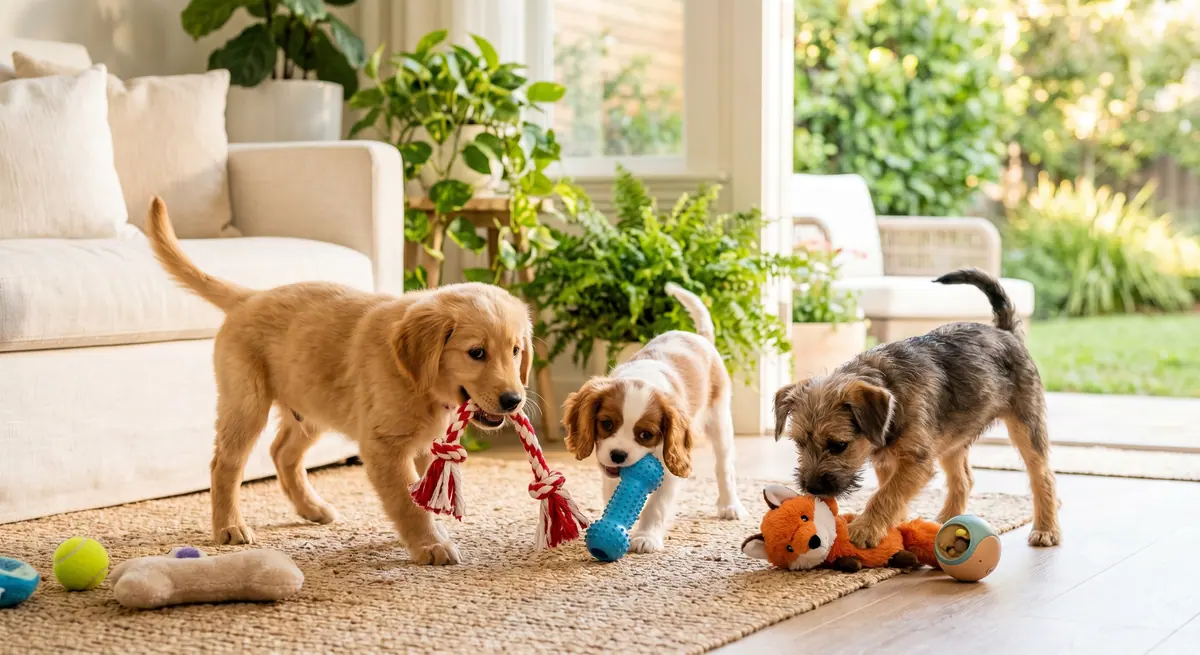
Softer materials matter more than you think. Adult dog toys - especially those labeled for power chewers - are often made from dense rubber, hard nylon, or reinforced fabric that can be too rigid for puppy teeth. Puppies lose their baby teeth between 3 and 6 months, and chewing on overly hard materials during this period can damage emerging adult teeth or cause painful gum trauma. According to the American Kennel Club's puppy teething guide, the teething process is intense and requires appropriate outlet toys to prevent destructive chewing elsewhere.
Size is a life-or-death safety factor. A toy that is fine for an adult Golden Retriever can be a choking hazard for a 10-week-old puppy. Conversely, a toy sized for a Chihuahua puppy could be dangerous for a Great Dane puppy. Always match toy size to your puppy's current size, and plan to resize as your puppy grows.
Chemical safety deserves more attention. Puppies spend enormous amounts of time mouthing and chewing objects. Toys with harmful dyes, BPA-containing plastics, or chemical-laden materials present a greater risk to puppies than to adult dogs simply because of the sheer amount of time the toy is in contact with their mouths. Look for toys certified as non-toxic and, where possible, free from BPA, phthalates, and artificial dyes.
Developmental stage shapes toy type. A 9-week-old puppy needs comfort and sensory exploration. A 4-month-old teething puppy needs chew relief. A 9-month-old adolescent needs mental challenge and physical outlet. One toy type cannot serve all of these stages. This is why age-appropriate toy selection is so important - and why we've structured our top 18 picks by developmental stage below.
The ASPCA recommends choosing toys with the "thumbnail test" in mind: if you can't make a dent in the toy with your thumbnail, it's too hard for a puppy. This is especially important during the teething phase between 3 and 6 months.
Best Puppy Toys by Age
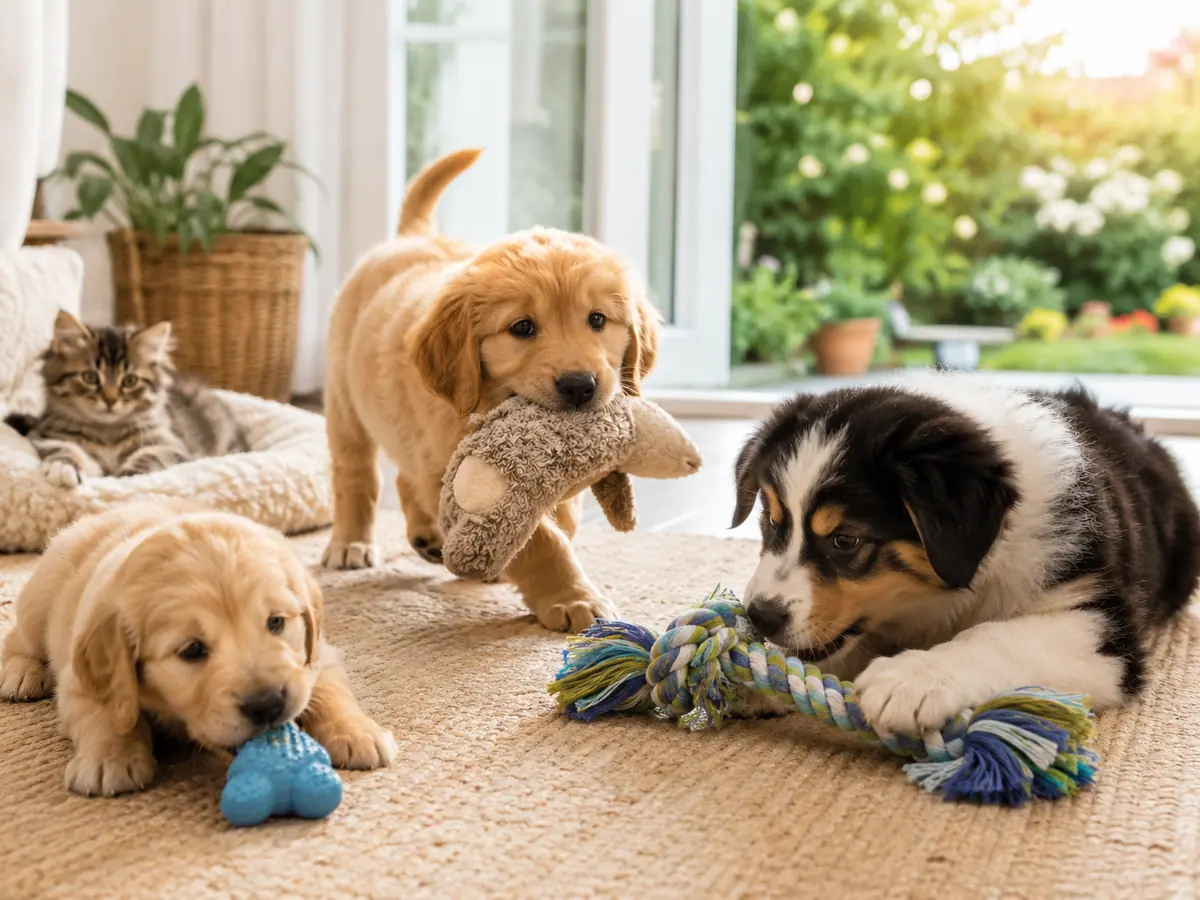
Every puppy goes through distinct developmental phases. Matching toys to these phases maximizes enrichment while minimizing risk. Here is what to prioritize at each stage.
8-12 Weeks: Soft Comfort Toys
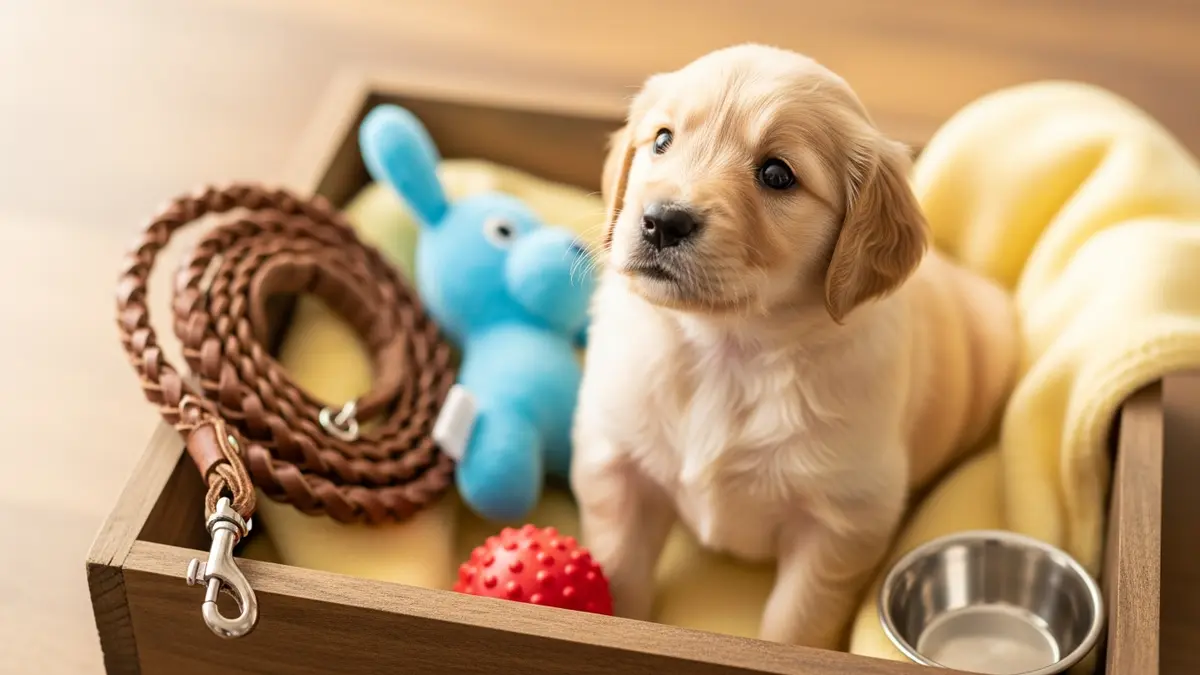
8 - 12 WeeksWhen your puppy first arrives home, they have just been separated from their mother and littermates. The primary psychological need at this stage is comfort and security. Soft plush toys, snuggle toys, and heartbeat toys address this need directly while also introducing your puppy to the concept of play.
Honestly, when readers ask us how to shop for toys for puppies, we tell them to ignore marketing language and focus on the spec sheet. We've found that filter cuts most regret purchases.
Plush toys with minimal stuffing and reinforced seams are ideal. Look for toys made specifically for puppies - these tend to be smaller, softer, and less likely to shed loose fibers. Avoid plush toys with button eyes, hard plastic pieces, or long ribbons that can be chewed off and swallowed.
Snuggle toys mimic the warmth and scent of a littermate. Products like the SmartPet Love Snuggle Puppy include a heartbeat simulator - a battery-powered module that pulses like a real heartbeat - and a heat pack. Multiple studies have shown that puppies kept near a simulated heartbeat exhibit significantly lower stress levels during the first nights at home. This is one of the most impactful purchases you can make for a new puppy's emotional wellbeing.
Lightweight crinkle toys satisfy early sensory curiosity. The soft crinkle sound is engaging without being overstimulating. Keep all toys at this stage small enough to hug but large enough that they can't be fully mouthed.
3-6 Months: Teething Toys
3 - 6 MonthsBetween 3 and 6 months, your puppy will lose all 28 baby teeth and grow 42 adult teeth. This process is uncomfortable and drives an intense need to chew. Providing appropriate teething toys directs this chewing urge away from your furniture, shoes, and baseboards.
Rubber teething toys - particularly the KONG Puppy in its pink or blue natural rubber formula - are the gold standard for this age group. The KONG Puppy is made from a gentler rubber compound specifically formulated for puppy teeth. It can be stuffed with soft treats, puppy-safe peanut butter, or wet food, then frozen for up to 30 minutes of soothing chew time. The cold texture provides additional relief for sore gums.
Frozen toys are highly effective for teething relief. Wet a rope toy or rubber toy, place it in the freezer for several hours, and offer it to your puppy. The cold numbs inflamed gums in much the same way an ice pack soothes human teething pain.
Nylon chews designed for puppies (not adult dogs) offer a longer-lasting chew option, but require careful supervision. Avoid any nylon chew that splinters or that your puppy can bite chunks off - these fragments can cause gastrointestinal obstruction.
Never give a teething puppy bones (cooked or raw), antlers, or hard hooves. These are among the leading causes of tooth fractures in dogs under one year. If the toy won't flex slightly under firm pressure from your hand, it is too hard for a teething puppy.
You might also enjoy our recommendations for best toys for golden retrievers.
6-12 Months: Interactive & Fetch Toys
6 - 12 MonthsBy 6 months, most puppies have their adult teeth, more physical coordination, and a much stronger desire for social play and mental stimulation. This is the age to introduce fetch toys, tug toys, and puzzle feeders - the "enrichment trifecta" that satisfies your puppy's growing need for exercise, bonding, and cognitive challenge.
Rubber fetch balls sized for your puppy's breed are a staple. Tennis balls are appropriate for medium to large breed puppies but are too large for small breeds and can present dental abrasion concerns over time due to the abrasive felt. Look for natural rubber or silicone balls designed specifically for dogs.
Tug toys introduce one of the most important bonding activities between dog and owner. Contrary to old training advice, playing tug does not make puppies aggressive. Modern behavioral research confirms that supervised tug play actually strengthens the human-dog bond, teaches impulse control ("drop it" and "leave it"), and provides significant physical exercise. Use tug toys with comfortable handles so your hands stay away from your puppy's teeth.
Puzzle feeders are arguably the most underutilized puppy toy category. A puzzle feeder slows eating (reducing bloat risk), provides 15-30 minutes of focused mental stimulation, and helps puppies develop problem-solving skills. Start with Level 1 puzzles and increase difficulty as your puppy masters each one. Check out our guide to new puppy essentials for more on setting up your puppy's enrichment routine.
18 Best Puppy Toys: Our Top Picks
Our editorial team reviewed dozens of puppy toys across all age groups and categories. The following 18 picks represent the best in each category based on safety, durability, enrichment value, and owner feedback. Browse our full dog toy collection to find many of these picks available with free US delivery.
1 KONG Puppy Classic
The KONG Puppy is the single most recommended puppy toy by veterinarians and trainers worldwide. Made from a proprietary pink/blue natural rubber blend softer than the adult KONG Classic, it is gentle enough for puppy teeth while providing durable enrichment. Stuff it with mashed banana, plain pumpkin, or puppy-safe peanut butter and freeze for a long-lasting challenge. Available in XS through Large to match your puppy's size.
2 Snuggle Puppy Heartbeat Toy
The SmartPet Love Snuggle Puppy is the go-to recommendation for managing separation anxiety in new puppies. A real-feel pulsing heartbeat unit (2xAA batteries) is housed inside a soft plush toy, mimicking a littermate's heartbeat. A removable heat pack adds warmth. Many owners report dramatic improvement in the first few nights home. Wash the outer plush regularly; remove the heartbeat unit before washing.
3 Nylabone Puppy Teething Pacifier
Nylabone's puppy-specific teething chew is made from softer nylon than their adult products and infused with a chicken or bacon flavor to hold your puppy's interest. The raised nubs on the chew surface help soothe gum irritation and promote healthy tooth development. Choose the correct size for your puppy's weight - the "petite" size is appropriate for puppies under 15 lbs. Discard when the chew becomes too small or noticeably worn down.
4 ZippyPaws Skinny Peltz Plush
ZippyPaws Skinny Peltz are the ideal starter plush toy for young puppies. They contain no stuffing (eliminating the ingestion risk common with stuffed plush), feature multiple squeakers, and come in a range of small animal shapes that puppies love to carry around. The flat, floppy design is easy for young puppies to grab and shake. Machine washable for easy hygiene.
5 Outward Hound Hide-A-Squirrel Puzzle
One of the best-selling puzzle toys for puppies and adult dogs alike, the Hide-A-Squirrel features a plush tree trunk with several squirrels tucked inside for your puppy to "hunt." It teaches scent work, problem-solving, and focused attention. The junior size is perfect for puppies and small breeds. Supervise play to prevent stuffed squirrels from being chewed apart.
6 West Paw Zogoflex Toppl
West Paw's Toppl combines the best elements of a treat dispenser and a chew toy. Made from Zogoflex - a flexible, non-toxic, recyclable material - it is gentle on puppy gums while providing meaningful enrichment. The wide opening makes it easy to fill with soft foods. Two Toppl units can be connected together for a more challenging puzzle. Made in the USA, free of BPA, phthalates, and latex.
7 Chuckit! Fetch Ball (Puppy)
Chuckit! makes the best rubber fetch ball for puppies. The puppy-specific size is smaller than the standard ball, appropriately sized for medium and small breed puppies. The natural rubber construction has enough bounce to be exciting and enough flex to be safe on developing teeth. High visibility colors make it easy to find in grass. Can be used with or without the Chuckit! launcher.
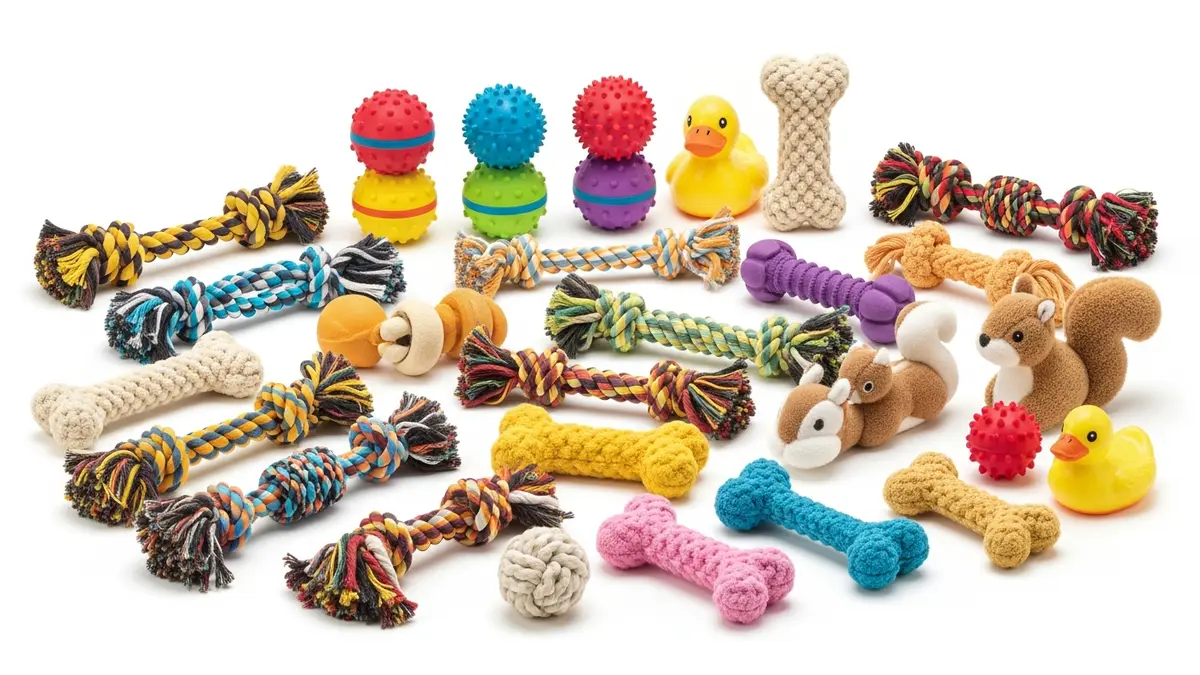
8 Pacific Pups Products Rope Toy Set
A good rope toy is a puppy staple. Pacific Pups' cotton rope toys are sized specifically for puppies, tightly knotted, and free from synthetic fibers. The natural cotton is gentle on gums and helps clean teeth through the flossing action of chewing. Use these for supervised tug sessions; remove when unsupervised to prevent fiber ingestion. Freeze damp rope toys for teething relief.
9 Nina Ottosson Dog Tornado Puzzle (Level 2)
Nina Ottosson is the gold standard in dog puzzle feeders, and the Dog Tornado is a perfect step-up puzzle for puppies who have mastered Level 1 toys. Rotating compartments hide treats at multiple levels, requiring your puppy to spin each layer to access the reward. An ideal 15-20 minute mental workout that tires out high-energy puppies as effectively as physical exercise. Dishwasher safe.
10 KONG Puppy Wubba
The KONG Wubba Puppy combines a rubber ball core with a fabric outer layer and trailing tails - perfect for tug, fetch, and shake play. The squeaker is housed in the rubber core, making it harder to access than standard squeaky toys. The tails give you a comfortable grip for tug games. Available in a puppy-specific size and material. A versatile toy that grows with your puppy through multiple play styles.
For related picks, take a look at our best interactive dog toys roundup.
11 Petstages Chew Toys by KONG (Orka Stick)

Petstages' Orka line uses a soft thermoplastic rubber that sits between plush toys and hard rubber in firmness - making it ideal for the transition from soft comfort toys to more dedicated chew toys. The Orka Stick shape is easy for puppies to grip with paws, promoting independent play. Can be stuffed with soft treats. Highly recommended for puppies transitioning from the comfort toy phase into active teething.
12 Ethical Pet Sensory Ball
Designed specifically for young puppies in the early socialization phase, Ethical Pet's Sensory Ball features different textures across its surface - nubs, ridges, and smooth patches - that stimulate a puppy's developing senses. The soft rubber is gentle on baby teeth. The open lattice design makes it easy to bat, chase, and investigate. A great first toy for building toy-play confidence in hesitant puppies.
13 Frisco Plush Squeak Toy (Puppy-Sized)
Frisco's puppy plush range offers excellent value with reinforced seams, non-toxic materials, and appropriately sized squeakers. The range includes food-shaped toys, animals, and novelty designs - great for keeping your puppy's toy rotation fresh. Machine washable. A solid budget-friendly plush option that holds up well for puppies who carry (rather than destroy) their toys.
14 Mammoth Flossy Chews Cotton Blend Rope
Mammoth's rope toys are made from a cotton-poly blend and knotted more tightly than most budget alternatives, making them last significantly longer. The tug-ring design (a knotted ring rather than a straight rope) is easier for puppies to grip independently. The rope fibers help remove plaque and tartar as your puppy chews - a passive dental hygiene benefit. Choose the "small" size for puppies under 20 lbs.
15 Snuggle Puppy Plush Dumbbell
The plush dumbbell shape is a classic for a reason: the two rounded ends make it easy to throw, easy to carry, and easy to tug with. Snuggle Puppy's version uses reinforced stitching and non-toxic fill. Lightweight enough for very young puppies to pick up and carry around. The squeakers in each end add extra excitement. A simple, versatile toy that most puppies love from the first interaction.
16 Benebone Puppy Wishbone (Bacon)
The Benebone Puppy Wishbone is designed for puppies who love to chew but are not yet ready for the harder adult Benebone formula. The wishbone shape makes it easy to hold between paws for independent chewing. Infused with real bacon (not artificial flavor), making it highly appealing. Made in the USA from non-toxic nylon. Replace when chewed down significantly - do not allow pieces to break off.
17 PetSafe Busy Buddy Twist 'n Treat
The Twist 'n Treat has a unique adjustable opening that lets you control exactly how easily treats fall out - making it appropriate for puppies at any skill level. Start with a wide opening for beginners and gradually tighten it as your puppy becomes more adept. The rubber construction is dishwasher safe. An excellent first treat-dispensing toy that prepares puppies for more complex puzzle feeders later.
18 Frisco Latex Squeaky Ball (Mini)
For puppies who are obsessed with squeaky toys, the Frisco Latex Squeaky Ball is a safer alternative to fabric squeaky toys because the squeak mechanism is molded into the latex ball rather than being a separate loose insert. The mini size is appropriate for small to medium puppies. The natural latex is more durable than foam and gentler than hard rubber. Supervise play and replace when the latex shows cracking or tearing.
For even more options including toys for power-chewing adolescents, see our in-depth guide to the best dog toys across all categories, and our specialized article on dog toys for aggressive chewers for when your puppy hits that destructive adolescent phase.
Puppy Toy Safety Rules
Puppy toy safety comes down to a handful of consistent principles. Apply these every time you introduce a new toy and you dramatically reduce the risk of injury, choking, or ingestion of foreign objects.
Puppy Toy Safety Checklist
- Size check first. The toy must be too large to fit entirely in your puppy's mouth. As a minimum, the toy should be wider than your puppy's open jaw. When in doubt, size up.
- No squeakers unsupervised. Squeaker toys are safe when you're watching, dangerous when you're not. If a puppy accesses and swallows a squeaker, it can cause a life-threatening intestinal obstruction requiring surgery. Put squeaky toys away when you leave the room.
- No strings, ribbons, or long tails. Any attached string or ribbon longer than a few inches can wrap around a puppy's tongue or throat, or be chewed off and swallowed, causing obstruction. Remove or trim any such attachments before giving the toy to your puppy.
- Check for button eyes and hard accessories. These can be chewed off, creating sharp-edged choking hazards. Only give plush toys that are specifically puppy-safe and feature embroidered rather than attached features.
- Inspect daily. Run your hands over every toy your puppy uses at least once a day. Feel for cracks, exposed stuffing, loose squeakers, or chunks that have been bitten off. Remove damaged toys immediately.
- No cooked bones, antlers, or hard hooves. These are leading causes of dental fractures in dogs under one year. Stick to purpose-made rubber, latex, or puppy-specific nylon chews instead.
- Separate toys by play context. Keep tug toys for supervised play, chew toys for crate time, and puzzle feeders for mealtimes. Clear separation helps puppies understand appropriate play contexts and reduces resource guarding.
For more on creating a safe play environment for your dog at every life stage, visit our About page to learn about our product curation philosophy, and browse our full shop for toys that meet these safety standards.
How Many Toys Does a Puppy Need?
This is one of the most common questions new puppy owners have - and the answer is less than you might expect. More toys does not automatically mean a happier puppy. In fact, having too many toys accessible at once can actually reduce your puppy's engagement with all of them.
Veterinary behaviorists and certified professional dog trainers generally recommend keeping 5-7 toys available at any one time and rotating them on a schedule of every 3-5 days. When a toy disappears for a few days and then reappears, it becomes novel again - and novelty is one of the primary drivers of dog engagement with objects.
| Toy Type | How Many to Own | Active at Once | Rotation Cycle |
|---|---|---|---|
| Chew / Teething Toys | 3-4 | 1-2 | Every 4-5 days |
| Plush / Comfort Toys | 4-6 | 2-3 | Every 3-4 days |
| Fetch / Tug Toys | 2-3 | 1 | Weekly |
| Puzzle / Treat Feeders | 2-3 | 1 | Every 3-5 days |
| Rope Toys | 2 | 1 (supervised only) | Weekly |
The 5-7 accessible toys rule breaks down as follows: 1-2 chew toys, 1 puzzle feeder (for mealtimes), 2 plush toys, and 1 fetch or tug toy. Store the rest in a box your puppy cannot access, and swap out toys on a regular schedule.
Rotating toys also helps you spot wear before it becomes a safety issue. When you pull a toy out of storage, inspect it thoroughly before returning it to rotation. Any toy with cracks, missing pieces, or exposed stuffing should be replaced - not returned to active use.
As your puppy grows and their chewing strength increases, you'll also need to graduate their toys. A toy that was appropriately challenging at 3 months may be destroyed in minutes by a 9-month-old. Plan to reassess your entire toy collection every 2-3 months and retire toys that have become too easy or too worn. Check our shipping information - we offer free shipping within the US, so restocking your puppy's toy box is simple wherever you are. And if you have questions about the best toys for your specific breed or situation, contact our team - we're happy to help.
Conclusion
Choosing the right approach for your pet comes down to matching the recommendations in this guide with the specifics of your situation. Pay close attention to age, breed, activity level, and any existing health concerns. When in doubt, talk to your veterinarian before making changes.
Use this guide as a starting point, observe your pet closely after any change, and update your routine as your pet's needs evolve. Small adjustments over time lead to the biggest improvements in well-being and behavior.
Frequently Asked Questions
Should I consult a veterinarian about my pet's play and enrichment needs?
Yes, especially if your pet shows signs of anxiety, sudden behavior changes, or destructive habits that may indicate a medical issue. A licensed veterinarian or veterinary behaviorist can rule out pain, dental problems, or cognitive decline before you adjust toys or routines. The guidance in this article is educational, not a substitute for professional veterinary advice.
How long does it take to see results from new toys or enrichment?
Most pet owners notice small changes within a week (calmer evenings, less destructive chewing, more interest in mealtime puzzles) and clearer behavior shifts within 4 to 6 weeks of consistent rotation. Older pets and rescues may take 8 to 12 weeks to adjust. Keep a short weekly journal so you can track real progress instead of relying on memory.