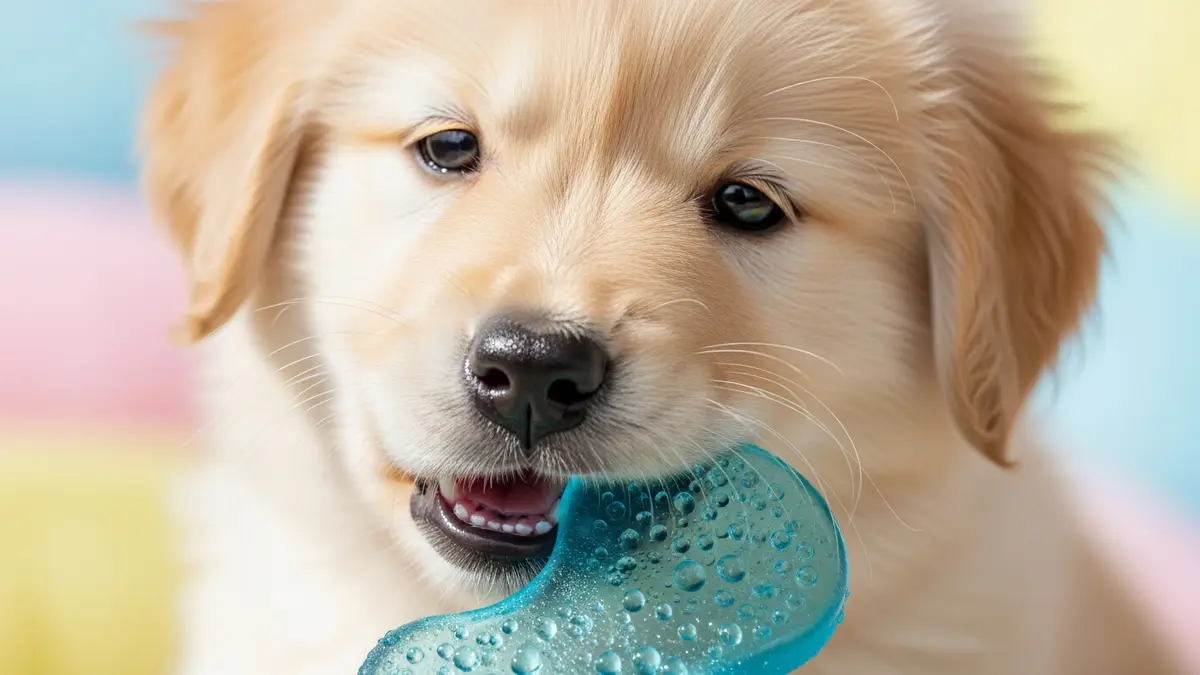
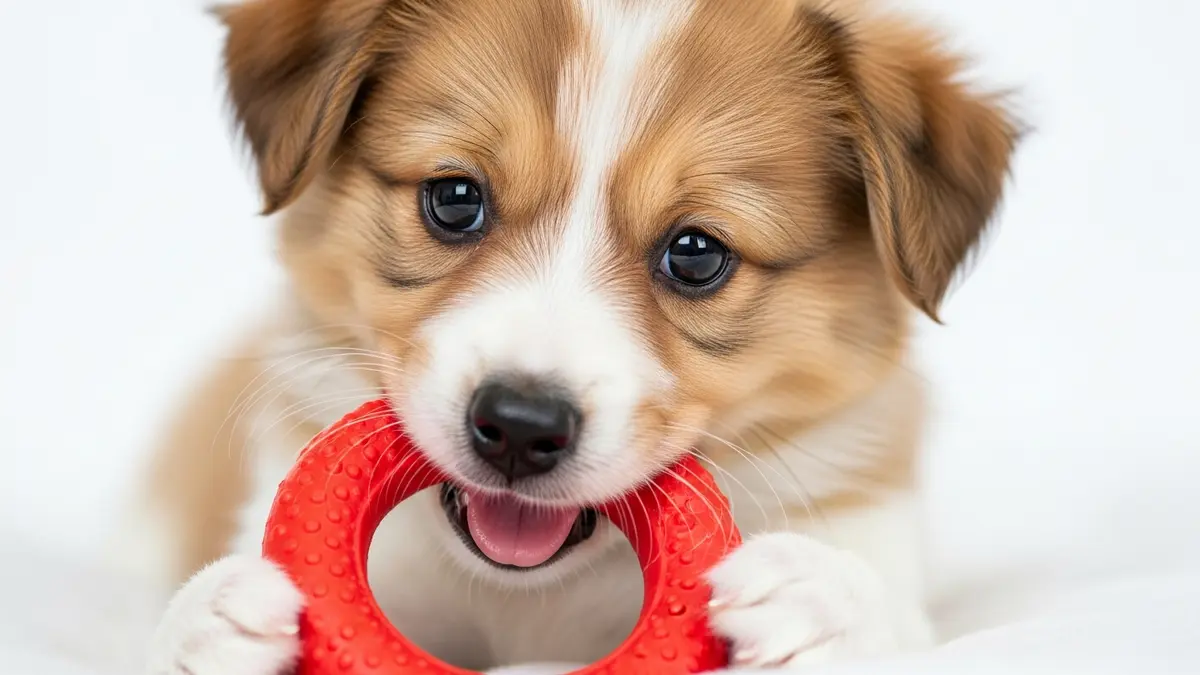
You brought home the fluffiest, softest creature you've ever seen - and within three weeks, your chair legs are notched, your best shoes have been investigated, and you've discovered that a four-month-old puppy is capable of dismantling a kitchen table corner with alarming efficiency. Welcome to teething. It's not a personality flaw. It's biology, and it's entirely manageable with the right best dog toys for puppies teething. According to the American Kennel Club expert health advice, choosing the right toys can support your pet's mental and physical wellbeing.
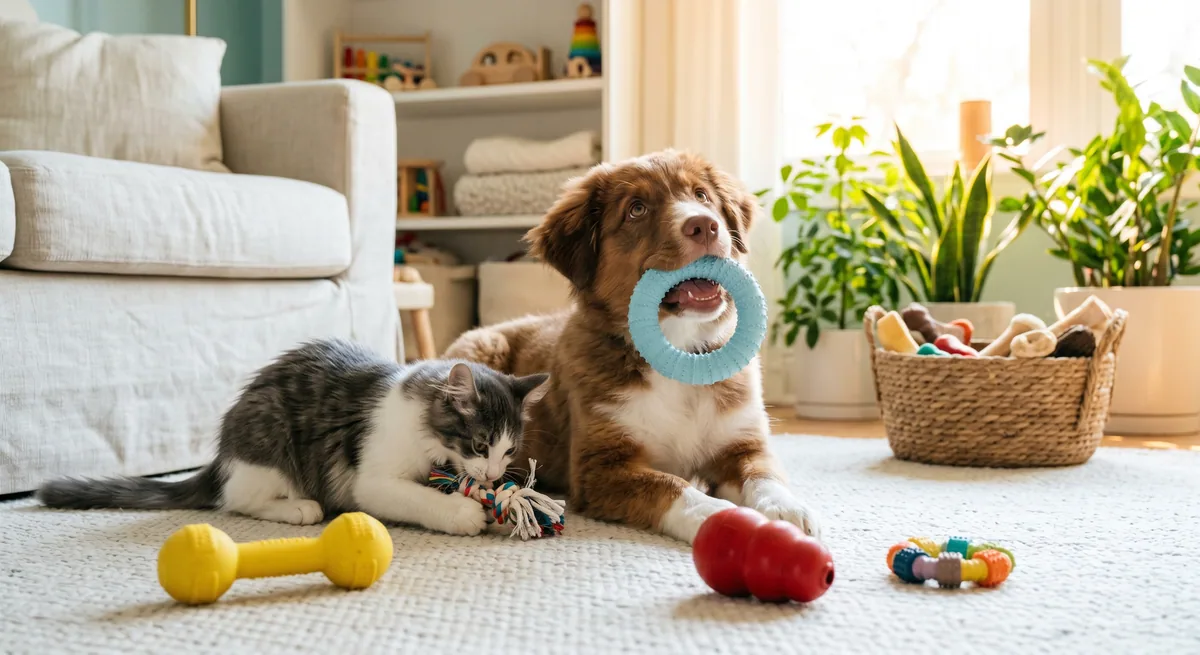
This is a complete guide - not just a product list. We'll walk you through what's actually happening inside your puppy's mouth, explain every category of teething toy available, rank the top 10 picks with honest detail, and give you a practical buying guide so you can match the right toy to the right puppy at the right stage. We've also included related reading: if you want a focused look at specific product types, check out our guide to toys for teething puppies or our curated list of the best teething toys for puppies. For the full puppy toy picture beyond teething, our best toys for puppies guide covers every stage of puppyhood.
This article is for general informational purposes only and is not a substitute for professional veterinary advice, diagnosis, or treatment. Always consult your veterinarian about any health concerns, dietary changes, medication, or product safety questions specific to your pet. If your pet shows signs of distress, illness, or injury, contact a licensed veterinarian or emergency animal hospital immediately.
Understanding Puppy Teething
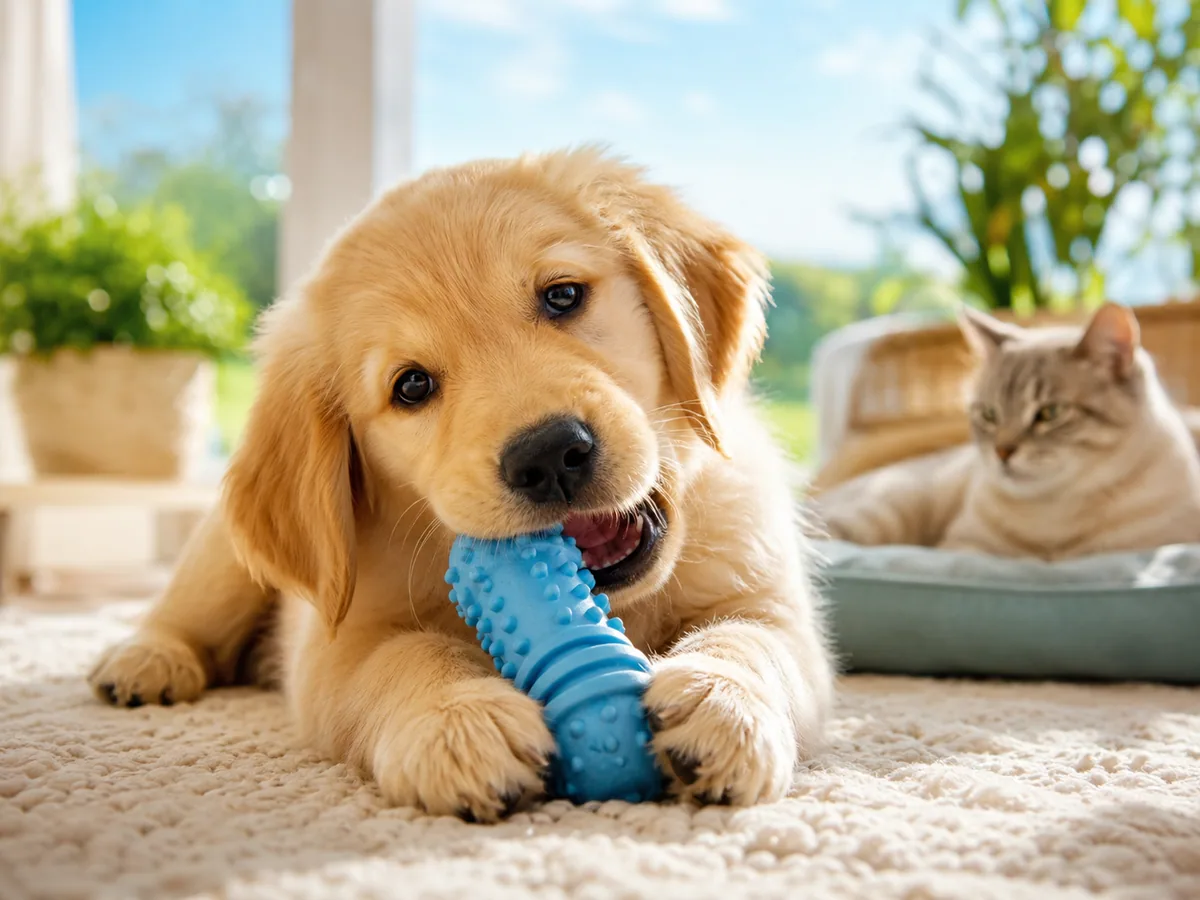
Puppy teething is a two-phase process that spans the first seven months of a dog's life. The first phase occurs before most owners ever meet their puppy: deciduous teeth - also called milk teeth or baby teeth - begin erupting around 3 to 4 weeks of age. By 6 to 8 weeks, all 28 deciduous teeth are in place. The breeder handles this phase.
When we research dog toys for puppies teething, we lean on veterinary references and observed behaviour patterns rather than anecdote alone. We've found that combination produces the most actionable guidance for everyday owners.
If you want even more options, check out our guide to best toys for puppies.
The second phase is the one you'll live through. Starting around 3 months, the puppy's 28 deciduous teeth begin loosening and falling out one by one, replaced by 42 permanent adult teeth. The process follows a rough sequence: incisors (front teeth) go first, around 3 to 4 months. Canines (the pointed fangs) follow between 4 and 6 months. Premolars and finally molars complete the set, usually finishing by 6 to 7 months. In total, your puppy will grow and shed an entire mouth of teeth inside the span of a few months.
Why Teething Hurts - and Why They Chew
As adult teeth push upward through the gum tissue, they create pressure, inflammation, and localized soreness along the jaw ridge. The gums may look red or slightly swollen, and the puppy may drool more than usual or show a mild decrease in appetite for hard kibble. Chewing creates counter-pressure against sore gums that temporarily relieves discomfort - the same instinct that leads human infants to gnaw on teething rings.
The problem is that a puppy left without appropriate outlets will apply this counter-pressure chewing to whatever is available: furniture, baseboards, clothing, electrical cords, and hands. Providing the right teething toys redirects this entirely natural behavior toward safe, appropriate objects.
The Risk of Malocclusion from Improper Toys
A less commonly discussed risk is malocclusion - misalignment of the bite caused by abnormal pressure on erupting adult teeth. If a puppy consistently chews on a toy that pushes or holds the jaw in an unnatural position, or if the toy is so hard that it deflects the path of an erupting tooth, the result can be adult teeth that don't sit correctly in the jaw. This may require veterinary dental correction. The fix is simple: use toys soft enough to compress slightly under bite pressure, and rotate toys so that no single chewing habit becomes dominant. The veterinary dentistry guideline - the "thumbnail test" - is your safest reference point. Press your thumbnail into the toy. If it leaves no indentation, the toy is too hard for a teething puppy.
If you notice a baby tooth still in place after the adult tooth has erupted behind it - called a "retained deciduous tooth" - schedule a vet visit promptly. Retained baby teeth can push adult teeth out of alignment and need to be extracted before they cause permanent bite problems.
Types of Teething Toys Explained
Not all teething toys are the same, and knowing the category helps you build a complete teething toolkit rather than buying five versions of the same thing. Here is every major type, with its primary benefit and key limitations.
Rubber Chew Toys
The gold standard for teething puppies. Natural or thermoplastic rubber at the right durometer (hardness) compresses slightly under bite force, giving the puppy satisfying resistance without the slab-fracture risk of hard nylon or bone. The hollow design of toys like the KONG Puppy also accepts stuffing - peanut butter, puppy kibble soaked in water, or commercial Kong filling - which extends engagement time from 5 minutes to 30 or more. Best for: all-day access, unsupervised chewing, molar and premolar relief.
Honestly, we revisit our dog toys for puppies teething guidance every few months because veterinary advice continues to refine. We've updated this piece to reflect current best practice as we understand it.
Frozen Toys
Any toy that can be soaked in water and frozen - purpose-built teething sticks, wet rope toys, or rubber chews with a water reservoir - delivers cold therapy directly to inflamed gum tissue. Cold constricts blood vessels, reduces swelling, and creates temporary numbing that can dramatically calm an irritable teething puppy. Best for: peak soreness periods, especially during molar eruption around 5 to 6 months.
Rope Toys
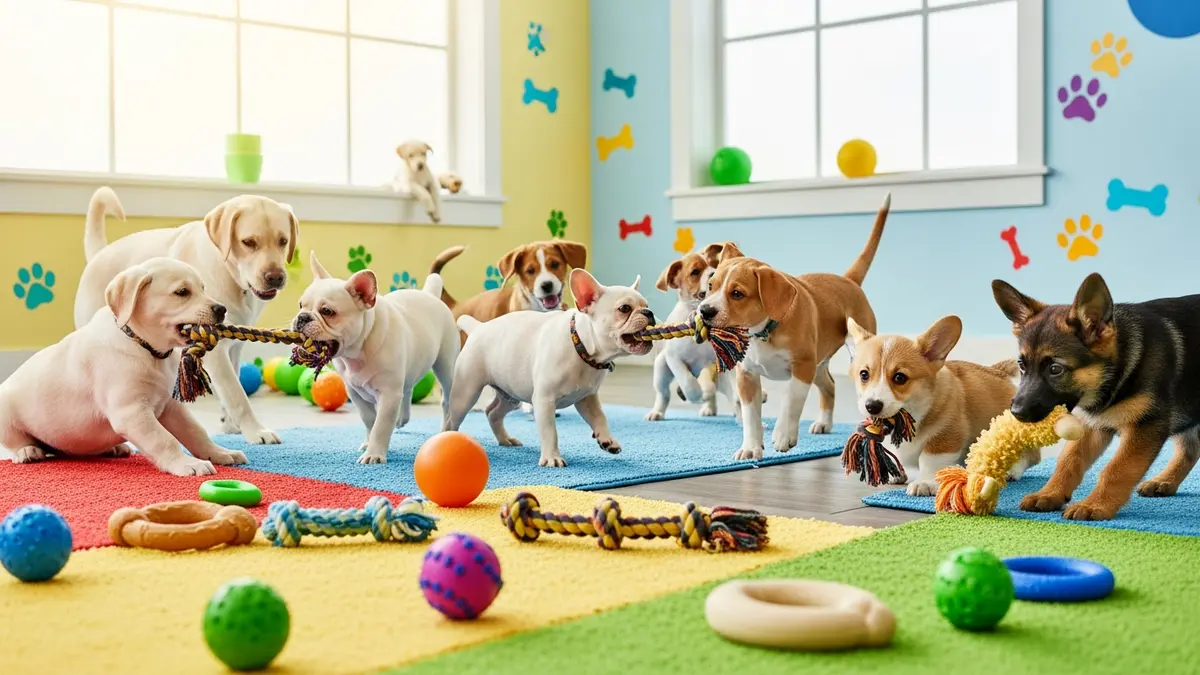
Tightly braided cotton or polyester rope provides a fibrous texture that works between teeth similarly to dental floss, plus a yielding surface that is gentle on sore gums. Rope toys are excellent for interactive tug play during teething, which also strengthens jaw muscles and builds bond. Important limitation: rope toys must be used under supervision only. Ingested rope fibers can wind around intestinal structures and cause life-threatening linear foreign body obstructions. Put the rope away when you leave the room.
You might also enjoy our recommendations for best dog toys.
Nylon Chews
Nylon-based chews designed specifically for puppies - such as the Nylabone Puppy Chew line - are formulated at a lower durometer than adult nylon chews. They have flavoring infused throughout the material, provide lasting engagement, and can withstand moderate chewing. Always choose a nylon product explicitly labeled for puppies; adult nylon chews are far too hard and can fracture erupting adult teeth.
Plush Comfort Toys
Soft plush toys are not teething toys in the functional sense - they do not provide meaningful gum counter-pressure or cold therapy. Their role is emotional comfort: a puppy in a new home that misses its littermates may carry a plush toy, sleep with it, or use it as a self-soothing object. These toys have genuine value in a puppy's life, but they should not be the primary or only option for a teething puppy, and they should be removed as soon as the puppy begins destructively tearing rather than gently carrying.
Interactive and Puzzle Toys
Puzzle feeders, treat-dispensing balls, and snuffle mats address a different need during teething: mental overstimulation from discomfort. A bored, sore puppy is a destructive puppy. Interactive toys occupy the puppy's brain and redirect energy constructively. They work especially well as a complement to rubber chew toys - the chew handles the physical urge, the puzzle handles the cognitive restlessness.
Top 10 Best Dog Toys for Puppies Teething
The following picks were selected based on material safety for erupting adult teeth, durability appropriate for a puppy chewer, and practical versatility. No external product links are included - this list is about informed buying decisions, not clicks.
1. KONG Puppy (Stuffable Rubber)
The KONG Puppy is the benchmark against which all other teething toys are measured. Made from a natural rubber formula specifically calibrated for puppy jaw strength, it passes the thumbnail test comfortably. Fill the hollow center with kibble and water paste or puppy-safe peanut butter, freeze overnight, and you have a 20 to 40-minute occupier that soothes gums with cold therapy while rewarding the puppy for appropriate chewing behavior. Available in XS through XL to match breed size. Start here before anything else.
2. Petstages Cool Teething Stick
The Cool Teething Stick is purpose-built for cold therapy. A gel-filled interior freezes within an hour and stays cold for extended play sessions. The stick shape lets puppies hold it between their paws for independent chewing and reaches molars more easily than a ball or kong shape. Replace when the outer casing shows punctures. This is a particularly useful pick during the 5 to 6 month molar eruption phase when gum soreness peaks.
3. Nylabone Puppy Chew (Petite)
Nylabone's puppy formula uses a softer nylon compound than their adult products, with a chicken or bacon flavor infused throughout. The petite size suits puppies up to approximately 25 pounds. The textured surface stimulates gum tissue while the nylon provides genuine resistance for a puppy that needs a harder object. Monitor for pieces breaking off once the toy starts to show significant wear - small nylon fragments can cause digestive upset.
4. Benebone Puppy Wishbone
The Benebone Wishbone's curved design is its key differentiator: the shape allows a puppy to hold one branch between its paws while chewing the other, giving better purchase than a straight stick. The puppy version uses real flavoring - bacon, chicken, or peanut - infused into the nylon rather than coated on the surface, so the taste lasts. The "puppy" label matters here: the material is softer than the standard Benebone and appropriate for deciduous-to-adult tooth transition.
5. West Paw Hurley (Puppy)
West Paw's Zogoflex material is a proprietary thermoplastic elastomer that compresses readily under bite force, passes the thumbnail test easily, and is dishwasher-safe for hygiene. The Hurley shape is satisfyingly bone-shaped without the hazards of real bone - no splintering, no marrow, no bacterial contamination concerns. It also floats, making it useful for water play. West Paw manufactures it in the USA and offers a guarantee against destruction by moderate chewers. For additional guidance, see the ASPCA general dog care resource.
For related picks, take a look at our best rope toys for dogs roundup.
6. KONG Puppy Activity Ball
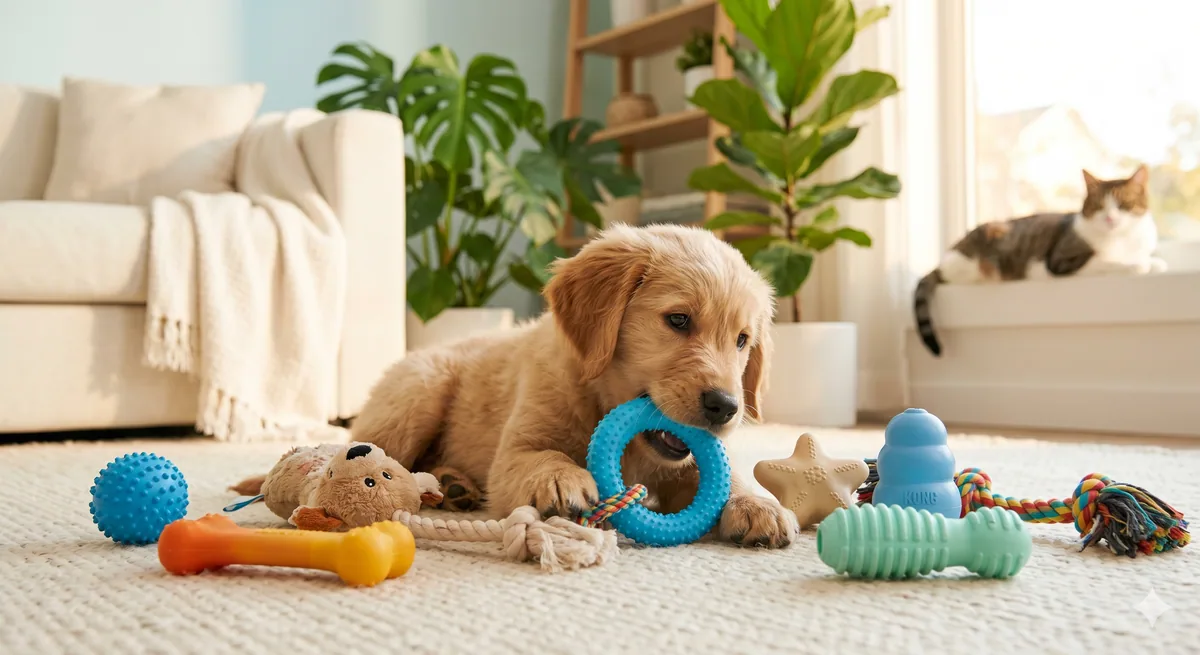
For puppies that need movement alongside chewing, the KONG Activity Ball combines treat dispensing with rolling unpredictability. Load it with kibble and the ball dispenses treats as the puppy bats and chews it across the floor. This adds the cognitive engagement of interactive play to the gum-relief function of a rubber chew, making it effective for the mentally restless teething puppy that can't settle with a stationary KONG.
7. ZippyPaws Skinny Peltz (No-Stuffing Plush)
If your puppy insists on plush toys, ZippyPaws Skinny Peltz significantly reduces the choking and ingestion risk by removing the polyfill stuffing entirely. The squeaker remains, providing engagement, but a puppy that tears through the outer fabric won't encounter a cloud of loose fiberfill to ingest. Skinny Peltz are comfort and carry toys, not chew toys - supervise play and retire them when the outer fabric is breached.
8. Outward Hound Puppy Invincibles (No-Stuffing Plush)
Outward Hound's Puppy Invincibles series takes the no-stuffing concept further with reinforced double-layer seams and a durable outer fabric. Multiple squeakers (depending on the design) keep engagement high. Like the Skinny Peltz, these are carry-and-comfort toys rather than chew toys, but they are significantly more durable than standard plush options and the reinforced construction means they stand up to moderate mouthing without immediate destruction.
9. Puppy Rope Toy (Supervised Tug)
A puppy-sized braided cotton rope toy - look for one using 100% natural cotton with no synthetic dyes - is one of the best interactive teething options available for tug sessions. The fibrous texture between teeth mimics dental flossing and the yielding surface is gentle on sore incisors and canines. The absolute rule: rope toys go away when you leave the room. Ingest enough rope fiber and your puppy may need emergency surgery for intestinal obstruction. With that boundary firmly in place, the rope toy is a valuable part of a teething toolkit.
10. Frozen Carrot (Natural, Free)
Do not underestimate the humble frozen carrot. A whole carrot placed in the freezer for 2 hours becomes a cold-therapy teething tool that is gentle on erupting teeth, low in calories, digestible, naturally flavored, and costs almost nothing. Most puppies accept it enthusiastically. It is particularly useful at peak teething soreness when commercial options aren't keeping up with the puppy's need for cold relief. Supervise as with any natural chew and discard when it becomes small enough to swallow whole.
Never give a teething puppy adult-formulated nylon chews, real bones (cooked or raw weight-bearing bones), antlers, hooves, or hard plastic toys labeled for aggressive adult chewers. These can fracture erupting permanent teeth, cause slab fractures, or create sharp fragments that lacerate gum tissue.
How to Choose the Right Teething Toy
With dozens of options on the market, a structured approach prevents both under-buying (one toy that isn't enough) and over-buying (ten toys that confuse your puppy or create clutter). Use the following frameworks.
Size Guide by Breed Weight
| Puppy Adult Weight | Breed Examples | Toy Size | KONG Size |
|---|---|---|---|
| Under 5 lbs | Chihuahua, Toy Poodle | XS / Toy | XS Puppy |
| 5 - 15 lbs | Shih Tzu, Dachshund, Pomeranian | Small | S Puppy |
| 15 - 35 lbs | Beagle, Cocker Spaniel, Corgi | Medium | M Puppy |
| 35 - 65 lbs | Labrador, Golden Retriever, Husky | Large | L Puppy |
| Over 65 lbs | Great Dane, Mastiff, Rottweiler | XL | XL Puppy |
Always size up when a puppy is between categories. A toy that is too small becomes a choking hazard; a toy that is too large is frustrating and won't get used. If your puppy is a large breed, remember that the adult weight is the reference point - a 3-month-old Lab puppy at 20 lbs should be using large-sized toys, not small.
Material Guide
- Natural rubber: Best overall. Passes the thumbnail test, freezeable, stuffable, non-toxic. Look for BPA-free certification.
- Thermoplastic elastomer (TPE/TPR): Synthetic rubber equivalent. Similar compliance and safety profile. West Paw Zogoflex is the leading example.
- Puppy nylon: Longer-lasting than rubber. Use only products explicitly labeled for puppies. Avoid adult nylon entirely.
- Cotton rope: Supervised use only. 100% natural cotton preferred. Avoid synthetic dyes and polyester fibers.
- Plush fabric: Comfort and carry only. No-stuffing designs preferred. Retire at first sign of structural breach.
- Natural food items: Frozen carrots only. Avoid ice cubes (too hard), cooked bones (splinter risk), and rawhide (chemical processing, choking risk).
Age Guide: Matching Toys to the Teething Timeline
- 8 - 12 weeks: Focus on soft rubber toys (KONG Puppy XS/S), plush comfort toys, and very short rope sessions. Baby teeth are fully in but fragile. Keep everything soft.
- 3 - 4 months: Incisors begin loosening. Introduce frozen KONG, Cool Teething Stick, and frozen carrots. This is when cold therapy becomes genuinely useful.
- 4 - 5 months: Peak chewing drive as canines and premolars transition. Full teething toolkit in rotation. Introduce puppy nylon if rubber alone isn't satisfying the puppy.
- 5 - 7 months: Molar eruption - often the sorest phase. Maximize frozen options. Begin transitioning toward more durable toys as the adult dentition sets.
- 7+ months: Adult teeth fully in. Graduate to adult-rated toys appropriate for your dog's chew style and breed size.
Keep 3 to 5 teething toys in rotation and swap them every 2 to 3 days. Novelty significantly increases engagement time. A toy that's been on the floor for a week is invisible to your puppy; the same toy reintroduced after a few days away is suddenly fascinating again.
Conclusion
Picking the right option for your dog is less about finding a single "best" product and more about matching the choice to your dog's size, age, play style, and your home environment. The recommendations above cover the main scenarios most pet owners run into, so use them as a checklist when comparing options.
Start with one or two changes, watch how your dog responds for a week or two, then iterate. Pets show you very quickly what works for them. If a toy, feeder, or routine is ignored or causes stress, swap it out without hesitation. The goal is a happier, healthier dog every day.
Frequently Asked Questions
Should I consult a veterinarian about my pet's play and enrichment needs?
Yes, especially if your pet shows signs of anxiety, sudden behavior changes, or destructive habits that may indicate a medical issue. A licensed veterinarian or veterinary behaviorist can rule out pain, dental problems, or cognitive decline before you adjust toys or routines. The guidance in this article is educational, not a substitute for professional veterinary advice.
How long does it take to see results from new toys or enrichment?
Most pet owners notice small changes within a week (calmer evenings, less destructive chewing, more interest in mealtime puzzles) and clearer behavior shifts within 4 to 6 weeks of consistent rotation. Older pets and rescues may take 8 to 12 weeks to adjust. Keep a short weekly journal so you can track real progress instead of relying on memory.