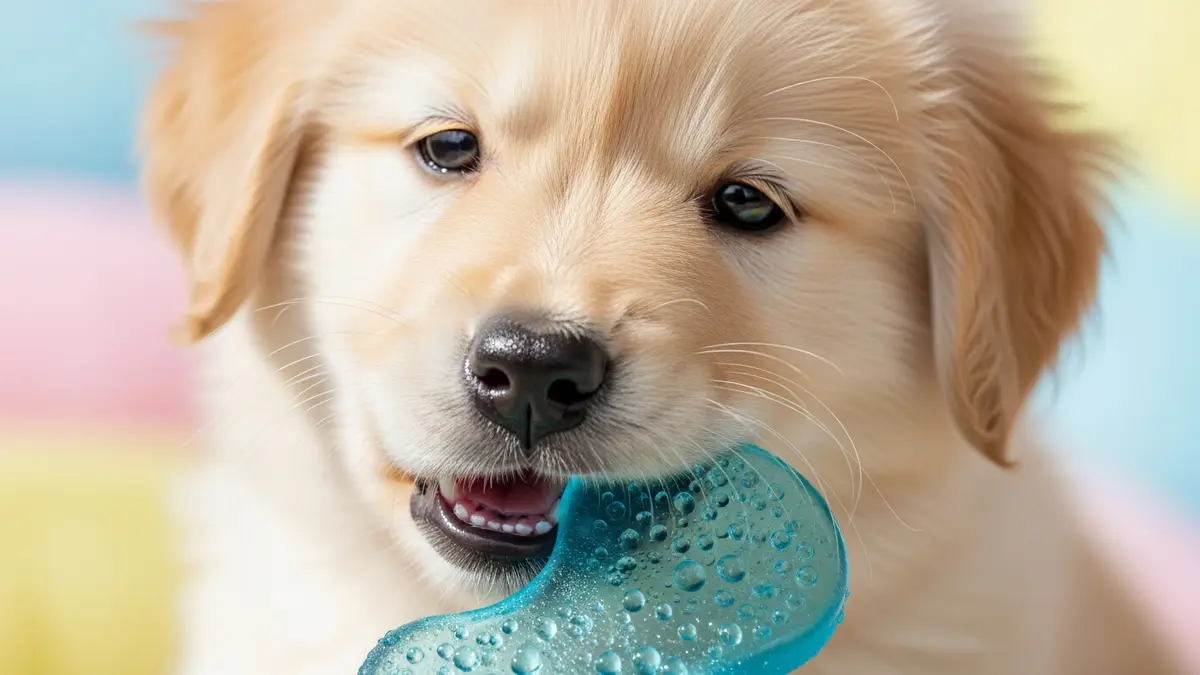
Somewhere between the adorable puppy breath and your first pair of chewed-through shoes, it happens: teething. For most puppies, the teething window runs from roughly 3 to 6 months of age, as 28 baby teeth fall out and 42 permanent adult teeth push their way through inflamed, sensitive gum tissue. It is uncomfortable, relentless, and the primary reason puppies chew on absolutely everything they can find - including you. According to the American Kennel Club expert health advice, choosing the right toys can support your pet's mental and physical wellbeing.
The right teething toy does not just redirect chewing away from your furniture. It actively soothes sore gums, provides safe outlet for the biting urge, and supports healthy dental development during a critical window. The wrong toy - one that is too hard, too small, made from unsafe materials, or designed for adult dogs - can crack fragile baby teeth, become a choking hazard, or deliver toxic compounds into a puppy's developing system. Finding the best teething toys for puppies means understanding what separates a genuinely helpful toy from a marketing label. Our full range of puppy toys and accessories is curated with exactly those distinctions in mind.
What Makes a Teething Toy "Best"
Not every chew toy on the shelf qualifies as a teething toy, and not every teething toy is suitable for every puppy. Four qualities separate the genuinely effective options from the rest.
In our experience writing about pet health topics like teething toys for puppies, we've found that owners benefit most when guidance separates clinical signs from normal variation. We try to flag that distinction clearly throughout this piece.
If you want even more options, check out our guide to best plush dog toys.
Safe, Non-Toxic Materials
Puppies are not subtle chewers - they mouth and ingest whatever their toy sheds. Natural rubber, food-grade nylon, and BPA-free thermoplastics are the gold-standard materials for teething toys. Avoid toys made from pressed rawhide, latex of unknown origin, or anything with dyes that bleed color onto your puppy's muzzle. If a toy smells strongly of chemicals out of the packaging, that is a red flag worth taking seriously. A puppy's digestive and immune systems are still maturing, which makes material safety a non-negotiable rather than a nice-to-have.
Right Hardness for Puppy Teeth
This is the most commonly misunderstood dimension of teething toy selection. Adult dog toys - particularly those marketed for aggressive chewers - are designed to withstand the jaw force of a mature dog. A puppy's baby teeth and incoming adult teeth are far more fragile. A toy that is too hard will crack teeth during the period when those teeth most need protection. The industry standard rule of thumb is the thumbnail test: if you press your thumbnail into the toy's surface and cannot leave a slight dent, the toy is too hard for a puppy. We cover this in detail in the dedicated section below.

Soothing Properties
The best teething toys do more than redirect chewing - they provide active relief. Textured surfaces massage inflamed gum tissue. Freezable toys add a cold, numbing effect that is especially welcome during peak teething discomfort. Some toys combine both features, offering both surface texture and the ability to be frozen. Think of it as the equivalent of a teething ring for a human infant: the goal is comfort, not just distraction.
Size-Appropriate for the Breed
A toy correctly sized for a Golden Retriever puppy can be a choking hazard for a Chihuahua puppy, and vice versa. Match toy size to your puppy's projected adult weight, and always check that no component is small enough to be separated and swallowed. For related guidance, our roundup of best toys for puppies covers sizing across breed categories from toy to giant.
Provide multiple teething toys with different textures and temperatures - rubber, fabric, and frozen options each target different aspects of teething discomfort. Variety keeps puppies engaged and covers more of the gum surface.
What to Look for in a Teething Toy
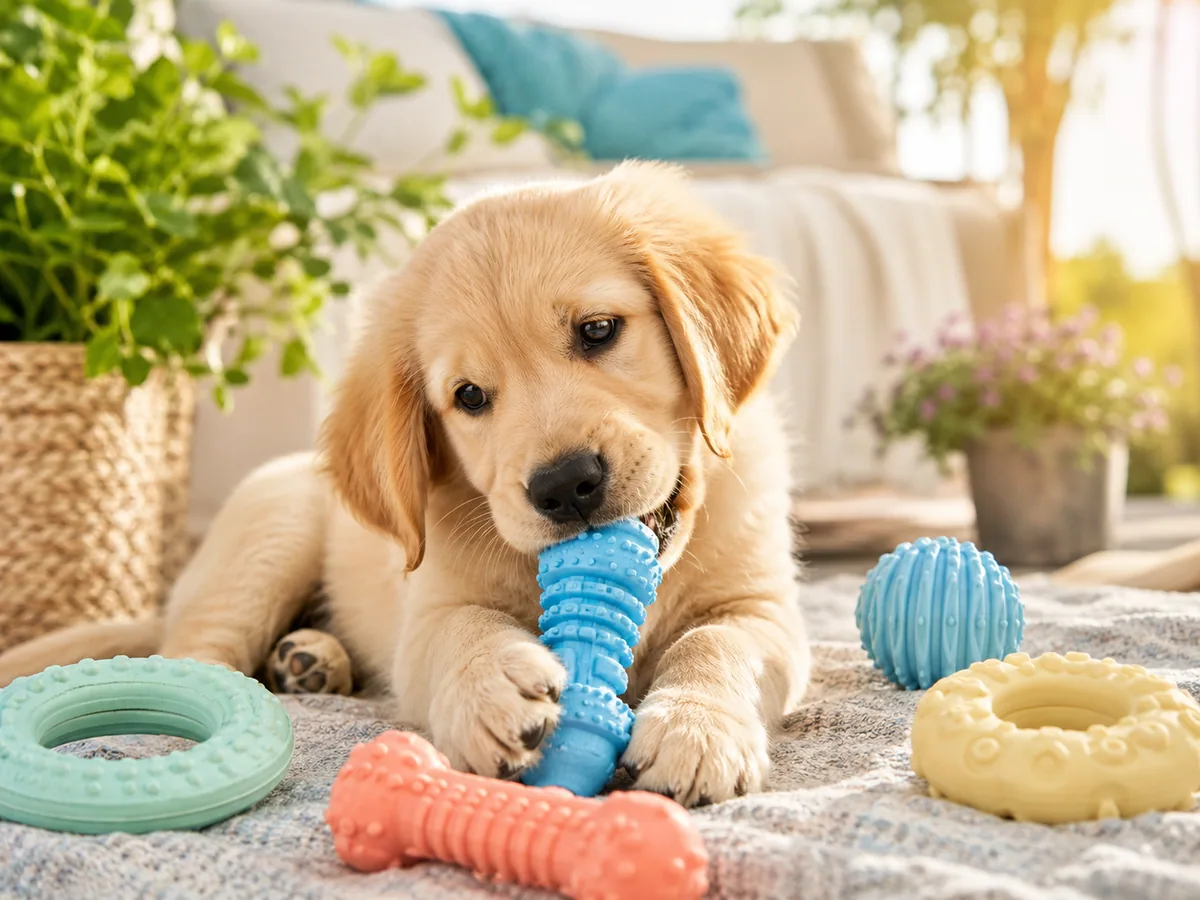
Before reviewing specific products, here is the buying framework that applies to every teething toy you consider for your puppy.
Material Safety
Look for toys labeled BPA-free, phthalate-free, and made from food-grade materials. Natural rubber (rubber hevea) is ideal: it is soft enough to pass the thumbnail test, flexible enough to provide gum massage, and durable enough to last through the teething phase without being swallowed in chunks. Avoid toys that crack or splinter under pressure - hard plastic and brittle nylon are not appropriate for puppies under 6 months.
Honestly, the most important takeaway we share with readers on teething toys for puppies is to involve a veterinarian early. We've seen how much smoother outcomes are when concerns are checked promptly.
Hardness: The Thumbnail Test
Press your thumbnail firmly into the toy's surface. If you cannot make a slight indentation, the toy is too hard for a puppy's developing teeth. This test applies to every toy, regardless of the marketing language on the packaging. "Durable," "tough," and "long-lasting" do not mean puppy-safe - in fact, they often signal exactly the opposite. We dedicate a full section to this test below because it is the single most important safety check available to any puppy owner.
Size Appropriate for Your Breed
Choose a toy size that your puppy cannot fit entirely in their mouth. Most manufacturers list a weight range - match that range to your puppy's current weight, not their projected adult size. A toy that fits a 5-pound puppy should be replaced when that puppy reaches 15 pounds. Check toy dimensions regularly as your puppy grows, particularly during the first six months when growth rates can be rapid.
Freezable Options
Freezable teething toys provide cold therapy that numbs inflamed gum tissue in the same way an ice pack reduces swelling in a joint. Look for toys specifically labeled as freezer-safe, and follow the manufacturer's guidelines on freezing duration. Some toys are designed to be soaked in water or broth before freezing, which adds scent and flavor that encourages interaction. This type of toy is particularly valuable during peak teething weeks when a puppy is visibly uncomfortable and sleep-disrupted.
Easy to Clean
Teething toys spend a lot of time on the floor and in a puppy's mouth. Dishwasher-safe rubber toys or toys that can be cleaned with warm soapy water are far more hygienic - and therefore safer - than toys with deep crevices that trap bacteria. Check for a cleaning note in the product instructions before purchasing. A toy that cannot be properly sanitized should not be in heavy daily rotation for a young puppy. For a full overview of puppy care staples, see our guide to new puppy essentials.
You might also enjoy our recommendations for best rope toys for dogs.
10 Best Teething Toys for Puppies
These picks cover the full spectrum of teething relief: rubber chews, freezable options, textured gum massagers, supervised fabric toys, and creative food-based solutions. All pass the thumbnail test and are made from puppy-safe materials. Browse our puppy toy collection for more options to complete your teething kit. You can also explore our guide to toys for teething puppies for additional context on building a complete teething rotation.
1. KONG Puppy - Top Pick
The KONG Puppy earns its top pick status through a combination of material science and versatility that no other teething toy fully matches. KONG engineers a specifically softer rubber compound for the puppy version - the same classic beehive shape as the adult KONG Classic, but made from a pink or blue natural rubber that is noticeably more pliable and passes the thumbnail test with room to spare. The hollow interior accepts kibble, soft treats, diluted peanut butter, or plain yogurt. Stuff it and freeze it overnight for a toy that combines cold gum relief with a long-duration enrichment challenge. A frozen stuffed KONG can occupy a teething puppy for 30 to 40 minutes, providing both distraction and genuine comfort. Available in XS through Large to cover every breed size from Chihuahua to Labrador.
2. Nylabone Puppy Starter Kit
Nylabone's Puppy Starter Kit provides a set of textured chew toys made from a softer nylon compound formulated specifically for developing teeth - not the dense, glass-hard nylon of adult Nylabone products. The kit typically includes two to three toys of different shapes and surface textures, allowing you to identify which profile your puppy finds most satisfying. The flavor-infused surface (usually chicken or bacon) encourages engagement, and the textured bristles that emerge as the puppy chews provide a gentle dental scrubbing effect. Important caveat: inspect these regularly and discard when knuckle-sized pieces begin to separate, as any piece large enough to swallow should be removed immediately.
3. Petstages Cool Teething Stick - Best Freezable Option
The Petstages Cool Teething Stick is purpose-built for the freezer: its hollow interior holds water that, once frozen, transforms the toy into a cold compress shaped perfectly for puppy mouths. The outer netting texture provides a satisfying bite resistance and gum massage action while the frozen core delivers numbing relief to inflamed tissue. Soak it in low-sodium chicken broth before freezing to add scent and flavor that increases engagement. The stick shape is intuitive for puppies to hold between their paws. This is one of the highest-value purchases during the peak teething window, especially for puppies showing visible signs of gum discomfort such as excessive drooling, pawing at their mouth, or whimpering while chewing.
4. Benebone Puppy Pack
The Benebone Puppy Pack offers two differently shaped chews - typically a wishbone and a bacon-flavored dental chew - in a puppy-safe nylon compound softer than the adult Benebone line. The wishbone shape is specifically designed so a puppy can anchor it between their paws and chew from an ergonomic angle that targets both sides of the mouth. Real flavor (bacon, chicken, or peanut) is baked into the nylon rather than surface-coated, so the scent encourages engagement throughout the toy's life rather than just when it is new. Sized by weight; always choose the puppy size corresponding to current weight. Replace when the chew surface is worn smooth or any end becomes small enough to fit fully in the mouth.
5. West Paw Hurley Puppy
West Paw's Zogoflex material is one of the most consistently recommended puppy-safe compounds available: non-toxic, fully recyclable, free of BPA and phthalates, and flexible enough to pass the thumbnail test while still providing meaningful chew resistance. The Hurley in Small size is the right choice for most puppies during teething - shaped like a simplified bone, light enough to carry and toss, and sized so a puppy can grip it comfortably between their paws. It floats for water play, cleans up in the dishwasher, and West Paw backs it with their Love It Guarantee. This is an excellent everyday option for puppies between sessions with frozen or stuffable toys.
6. KONG Puppy Goodie Ribbon - Best Textured Gum Massager
The KONG Puppy Goodie Ribbon combines the trusted KONG puppy rubber formula with a flat, ribbon-like shape covered in raised ridges and nubs designed to massage gum tissue as the puppy chews. Unlike the classic round KONG, the ribbon shape allows the puppy to chew along its length, targeting different areas of the mouth with each session. The two hollow ends can be stuffed with soft treats or peanut butter to maintain engagement. This is a particularly effective choice during the period when multiple teeth are simultaneously erupting and the gum tissue is uniformly irritated - the full-length ridge action covers more surface area than a single-point chew toy.
7. Chuckit! Puppy Fetch Stick
For puppies that want to combine teething relief with movement and play, the Chuckit! Puppy Fetch Stick is a lightweight natural rubber stick designed for gentle fetch sessions. The elongated shape is easy for a young puppy to carry and shake, the rubber compound provides the right bite resistance for developing teeth, and the toy floats for water play as warmer months arrive. Puppy fetch sessions also serve as an early foundation for recall training - the puppy learns to bring objects back in exchange for the reward of another throw. Keep sessions short (5 to 10 minutes) to prevent jaw fatigue in a young puppy still building muscle.
8. Puppy Rope Toy - Best Supervised Fabric Option
A natural cotton rope toy provides a satisfying, yielding chew surface that many teething puppies find intensely satisfying - the fibers give slightly under bite pressure and the texture against gum tissue provides gentle massage. Rope tug sessions also begin teaching bite inhibition: a puppy learns where appropriate chewing stops and where it becomes overstimulation. The critical rule with rope toys is supervision-only. Puppies that chew rope toys unsupervised ingest frayed cotton fibers, which can form a linear obstruction in the intestine requiring emergency surgery. Keep the rope toy for structured play sessions and put it away when the session ends. This distinction - supervised interactive toy, not solo chew toy - is the entire safety equation with rope for puppies.
9. ZippyPaws Skinny Peltz - Best No-Stuffing Plush Option
Soft plush toys are irresistible to most puppies, but standard stuffed animals present an ingestion risk when the fabric is punctured and polyfill begins to come out. ZippyPaws Skinny Peltz solves this by eliminating the stuffing entirely - the toys are flat fabric animals with squeakers inside. Without stuffing to ingest, the primary risk profile is dramatically reduced. These are best for gentle to moderate chewers; puppies that rapidly destroy fabric should graduate to rubber options. The squeaker sound encourages interaction and the soft surface is gentle on sensitive gums. As with all soft toys, inspect regularly and replace when seams begin to separate or the squeaker becomes accessible.
10. Frozen Banana in a KONG - Best DIY Frozen Option
Sometimes the most effective teething solution is the simplest one. Mash a ripe banana - naturally sweet, easily digestible, and safe for puppies - into the hollow of a KONG Puppy, seal the small end with a dab of plain peanut butter, and freeze for at least four hours. The result is a cold, flavorful, long-duration chew that provides genuine gum-numbing relief through temperature and satisfies the chewing urge simultaneously. Banana is high in potassium and magnesium and digests cleanly without the sugar load of processed treats. Other effective frozen fillers: plain low-fat yogurt, diluted low-sodium chicken broth, or pureed pumpkin. Batch-prepare several and keep them in a zip-lock bag in the freezer for an always-ready teething solution.
For related picks, take a look at our dog toys for heavy chewers roundup. For additional guidance, see the ASPCA general dog care resource.
The Thumbnail Test: How Hard Is Too Hard?
Veterinary dental specialists have a straightforward rule for evaluating whether a chew toy is safe for a dog's teeth: if you cannot dent it with your thumbnail, it is too hard. This test works because human thumbnail pressure approximates the forces involved in casual jaw movement - if a material resists that pressure, it will resist a dog's tooth as well, creating the conditions for a slab fracture or crack.
Why Hardness Matters More for Puppies
Adult dogs have dense, fully mineralized enamel. Even then, hard toys cause slab fractures in adult dogs at a clinically significant rate. Puppies are at greater risk still: their baby teeth are smaller, thinner, and more brittle than adult teeth, and the incoming adult teeth erupting through the gumline are in their most vulnerable state before full mineralization is complete. A toy that an adult Labrador chews without issue can crack a puppy's baby tooth or damage an adult tooth that has not yet fully emerged. The financial and emotional cost of a tooth fracture - potentially including extraction under anesthesia - vastly exceeds the cost of replacing a toy with a softer alternative.
How to Perform the Test
Hold the toy firmly in one hand. Press the edge of your thumbnail - not the pad, but the actual nail edge - into the toy's surface with moderate pressure. If you can leave a shallow indent or feel the material give even slightly, the toy passes. If the surface feels completely rigid with no give whatsoever - like pressing your nail against a ceramic mug - the toy fails the test and is not appropriate for a puppy. Apply this test to every toy you consider, regardless of the label. "Puppy-safe" marketing language does not replace the physical test.
Common Toys That Fail the Test
Several popular toy categories consistently fail the thumbnail test: adult-formula nylon bones (Nylabone Power Chew and similar products), antlers of any type, hooves, marrow bones, and hard plastic fetch toys. These are frequently recommended in general pet advice, but none are appropriate for teething puppies. If a toy is marketed with language like "virtually indestructible," "for power chewers," or "lasts months," assume it fails the thumbnail test until you verify otherwise.
If you cannot dent the toy with your thumbnail, it is too hard for a puppy. No exceptions. Hard toys cause tooth fractures in puppies during the exact developmental window when healthy teeth matter most for a lifetime of good dental health.
Toys to Avoid During Teething
Knowing what not to give a teething puppy is as important as knowing what works. These categories cause real harm and should be kept off your puppy's toy list entirely during the teething phase.
Adult Dog Toys
Adult toys - especially rubber toys labeled for medium, large, or aggressive-chewing adult dogs - use rubber or nylon compounds formulated for the jaw force of a mature dog. That same hardness that makes them durable for adults makes them a dental hazard for puppies. This includes the KONG Classic (as opposed to the KONG Puppy), adult-formula Nylabone products, West Paw Zogoflex toys in adult sizes, and large breed fetch balls that require significant bite force to compress. Always check that the toy is specifically labeled for puppies, not just "all life stages."
Cooked Bones of Any Kind
Cooked bones - whether from a roast chicken, pork ribs, or any other cooked source - are never safe for any dog at any life stage, but they are acutely dangerous for teething puppies. Cooking changes bone structure from flexible to brittle, causing it to splinter into sharp shards under bite pressure. Bone shards can puncture gum tissue, crack baby teeth, lacerate the esophagus, and perforate the intestine. No amount of supervision makes cooked bones safe. Raw bones carry their own set of risks for very young puppies; consult your veterinarian before introducing any bone to a puppy under 6 months.
Hard Adult-Formula Nylon Chews
Nylon chews designed for adult dogs - including many popular branded options prominently displayed in pet stores - are categorically too hard for puppies. The confusion arises because some brands offer a puppy-specific version alongside their adult product, and the packaging can look similar. Always read the label and confirm the product is the puppy-specific formula before purchasing. If the label says "for aggressive chewers" or "long-lasting," it is an adult product regardless of any other labeling.
Toys with Small Detachable Parts
Eyes, buttons, ribbons, and decorative elements on plush toys can be chewed free and swallowed in seconds. Remove any detachable parts from plush toys before giving them to a puppy, or choose plush toys that are designed with all features embroidered rather than attached. The ZippyPaws Skinny Peltz recommended above uses this principle: eyes and features are stitched directly into the fabric rather than glued or sewn on as separate components.
Comparison: Budget vs Mid-Range vs Premium
This quick comparison helps you understand what you actually get at each price band, so you can decide where to spend and where to save without compromising safety.
Comparison reflects typical US retail ranges as of 2026. Always verify safety labels before purchase.
Conclusion
Picking the right option for your pet is less about finding a single "best" product and more about matching the choice to your pet's size, age, play style, and your home environment. The recommendations above cover the main scenarios most pet owners run into, so use them as a checklist when comparing options.
Start with one or two changes, watch how your pet responds for a week or two, then iterate. Pets show you very quickly what works for them. If a toy, feeder, or routine is ignored or causes stress, swap it out without hesitation. The goal is a happier, healthier pet every day.
Frequently Asked Questions
Should I consult a veterinarian about my pet's play and enrichment needs?
Yes, especially if your pet shows signs of anxiety, sudden behavior changes, or destructive habits that may indicate a medical issue. A licensed veterinarian or veterinary behaviorist can rule out pain, dental problems, or cognitive decline before you adjust toys or routines. The guidance in this article is educational, not a substitute for professional veterinary advice.
How long does it take to see results from new toys or enrichment?
Most pet owners notice small changes within a week (calmer evenings, less destructive chewing, more interest in mealtime puzzles) and clearer behavior shifts within 4 to 6 weeks of consistent rotation. Older pets and rescues may take 8 to 12 weeks to adjust. Keep a short weekly journal so you can track real progress instead of relying on memory.