A bored dog is not just an unhappy dog - it is a dog with time on its paws and creative ways to fill it. Chewed sofa cushions, excavated garden beds, and a kitchen bin that has been investigated one more time than strictly necessary are all classic signs of a dog with nothing to do. The good news: dog boredom toys are specifically designed to solve this problem, giving your dog meaningful mental and physical engagement that satisfies their natural instincts without requiring you to be present every moment.
Boredom in dogs stems from a mismatch between the level of stimulation a dog needs and what their daily environment provides. Working breeds like Border Collies, Huskies, and Belgian Malinois were selectively bred for high-output cognitive tasks; a suburban home with two 20-minute walks rarely meets that demand. But even low-energy breeds need enrichment - they just need it at a different intensity. This guide covers the 10 best boredom toys for dogs across all types and temperaments, from gentle foragers to heavy-duty destroyers. Source: American Kennel Club.
Quick Answer: What Should You Know About Dog Boredom Toys?
The best dog boredom toys depends on your pet's size, age, activity level, chewing style, and safety needs. Choose an appropriately sized option made from durable, easy-to-clean materials, introduce it under supervision, and replace it when worn. This guide compares practical choices, warning signs, and care steps so you can choose confidently.
What Causes Dog Boredom and Why It Matters?
Answer: Dogs were not designed for a life of comfortable inactivity. Domesticated dogs retain the cognitive architecture of a working predator - problem-solving capacity, sensory acuity, social complexity - without the environmental demands that once exercised those systems. When stimulation is insufficient, that cognitive energy gets redirected into self-generated activity: destructive chewing, excessive barking, digging, pestering.
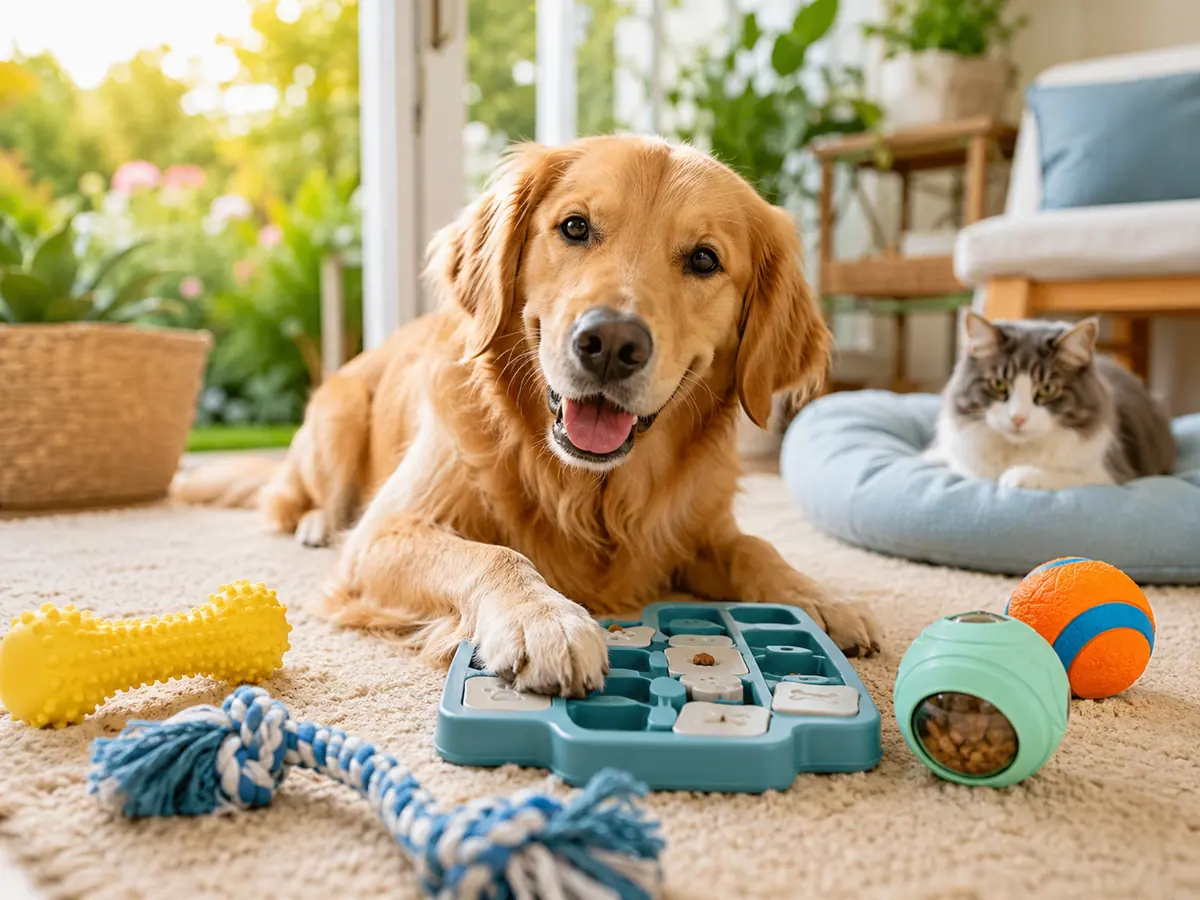
Dogs were not designed for a life of comfortable inactivity. Domesticated dogs retain the cognitive architecture of a working predator - problem-solving capacity, sensory acuity, social complexity - without the environmental demands that once exercised those systems. When stimulation is insufficient, that cognitive energy gets redirected into self-generated activity: destructive chewing, excessive barking, digging, pestering, or compulsive pacing.
Boredom is distinct from separation anxiety: a bored dog is under-stimulated; an anxious dog is in emotional distress about being alone. A bored dog will destroy indiscriminately throughout the day; an anxious dog tends to focus their distress near exits or in the first 30 minutes after departure. Toys address boredom directly by providing a structured outlet for mental energy. Some toys also partially buffer mild anxiety, though true anxiety disorders require behavioral intervention. Source: American Kennel Club.
The most effective boredom toys share three traits: they require some effort to operate, they deliver a variable reward (not always the same outcome every time), and they engage the dog's nose, problem-solving ability, or chewing instinct. Toys that deliver a fixed, immediate reward - like a simple squeaky toy - quickly lose novelty. Toys that challenge and reward unpredictably hold attention far longer.
What Should Pet Owners Know About 10 Best Dog Boredom Toys (Our Top Picks)?
Answer: 1. Puzzle Feeders and Treat Dispensing Toys - Puzzle feeders are the gold standard for canine mental engagement. By converting mealtime into a problem-solving exercise, they slow eating, extend engagement time, and provide genuine cognitive challenge. The difficulty levels range from beginner (simple sliders and flippers) to advanced (multi-step mazes). Match the difficulty to your. Source: American Kennel Club.
1. Puzzle Feeders and Treat Dispensing Toys - Puzzle feeders are the gold standard for canine mental engagement. By converting mealtime into a problem-solving exercise, they slow eating, extend engagement time, and provide genuine cognitive challenge. The difficulty levels range from beginner (simple sliders and flippers) to advanced (multi-step mazes). Match the difficulty to your dog's experience - too easy and they lose interest; too hard and they give up in frustration. Start one level below what you think your dog can handle and progress gradually. Source: American Kennel Club.
2. Snuffle Mats - Snuffle mats replicate the foraging experience of sniffing through grass and ground cover for scattered food. The irregular fabric loops hide kibble or treats that the dog must nose out, activating their olfactory system in a way that is genuinely tiring. A 15-minute snuffle session can equal 30 minutes of physical exercise in terms of mental fatigue. Snuffle mats are excellent for senior dogs, dogs recovering from injury, or dogs in high-distraction environments where physical exercise is limited. Source: American Kennel Club.
3. LickiMats and Slow Feeders - Licking is a naturally calming behavior in dogs, linked to the release of serotonin. LickiMats and similar licking surfaces extend mealtime by spreading soft foods (peanut butter, yogurt, wet food, pureed pumpkin) into textured surfaces the dog must work to access. Freeze the mat for an extended challenge. They are particularly effective for dogs who eat too quickly or who need a calming activity during high-stress periods. Source: American Kennel Club.
4. Chew Toys - Appropriate chew toys serve a different function from puzzle toys: they satisfy the deeply wired chewing drive while providing jaw exercise and dental benefit. A good chew toy for a bored dog must be durable enough to last more than a few minutes, interesting enough to choose over furniture, and appropriately sized so the dog cannot swallow chunks. Natural chews (bully sticks, yak chews, antlers) hold interest longer than rubber alternatives for most dogs, but supervise any natural chew session. Source: American Kennel Club.
5. Interactive Ball Launchers - Automated fetch machines let dogs initiate and play fetch independently, giving them physical exercise and self-directed activity even when you are busy or not available. Dogs can learn to drop balls into the launcher themselves, enabling continuous self-play. These are best suited to high-energy breeds that need more physical output than enrichment feeding alone can provide. Source: American Kennel Club.
6. Rope Toys and Tug Toys - Rope toys satisfy the grip, pull, and shake instincts that are ancestrally linked to prey capture. When used in interactive tug sessions they build engagement and relationship, but they also serve as solo enrichment items that dogs can carry, shake, and chew independently. Look for tightly braided cotton rope without dyes or synthetic fibers, and retire the toy when strands become loose enough to swallow. Source: American Kennel Club.
7. Wobble and Balance Toys - Balance boards, peanut balls, and wobble bases provide proprioceptive stimulation - engaging the dog's awareness of their own body position - alongside mental focus. Initially frustrating, they become satisfying as the dog learns to balance on an unstable surface. These are excellent for breeds that respond well to physical challenge and precision tasks. Source: American Kennel Club.
8. Scent-Work Hides - DIY scent-work games, or structured nose-work kits, teach the dog to search a designated area for a hidden scent (often birch oil, which is used in formal nosework competition). Dogs take to scent work with remarkable enthusiasm - it is genuinely tiring, mentally complex, and leverages their single greatest sensory advantage. A trained dog can search an entire room or garden for a hidden target, spending 20-30 focused minutes on the task. Source: American Kennel Club.
9. Frozen Stuffable Toys (KONG and equivalents) - Filling a rubber toy with wet food, peanut butter, or a mixture and freezing it overnight creates an extended enrichment session that can last 30-45 minutes. The dog works to access the food using tongue, teeth, and paws, engaging multiple systems simultaneously. Prepare several and rotate from the freezer daily so there is always one ready at departure time. Source: American Kennel Club.
10. Rotating Toy Box - A rotating toy library - storing most toys out of sight and introducing a different one each day - dramatically extends the novelty and therefore the interest of existing toys. Dogs become habituated to toys left out permanently; the same toy presented after a three-day absence is treated as nearly new. Keep 3-4 toys in rotation and swap daily to maintain engagement without purchasing new items constantly. Source: American Kennel Club.
How to Choose the Right Boredom Toy for Your Dog?
Answer: The right toy depends on your dog's age, energy level, breed characteristics, chewing strength, and the supervision you can provide. A toy that is perfect for a senior Basset Hound might be destroyed in seconds by a young Staffordshire Terrier, and vice versa. Start by identifying which of your dog's instincts are strongest: Do they.
The right toy depends on your dog's age, energy level, breed characteristics, chewing strength, and the supervision you can provide. A toy that is perfect for a senior Basset Hound might be destroyed in seconds by a young Staffordshire Terrier, and vice versa. Start by identifying which of your dog's instincts are strongest: Do they sniff obsessively? A snuffle mat or scent-work kit. Do they destroy everything they touch? A heavy-duty chew toy or indestructible rubber toy. Do they need constant movement? An automated ball launcher or balance toy.
Safety rating matters as much as engagement. Always check that toys are sized appropriately - a toy that can fit entirely in the dog's mouth is a choking hazard. Avoid toys with small detachable parts, squeakers that can be removed, or thin plastic components a powerful chewer can splinter. Test new toys with supervision before leaving your dog alone with them. Once you know a toy is safe for solo use, add it to your dog's unsupervised enrichment rotation.
Budget also shapes your strategy. The most expensive toys are not always the most effective - a snuffle mat made from a rubber mat and fleece strips can outperform a $40 plastic puzzle. A muffin tin with treats under tennis balls costs nothing and entertains a dog for 20 minutes. Invest in quality for items like chew toys and treat dispensers that your dog will interact with daily; DIY and low-cost for rotation novelty. Source: American Kennel Club.
How to Use Boredom Toys Effectively?
Answer: Introducing a new toy correctly significantly affects how long it holds your dog's interest. Do not simply hand the toy over and walk away. Show your dog how it works - model the behavior, let them see food rewards come out of it, express enthusiasm. A dog who has never seen a puzzle feeder may.
Introducing a new toy correctly significantly affects how long it holds your dog's interest. Do not simply hand the toy over and walk away. Show your dog how it works - model the behavior, let them see food rewards come out of it, express enthusiasm. A dog who has never seen a puzzle feeder may sit next to it in bewilderment; a 2-minute demonstration teaches them the concept and triggers engagement. Source: American Kennel Club.
Combine toy enrichment with exercise for maximum effect. A dog who has had a 30-minute walk before receiving a puzzle feeder will engage with it calmly and persistently; a dog who is physically over-energized may be too aroused to focus on a mental challenge. The sequence matters: exercise, then enrichment, then rest. Many behavior consultants recommend this as the foundation of a good daily structure for bored or anxious dogs. Source: American Kennel Club.
Monitor enrichment sessions to collect useful data. How long does your dog engage with each toy before abandoning it? Do they succeed at the task or give up in frustration? Tracking this tells you where to set difficulty, which formats your dog prefers, and how long you need enrichment to last to bridge the gap in your absence. Adjust your choices accordingly.
What Should Pet Owners Know About Enrichment Products from Livehappypet?
Answer: At Livehappypet , we select enrichment toys specifically for dogs who need more from their day. Our dog toy collection includes rope toys, plush squeaker toys, and chew-resistant options across all size categories. Every product ships free within the US , with no minimum order required.
At Livehappypet, we select enrichment toys specifically for dogs who need more from their day. Our dog toy collection includes rope toys, plush squeaker toys, and chew-resistant options across all size categories. Every product ships free within the US, with no minimum order required.
If your dog is experiencing more than simple boredom - if their distress seems linked to your departure rather than under-stimulation in general - explore our guide on separation anxiety dog toys, which covers the specific products and techniques recommended for anxious dogs. For dogs who need structured physical challenges, our mental stimulation dog toys guide covers cognitive and sensory enrichment in greater detail.
Organizations like the VCA Animal Hospitals pet health library also offer trusted, science-backed advice that is well worth bookmarking.
What Questions Do Pet Owners Ask About Dog Boredom Toys?
Answer: The best dog boredom toys depends on your pet's size, age, activity level, chewing style, and safety needs. Choose an appropriately sized option made from durable, easy-to-clean materials, introduce it under supervision, and replace it when worn. This guide compares practical choices, warning signs, and care steps so you can choose confidently.
What is the best toy for a bored dog?
Puzzle feeders and treat-dispensing toys are consistently the highest-rated boredom toys because they convert mealtime into a problem-solving exercise. A KONG stuffed with wet food and frozen overnight can engage a dog for 30-45 minutes. For dogs who are particularly scent-driven, snuffle mats that require foraging for hidden kibble are highly effective. The best toy for your specific dog depends on their chewing strength, energy level, and what instincts dominate - sniffing, chewing, or problem-solving. Source: American Kennel Club.
How long should I leave my dog alone with a boredom toy?
Most durable enrichment toys are safe for unsupervised use once you have tested them with supervision and confirmed they do not produce splinters, detachable pieces, or other hazards. The engagement duration varies: a frozen KONG typically lasts 30-45 minutes; a snuffle mat 15-20 minutes; a LickiMat 10-30 minutes depending on how it is loaded. Plan your dog's enrichment so it covers the highest-boredom window - typically the first hour after you leave and the mid-afternoon dip in activity. Source: American Kennel Club.
Do dog boredom toys really work?
Yes, when matched to the dog's needs and used consistently. Enrichment toys reduce boredom-related destructive behavior, slow eating-related digestive problems, and provide genuine mental fatigue that improves rest quality. The effect is not instantaneous - it typically takes 2-3 weeks of consistent enrichment for behavioral changes to become measurable. The toys must also be introduced correctly; a dog who has never encountered a puzzle feeder may not know what to do with it until shown. Source: American Kennel Club.
Are boredom toys the same as anxiety toys?
Not exactly. Boredom toys address under-stimulation - a dog that has nothing to do and is redirecting energy into unwanted behavior. Anxiety toys (particularly lick-based and chew-based products) can soothe mild stress responses through behavioral calming mechanisms. A dog with true separation anxiety needs behavioral intervention beyond what toys can provide, though toys form a useful component of a broader treatment plan. If your dog's destructive behavior is specifically linked to your departures rather than general idleness, consult a veterinary behaviorist.
How often should I rotate my dog's toys?
Rotate toys every 1-3 days to maintain novelty. Dogs habituate rapidly to stimuli that are always present; a toy left out 24/7 quickly becomes part of the scenery. Storing 70% of your dog's toys out of sight and rotating small sets daily makes the same toy collection feel perpetually fresh. Some owners label a 'Monday box,' 'Tuesday box,' etc., for a simple rotation system. A toy reintroduced after 3 days of absence is greeted with nearly the same enthusiasm as a new toy. Source: American Kennel Club.
Shop Premium Dog Toys
Free US shipping on every order. No minimum purchase required.
Browse Dog Toys →