If your dog has chewed through a third couch cushion this week, dug a crater in the garden, or learned to unpack grocery bags before you can stop them, boredom has taken root. Dogs in the modern world are spectacularly under-challenged: they have been bred over thousands of years for complex cognitive and physical tasks, and most spend their days in conditions that would try the patience of even the most placid animal. Boredom busters for dogs: toys, games, activities, and environmental changes, close this gap between what a dog needs and what their daily life provides.
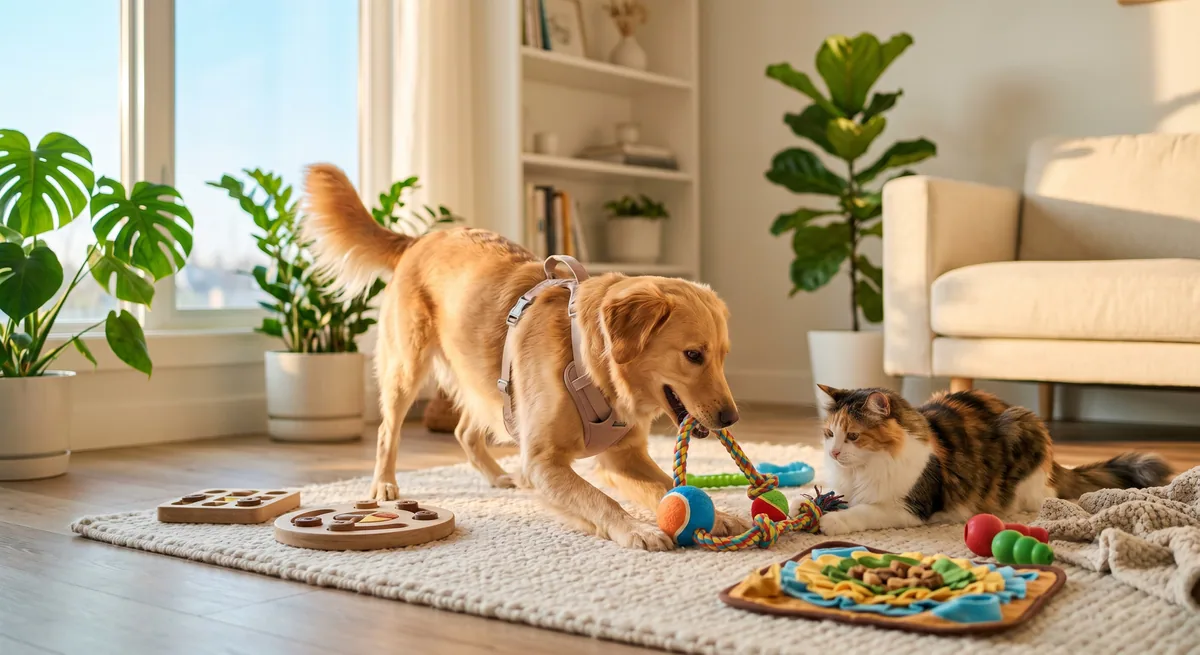
The encouraging reality is that beating dog boredom does not require expensive equipment, massive outdoor spaces, or hours of your time. Some of the most effective enrichment activities cost nothing and take five minutes to set up. This guide covers 15 of the best boredom busters across toys, games, and activities, organized by what you have available and how much time you can invest. For background context, see the reference at ASPCA.
Understanding Dog Boredom: More Than Just Restlessness
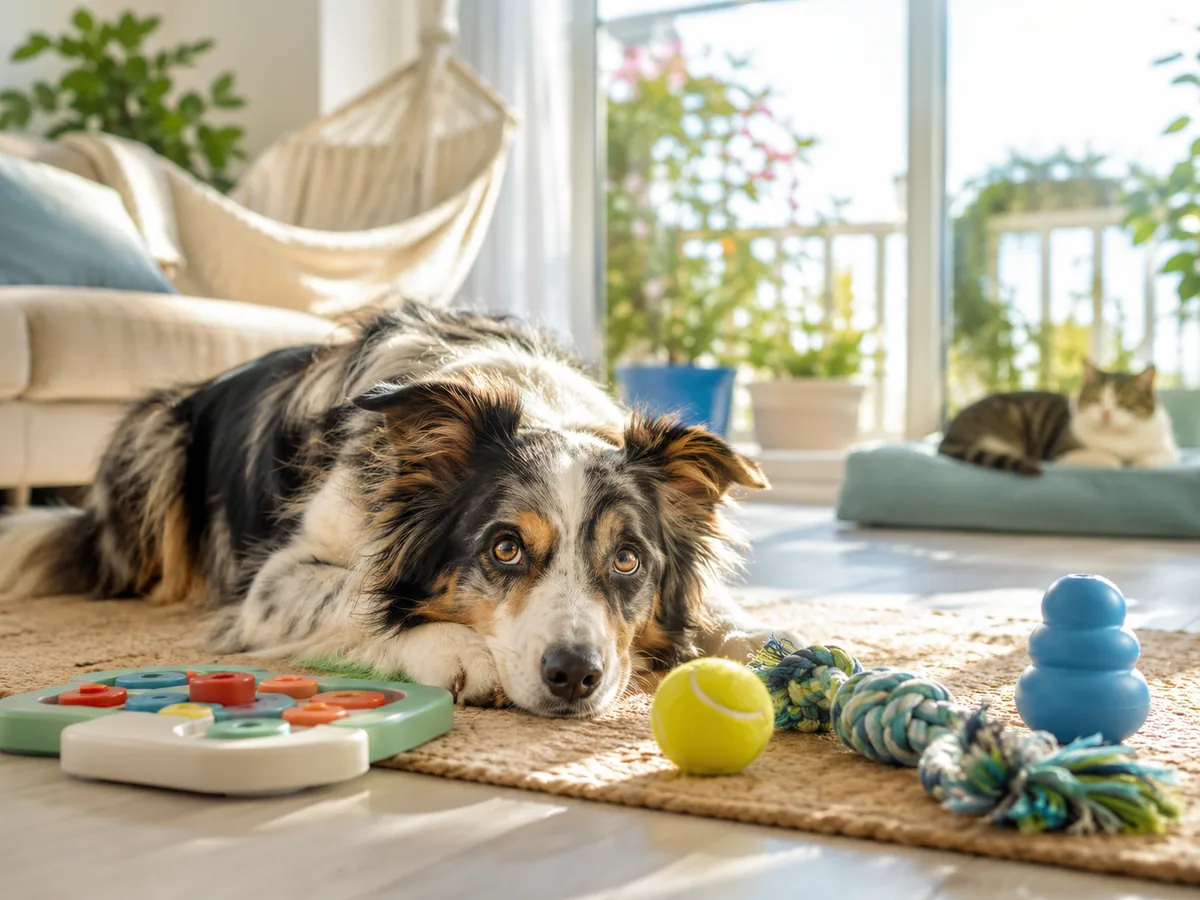
Dog boredom is not a personality quirk or a sign of a difficult dog, it is a physiological need going unmet. Dogs have cognitive capacity proportional to their ancestral roles: herding breeds process livestock movement patterns; scent hounds analyze layered olfactory environments; terriers problem-solve for prey. When these systems run without meaningful input, they generate their own, and the results are rarely welcome in a human home.
In our experience covering boredom busters for dogs, we've noticed that owners often expect a single fix, when what actually works is a layered approach that combines training, environment, and time. We outline that layering below.
If you want even more options, check out our guide to best dog toys for fetch.
The behavioral signals of boredom are distinct from those of anxiety: a bored dog is active, curious, and often inventive (destructive behavior, obsessive play-soliciting, counter surfing, bin raiding). An anxious dog is distressed, and their behavior is typically concentrated around departures and exits. Both need intervention, but of different kinds. Boredom responds to enrichment; anxiety requires behavioral therapy with enrichment as a support tool.
How much enrichment a dog needs depends on breed, age, and individual temperament. A 3-year-old Border Collie may need 4 hours of structured enrichment daily to remain well-adjusted; a 10-year-old Shih Tzu may be satisfied with 30 minutes of gentle foraging and two short walks. Know your dog's baseline and design enrichment to meet, not exceed, that baseline, gradually increasing as their capacity develops.
Quick Boredom Busters (Under 10 Minutes to Set Up)
1. Muffin Tin Game: Place treats in some cups of a standard muffin tin and cover all cups with tennis balls. Your dog must nose out the balls to find the rewards. Setup time: 2 minutes. Engagement time: 10-20 minutes. Difficulty can be increased by hiding treats in fewer cups (making the search less predictable) or by using a muffin tin with smaller cups.
2. Scatter Feeding: Instead of feeding your dog from a bowl, scatter their entire meal in the grass (or on a snuffle mat indoors). The foraging exercise engages the olfactory system intensively, and the slower eating rate reduces bloat risk. A meal that takes 45 seconds from a bowl can take 15-20 minutes scattered across a lawn. No equipment needed.
Honestly, we've watched plenty of pets work through boredom busters for dogs, and the common thread in success stories is consistency rather than novelty.
3. Hide and Seek with Treats: Hide small treats throughout your house or yard, under cushions, behind plant pots, in the corner of rugs, and release your dog to find them. This taps into the scent-work instinct and provides genuine cognitive challenge. Start with easy hides in visible locations; progress to more concealed spots as your dog's search skills develop.
4. Cardboard Box Puzzle: Fill an empty cardboard box with crumpled paper and hide treats throughout. Your dog must push through and rearrange the paper to find the rewards. Shredding the cardboard is fine, it is part of the engagement, but monitor to ensure they are not eating large pieces.
You might also enjoy our recommendations for toys for pitbulls.
5. Ice Cube Treats: Freeze small treats or kibble in ice cubes for a cooling summer enrichment. Dogs work to lick through the ice to access the reward. For a more complex version, freeze a stuffed KONG ice block in a larger container of water.
Toy-Based Boredom Busters
6. Puzzle Feeder Boards: Commercially available puzzle boards range from beginner (simple sliders and flippers) to advanced (multi-step, multi-action boards). They convert mealtime into a 15-30 minute mental workout. Match difficulty to your dog's current skill level, start one step below what you think they can manage and progress slowly.
7. Snuffle Mat: A must-have for any enrichment toolkit. Scatter kibble through the fabric loops and let your dog forage. 15 minutes of snuffle work typically produces 30+ minutes of rest afterward due to the cognitive effort involved. Machine washable and easy to reset.
8. Stuffable Chew Toys: KONG, West Paw Toppl, Orbee-Tuff, and similar hollow rubber toys can be stuffed with food and frozen for extended solo engagement. Prepare in advance and store in the freezer for use on demand.
9. Rope Toy Braids: A heavy-duty rope toy satisfies the grip-and-pull instinct without requiring you to be present. Look for toys with multiple braids, tight construction, and natural cotton fiber. Replace when any braid strands become loose enough to swallow.
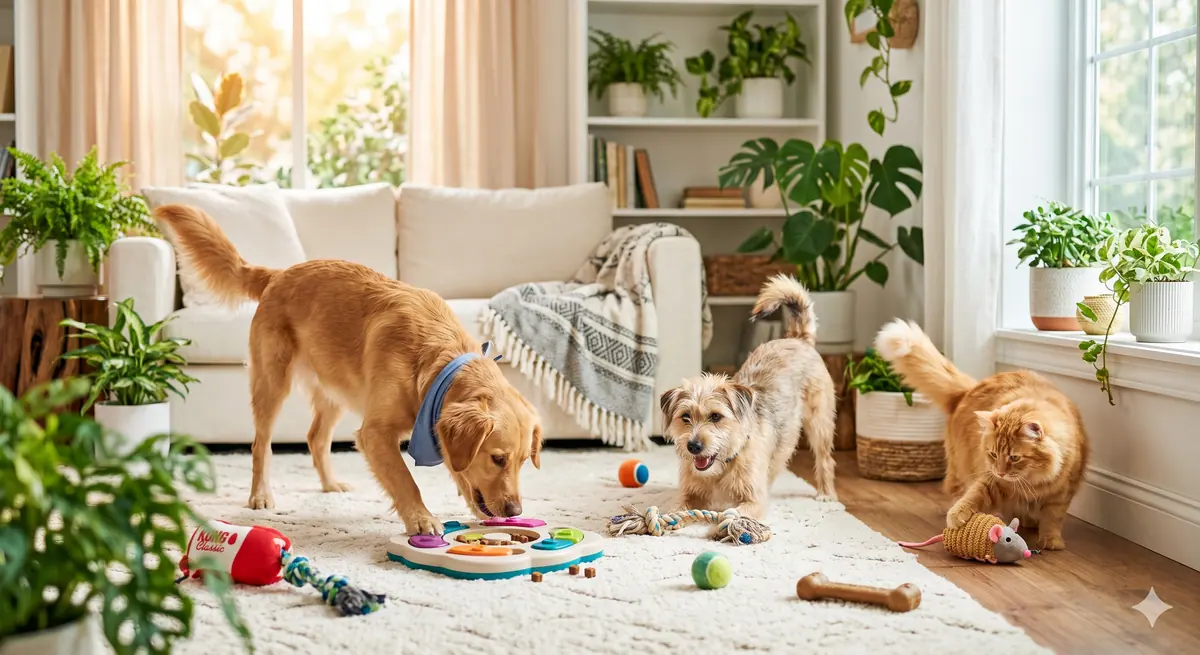
10. Interactive Feeder Ball: A ball-shaped dispenser that rolls and releases kibble as the dog pushes it around. Dogs can spend 20-40 minutes with a full-meal load, getting mild physical exercise alongside the foraging reward. The variation in dispensing direction keeps the activity unpredictable enough to maintain interest.
For related picks, take a look at our toys for chihuahuas roundup.
Activity-Based Boredom Busters (No Equipment Needed)
11. New Smells Walk (Decompression Walk): Instead of a brisk exercise walk, take a slow sniff walk where the dog sets the pace and chooses where to sniff and for how long. A 20-minute decompression walk in a new location is more mentally tiring than a 40-minute brisk walk on the same familiar route. Vary the route regularly.
12. Learn a New Trick: Training sessions of 5-10 minutes stimulate the dog cognitively, strengthen the handler-dog relationship, and produce behavioral fatigue. Teaching a new behavior (hand target, spin, place, wait) engages the dog's problem-solving and pattern-recognition systems. Keep sessions short and end on success.
13. Which Hand? Game: Put a treat in one fist, extend both closed fists to your dog, and ask them to indicate which hand holds the treat. Dogs must use their nose, they cannot see through the hand, and the game teaches them to use scent communication with you. Simple, fast, and mentally engaging.
14. Playdate with Another Dog: Social play with an appropriate canine companion provides enrichment that no toy or game can replicate. Arrange regular playdates with a compatible friend's dog, or consider a supervised day at a well-run doggy daycare one or two days per week.
15. Nose Work Searches: Teach your dog to find a specific target scent (a cotton swab dabbed with birch oil, or a specific toy with a distinctive scent) hidden around the house. Once the concept is learned, you can hide the target anywhere in a room and release the dog to find it, a self-directed activity that can last 20-30 minutes per session.
Comparison: Budget vs Mid-Range vs Premium
This quick comparison helps you understand what you actually get at each price band, so you can decide where to spend and where to save without compromising safety.
Comparison reflects typical US retail ranges as of 2026. Always verify safety labels before purchase.
Conclusion
Picking the right option for your dog is less about finding a single "best" product and more about matching the choice to your dog's size, age, play style, and your home environment. The recommendations above cover the main scenarios most pet owners run into, so use them as a checklist when comparing options.
Start with one or two changes, watch how your dog responds for a week or two, then iterate. Pets show you very quickly what works for them. If a toy, feeder, or routine is ignored or causes stress, swap it out without hesitation. The goal is a happier, healthier dog every day.
Frequently Asked Questions
How do I know if my dog is bored?
Classic signs of dog boredom include: destructive behavior (chewing furniture, shoes, household items), excessive barking or whining without obvious cause, digging in the garden or carpets, attention-seeking behavior (nudging, pawing, bringing toys repeatedly), restlessness and inability to settle, eating non-food items (pica), and following you obsessively around the house. Note that some of these behaviors also appear in anxious dogs, the key distinction is whether the behavior is linked specifically to your absence (anxiety) or occurs throughout the day regardless of your presence (boredom).
What is the fastest way to tire out a bored dog?
A combination of physical exercise followed by mental enrichment is the most efficient boredom solution. A 30-minute run or vigorous play session depletes physical energy; a 15-minute snuffle mat session or puzzle feeder afterward depletes mental energy. Most dogs rest for 1-2 hours after this combination. The mental component is particularly efficient, a hard puzzle feeder session can produce more fatigue in 15 minutes than a 30-minute walk alone.
Can you over-stimulate a dog?
Yes, particularly for puppies and anxious dogs. Over-stimulation looks like: inability to settle, frantic behavior, mouthing and jumping increasing rather than decreasing, or shutting down entirely (going very still and 'switching off'). Signs you have hit the limit: the dog starts making mistakes on tasks they normally perform reliably, yawning repeatedly, looking away, or showing displacement behaviors. End the session, give the dog a quiet space, and let them rest. Enrichment should be engaging and slightly challenging, not frantic.
Are DIY boredom busters as effective as commercial toys?
Often yes. The muffin tin game, scatter feeding, cardboard box puzzle, and hide-and-seek treat searches require no purchase and engage dogs as effectively as commercial equivalents. The advantage of commercial toys is durability and specific design features (portion-controlled openings, difficulty scaling, machine washability). Use both: DIY games for daily variety and novelty; commercial toys as durable workhorses in the enrichment rotation.
How much enrichment does a dog need per day?
The right amount depends on breed, age, and individual temperament. A general baseline: 2 short enrichment sessions daily (15-20 minutes each) plus adequate physical exercise covers most adult dogs of moderate-energy breeds. High-energy working breeds may need double this. Puppies need shorter but more frequent sessions (5-10 minutes, 4-5 times per day). Senior dogs benefit from daily gentle enrichment (snuffle mats, soft puzzle feeders) at a pace appropriate for their comfort and stamina.
Should I consult a veterinarian about my pet's play and enrichment needs?
Yes, especially if your pet shows signs of anxiety, sudden behavior changes, or destructive habits that may indicate a medical issue. A licensed veterinarian or veterinary behaviorist can rule out pain, dental problems, or cognitive decline before you adjust toys or routines. The guidance in this article is educational, not a substitute for professional veterinary advice.
How long does it take to see results from new toys or enrichment?
Most pet owners notice small changes within a week (calmer evenings, less destructive chewing, more interest in mealtime puzzles) and clearer behavior shifts within 4 to 6 weeks of consistent rotation. Older pets and rescues may take 8 to 12 weeks to adjust. Keep a short weekly journal so you can track real progress instead of relying on memory.
Shop Premium Dog Toys
Free US shipping on every order. No minimum purchase required.
Browse Dog Toys →