Canine grooming tools are easiest to choose when you start with your dog's coat, comfort, and actual care needs. A smooth-coated beagle does not need the same brush kit as a curly poodle, and not every dog needs home clippers. The useful basics are simple: tools that remove loose hair without scraping skin, keep nails manageable, support safe bathing, and make routine checks easier.
This guide explains what each tool does, how to match it to coat type, and where home grooming should stop. It is practical education for US dog owners, not a substitute for a veterinarian or qualified groomer. Pain, infection signs, severe matting, or intense fear require professional help.
Essential canine grooming tools and what they do
A beginner kit should solve recurring tasks rather than cover every possible breed. Begin with one suitable brush and a metal comb. The brush lifts loose coat and separates hair. The comb follows behind to reveal small tangles the brush missed. If a comb cannot move gently from near the skin to the hair tips, the area is not fully detangled.
Add nail clippers or a grinder, styptic powder, dog shampoo, an anti-slip bath mat, several towels, a toothbrush and dog toothpaste. Ear cleaner is useful only when your veterinarian has confirmed the product and technique for your dog. Electric clippers, coat rakes, shedding blades, dematting tools, and curved scissors are specialty items, not automatic essentials.
The American Kennel Club's home grooming overview recommends regular brushing and body checks, while the ASPCA's dog grooming tips cover coat, bath, nail, ear, and dental basics. For a shorter shopping-focused overview, compare our pet grooming tools for dogs guide and dog grooming tools checklist.
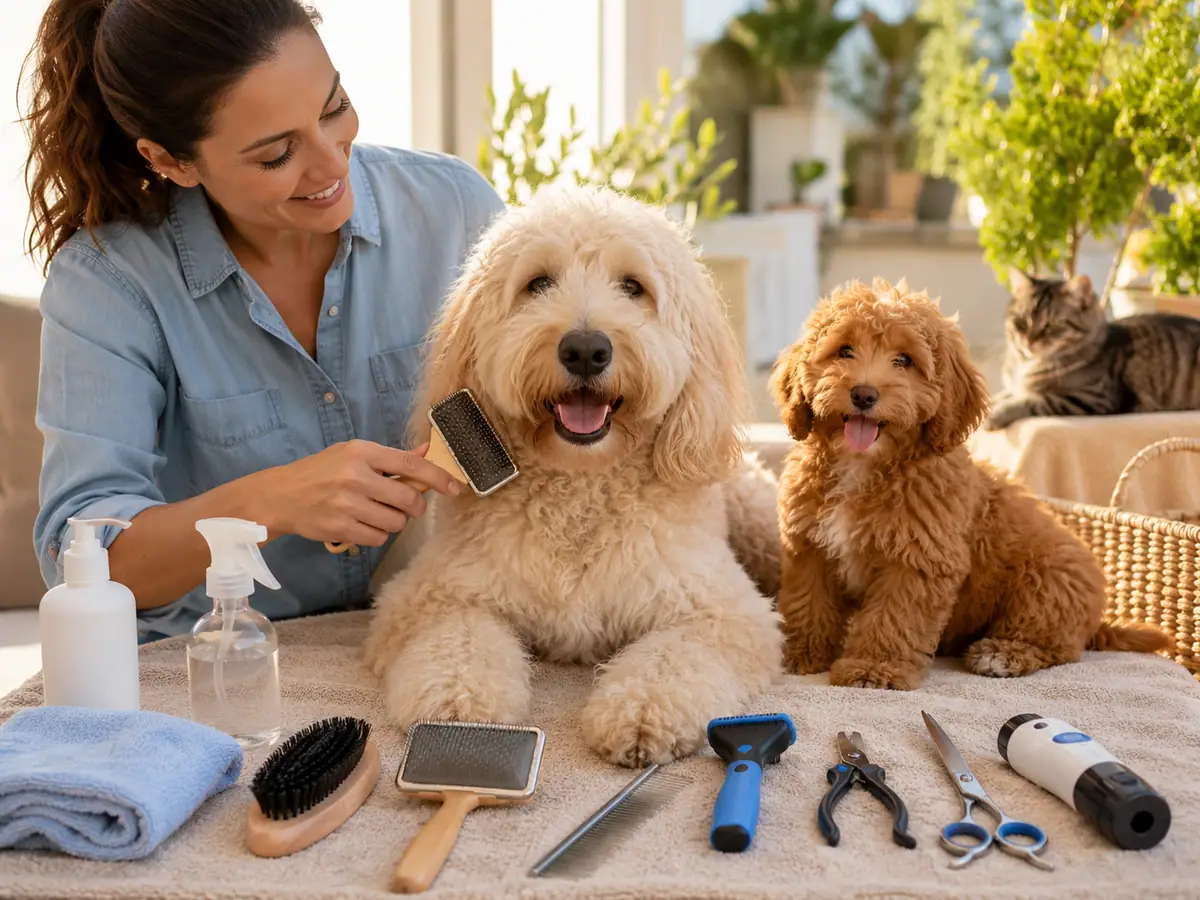
| Tool | Best use | What to check | Main caution |
|---|---|---|---|
| Rubber curry or grooming mitt | Loose hair on short, smooth coats | Flexible tips and easy-to-clean material | Do not scrub irritated skin |
| Slicker brush | Separating medium, long, curly, or dense coat | Comfortable handle and pins suited to coat depth | Light pressure only |
| Pin brush | Long or flowing coat and finishing | Rounded, secure pins | Will not confirm hidden tangles alone |
| Undercoat rake | Loose undercoat in double-coated dogs | Teeth no longer than the coat requires | Overuse can irritate or break coat |
| Stainless-steel comb | Checking work and detailing small areas | Wide and fine tooth sections with smooth ends | Never pull through a tight mat |
| Nail clipper or grinder | Shortening nails in small increments | Sharp blade or steady grinder with suitable size | Avoid the quick and heat buildup |
Choose brushes and combs by coat type
Short, smooth coats usually respond well to a rubber curry, grooming mitt, or soft bristle brush. Work in the direction of hair growth and use gentle circular motion only where skin is healthy. The goal is to collect loose hair and surface debris, not scrape the coat until it shines.
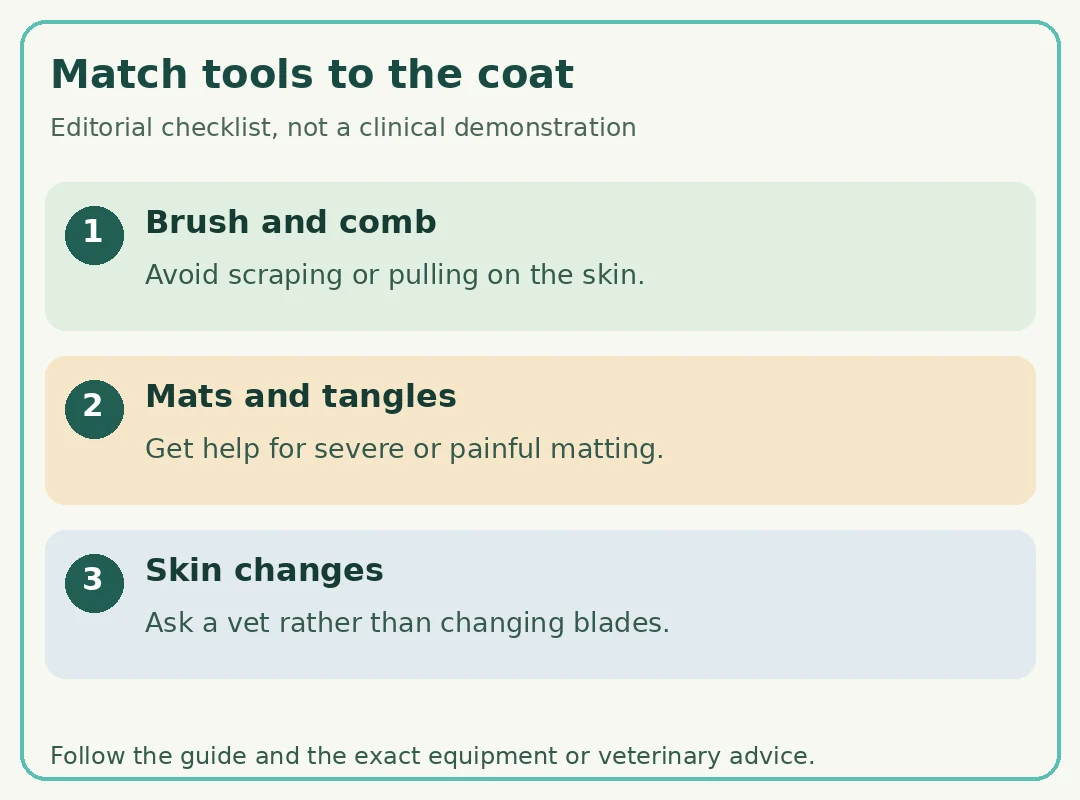
Double coats need a surface brush plus a tool that can reach loose undercoat. A slicker or pin brush can open sections, followed by a correctly sized undercoat rake during shedding. Do not shave a double coat simply to reduce shedding. Coat clipping decisions can depend on health, coat condition, and breed, so ask a veterinarian or experienced groomer first.
Long, silky, curly, or woolly coats need frequent line-by-line checks. Divide the coat into small sections, support the hair near the skin, and work from the ends toward the roots. A slicker can separate coat and a comb verifies the result. Curly coats that are regularly clipped may also need a professional schedule. Our Groomi tool guide explains one deshedding option, while the puppy grooming tools guide focuses on early handling.
Livehappypet tip: Use the comb as your quality check. If it catches, stop before pulling. Separate the tangle with fingers, add a dog-safe detangling product if your groomer recommends one, and work from the outer edge. A hard mat close to skin needs professional removal.
The VCA Animal Hospitals coat-care guide notes that grooming needs vary with hair type and that brushing is also an opportunity to inspect skin. Check for redness, lumps, parasites, scabs, odor, or sudden hair loss as the coat parts.
Nail and paw tools: clipper, grinder, file, and styptic
Choose scissor-style or guillotine clippers sized to the nail, or a rotary grinder with a protective guard. Clippers make one quick cut but must be sharp. A grinder allows gradual shaping, yet its sound and vibration can worry dogs and friction can heat the nail. A plain nail file can smooth a sharp edge after either method.
The quick contains blood vessels and nerves. On clear nails it may be visible as a pink center. Dark nails require more conservative work. Remove a tiny amount, inspect the cut surface, and stop well before uncertain tissue. Keep styptic powder within reach, but do not treat it as permission to rush. The AKC's nail trimming safety guide explains positioning, gradual trimming, and what to do after a nick.
Inspect paw pads and between toes while the foot is supported naturally. Do not dig at embedded objects or cut hair near moving toes with pointed scissors. A split nail, swollen toe, wound, limp, or ongoing bleeding belongs with a veterinarian. Compare equipment in our dog nail trimmer guide and canine nail trimmer overview.
Livehappypet tip: Introduce the tool before trimming. Reward a look at the clipper, then a paw touch, then the sound near the paw. End while your dog is still comfortable. Several calm, tiny sessions are better than forcing all four feet at once.
Clippers, trimmers, and scissors without avoidable risk
Home clippers are appropriate only when you understand the coat and your dog can remain safely positioned. Select a model intended for dog coat, compatible guide combs, blade oil, a cleaning brush, and a cooling plan. Brush and comb the coat first because clippers should not be pushed through mats. Run the clipper in the coat's growth direction unless a professional has shown you another technique.
Check blade temperature against your inner wrist often. A hot blade can injure skin. Pause to change or cool it according to the manufacturer's directions. Keep loose skin flat, especially around armpits, groin, ears, and joints. Never chase a moving dog with a running clipper.
Blunt-tip grooming scissors may help tidy a small, clearly visible fringe on a calm dog. They are not a safe way to remove a tight mat. Skin can tent upward inside matted hair and be nearly impossible to see. Leave face shaping, sanitary areas, ear edges, pad trimming, dense mats, and work on an unsteady dog to a groomer. Senior dogs or dogs with pain may need a veterinarian-guided plan.
Bathing, drying, ear care, and dental supplies
For bathing, gather dog-specific shampoo, an anti-slip mat, a cup or gentle sprayer, washcloths, and absorbent towels. Brush out loose coat and manageable tangles before wetting. Protect eyes and ear openings, rinse until water runs clear, and towel blot rather than rubbing a long coat into new knots. Our dog shampoo guide covers everyday formulas. Itching, odor, sores, or suspected infection should be assessed before using an antifungal dog shampoo or another medicated product.
If using a dryer, choose cool or low warmth, keep airflow moving, and give the dog a non-slip stance and breaks from noise. Never direct forced air into eyes, ears, nose, or mouth. Check folds, armpits, and feet because trapped dampness can worsen irritation.
For ears, use only a veterinarian-approved canine ear cleaner and gauze or cotton for the visible outer area. Do not insert cotton swabs into the canal. The VCA ear-cleaning instructions explain safe massage and wiping steps. Odor, pain, discharge, redness, head tilt, or repeated shaking needs veterinary attention, not repeated cleaning.
For teeth, use a soft dog toothbrush or finger brush and toothpaste formulated for dogs. Never use human toothpaste. Start with brief lip and gum handling before adding the brush. The American Veterinary Medical Association dental-care resource explains why home care and veterinary exams work together. See our dog toothbrush guide for equipment basics.
Build a low-stress home grooming routine
Prepare a quiet, well-lit space with non-slip footing. Place tools within reach, remove distractions, and decide on one small goal. Let your dog investigate a non-sharp tool, then pair calm contact with praise or a suitable reward. Touch the shoulder before the leg, or the cheek before the ear, so contact is predictable.
Work in short sections and watch the whole dog. Turning away once may be normal, but repeated escape attempts, trembling, panting unrelated to heat, freezing, growling, snapping, or frantic movement means stop. Punishing warnings makes the next session less safe. A certified trainer can help with cooperative care, while a groomer or veterinarian can complete urgent hygiene work.
Livehappypet tip: Keep a simple grooming note with the date, tool, body area, and your dog's response. It helps you repeat what worked and gives a veterinarian useful context if skin, ear, nail, or behavior changes appear.
| Stage | Action | Continue when | Stop or refer when |
|---|---|---|---|
| 1. Inspect | Part coat and check skin, ears, paws, and nails | Skin looks comfortable and dog accepts touch | Wounds, swelling, discharge, pain, or parasites are present |
| 2. Brush | Use coat-appropriate brush in small sections | Tool moves without scraping or force | Hard mats, skin pulling, or redness appears |
| 3. Detail | Comb, trim nails, or complete one small task | Dog stays balanced and relaxed | Quick is uncertain, dog struggles, or equipment heats |
| 4. Bathe | Use dog shampoo and rinse completely | No known skin problem and footing is secure | Open lesions, marked itching, or panic occurs |
| 5. Dry | Towel blot, then use moving cool airflow if tolerated | Skin remains comfortable and dog is calm | Air feels hot or dog cannot tolerate noise |
| 6. Record | Clean tools and note coat, skin, and behavior changes | Routine can be repeated comfortably | A change needs groomer or veterinary review |
Clean, store, and replace grooming equipment
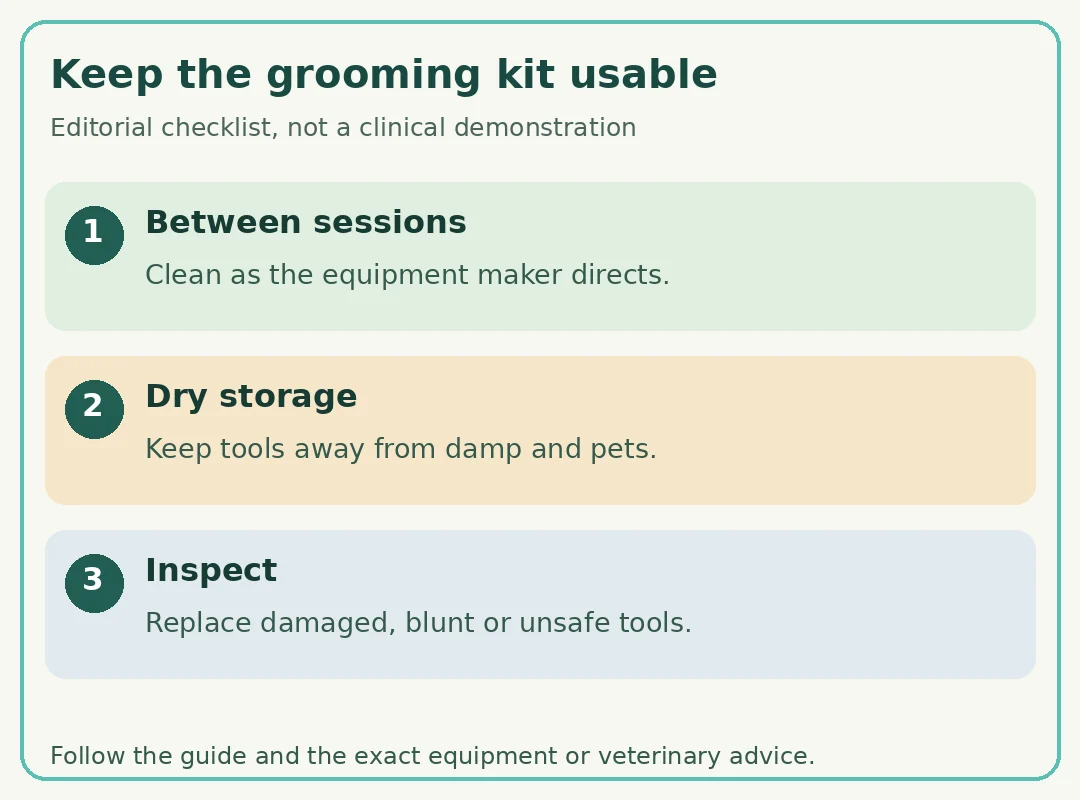
Remove hair from brushes and combs after each use. Wash tools only as their manufacturer directs, disinfect equipment used on affected skin under veterinary guidance, and dry everything fully before storage. Moisture left around clipper blades or metal combs can promote corrosion. Do not share tools between animals with a known skin condition.
Brush teeth should be straight, secure, and smooth. Clippers should cut cleanly rather than fold or crush nails. Grinder bands must remain even, cords intact, and clipper blades free of chips. Replace a tool when it has sharp edges, loose parts, cracks, rust, persistent odor, or poor performance. Oil and align clipper blades according to the manual, never while plugged in.
Store sharp tools closed or guarded in a dry container that children and pets cannot reach. Keep shampoos, ear products, styptic powder, and toothpaste in original labeled packages and observe expiration and storage instructions. For between-bath cleanup, read our dog wipes guide, but do not use wipes to cover persistent odor or inflamed skin.
Frequently asked questions
Which canine grooming tools does a beginner really need?
Start with a coat-appropriate brush, a stainless-steel comb, dog nail clippers or a grinder, styptic powder, dog shampoo, absorbent towels, a dog toothbrush, and veterinarian-approved ear cleaner if your veterinarian recommends it. Add clippers or specialty rakes only when your dog’s coat requires them.
How often should I brush my dog?
It depends on coat type and condition. Smooth coats may need a weekly pass, while long, curly, or double coats often need checks several times a week. Brush more during seasonal shedding, and stop if you see redness, pain, or persistent resistance.
Is a slicker brush suitable for every dog?
No. Slickers are useful for many medium, long, curly, and double coats, but pin length and pressure matter. A rubber curry or bristle brush is often gentler for a short, smooth coat. Ask a groomer to demonstrate technique if the brush scratches skin or catches repeatedly.
Should I use nail clippers or a grinder?
Either can work. Clippers are quick and quiet, while grinders remove small amounts gradually but create noise, vibration, and heat. Choose the tool your dog tolerates, work in tiny increments, and keep styptic powder nearby. A professional should handle nails when the quick is hard to judge or the dog struggles.
Can I cut a mat out with scissors?
Do not slide scissors under a tight mat. Dog skin can be pulled into the mat and cut easily. Loose tangles may be worked from the ends with a comb, but close, dense, painful, or widespread mats belong with a professional groomer or veterinarian.
Can I use human shampoo or toothpaste on my dog?
Use products made for dogs. Human shampoo can be inappropriate for canine skin, and human toothpaste may contain ingredients dogs should not swallow. Choose dog-specific shampoo and toothpaste, and ask your veterinarian about medicated products or persistent skin and mouth problems.
When should grooming stop and veterinary care begin?
Stop and call your veterinarian for open sores, marked redness, swelling, pus, strong ear odor, ear discharge, unexplained hair loss, painful feet, a broken nail, ongoing bleeding, mouth pain, or severe distress. Grooming should not be used to diagnose or treat these problems.
Conclusion: choose a smaller, safer kit
The best canine grooming tools are the ones matched to your dog's coat and used with calm technique. Build around a brush, finishing comb, nail tool, bathing setup, and dog-specific dental care. Add clippers, rakes, or specialty tools only when they solve a real coat need and you know how to use them.
Inspect skin and equipment every session, keep blades cool and sharp, and stop before discomfort becomes a struggle. A professional groomer is the right choice for close mats, complex clipping, or a dog who cannot stay safely positioned. A veterinarian should assess pain, wounds, infection signs, broken nails, unusual hair loss, or severe distress. Good grooming supports comfort because it is regular, gentle, and safely within your skills.
Explore Dog Supplies
Find practical accessories for happier routines with your dog.
Shop Dog Supplies →Put this guide in context
Choose the next guide for the care question you actually have: dog claw trimmer; how to trim dog nails; dog shampoo; how often to bathe a dog; dog toothbrush. These pages cover different decisions, rather than interchangeable products or a prescribed schedule.