The groomi tool for dogs is a handheld deshedding brush designed to lift loose, dead hair from short and medium coats. It can be a useful part of a home grooming kit, particularly for a dog that sheds on the sofa, but it is not a mat detangler, a clipper, or a substitute for veterinary care. The best results come from light pressure, short strokes in the direction of hair growth, and frequent skin checks.
This guide explains where Groomi fits, which coats are the best match, and how to groom without scraping sensitive skin. If you are still building your kit, start with our overview of dog grooming tools.
What the Groomi tool does
Groomi is a branded loose hair removal tool. Its shallow, widely spaced stainless steel comb meets the coat as you pull the handle across the dog's back and sides. According to the maker's Groomi use instructions, the tool helps remove hair as it loosens rather than cutting it. The maker also limits its intended use to pets over six months old with hair shorter than four inches.
That makes it most useful for controlling visible shedding and catching loose hair before it reaches your clothing. It does not straighten knots, remove tight mats, deep comb a heavy undercoat, or replace the finishing brush some coats need. Think of it as one specialist in a smaller dog grooming toolkit, not an all purpose brush.
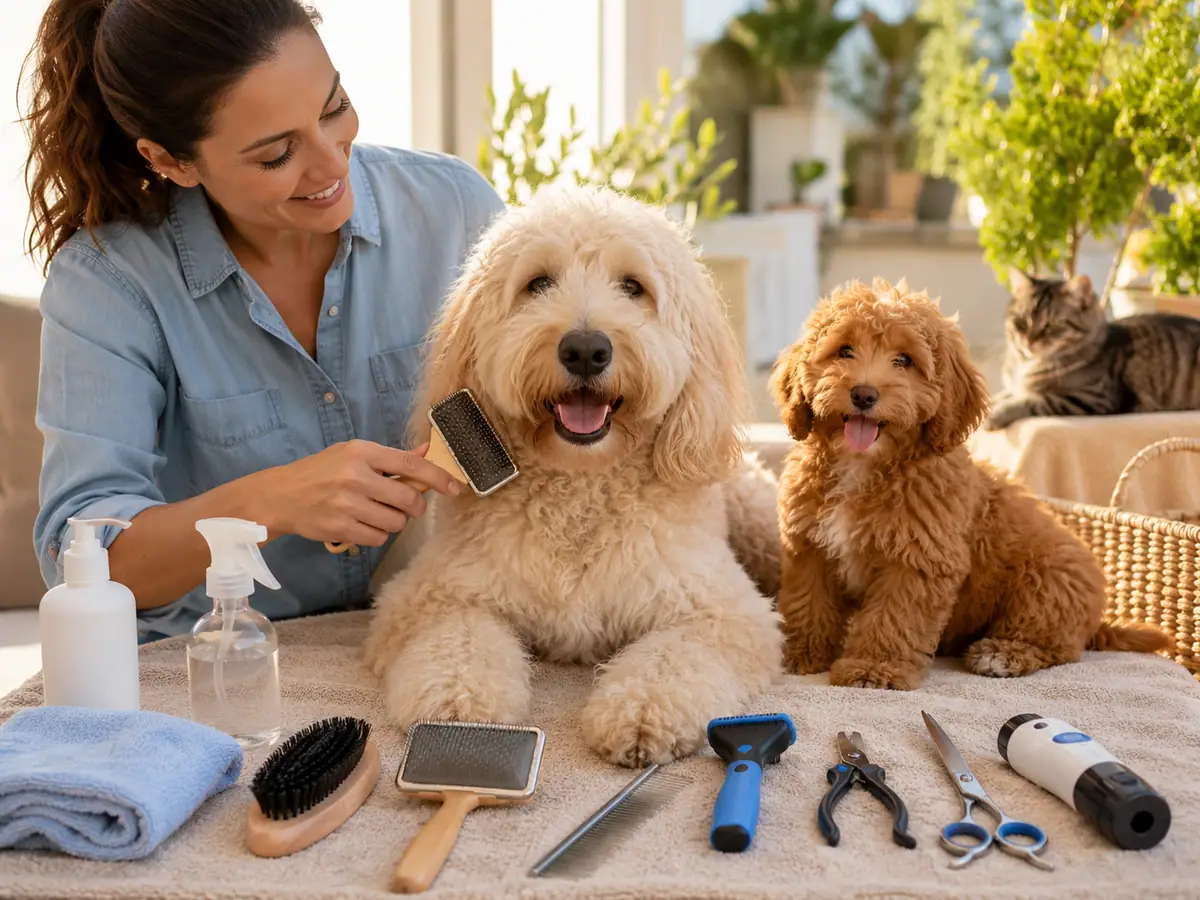
Which coat types are a good match?
Choose by the coat in front of you, not by breed name alone. Two dogs of the same breed can have different density, skin sensitivity, and grooming history. The AKC home grooming guide recommends matching the brush to coat texture and length. Use this table as a starting point.
| Coat or situation | Likely fit | Better first tool |
|---|---|---|
| Short, smooth, visibly shedding | Good candidate | Rubber curry or bristle brush for finishing |
| Medium length, loose hair near the surface | Good candidate | Slicker first if tangled |
| Thick double coat in heavy shed | Useful for surface loose hair | Undercoat rake for deeper fur, if suitable |
| Long, silky, curly, or corded | Limited or poor fit | Pin brush and comb, plus professional advice |
| Matted, wet, irritated, or wounded skin | Do not use | Stop, assess, and consult a groomer or veterinarian |
For a puppy younger than six months, use a soft puppy brush and brief, positive handling sessions instead. For a long or curly coat, read a general dog brush and grooming guide before choosing a deshedder.
Prepare for a comfortable session
Groom on a dry, nonslip surface in good light. Keep the session quiet, and let your dog sniff the tool before it touches the coat. Have small treats at hand, but do not force a frightened dog to stay still. A lick mat can be a calm distraction only if you can still monitor the dog's body language.
- Run your hands over the coat for heat, scabs, lumps, sore spots, flea dirt, and ticks.
- Untangle the coat with the appropriate brush or comb. Never pull a Groomi tool through a mat.
- Wait until the coat is completely dry. Wet hair can clump and make it harder to judge pressure.
- Check the comb edge for damage, bent teeth, or rough spots before each use.
Brushing is also a useful wellness check. The ASPCA dog grooming tips recommend checking for fleas and flea dirt during regular brushing. If you also plan a bath, keep it separate from an unfamiliar grooming session and use a dog shampoo selected for your dog's skin and coat.
How to use a Groomi brush step by step
- Start with contact. Touch the flat of the tool to the shoulder and reward calm behavior. Then make one light stroke over a less sensitive area of the back.
- Work with the hair. Move from shoulder toward tail and from the top of the side downward. Keep the tool nearly flat and stroke in the direction the hair grows.
- Use almost no pressure. Let the comb skim the coat. If the skin moves or the tool leaves a line, lighten your hand.
- Use short strokes. Use a few strokes in one small area, then lift the tool and move on. Do not saw back and forth or repeatedly scrape the same spot.
- Empty and check. Remove collected hair so you can see the teeth. Check the skin after each region. Pink that fades quickly can be normal from touch, but persistent redness is a stop signal.
- End while it is easy. Stop after a few minutes during early sessions. Reward your dog, even if you only groomed one side.
Use extra caution over bony areas, including shoulder points, hips, hocks, and the spine. Avoid the face, ears, feet, genitals, and any area where the coat is thin enough that you can sharply feel bone or skin.
How often to use the Groomi tool
There is no single safe schedule for every dog. Coat type, season, health, and tolerance matter more than a rigid calendar. The maker's Groomi FAQ says the gentle comb can be used several times a week and daily during peak shedding. Treat that as a product limit, not a target. Your dog's skin and comfort decide when to stop.
For a new user, start with one to three minutes, two or three times a week. If the skin remains calm and the dog relaxes, you can gradually cover more of the body. During a heavy shed, short, gentle daily sessions may be well tolerated, but more hair in the comb is not proof that more brushing is better. Brushing frequency should change with coat type, as the VCA coat care guide explains.
- Short, smooth coat: once or twice weekly as a starting rhythm, more often if loose hair warrants it.
- Medium or double coat: two or three short sessions weekly, adjusted for seasonal shedding.
- Long or curly coat: use a suitable brush and comb on the coat's own schedule; Groomi may only be a limited final step if the hair is short enough.
A complete grooming routine includes more than coat care. Learn about safe canine nail trimmers, but handle nails in a separate session if your dog is already tired of handling.
Groomi versus slicker brush, deshedding rake, and grooming glove
No single brush is best for every job. The most useful question is not Which one wins? but What is happening in this coat today?
| Tool | Best for | Limit | Technique note |
|---|---|---|---|
| Groomi | Loose surface hair on short to medium coats | Not for mats or deep detangling | Nearly flat, very light pressure |
| Slicker brush | Loose hair, small tangles, and finishing many coats | Wire pins can irritate skin if used roughly | Short, controlled strokes; line brush long coats |
| Deshedding rake | Reaching loose undercoat in dense, double coats | Can pull if the coat is tangled | Part the coat and work small sections |
| Grooming glove | Sensitive dogs, short coats, body massage | Limited reach into dense coats | Long, smooth hand passes |
Many home kits need two coat tools: one to detangle or reach the undercoat, and one to gather loose surface hair and finish. If your dog has a small knot, hold it at the base so you do not tug the skin, then work from the end with a comb. If the mat is tight or close to skin, have a professional handle it. Scissors can easily cut skin hidden inside a mat.
If you are ready to round out your supplies, browse dog supplies or the broader Live Happy Pet shop. Choose for coat fit and comfort, not just the largest claim on a package.
Cleaning and maintaining your Groomi tool
After each session, lift hair from the comb with your fingers. A blunt comb can help with stubborn hair, but do not pry at the teeth with scissors or another sharp object. Wipe the handle and comb with a slightly damp cloth to remove dander and oils, then dry it completely.
If the tool needs a deeper clean, follow the current manufacturer instructions for the exact model. Do not soak the assembled tool unless the label specifically says it is immersible. Harsh cleaners, bleach, and prolonged dampness can damage surfaces. Store it clean and dry, away from children and pets.
Inspect the comb for nicks, corrosion, or bends in bright light. Replace a worn or damaged comb rather than trying to smooth it at home. The maker says the comb is replaceable, so check that your replacement matches your handle version. A clean, damage free edge is easier to use gently and consistently.
Skin safety, common mistakes, and when to stop
Stop immediately if your dog yelps, snaps, tries to escape, or if you see bleeding, hives, swelling, or rapidly deepening redness. A flinch, lip lick, tucked tail, turned head, or repeated looking at your hand can be earlier signs that the dog needs a pause. Do not punish the warning or restrain the dog to finish.
Common mistakes include pressing harder to gather more hair, brushing against the coat grain, scraping one area many times, working over mats, using the tool on wet fur, and grooming an already irritated spot. Removing a large pile of hair is not a safety measure. Comfortable skin and a calm dog are the better endpoints.
Health disclaimer: This article provides general grooming information, not a diagnosis or treatment plan. Do not use a Groomi tool on rashes, hot spots, open wounds, infected areas, recent surgery sites, or unexplained hair loss. Skin conditions can need a veterinary exam and a tailored bathing or medication plan. Contact your veterinarian if you notice pain, odor, discharge, scabs, parasites, spreading redness, or persistent itching. For background on coat and skin changes, read the VCA guide to grooming and coat care.
For nonspecific maintenance between visits, a gentle canine shampoo may fit a healthy dog. Use only products labeled for dogs, and ask your veterinarian before using a medicated shampoo.
Frequently asked questions
Is the Groomi tool safe for all dogs?
No. The maker specifies dogs over six months with hair under four inches. It is not appropriate over mats, wounds, rashes, or painful areas. Coat type, skin health, and your dog's comfort all matter.
Does a Groomi brush cut the dog's hair?
The manufacturer describes the comb as having no cutting edge and says it removes hair as it loosens. Use a light hand, and inspect the comb for damage before use.
How often can I use a Groomi on my dog?
Start with one to three minutes, two or three times a week, and watch the skin. The maker says the tool can be used more often, even daily in heavy shedding, if it is comfortable. Stop for redness, pain, or avoidance.
Can I use a Groomi on a wet coat?
No. Use it on a clean, dry coat so hair moves freely and you can judge pressure. Brush out tangles before bathing and wait until the coat is fully dry before deshedding.
Will Groomi remove mats and tangles?
No. It is a deshedding tool, not a mat remover. Use a suitable comb or slicker for minor tangles. Tight mats or mats close to skin are safer in the hands of a professional groomer.
Why does my dog's skin look red after brushing?
Mild pink from touch should fade quickly. Persistent redness, swelling, hives, pain, or broken skin means you should stop. If the change does not resolve or itching continues, contact your veterinarian.
Should I use Groomi or a slicker brush?
Use Groomi to gather loose surface hair from a suitable short or medium coat. Use a slicker for small tangles, mats, and general finishing when it matches the coat. Many dogs benefit from both at different stages.