Bathe a healthy dog when their coat genuinely needs cleaning, not simply because another week or month has passed. Coat type, outdoor activities, visible dirt, odor, and skin health all change the decision. Choose the least extensive cleaning that does the job, and let veterinary instructions take priority when bathing treats a diagnosed condition.
Why a calendar cannot answer the whole question
A bath date is a reminder to assess your dog, not proof that shampoo is due. A comfortable dog with clean skin and a manageable coat may need brushing instead. A dog covered in unpleasant debris may need cleaning before the next planned appointment. Neither situation fits a universal weekly or monthly rule.
VCA's grooming and coat care guidance describes occasional bathing for many dogs and identifies age, lifestyle, coat, and health as relevant factors. Its examples are general guidance, not a tested optimum for every animal. They cannot determine your individual dog's ideal interval without observation and, where necessary, professional advice.
The practical target is minimum necessary cleaning while keeping the skin comfortable and the coat maintained. That means neither bathing for fragrance alone nor withholding a needed wash to meet an arbitrary target.
Use this decision tree before reaching for shampoo
Start with skin health, then work through what actually needs removing. This decision tree is a practical summary of the guidance below, not a diagnostic tool or a medically validated scoring system.
- Is there a prescribed bathing plan? Follow your veterinarian's instructions rather than this routine-cleaning framework.
- Is the skin sore, persistently itchy, unusually greasy, or changing? Contact your veterinarian before responding with more baths.
- Is ordinary dirt limited to paws or a small patch? Try local cleaning, then reassess the rest of the coat.
- Is there widespread dirt or an identifiable, unpleasant substance throughout the coat? A full bath may be appropriate. Unknown or potentially hazardous substances need prompt veterinary advice about safe removal.
- Is the coat clean, comfortable, and free of unusual odor? Brush and inspect rather than automatically shampooing.
Coat requirements and lifestyle help refine the outcome; they do not override the health check. If you cannot tell whether a smell comes from ordinary dirt or a skin problem, ask your veterinarian rather than testing stronger cleansers.
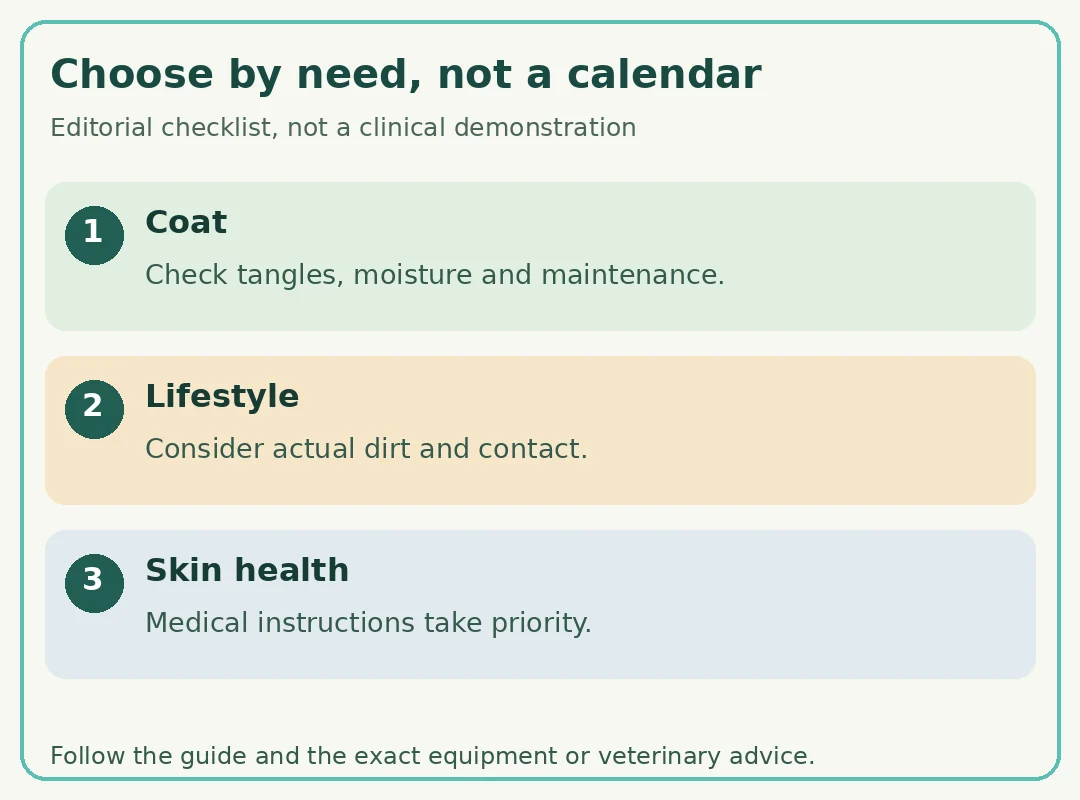
What does your dog's coat change?
Coat length alone does not predict bathing needs. The American Kennel Club's bathing-frequency overview describes differences between coat types, including care-intensive hairless dogs and thick double coats. Use breed information as background, then consider your dog's actual skin, coat condition, and maintenance needs.
- Smooth, short coats: Loose dirt may come away with gentle brushing or a damp cloth.
- Long, curly, or continuously growing coats: Tangling and retained debris make regular coat maintenance important. Ask a groomer to coordinate washing with brushing and clipping.
- Dense double coats: Plan for careful brushing, thorough rinsing, and complete drying. Shedding is not automatically a reason for repeated shampooing.
- Hairless or unusual coats: Get individualized guidance rather than assuming less hair means less care.
Mixed-breed dogs can also have coats that do not fit a simple label. Ask a qualified groomer to demonstrate maintenance on your dog, especially when the surface looks tidy but the undercoat feels packed.
When booking professional grooming, describe the coat's condition and any washing you have already done at home. Ask how the planned appointment fits with your between-visit care. A service package should not become a separate automatic bathing rule. Tell the groomer about veterinary skin instructions, and check with the clinic before changing a treatment schedule to fit an appointment.
Let real outings change the cleaning decision
Judge what happened outdoors, not whether your dog qualifies as active. A pavement walk and a muddy field run create different cleaning needs. VCA notes that dogs may need bathing after muddy outings, while AKC describes damp-cloth cleaning as an option for some short-coated dogs between baths.
Check the paws, lower legs, belly, and coat after an outing. If ordinary mud is confined to the feet, cleaning that area may be enough. If dirt is spread through the coat or your dog has rolled in something unpleasant, a full wash can be more sensible than repeatedly rubbing small sections.
Do not leave urine or fecal soiling on the coat while waiting for a scheduled bath. Clean the affected area promptly and dry it. Repeated accidents, trouble staying clean, or painful handling warrant veterinary advice. For puppies and older dogs, also consider whether you can provide safe footing, gentle support, and a comfortably warm drying area.
Brush or spot-clean when that solves the problem
Between-bath care is active maintenance, not neglect. Gentle brushing removes loose hair and debris while giving you a chance to inspect the skin. Our canine grooming tools guide explains coat-matched equipment and the limits of home grooming. Stop if the brush pulls painfully or the skin looks irritated.
For a small patch of ordinary dirt, use a clean damp cloth or a localized lukewarm-water rinse, then dry the area. Check whether that actually removed the dirt before deciding to wash the whole dog. A wipe does not replace appropriate treatment for an unknown substance or a skin condition.
Deal with small, loose tangles gently before bathing. VCA warns that tangles can become harder to remove after washing. Tight mats, extensive tangling, or mats over sore skin need professional help; do not tug them apart or cut close to skin with scissors.
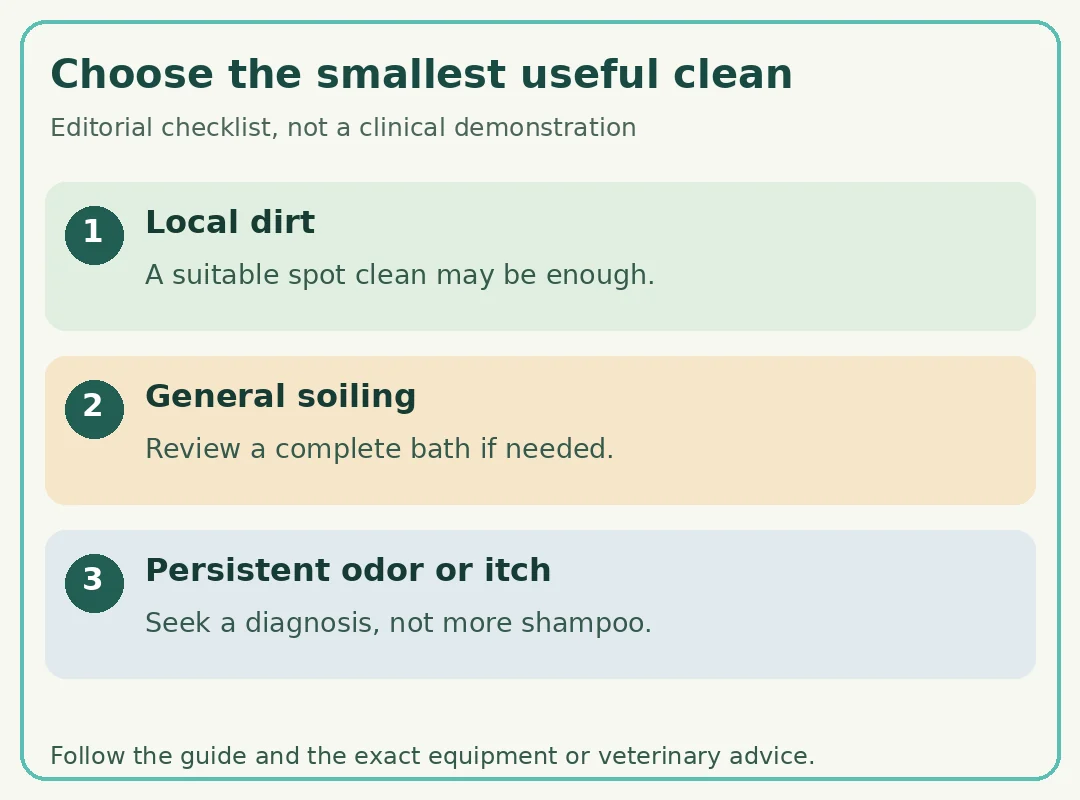
When does odor mean a vet visit, not another bath?
An identifiable dirty-coat smell can justify cleaning. An unusual smell that persists or repeatedly returns, particularly with itching or skin changes, needs investigation instead of a shorter bath interval. Smell alone cannot identify yeast, bacteria, allergies, or another cause, and covering it with perfume provides no diagnosis.
The AKC's dry-skin guidance lists odor, oiliness, hair loss, inflammation, and scabs among possible skin signs. It also explains that excessive bathing, harsh products, and incomplete rinsing can contribute to problems. That does not mean every itchy dog has been overbathed.
- Arrange veterinary assessment for persistent scratching, licking, flaking, redness, recurring odor, or unexplained hair loss.
- Seek prompt advice for painful skin, open sores, discharge, or rapidly worsening changes.
- Mention ear odor, head shaking, or discomfort separately rather than treating them with a body wash.
Our hypoallergenic dog shampoo guide discusses sensitive-skin considerations. A gentle-sounding label still does not establish why your dog itches or authorize more frequent washing.
Review rinsing and drying before changing frequency
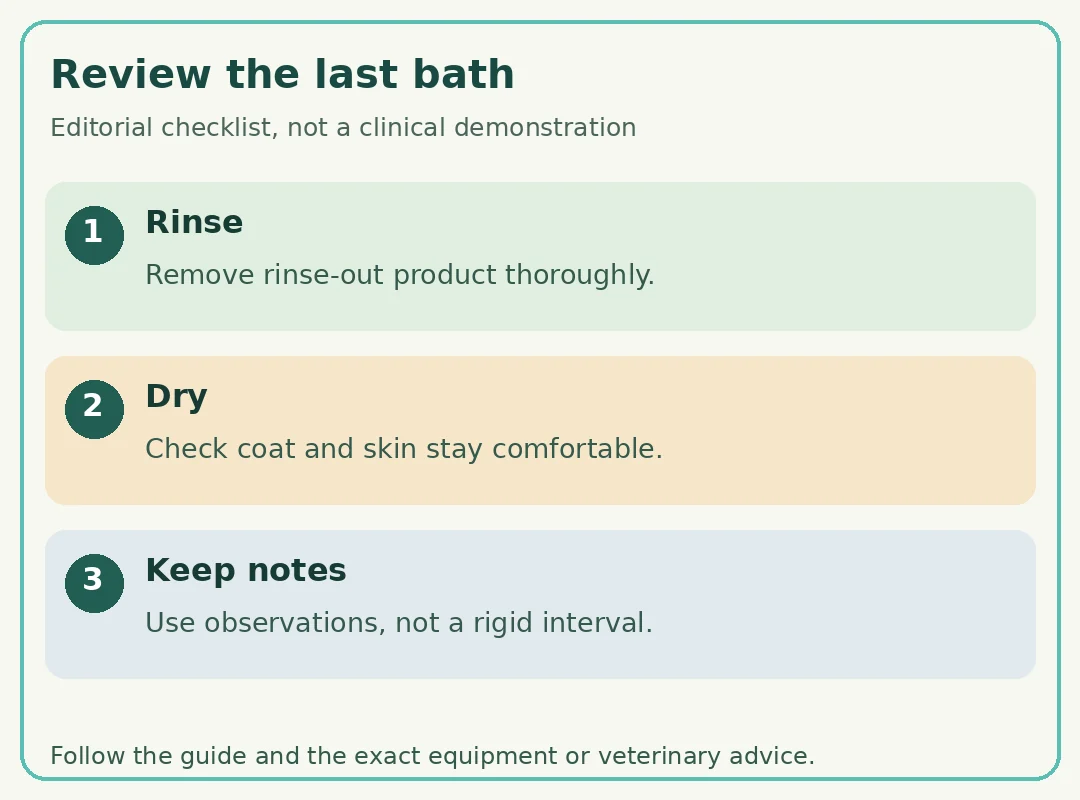
A dog that seems uncomfortable after washing needs a review of the whole process, not just the calendar. AKC notes that incomplete rinsing can leave skin flaky. Record the product and technique, and discuss continuing or worsening signs with your veterinarian instead of repeatedly washing to correct them.
When a routine bath is needed, prepare a nonslip surface, lukewarm water, and dry towels. Use a dog-labeled cleanser according to its directions. Keep water and product away from the eyes and ear canals. Our dog shampoo guide addresses product selection separately from deciding when to bathe.
Rinse thoroughly through the coat, including easily missed areas underneath and between the legs. Follow the specific product's rinse-out or leave-in instructions; do not assume all formulas work alike. Gently towel-dry and keep your dog comfortably warm until fully dry. Check beneath a dense coat rather than judging only the surface. Get a groomer's help if you cannot dry it safely.
Follow medical instructions, then keep an optional owner log
Medical bathing is a separate decision. VCA's medicated-shampoo guidance explains that veterinarians choose treatment for a specific skin condition and that frequency depends on that condition. Do not reduce prescribed baths because a general article recommends minimal routine washing, or increase them hoping for faster results.
Follow the exact instructions for product, dilution if applicable, application areas, contact time, rinsing, drying, and frequency. Clarify conflicting or unclear label and clinic directions before proceeding. Tell the clinic if your dog's skin consistently worsens with treatment; do not improvise a medicated mixture or add another product.
For ordinary care, an optional owner log can record the cleaning date, reason, areas cleaned, product used, rinsing and drying details, and any later skin changes. Include swims, muddy outings, and professional grooming. These are personal observations to discuss with your care team, not study data, allergy tests, or proof of an optimal interval.
Keep the notes descriptive and brief. Record whether discomfort was already present before washing, rather than only noting that a bath occurred. You do not need to score symptoms or deliberately change several parts of the routine to test a theory. If a pattern seems to emerge, share the entries with your veterinarian without assuming that the product, bathing frequency, or drying method caused it.
Use the record to notice changing needs, not to chase a perfect schedule. Keep brushing and checking the skin; reassess cleaning when the coat, activities, or health changes.
Put this guide in context
Choose the next guide for the care question you actually have: dog claw trimmer; how to trim dog nails; dog shampoo; dog toothbrush; canine grooming tools. These pages cover different decisions, rather than interchangeable products or a prescribed schedule.
Frequently Asked Questions
Is bathing a dog every week too often?
It can be unnecessary for a healthy, clean dog, but weekly bathing is not automatically wrong for every dog. Coat needs and a veterinary treatment plan can change the answer. Assess the reason for washing and the skin's condition rather than adopting a weekly rule for all dogs.
Does an indoor dog need a monthly bath?
Living indoors does not create a monthly requirement or remove the need for cleaning. Check coat maintenance, ordinary dirt, unusual odor, and skin comfort. A clean dog may need brushing rather than shampoo, while an indoor dog with soiling may need prompt local cleaning or a full bath.
Can I clean muddy paws without bathing my whole dog?
For ordinary mud limited to the paws, a damp cloth or localized lukewarm-water rinse may be enough. Dry afterward and inspect for remaining debris or discomfort. If dirt is widespread, a full bath may make more sense. Pain, wounds, or an unknown substance require different advice from your veterinarian.
Should I bathe my dog again if the smell returns quickly?
Not automatically. Identify whether the coat has become dirty again or the smell persists without a clear explanation. Recurring odor with redness, scratching, greasy skin, or ear changes needs veterinary assessment. Repeated shampooing or stronger fragrance can obscure the problem without addressing its cause.
Does itching after a bath mean I should bathe less often?
Frequency is only one possible factor. Product irritation, incomplete rinsing, and an underlying skin condition can also matter. Stop experimenting with new cleansers and contact your veterinarian if itching persists or worsens. Record what you used and how you rinsed and dried your dog so the clinic can review it.
How often should a dog have a medicated bath?
Use the schedule prescribed for your dog's specific condition and product. Follow the exact contact time, dilution, application, rinsing, and drying instructions rather than copying another dog's routine. If directions are unclear, or the skin consistently worsens, contact the prescribing clinic instead of adjusting treatment yourself.