Hypoallergenic dog shampoo is designed to clean your dog while minimizing the ingredients most likely to irritate sensitive skin. It is a helpful tool for itch prone dogs, but the word hypoallergenic is a marketing descriptor rather than a regulated standard. No shampoo can promise to prevent an allergy, and true itching often traces back to environmental allergens, food, parasites, or infection. The dependable approach is to understand what these formulas do, read the full ingredient list, and pair gentle bathing with veterinary guidance when the skin does not settle.
This guide explains what hypoallergenic really means for dog shampoo, which soothing ingredients tend to help, which ingredients many owners avoid, how to choose and use a gentle formula, and when itchy skin should be examined by a veterinarian. The goal is clear selection criteria you can use with your dog's care team, not a list of unverified brand rankings.
What hypoallergenic dog shampoo really means
In the United States, hypoallergenic is not an official, test based label for pet shampoo. The Food and Drug Administration does not define a universal standard that a product must pass before it uses the term. In practice, hypoallergenic usually signals that a formula was built to reduce common irritant triggers, most often by leaving out added fragrance and by using milder cleansers. The exact meaning still varies from brand to brand, so the front of the bottle is a starting point rather than a guarantee.
It also helps to separate irritation from allergy. Irritant contact reactions come from something that bothers the skin directly, such as a harsh detergent or a strong scent. A true allergy involves the immune system and is usually more complex, as with atopic dermatitis, food reactions, or flea allergy. A gentle shampoo can lower the risk of irritation and wash away allergens sitting on the coat, but it cannot cure an underlying allergic condition. For routine coat care basics, our general dog shampoo guide is a useful companion read.
Signs of sensitive or allergic skin
Sensitive skin dogs often show frequent scratching, licking, or chewing, along with dryness, flaking, redness, or a coat that looks dull. Some develop recurring irritation after baths, walks in certain seasons, or contact with a new product. These clues are worth tracking, but they do not identify the cause on their own. Fleas, food ingredients, pollen, dust mites, contact irritants, and secondary infections can all produce a similar itchy picture, and many dogs have more than one issue at once.
Persistent or worsening signs deserve a closer look. Thickened or darkened skin, hair loss, an unpleasant odor, greasy patches, oozing, crusting, or repeated ear problems can point to an ongoing allergic condition or an infection that shampoo alone will not resolve. The VCA overview of allergies in dogs explains how varied the triggers can be, and its guidance on pyoderma in dogs shows why a bacterial infection may need testing and targeted care rather than a stronger wash.
| What you notice | Possible explanation | Best next step |
|---|---|---|
| Dry, flaky skin and dull coat | Barrier dryness or over bathing | Switch to a gentler routine and a soothing, fragrance free formula |
| Redness or itch after a new product | Irritant contact reaction is possible | Stop the product, rinse, and patch test anything new next time |
| Chronic or seasonal itching | Atopic dermatitis or environmental allergy | Arrange a veterinary exam to identify triggers and a plan |
| Odor, oozing, crusts, or hair loss | Secondary infection may be present | Seek veterinary assessment before relying on shampoo alone |
Soothing ingredients to look for
Read the ingredient list rather than the marketing words on the front. A few well known ingredients show up repeatedly in gentle, sensitive skin formulas because they calm irritation and support the skin barrier.
- Colloidal oatmeal. A classic choice to calm itch and protect the skin surface, which is why it appears in so many sensitive skin products.
- Aloe vera. Often included for its soothing, moisturizing feel that can ease the dry, tight sensation of irritated skin.
- Chamomile. A botanical used for comfort in many calming formulas. Botanical does not automatically mean safe for every dog, though reactions to plant extracts are less common than reactions to fragrance.
- Glycerin. A humectant that helps skin hold on to moisture, which supports the barrier and can reduce dryness related itching.
You may also see barrier building ingredients such as ceramides, fatty acids, or oat derived beta glucan. These can help support skin that loses moisture easily. No single ingredient is a cure, and the right formula depends on your dog and the reason for the irritation, so use these as signals of a thoughtful product rather than a promise of results.
Ingredients many owners avoid
For sensitive or allergy prone dogs, choosing a gentle shampoo is often less about one magic ingredient and more about removing likely irritants. The items below are the ones most commonly flagged.
- Artificial fragrance and parfum. Added scent is one of the most common irritant triggers, which is why many hypoallergenic products are fragrance free.
- Harsh sulfates. Strong surfactants such as sodium lauryl sulfate can strip natural oils and dry already inflamed skin. Some sulfate free systems can still be harsh, so gentleness matters more than a single word.
- Artificial dyes. Colorants are usually not the main irritant, but they add nonessential extras that a minimal formula can do without.
- Parabens. These preservatives are not automatically harmful, yet owners aiming for a minimal irritant formula often prefer to skip them.
- Added essential oils and strong cooling agents. Even natural oils and high levels of menthol can irritate a subset of dogs, so caution is sensible for reactive skin.
Also avoid reaching for human shampoo, including baby shampoo, unless your veterinarian specifically recommends it. Canine skin has different needs, dogs lick their coats and can swallow residue, and human products may contain unsuitable ingredients or strengths. A shampoo labeled for dogs and matched to your dog's life stage is the safer default.
How to choose a gentle shampoo
Start with what you know about your dog. If itching is mild and tied to dryness or a recent product, a fragrance free, oatmeal based formula is a reasonable first try. If itching is chronic, severe, or paired with infection signs, involve your veterinarian before spending on trial and error. A prescription or medicated product may be more appropriate than a general hypoallergenic wash, and our guides to antifungal dog shampoo and flea shampoo for dogs explain when those targeted options come into play.
Then check the label carefully. Confirm the product is made for dogs, suits your dog's age, and lists its ingredients, directions, warnings, and an expiration date. Typical retail bottles of hypoallergenic dog shampoo in the United States run about $10 to $25, but price does not guarantee suitability, so match the formula to your dog rather than the highest cost. Puppies, pregnant or nursing dogs, and dogs already on medication deserve specific veterinary guidance. If you are still building a young dog's kit, our new puppy essentials guide covers the wider setup.
| Check | What to look for | Why it matters |
|---|---|---|
| Right fit | Made for dogs and matched to age or life stage | Canine skin differs from human skin and needs a suitable formula |
| Gentle base | Fragrance free with mild, non stripping cleansers | Reduces the most common irritant triggers for sensitive skin |
| Soothing actives | Colloidal oatmeal, aloe, chamomile, or glycerin | Support the skin barrier and help calm dryness and itch |
| Complete label | Ingredients, directions, warnings, and expiration date | Safe use depends on the full formula and clear instructions |
How to bathe a dog with sensitive skin
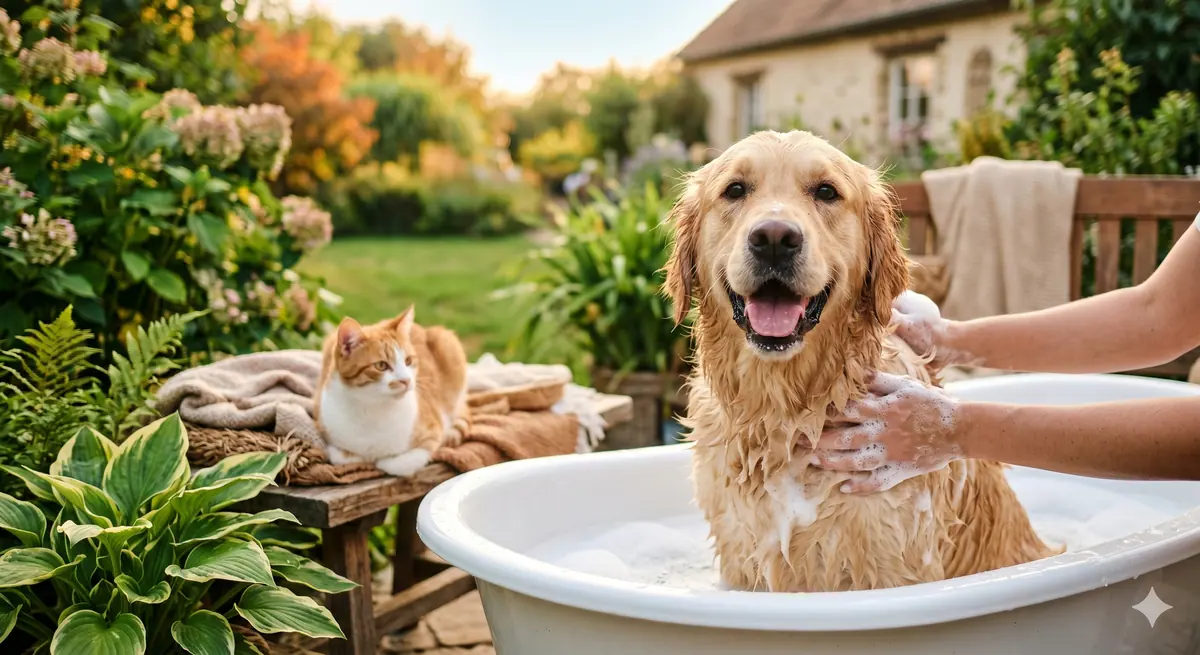
Gentle technique matters as much as the product. The aim is a calm, low friction bath that leaves no residue behind, since allergy prone dogs often react to shampoo left in the coat.
- Prepare and patch test. Set out towels, a timer, and lukewarm water on a nonslip surface. Before the first full bath with a new shampoo, apply a small amount to one limited area, rinse, and watch for redness, itching, or swelling over about twenty four hours.
- Brush first. Remove loose hair and tangles so washing creates less friction. Our dog grooming tools guide can help you pick gentle brushes for the job.
- Wet and apply lightly. Saturate the coat with lukewarm water, then apply a light amount of shampoo. Keep water and product away from the eyes, face, and ear canals, and massage with your hands or a very soft brush.
- Mind the contact time. Follow the label. A general hypoallergenic wash usually needs only brief contact, while a medicated product may require a specific timed period. Do not let shampoo sit longer than directed.
- Rinse completely. Rinse longer than you think you need to, until the water runs clear and the coat no longer feels slippery. Residue is a frequent cause of post bath itching.
- Dry gently. Press with a towel rather than rubbing, and use a low heat setting if you use a dryer. Do not let the skin stay damp for long, since trapped moisture can worsen irritation.
Bathing frequency matters too. Washing too often can strip protective oils and make itching worse, so many sensitive skin dogs do well with a bath every two to four weeks unless a veterinarian advises otherwise. Between baths, plain water or veterinarian approved wipes can spot clean muddy paws without a full wash.

When to see a veterinarian
A gentle shampoo is only one part of skin care. Schedule a veterinary exam when itching or redness persists or worsens after bathing, or when you notice hair loss, thickened skin, a strong odor, greasy patches, oozing, crusting, or repeated ear and skin infections. These can be signs of atopic dermatitis or a secondary infection, and repeated home washing may mask the problem while the underlying condition continues.
Some situations call for urgent care. Stop, rinse thoroughly, and contact your veterinarian right away if a bath is followed by hives, facial swelling, breathing difficulty, weakness, vomiting, or a sudden spike in pain or itching. If product is swallowed or gets into an eye, follow the label and call your clinic or an animal poison service promptly. Keeping a record of the product, when it was used, and any reaction helps your veterinary team make a faster, safer decision. The FDA's Animal Health Literacy resources are a reliable place to learn more about animal products and reporting concerns.
Supporting healthy skin between baths
Comfortable skin depends on more than the shampoo bottle. Dry skin folds and paws after swimming or rainy walks, keep bedding clean and dry, and follow a steady grooming routine without overbrushing inflamed areas. A supportive, easy to clean bed can help a dog with reactive skin rest without adding irritation, and our best dog beds guide covers comfortable options. Enrichment matters too, since calm, well exercised dogs are less likely to chew and scratch out of boredom, and our best dog toys guide can help you redirect that energy.
Finally, keep a short log of bathing dates, the shampoo used, contact time, and any change in itch, odor, or skin appearance. Photos taken in similar lighting help your veterinarian judge progress. If a flare does not improve on the expected timeline, do not simply bathe more often. Return to your veterinary team, because a plan that addresses the root cause protects your dog's comfort far better than repeated washing. You can browse more everyday care guides on the Livehappypet blog, and find gentle supplies in the dog shop.
Frequently asked questions
What does hypoallergenic dog shampoo actually mean?
Hypoallergenic is a marketing descriptor, not a regulated or FDA defined standard for pet shampoo. It usually means the formula is designed to reduce common irritant triggers, often by being fragrance free and using gentle cleansers. No shampoo can be guaranteed to prevent allergies, so read the full ingredient list rather than trusting the front label alone.
Which ingredients soothe a dog with sensitive skin?
Colloidal oatmeal is a classic choice to calm itch and support the skin barrier. Aloe vera and chamomile add soothing moisture, while glycerin is a humectant that helps skin retain water. Barrier ingredients such as ceramides and fatty acids can also help, but the right formula depends on your dog and the cause of the irritation.
Which ingredients should I avoid in a dog shampoo?
For sensitive skin, many owners avoid artificial fragrances, harsh sulfates such as sodium lauryl sulfate, artificial dyes, and strong stripping detergents. Some also skip parabens and added essential oils. Fragrance is the most common red flag, so a fragrance free, gentle, dog labeled formula is usually the safest starting point.
Can I use human hypoallergenic or baby shampoo on my dog?
Avoid human or baby shampoo unless your veterinarian specifically directs it. Canine skin has a different pH and needs, dogs can ingest residue while grooming, and human formulas may include unsuitable ingredients or strengths. Choose a shampoo labeled for dogs and matched to your dog's age or life stage.
How often should I bathe a dog with sensitive skin?
Bathing too often can strip protective oils and worsen itching. Many sensitive skin dogs do well with a bath every two to four weeks, but follow your product label and any veterinary guidance, especially during an active flare. Between baths, plain water or veterinarian approved wipes can spot clean without a full wash.
Should I patch test a new shampoo?
Yes. Apply a small amount to one limited area of skin, rinse, and wait about twenty four hours. Watch for increased redness, itching, hives, or swelling before using the product for a full bath. Stop and rinse right away if any reaction appears, and ask your veterinarian if you are unsure.
When should an itchy dog see a veterinarian?
See a veterinarian for persistent or worsening itch, redness, hair loss, thickened skin, odor, oozing, crusting, or repeated ear and skin infections. Chronic itch can signal atopic dermatitis or a secondary infection that shampoo alone will not fix. Seek urgent care for hives, facial swelling, breathing trouble, or collapse after a bath.
A practical next step
The best hypoallergenic dog shampoo is not a single brand or ingredient. It is the gentle, dog safe, fragrance free formula that suits your individual dog and comes with directions the two of you can follow comfortably. Start with a soothing oatmeal based wash, patch test it, bathe with lukewarm water and thorough rinsing, and keep the schedule light enough to protect natural oils. Watch how the skin responds and jot down what you see. If the itch is chronic or comes with infection signs, bring your veterinarian in early, since a plan built around the real cause keeps your dog far more comfortable than more frequent baths ever could.