Choose dog dental chews by checking the evidence for plaque or tartar control, then the package's weight range, minimum age, calories, and feeding directions. A suitable chew can support dental care, but it does not replace brushing or veterinary treatment. Your dog's chewing habits matter too: swallowing a chew whole is a reason to reconsider, not buy a harder version.
What makes a dental chew worth considering?
A dental claim needs more support than a tooth-shaped treat or minty smell. Start by separating what the package promises from what has been demonstrated. Fresh breath, enjoyment, and plaque control are different outcomes. A dog liking a chew tells you nothing about its effect on plaque or tartar.
Dental chews are edible products intended to contribute to oral care while a dog chews. Their usefulness depends on the particular product and how it is used. That makes the exact name, size, and instructions more helpful than broad descriptions such as natural, premium, or dental friendly.
Before comparing flavors, ask three questions: What dental outcome is supported? Is this version suitable for my dog? Can I give it safely as directed? A product must pass all three checks. Evidence of dental benefit is not permission to overlook a weight restriction, unsuitable ingredient, or dog that gulps treats.
Read the VOHC claim, not just the logo
The Veterinary Oral Health Council reviews submitted evidence against its standards for plaque and tartar control; it does not conduct the product tests itself. Its accepted-products list identifies the product and whether the accepted claim concerns plaque, tartar, or both. Match the entry to the package you are considering.
Plaque is the bacterial film on teeth; tartar is mineralized buildup. These terms are related, but they are not interchangeable. If the listed claim is tartar control, do not turn that into a promise that the chew treats gum disease or removes existing deposits. Check the wording rather than assuming every accepted product supports identical outcomes.
The seal is a useful evidence filter, not a universal safety guarantee or a brand-wide endorsement. A product without it is not automatically useless, but its front-label claim remains a separate question. Avoid letting a familiar brand name substitute for checking the specific product.
Does the package fit your dog's age and weight?
Use the manufacturer's stated weight range and minimum age, not your guess about what looks chewable. Puppy and adult products may have different restrictions. A small adult dog is not interchangeable with a puppy, and growing puppies can move out of a weight band between purchases.
Read the back before opening the bag. Confirm the intended species, size band, serving frequency, and any warnings about swallowing or supervision. If the information is missing from an online listing, ask the manufacturer or check the packaging before ordering. Product photographs can make different sizes look almost identical.
Do not buy a smaller size solely to reduce calories, or cut a larger chew unless its directions permit that use. Altering the size can change how your dog handles it. For a dog with missing teeth, a known dental problem, or recent dental treatment, ask the veterinary team whether an edible chew is appropriate before choosing one.
Count a dental chew as food, not a free extra
Dental benefits do not cancel calories. Look for calories per chew, then include the serving alongside training rewards, table scraps, and other extras. VCA's guidance on dog treats explains that many treats are not complete and balanced and that dogs on special diets may need restrictions.
If the label gives calories only by weight, ask the manufacturer for the amount in the size you intend to buy. Do not assume that a small-looking chew is a small addition. When the recommended serving does not fit your dog's dietary plan, discuss another dental-care option rather than quietly adding it to every meal.
Dietary fit also means checking ingredients against known sensitivities and veterinary advice. A prescription diet or food allergy can make a seemingly ordinary treat unsuitable. Our pet food label guide explains the distinction between a complete diet and an extra; a dog food topper belongs in the same accounting for extras.
Watch the chewing, especially with gulpers
A chew needs to be chewed, not swallowed after a token bite. The VOHC's safety guidance advises choosing the size for the dog's body weight and giving dental chews only when someone can observe the dog. Supervision remains necessary after the first successful serving.
Choose a quiet place where you can watch without crowding your dog. In a household with several dogs, give each dog space rather than creating competition over treats. Notice whether your dog works through the chew, breaks off large chunks, or tries to swallow what remains. Follow the package's removal instructions.
If gulping happens, stop using that product and seek advice about a suitable alternative. Do not assume an extra-hard chew solves the problem. Avoid grabbing food from a dog that guards it; ask for safe handling advice instead. Keep the package so the veterinary team can identify the ingredients and size if a problem occurs.

Harder is not evidence of better cleaning
A long chewing session is not proof of dental benefit, and extreme hardness can create a different problem. In its dental disease guidance, VCA identifies overly hard objects as a cause of fractured teeth and advises that dental treats should bend or give under compression.
Bones, antlers, hooves, and hard nylon objects are not interchangeable with an edible dental chew simply because dogs chew them. Choosing something hard enough to withstand a powerful jaw can shift the concern from the product breaking to a tooth breaking. Durability claims answer a different question from dental efficacy.
Some flexibility is a useful screening point, not a home safety certification. A product can still be unsuitable because of its size, ingredients, or your dog's behavior. If you cannot judge its texture from the listing, avoid guessing. Ask the manufacturer for product information and your veterinarian for advice about your dog's teeth.
When should you stop and ask for help?
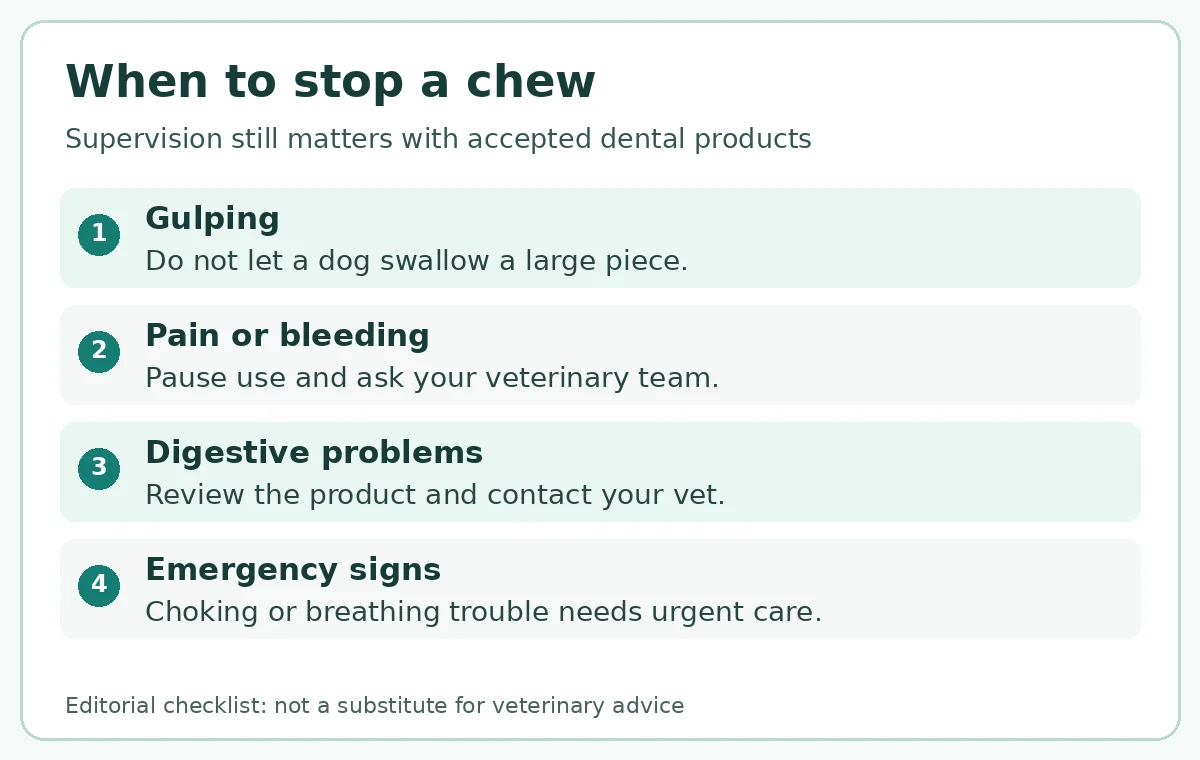
Stop offering the chew if eating appears painful or your dog develops concerning symptoms. Dropping food, pawing at the mouth, excessive drooling, or blood in saliva can be signs of dental trouble, as VCA explains. Persistent bad breath deserves a veterinary check rather than a stronger-smelling treat.
Contact your veterinary team if vomiting, reduced appetite, or other digestive changes follow a new chew. Explain what was eaten, how much, and whether a large piece may have been swallowed. If your dog has trouble breathing or appears to be choking, seek emergency veterinary help immediately.
Do not keep offering chews to test whether a painful tooth will settle. Likewise, do not try to scrape tartar off at home. An outwardly cleaner-looking tooth does not tell you whether the gumline or tissues beneath it are healthy. A chew cannot establish a diagnosis.
Make the purchase fit a daily dental routine
Keep brushing at the center of home dental care, with chews as a possible addition. VCA's toothbrushing guide recommends a gradual, positive introduction and toothpaste formulated for pets, not human toothpaste. Choose a dog toothbrush your dog can comfortably tolerate, and ask for help if mouth handling is difficult.
Existing tartar or suspected dental disease needs a veterinary assessment; buying another bag is not a treatment plan. If your dog refuses brushing, discuss the reason and appropriate alternatives rather than assuming chews provide equivalent care. Your veterinarian can also advise when professional dental care is needed.
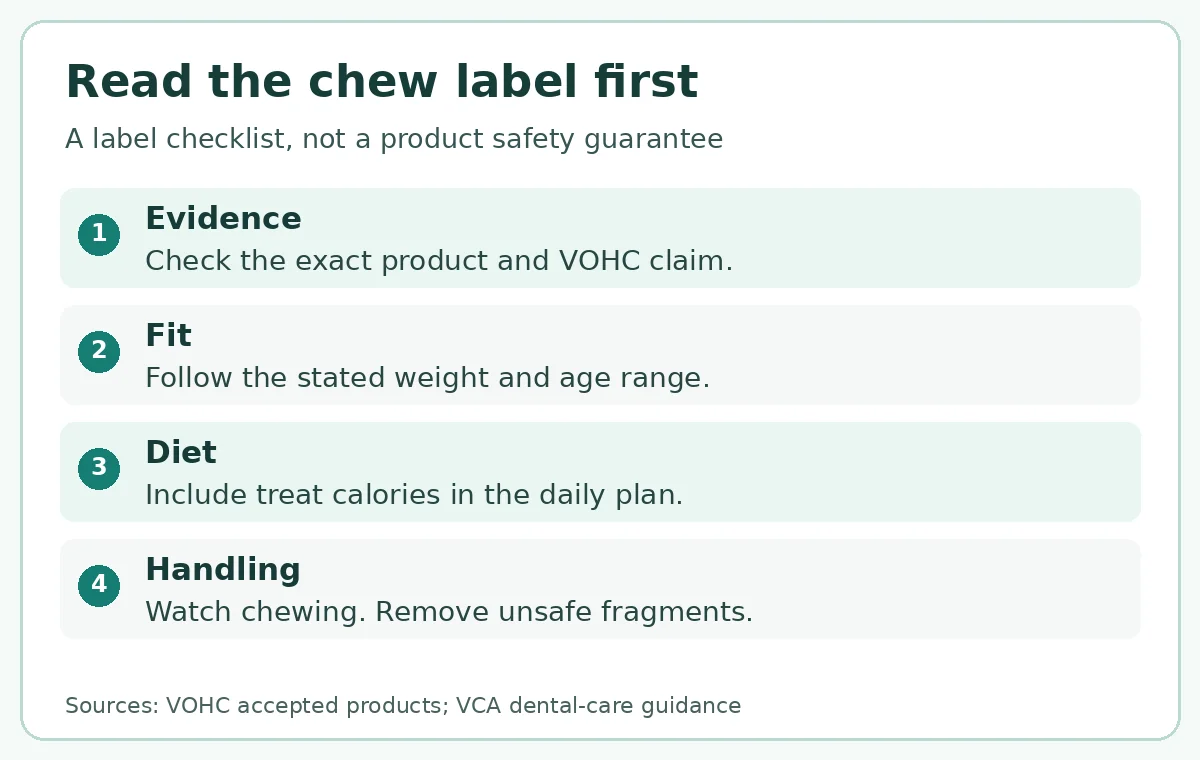
Before checkout, confirm the exact evidence-backed claim, suitable age and weight band, dietary fit, and clear directions. Then ask whether you can supervise every serving. A purchase that fits those checks is more useful than a bag covered in dental imagery. Recheck the label when switching sizes or formulas.
Frequently Asked Questions
Can dog dental chews replace toothbrushing?
No. Dental chews can support oral care, but they do not replace brushing or veterinary assessment. Use pet toothpaste and introduce brushing gradually. If your dog resists mouth handling or seems uncomfortable, ask your veterinary team for guidance rather than relying on chews to cover the problem.
Can I give my dog a dental chew every day?
Follow the directions for the exact product, and check that its serving fits your dog's diet. A daily instruction is not permission to ignore calories, weight limits, or health restrictions. Supervise each serving, and ask your veterinarian about suitability if your dog has a medical condition or special diet.
Are adult dental chews suitable for puppies?
Not necessarily. Check the package's minimum age and weight range rather than choosing by appearance. Puppies grow, so a size that once fitted may no longer be appropriate. If you are unsure about a chew during teething or your puppy tends to swallow treats quickly, ask your veterinary team first.
Does the VOHC seal mean a chew is safe for every dog?
No. The seal identifies an accepted plaque or tartar control claim for a particular product used as directed. It does not remove the need to check size, age restrictions, ingredients, and chewing behavior. Even an accepted dental chew needs supervision and may not suit a dog with specific health needs.
Will dental chews remove tartar already on my dog's teeth?
Do not count on a chew to remove existing tartar or treat dental disease. Accepted claims concern controlling accumulation, not replacing professional care. Ask your veterinarian to assess visible buildup, persistent bad breath, or discomfort. Brushing and suitable chews belong in an ongoing care plan, not a home cure.
What if my dog swallows dental chews without chewing?
Stop offering that product and ask your veterinary team about another approach. Check whether the chew matched the stated weight range, but do not solve gulping by automatically choosing something harder. If a swallowed piece is followed by breathing difficulty, choking, vomiting, or other concerning signs, seek veterinary help promptly.