Separation anxiety treats for dogs come in two very different forms. The first is a departure treat: a food-stuffed toy or long-lasting chew you hand over as you leave, so being alone starts to predict something good. The second is a calming chew or supplement, usually built around ingredients like L-theanine, alpha-casozepine, tryptophan, or CBD. The first is recommended by the ASPCA as part of a training plan. The second has mixed and mostly modest evidence, and neither replaces help from a veterinarian when anxiety is severe.
Published September 28, 2026. Header photo: Picography / Wikimedia Commons, CC0, cropped and resized. A Shiba Inu watches the street from a window.
In This Article
- The Short Answer
- Two Very Different Kinds of Separation Anxiety Treat
- How Departure Treats Work
- Departure Treats That Last
- What the Research Says About Calming Chews
- Calming Chews vs. Prescription Medication
- A Departure Routine That Puts the Treat to Work
- When a Treat Is Not Enough
- Frequently Asked Questions
- Sources
The Short Answer
- Start with a departure treat. A puzzle toy stuffed with food that takes 20 to 30 minutes to finish is the ASPCA's own example for mild separation anxiety.
- Only offer it when you leave, and pick it up when you come home, so the treat stays tied to your departures.
- Treat calming chews as an extra, not the fix. Studies on their ingredients show small or inconsistent effects.
- Talk to your veterinarian for moderate or severe cases. At least two prescription drugs, clomipramine and fluoxetine, are FDA approved for canine separation anxiety, both meant to be used with behavior modification.
Two Very Different Kinds of Separation Anxiety Treat
When people shop for separation anxiety treats, they often mix two ideas together. It helps to separate them, because they work in different ways and have very different evidence behind them.
Departure treats are about learning. Calming chews are about body chemistry. A dog can benefit from both, but only the departure treat directly changes what your dog expects when the door closes. If you are not yet sure whether your dog has separation anxiety or is simply bored, our guide to anxiety in dogs walks through the signs, and our five-step separation anxiety training plan covers the behavior side in detail.
How Departure Treats Work
The ASPCA's guide to separation anxiety in dogs describes the idea as counterconditioning: building an association between being alone and something your dog loves, such as delicious food. For mild cases, it suggests that every time you leave, you give your dog a puzzle toy stuffed with food that will take at least 20 to 30 minutes to finish. Its examples include a rubber food toy filled with low-fat cream cheese, spray cheese or low-fat peanut butter, frozen banana and cottage cheese, or canned dog food and kibble, and it points out that freezing the toy makes the food last longer.
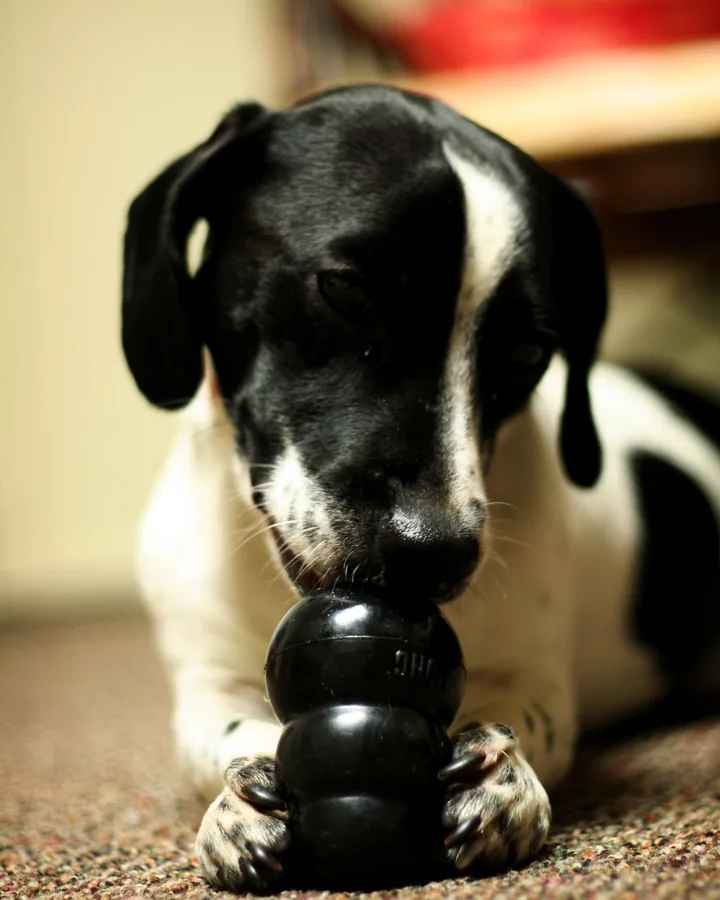
The ASPCA adds two rules that make the treat work. First, remove these special toys as soon as you get home, so your dog only has access to them while alone. Second, keep your comings and goings calm and quiet, which lowers the contrast between the time you are there and the time you are away. It also notes that puzzle toys and chew items encourage chewing and licking, which have been shown to have a calming effect on dogs, and recommends providing them whenever your dog is left alone.
This is why a departure treat is more than a distraction. Given consistently, it slowly changes the meaning of your keys, your coat, and the closing door. The ASPCA is clear about the limit: this approach only works for mild cases, because highly anxious dogs usually will not eat when their guardians are not home. Moderate or severe cases need a more complex desensitization and counterconditioning program.
Departure Treats That Last
The best separation anxiety treat is one your dog finds irresistible and cannot finish in two minutes. These are the main options, with the trade-offs to consider.
A few safety notes apply to all of them. Check any peanut butter or nut butter label before you use it: the FDA's warning on xylitol and dogs lists some peanut and nut butters among products that may contain this sweetener, which is dangerous for dogs. Count the food in the toy as part of your dog's daily ration, especially if you use it every day. And try any new chew or toy while you are home before you rely on it when you are out.
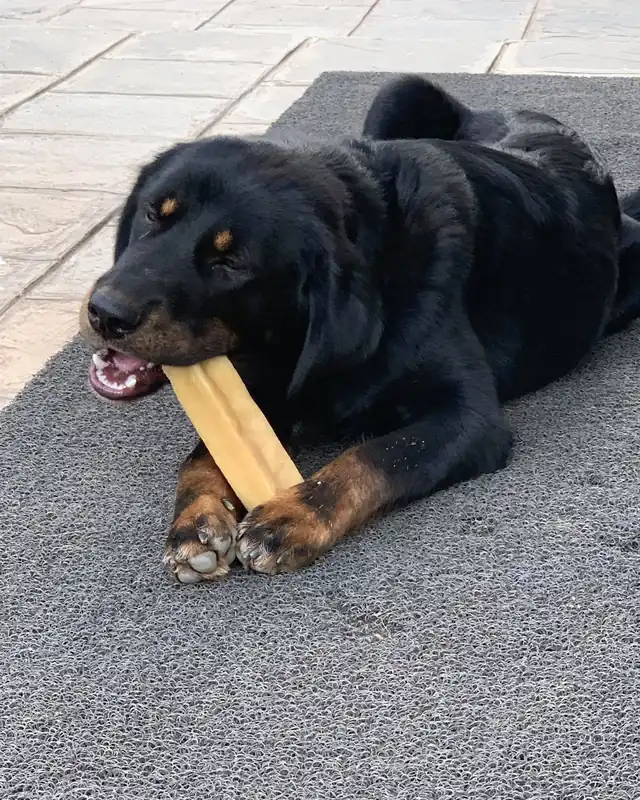
For toys built for this job, see our guides to treat-dispensing toys, lick mats, snuffle mats, and puzzle feeders. If you have a strong chewer, our KONG dog toys guide explains how sizes and rubber strengths differ.
What the Research Says About Calming Chews
Calming chews and supplement treats are sold for stress, travel, fireworks, and separation. Their ingredients have been studied, but mostly in small trials, in lab settings, or in stress tests other than being left alone. Here is what the studies we could verify actually found.
Two themes run through this research. Effects, where they appear, are modest, and they are rarely measured in dogs being left alone. A 2024 evidence summary on tryptophan concluded that it is not enough as a sole treatment for anxious adult dogs, and a 2017 summary on alpha-casozepine found no evidence that it works when given shortly before a stressful event. The FDA, for its part, says it has not approved cannabis for any use in animals and cannot ensure the safety or effectiveness of these products, and it advises pet owners to talk with a veterinarian about treatment options.
That does not mean calming chews are useless. Some dogs may benefit, and a chew can double as a pleasant ritual. It means they should sit alongside training and management, not replace them. Tell your veterinarian about any supplement you give, especially if your dog takes other medication.
Calming Chews vs. Prescription Medication
For dogs with more than mild separation anxiety, prescription medication is a real option, and it is a different category from over-the-counter chews. The FDA has approved clomipramine (sold as Clomicalm) for separation anxiety in dogs older than 6 months, as part of a comprehensive behavioral management program. In October 2019 the agency announced the approval of the first generic clomipramine tablets. In the same announcement, the FDA noted that separation anxiety behavior problems are diagnosed in an estimated 20 to 40 percent of dogs referred to behavior practices in North America.
Fluoxetine chewable tablets for dogs (sold as Reconcile) are also approved for canine separation anxiety, to be used together with a behavior modification plan, according to the drug's label on DailyMed.
The ASPCA says to always consult your veterinarian or a veterinary behaviorist before giving your dog any medication for a behavior problem. It notes that medication can be very helpful in severe cases, can help a dog tolerate some time alone, and can speed up progress, but that most dogs need a combination of medication and behavior modification. Departure treats keep their place in that plan, because they are part of the behavior modification.
A Departure Routine That Puts the Treat to Work
A treat only helps if it arrives at the right moment, in the right way, every time. This simple routine combines the ASPCA's advice on exercise, counterconditioning, and calm departures.
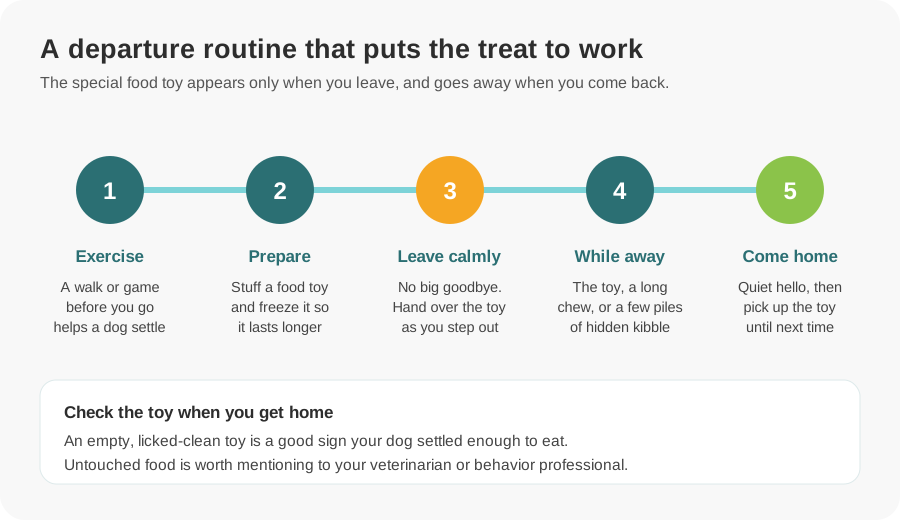
- Exercise first. The ASPCA suggests at least 30 minutes of aerobic activity a day and recommends exercising your dog right before you leave, which may help your dog relax and rest while you are gone.
- Prepare the toy in advance. Stuff it the night before and freeze it, so it lasts longer and is ready to go.
- Keep the exit low key. Hand over the toy as you step out, without a long goodbye.
- Add a food hunt for longer absences. The ASPCA suggests hiding small piles of your dog's kibble around the house or yard when you leave.
- Come home calmly and pick up the toy. Greet your dog quietly, then put the special toy away until your next departure.
When you are building up alone time from very short absences, the ASPCA suggests adding the stuffed food toy once your dog is comfortable with separations of five to ten seconds, and handing it over just before you step out. It describes the toy as a safety cue that tells your dog this is a safe separation. Our guides to separation anxiety dog toys and toys for dogs with separation anxiety list options that work well for this step.
When a Treat Is Not Enough
A departure treat is a strong tool for mild separation anxiety, but some dogs need more. Coming home to an untouched, still-full food toy is useful information. The ASPCA notes that highly anxious dogs usually will not eat while their guardians are away, so a full toy is worth mentioning to your veterinarian or a behavior professional.

The ASPCA lists signs of separation anxiety that include urinating or defecating when left alone, persistent barking or howling, chewing and digging at doors and windows, and escape attempts that can lead to broken teeth and cut paws. It also recommends ruling out medical causes first, since conditions such as urinary tract infections, bladder stones, diabetes, and kidney disease can cause house soiling that looks like a behavior problem.
If you see self-injury, destruction around exits, or distress that starts within minutes of you leaving, speak to your veterinarian about a full plan that may include medication and professional training support. In the meantime, a comfortable resting spot such as a calming dog bed and a few of the calming toys we recommend can make the space where your dog waits a little easier.
Frequently Asked Questions
What treats help dogs with separation anxiety?
The best-supported option is a departure treat: a puzzle toy stuffed with food that takes at least 20 to 30 minutes to finish, given every time you leave and removed when you return. The ASPCA recommends this for mild separation anxiety.
Do calming treats work for separation anxiety?
The evidence is modest. Studies of ingredients such as L-theanine, alpha-casozepine, tryptophan, and CBD show small or inconsistent effects, and few test dogs being left alone. Use them alongside training, not instead of it.
Is CBD safe for dogs with separation anxiety?
The FDA says it has not approved cannabis for any use in animals and cannot ensure the safety or effectiveness of these products. It advises pet owners to talk with a veterinarian about treatment options.
What can I put in a stuffed toy for my dog?
The ASPCA suggests fillings such as low-fat cream cheese, spray cheese or low-fat peanut butter, frozen banana and cottage cheese, or canned dog food and kibble. Check nut butter labels for xylitol, which is dangerous for dogs.
Should I give my dog the treat when I get home?
No. Give the special toy as you leave and pick it up as soon as you return, so it stays linked to being alone. Keep both departures and arrivals calm and quiet.
My dog ignores the treat when I leave. What does that mean?
The ASPCA notes that highly anxious dogs usually will not eat when their guardians are away, which is why food toys alone suit only mild cases. Talk to your veterinarian or a behavior professional about a fuller plan.
Is there medication for dog separation anxiety?
Yes. Clomipramine and fluoxetine are FDA approved for canine separation anxiety, to be used with a behavior modification plan. Your veterinarian can tell you whether medication suits your dog.
Sources
- ASPCA: Separation anxiety
- FDA: FDA approves clomipramine hydrochloride tablets to treat separation anxiety in dogs (2019)
- DailyMed: Reconcile (fluoxetine hydrochloride) chewable tablets label
- FDA: Regulation of cannabis and cannabis-derived products, including CBD (question 24, pets)
- FDA: Paws off xylitol, it's dangerous for dogs
- Morris EM et al. (2020). The impact of feeding cannabidiol (CBD) containing treats on canine response to a noise-induced fear response test. Frontiers in Veterinary Science.
- Flint HE et al. (2025). Treats containing cannabidiol, L-tryptophan and alpha-casozepine have a mild stress-reducing effect in dogs. Frontiers in Veterinary Science.
- Sofyan LM (2024). In adult dogs is supplementary tryptophan in the diet effective in reducing signs of anxiety? Veterinary Evidence.
- Buckley LA (2017). Is alpha-casozepine efficacious at reducing anxiety in dogs? Veterinary Evidence.
- Araujo JA et al. (2010). ANXITANE tablets reduce fear of human beings in a laboratory model of anxiety-related behavior. Journal of Veterinary Behavior.
Tire them out before you go
The ASPCA suggests exercising your dog right before you leave. A durable rubber chew ball makes a quick game of fetch easy.
See the Chew Ball Toy