If you are looking for the best anxiety in dogs, this comprehensive guide covers everything you need to know. Whether you are a first-time pet owner or an experienced one looking to upgrade, you will find practical advice, safety tips, and honest comparisons below.
What Anxiety in Dogs Actually Is
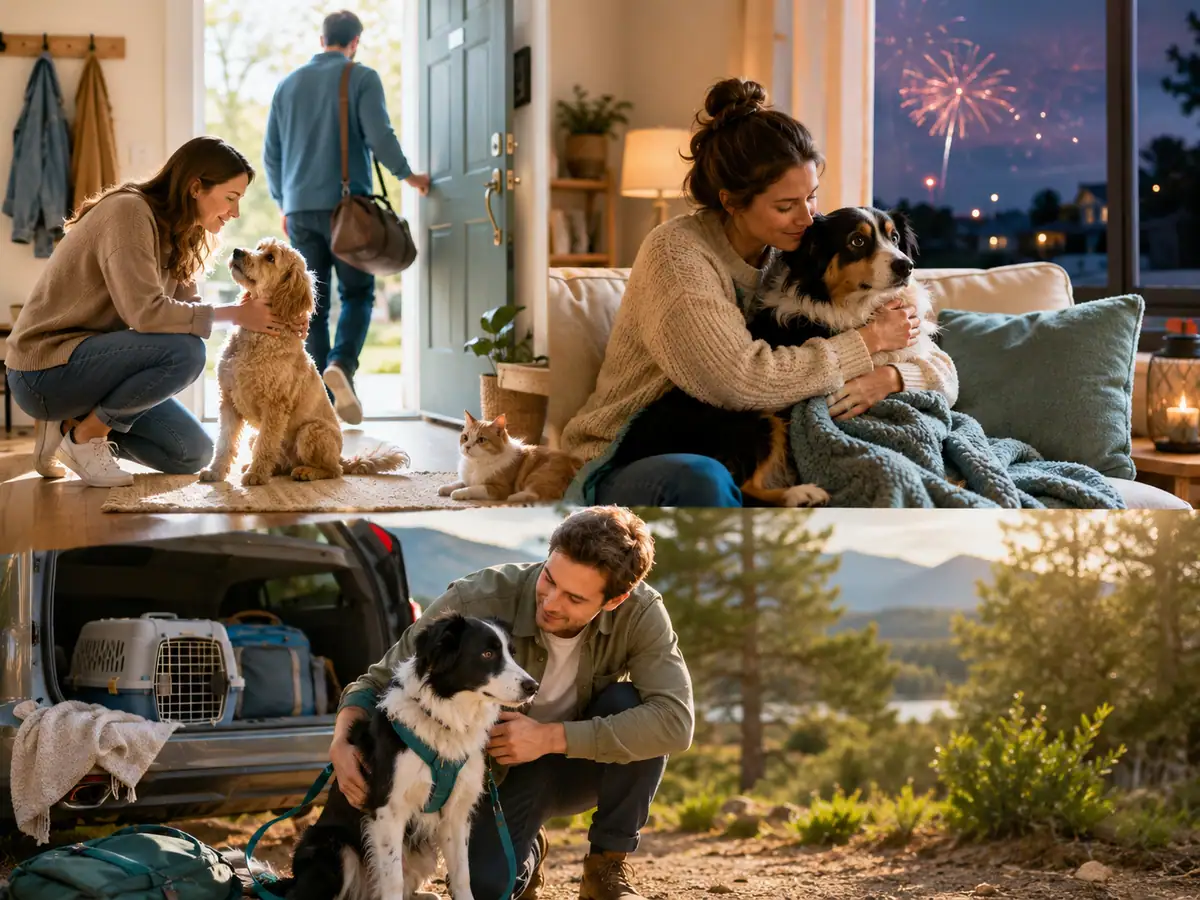
Fear is a normal, healthy response that helps a dog react to a real threat and then move on. Anxiety is different. An anxious dog is reacting to the anticipation of something bad, often long before anything happens, and sometimes when nothing is going to happen at all. The storm has not started yet, the owner has not left yet, but the dog is already pacing, panting, and unable to settle.
Occasional nervousness is part of normal dog life. A dog that startles at a dropped pan and recovers within a minute is doing exactly what a healthy nervous system should do. Anxiety becomes a genuine welfare problem when the worry is out of proportion to the trigger, when it lasts long after the trigger is gone, or when it starts interfering with eating, sleeping, play, and everyday routines.
It helps to think of anxiety as a dial rather than a switch. Many dogs live most of their lives at a low, manageable level of watchfulness and only spike during specific events like fireworks or vet visits. Others run hot all day, scanning the environment constantly and struggling to relax even at home. Both patterns deserve attention, but the daily version usually needs more structured help.
The encouraging news is that anxiety in dogs responds well to a combination of management, training, enrichment, and, in some cases, veterinary support. The earlier you recognize what is happening, the easier it is to change the trajectory. This guide walks through the signs, the common triggers, what you can do at home, and the point where professional help becomes the right call.
The Most Common Forms of Anxiety in Dogs
Separation anxiety is the form most owners know by name. A dog with separation anxiety becomes distressed when left alone or separated from a specific person. The distress typically concentrates around departures and the first stretch of alone time, which is what separates it from simple boredom. The ASPCA guide to separation anxiety describes the classic picture: drooling, pacing, vocalizing, and destruction aimed at doors, windows, and exit points.
If stress is a concern, our guide to canine separation anxiety covers more solutions.
Noise anxiety is the second big category. Fireworks, thunderstorms, construction noise, and even beeping appliances can send a sound-sensitive dog under the bed, trembling and drooling. Noise fears often get worse with repeated exposure rather than better, which is why they are worth addressing early instead of waiting for the dog to simply get used to it.
Social anxiety shows up around unfamiliar people or dogs. It is common in dogs that missed out on positive experiences during their early socialization window as puppies, and in dogs with a history of rough encounters. Travel anxiety, usually tied to car rides that end somewhere unpleasant, and confinement anxiety, distress about crates or small spaces, round out the common list.
Many dogs carry more than one of these at once, and one can feed another. A dog that is already worried about noises will find alone time harder, because there is no one around to anchor it when a scary sound happens. That overlap is normal, and the home strategies later in this guide help across categories.
Signs of Anxiety in Dogs Owners Often Miss
The obvious signs are hard to overlook: trembling, whining, barking, howling, drooling, and destructive chewing focused on exits. House soiling in an otherwise reliable adult dog is another loud signal, especially when it happens only while the dog is alone or during storms and fireworks.
The subtle signs are the ones that slip past even attentive owners. Lip licking when no food is around, repeated yawning when the dog is not tired, a tightly closed mouth, ears pinned back, sudden shedding during a stressful event, sweaty paw prints on the floor, and the classic whale eye, where the dog turns its head away but keeps watching so the whites of the eyes show. These are early words in a dog's stress vocabulary, and they usually appear well before barking or shaking.
Watch the body as a whole rather than a single signal. An anxious dog often carries its weight low and back, tucks its tail, moves in slow arcs rather than straight lines, and either refuses food entirely or takes treats with a hard, snatching mouth. A dog that will not eat a treat it normally loves is telling you its stress level is high.
Pattern matters as much as posture. Note when the signs appear, what happened just before, and how long the dog takes to recover. A simple log over a week or two, even just notes on your phone, turns a vague feeling that something is off into a clear picture you can act on and, if needed, show your veterinarian.
What Causes Anxiety in Dogs
Genetics deal the first hand. Some dogs are simply born with a more reactive temperament, and certain lines within many breeds are known for being more sensitive. A naturally watchful dog raised perfectly can still be more anxiety-prone than a laid-back dog raised carelessly. Knowing this helps owners drop the guilt and focus on management.
Anxious pets may also benefit from the products in our separation anxiety guide.
Early experience deals the second hand. Puppies go through a critical socialization period in their first months, and dogs that meet too little of the world during that window, or meet it in frightening ways, are more likely to find normal life alarming later. Rescue dogs with unknown histories often fall in this group, which is why patience matters more than pressure with a newly adopted dog.
Specific experiences can install specific fears at any age. One bad thunderstorm spent alone, a painful event at a grooming salon, or an attack by another dog can each leave a lasting mark. Big life changes are quieter triggers: a move, a new baby, a new pet, a family member leaving home, or a sudden change in work schedule that rewrites the dog's entire routine overnight.
Health belongs on the list too. Pain, itching, hormonal conditions, and hearing or vision loss can all present as new anxiety, and senior dogs can develop cognitive decline that looks like restless, anxious pacing, especially at night. The Merck Veterinary Manual chapter on behavior problems in dogs is a solid owner-level reference on how medical issues and behavior tangle together, and it is a good reason any sudden behavior change deserves a vet check first.
How to Help an Anxious Dog at Home
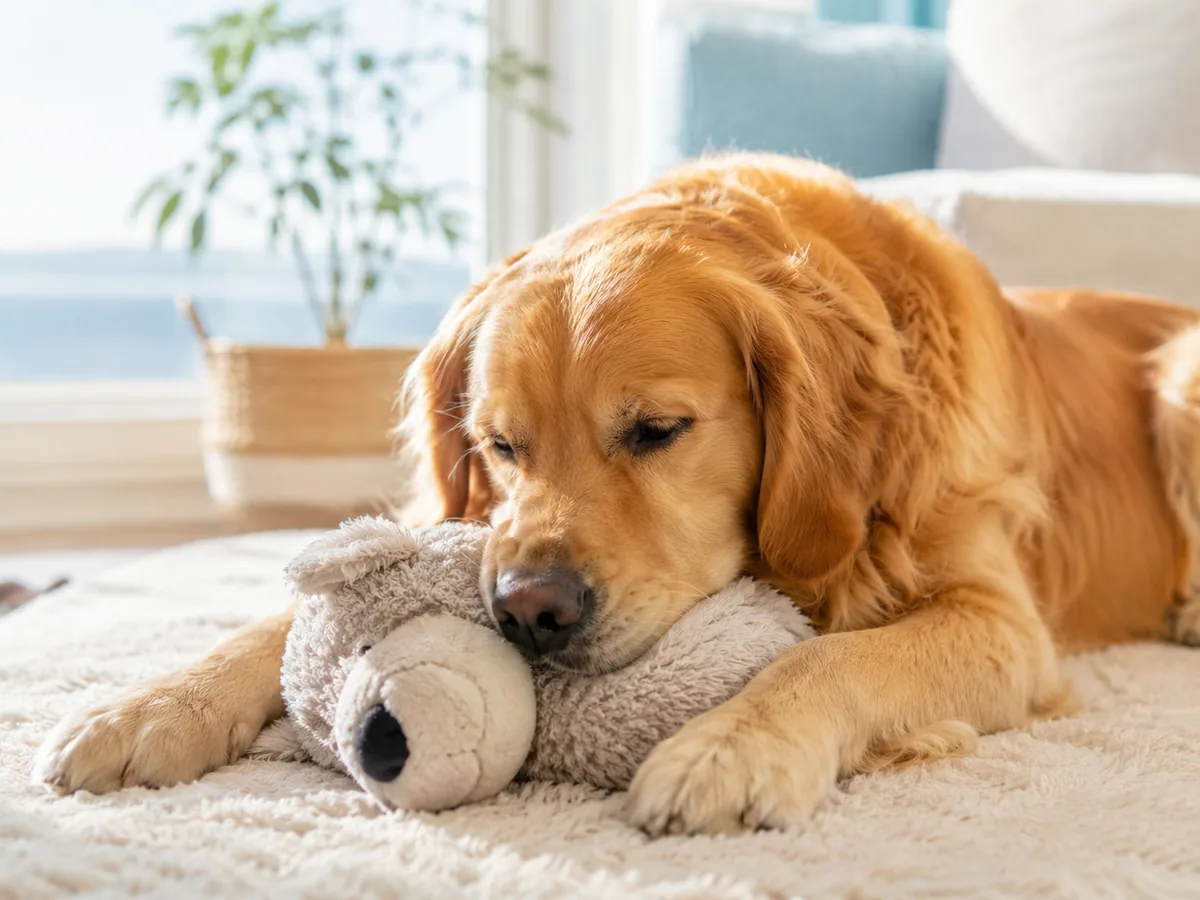
Start with predictability. Anxious dogs do dramatically better when meals, walks, play, and rest happen on a rhythm they can count on. A predictable day means fewer surprises, and fewer surprises means a lower baseline stress level. Keep greetings and departures calm and boring rather than emotional productions.
Give the dog a safe zone it chooses to use. That can be a crate with the door open, a bed in a quiet corner, or a spot behind the sofa. The rule is simple: good things happen there and nobody bothers the dog while it is there. A comfortable, washable bed helps; for dogs that like to curl and burrow, our calming dog bed guide covers what actually makes a bed calming beyond the marketing.
Burn the right kind of energy. Physical exercise matters, but mental work is the underrated half. Licking and chewing are naturally soothing behaviors for dogs, which is why long-lasting chews, lick mats, and food puzzles have an outsized calming effect. We compared the options that work best for stressed dogs in our calming toys for dogs guide.
Layer in gradual exposure for known triggers. The principle is to present the trigger at a strength the dog barely notices, pair it with something wonderful, and increase intensity only while the dog stays relaxed. For sound fears that means playing recordings at very low volume during dinner. For alone-time trouble it means seconds-long absences before minutes-long ones. Slow is fast here; pushing past the dog's comfort point resets the work.
The table below matches common situations with the approaches and tools that tend to help most.
A Closer Look at Separation Anxiety
Separation anxiety deserves its own section because it is common, hard on everyone, and frequently mishandled. The defining feature is that the dog's distress is tied to being left, not to being under-stimulated. A bored dog will happily destroy a cushion at 3 pm; an anxious dog starts drooling before you pick up your keys and targets the door you left through.
For more calming solutions, see our detailed dog separation review.
Begin by defusing your departure cues. Keys, shoes, and jackets have become alarm bells that predict abandonment. Pick them up randomly throughout the day and go nowhere, until they stop meaning anything. At the same time, practice micro-absences: step outside, count to ten, come back in before the dog escalates, and repeat while gradually stretching the time.
Give the dog a job for the moment you leave. A frozen food-stuffed toy handed over at the door builds a positive association with your exit and occupies the crucial first minutes, which are the hardest part of alone time for most dogs. Our roundups of anxiety toys for dogs and dog anxiety toys cover the formats that hold up to this exact task.
Know what not to do. Punishment for damage or accidents makes separation anxiety worse, because the dog links the punishment to your return, not to its earlier behavior, and now fears both being alone and your arrival. Getting a second dog rarely fixes it either, because the attachment is usually to a person. For severe cases, where the dog injures itself, breaks teeth on crate bars, or cannot be left for even a minute, skip straight to professional help.
When Anxiety in Dogs Needs Professional Help
Home management has limits, and recognizing them early spares the dog months of unnecessary distress. Call your veterinarian when the anxiety appeared suddenly in an adult dog, when it is getting worse despite consistent work, when the dog hurts itself, refuses food for more than a day, or when aggression has entered the picture. Sudden behavior change in particular is a medical question before it is a training question.
Expect the vet to rule out physical causes first. Pain and anxiety are tightly linked in dogs, and treating an undiagnosed sore joint or ear infection sometimes resolves what looked like a pure behavior problem. Bring your notes on when the anxiety shows up, what triggers it, and what you have already tried; a short video of an episode is worth a thousand descriptions.
For genuine anxiety disorders, veterinarians can prescribe medication, either daily or situational for events like fireworks and travel. Medication is not a shortcut or a failure; for a dog whose panic is too high to learn anything, it lowers the volume enough for training to finally work. Decisions about specific drugs and doses belong entirely with your vet.
For the training side, a credentialed animal behavior professional or a veterinary behaviorist can build a structured plan and keep it on track. The combination of medical support plus a systematic behavior plan is the gold standard for serious cases, and most dogs improve meaningfully once both pieces are in place.
Mistakes That Make Dog Anxiety Worse
Punishment tops the list. Yelling, leash jerks, or rubbing a dog's nose in an accident add fear to fear. The dog does not connect the punishment with the earlier behavior; it connects the punishment with you, with the room, and with the situation, all of which now feel less safe. Every serious behavior organization has moved away from punishment-based approaches for anxious dogs.
Flooding is the second classic error: forcing the dog to face its fear at full strength until it stops reacting. Carrying a dog that fears strangers into a crowd, or crating a panicking dog through a storm, usually teaches the dog that the situation is exactly as terrible as it feared, and that its signals are ignored. What looks like calming down is often shutdown, which is worse, not better.
Accidentally rewarding panic is subtler. Comforting a frightened dog is fine, and you cannot reinforce fear itself, but dramatic, high-energy reactions from the owner can confirm that something really is wrong. Aim for calm, matter-of-fact reassurance: a steady voice, slow hands, and normal behavior that signals the situation is boring.
Finally, do not wait it out. Anxiety that is rehearsed daily gets stronger, not weaker, and each panic episode makes the next one easier to trigger. The dogs that recover fastest are the ones whose owners started small, stayed consistent, and asked for help early. Anxiety in dogs is one of the most treatable behavior problems there is, provided it actually gets treated.
Calming Support from Livehappypet
Products never replace routine and training, but the right gear makes both easier. A long-lasting chew or food puzzle occupies an anxious dog during trigger moments, a snuffle mat turns dinner into ten minutes of soothing nose work, and a well-designed bed gives the safe zone a physical address your dog actually wants to use.
When choosing, favor items that promote licking, chewing, and sniffing, the three behaviors dogs use to self-soothe, and match toy toughness to your dog's jaw strength so the outlet does not become a hazard. Rotate a small set rather than leaving everything out, so each item keeps its novelty when you need it most.
Livehappypet stocks calming beds, tough chew toys, puzzle feeders, and comfort plush across sizes and budgets, with free shipping on every order. Start with one licking outlet, one chewing outlet, and one cozy retreat, then build from there based on what your dog reaches for when stress rises.
If you want to dig deeper into the research, the ASPCA dog care library publishes practical, expert-reviewed resources for pet owners.
Frequently Asked Questions
How do I know if my dog has anxiety or is just bored?
Look at timing and targets. A bored dog acts out at random times, engages happily with food and toys, and destroys whatever is interesting. An anxious dog shows stress signals tied to specific triggers, often refuses food during episodes, and directs destruction at exits like doors and windows. Drooling, trembling, pacing, and house soiling that happen mainly when the dog is alone point strongly toward anxiety rather than boredom.
Can anxiety in dogs go away on its own?
Rarely. Rehearsed anxiety tends to strengthen over time because every episode makes the underlying pathway easier to trigger. Mild, situational nervousness after a one-off event can fade, but recurring anxiety almost always needs active management: predictable routines, gradual exposure at a tolerable level, appropriate outlets for licking and chewing, and veterinary help for severe cases. The earlier you intervene, the faster dogs improve.
What dog breeds are most prone to anxiety?
Any breed can develop anxiety, and individual temperament matters more than breed labels. That said, highly people-oriented and high-drive dogs, including many herding and working types, are frequently represented in separation and noise anxiety cases, and sensitive lines exist within most breeds. Early socialization, a stable routine, and matching a dog's energy needs with real outlets do more to prevent anxiety than breed choice alone.
Does exercise help a dog with anxiety?
Yes, but it is half the answer. Physical exercise lowers overall arousal, and a well-exercised dog copes better with stress. Mental work is the other half: sniffing walks, food puzzles, and licking or chewing sessions activate calming behaviors that running alone does not. An anxious dog that gets both physical and mental outlets daily is in a far better position to handle its triggers than one that only gets miles.
Are calming toys and beds actually effective?
They help as part of a bigger plan. Licking and chewing genuinely lower stress in dogs, so long-lasting chews, lick mats, and stuffable toys give measurable relief during trigger moments. Donut-style beds give curl-and-burrow sleepers a secure retreat. What they cannot do is fix the underlying pattern by themselves; pair them with routine, gradual exposure to triggers, and professional help when the anxiety is severe.
When should a dog with anxiety get medication?
When panic is so high the dog cannot learn, when it injures itself, when episodes are frequent despite consistent training, or when quality of life is clearly suffering. That decision belongs with your veterinarian, who will first rule out medical causes. Modern behavior medications lower the panic enough for training to work and are used either daily or situationally for events like storms, fireworks, and travel.
Browse Calming Toys
Free US shipping on every order. No minimum purchase required.
Browse Calming Toys →