If your dog panics every time you leave the house, this guide walks through the calming tools and routines that genuinely help dogs and separation anxiety, what each option does, and how to pick the right combination for your pet. Prefer a full training protocol instead? See our step-by-step separation anxiety training plan.
Understanding Separation Anxiety in Dogs
Pet anxiety affects millions of dogs and cats worldwide, manifesting as destructive behavior, excessive vocalization, house soiling, or self-harm. Separation anxiety is the most common form, triggered when pets are left alone. Noise anxiety from thunderstorms and fireworks ranks second. The right calming tools serve a valuable role in a broader anxiety management strategy.
Anxiety toys work through two primary mechanisms: distraction and comfort. Distraction-based toys like treat-dispensing puzzles redirect your pet's focus away from anxiety triggers. Comfort-based toys, such as heartbeat plushies or weighted blankets, provide physical reassurance that reduces stress hormones. The most effective approach combines both types.
While toys alone rarely resolve severe anxiety, they are an essential component of any treatment plan. Veterinary behaviorists typically recommend a combination of environmental management, behavioral modification, enrichment tools, and sometimes medication. Toys address the enrichment component and support the behavioral modification process by giving your pet positive associations with previously stressful situations.
Types of Calming Tools That Actually Work
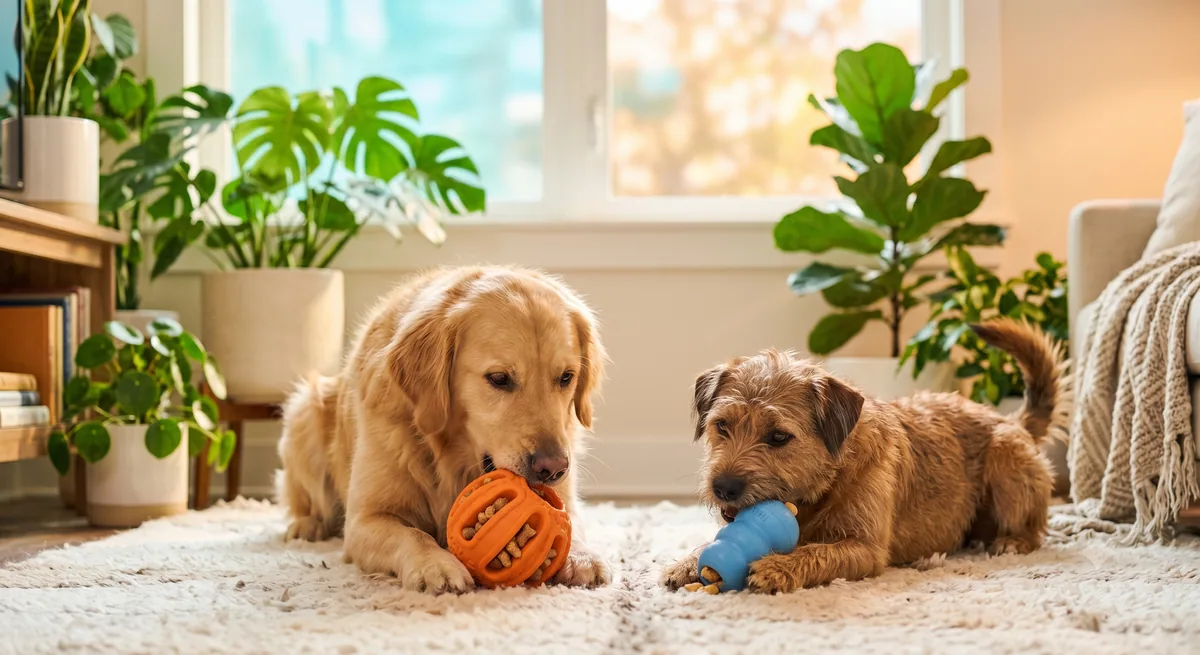
Treat-dispensing toys provide the strongest anxiety relief through active distraction. KONGs stuffed with frozen peanut butter, lick mats smeared with yogurt, and puzzle feeders filled with kibble occupy your pet's mouth and brain simultaneously. The licking and chewing motions release endorphins that naturally reduce anxiety levels. Prepare these toys before departures to create a positive association with your leaving.
If stress is a concern, our guide to meds for dogs with separation anxiety covers more solutions.
Heartbeat and warmth toys simulate the presence of a companion. These products contain a battery-powered heartbeat mechanism and sometimes a heat source that mimics body warmth. They are particularly effective for puppies adjusting to a new home, dogs recovering from losing a companion, and cats that become anxious during nighttime hours.
Snuffle mats and nose-work toys engage your pet's strongest sense. Hiding treats in a textured fabric mat or scattering them across a foraging toy activates the brain's seeking circuit, which is incompatible with anxiety. Dogs using their nose to find food enter a calm, focused state that naturally displaces anxious behavior.
Weighted and pressure toys apply gentle compression that many anxious pets find soothing. Similar to the concept behind weighted blankets for humans, these products trigger a calming response through deep pressure stimulation. Some dogs respond well to weighted vests while others prefer heavy stuffed toys they can lie against.
Building a Calmer Departure Routine
A consistent departure routine using enrichment toys can dramatically reduce separation anxiety over time. The goal is to make your departure predict something wonderful rather than something frightening. Start preparing your enrichment toy 10-15 minutes before you plan to leave, allowing your pet to see it and build anticipation.
Present the high-value toy at the exact moment you walk out the door. This timing is critical because it pairs your departure with the arrival of something your pet loves. After several weeks of this routine, many dogs begin to welcome their owner's departure because it signals the appearance of their favorite stuffed KONG or puzzle feeder.
Collect the departure toy when you return home. This ensures the toy retains its special status and is only available during alone time. If your pet has access to this toy throughout the day, it loses its power as a departure-specific comfort item. Reserve your best enrichment options exclusively for alone-time use.
Recognizing the Signs of Separation Anxiety
Destructive behavior concentrated near exits is a hallmark sign of separation anxiety. If your dog scratches at doors, chews window frames, or digs at carpets near the front door, they are attempting to follow you. This is different from general boredom-based destruction, which tends to be more randomly distributed throughout the home.
Anxious pets may also benefit from the products in our anxiety in dogs guide.
Excessive drooling, panting, or pacing when you prepare to leave indicates anticipatory anxiety. Dogs that recognize departure cues like picking up keys, putting on shoes, or grabbing a bag may begin showing stress before you actually leave. Enrichment toys can interrupt this anticipatory cycle by giving your dog something positive to focus on during your departure preparation.
Refusal to eat after you leave is a strong indicator of anxiety severity. Dogs experiencing moderate to severe separation anxiety often will not touch food or treats, even high-value options. If your dog ignores a frozen KONG after you leave but devours it when you are home, the anxiety level may require professional intervention beyond toy-based management alone.
Combining Calming Tools with Training
Desensitization training pairs well with enrichment toys. Start by giving your dog an engaging toy, then practice brief departures of just a few seconds. Gradually increase the duration while monitoring your dog's response. The toy provides a consistent comfort anchor during these training exercises, making longer separations more manageable.
Counter-conditioning uses toys to replace fear responses with positive emotions. If your dog fears thunderstorms, begin using a special high-value puzzle toy every time you hear distant thunder. Over time, the sound of thunder starts to predict something enjoyable rather than something frightening. This process takes weeks to months but produces lasting results.
Avoid using toys as a crutch without addressing underlying causes. If your pet has severe anxiety that prevents them from engaging with any toy when stressed, professional help from a veterinary behaviorist is necessary. Toys support treatment but cannot replace behavioral modification, environmental management, or medication when those interventions are needed.
Choosing the Right Calming Products
Durability matters more for anxiety toys than any other category. Anxious dogs often chew with more intensity than they would during calm play. Products must withstand elevated jaw pressure without breaking into pieces that could be swallowed. Test a new toy under supervision before trusting it during alone time.
For more calming solutions, see our detailed remedies for separation anxiety in dogs review.
Match the toy type to your pet's preferred coping mechanism. Some dogs find comfort in chewing and licking, making stuffable rubber toys ideal. Others prefer carrying and cuddling, which points toward durable plush toys. A few dogs cope through problem-solving, making puzzle feeders the best choice. Observe your pet's natural stress responses to guide your selection.
Consider freezing treats inside toys to extend engagement time. A KONG filled with wet food and frozen overnight provides 30-60 minutes of focused licking compared to 5-10 minutes at room temperature. This extended engagement covers the critical first hour of separation, which is when most anxiety-related behavior occurs.
Strategies for Multi-Pet Households
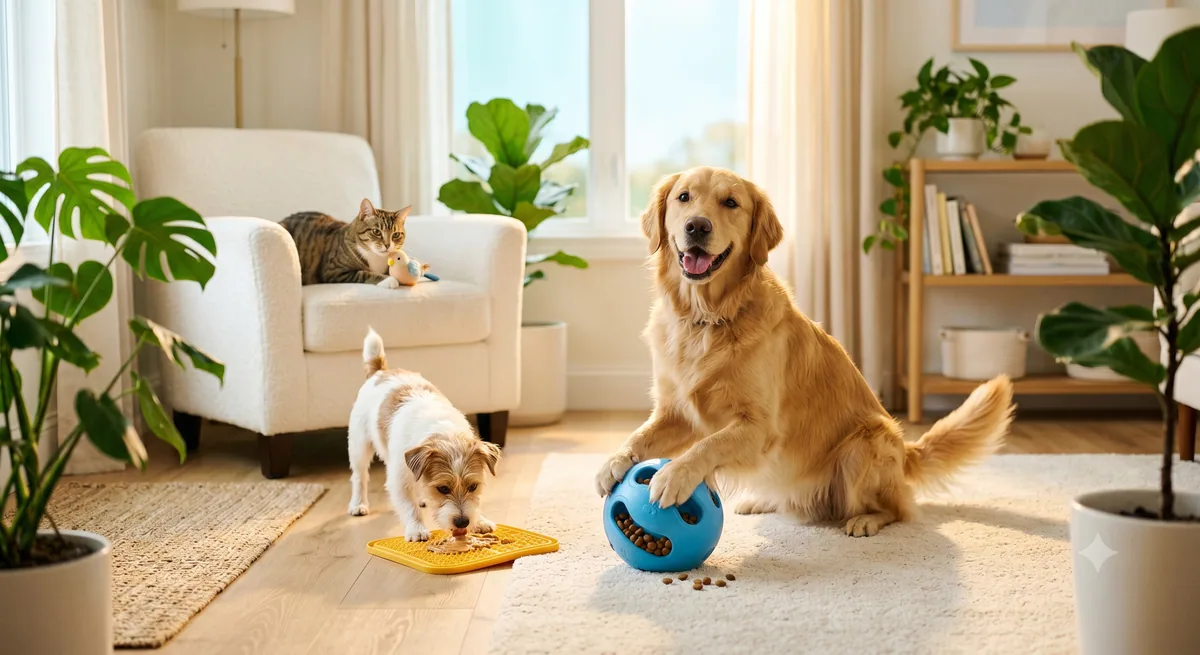
In multi-pet households, provide separate enrichment stations to prevent resource guarding during anxious periods. Each pet should have their own departure toy in a different area of the home. Competition over high-value items can increase anxiety rather than reduce it, especially if one pet tends to bully others.
Monitor whether one pet's anxiety is affecting others in the household. Anxiety can spread between pets through social facilitation, where one dog's stressed behavior triggers stress responses in housemates. Individual enrichment spaces help contain this emotional contagion and allow each pet to self-soothe without interference.
Calming Tools: Feature Comparison Table
Compare the most common types of anxiety relief toys to find the best fit for your pet's specific anxiety triggers and coping style.
Organizations like the VCA Animal Hospitals pet health library also offer trusted, science-backed advice that is well worth bookmarking.
Frequently Asked Questions
How do I know if my pet has anxiety?
Common signs of pet anxiety include excessive panting or drooling, pacing or restlessness, destructive behavior (especially near exits), house soiling despite being trained, excessive vocalization (barking, whining, howling), refusal to eat when alone, and attempts to escape. If these behaviors occur primarily during your absence or during specific triggers like storms, anxiety is the likely cause.
Do calming toys really work for anxious pets?
Calming toys provide genuine anxiety relief through scientifically supported mechanisms. Licking and chewing release endorphins that reduce stress hormones. Puzzle toys redirect focus away from anxiety triggers. Heartbeat toys provide comfort through simulated companionship. However, toys work best as part of a comprehensive approach that may include behavioral training and veterinary guidance.
What is the best toy for separation anxiety?
Frozen treat-dispensing toys are the most effective option for separation anxiety because they occupy your dog during the critical first 30-60 minutes of your absence, when anxiety peaks. A KONG stuffed with wet food and frozen overnight provides extended engagement. Present it at the exact moment you leave and collect it when you return to maintain its special status.
Can anxiety toys replace medication?
For mild anxiety, enrichment toys combined with behavioral modification may be sufficient without medication. For moderate to severe anxiety, toys are an important supplement to a treatment plan that may include prescription medication, professional behavioral training, and environmental modifications. Consult your veterinarian for cases where your pet cannot function normally despite enrichment efforts.
How long does it take for calming toys to work?
Individual play sessions with calming toys provide immediate short-term relief lasting 20-60 minutes. The long-term conditioning effect, where your pet begins to associate certain toys with safety and relaxation, typically develops over 2-4 weeks of consistent use. Departure routine conditioning using enrichment toys usually shows noticeable improvement within 3-6 weeks.
Are there calming toys for cats?
Yes, cats benefit from calming toys designed for their unique anxiety triggers. Puzzle feeders redirect anxious energy into problem-solving. Catnip and silvervine toys trigger a temporary euphoric state that reduces stress. Enclosed cat beds and tunnel toys provide safe hiding spaces where cats feel protected during stressful events like parties or thunderstorms.
What should I avoid with an anxious pet?
Avoid punishment for anxiety-driven behaviors, as this increases fear and worsens the condition. Do not force anxious pets to confront their triggers without professional guidance. Avoid high-stimulation toys during active anxiety episodes because they can increase arousal rather than calm your pet. Also avoid leaving multiple unfamiliar toys during departures, as novelty can increase rather than decrease anxiety in sensitive pets.
Browse Calming Toys
Free US shipping on every order. No minimum purchase required.
Browse Calming Toys →