The right dog bed size comes from measuring your dog in the positions it actually sleeps in, then comparing that with the bed's usable interior, not its outside footprint. Size names such as Medium or XL are not standardized between brands, so a quick measurement at home is the most reliable shortcut you have.
This guide walks through that measurement step by step, explains why bolsters and walls change the numbers, and shows how to check a listing before you order. It is part of our complete dog beds guide, which covers bed styles, support and placement in more depth. We have not lab-tested the products shown in our illustrations; the examples here are measuring exercises, not product rankings.
Watch how your dog sleeps before you measure
Start with a few days of casual observation. Does your dog sleep curled into a tight circle, lie on one side with legs extended, sprawl on its back, or switch between positions through the night? Each habit needs a different shape of space. A curled sleeper can be comfortable on a compact round bed, while a side sleeper who stretches out needs length and width that a round nest may not provide.
Note where the dog chooses to rest as well. A dog that presses its back against the sofa or rests its chin on a cushion may appreciate a raised edge. A dog that avoids enclosed spots and sprawls on cool floors may be happier on a flat mattress with open sides. You are building a picture of the space the dog occupies, not guessing from breed averages.
Breed charts on retailer pages can narrow a search, but individual dogs vary in proportion, coat and habit. Two dogs of the same breed and weight can sleep very differently. The American Kennel Club's guide to choosing a dog bed makes the same basic point: large dogs need bigger beds, and the bed should give your dog more than enough space to stretch out. Observation tells you what "enough" means for your own dog.
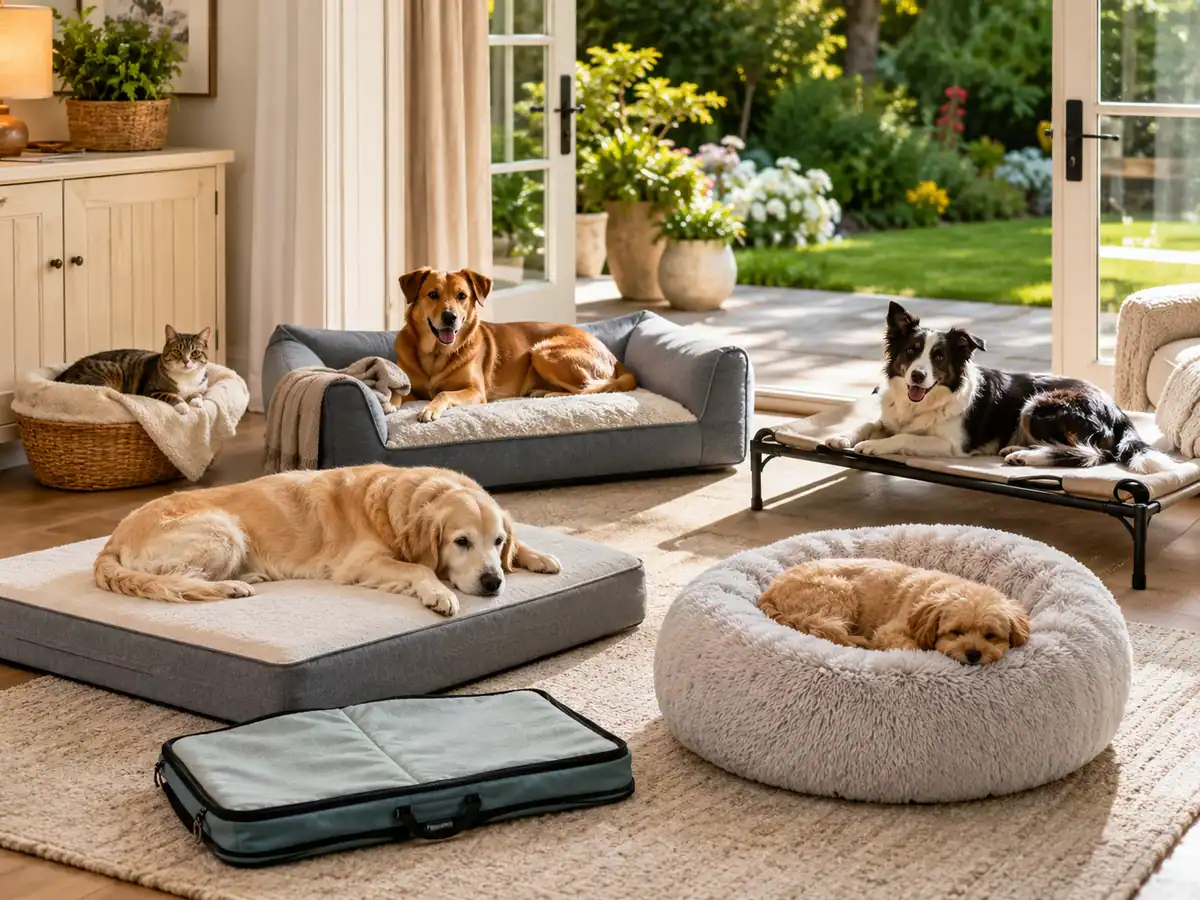
Measure your dog in three simple steps
You only need a soft tape measure, a notebook and a relaxed dog. Do not wake or reposition the dog to take measurements; wait until it settles naturally, or measure while standing and add the allowances below.
- Length while stretched out. Measure from the tip of the nose to the base of the tail while the dog lies on its side in its usual stretched position. If measuring a standing dog, measure the same nose-to-tail-base distance.
- Width while lying down. Measure across the widest part of the resting dog, from the back to the outstretched paws for a side sleeper, or across the curled body for a dog that sleeps in a ball.
- Add room to move. Add a comfortable allowance to both numbers so the dog can turn, shift and lie down without hanging off an edge. There is no official standard for this margin, so be generous rather than tight, and base it on how much your dog moves around during rest. More room is useful for sprawlers; less may be fine for a dog that always curls tightly.
If your dog is still growing, measure again every few weeks and plan for adult size, or choose an inexpensive interim bed. A puppy bed that fits today may be outgrown quickly, and a bed that is far too large can feel less secure to a young dog that likes to snuggle against an edge.
Compare the usable interior, not the outside dimensions
Most listings publish the outside footprint of a dog bed. That tells you whether it fits beside the sofa, but it may not describe the flat surface the dog will actually lie on. Bolsters, raised walls and rounded corners take up space. A bed that looks generous in a photo can have a noticeably smaller sleeping area once those walls are subtracted.
Here is a worked example with hypothetical numbers, not a real product. A bolster bed measures 40 by 30 inches outside, with padded sides about 5 inches wide on every edge. The usable interior is then roughly 30 by 20 inches. If your stretched dog plus allowance measures 34 by 24 inches, this bed will be too small for side sleeping even though its outside size looks larger than your dog.
| Listing detail | What it tells you | What to ask if it is missing |
|---|---|---|
| Outside dimensions | Floor space the bed occupies | Usable interior dimensions |
| Bolster or wall width | How much the edges reduce the sleeping area | Width of each side, not only the height |
| Mattress thickness | Depth of the sleeping surface | Thickness under the dog, not including raised edges |
| Size name (S, M, L, XL) | Only the seller's own category | The measurements behind that name |
| Recommended dog weight | A rough guide from the maker | Length and width, since weight does not show body shape |
When a listing gives only outside dimensions and a weight range, message the seller before buying. A clear answer about interior size is worth more than a size name. For large and giant dogs, our large dog bed fit checklist goes into extra checks such as weight capacity and how easy the bed is to move.
Pick a shape that fits the measurements
Once you know the numbers, match them to a bed shape. Shape affects how much of the listed size your dog can use.
- Rectangular mattress or flat cushion: nearly all of the listed area is usable, which suits side sleepers and sprawlers.
- Bolster bed: the raised edge offers a place to rest the head or lean, but it reduces the sleeping area. Check both interior dimensions.
- Round or donut bed: designed for curling. Compare the interior diameter with your dog's curled width, and remember that a stretched dog will not fit a round bed of the same nominal size.
- Elevated cot: the frame usually matches the sleeping surface, but check the height the dog has to step onto.
- Crate mat: sized to a crate's interior. Measure the inside of your crate, not the crate's advertised outside size, and make sure the mat does not block the door.
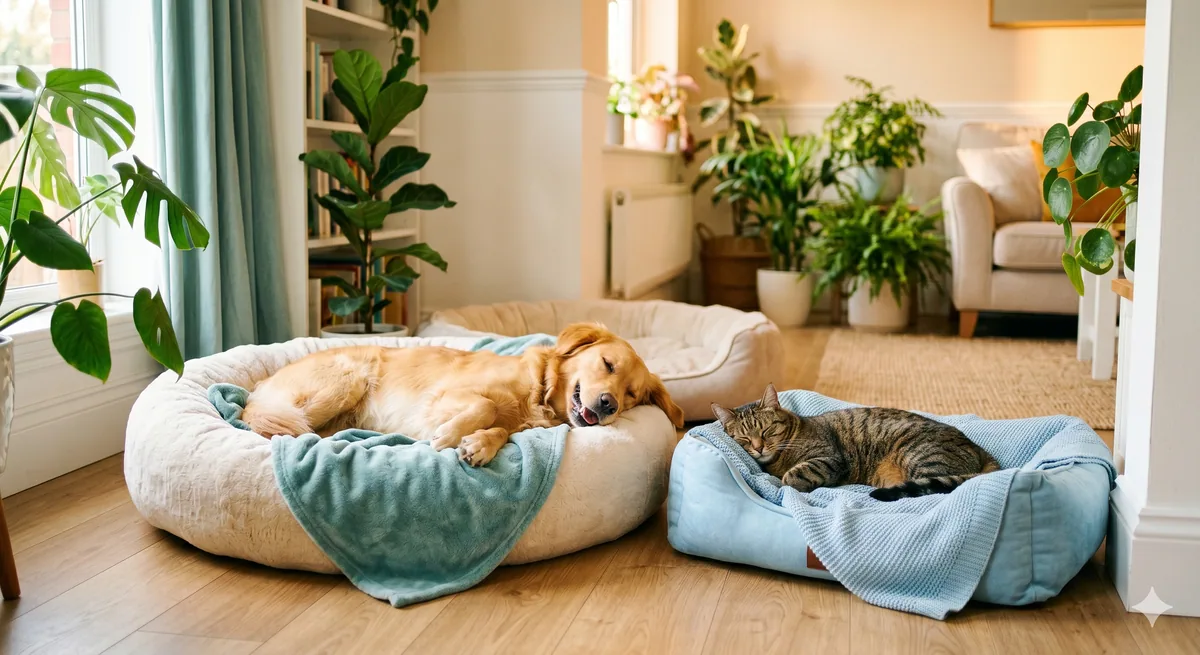
If your dog uses both curled and stretched positions, prioritize the stretched measurement. A curled dog fits comfortably on a bed sized for stretching, but the reverse is not true.
Check the room as well as the dog
A correctly sized bed still has to fit its location. Measure the floor space where the bed will go, including clearance for the dog to walk on and off without squeezing past furniture. Leave space around doors and walkways so the bed does not become an obstacle, and so the dog is not stepped over constantly while it tries to rest.
The RSPCA's advice on creating a good home for your dog recommends a comfortable, dry, draught-free, clean and quiet place to rest undisturbed. That guidance is about location more than size, but it matters for sizing too: a large bed squeezed into a busy hallway meets the measurement test and fails the rest test.
If you have more than one dog, the RSPCA also advises providing enough beds and resources for each dog so they do not compete. Plan one appropriately sized bed per dog rather than one oversized bed they are expected to share.
Size for age, mobility and coat
Measurements are the starting point, but a few situations change the choice.
Senior dogs or dogs with stiff joints
An older dog may need a lower entry and a surface that is easy to stand up from, in addition to enough room. The American College of Veterinary Surgeons notes that high-impact activities such as jumping can increase joint inflammation and pain in dogs with osteoarthritis, so avoid beds that require a jump or a tall step. Our guide to supportive and orthopedic dog beds explains which construction details to compare. If your dog shows pain or stiffness, speak to your veterinarian; a bed is not a treatment.
Puppies
Size for the next few months rather than the adult dog if the adult size is still uncertain, and choose a cover you can wash easily during house training. The AKC guide highlights machine-washable beds or removable covers for puppies and older dogs who may have accidents.
Heavy coats and warm homes
A dog that runs warm may stretch out more to cool down, which increases the length it needs. Measure on a warm day if possible, or add a little extra allowance.
Before you order: a sizing checklist
Run through this list with the product page open. Leave a line blank if the listing does not answer it, and ask the seller instead of assuming.
| Check | Your number or answer |
|---|---|
| Dog's stretched length plus allowance | Nose to tail base, plus room to turn |
| Dog's resting width plus allowance | Widest resting position, plus room to shift |
| Bed's usable interior length and width | From the listing or the seller |
| Entry height | Comfortable for your dog to step over |
| Floor space at the chosen spot | Bed footprint plus walking clearance |
| Cover care | Removable? Fits your washing machine? |
| Return conditions | Can you return a bed that turns out too small? |
Cleaning is easy to overlook while focusing on size, but very large covers may not fit a home washing machine. Our washable dog bed guide explains how to check covers, liners and filling separately.
Frequently asked questions
How do I measure my dog for a bed?
Measure from the tip of the nose to the base of the tail while your dog lies stretched out in its usual position, then measure its resting width. Add a comfortable margin to both so the dog can turn and shift without hanging off an edge.
Should a dog bed be bigger than the dog?
Yes. The usable sleeping area should be larger than your dog in its largest regular resting position, so it can turn around, lie down and stretch. Compare the interior surface, because bolsters and walls reduce the space inside the outside dimensions.
Are dog bed size names the same between brands?
No. Size names such as Medium or Large are set by each seller and are not standardized. Always compare the actual measurements, and ask the seller for interior dimensions if the listing only gives outside size and a weight range.
Is weight a good way to choose a dog bed size?
Weight is only a rough guide because it does not show your dog's length or sleeping style. Two dogs of the same weight can need different beds. Use length and width measurements taken while your dog rests.
What size bed does a dog that curls up need?
A dog that always sleeps curled can use a round or donut bed whose interior fits its curled width with some room to settle. If the dog sometimes stretches out, size for the stretched position instead.
Can a dog bed be too big?
It can be too big for the room, harder to wash, or less cosy for a dog that likes to lean against an edge. Choose enough usable space for comfortable movement rather than the largest size available.
How do I choose a bed for a crate?
Measure the inside of the crate rather than its advertised outside size. The mat should lie flat, fit the floor without bunching, and leave the door free to close and open.
Order with confidence, then check the fit at home
When the bed arrives, place it where it will stay and let your dog explore it at its own pace. Watch a few normal rest periods. Can the dog lie in its favorite position without hanging over the edge? Does it step in and out easily? Does the bed stay in place on your floor? Those observations confirm the size far better than any chart.
If the dog consistently hangs off one end or avoids the bed, the size or shape may be wrong. Check the return conditions before removing tags or washing the cover. Revisit the size if your dog gains or loses weight, grows, or starts sleeping differently with age.
For the bigger picture on bed styles, materials and placement, read our dog beds guide. If you share your home with a cat too, our cat bed guide covers how cats choose resting spots. You can browse the dog accessories collection, and please contact us with any product size question before you order.