The best cat bed is one that matches where and how your cat already chooses to rest: warm, comfortable, often raised off the floor, and somewhere the cat feels safe and undisturbed. Cats pick their own sleeping spots, so a good bed works with those preferences instead of trying to change them.
This guide explains how cats choose resting places, which bed styles suit which habits, and how to size, place and introduce a new bed. It is part of our bed guide series; if you share your home with a dog too, see our dog beds guide. We have not tested the beds in our illustrations. Behavior guidance below is linked to the cat welfare charity it comes from.
How cats choose where to sleep
Cats spend a large part of the day resting. According to Cats Protection's guide to cats and sleep, domestic cats sleep for approximately 12 to 18 hours a day, resting or sleeping intermittently, and often prefer a warm, comfortable, elevated and safe place.
That description is a useful shopping brief. Each word points to a feature:
- Warm: soft, insulating fabrics, a raised rim to block drafts, or a spot near a sunny window.
- Comfortable: a cushioned base the cat can knead and settle into.
- Elevated: a bed on a shelf, window perch, cat tree or piece of furniture.
- Safe: somewhere quiet, with a clear view or a covered hideaway, away from busy walkways.
Cats Protection also notes that cats often rotate their preferred sleeping area. Do not be surprised if your cat uses a new bed for a week and then moves on for a while. Offering more than one resting option works better than expecting one bed to be used every day.
Match the cat bed style to your cat's habits
Watch where your cat naps now. The places it picks tell you which style to buy.
| If your cat likes to... | Consider | Check |
|---|---|---|
| Curl up in a tight ball | Round or donut bed with a raised rim | Interior diameter fits the curled cat |
| Hide in boxes or under furniture | Cave, igloo or hooded bed | Entrance size and whether the cover stays upright |
| Nap high up | Window perch, shelf bed or cat tree platform | Stable mounting and weight rating |
| Stretch out flat | Flat cushion or rectangular pad | Length for the stretched cat |
| Sleep near warmth | Radiator hammock or soft, insulating bed | Secure fitting and safe distance from heat sources |
Cats Protection's sleep guide mentions igloo beds and radiator hammocks as options, and even a cardboard box on its side with a soft blanket inside. The point is not to buy the most expensive bed but to offer the kind of space your cat already seeks.
Covered beds and hiding places
Many cats like to rest out of sight, especially when they are unsure or the household is busy. Cats Protection's advice on cats hiding recommends providing hiding places that are somewhere quiet where the cat will not be disturbed, up high because cats often feel safer further off the ground, covered over like an igloo bed, away from food, water and litter trays, and in a place the cat normally likes to hide.
A covered cave or igloo bed can meet several of those points at once. Place it where your cat already retreats, such as a quiet corner of a bedroom or on a sturdy shelf, rather than in the middle of a living room. Leave the cat to use it on its own terms, and do not pull it out of a hiding place to show it the new bed.
If your cat suddenly starts hiding or sleeping much more than usual, Cats Protection advises checking with your vet to rule out a medical issue. A new bed is not a fix for a change in behavior.
Choose the right cat bed size
Most cats like a bed that feels snug. Measure your cat while it rests in its usual position: across the curled body for a cat that sleeps in a ball, or from nose to base of tail for one that stretches. Add a little room so it can turn around and settle, but avoid a bed so large that it loses the enclosed feel many cats prefer.
For cave and hooded beds, check the entrance as well as the interior. The cat should be able to walk in and turn around without squeezing, and larger or older cats need an entrance that does not require crouching low.
If you have a large breed or a cat that sprawls, a flat cushion or rectangular pad may suit better than a round nest. As with dog beds, the listed outside size can be larger than the usable space inside a raised rim, so compare interior measurements where possible. Our bed sizing guide explains that difference in more detail.
Materials, warmth and cleaning
Look for a soft, warm surface your cat can knead, with a base that does not slide on hard floors or shelves. Plush and fleece-type fabrics feel warm; cooler, smoother fabrics can suit a warm home or summer months. Some cats also like a folded blanket or an item that smells familiar placed inside a new bed.
Cleaning matters because beds collect fur. Choose a bed with a removable, washable cover or a bed that can be washed whole according to its label, and check that it fits your washing machine. Our washable pet bed guide explains how to check each component's care instructions.

Where to put a cat bed
The location often decides whether a bed gets used. Good options include a sunny windowsill or perch, a quiet bedroom corner, a shelf or cat tree platform, and a spot near where the cat already sleeps. Avoid busy hallways, loud appliances, and areas where children or dogs will constantly pass.
Raised positions help many cats feel secure. Make sure any raised bed is stable and that the cat can get up and down easily; older cats may need a lower option or a step. For households with several cats, offer more than one bed in different locations so no cat has to share or compete for a favorite spot. Our guide to cat beds around the home covers placement across several rooms in more detail.
Cat beds in homes with dogs
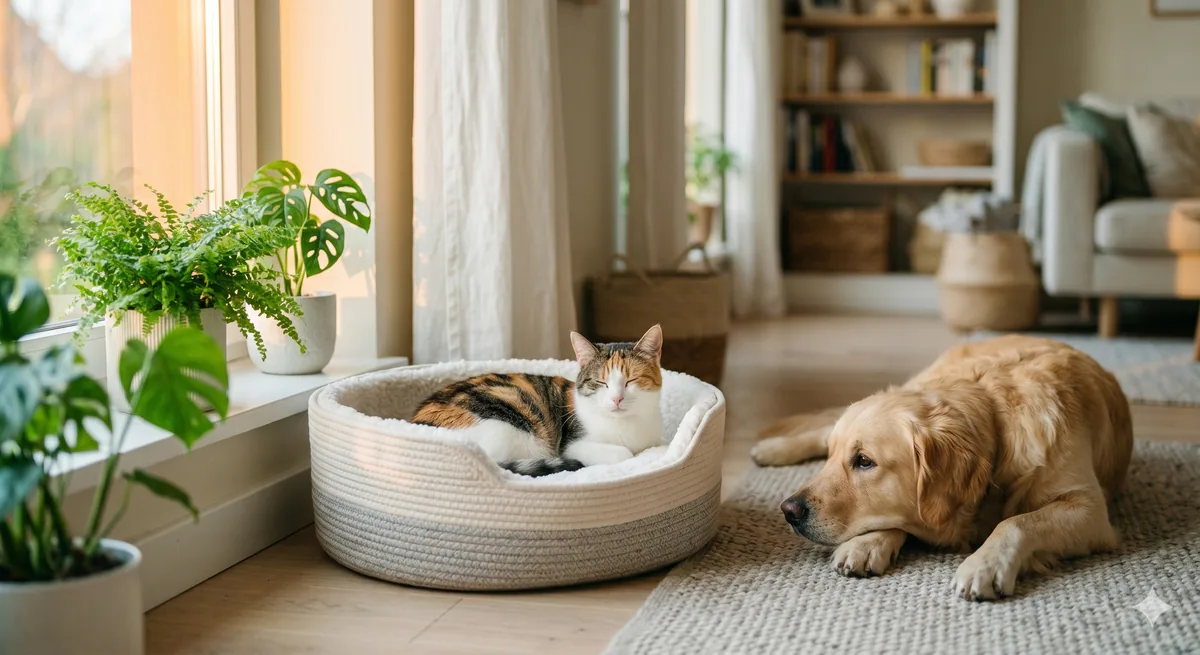
Cats and dogs sometimes share a bed, but a cat should always have its own place to retreat that the dog cannot reach. Raised beds, window perches and shelves are useful here because they give the cat height and distance. Do not put the cat bed in the dog's main resting area, and do not encourage a dog to investigate the cat's bed.
If you are choosing beds for both pets, our dog beds guide covers the dog's side, including placement that keeps both animals comfortable.
Frequently asked questions
What kind of bed do cats like best?
It depends on the cat. Cats Protection says cats often prefer a warm, comfortable, elevated and safe place. Watch where your cat already naps and choose a round, covered, raised or flat bed to match.
Why won't my cat use its new bed?
The location is often the problem. Move the bed to a spot your cat already uses, add a familiar blanket, and give it time. Cats also rotate their sleeping spots, so a bed may be used on and off.
Do cats prefer covered beds?
Many cats like somewhere to hide. Cats Protection recommends hiding places that are quiet, raised, covered like an igloo bed, and away from food, water and litter trays. Others prefer open beds with a view.
How big should a cat bed be?
Most cats like a snug bed. Measure your cat in its usual resting position and add a little room to turn. For cave beds, check that the entrance is easy to walk through.
Where should I put a cat bed?
Choose a quiet, warm spot such as a sunny window, a bedroom corner or a stable shelf, away from busy walkways, loud appliances, the litter tray and food bowls.
How much do cats sleep?
Cats Protection states that domestic cats sleep approximately 12 to 18 hours a day, resting intermittently. If your cat suddenly sleeps or hides much more than usual, check with your vet.
Can my cat and dog share a bed?
Some do, but your cat should always have its own bed that the dog cannot reach, such as a raised perch or shelf bed, so it can rest undisturbed.
Introduce the new bed and let your cat decide
Put the new cat bed where your cat already likes to nap, add a familiar blanket if you have one, and then leave it alone. Cats Protection advises not waking or disturbing a cat when it goes to its favorite nap spot, and the same patience works with a new bed. Some cats move in immediately; others take days.
Browse our cat accessories collection and check the size and care details on each product page, or contact us with a question about a specific bed. For more resting spots across the home, read our cat beds placement guide.