Indoor cats do best with several cat beds in different places, so they can choose between warm, raised, hidden and quiet spots as the day changes. One bed rarely covers every need, and cats naturally move between favorite resting places.
This guide is about planning cat beds across your home: how many, which types, and where each one goes. For choosing a single bed that suits your cat's habits, read our companion cat bed selection guide. Guidance below links to the cat welfare sources it comes from; we have not tested the beds shown in our illustrations.
Why one bed is rarely enough
Cats rest for much of the day. Cats Protection says domestic cats sleep for approximately 12 to 18 hours a day, resting intermittently rather than in one long stretch, and often prefer a warm, comfortable, elevated and safe place.
The same guide notes that cats often rotate their preferred sleeping area, a behavior also seen in the African wildcat, which moves between safe spots within its territory. In a home, that means your cat may use one bed in the morning sun, another in a quiet room during a busy afternoon, and a third near you in the evening.
Several beds let your cat follow those preferences without being forced into a single location. They also reduce competition in multi-cat homes and give a cat somewhere to go when a room gets noisy.
Map the resting zones in your home
Walk through your home and note where your cat already rests, where the sun falls at different times of day, and which rooms are quiet or busy. Then plan beds by zone.
| Zone | Best bed type | Why |
|---|---|---|
| Sunny window | Window perch or shelf bed | Warmth, height and a view outside |
| Quiet bedroom or office | Cave or igloo bed | Covered, undisturbed retreat |
| Living area | Raised bed on furniture or a cat tree platform | Close to the family but above foot traffic |
| Cool spot for warm days | Flat cushion or pad | Room to stretch out |
| Near a heat source | Radiator hammock or soft round bed | Warmth in colder months, fitted securely |
You do not need every type at once. Start with two or three beds in the places your cat already uses, then add others as you see which spots it prefers.
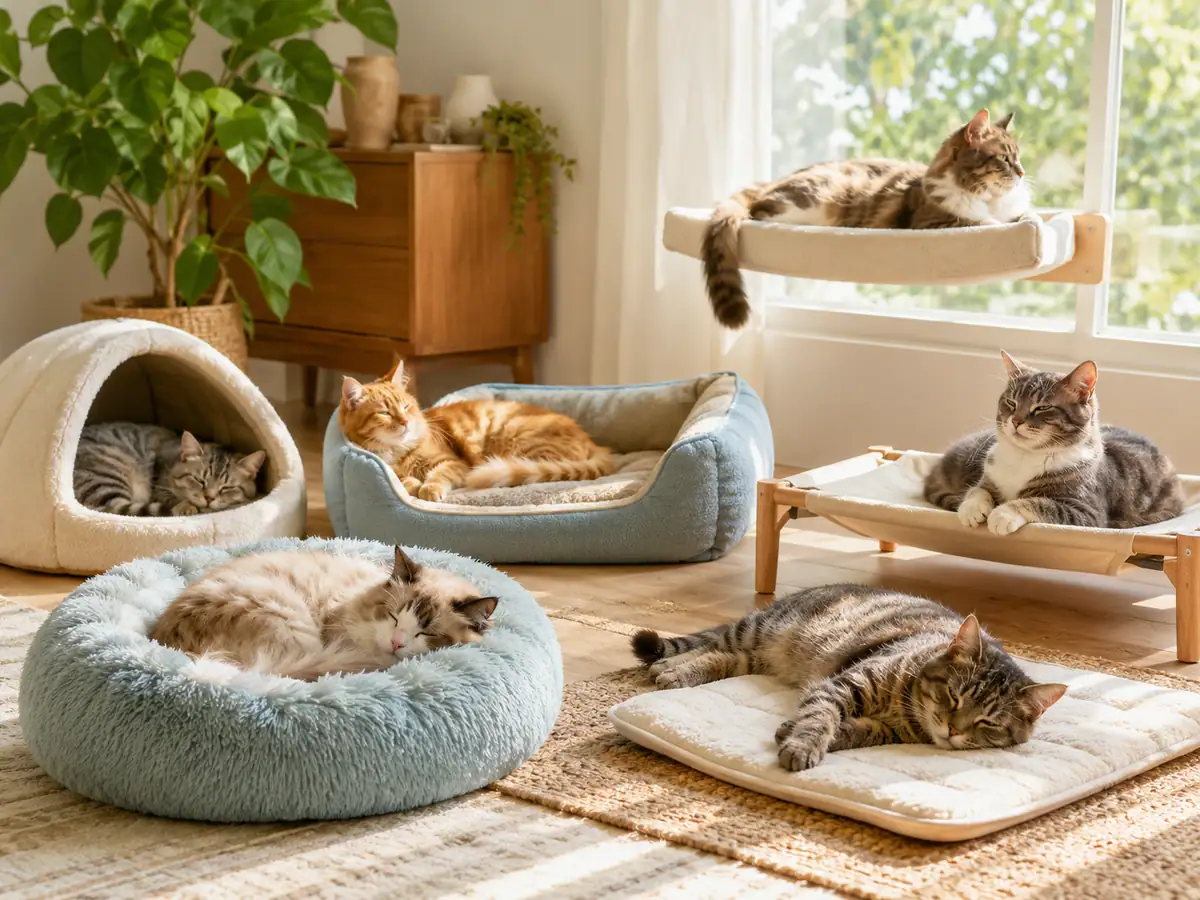
High places and hidden places
Two features come up again and again in cat welfare advice: height and cover. Cats Protection's guidance on hiding recommends places that are quiet, up high because cats often feel safer further off the ground, covered over like an igloo bed, away from food, water and litter trays, and in spots the cat normally likes to hide.
Build both into your plan. A window perch or shelf bed gives height and a view. A cave bed in a quiet room gives cover. Some cat trees offer both, with a covered cubby low down and an open platform at the top.
For older cats or cats with stiff joints, keep at least one comfortable bed at floor level or add a step, so resting spots stay easy to reach.
Planning cat beds for more than one cat
In a multi-cat home, resources that cats have to share can become a source of tension. Plan beds so that each cat can rest somewhere without having to pass or displace another cat. A practical approach is to provide at least one bed per cat plus a spare, spread across different rooms and heights rather than grouped together.
Watch how your cats use them. Cats that are closely bonded may sleep curled together; others prefer to rest in separate rooms. Let them choose, and do not move a cat out of a bed to make room for another.
Keep beds separate from litter trays and food and water bowls. Cats Protection lists being away from those resources as one of the qualities of a good hiding place, and it applies to resting spots generally.
Cat beds in a home with a dog
When a dog shares the home, height becomes especially important. Raised beds, perches and shelves give a cat places the dog cannot reach. Cave beds should be placed out of the dog's main areas so the cat is not disturbed while hiding.
Some cats and dogs choose to rest near each other, but that should always be the cat's choice. Make sure each animal has its own beds; our dog beds guide covers the dog's side of the plan, including placement that leaves room for both pets.

Choosing each cat bed
For each zone, pick a bed that suits the spot and your cat's habits. A cat that curls up will want a round bed with a rim; one that stretches out will want a flat pad. Our cat bed guide goes into sizing, materials and style matching for a single bed.
Keep practical details in mind as you add more beds:
- Washability: several beds mean more laundry. Removable, machine-washable covers make regular cleaning manageable. Our washable pet bed guide explains how to read care labels for each part.
- Non-slip bases: especially for beds on shelves, windowsills and smooth floors.
- Size: snug for curling cats, longer for stretchers. Check the usable interior, not just the outside dimensions.
- Safety: avoid loose strings or small decorations a cat could chew, and fit radiator hammocks and window perches securely.
Indoor safety around windows and high spots
Window resting spots are popular with indoor cats, but open windows and balconies carry a fall risk. Cats Protection's indoor cat guide warns that any cat can fall, that young cats under two are particularly susceptible, and suggests measures such as wire mesh or netting across a balcony or a sturdy window screen designed for cats.
If you place a bed or perch near a window that opens, make sure the window is screened or kept closed while the cat is there. Keep perches away from unsecured blinds cords as well.

Keep the setup working over time
Check how the beds are used every few weeks. Beds that are never used can be moved to a different spot before you replace them. Wash covers on a regular schedule and inspect beds for flattened filling, loose threads or damaged fasteners.
Expect your cat's preferences to shift with the seasons. A sunny perch may be the favorite in winter and ignored in summer, when a cooler flat pad in a shaded room takes over. Rotating bed positions occasionally can refresh interest, but keep at least one familiar bed in place so your cat always has a known safe spot.
If your cat's sleeping or hiding habits change suddenly, Cats Protection advises checking with your vet, since more sleep or more hiding can sometimes indicate an underlying medical issue.
Frequently asked questions
How many cat beds does a cat need?
There is no fixed number, but several resting spots work better than one because cats often rotate where they sleep. Start with two or three beds in different zones and add more based on use.
How many beds for multiple cats?
Give each cat its own options so no cat has to displace another. A practical approach is at least one bed per cat plus a spare, spread across different rooms and heights.
Where do indoor cats like to sleep?
Cats Protection says cats often prefer warm, comfortable, elevated and safe places. Sunny windows, quiet bedrooms, shelves and cat tree platforms are common favorites.
Should cat beds be placed high up?
Many cats feel safer higher off the ground, according to Cats Protection. Include at least one raised bed, make sure it is stable, and keep a floor-level option for older cats.
Is a window perch safe for a cat?
It can be, if it is securely fitted and the window is closed or screened. Cats Protection warns that any cat can fall from open windows or balconies and recommends mesh or cat-safe screens.
Should cat beds be near the litter box?
No. Keep beds away from litter trays and food and water bowls. Cats generally prefer these resources to be separate.
Why does my cat keep changing where it sleeps?
Rotating sleeping spots is normal cat behavior, according to Cats Protection. Seasonal changes in warmth and light also affect favorite spots. Sudden changes in sleep or hiding are worth checking with a vet.
Start with two or three beds and build from there
Place a raised bed where the sun falls, a covered bed in a quiet room, and a comfortable bed near where your cat already rests. Watch which ones get used, then add or move beds to fill the gaps. Give each cat in the household its own options, and keep beds away from litter trays and food.
Browse our cat accessories collection and check size and care details on each product page, or contact us with a question. For help choosing a single bed, read our cat bed guide, and for dogs, see the dog beds guide.