🚚 FREE WORLDWIDE SHIPPING on every order — no minimum required! View Shipping Policy
Dog ToysCat ToysAll ProductsBlogAboutContact
Cat Care

Best Cat Scratching Posts of 2026: Complete Buyer's Guide

Livehappypet Team March 26, 2026 10 min read

Every cat scratches. It is not a behavioral problem - it is a biological necessity as fundamental as eating and sleeping. The question is never whether your cat will scratch, but where. A well-chosen cat scratching post protects your furniture, satisfies your cat's deepest instincts, and contributes to their physical and emotional health in ways that might surprise you.

This guide covers everything you need to know about choosing the right scratching post - from materials and sizes to placement strategies and our top product picks for 2026. For a broader look at feline enrichment, check out our complete best cat toys guide.

Why Cats Need to Scratch

Understanding why cats scratch is the key to providing the right scratching surface. Far from being destructive, scratching serves at least four essential biological functions that your cat cannot do without.

Cat parents might also find our best cat scratcher guide helpful.

Claw maintenance. Scratching removes the dead outer sheath (husk) of the claw, revealing the sharp, healthy claw beneath. This is the feline equivalent of filing your nails - without a proper scratching surface, dead claw sheaths build up, causing discomfort and potentially leading to ingrown claws. You will often find tiny translucent claw sheaths at the base of a well-used scratching post.

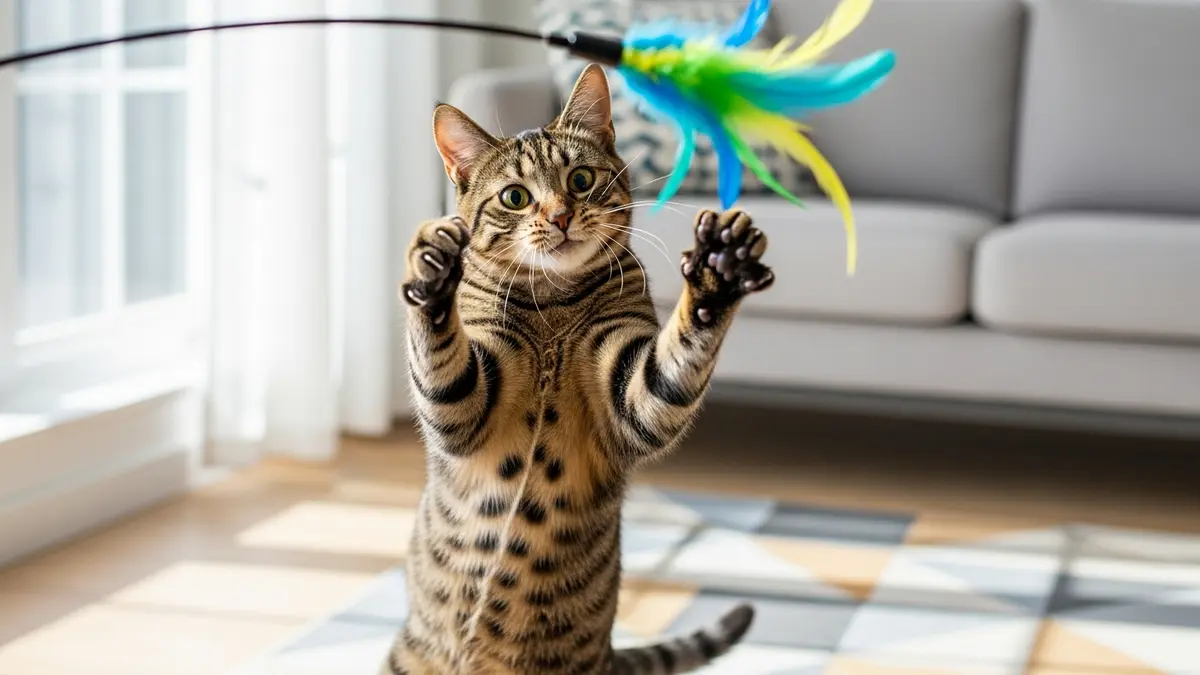
Full-body stretching. When a cat reaches up to scratch a vertical surface, they are performing a full-body stretch that engages the muscles in their shoulders, legs, back, and paws. This stretch is essential for maintaining flexibility and muscle tone, particularly for indoor cats that do not get the exercise of hunting and climbing outdoors. A scratching post that is too short deprives your cat of this vital stretch.

Territory marking. Cats have scent glands in their paw pads that deposit pheromones when they scratch. Combined with the visible marks left on the surface, scratching creates both a visual and olfactory territorial signal. This is why cats often return to the same scratching spots repeatedly - they are reinforcing their claim. It is also why placing a new post near a cat's existing favorite scratching area is critical for adoption.

Stress relief and emotional expression. Cats frequently scratch after waking, before play, or during moments of excitement. Scratching functions as an emotional outlet - a way to release built-up energy or express anticipation. Cats that lack appropriate scratching outlets often redirect this need toward furniture, doorframes, or carpet. If your cat is showing signs of anxiety, our calming toys guide covers additional enrichment strategies.

Pro Tip

Never declaw a cat as an alternative to providing scratching surfaces. Declawing is an amputation of the last bone of each toe, causing chronic pain, behavioral problems, and long-term mobility issues. Proper scratching surfaces solve furniture damage without harming your cat.

Types of Cat Scratching Posts

Scratching posts come in several orientations and designs. Most cats have a strong preference for one type, so understanding the options helps you make the right choice on the first purchase.

Type Best For Typical Height/Size Space Needed
Vertical Post Cats that scratch furniture, doorframes 32-40 inches tall Small footprint
Horizontal Pad Cats that scratch carpet, rugs 18-24 inches long Floor space
Angled Ramp Kittens, senior cats 18-30 inches Moderate
Cat Tree/Tower Multi-cat homes, active climbers 48-72 inches tall Large footprint
Wall-Mounted Small apartments, modern decor 24-36 inches Wall space only

Vertical Posts

The most popular style, vertical posts let cats stretch fully upward while scratching. Look for posts at least 32 inches tall with a heavy, wide base. If the post wobbles, your cat will reject it - stability is absolutely non-negotiable. Vertical posts work best for cats that are currently scratching the sides of couches, chair legs, or doorframes.

For more feline-friendly picks, browse our indoor cat toys roundup.

Horizontal Scratching Pads

Some cats strongly prefer scratching horizontal surfaces. If your cat is targeting your carpet or rugs, a horizontal scratcher is likely the best match. Cardboard scratching pads are the most popular horizontal option - they are inexpensive, replaceable, and most cats find the texture irresistible.

Angled Scratchers

Offering a compromise between vertical and horizontal, angled scratchers work particularly well for kittens that have not yet developed a strong preference. They are also excellent for senior cats with arthritis or mobility issues who find full vertical stretching uncomfortable.

Scratching Post Materials Compared

The surface material of a scratching post determines its durability, appeal to your cat, and long-term value. Here is what you need to know about each option.

Sisal Rope and Sisal Fabric

SmartCat Ultimate Scratching Post

Sisal Fabric 32 Inches Tall Heavy Base Best Overall

The SmartCat Ultimate is widely regarded as the gold standard in scratching posts. At 32 inches tall with a 16x16 inch base, it provides full-stretch scratching without any wobble. The woven sisal fabric surface offers superior durability compared to sisal rope - it does not unravel or catch claws. Veterinary behaviorists consistently recommend this post for its simple, effective design that prioritizes what cats actually need over aesthetic gimmicks.

Sisal is the most recommended scratching material among veterinary professionals. Sisal rope wraps around the post in a spiral pattern, providing a rough texture that cats find deeply satisfying to dig their claws into. Sisal fabric (flat woven) is even more durable and resists shredding longer. The only downside is that sisal generates visible debris as it wears, which requires occasional cleanup.

Corrugated Cardboard

PetFusion Ultimate Cat Scratcher Lounge

Cardboard Reversible Lounge Design Budget Friendly

The PetFusion Scratcher Lounge doubles as a scratching surface and a cat bed, making it one of the most space-efficient designs available. The high-density cardboard resists shredding far longer than standard cardboard scratchers, and the reversible design gives you twice the lifespan. Its curved shape encourages both scratching and lounging, and most cats take to it immediately without any training or catnip encouragement.

Cardboard scratchers are affordable and almost universally loved by cats. The soft tearing sound and resistance that cardboard provides is genuinely satisfying for cats - many prefer it over all other materials. The tradeoff is durability: cardboard scratchers need replacing every few months, and they produce visible cardboard debris.

If your cat needs variety, our top rated cat toys guide has great suggestions.

Carpet

Carpet-covered posts are common but generally not recommended by behaviorists. The problem: carpet mimics the texture of your home's flooring and upholstery, which can confuse cats about which carpeted surfaces are acceptable to scratch. If your cat already scratches carpet, a carpet-covered post may actually reinforce the unwanted behavior rather than redirecting it. Choose sisal or cardboard instead.

Wood

4CLAWS Wall-Mounted Scratching Post

Real Wood Wall Mounted Space Saving Modern Design

For cat owners who want a scratching surface that blends with modern home decor, the 4CLAWS wall-mounted post offers real wood texture that mimics natural tree bark. Wall mounting eliminates stability concerns entirely, and the slim profile takes up zero floor space. The natural wood grain provides an excellent claw-sharpening surface and many cats prefer it to synthetic materials, as it closely replicates what outdoor cats scratch in nature.

How to Choose the Right Post for Your Cat

Selecting the perfect scratching post requires observing your cat's current scratching habits and matching those preferences to a product design.

Watch where and how your cat scratches. If your cat reaches up to scratch vertical surfaces like couch arms or doorframes, get a tall vertical post. If they scratch the carpet, choose a horizontal pad. If they scratch both, consider providing one of each - many behaviorists recommend having at least two scratching surfaces in different orientations.

Height matters more than anything. A vertical post must be tall enough for your cat to fully extend their body while reaching up. For an average adult cat, this means at least 32 inches. For large breeds, aim for 36 to 40 inches. Short, stubby posts that do not allow full extension are the most common reason cats reject scratching posts in favor of taller furniture.

Stability is non-negotiable. If a post wobbles, tips, or slides when your cat uses it, they will abandon it immediately and return to your rock-solid couch. The base should be wide and heavy enough to withstand vigorous scratching without any movement. As a test: push firmly against the top of the post from the side. If it tips easily, it is not stable enough.

Placement determines adoption. Position the new scratching post near wherever your cat currently scratches most. Cats scratch in socially significant locations - often near sleeping areas, room entrances, or places where they spend the most time. A beautiful scratching post hidden in a back corner will be ignored. Once your cat has adopted the post, you can gradually move it (a few inches per day) to your preferred location.

Pro Tip

Sprinkle catnip on a new scratching post to accelerate adoption. You can also hang a feather toy from the top to encourage initial interaction. Most cats begin using a properly placed post within the first week.

Frequently Asked Questions About Cat Scratching Posts

Scratching is an essential behavior for cats that serves multiple purposes: it removes the dead outer sheath of their claws to keep them sharp, stretches the muscles in their shoulders, legs, and paws, marks territory through both visual marks and scent glands in their paw pads, and provides stress relief. Without an appropriate scratching surface, cats will inevitably scratch furniture, carpets, or walls.
Sisal rope and sisal fabric are widely considered the best materials for cat scratching posts. Sisal provides a satisfying resistance that mimics tree bark - cats' natural scratching surface. Sisal fabric is slightly more durable than sisal rope and does not catch claws as easily. Cardboard is another excellent budget option that many cats love, though it needs replacing more frequently. Avoid carpet-covered posts, as they can confuse cats about which carpeted surfaces are acceptable to scratch.
A vertical scratching post should be at least 32 inches tall - tall enough for your cat to fully extend their body while scratching. Cats stretch upward while scratching to work the muscles in their shoulders and back, so a short post does not provide the full benefit. For large cat breeds like Maine Coons, look for posts at least 36-40 inches tall. The post must also have a stable, heavy base so it does not wobble or tip during vigorous use.
Place the scratching post near the furniture your cat currently scratches - cats scratch in specific locations for territorial reasons, so position matters. Rub catnip on the post or hang a toy from the top to attract initial interest. When your cat uses the post, reward them with treats and praise. Never punish a cat for scratching furniture - instead, temporarily cover the furniture with double-sided tape or aluminum foil while redirecting to the post. Most cats will transition within 1-2 weeks with consistent encouragement.

Find the Perfect Scratching Post for Your Cat

Browse our curated selection of cat toys and accessories - from sisal posts to cardboard lounges - with free shipping to 50+ countries.

Shop Cat Accessories