Indoor cats live longer, safer lives than their outdoor counterparts - but they face a unique challenge that outdoor cats never encounter: environmental monotony. Without the natural stimulation of hunting, exploring, and territorial patrol, indoor cats depend entirely on their environment and their owners for enrichment. The right indoor cat toys can transform a boring apartment into a feline adventure zone. According to the ASPCA cat care guidance, choosing the right toys can support your pet's mental and physical wellbeing.
This guide covers the 12 best indoor cat toys across every category - from interactive wands and electronic prey simulators to puzzle feeders and window entertainment. For a broader overview of cat toys including outdoor-friendly options, see our complete best cat toys guide.
This article is for general informational purposes only and is not a substitute for professional veterinary advice, diagnosis, or treatment. Always consult your veterinarian about any health concerns, dietary changes, medication, or product safety questions specific to your pet. If your pet shows signs of distress, illness, or injury, contact a licensed veterinarian or emergency animal hospital immediately.
Why Indoor Cats Need More Enrichment
The statistics are sobering: indoor cats that lack adequate environmental enrichment are significantly more likely to develop obesity, behavioral problems, and stress-related health issues. An under-stimulated indoor cat is not just bored - they are at genuine risk for a cluster of conditions that veterinary behaviorists call "indoor cat syndrome."
In our experience reviewing dozens of indoor cat toys for the Livehappypet team, we've found that the best options share three traits: durable materials, appropriate sizing, and clear safety markings.
Cat parents might also find our cat scratching post guide helpful.
The enrichment gap. An outdoor cat encounters dozens of novel stimuli daily - smells, sounds, insects, other animals, changing weather. An indoor cat in a typical home encounters virtually none of that. This gap must be filled with intentional enrichment, and toys are the most accessible and effective tool available. Combined with scratching posts and vertical spaces, a well-planned toy collection can provide a genuinely fulfilling indoor life.
Physical health consequences. The Association for Pet Obesity Prevention estimates that over 60% of indoor cats are overweight or obese. Without the natural exercise that comes from outdoor activity, indoor cats must get their physical activity through play. Two daily sessions of vigorous interactive play can be the difference between a healthy-weight cat and one heading toward diabetes, arthritis, and heart disease.
Behavioral indicators of boredom. Watch for these signs that your indoor cat needs more stimulation: excessive sleeping (beyond the normal 12-16 hours), over-grooming or hair pulling, overeating, aggression toward other pets or family members, and destructive scratching on non-designated surfaces. If your cat displays any of these, increasing toy variety and interactive play should be the first intervention before assuming a medical cause.
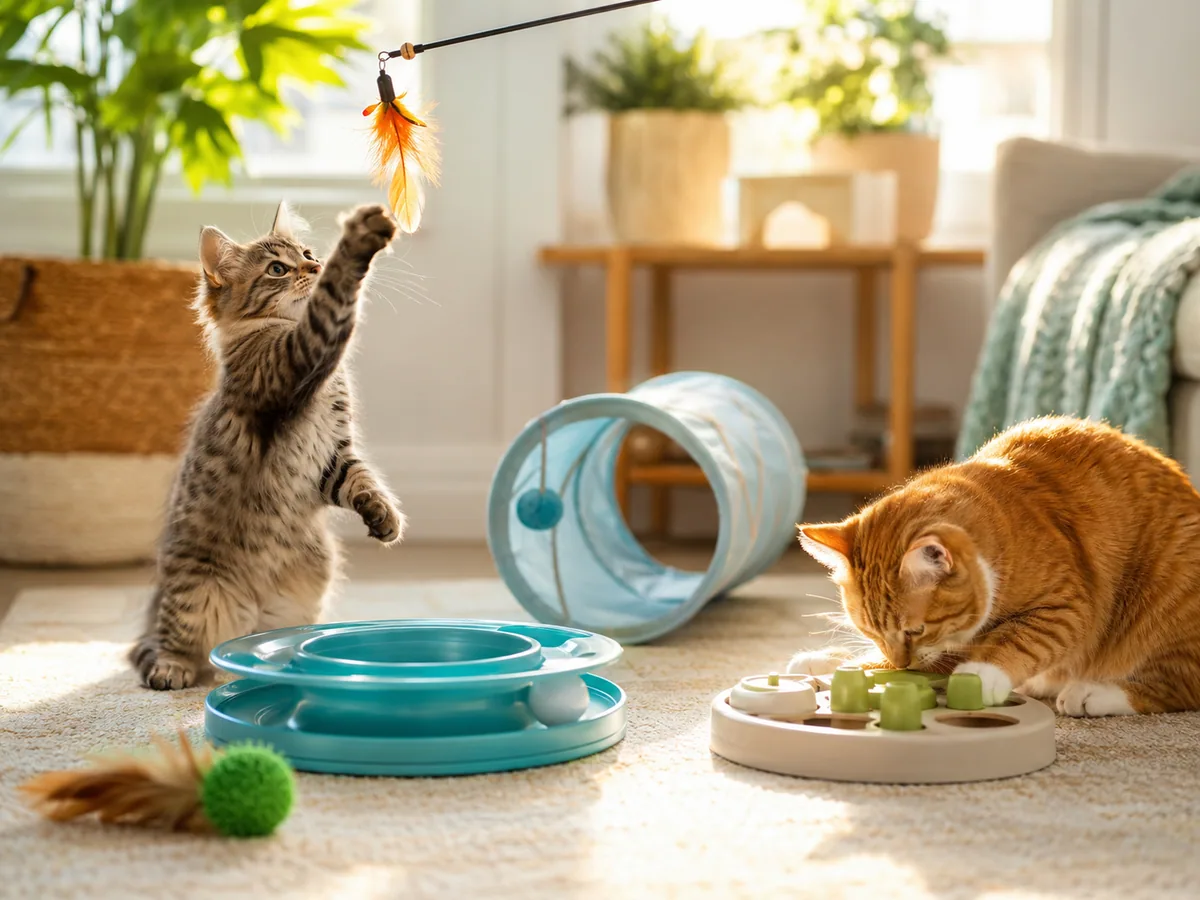
A well-enriched indoor cat needs: 2 daily interactive play sessions (10-15 min each), 3-5 solo toys available in rotation, at least 1 puzzle feeder, a scratching post, a window perch with a view, and vertical climbing space. This combination addresses all five categories of feline environmental enrichment.
Best Interactive Indoor Cat Toys
Interactive toys - those that require your participation - provide the deepest, most satisfying engagement for your cat. They simulate the social hunting experience that cats are wired for and provide the best cardiovascular exercise available indoors.
Da Bird Feather Wand Toy
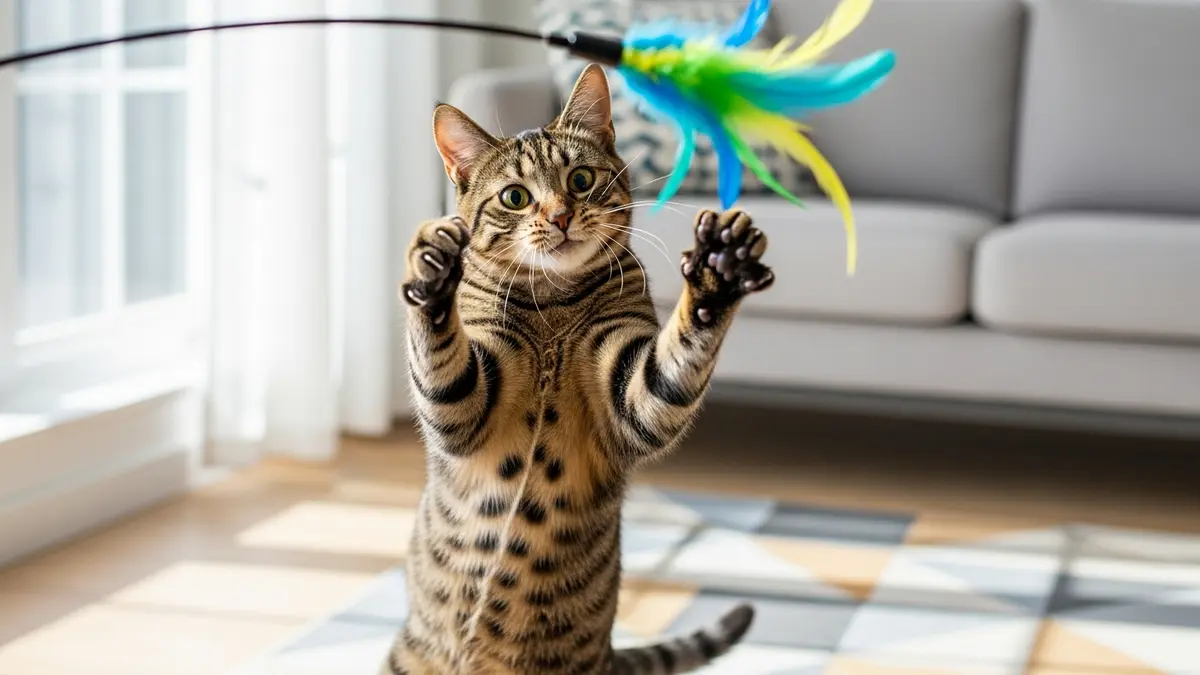
The Da Bird remains the single most effective interactive cat toy ever designed. The swivel mechanism makes the feather lure spin and flutter like a real bird in flight, triggering an almost involuntary prey response. Even cats that ignore other toys tend to become intensely engaged with Da Bird. Essential for indoor cats that need vigorous exercise.
Honestly, when we first started covering indoor cat toys, we underestimated how much sizing and material would matter to long-term safety. We've since adjusted how we recommend products.
Cat Dancer Interactive Cat Toy
Sometimes the simplest designs work best. The Cat Dancer is just a steel wire with rolled cardboard pieces attached, but the spring-like wire creates unpredictable bouncing and darting movements that drive cats wild. It is virtually indestructible, takes up no storage space, and at a fraction of the price of complex toys, it often outperforms them all. A must-have for any indoor cat toolkit.
For more feline-friendly picks, browse our best cat toys 2026 roundup.
Best Solo Play Toys for Indoor Cats
When you are at work or busy, your indoor cat needs toys that provide engagement without human participation. These are the toys that keep boredom at bay during the hours you cannot actively play.
Petstages Tower of Tracks
Three stacked circular tracks with brightly colored balls that spin and roll but never escape. The Tower of Tracks requires zero setup, zero batteries, and zero human involvement - cats can bat the balls and chase them around the tracks for hours. The non-slip base keeps it stable, and the multi-level design allows multiple cats to play simultaneously. One of the best investments for indoor cat entertainment.
SmartyKat Hot Pursuit Electronic Toy
A motorized wand hidden beneath a fabric cover creates fluttering, unpredictable movements that mimic prey hiding under leaves. The concealed motion is particularly effective for indoor cats because it taps into the ground-stalking instinct that many indoor cats develop in lieu of aerial hunting. Variable speed settings accommodate both energetic young cats and mellow seniors.
Puzzle Feeders for Indoor Cats
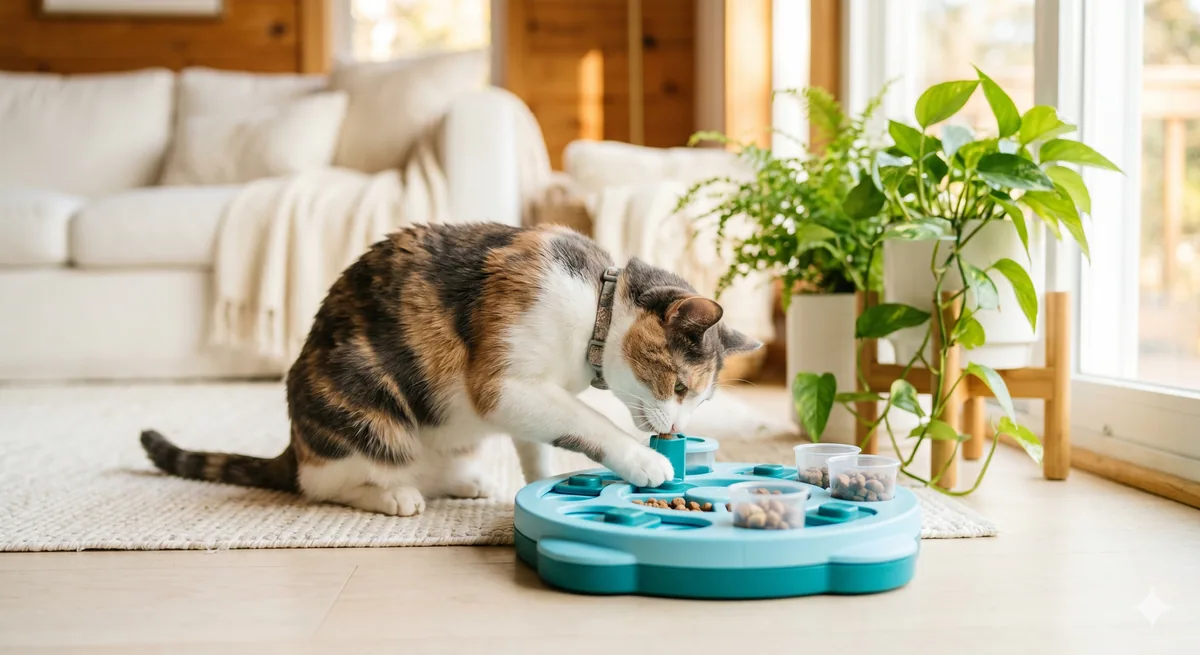
Puzzle feeders transform mealtime from a passive 30-second event into a 15 to 30 minute enrichment activity. For indoor cats, this is arguably the single most impactful enrichment change you can make - it addresses boredom, overeating, and lack of mental stimulation simultaneously.
Doc & Phoebe Indoor Hunting Cat Feeder
Five mouse-shaped feeders that you fill with kibble and hide around your home each day. Your cat hunts for meals throughout the day, engaging natural foraging instincts that a bowl completely suppresses. Developed by a veterinarian specifically for indoor cats, this system has been clinically shown to reduce anxiety, vomiting, and overeating. It is the most transformative single product you can buy for an indoor cat.
Even a simple slow-feeder bowl or a treat-dispensing ball provides meaningful enrichment compared to a standard food bowl. The key principle is making your cat work for their food - even a small amount of effort activates foraging pathways in the brain that provide genuine satisfaction. If your cat is showing signs of stress or anxiety, our calming toys for cats guide covers additional soothing options.
Window Entertainment and Perches
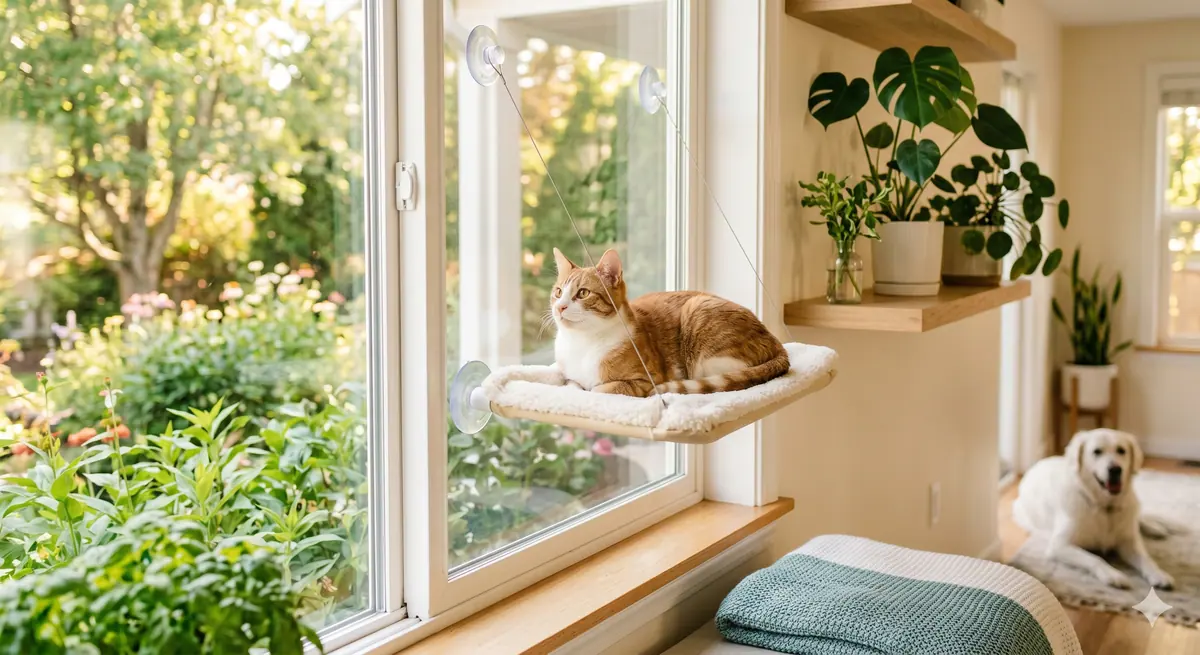
A window with a view is not just entertainment - it is a fundamental enrichment resource for indoor cats. The visual stimulation of watching birds, squirrels, pedestrians, and weather changes provides passive but meaningful sensory engagement throughout the day.
If your cat needs variety, our best cat scratcher guide has great suggestions.
Window perches give your cat a comfortable, elevated vantage point for extended observation sessions. Suction-cup mounted perches are easy to install and remove, while shelf-style perches offer more stability for heavier cats. Position the perch at a window with the most wildlife activity for maximum engagement. For additional guidance, see the Cornell Feline Health Center.
Window bird feeders turn any window into live cat television. A suction-cup bird feeder attached to the outside of a window will attract local birds, providing hours of intense visual stimulation for your indoor cat. This combination of perch plus bird feeder is one of the most cost-effective enrichment strategies available.
| Toy Category | Supervision Needed | Best For | Indoor Rating |
|---|---|---|---|
| Wand/Feather Toys | Yes - supervised only | Exercise, bonding | Essential |
| Ball Track Toys | No | Solo play, multi-cat | Essential |
| Electronic Motion | No (with auto-off) | Solo play, stimulation | Highly recommended |
| Puzzle Feeders | No | Mental enrichment, weight | Essential |
| Window Perch | No | Passive entertainment | Essential |
| Catnip Toys | No | Self-play, comfort | Recommended |
| Tunnels | No | Hiding, ambush play | Highly recommended |
Toy Safety for Indoor Cats
The toys indoor cats love most are also the ones that need the most care. String, ribbon, yarn, and the cords on wand toys are the biggest risk. VCA Animal Hospitals notes that cats commonly swallow thread, wool, rubber bands, and small toys, and that swallowed thread, string, or yarn can become a life-threatening emergency. Use wand toys only during supervised play and put them away in a closed drawer or cupboard afterward.
Check small parts before every new toy goes into rotation. Bells, glued-on plastic eyes, pom-poms, and loose feathers can be chewed off quickly. Give the toy a firm tug: if anything comes loose in your hand, it will come loose in your cat's mouth too. Retire toys once stitching splits or stuffing shows.
Use laser pointers as a warm-up, not the whole game. A cat that chases a light dot never gets to catch anything. Finish every laser session by landing the dot on a plush toy or a treat your cat can actually grab, and never shine the beam toward your cat's eyes.
Choosing Toys for Kittens, Adults, and Seniors
Kittens will play with almost anything, which is exactly why their toys need to be small, light, and free of detachable parts. Short wands, lightweight balls, and soft mice suit small mouths and developing coordination. Introduce puzzle feeders at the easiest setting and make them harder as your kitten gets the hang of them.
Adult cats can use the full range covered above: wands, ball tracks, electronic toys, and harder puzzle feeders. Watch how your cat hunts. Some prefer ground-level stalking (ball tracks, toys under a blanket), while others prefer aerial pouncing (feather wands held above head height), and buying for that preference wastes less money.
Senior cats keep their hunting instinct even when their joints slow down. Choose low-profile puzzle feeders, slow-moving electronic toys, and gentle wand play close to the floor. Several short sessions a day usually work better than one long one. If a senior cat suddenly loses interest in play, mention it to your veterinarian, since pain and other health problems can show up as reduced activity.
Creating an Indoor Enrichment Schedule
The most effective approach to indoor cat enrichment is not random - it follows a predictable daily schedule that aligns with your cat's natural activity patterns. Cats are crepuscular creatures, most active at dawn and dusk, and structuring play around those peaks maximizes engagement.
Morning routine: A 10-minute interactive wand session before you leave for work burns off morning energy and satisfies the dawn hunting urge. Follow it with breakfast served in a puzzle feeder, giving your cat a challenging activity as you head out the door.
Daytime (while you are away): Leave out 2-3 safe solo toys on rotation - a ball track, a catnip kicker, and an electronic toy with auto-shutoff. The window perch provides passive entertainment throughout the day. Avoid leaving wand toys, strings, or feather toys accessible without supervision.
Evening routine: The second interactive play session should happen in the evening, ideally 30-60 minutes before dinner. This mimics the natural hunt-catch-eat sequence and often helps cats settle for the night without the disruptive midnight energy bursts that plague many indoor cat owners.
Toy rotation: Every 3-4 days, swap out the available solo toys with different ones from your collection. This simple practice maintains novelty without requiring you to constantly buy new toys. Store retired toys in a sealed bag with a pinch of catnip to refresh them for their next rotation. For more gift ideas and toy options, check our gifts for cat lovers guide.
End every interactive play session with a treat or small meal. This completes the natural hunt-catch-eat cycle and gives your cat the satisfying conclusion their instincts demand. Cats that play without a food reward at the end may become frustrated over time.