The best dog beds for large dogs give a full-grown dog enough room to stretch, turn, and rest without hanging over the edge. Start by measuring your dog from nose to tail while they are relaxed, then add a comfort margin. A supportive base, washable cover, stable construction, and material suited to your dog's habits matter just as much as the label on the package. For bed styles beyond large-dog fit, see our complete dog beds guide and the step-by-step dog bed size guide.
For most large breeds, a rectangular mattress or roomy bolster bed is a strong starting point. Orthopedic foam can help distribute pressure for older dogs, while a durable, easy-clean cover is valuable for muddy paws and shedding. This guide explains how to compare a large dog bed by fit, support, safety, cleaning, and everyday value instead of choosing by appearance alone.
How to Measure for Large Dog Beds
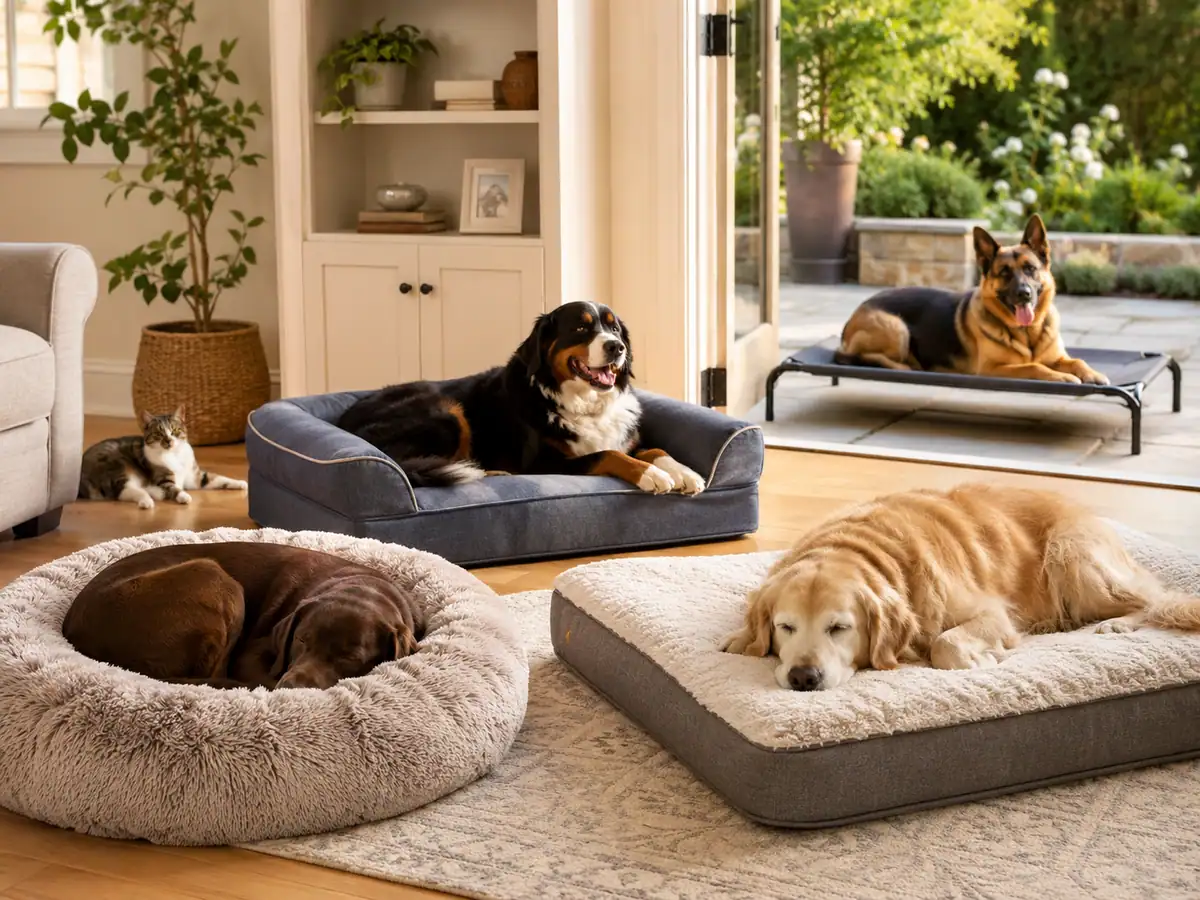
Measure your dog while they are sleeping in their favorite position, not only while standing. Record the length from the nose to the base of the tail, then measure across the shoulders and hips if your dog sleeps curled or sprawled. Add several inches to the length and width so the finished bed leaves room for stretching, repositioning, and a blanket without forcing the dog against the sides.
Large dog beds are often described with outside dimensions, but the usable sleep surface can be smaller because of bolsters, seams, or raised edges. Check the inside measurement and compare it with your dog's longest relaxed position. A dog that repeatedly moves to the floor may be telling you that the bed is too short, too warm, or too difficult to enter.
Doorways, crates, and vehicle spaces also affect the practical size. Measure the route into the room before ordering an oversized bed, and confirm that the cover can be removed without lifting the entire frame. The American Kennel Club dog bed guide also recommends matching the bed to a dog's size and sleeping preferences.
Choose Support for Weight and Sleep Style
A large dog's weight is spread over a bigger surface, so a thin cushion may compress quickly and leave the hips or shoulders close to the floor. Look for a base that returns to shape after pressure and does not develop a permanent dip after a few minutes. Foam density, thickness, and the quality of the support layer are more useful signals than a soft surface that feels plush in a shop.
Sleep style should guide the shape. Dogs that stretch out often prefer a flat mattress with no high front edge, while dogs that curl or lean may enjoy a bolster that provides a boundary. Dogs that change position frequently need enough clear surface to stand, turn, and settle without stepping over a tall wall. A lower entry can be helpful for seniors or dogs with stiff joints.
If your dog has pain, mobility changes, or a diagnosed joint condition, use the bed as comfort equipment rather than medical treatment. Ask your veterinarian about the most suitable support and placement. You can also compare our orthopedic dog bed guide and calming dog bed ideas before deciding on a style.
Materials, Covers, and Durability for Big Dogs
Large dogs create more friction when they turn, dig, and climb into bed, so construction quality matters. A strong outer fabric, reinforced seams, and a cover that stays attached to the base help the bed remain usable. If your dog chews fabric, inspect the first sessions under supervision and avoid beds with loose ties, exposed zippers, or decorative pieces that can be swallowed.
A washable cover is one of the best practical features for a large dog bed. Look for a zipper that opens widely, a cover that fits back over the foam without tearing, and care instructions that match your washing machine. Waterproof liners can protect the insert from accidents, drool, and wet fur, but they should not trap heat or make a loud crinkling sound that discourages rest.
For dogs that scratch before settling, choose a fabric that can tolerate normal nesting and keep a separate blanket for digging behavior. A bed designed for everyday use should still be inspected weekly for flattened foam, ripped seams, sharp frame edges, and dampness underneath. Our indestructible dog bed guide and chew-proof dog bed tips cover durability tradeoffs in more detail.
Temperature, Placement, and Everyday Comfort
Big dogs can retain heat, especially when they have thick coats or sleep in warm rooms. Place the bed away from direct heaters and in a location with comfortable airflow. A breathable cover and a cooling layer can be useful in summer, but a dog should always be able to leave the bed and choose a cooler floor surface if they become warm.
Placement affects whether a dog uses the bed. Choose a quiet area where the dog can still see familiar people, then keep food, water, and the path to the door easy to access. Avoid blocking a hallway or placing a heavy bed on an unstable platform. If your dog is easily startled, a bed with a wall behind it can create a more secure resting space.
Older dogs may need a bed on one level with a low step-in edge rather than a thick platform that requires jumping. Keep the surrounding floor dry and use a non-slip mat if the bed moves when the dog stands. For more options, review our outdoor dog bed guide, large dog enrichment ideas, and dog accessories collection.
Cleaning and Maintenance for a Large Dog Bed
A large dog bed should be cleaned on a schedule that matches how it is used. Shake out hair and debris several times a week, wash removable covers according to the care label, and dry the insert completely before putting it back. Damp foam can develop an odor and may irritate sensitive skin, so never seal a wet bed inside a cover.
Use a washable blanket as a top layer when your dog tracks in mud or sheds heavily. Keep a spare cover available so the dog always has a dry resting surface during laundry. Vacuum around and under the bed because hair, food particles, and moisture collect where the base meets the floor. Check the underside for discoloration after rainy walks.
Replace the bed when the foam stays compressed, the cover can no longer be cleaned, or the structure exposes sharp or swallowable parts. Before shopping, compare our washable dog bed guide with the best dog beds overview. When you order, our shipping information explains delivery, and the contact page is available for product questions.
Large Dog Bed Shopping Checklist
Before buying, write down the dog's relaxed length, shoulder width, weight range, preferred sleep position, and the surface where the bed will sit. Then compare the usable sleep area, support material, cover care, entry height, and replacement-cover availability. This short list prevents a common mistake: choosing an attractive bed that is too small once a blanket or bolster takes up space.
A practical setup can include one supportive indoor bed, a washable travel mat, and a second cover for laundry days. Choose the extra pieces only when they solve a real need. A Fluffy Round Plush Pet Bed, 24 Inch can complement a larger sleep surface, while a dog collection and the full pet supply shop make it easier to compare daily essentials.
The right large dog bed is the one your dog can enter, settle into, and leave comfortably every day. Recheck the fit after weight changes, a new sleeping habit, or a move to a different room. If you are unsure between two sizes, prioritize the usable surface and the dog's longest relaxed position rather than the smallest option that technically fits.
For more independent, vet-reviewed guidance on this topic, the American Kennel Club expert advice center is an excellent place to start.
Frequently Asked Questions
How big should a dog bed be for a large dog?
Measure your dog while relaxed from nose to the base of the tail, then add several inches for stretching and repositioning. Compare that result with the usable inside dimensions, because bolsters and thick edges reduce the sleeping surface.
Are orthopedic beds better for large dogs?
A supportive orthopedic-style bed can be useful for some large dogs because it spreads pressure over a broader surface. It is not a treatment for pain or joint disease, so ask your veterinarian if your dog has mobility changes or discomfort.
What type of bed lasts longest for a large dog?
Beds with strong seams, durable upholstery, replaceable covers, and a supportive base usually last longer than thin cushions. Match the fabric to your dog's nesting and chewing habits, and inspect the bed regularly.
Should a large dog bed have a bolster?
A bolster can give a dog that curls or leans a comfortable boundary. Dogs that stretch fully may prefer a flatter surface. Make sure the bolster does not reduce the usable space or create a high step for a senior dog.
How often should I wash a large dog bed?
Remove hair and debris several times a week and wash the cover whenever it is soiled or has a noticeable odor. Dry every component fully before use, and keep a spare cover when possible.
Where should I place a large dog bed?
Choose a quiet, dry location with comfortable airflow where your dog can still see familiar people. Keep the route to water and the exit clear, and avoid unstable platforms, heaters, and damp floors.
Shop Premium Dog Toys
Free US shipping on every order. No minimum purchase required.
Browse Dog Toys →