An indestructible dog bed should be treated as chew-resistant, not impossible to damage. Choose around your dog's chewing pattern, accessible seams, sleeping position, and cleaning needs. A tougher cover is only useful if the bed stays comfortable and intact. If your dog tears the bed, remove it. If fabric or filling may have been swallowed, contact your veterinarian.
Start with the chewing pattern, not the toughest label
Your first decision is whether the problem is occasional nibbling, repeated bed destruction, or swallowing material. A dog that catches one exposed zipper needs a different assessment from a dog that pulls filling from every cushion. Repeated fabric ingestion calls for veterinary guidance, not another durability claim.
Note when chewing happens, which part the dog targets, and whether pieces disappear. The ASPCA's guidance on destructive chewing explains that chewing can reflect exploration, boredom, frustration, or anxiety. Chewing mostly when alone, alongside pacing or vocalizing, deserves attention to possible separation distress. Persistent fabric sucking that is difficult to interrupt may also need professional behavior help.
Use these observations to set priorities before shopping. If the dog repeatedly attacks soft edges, compare designs with fewer accessible edges. If the dog already swallows bedding, ask your veterinarian about a suitable resting arrangement and behavior plan. Stronger fabric does not address why the chewing happens. Our guide to separation-related distress can help you organize observations for that conversation, without diagnosing the problem from damaged bedding alone.
Inspect the places teeth can reach
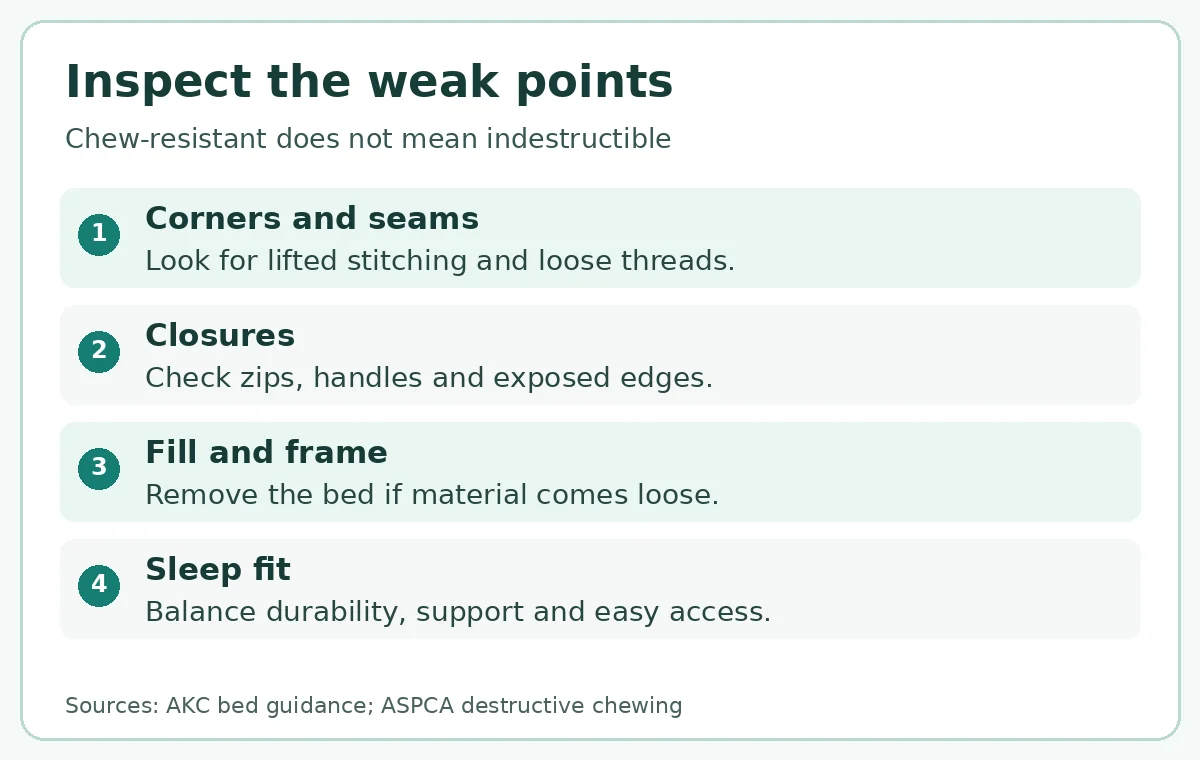
Look at the underside, corners, zipper ends, piping, handles, labels, and bolster joins. Product photographs that show only the top cannot tell you whether the closure is exposed underneath. Ask for those views before buying online.
Can the dog lift a loose fabric flap? Is the zipper pull tucked away when closed? Do handles or decorative loops remain within reach? Are seams already separating? A protected closure is useful only if its protective flap cannot easily be grabbed.
For a cot, inspect the fabric where it meets the frame, plus corner fittings, exposed fasteners, and any loose end caps. A metal frame does not make the sleeping panel immune to damage. Ask whether replacement covers or panels are available and whether their fitting instructions are clear.

Judge construction without inventing durability
Compare material descriptions with the actual design. Words such as heavy-duty, reinforced, or ripstop do not answer whether your dog can reach a vulnerable seam. Look for clear descriptions of the cover, underside, closure, and filling. Treat an unexplained "indestructible" label as a claim to investigate, not a safety assurance.
A smooth, close-fitting cover with fewer dangling details is worth considering when your dog targets those details. That is a design-based choice, not proof of bite resistance. Similarly, waterproofing concerns moisture management; it does not establish resistance to chewing or make swallowed material safe. A padded bed may still contain accessible foam or loose filling once the cover is breached.
Read any damage policy separately from the construction description. Check exclusions, replacement conditions, and which components it covers. Use our dog bed comparison guide to organize the available shapes and construction choices, but base your decision on the current product's documented features and your dog's behavior.
Match the bed to how your dog actually sleeps
Write down the dimensions of a comfortable resting area before comparing listings. For a dog that stretches out, our large dog bed sizing guide helps separate usable space from the outer footprint. Do not buy extra height or elaborate sides simply because a bed looks more substantial. An awkward entry, a crowded interior, or a surface the dog avoids can make a technically tougher purchase a poor everyday choice.
A durable bed is still a poor choice if your dog cannot rest comfortably on it. Watch several naps before choosing a shape. Does your dog stretch fully, curl tightly, lean against an edge, or change positions frequently? Compare the usable sleeping area with that posture, rather than choosing from breed names alone.
The American Kennel Club's dog bed guidance emphasizes appropriate sizing, room to stretch, and supportive cushioning, especially for dogs with joint problems. Bolsters occupy part of a bed's advertised footprint. Measure the interior resting space, and consider whether a high edge makes entry awkward for your particular dog.
During supervised use, observe whether the padding becomes thin beneath the dog and whether settling or getting up looks difficult. Do not diagnose joint pain from a bed trial. Ask your veterinarian about persistent discomfort or mobility changes. Our dog couches guide explores sofa-style layouts, but an appealing bolster is not a substitute for suitable support or safe access.
Would an elevated cot solve the right problem?
Keep support and chewing resistance as separate questions on your comparison sheet. Our orthopedic bed guide covers cushioning considerations, while the calming bed guide explains why an inviting shape is not treatment for anxiety. A product name does not establish either medical benefit or safe construction. If comfort and chewing risk point toward different designs, discuss that conflict with your veterinarian rather than choosing the strongest-sounding label.
An elevated cot deserves consideration when you want a different construction, not an automatic upgrade in chew resistance. Compare its accessible panel edges and fittings with the weak points your dog targets. A cot without a stuffed cushion removes that particular filling source, but its fabric panel remains something a dog could damage.
Cots and padded beds also feel different. The AKC notes that elevated designs can provide airflow and joint support. That does not mean every cot provides the same support as every cushion. Consider panel tension, room to turn, frame stability, entry height, and your dog's willingness to lie down.
If your dog needs substantial cushioning, ask your veterinarian whether a cot suits those needs. Adding a loose cushion may reintroduce the exact fabric edges you wanted to avoid. Compare practical setup options in the elevated dog bed guide. Choose the design that meets both resting needs and the identified chewing risks, rather than trading comfort for an unproven promise.
Introduce the bed with a clear stop rule
Plan a suitable chewing outlet separately from the sleeping surface. Our chew toy selection guide discusses matching an item to the individual dog. For a youngster, use the puppy chewing guide rather than assuming a product chosen for an adult is suitable. Introducing an alternative still requires observation: check its condition, watch how the dog uses it, and remove damaged pieces. A toy does not make already-torn bedding safe to leave in place.
Begin while you can watch your dog settle and inspect the bed afterward. Reward relaxed use. If chewing starts, redirect your dog toward an appropriate alternative and remove the bed from use if it is being damaged. Do not forcefully retrieve material from a dog that may guard it.
Use the pattern you recorded earlier to guide supervision. If chewing usually begins during household departures, do not assume a peaceful supervised introduction has resolved that trigger. The ASPCA recommends humane teaching, appropriate chewing outlets, exercise, and mental stimulation, and warns against punishment after damage has occurred. Build a manageable routine with our mental stimulation planning guide and everyday enrichment activity ideas; neither is a substitute for professional help with distress or ingestion.
Set the stop rule before the first use: an opening seam, loose piece, accessible filling, or damaged fitting means the bed comes out for assessment. Repeated destruction despite thoughtful selection is a reason to involve your veterinarian or a qualified behavior professional. It is not a reason to keep buying successively harder beds.

Make cleaning part of the construction decision
Read the care label before deciding that a removable cover solves maintenance. Our washable dog bed guide helps you compare what actually comes apart. Check whether you can inspect the underside after reassembly, whether the closure still sits out of reach, and whether the spare cover has the same fit. Keep the bed unavailable while components are drying or a fastening remains loose. Cleaning should end with another condition check, not just a fresher-looking surface.
Choose a bed you can clean according to its instructions without making reassembly a guessing game. The AKC recommends removable washable covers and notes the importance of cleaning the bed itself. Confirm what can be washed, how it must dry, and whether the filling or frame needs different care.
After washing, inspect the cover before fitting it back. Check corners and seams for new gaps, the closure for secure fastening, and the underside for wear. Make sure a replacement cover is intended for that bed and fits as instructed. A loose, improvised covering can create new reachable edges instead of resolving the original weakness.
Let cleaned components dry completely as directed before returning the bed. A wipeable or waterproof surface is not a reason to ignore seams, concealed moisture, or damaged inner layers. Schedule inspections around actual use: after a chewing incident, after cleaning, and whenever the dog starts investigating a new part.
Replace unsafe damage and know when to call
Remove a damaged bed when fabric tears, seams open, filling becomes reachable, or fittings loosen. Do not leave it available while deciding whether the damage looks cosmetic. A manufacturer-specified replacement component may restore an intact setup, but only after the remaining bed has been inspected and the component fitted correctly.
If fabric, foam, or another part may have been swallowed, contact your veterinarian promptly, even if your dog initially seems comfortable. Describe the material, the missing amount if known, and when it happened. Keep photographs or a sample of the damaged bed available. Let the veterinarian decide what assessment or monitoring is appropriate.
Cornell's veterinary guide to gastrointestinal foreign body obstruction identifies clothing and string among problematic swallowed objects. It lists vomiting, appetite loss, abdominal pain, diarrhea, and lethargy as possible signs. Suspected obstruction is an emergency. Seek urgent veterinary care if these signs follow suspected ingestion; do not wait for material to appear in stool. The goal is an intact, comfortable resting place, not proving an indestructible claim.
Frequently Asked Questions
Does a chew-resistant cover make loose stuffing safe?
No. The cover and the filling are separate safety considerations. Once a seam opens or a hole exposes the inside, remove the bed from use. If filling or fabric is missing and ingestion is possible, contact your veterinarian rather than assuming a tougher outer material prevented swallowing.
Should I choose a flat mattress instead of bolsters?
Choose by sleeping posture and the parts your dog targets. A flat mattress avoids bolster joins but still has edges and closures to inspect. Bolsters may suit a dog that likes leaning or curling, yet reduce usable resting space. Neither shape guarantees resistance to destructive chewing.
What if my dog attacks the zipper rather than the fabric?
Inspect whether the pull and zipper ends are exposed during normal use, including underneath the bed. Consider a design with a securely protected closure and no reachable loose flap. Retire a damaged cover. Replacing it with the same exposed arrangement may leave the original problem unchanged.
Can I put a soft topper on an elevated cot?
A topper changes both the resting surface and the chewing opportunities. Check whether it introduces loose corners, exposed filling, or an unsecured cover. Follow the cot instructions about additions. If your dog needs extra cushioning because of discomfort, ask your veterinarian whether the combined setup is appropriate.
Does a replacement guarantee mean the bed is safe unsupervised?
No. A replacement policy explains what the seller may provide after damage, not whether damage or ingestion can occur. Read the exclusions and covered components, then make a separate safety decision. Observe your dog with the bed and reassess after wear, washing, or a change in chewing behavior.
Is washable bedding enough for a dog that eats fabric?
Washability does not address ingestion. Remove damaged bedding and contact your veterinarian if any material may have been swallowed. Repeated fabric eating also warrants discussion of the behavior and a suitable resting arrangement. A clean cover is still unsuitable if your dog keeps tearing off and swallowing pieces.