Some days a full bath is not on the table. Your dog just had surgery, your senior dog cannot stand in a tub for long, the weather is freezing, or your dog simply panics at the sound of running water. That is where dry shampoo for dogs comes in. This guide explains what the different waterless products are, when they genuinely help, when they are the wrong tool, how to use them safely step by step, and which ingredients deserve a hard pass.
In This Article
- Quick Answer: What Is Dry Shampoo for Dogs?
- What Is Dog Dry Shampoo and How Does It Work?
- What Types of Dry Shampoo for Dogs Are There?
- When Does Dry Shampoo Actually Help a Dog?
- When Should You Skip Dry Shampoo and Bathe or Call the Vet?
- How Do You Use Dry Shampoo on a Dog Step by Step?
- Which Ingredients and Products Should You Avoid?
- How Should You Adjust Dry Shampoo for Your Dog's Coat?
- How Do You Choose a Good Dry Shampoo for Your Dog?
- What Do People Ask Most About Dry Shampoo for Dogs?
- Sources
Quick Answer: What Is Dry Shampoo for Dogs?
Dry shampoo for dogs is a no rinse grooming product, sold as a powder, foam, spray or wipe, that absorbs surface oil and freshens odor without a full bath. It is useful between baths, for seniors, after surgery and for water shy dogs, but it does not truly clean dirt, treat skin disease or kill fleas.
Updated October 21, 2026- Best use: a quick refresh between regular baths, not a replacement for them.
- Main types: powders, foams (often called waterless shampoo), pump sprays and pre-moistened wipes.
- Never use: human dry shampoo, aerosol cans near the face, or products heavy in essential oils such as tea tree.
- See a vet instead: for itching, redness, a strong smell that keeps coming back, hair loss or fleas.
What Is Dog Dry Shampoo and How Does It Work?
Answer: Dog dry shampoo is any grooming product meant to freshen a coat without rinsing. Powders absorb oil and are brushed out, while foams and sprays carry mild cleansers and deodorizers that you work in and towel off. They mostly reduce odor and greasiness; they do not wash dirt off the skin the way water does.
A regular bath works because water and shampoo lift oil, sweat, dander and dirt off the skin and carry them away down the drain. A dry shampoo skips the rinse, so whatever it loosens has to come out with a towel or a brush. That is why the results are lighter. Whole Dog Journal puts it bluntly: a dry shampoo mostly deodorizes your dog, and it is not truly removing dirt from the skin. Source: Whole Dog Journal, Dry Shampoo for Dogs.
That does not make dry shampoo useless. A dog that smells a little doggy, has a greasy patch on the back, or rolled in something mild can look and smell noticeably better after a few minutes of work. The trick is knowing what you are asking the product to do. Freshening is realistic. Deep cleaning, treating a skin problem or clearing out parasites is not.
The names on the shelf can be confusing. "Dry shampoo," "waterless shampoo," "no rinse shampoo" and "rinse free foam" are often used for the same idea. Read the directions rather than the front label: if it tells you to sprinkle and brush, it is a powder; if it tells you to massage in and towel dry, it behaves like a foam or spray.
What Types of Dry Shampoo for Dogs Are There?
Answer: There are four common types: powders you sprinkle in and brush out, foams you massage in and towel off, pump sprays you mist on and rub in, and pre-moistened wipes for spot cleaning. Foams and wipes suit most homes; powders suit short, oily coats; sprays need extra care around the face.
Each format has a sweet spot. The table below compares them side by side so you can match the product to your dog and your situation rather than to the packaging.
Wipes deserve a special mention because they are often the most practical "dry shampoo" of all. Muddy paws, a messy rear end or a wrinkle that collects grime are spot problems, and a wipe handles them without coating the whole dog. Our guide to dog wipes covers what to look for in the pack.
Whole Dog Journal points out that powders and manual pump sprays are safer choices than aerosol cans, which often rely on petroleum based propellants. That single rule, choosing a pump over a can, removes much of the risk before you even read the ingredient list. Source: Whole Dog Journal, Dry Shampoo for Dogs.
When Does Dry Shampoo Actually Help a Dog?
Answer: Dry shampoo helps when a full bath is impossible or unwise for a short time: between scheduled baths, for senior or arthritic dogs, during the no bath period after surgery, for dogs terrified of water, in cold weather and while traveling. In each case it keeps your dog comfortable until a real bath is possible again.
Between regular baths. Most dogs do not need frequent full baths, and washing too often can dry out the skin. A light refresh with foam or a wipe keeps a dog pleasant to cuddle in the weeks between washes. Our guide on how often to bathe a dog explains how coat type and lifestyle change the ideal schedule.
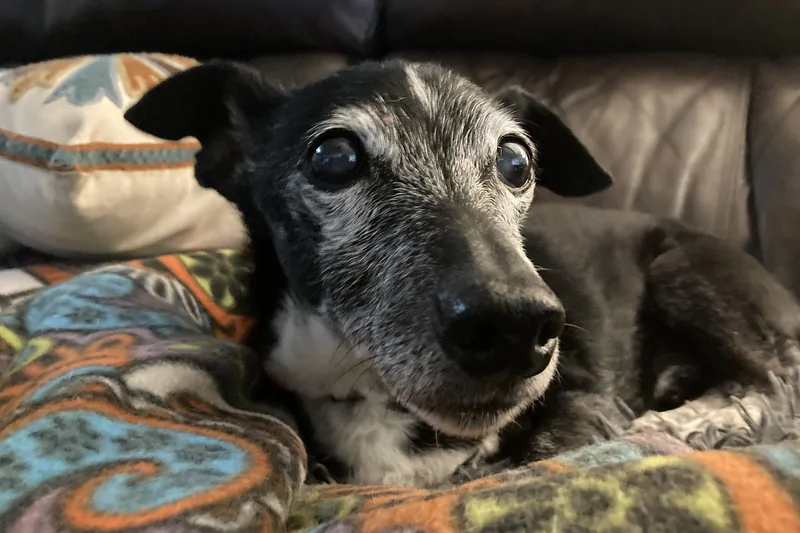
Senior and arthritic dogs. Standing on a slippery tub floor, being lifted in and out, and shivering while wet can be hard on an older dog. A dry clean on a non slip mat, with your dog lying down if they prefer, avoids most of that strain. Keep sessions short and stop if your dog seems sore.
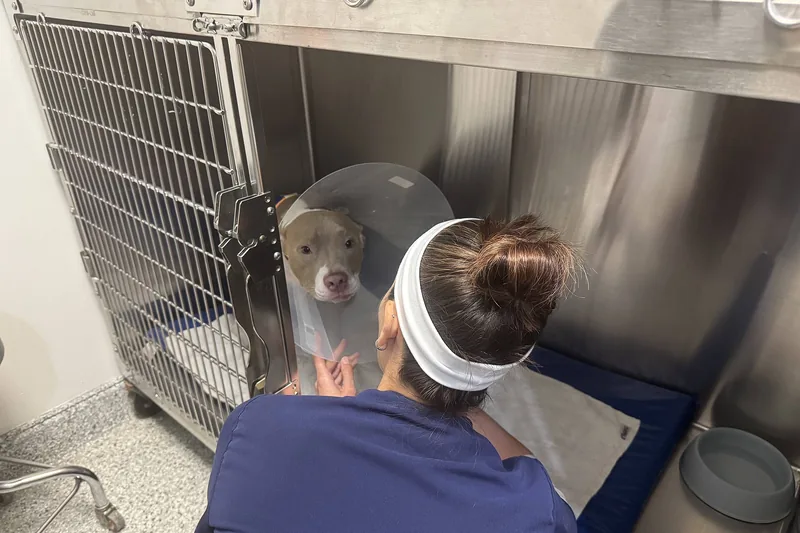
After surgery. VCA Animal Hospitals' surgical discharge instructions tell owners to keep the incision dry, not to bathe the dog, and to stop the dog from licking the wound. That leaves you with a dog who may smell of the clinic for a while. Wipes or foam on the head, back and legs, well away from the incision, can help, but only with your vet's approval. Source: VCA Animal Hospitals, Surgical Discharge Instructions for Dogs.
If your dog is wearing a cone, freshen the parts you can reach easily and leave the rest for later. Our guide to dog cones covers comfortable recovery collars that keep licking away from stitches while you wait for the all clear.
Dogs that hate water. For a dog who trembles at the tub, a calm session with foam and a towel can be a kinder routine, and it gives you a chance to build positive associations with handling. Pair it with treats and keep the bath itself for when it is truly needed.
Cold weather and travel. A wet dog in a chilly house, a campsite without a hose, or a hotel room before a family visit are all situations where a waterless refresh buys you time until you can do a proper wash at home.
When Should You Skip Dry Shampoo and Bathe or Call the Vet?
Answer: Skip dry shampoo when your dog is genuinely dirty, has rolled in something nasty, has itchy or inflamed skin, a persistent bad smell, flaky or greasy patches, hair loss, open sores or fleas. Real dirt needs water, and skin or parasite problems need a diagnosis, not a cover up with fragrance.
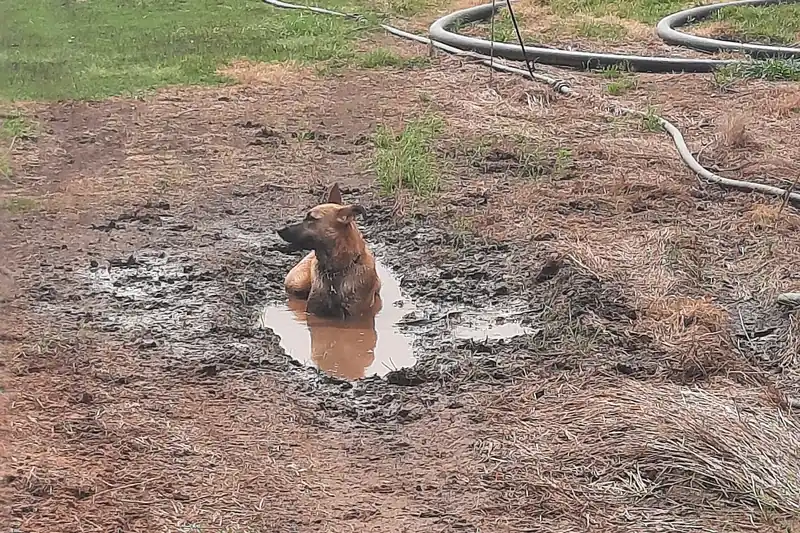
Real dirt and mud. A dog caked in mud, sand or something they rolled in needs a rinse. Rubbing powder or foam into heavy dirt just makes paste and can pull at the hair. Rinse first, then use a gentle dog shampoo to finish the job.
Skin trouble. Constant scratching, redness, scabs, a yeasty or rancid smell, dandruff that keeps coming back or bald patches are signs that something is going on in the skin. Masking the smell can delay the visit your dog actually needs. Your vet may prescribe a medicated dog shampoo or an antifungal dog shampoo that has to stay on the skin for a set contact time and then be rinsed, which no dry product can replace.
Fleas. Grooming dry shampoos are not flea treatments. If you see fleas or flea dirt, talk to your vet about an effective flea control plan for every pet in the home. A flea comb helps you check for them, and our guide to flea shampoo for dogs explains where shampoos fit and where they fall short.
Allergic or sensitive dogs. Dogs with known allergies can react to fragrance and preservatives that sit on the skin without being rinsed away. For these dogs, a gentle hypoallergenic dog shampoo and a proper rinse are usually the safer routine.
How Do You Use Dry Shampoo on a Dog Step by Step?
Answer: Brush out tangles first, test a small patch, apply the product to the body while avoiding the eyes, nose, mouth, ears and any wounds, work it down to the skin, wait as the label says, then towel off and brush out every trace. Finish with a treat and check the skin for redness afterward.
The routine below works for foams, sprays and powders. Wipes skip the waiting and brushing steps, but the same rules about the face and wounds apply.
- Read the label. Check that it is made for dogs, note any minimum age, and follow the stated amount and contact time.
- Brush first. Remove loose hair and tangles with a suitable dog brush so the product reaches the skin and does not get trapped in mats.
- Patch test. Try a small amount on one spot, such as the shoulder, and wait a day if your dog has sensitive skin. Skip the product if you see redness or itching.
- Set up calmly. Work on a non slip mat or towel in a quiet room with good airflow, with treats within reach.
- Apply to the body only. For foam, pump it into your hands first. For a pump spray, mist onto your hand or a cloth near the head, never straight at the face. For powder, sprinkle along the back and sides.
- Work it in. Massage against the direction of the hair so it reaches the skin, covering the neck, back, sides, chest and legs.
- Clean the face separately. Use a damp cloth or a plain, fragrance free wipe around the muzzle and under the eyes.
- Wait as directed. Give the product the time the label states, distracting your dog with a chew so they do not lick it.
- Towel and brush out. Rub with a dry towel, then brush thoroughly until no powder, foam or stickiness remains.
- Check and reward. Look over the skin for redness, praise your dog and give a treat so the next session is easier.
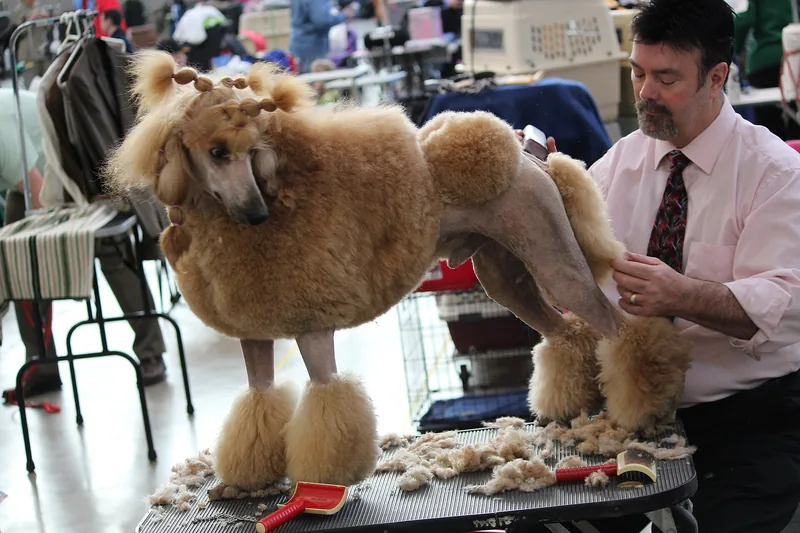
Whole Dog Journal notes that dry shampoos are not really time savers, because you still need to towel dry the dog or comb out a powder. Plan for a relaxed session rather than a rushed one. Source: Whole Dog Journal, Dry Shampoo for Dogs.
The towel and brush do most of the cleaning. Without that final step, oil and product stay in the coat, attract dust and can leave your dog feeling tacky. If you do not already own a good kit, our overview of dog grooming tools covers brushes, combs and towels for each coat type.
Which Ingredients and Products Should You Avoid?
Answer: Avoid human dry shampoo, aerosol cans sprayed near the face, products with strong fragrance, and essential oils such as tea tree, pine, peppermint, citrus, cinnamon, wintergreen, pennyroyal and ylang ylang. Because dry shampoo stays on the coat and dogs lick themselves, anything left behind can be swallowed or absorbed through the skin.
Human dry shampoo. Products for people are formulated for human skin and hair. The American Kennel Club explains that dog skin has a different acidity than ours and is thinner, with fewer cell layers, so human products can irritate it and strip protective oils. Choose something labeled for dogs. Source: American Kennel Club, Can You Use Human Shampoo on Dogs?.
Aerosol cans. Many human dry shampoos come in pressurized aerosol cans. The FDA published a voluntary recall by Unilever of several aerosol dry shampoo brands after the propellant was identified as the source of benzene, which the notice describes as classified as a human carcinogen. That recall involved human products, but it shows why a pump bottle is the better choice for a pet that breathes close to the coat. Source: U.S. FDA, Unilever voluntary recall of select dry shampoos.
Even a pet safe spray can bother a dog if it is misted at the head. Dogs explore the world nose first, so keep any spray low and away from the face, and treat sneezing, pawing at the eyes or watery eyes as a signal to stop.
Tea tree oil and other essential oils. Pet Poison Helpline warns that tea tree oil is toxic to dogs and that even a few concentrated drops applied to the skin or swallowed can cause severe poisoning, with signs such as drooling, stumbling, weakness, tremors and low body temperature. It notes that pet shampoos with a very low concentration are generally considered non toxic when used as labeled. Source: Pet Poison Helpline, Tea Tree Oil.
VCA Animal Hospitals lists oils of cinnamon, citrus, pennyroyal, peppermint, pine, sweet birch, tea tree, wintergreen and ylang ylang as toxic to dogs and cats, and warns that a few licks or a small amount on the skin can be enough to make a pet sick. A no rinse product that relies on these oils for scent is a poor bet. Source: VCA Animal Hospitals, Steer Clear of Essential Oils.
Never add oils yourself. Homemade recipes online often suggest stirring a few drops of essential oil into cornstarch or water. Do not do this. You cannot control the concentration, and your dog will groom the coat afterward. If you suspect your dog has been exposed to a concentrated oil, wash it off with a gentle dish soap, call your vet or a pet poison hotline, and do not try to make your dog vomit.
How Should You Adjust Dry Shampoo for Your Dog's Coat?
Answer: Match the format to the coat. Short smooth coats take powder or a light spray well, double coats need product worked to the skin and a thorough brush out, long silky coats do best with a small amount of foam, and curly or wiry coats need detangling first. Use less product on thin or sparse coats.
Double coats are where most owners go wrong. The outer guard hairs look clean while the dense undercoat underneath holds oil and odor. Work in sections, push the product down to the skin, and then brush thoroughly. A slicker brush for dogs and a good shedding brush make the brush out much faster.
Curly and long coats punish shortcuts. Any product left near the skin can bind loose hair into tight mats. Comb through to the skin before and after, and use less product than you think you need. If your dog already has mats, brush them out or ask a groomer before you add anything to the coat.
Dark coats show powder residue easily, so a foam or spray is often the cleaner choice. White and light coats hide powder well, but check that the product does not leave a yellow tint or a greasy film.
How Do You Choose a Good Dry Shampoo for Your Dog?
Answer: Choose a product clearly labeled for dogs, in a pump, foam, powder or wipe rather than an aerosol, with mild or no fragrance and a short, readable ingredient list. Check the age guidance, avoid heavy essential oils, and pick the format that suits your dog's coat and temperament. Patch test before the first full use.
A quick checklist for the store shelf or a product page:
- Made for dogs: the label should say so plainly. Cat products and dog products are not always interchangeable.
- Dispenser: pump foam, pump spray, shaker powder or wipes, not a pressurized can.
- Scent: unscented or lightly scented. Dogs have sensitive noses, and strong perfume is a common irritant.
- Ingredients: a clear full list, with essential oils absent or low on the list.
- Directions: clear instructions on amount, contact time and keeping it away from the eyes and mouth.
- Age guidance: important for puppies; see our puppy shampoo guide for gentle options for young dogs.
If you are building a routine, think of dry shampoo as one tool among several. Regular brushing does more to keep a coat clean and fresh than any waterless product, and a periodic bath with a proper shampoo handles what brushing cannot. Keep wipes for paws and spot messes, a foam for the occasional all over refresh, and a vet visit for anything that itches, smells sour or keeps coming back.
What Do People Ask Most About Dry Shampoo for Dogs?
Answer: Owners usually ask whether human dry shampoo is safe, whether dry shampoo really cleans, how often it can be used, whether it suits puppies or dogs after surgery, whether it kills fleas, whether essential oils are a problem and whether homemade powders work. The short answers below draw on veterinary and kennel club guidance.
Can I use human dry shampoo on my dog?
No. Human dry shampoos are made for human skin and often come in aerosol cans with propellants and fragrance. The American Kennel Club explains that dog skin differs from ours in acidity and thickness, so use a product labeled for dogs.
Does dry shampoo actually clean a dog?
Only lightly. It absorbs some surface oil and masks odor, but it does not lift real dirt off the skin the way water and shampoo do. Think of it as a refresher between baths, not a replacement.
How often can I use dry shampoo on my dog?
Use it occasionally, between regular baths, and follow the label. If your dog needs it so often that it becomes a routine, the coat probably needs a real bath, more brushing or a vet check for skin or odor problems.
Is dry shampoo safe for puppies?
Many labels give a minimum age, so read it before you use anything on a young puppy. A damp cloth and a soft brush are usually the gentlest choice, and your vet can tell you when regular grooming products are fine.
Can I use dry shampoo after my dog is spayed or neutered?
Yes, on areas away from the incision, if your vet agrees. Veterinary discharge instructions ask you to keep the incision dry and skip baths, so never spray, foam or rub product on or near the wound or the stitches.
Will dry shampoo get rid of fleas?
No. A grooming dry shampoo is not a flea treatment. Fleas need a proper flea control product chosen with your vet, plus washing bedding and treating every pet in the home.
Are essential oils in dog dry shampoo safe?
Be careful. Pet Poison Helpline warns that concentrated tea tree oil is toxic to dogs, and VCA lists several essential oils as toxic to pets. Choose unscented products, or ones made for dogs that state the oils and keep them low.
Can I make my own dry shampoo with cornstarch or baking soda?
Plain cornstarch can absorb oil on a short coat, but it is messy and your dog may lick it off. Skip scented powders, essential oils and anything made for people, and brush every bit out afterward.
Sources
- Whole Dog Journal: Dry Shampoo for Dogs
- American Kennel Club: Can You Use Human Shampoo on Dogs?
- VCA Animal Hospitals: Surgical Discharge Instructions for Dogs
- VCA Animal Hospitals: Steer Clear of Essential Oils
- Pet Poison Helpline: Tea Tree Oil
- U.S. FDA: Unilever Issues Voluntary U.S. Recall of Select Dry Shampoos Due to Potential Presence of Benzene
Keep grooming time easy
Browse brushes, accessories and everyday care essentials for dogs of every size.
Shop dog essentials