A dog recovery cone is a temporary medical barrier, not a punishment. It keeps a dog's mouth and paws away from an incision, wound, bandage, eye, ear, hot spot, or medicated area while treatment has time to work. The familiar rigid plastic cone is also called an Elizabethan collar or veterinary e-collar, but soft cones, inflatable collars, and recovery clothing may be useful in selected cases.
The safest choice is the one that actually blocks the individual dog from reaching the protected site without restricting breathing, swallowing, or normal rest. Your veterinarian's discharge instructions take priority because the right device and wear period depend on the procedure, body part, and dog. This practical guide covers cone types, measurement, meals, sleep, mobility, cleaning, humane adjustment, common problems, alternatives, and signs that need veterinary help.
In This Article
- What a Recovery Cone Does
- Types of Dog Cones
- How to Size and Fit a Cone
- Eating and Drinking in a Cone
- Sleep, Movement, and Supervision
- Cone Alternatives and Their Limits
- Cleaning and Daily Recovery Care
- Troubleshooting Common Cone Problems
- When to Call the Veterinarian
- Humane Adjustment and a Calm Routine
- Frequently Asked Questions
What a Recovery Cone Does
Dogs lick because a site hurts, itches, smells unusual, or simply attracts their attention. Licking is not a safe wound-cleaning method. Repeated contact adds moisture and friction, can pull sutures or staples, moves dressings, removes topical medication, and may introduce contamination. Scratching with a rear foot can be just as damaging around the head, ears, and eyes. A cone interrupts those movements so healing tissue can remain undisturbed.
Veterinarians prescribe cones after spay or neuter surgery, orthopedic procedures, wound repair, eye treatment, ear injury, skin treatment, drain placement, and bandaging. The cone itself does not relieve pain, treat infection, or make tissue heal. It protects the treatment plan. If a dog is urgently trying to reach the site, the cause may be uncontrolled pain, severe itch, a wet bandage, or another complication that needs attention.
Keep the barrier on for the schedule set by the treating clinic, often including meals, naps, nighttime, and periods alone. A surface that looks closed may still be fragile. The ASPCA's after-surgery instructions stress preventing licking, while the American College of Veterinary Surgeons postoperative guide explains why activity restriction and wound protection matter. Individual discharge instructions should override general timelines found online.
Types of Dog Cones
Rigid plastic cones
The traditional clear or translucent plastic cone provides the most dependable reach prevention for many injuries. Its shape creates distance even when a flexible dog bends or twists. A clear panel can preserve some peripheral vision, though glare and the wide rim still require adjustment. Rigid cones wipe clean easily and make it obvious if the dog has pushed the edge behind the wound. Their disadvantages are noise, bulk, and collisions with furniture.
Soft or padded cones
Fabric and foam cones are quieter and compress against a bed, which can make resting easier. Some have removable stays that add structure. Flexibility is also the main limitation: a determined dog may fold the rim backward, push it against the body, or turn far enough to reach a paw or tail. Test the exact protected site while the dog is calm and closely watched. A softer feel is not safer if coverage fails.
Inflatable donut collars
An inflatable collar limits neck rotation without extending past the face, so vision, bowls, and doorways may be easier. It can work for some chest or trunk sites. It often fails for long-nosed, long-bodied, or highly flexible dogs and for wounds on feet, lower legs, hindquarters, or tail. Underinflation reduces protection, while overinflation may press uncomfortably. Check the valve, outer cover, seams, and firmness daily.
Recovery suits and sleeves
A veterinary recovery suit covers selected torso incisions; a fitted sleeve may cover part of a limb. Clothing can be useful when the clinic approves it and the fabric stays clean, dry, and away from the incision. It does not protect eyes, ears, face, most paws, or every tail and groin site. Fabric may shift, hold urine or wound fluid, cause rubbing, or hide a complication. It must be opened for scheduled site checks without letting the dog lick.
Some dogs use a combination, such as an inflatable collar plus a suit, but more equipment is not automatically better. Ask which device protects the target with the least necessary restriction. VCA's overview of Elizabethan collars in dogs also notes that alternatives only work when they truly prevent access.
How to Size and Fit a Cone
Measure before buying unless the veterinary team supplies and fits the cone. Product sizing varies, so a label such as medium is not enough. Measure around the neck where the cone will sit, then measure from that point to the tip of the nose. Compare both figures with the manufacturer's chart. A thick coat can compress, and weight alone does not predict neck shape or muzzle length.
- Secure the neck opening. It should not slide over the head when the dog backs up. You should generally be able to place one or two fingers comfortably between the fastening area and the neck. It must not press on the throat.
- Check rim length. For many targets, the rim should extend beyond the nose. Paw, leg, tail, and hindquarter injuries may need more projection than an abdominal incision. Flat-faced dogs may need a specially shaped model and professional fitting.
- Use every attachment point. Thread a flat collar through all intended loops or fasten the cone exactly as directed. Never use a slip lead, string, or improvised tie that can tighten around the neck.
- Test actual reach. Watch the dog's natural attempts to turn, curl, sit, and lie down. Confirm that mouth and rear feet cannot contact the wound, dressing, or medication. Do not invite the dog to lick a fresh site.
- Recheck after activity. Fasteners loosen, fur flattens, and inflatable models lose air. Reassess after meals, walks, naps, and any escape attempt.
Breathing and swallowing should remain quiet and easy. Coughing, gagging, repeated retching, neck swelling, noisy breathing, pale or blue gums, or obvious pressure requires immediate removal only if needed to restore breathing, followed by urgent veterinary help. Puppies, older dogs, brachycephalic breeds, and dogs with airway, neck, or neurologic disease deserve an in-clinic fit check.
Eating and Drinking in a Cone
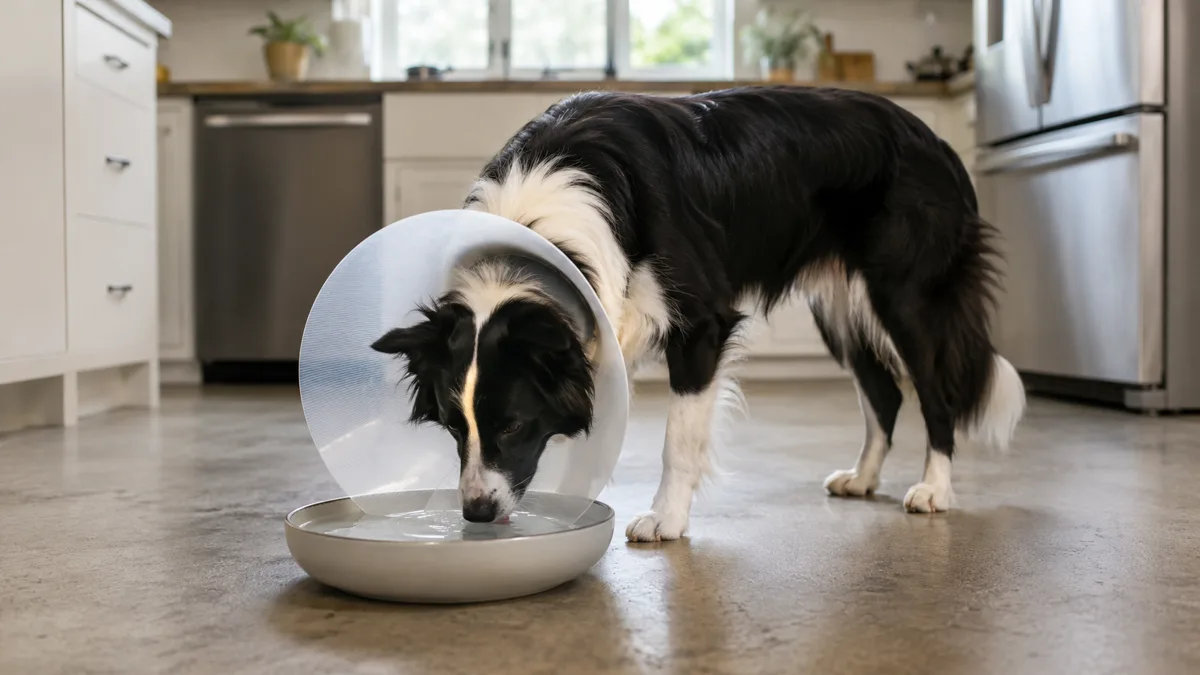
Most dogs can eat and drink in a correctly fitted cone, but their usual deep bowl may no longer work. Watch a complete drinking attempt instead of assuming water is accessible. Place a stable, narrow bowl inside the cone's opening, or use a wide shallow dish that lets the rim pass around it. A low, nonslip riser can help the rim clear the floor, provided the dog does not need to stretch or twist.
Offer food in the form and amount allowed by the discharge instructions. After anesthesia, a clinic may recommend a smaller first meal. Spread wet food on a shallow plate or divide dry food among smaller servings if the cone edge knocks a full bowl away. Keep the feeding space open so the cone does not wedge between cabinets. Wipe food and water from the rim and the dog's chin afterward.
Do not trim a rigid cone merely to fit a bowl. Shortening can let the dog reach the wound and may leave a sharp edge. Do not replace water with occasional hand-held drinks, and do not leave the cone off because meals seem inconvenient. If simple bowl changes fail, call the clinic the same day for a fit check or an approved closely supervised meal plan. Refusing water, repeated vomiting, trouble swallowing, or inability to keep medication down may reflect a medical problem rather than dislike of the cone.
Sleep, Movement, and Supervision
Dogs can usually sleep in a properly fitted cone and should do so when continuous protection was prescribed. A dog can damage an incision within moments after the household falls asleep. Provide a roomy bed on nonslip flooring, away from furniture legs, heater grilles, cords, crate wires, and narrow corners. Some dogs settle more comfortably when the lower rim rests on the bed's edge or a folded towel. Monitor the first nap to confirm easy breathing and a neutral neck position.
A standard crate may become too narrow for a rigid cone, and its rim can catch on bars. Use the recovery area recommended by the clinic, such as a pen or small cleared room, unless the dog requires strict confinement. Block stairs if visibility or balance is impaired. Keep the dog away from pools, balconies, traffic, rough ground, and off-leash activity. Lead outdoor bathroom trips calmly and use a harness only if it does not interfere with the surgical or treatment site.
Supervision means staying close enough to stop the first lick. It does not mean being elsewhere in the house, watching television, cooking, showering, or checking occasionally. Remove the device only when the veterinarian allows a break and one attentive adult can maintain continuous control. Refit it before looking away. Separate playful pets and children because they may bump the patient, pull the cone, or lick the wound themselves.
Expect the rim to touch doorframes at first. Approach wider openings slowly and guide with a cheerful voice rather than pulling the dog by the cone. Keep prescribed walks short and controlled. The cone protects against self-trauma, but it does not protect healing tissue from running, jumping, or wrestling.
Cone Alternatives and Their Limits
The goal is reliable protection, not use of one particular shape. An alternative can be humane and effective when it blocks the dog at all times, remains safe while unattended, and has veterinary approval for that site. Before switching, show the clinic the proposed product and the wound location. Then perform a supervised reach test while the dog turns in both directions, curls up, and lies on each side.
Inflatable collars leave the face clear but often allow access to lower limbs and the rear of the body. Soft cones may collapse. Neck braces restrict turning but require precise fitting and may be unsuitable for neck, airway, or neurologic problems. Suits and sleeves cover only what lies beneath them and can hide moisture or discharge. Muzzles are not substitutes: they interfere with panting, drinking, and vomiting safety and should never be left on as postoperative wound protection.
A bandage is also not a casual substitute. Poorly applied wraps can slip, trap moisture, impair circulation, and create pressure sores. Bitter sprays should not be put on an incision, near an eye, or on a bandage unless the veterinarian specifically directs it. Human shirts, pool noodles, towels, tape, and homemade cardboard devices may shift or create choking and snag hazards.
If every option causes distress or fails coverage, call the clinic rather than choosing no protection. The dog may need another size, a combined approach, medication review, pain control, or treatment for itch. Our Elizabethan collar guide explains the traditional design in more detail, while the veterinary e-collar guide clarifies terminology.
Cleaning and Daily Recovery Care
Saliva, food, skin oil, dirt, and wound fluid can collect on a cone. Inspect it at least twice daily and after every messy meal. Wipe rigid plastic with mild unscented soap and warm water, rinse completely, and dry it before refitting. Follow label instructions for fabric covers, foam, and inflatable components. Avoid bleach residue, essential oils, strong fragrance, and household sprays close to the dog's enclosed face.
Use any veterinarian-approved removal period efficiently. Prepare cleaning supplies before taking the cone off, keep the dog within arm's reach, block access to the site, and replace the barrier immediately. Having a second clean cone of the same confirmed fit can prevent a gap while fabric dries. Replace damaged plastic, frayed seams, exposed foam, broken loops, leaking bladders, and sharp edges rather than repairing them with tape where the dog can chew it.
Part the coat and inspect the neck, jawline, and skin behind the ears for redness, dampness, odor, hair loss, swelling, or sores. Check that the cone has not rubbed the incision or displaced a bandage. Examine the treatment site only as the discharge sheet directs. VCA provides specific guidance on care of surgical incisions in dogs.
Give only medication prescribed or explicitly approved for this dog. Human pain relievers can be dangerous, and another pet's prescription may be the wrong drug or dose. The U.S. Food and Drug Administration explains these risks in its guide to pain relievers for pets. Call the veterinarian if discomfort seems poorly controlled instead of adding a home remedy.
Troubleshooting Common Cone Problems
The dog freezes, backs up, or refuses to walk
Give the dog a quiet moment to process the new boundary. Use a few small approved treats, calm praise, and one or two easy steps toward you. Guide through a wide route with nonslip footing. Do not drag, scold, or repeatedly remove the cone, which can teach the dog that struggling makes it disappear. Mark calm actions such as standing, turning, drinking, and settling.
The dog keeps crashing into things
Clear a simple path between bed, water, and exit. Move breakables, open doors fully, protect sharp corners, and approach stairs on leash. Dogs usually learn the cone's width with practice. Persistent disorientation, falling, circling, or inability to stand can be related to anesthesia, medication, pain, vision, or neurologic trouble and warrants a veterinary call.
The cone slips off or the dog reaches the wound
Stop access immediately, refit only if you know the correct setup, and contact the clinic. The neck may be too loose, loops may be skipped, or the rim may be too short. Inspect the site for licking damage, missing sutures, bleeding, or contamination. Do not simply tighten until the throat is compressed.
The dog pants, whines, or cannot settle
Move to a cool, quiet room and check fit, breathing, temperature, and prescribed medication timing. Panting may accompany stress or pain, but it can also signal overheating or a serious problem. Persistent panic, nonstop vocalization, self-injury, or exhaustion is not an acceptable adjustment process. Call the clinic for a same-day assessment and safer plan.
When to Call the Veterinarian
Call the treating clinic promptly if the dog can reach the site, repeatedly escapes the cone, cannot eat or drink after bowl and fit adjustments, develops a neck sore, remains intensely distressed, or has worsening pain. Also report repeated vomiting, diarrhea that interferes with medication, profound lethargy, inability to urinate, a wet or displaced bandage, or any change that conflicts with the discharge expectations.
Incision warning signs include separated edges, missing sutures or staples, active bleeding, increasing redness, heat or swelling, pus-like discharge, foul odor, or pain that worsens rather than improves. Take a clear photo in good light and note when the change began, but do not delay care while waiting for an online reply. Do not apply peroxide, alcohol, ointment, adhesive, or a new bandage unless instructed.
Seek urgent veterinary care for trouble breathing, collapse, pale or blue gums, uncontrolled bleeding, repeated unproductive retching, a rapidly swelling abdomen, seizure, extreme weakness, or severe distress. Remove a device only if it is clearly obstructing breathing and do so while arranging emergency help. The American Veterinary Medical Association's overview of recovery after anesthesia offers general preparation guidance, but an emergency requires direct care.
Keep the regular clinic and nearest emergency hospital numbers visible. When calling, have the procedure date, medication names, last doses, food and water intake, bathroom history, and details of any contact with the wound ready. Accurate information helps the team decide whether the dog needs an immediate examination.
Humane Adjustment and a Calm Routine
Introduce the cone before a planned procedure if possible. Let the dog sniff it, reward looking toward it, briefly touch it to the neck, and build up to short wearing periods. Keep sessions easy and stop before frustration escalates. If the cone arrives after an unexpected injury, the same calm steps can be compressed into minutes without leaving the vulnerable site exposed.
Never call it a cone of shame around a worried household or treat clumsy moments as comedy. Dogs respond to voice, posture, and routine. Speak normally, move slowly, and reward calm cooperation. Avoid forcing the head through a small opening if the design can be opened and wrapped safely around the neck. Follow the product's assembly instructions so tabs do not pinch hair or ears.
Create one predictable recovery station with a clean bed, fresh water, nonslip floor, dim nighttime lighting, and enough room to turn. Keep medication, feeding, bathroom trips, cleaning, and site checks on a written schedule. A handoff note prevents one caregiver from removing the cone because another person already checked the wound. Quiet companionship is useful, but the dog also needs uninterrupted sleep.
If the dog struggles, look for a solvable cause before labeling the behavior stubborn. Check pain, itch, heat, noise, trapped fur, bowl access, room layout, and cone fit. Ask the veterinary team to demonstrate removal and replacement and take a photo of the correct fit. Humane care means reducing avoidable stress while maintaining effective protection, not abandoning the barrier as soon as the dog objects.
Continue for the full prescribed period and attend any recommended recheck. Interest in the site may increase as sensation returns. When the veterinarian confirms protection can end, supervise the first cone-free period and watch for renewed licking. For everyday neckwear after recovery, see our pet collar guide; an identification collar and a medical recovery cone serve different purposes.
Frequently Asked Questions
How long should a dog wear a cone?
Keep the cone on for the full period prescribed by your veterinarian, including overnight and whenever your dog is unattended. The correct endpoint depends on the procedure and healing site, so use the discharge instructions or veterinary recheck rather than guessing from appearance.
Can my dog eat and drink while wearing a cone?
Yes. A correctly fitted cone should allow eating and drinking. Use a wide, shallow bowl, raise it slightly if helpful, and make sure the rim fits inside the cone. If your dog still cannot drink or repeatedly refuses food, call the veterinary clinic rather than leaving the cone off unsupervised.
Should a dog sleep with a cone on?
Usually, yes. Dogs can lick or chew a healing site quickly at night, so the cone should stay on unless the treating veterinarian has given different instructions. Provide an open sleeping area, remove snag hazards, and check that the dog can lie down and breathe comfortably.
How tight should a dog cone be?
The neck opening should be secure without pressing on the throat. You should generally be able to slide one or two fingers between the neck and attachment, while the dog cannot back out. The cone must also extend far enough beyond the nose to block access to the protected area.
Can I take the cone off when I am watching my dog?
Only if your veterinarian permits supervised breaks and you can keep continuous, close attention on your dog. Supervision means being close enough to stop the first attempt to lick, not simply being in the same home. Replace the cone before you look away, leave the room, or go to sleep.
Are inflatable collars and recovery suits as effective as cones?
Sometimes, but effectiveness depends on the body part being protected and the dog's flexibility. Inflatable collars may not block a long-nosed dog from reaching a paw or tail, while recovery suits do not protect eyes, ears, feet, or every wound. Ask the treating veterinary team to approve the alternative and test reach before relying on it.
When should I call the veterinarian about cone recovery?
Call promptly if the incision opens, bleeds, develops increasing redness, swelling, discharge, odor, or marked pain, or if a bandage becomes wet or displaced. Seek urgent help for trouble breathing, collapse, pale or blue gums, repeated vomiting, uncontrolled bleeding, or severe distress.
Make Recovery Safer and Calmer
Review fit, access, water, comfort, and the treatment site every day, and contact your veterinary team when something is not working.
Read the Elizabethan Collar Guide →