An Elizabethan collar, often called an E-collar, pet cone, or cone of shame, is a temporary medical barrier that keeps a dog or cat from licking, chewing, scratching, or rubbing a healing area. The safest plan is to use the style and duration prescribed by your veterinarian, confirm that the collar extends beyond your pet's reach, and leave it on whenever you cannot provide direct supervision. A good fit allows comfortable breathing and swallowing without letting your pet slip out.
The first hours can look awkward. Your pet may freeze, bump a doorway, or ask for help at the water bowl. That does not mean the collar is cruel or impossible to use. A quiet setup, patient guidance, and a few practical changes usually make recovery much easier. This guide covers dogs and cats, but the treating veterinary team should make the final call because the location of the wound, your pet's body shape, and the procedure all change what protection is effective.
What an Elizabethan Collar Does
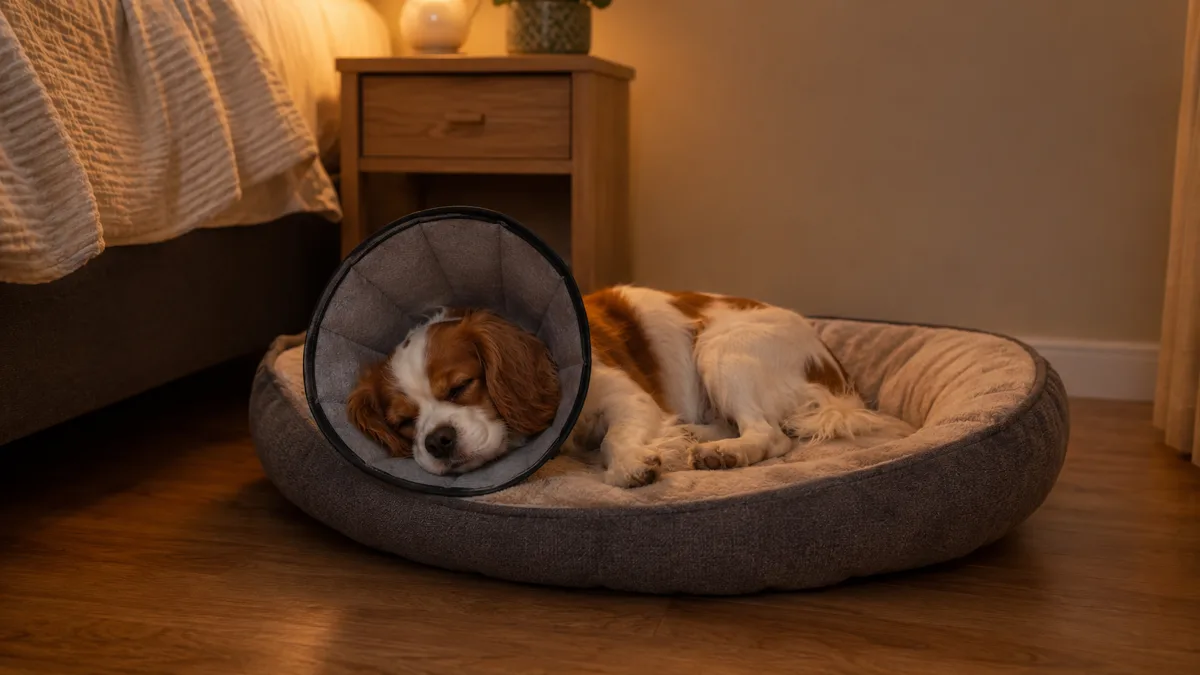
The cone's job is simple: it interrupts the path between a pet's mouth or paws and a vulnerable area. It may be prescribed after surgery, wound repair, eye treatment, placement of a bandage, or treatment of a hot spot. Even gentle licking introduces moisture and friction. Persistent licking, chewing, or scratching can pull sutures, contaminate tissue, dislodge a bandage, and turn a straightforward recovery into an urgent problem. VCA's guidance on Elizabethan collars for dogs and Elizabethan collars for cats likewise emphasizes preventing self-injury while healing.
A cone does not treat pain, itch, infection, or anxiety. It protects the site while the prescribed treatment does the medical work. If a pet is frantic about reaching an incision, do not assume the collar alone solves the problem. Pain, severe itch, a wet bandage, or another complication may need veterinary attention. Give only medications prescribed or approved for that pet. The FDA's pet pain-reliever guidance explains why human pain medicines can be unsafe for animals.
Use the collar for the full period your veterinarian gave you, even if the skin looks closed from the outside. Follow the discharge sheet rather than a generic online timeline. If the instructions are unclear, call the clinic and ask which body area must be protected, whether supervised breaks are allowed, and exactly what event ends collar use, such as a recheck or suture removal.
Sizing and Safe Fit
Start with reach, then check the neck. For most wounds, the front rim of a rigid cone should project beyond the nose so your pet cannot curl around it and touch the protected site. A short cone may look more comfortable but fail completely. Long-nosed dogs, flexible cats, and pets protecting a paw, tail, or rear leg may need extra length. A cone that works for an abdominal incision may not protect an eye. With your pet calm and closely supervised, watch for any attempt to reach the exact area. Do not encourage twisting or let the pet make contact during the test.
At the neck, aim for secure rather than tight. You should generally be able to slide one or two fingers under the neck opening without forcing them. Your pet should breathe, swallow, lie down, and open the mouth normally. The collar should not slide over the head when gentle backward pressure is applied. Many plastic cones have loops for threading a regular flat collar or gauze tie through them. Use the attachment method demonstrated by the clinic. Never improvise with a cord that can tighten, and do not attach a leash to the cone.
Recheck the fit after arriving home, after cleaning, and whenever swelling, coat compression, or weight changes could alter it. Look for rubbing under the jaw, behind the ears, and around the neck. Coughing, gagging, noisy breathing, repeated escape, pressure marks, or an inability to lower the head comfortably means the setup needs prompt adjustment. Brachycephalic pets, very small pets, and animals with breathing or neck disease deserve especially careful veterinary fitting.
A Safe Daily Routine
Keep life quiet and predictable. At the start of each day, confirm that the cone is fastened, dry, undamaged, and still long enough to block the target area. Check the protected site exactly as directed without touching it unnecessarily. Give prescribed medicine on schedule and record appetite, water intake, urination, bowel movements, and any change in behavior. These notes help if you need to call the clinic.
Clear narrow pathways through the home. Move breakable objects, close access to stairs unless you are escorting your pet, block tight gaps behind furniture, and keep toilet lids down. A wide cone changes spatial awareness and can catch on crate doors, pet doors, branches, and railings. Use leash walks only for bathroom needs if post-procedure instructions restrict activity. Walk slowly beside a dog rather than pulling from ahead. Keep cats indoors in one calm room with a low-entry litter box and easy routes to food, water, and bed.
Separate the recovering pet from playful housemates and young children. Another animal can lick the wound, tug the cone, or start a chase. Avoid unsupervised yards, free roaming, rough play, jumping, and swimming. The collar prevents self-trauma, but it does not protect healing tissue from overactivity. For general post-operative expectations, the American College of Veterinary Surgeons recommends following the surgeon's individual instructions and monitoring the incision.
Eating and Drinking in a Cone
Most pets can and should eat and drink with a correctly fitted cone in place. Begin by offering water while you watch. A bowl narrower than the cone opening lets the rim surround the bowl instead of knocking it away. Choose a heavy, nonslip bowl and move it away from walls. A shallow plate may help with food. Some pets do better when bowls are raised just enough for a comfortable head position, but elevation should be stable and appropriate for that pet's medical needs.
Guide the rim around the bowl and reward calm investigation. For a cat, make sure whiskers and the cone are not pressed into a deep dish. Offer the usual diet unless the veterinarian prescribed something else. Hand-feeding a few bites can help a hesitant pet learn the new angle, but do not force food or pour water into the mouth. Wipe food from the cone after each meal so odors and residue do not irritate the face.
If your pet cannot reach the bowls, repeatedly overturns them, or refuses all attempts, call the clinic for advice the same day. The cone may be too long, too rigid for that body shape, or paired with the wrong bowl. Do not make routine unapproved meal breaks the default. A quick lick can harm an incision while your hands are occupied. If the veterinarian specifically permits removal, keep one hand ready to prevent access, replace the cone immediately after the meal, and never walk away.
Sleeping and Moving Safely
The Elizabethan collar usually stays on overnight. Pets may wake and investigate an itchy site before you can react, so sleep is not a safe substitute for protection. Set up a floor-level bed in a quiet, temperature-comfortable space. Give the cone enough clearance from walls and furniture. Remove loose blankets that can bunch inside the opening, and avoid elevated beds, couches, or stairs while your pet is groggy or still learning to turn.
A pet can sleep on the side, chest, or in another naturally chosen position while wearing a cone. Do not wedge the cone or prop the head in a forced position. Many animals use the lower rim like a pillow. For a crate-trained dog, confirm that the crate is large enough to stand, turn, and lie down without the cone catching. A larger temporary recovery pen may be safer. Never leave a cone-wearing pet tethered or attached to a fixed object.
Expect bumping at first, but watch the pattern. Occasional taps are different from panic, falls, or getting trapped. Use a light at night, guide your pet around corners, and approach from the front so the cone does not block awareness of you. If your pet cannot settle, pants continuously, vocalizes, repeatedly crashes, or seems unusually sedated, call the veterinarian. Discomfort, medication effects, or a poor fit may be contributing.
Alternatives and Their Limits
A rigid plastic cone is often the most reliable choice because it creates a continuous barrier and its length is easy to assess. Soft fabric cones may be quieter against furniture and more comfortable for resting, but some fold when a determined pet pushes against the floor. Transparent cones may improve peripheral light compared with opaque styles. Comfort matters, yet the best option is the one that actually blocks the mouth and paws from the medical site.
Inflatable donut collars limit neck bending, but long-nosed, long-bodied, or flexible pets may still reach the legs, feet, tail, or hindquarters. They can also deflate or rotate. Cervical braces restrict neck movement and require precise fitting. Recovery suits or medical shirts can cover some chest or abdominal incisions, but they may trap moisture, rub tissue, hide drainage, or provide no protection for eyes, ears, legs, and paws. A sock or bandage is not a universal substitute and can create circulation or moisture problems if used incorrectly.
Never switch solely because an alternative looks friendlier. Ask the veterinarian to approve it for the exact wound, then perform a supervised reach test. Some pets need a cone plus another protective method. Others should not use a particular device because of breathing, swallowing, neck, skin, or mobility concerns. If the prescribed cone is causing distress, the humane answer is a veterinary refit or approved alternative, not leaving the wound unprotected.
Cleaning the Cone and Checking the Skin
Inspect the collar at least morning and evening, and clean it whenever it is soiled. For a plastic cone, wipe both surfaces with warm water and a small amount of mild, unscented dish soap, rinse away all residue, and dry it completely before refitting. Follow manufacturer directions for padded, fabric, or inflatable products. Avoid bleach, essential oils, strongly scented cleaners, or disinfectants unless your veterinarian specifically approves the product and dilution.
Food, saliva, litter, and outdoor dirt collect along the rim and neck opening. Clean those edges carefully and feel for cracks, sharp spots, broken fasteners, loose stitching, or collapsed panels. Replace a damaged collar rather than patching it with exposed staples, wire, or rough tape. If the cone must come off for cleaning, another adult should provide continuous hands-on supervision, or an approved second collar should already be in place.
Each time you refit it, part the fur and check the neck, jawline, and skin behind the ears. Watch for redness, dampness, odor, hair loss, swelling, or sores. Keep the protected incision itself dry unless the discharge instructions say otherwise. VCA's incision-care pages for dogs and cats advise preventing licking and avoiding unapproved cleaning products on the surgical area.
When to Call the Veterinarian
Call promptly if the collar is not doing its job or your pet cannot function safely in it. Examples include reaching the wound, escaping repeatedly, trouble breathing or swallowing, gagging, collapse, repeated falls, inability to eat or drink, no urination when expected, severe distress, new neck sores, or a broken collar you cannot replace immediately. Breathing difficulty, collapse, uncontrolled bleeding, or rapidly worsening swelling can be emergencies. Contact the clinic or an emergency hospital right away rather than waiting for an online reply.
Also report incision edges that separate, missing sutures, active bleeding, increasing redness or swelling, pus-like discharge, bad odor, marked heat, or pain that is worsening rather than improving. Vomiting, profound lethargy, a swollen abdomen, pale gums, medication mistakes, or a major change from the discharge expectations also warrant a call. The ASPCA offers a general overview of care around spay and neuter procedures, but your own clinic's instructions take priority.
When calling, have the procedure date, medication list, time of the last dose, appetite and water history, and a clear photo available. Explain whether the pet touched the site and for how long. Do not apply ointment, peroxide, alcohol, a new bandage, or a human medication unless instructed. If anesthesia recovery itself concerns you, the American Veterinary Medical Association's anesthesia resource provides useful questions for the veterinary team.
Humane Adjustment Without Sacrificing Safety
Let your pet investigate the collar before fitting when circumstances allow. Offer tiny treats near and then through the opening, use a calm voice, and fasten it without wrestling. After fitting, reward one step, then a few steps, then approaching the bowl. Keep early sessions in an uncluttered room. Guide with your hand or a treat rather than dragging the rim through a doorway. Cats may initially crouch or walk backward, while dogs may freeze. Give them a moment to process before assuming they cannot adapt.
Comfort also means meeting normal needs. Provide affection in the way your pet requests, gentle food enrichment approved for the recovery diet, short sniffing opportunities if activity instructions allow, and a predictable bathroom schedule. Scratch areas your pet cannot comfortably reach, but stay away from the wound. Keep voices and handling calm. Do not laugh at, punish, or repeatedly film a struggling pet. The collar is medical equipment, not a behavior test.
Some distress is a fitting or medical signal, not stubbornness. Pause and check for trapped ears, pinched fur, a caught whisker, neck pressure, heat, soiling, pain, nausea, and medication effects. If careful setup does not help, call the clinic. They may refit the cone, approve a different device, or address pain and anxiety safely. Never give sedatives, antihistamines, calming products, or leftover prescriptions without veterinary approval. Humane care protects both emotional comfort and the healing site.
Before the clinic closes, make a backup plan: know how the fasteners work, where to obtain a replacement, and which emergency number to use. Keep your discharge instructions nearby. If you want more general recovery preparation, browse our pet care articles, but use your veterinarian's case-specific directions first.
Frequently Asked Questions
How tight should an Elizabethan collar be?
It should be snug enough that your pet cannot back out, but not tight. You should generally be able to slide one or two fingers between the neck opening and the neck without forcing them. Check the skin at least twice daily. Ask your veterinary team to refit it if your pet coughs, gags, develops redness, or can remove it.
How far should a pet cone extend past the nose?
For most head, eye, ear, and body wounds, the rim needs to extend beyond the tip of the nose enough to prevent the mouth from reaching the protected area. Body shape and wound location matter more than a universal measurement. Test reach under close supervision and follow the size selected by your veterinary team.
Can my pet eat and drink while wearing the cone?
Yes. A correctly fitted cone should usually stay on for meals and water. Offer stable bowls narrower than the cone opening, and raise or reposition them if your veterinary team agrees. Watch the first attempts. If your pet cannot eat or drink, contact the clinic promptly for fitting help rather than routinely leaving the cone off.
Should an Elizabethan collar stay on overnight?
Usually yes. Licking and chewing can happen quickly while everyone is asleep, so pets generally need the prescribed protection overnight. Create a clear, floor-level sleeping area away from stairs and furniture edges. Ask your veterinarian before removing or switching the collar at night.
Can I remove the cone for short breaks?
Only if your veterinarian allows it and you can provide continuous, close supervision. A pet can damage an incision in seconds. Put the cone back on before looking away, leaving the room, or going to sleep. If removal seems necessary for every meal, ask the clinic to reassess the fit and bowl setup.
Are inflatable collars or recovery suits as effective as cones?
Sometimes, but not for every pet or injury. Inflatable collars may still let a flexible or long-nosed pet reach a paw, tail, or hindquarter. Recovery suits can cover some trunk incisions but do not protect eyes, ears, feet, or every wound. Let the treating veterinarian approve any alternative after checking your pet's reach.
How long does a pet need to wear an Elizabethan collar?
Keep it on for the full period prescribed by the veterinarian, not merely until the area looks better. Duration depends on the procedure, wound, and healing progress. Ask at discharge what event ends protection and whether a recheck is required. Do not stop early or extend treatment on your own.
Keep Your Recovery Instructions Handy
Your veterinary team's directions should guide cone choice, fit, medications, activity, and the date protection can safely end.
Explore Pet Care Articles →