A collar looks like the simplest purchase in the pet aisle, yet it carries your dog's ID, connects the leash, and sits on their neck around the clock. Getting the type and fit right matters more than the color ever will.
This guide walks through the main collar types and what each is actually for, the two-finger fit rule, materials that hold up to real weather, and the safety habits that prevent the most common collar accidents.
The Main Collar Types and What Each Is For
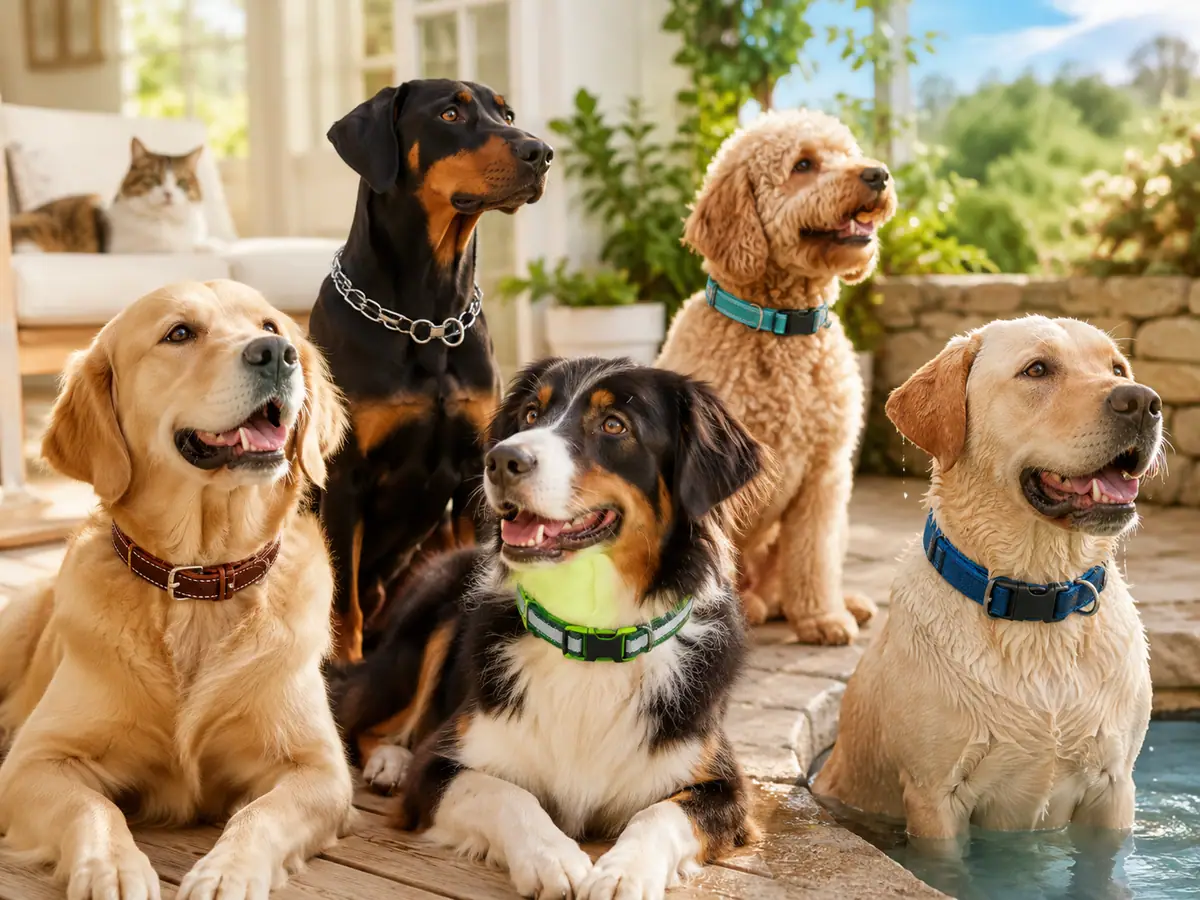
Flat collars are the everyday default: a strap, a buckle or clip, and a D-ring for tags and leash. For most well-mannered dogs, a quality flat collar is all you need.
Martingale collars tighten slightly under tension without choking, which stops narrow-headed dogs like greyhounds and whippets from backing out of the collar. They are the standard recommendation for escape artists.
Rolled leather collars reduce coat flattening and matting on long-haired breeds. Breakaway collars release under strong pressure, a safety feature for dogs left unsupervised in yards or crates where a snagged collar could be dangerous.
Head collars and no-pull tools live in a different category: they are training equipment, not everyday wear. If pulling is your real problem, a no-pull dog harness usually solves it more comfortably.
Getting the Fit Right
The two-finger rule covers most dogs: with the collar fastened, you should be able to slide two flat fingers between the collar and the neck. Looser and the collar slips over the ears during a lunge; tighter and it chafes, rubs off coat, and stresses the throat.
Measure the neck with a soft tape where the collar naturally sits, then add roughly two inches for medium dogs (one for tiny breeds, up to three for giants) and buy a collar whose adjustment range puts your measurement near the middle, not the end.
Puppies outgrow collars startlingly fast. Check fit weekly during growth spurts and plan on at least two collar sizes before adulthood. An embedded collar from a forgotten weekly check is one of the most preventable injuries vets see.
Materials That Survive Real Life
Nylon webbing is light, cheap, machine-washable, and available in every color; its weakness is holding smells once it stays damp. Biothane, a coated webbing, is the swimmer's upgrade: waterproof, odor-proof, and wipe-clean.
Leather outlasts everything when cared for, softens with age, and suits heavy pullers thanks to its strength. It costs more upfront and dislikes constant soaking. Chain collars have narrow training uses in experienced hands and are a poor choice for everyday wear.
Whatever the strap, hardware decides longevity. Metal buckles outlive plastic side-release clips, and a welded (not split) D-ring resists bending under a strong lunge.
Collar Safety Habits Owners Learn Too Late
Take the collar off, or switch to a breakaway, whenever your dog is crated or plays rough with other dogs. Collar snags on crate bars and jaw-under-collar accidents during wrestling are the two classic emergencies, and both are fully preventable.
Check the collar itself monthly: fraying edges, a buckle that slips a notch, stitching pulling loose at the D-ring. Replace at the first sign rather than after the first failure, which always happens at the worst moment.
Finally, keep ID current. A collar without a readable tag is half a safety system; our guide on what to put on a dog tag covers the engraving side in detail.
When a Collar Is Not Enough
Some dogs should clip the leash to a harness instead: brachycephalic breeds with sensitive airways, tiny dogs prone to collapsing trachea, and strong pullers mid-training. The collar stays on for ID; the walking forces move to the dog harness.
Night walkers benefit from reflective stitching or a light-up collar, and off-leash adventurers from a GPS unit. Think of the collar as a platform: ID always, leash sometimes, extras as your routine demands. For independent advice on walking equipment, the AKC expert advice center maintains solid primers.
Frequently Asked Questions
How tight should a dog collar be?
Use the two-finger rule: with the collar fastened, two flat fingers should slide comfortably between the collar and your dog's neck. If the collar rotates freely or slips toward the ears, it is too loose. If you have to force your fingers under it, loosen it a notch and recheck weekly on growing puppies.
Should a dog wear a collar all the time?
Most dogs wear a flat collar with ID during the day, which is exactly what gets a lost dog home fast. Remove it, or switch to a breakaway design, when the dog is crated or wrestling with other dogs, since snagged collars are a known accident risk in both situations.
What collar is best for a dog that slips out of collars?
A martingale. It tightens slightly under tension so the loop cannot pass over the ears, without choking like a chain. Martingales were designed for narrow-headed sighthounds but work for any practiced escape artist. Fit it so it closes snug at maximum tension, never tight at rest.
When should a puppy get its first collar?
Start with a light, soft flat collar around 8 to 10 weeks so the puppy acclimates early, worn in short supervised sessions at first. Expect to size up at least twice before adulthood, and check the fit weekly during growth spurts, since puppies can outgrow a collar setting in days.
Is a collar or harness better for walking?
For calm walkers, a flat collar is fine. For pullers, small breeds with delicate tracheas, and flat-faced breeds, a harness moves pressure off the throat and onto the chest, which is safer and more comfortable. Many owners use both: collar for ID, harness for the leash.
Browse Dog Accessories
Free US shipping on every order. No minimum purchase required.
Browse Accessories →