A good dog leash and collar setup is a matched system: a collar that fits and carries ID, a leash of the right length and weight, and hardware on both that can take your dog's strongest lunge. Buying a matching set is convenient, but the real test is how the pieces work together on the walk, not whether the colors match.
This checklist is the practical closing piece of our dog collars and walking gear series. Use it before your first walk with new gear, and again every few months as a quick safety review.
Decide where the leash attaches
Before choosing anything else, decide whether the leash will clip to the collar or to a harness. For a dog that already walks on a loose leash, a flat collar is often enough. For a dog that pulls, a small or short-muzzled breed, or a dog with neck or throat concerns, clipping to a harness is kinder. VCA Animal Hospitals notes that a dog pulling hard against a collar can put too much pressure on delicate structures in the neck.
Even if the leash goes on a harness, keep a collar on for identification during walks. The harness buying details are in our dog harness guide.
Match the leash to the collar and the dog
Proportion is the first compatibility check. A heavy clip on a toy breed's slim collar drags the collar down and bounces against the chest. A thin leash on a large dog's wide collar may have a clip that is too small for the D-ring. Hold the leash clip against the collar ring before your first walk: the clip should open wide enough to close around the ring completely, without forcing.
| Dog size | Collar width (typical) | Leash style that pairs well |
|---|---|---|
| Toy and small | Narrow, lightweight strap | Thin leash with a small, light clip |
| Medium | Medium-width strap | Standard webbing or rope leash |
| Large and strong | Wider strap with a solid D-ring | Wide or round leash with a heavy-duty clip |
These are general pairings, not rules. Your dog's strength and walking behavior matter more than weight alone.
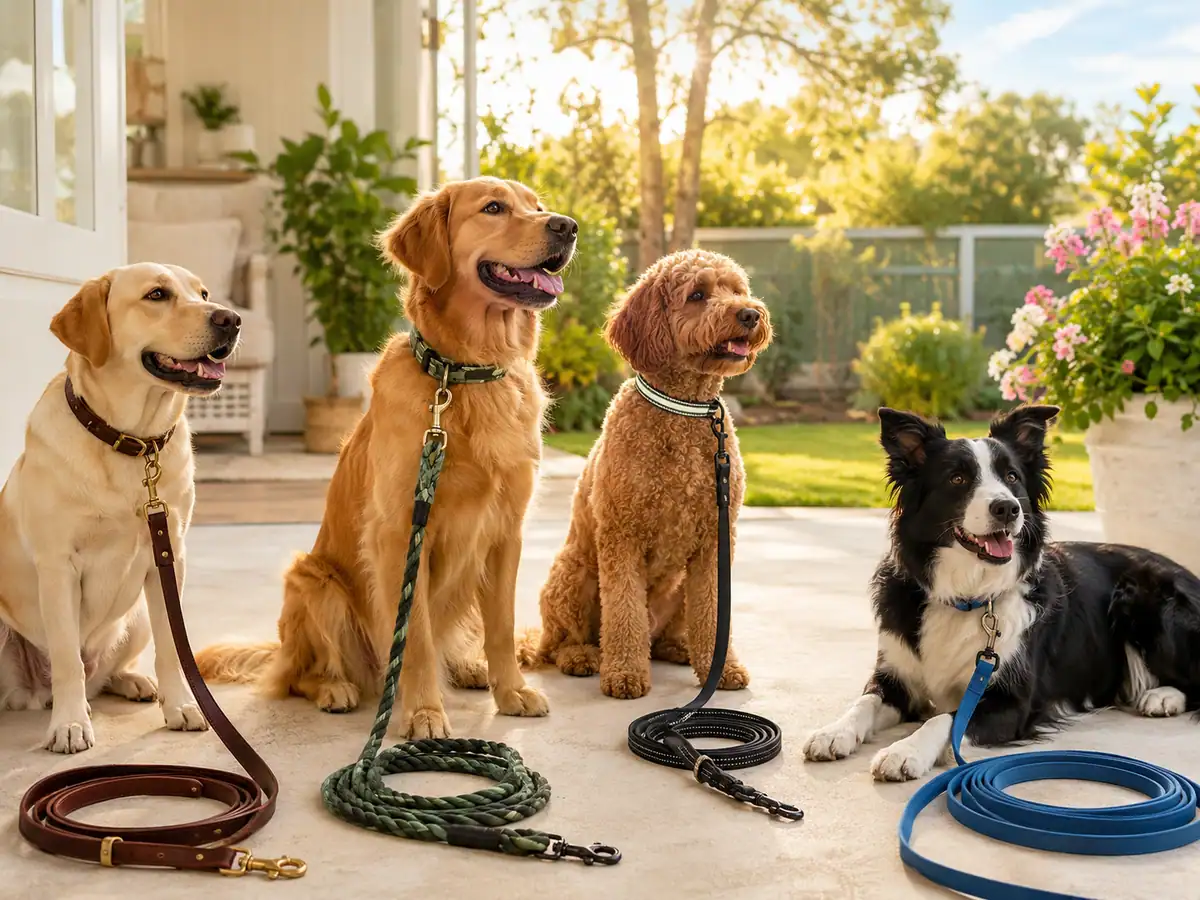
The hardware check
Every walk puts load through four points: the collar buckle, the collar D-ring, the leash clip and the leash handle seam. Inspect each one when the gear is new and every few weeks after. Look for bent metal, cracked plastic, fraying where webbing meets hardware, and a clip spring that no longer snaps shut crisply.
Clip failures happen. The U.S. Consumer Product Safety Commission recalled a retractable leash line in 2008 because the metal clasp connecting the leash to the collar could bend or break. You cannot inspect factory flaws, but you can replace any clip that shows wear or damage.
A special rule for breakaway collars
Breakaway collars are designed to release under pressure, which is why they are recommended for dogs that could get caught during play or in a crate. That same feature means a leash clipped to the wrong ring can let the dog pull free. VCA and the American Kennel Club both explain that on two-ring breakaway designs the leash must be clipped through both rings. If that feels awkward, clip the leash to a harness and let the breakaway collar carry ID only.
Fit check with the leash attached
Fit the collar first using the finger test from the AKC: one finger for small dogs, two for large breeds. Then clip on the leash and apply gentle, steady backward tension, the way a dog pulls when it spots a squirrel. The collar should stay put rather than ride up over the ears. Our dog collar size and fit guide explains the full measuring process.
Watch the tags as well. With the leash attached, the tag should not tangle with the clip. If it does, move the tag to a separate ring or switch to a slide-on tag, as described in our dog tag guide.
When a matching set makes sense
A collar and leash sold as a set usually shares the same strap width, hardware finish and material, which helps with proportion. It is a good option for new owners who want one purchase that works together. Still, check the collar's adjustment range against your tape measurement and the leash length against your walking needs, because a set is only useful if both pieces fit your dog.
If your dog is still growing, you may replace the collar before the leash wears out. That is fine: our adjustable collar guide explains how to stretch the life of a puppy collar.
Before-walk routine
Keep the collar, leash and poop bags together by the door. Before each walk, glance at the collar fit, the tag, and the clip closure. It takes a few seconds and becomes automatic. After walks in rain or mud, rinse and hang both pieces to dry, then check hardware for grit that can jam a clip spring.
For more on leash length, retractable leashes and hands-free options, see our complete dog leash guide. For deciding when the collar comes off at home, read should your dog wear a collar all the time.
Frequently asked questions
Should my dog's leash and collar match?
Matching sets help with proportion and hardware size, but what matters is that the collar fits, the leash length suits your walks, and the clip closes fully around the collar ring.
Can I clip a leash to a breakaway collar?
Only on models designed for it, and then through both rings as the manufacturer directs. Otherwise clip the leash to a harness and use the breakaway collar for ID.
How often should I check leash and collar hardware?
Inspect buckles, rings, clips and stitched seams when new and every few weeks after, and replace anything bent, cracked or frayed.
Why does my dog's collar slide up when on the leash?
The collar is probably too loose. Refit it with the finger test and check that it stays in place under gentle backward tension.
Where should the ID tag go if the leash clips to the collar?
Use a separate ring from the leash ring if your collar has one, or switch to a slide-on tag so it does not tangle with the clip.
The five-point setup check
Attachment point chosen for your dog's walking style. Collar fitted and tested with the finger rule. Leash length suited to the walk and local rules. Clip and ring sized for each other. Tag readable and not tangling with the clip. If all five pass, your kit is ready.
Looking for a matched pair? Compare the listed collar range on our No-Pull Dog Harness and 5 ft Leash Set, Large against your measurement, or contact us for sizing help.