The right dog collar is the one that fits your dog's neck shape, carries readable ID, and suits how you actually walk. Style, color and price come after those three checks. This pillar guide explains the main collar types, how collars compare with harnesses and leashes, and where to go next for sizing, materials, tags and fitting.
We are a small pet accessories shop, not a veterinary practice, so this is a buyer's guide rather than a lab test. Where we mention safety or fit rules, we link to the veterinary or kennel club source we relied on. If your dog has a neck, throat or breathing problem, speak with your vet before choosing any neck equipment.
What a collar is for, and what it is not for
A collar does two everyday jobs. It holds identification, and it gives you a point to clip a leash for calm walking. Many owners also use it as a quick handle when a dog needs guiding away from a doorway. Those are reasonable uses. Using a collar to drag, jerk or punish a dog is not, and it is the part of collar use that veterinary behaviorists warn about most.
The team behind VCA Animal Hospitals' guide to collar and harness options advises that a leash should never be snapped or jerked and that dogs do not need pain or discomfort to learn good manners. We agree with that starting point. It shapes every recommendation below: pick gear that is comfortable when worn correctly, then teach loose-leash walking with rewards.
The main dog collar types compared
Most dogs do well in a flat collar. The other designs exist to solve specific problems, such as a narrow head, sensitive skin, or a dog that often gets into places where a collar could snag. Choose the problem first, then the design.
| Collar type | Best suited to | Watch out for |
|---|---|---|
| Flat buckle or quick-release | Everyday ID and relaxed walks | Can slip off narrow heads if loose |
| Adjustable slide collar | Puppies and dogs between sizes | Slides can creep looser over time |
| Martingale (limited slip) | Dogs whose head is no wider than the neck | Needs correct fit and supervision |
| Rolled collar | Dogs with skin folds or sensitive coats | Less comfortable for strong pullers |
| Breakaway collar | Dogs that play or rest where a collar may catch | Leash must clip to both rings |
The American Kennel Club explains that martingale collars suit dogs whose necks are about the same size as their heads, such as Greyhounds and Whippets, and that rolled collars work well for dogs with sensitive skin, wrinkles or rolls. If you are choosing for a growing puppy, our adjustable dog collar guide covers how slide and buckle adjusters behave over months of growth.
We have left prong, choke and shock collars out of this table on purpose. VCA lists all three among collars designed to cause discomfort, and the American College of Veterinary Behaviorists does not support training that relies on pain. If you are dealing with pulling, a well-fitted harness is usually the gentler first step.
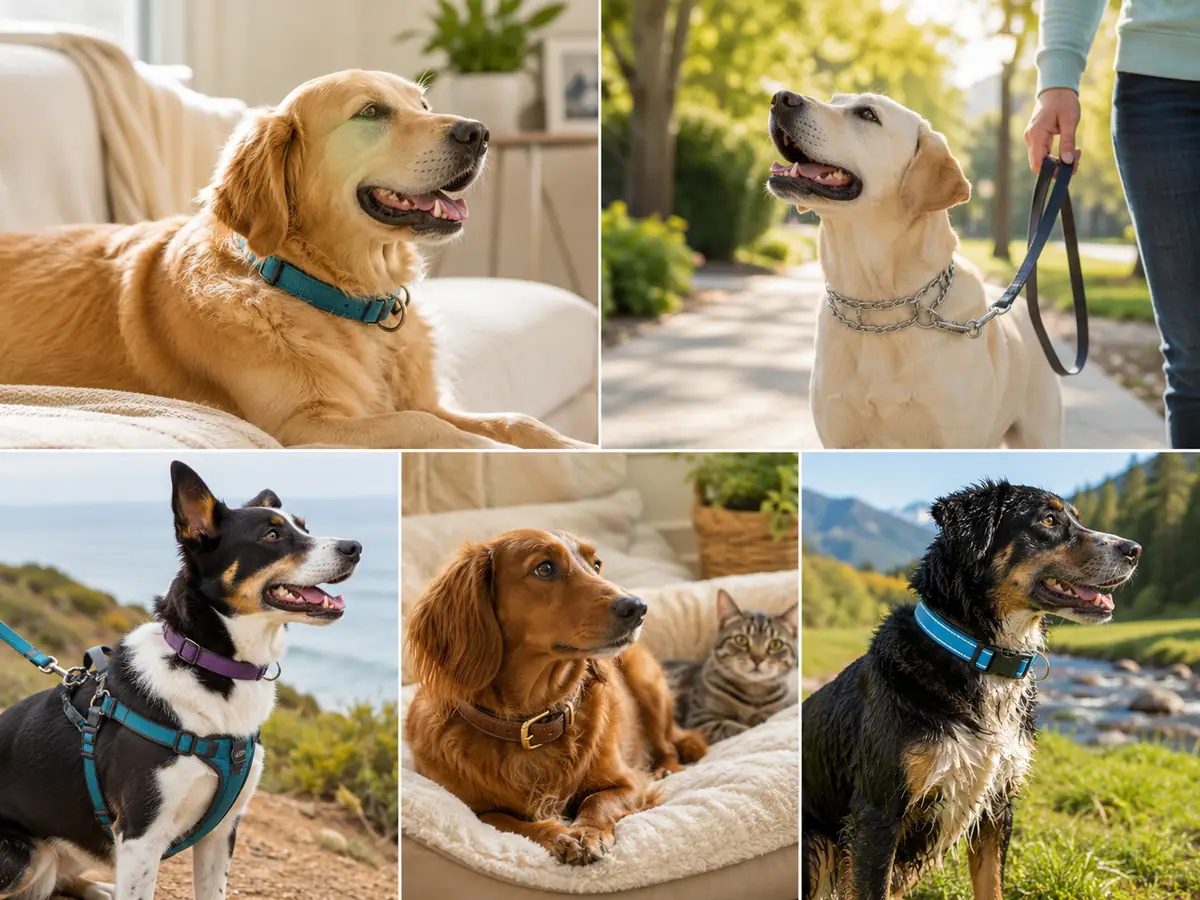
Fit decides comfort more than any feature
A premium collar that fits badly is worse than a plain one that fits well. The AKC finger check is the simplest place to start: you should be able to slip one finger between collar and skin on a small dog, or two fingers on a large breed. Too loose and the collar can slide over the head. Too tight and it rubs.
Fit also changes with posture. A veterinary adviser quoted by PetMD notes that a collar that sits perfectly while a dog stands may become too tight when the dog lies down, because skin and body fat shift. Check the fit with your dog standing, sitting and lying. For the full measuring method, including where to run the tape and how to read a size chart, use our dog collar size and fit guide.
Materials: choose for your dog's lifestyle
Nylon webbing is light, affordable and easy to wash. Leather softens with wear but dislikes repeated soaking. Coated webbing, often sold as biothane or PVC-coated nylon, shrugs off mud and water and wipes clean. None of these is automatically better; the right answer depends on whether your dog swims, rolls in the garden, or mostly walks on pavement.
Hardware matters as much as the strap. Look at the buckle, the D-ring and the stitching where the ring is attached, because that is where the leash load goes. We compare materials in detail, including how each one handles water and odor, in our guide to waterproof dog collar materials.
Collar, harness, or both?
A collar and a harness are not rivals. Many owners use the collar for ID tags at all times and clip the leash to a harness for walks. That setup keeps identification on the dog while taking leash pressure off the neck. VCA describes a body harness as an excellent choice for dogs with tracheal disease or neck pain, because it places minimal pressure on delicate tissue.
A collar alone can work for a dog that already walks on a loose leash. A harness makes more sense for small breeds, strong pullers, dogs with short muzzles, and anyone who wants more control without neck pressure. Read our dog harness buying guide to compare back-clip, front-clip and step-in styles, then the step-by-step harness fitting guide once it arrives.
Identification: the job collars do every day
ID is not optional in many places. In England, Scotland and Wales, the Control of Dogs Order 1992 requires a dog on a highway or in a public place to wear a collar showing the owner's name and address, either on the collar itself or on an attached plate or badge. In New York City, the Health Department requires every dog to be licensed and the license to be attached to its collar in public.
A tag and a microchip work best together. The tag gives a finder an instant phone number, while the chip survives a lost collar. Our dog tag guide explains what to engrave, which tag styles stay readable, and how to keep chip records current.
When a collar should come off
Collars can snag. VCA warns that serious injury can happen if a collar becomes entangled and twisted during play, in a crate or kennel, or on a heat register or cabinet handle. That is why many trainers remove collars in the crate and during rough play between dogs, and why breakaway collars exist.
Deciding when your dog should wear a collar indoors, overnight, or at the groomer depends on your home and your dog. We walk through those situations one by one in should your dog wear a collar all the time.
Pair the collar with the right leash
The leash is the other half of the walking kit. A fixed-length leash between four and six feet covers most daily walks and suits leash training. Longer lines have their place in open, safe spaces for recall practice. Retractable leashes are convenient for some owners but need careful handling. The dog leash guide compares lengths, widths and clip types, and the leash and collar setup checklist shows how to match hardware so the whole kit works together.
Frequently asked questions
What type of collar is best for most dogs?
A well-fitted flat collar with a buckle or quick-release clip suits most dogs for everyday ID and relaxed walks. Martingale, rolled and breakaway collars solve specific problems such as a narrow head, sensitive skin or snagging risk.
How tight should a dog collar be?
The American Kennel Club suggests you should be able to slip one finger under the collar on a small dog and two fingers on a large breed. Check the fit again with the dog sitting and lying down.
Is a collar or a harness better for walking?
A collar works for dogs that already walk on a loose leash. A harness is usually better for pullers, small breeds and dogs with neck or throat concerns, because it moves leash pressure off the neck. Many owners use both: a collar for ID and a harness for the leash.
Are prong, choke or shock collars recommended?
VCA Animal Hospitals lists prong, choke and electronic shock collars among designs that can inflict considerable discomfort, and veterinary behaviorists support reward-based training instead. We do not recommend them.
Does my dog need an ID tag on its collar?
In many places, yes. In Great Britain a dog in public must wear a collar showing the owner name and address, and New York City requires the dog license to be attached to the collar in public. Check your local rules.
Build your dog's collar kit in four steps
First, decide what problem you are solving: everyday ID, a dog that slips out, sensitive skin, or a dog that pulls. Second, measure the neck with a soft tape rather than guessing from breed. Third, choose a material that suits where your dog spends its time. Fourth, add a tag with current details and schedule a regular fit check.
If you want a matching set, you can compare the measurements on our No-Pull Dog Harness and 5 ft Leash Set, Large against your tape reading before ordering. Still unsure which size or style to choose? Send us your dog's neck measurement and we will help you compare options.