If your dog swims, rolls in mud or lives in a wet climate, choose a collar with a coated or synthetic strap and rust-resistant hardware. Coated webbing (often sold as biothane or PVC-coated nylon) repels water and wipes clean, plain nylon dries reasonably fast but holds odor, and leather is best kept for dogs that stay mostly dry. Material choice is about lifestyle, not luxury.
This guide belongs to our dog collars series. It compares collar materials with one question in mind: how each one copes with water, dirt and daily wear. It does not rank specific brands, and we have not run laboratory tests on the materials described.
What "waterproof" means on a collar listing
There is no single standard behind the word. Sellers use "waterproof" to mean anything from a fully coated strap that absorbs no water to a nylon collar that simply survives a wash. Read past the label and look for three details: what the strap is made of, whether the surface is coated, and what metal the buckle and D-ring use.
A collar is only as water-friendly as its weakest part. A coated strap with plain steel hardware can still rust at the ring. A stainless or brass buckle on an uncoated fabric strap will not rust, but the fabric will stay damp and may smell after swims.
Collar materials compared
The table below summarizes the trade-offs we look for when choosing a collar for a wet or messy dog. It is a practical guide to typical behavior, so always check the care instructions for the exact product.
| Material | In water | Cleaning | Best for |
|---|---|---|---|
| Coated webbing (biothane, PVC) | Does not soak up water | Wipe or rinse | Swimmers, farm and beach dogs |
| Nylon webbing | Absorbs, then dries | Hand or machine wash per label | Everyday use, budget, color choice |
| Polyester webbing | Absorbs less than nylon | Hand or machine wash per label | Dogs that get damp often |
| Leather | Can stiffen or crack if soaked | Wipe, condition occasionally | Mostly dry, city walking |
| Padded neoprene lining | Holds water in the padding | Rinse and air dry fully | Comfort, if dried properly |
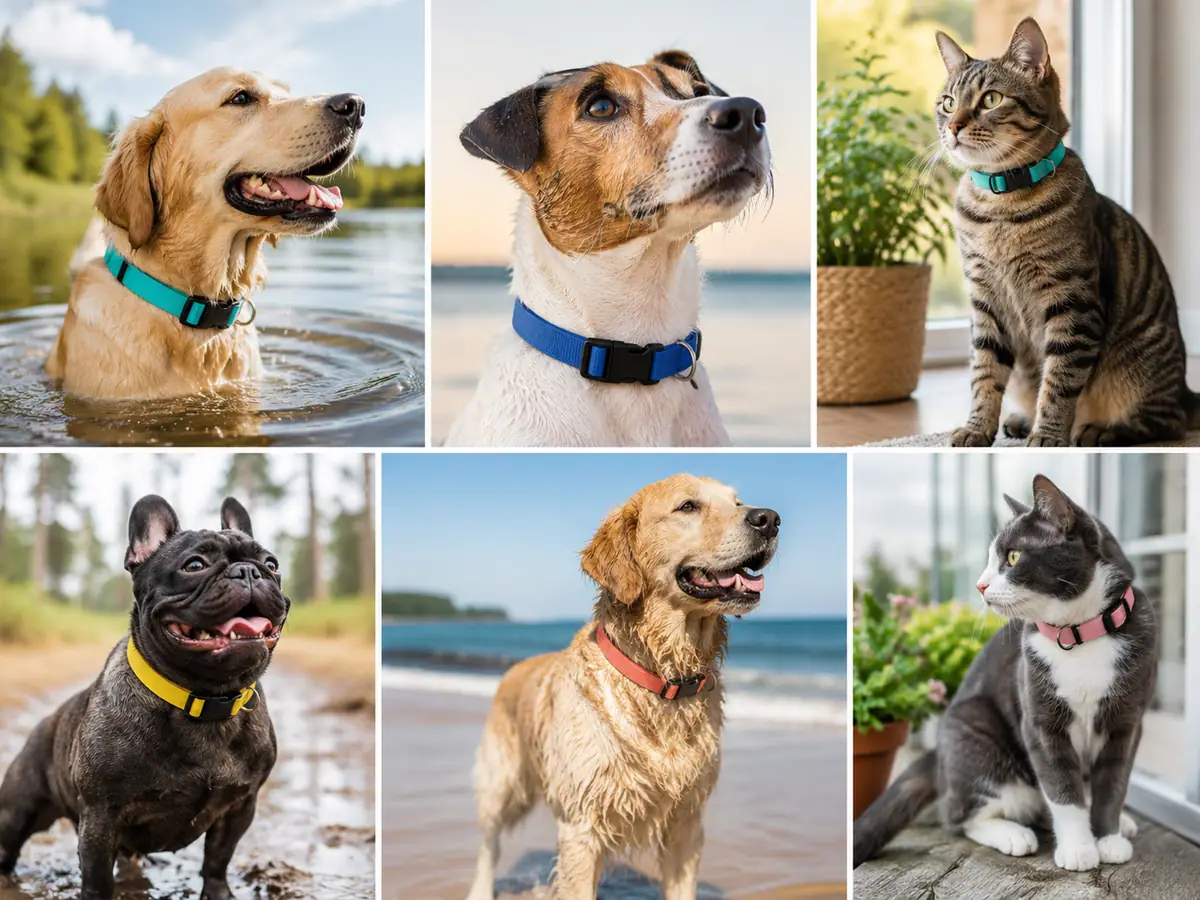
Coated webbing: the low-maintenance option
Coated webbing is a woven core sealed inside a smooth plastic coating. Because water cannot soak into the fibers, it does not stay wet, and mud or pond water can be rinsed off. That also means less of the damp, sour smell that builds up in fabric collars after repeated swims.
The trade-offs are stiffness in very cold weather on some products, and fewer patterns and colors than printed nylon. Coated straps also feel firmer at first. Check the edges: they should be smooth and rounded rather than cut sharp, so they do not rub the neck.
Nylon and leather in wet conditions
Nylon is the most common collar fabric because it is light, strong and inexpensive. It is washable, but it absorbs water and can take a while to dry, especially on thick-coated dogs where the collar sits against wet fur. If your dog swims only occasionally, a nylon collar rinsed and dried after each swim is perfectly workable.
Leather feels soft and looks classic, but repeated soaking can stiffen or crack it. If you love leather, keep a second, coated collar for beach trips and rainy seasons. Whatever the material, avoid putting a damp collar back on a damp dog for long periods, since a veterinary adviser quoted by PetMD notes that even a moderately tight collar can irritate skin. Letting the neck and collar dry between wears is a simple precaution.
Hardware: buckles, rings and rust
Look for stainless steel, brass or solid aluminum hardware on a collar meant for water. Plated steel can look identical when new but may rust once the plating wears. Check where the D-ring is stitched to the strap: that seam carries the leash load, and it should be neat, tight and reinforced.
Plastic quick-release buckles do not rust but can crack with age or cold. Test the clip every few weeks by pulling the two halves apart firmly; it should stay closed. If the clip feels loose, replace the collar. Our adjustable collar guide explains how to inspect slides and clips for wear.
Skin and coat care for water dogs
After a swim, take the collar off, rinse it if it has been in salt or chlorinated water, and let both collar and neck dry. Part the fur under the collar line and look for redness, hair thinning or a smell. Rotating between two collars gives each one time to dry completely; PetMD's veterinary adviser also recommends rotating collars and checking the fit regularly.
Always refit after the dog dries. Wet fur lies flat and can make a collar seem looser than it is. Use the finger check described in our collar size and fit guide once your dog is dry.
Safety near water
Swimming is one of the situations where a collar can catch on branches, docks or rocks. For open water swims, a well-fitted harness with a handle can be easier to grab than a collar. Keep ID on the dog either way, since an excited swimmer can run off along a shoreline. Our dog tag guide covers engraved and slide-on tags that stay readable after repeated soaking.
Frequently asked questions
What is the most waterproof collar material?
Coated webbing, often sold as biothane or PVC-coated nylon, does not soak up water and can be rinsed or wiped clean, which makes it a practical choice for frequent swimmers.
Can a leather collar get wet?
Occasional splashes are fine, but repeated soaking can stiffen or crack leather. Keep a coated collar for beach trips and rainy seasons.
Why does my dog's collar smell after swimming?
Fabric collars absorb water and hold it against wet fur. Rinse the collar, let it and your dog dry fully, and rotate between two collars.
What hardware should a waterproof collar have?
Look for stainless steel, brass or solid aluminum buckles and rings. Plated steel can rust once the plating wears.
Should my dog wear a collar while swimming?
Keep ID on your dog near open water, but be aware a collar can catch on branches or docks. A well-fitted harness with a handle can be easier to grab in the water.
How to decide
Ask how often your dog gets wet. Rarely: any well-made collar will do, and nylon or leather are fine. Weekly: favor polyester or coated webbing with rust-resistant hardware. Daily swimmers, farm dogs and beach dogs: choose coated webbing and keep a spare.
Want to compare collar materials against other parts of the walking kit? See the leash and collar setup checklist or ask us about the materials in our range.