A dog tag is the cheapest piece of safety equipment you will ever buy, and the one most likely to get your dog home the same day it goes missing. A microchip proves ownership at a vet or shelter, but the neighbor who finds your dog in their yard reads a tag, not a chip.
This guide is about doing the tag right: exactly what to engrave, what to leave off for your own privacy, which materials and styles hold up, and how tags and microchips work together.
Why the Tag Is Still the Fastest Way Home
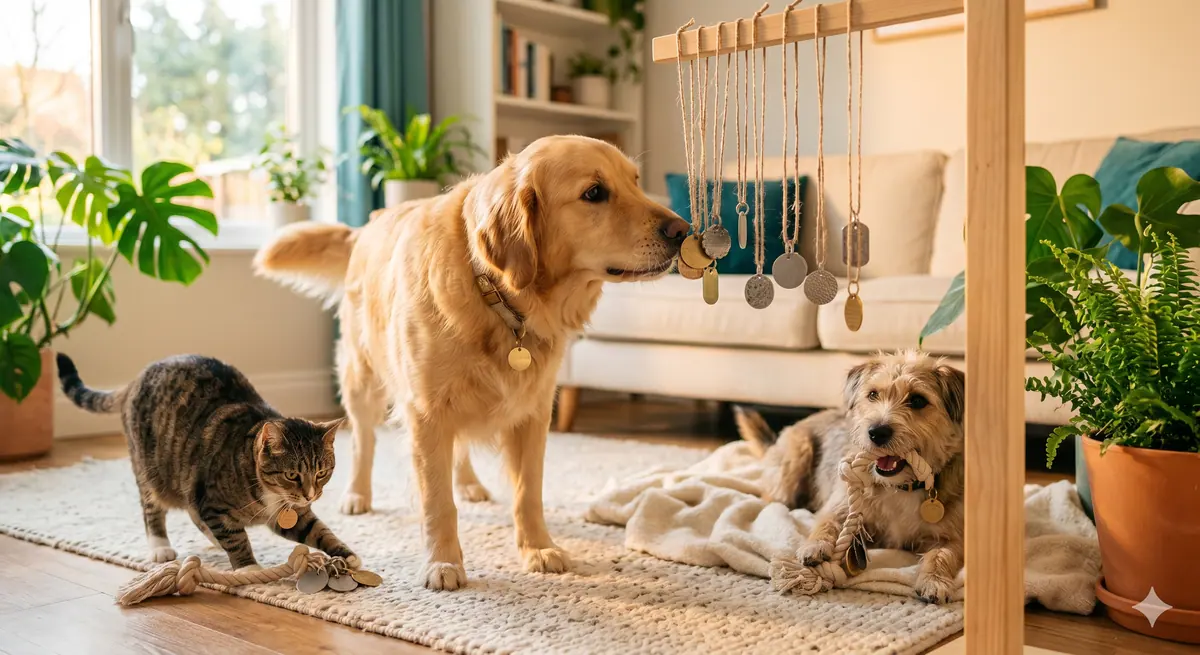
Think about who actually finds lost dogs: joggers, school kids, the family two streets over. None of them carry microchip scanners. A tag with a working phone number turns every one of those people into a rescue service, no shelter visit required.
Microchips remain essential backup, because collars can slip off. The winning setup is both: a chip with up-to-date registration plus a tag that gets read in the first five minutes. Shelter studies consistently show that visible ID dramatically shortens the time lost pets spend away from home.
If your dog already wears a tag, check it right now. Faded engraving and outdated numbers are so common that a yearly tag check deserves a spot next to vaccine reminders.
What to Engrave, Line by Line
Most tags give you three to five short lines. Use them in this priority order:
- Line 1: your mobile number. This is the single non-negotiable line. Add a second number (partner, landline) if space allows.
- Line 2: your city or neighborhood. It tells the finder the dog is local, not dumped, and narrows the search if the number fails.
- Line 3: a medical or reward hook when relevant. "NEEDS DAILY MEDS" or "REWARD IF FOUND" both measurably motivate faster calls.
- Optional: "I am microchipped." Signals to any finder that a shelter or vet can confirm ownership.
Engrave both sides if the tag allows it, and choose the deepest engraving the vendor offers. Laser-etched surface marking looks crisp new but fades fastest against pavement, bowls, and other tags.
What to Leave Off
Skip your home address. A phone number gets your dog returned; an address on a wandering dog tells strangers exactly which house currently has no dog watching it. City alone gives the finder enough context.
Your dog's name is a genuine judgment call, not a rule. The argument for including it: finders can calm the dog and prove helpfulness. The argument against: a thief who can call your dog by name looks convincingly like its owner. If your dog is friendly and low-theft-risk, the name is fine. For expensive, in-demand breeds, many trainers suggest leaving it off.
Never engrave anything you would not hand a stranger on a business card. That includes your full name, workplace, or schedule hints.
Tag Styles and Materials That Last
Stainless steel is the default for good reason: it shrugs off weather, chewing accidents, and years of jingling. Brass looks warmer and engraves deeply but patinas over time. Anodized aluminum offers bright colors and low cost, with softer metal that scratches sooner.
If the jingling drives you mad, silicone slide-on tags hug the collar silently and cannot fall off a split ring. Their trade-off is smaller text and eventual stretching. Rivet-on nameplates for flat collars are the most secure of all; pair one with a sturdy everyday collar from our dog collars guide.
QR code and NFC smart tags link to online profiles you can update without re-engraving, which is genuinely useful. Treat them as an addition, never a replacement: they fail for any finder without a smartphone, a signal, or the patience to scan.
Keeping ID Working Over the Years
Do a yearly tag audit: still readable at arm's length? Numbers still correct? Split ring still tight? Rub a worn tag with a cloth and check it in sunlight; if you have to squint, a finder will give up. Replace tags roughly every 2 to 3 years for active dogs, and re-order immediately after moving or changing numbers.
Update the microchip registration in the same sitting, since the chip database and the tag drift out of date together. If your dog tends to slip collars entirely, a GPS unit adds live tracking on top of static ID; see our GPS dog collar guide for when the subscription is worth it.
For a broader look at pet identification and recovery, the AVMA pet owner resources cover microchipping and lost-pet basics from the veterinary side.
Frequently Asked Questions
What information should be on a dog tag?
At minimum, one working mobile number. Add a second phone number and your city if space allows, then a relevant hook such as "needs daily meds" or "microchipped". Engrave deeply on both sides. Every extra second a finder spends deciphering a faded tag lowers the chance of a call.
Should I put my dog's name on the tag?
It is optional and genuinely debated. A name helps a finder calm and control your dog, but it also lets a thief pose convincingly as the owner. For friendly family dogs the name is usually fine. For expensive or frequently stolen breeds, many trainers recommend leaving it off and leading with phone numbers.
Should I put my address on my dog's tag?
No. A phone number accomplishes the reunion, while a street address on a wandering dog advertises exactly which home is currently unguarded. Engrave your city alone if you want to signal that the dog is local. Keep the precise address for the microchip registry, which only shelters and vets can access.
Do dogs need a tag if they are microchipped?
Yes. The chip and tag do different jobs. A tag lets any passerby call you within minutes, while a chip requires a scanner at a vet or shelter and proves ownership if the collar is lost. Dogs wearing visible ID get returned faster, and the chip backs up the tag when equipment fails.
How often should I replace my dog's tag?
Inspect it yearly and replace it as soon as the engraving becomes hard to read at arm's length, typically every 2 to 3 years for active dogs. Replace it immediately when you move or change phone numbers, and update the microchip registration at the same time so both systems stay current.
Browse Dog Accessories
Free US shipping on every order. No minimum purchase required.
Browse Dog Accessories →