Many small dogs carry the word miniature in their name, and buyers often assume each one is simply a shrunken copy of a larger breed. Sometimes that is roughly true. Often it is not. The Miniature Pinscher is not a small Doberman, the Miniature Schnauzer is its own breed with its own group, and the Miniature Dachshund is not a breed at all but a size of the Dachshund.
This guide looks at miniature toy breeds from that angle: how each well-known miniature compares with the full-size dog it is named after, where it came from, and what it kept from its working past. Heights and weights come from the American Kennel Club breed pages, history comes from Wikipedia articles that cite their sources, and every source is listed at the end.
In This Article
- Quick Answer: What Are Miniature Toy Breeds?
- What Does "Miniature" Mean in a Breed Name?
- How Do Miniature Breeds Compare With Their Full-Size Namesakes?
- Is the Miniature Schnauzer Just a Small Standard Schnauzer?
- Is the Miniature Pinscher a Mini Doberman?
- How Did the Miniature Bull Terrier Split From the Bull Terrier?
- Where Did the Miniature American Shepherd Come From?
- Why Is the Miniature Dachshund a Size, Not a Separate Breed?
- Why Are Some Miniatures in the Toy Group and Others Not?
- Does a Smaller Size Mean a Calmer Dog?
- Which Miniature Breed Suits Your Home?
- What Do People Ask Most About Miniature Toy Breeds?
- Sources
Quick Answer: What Are Miniature Toy Breeds?
Miniature toy breeds are small dogs whose name includes miniature, such as the Miniature Schnauzer, Miniature Pinscher, Miniature Bull Terrier, Miniature American Shepherd and Miniature Dachshund. Some are separate breeds, one is a size of a larger breed, and only the Miniature Pinscher sits in the AKC Toy Group. Each kept its working temperament.
Updated November 1, 2026- Separate breeds: Miniature Schnauzer, Miniature Pinscher, Miniature Bull Terrier and Miniature American Shepherd each have their own standard.
- Size variety: the Miniature Dachshund is one of the two AKC sizes of the Dachshund.
- Not a copy: the Miniature Pinscher is not descended from the Doberman.
- Same drive: every miniature here was bred for work and still needs exercise and training.
What Does "Miniature" Mean in a Breed Name?
Answer: In a breed name, miniature means a recognized small breed or size that sits below a larger relative. It does not mean a toy dog. The American Kennel Club uses Toy as a group for small companion breeds, while miniature belongs to the name of a breed or a size variety, wherever that breed is grouped.
That difference matters when you read a listing. A dog called "toy" may be any member of the Toy Group, from a Chihuahua to a Pug. A dog called "miniature" should match a written standard that gives it a size range. If the seller cannot name the standard, the word is being used as a marketing label rather than a breed description.
This page is about the miniatures and the larger dogs they are named after. If you want the list of breeds that come in both toy and miniature sizes, with heights for each size, our guide to mini toy breeds in official toy and miniature sizes covers it. If you are comparing poodle crosses such as the Cockapoo or Maltipoo, see our side-by-side comparison of small poodle mixes, and for the full Toy Group roster read types of toy dogs.
How Do Miniature Breeds Compare With Their Full-Size Namesakes?
Answer: Most miniatures are less than half the height of the dog they are named after, and a fraction of its weight. The Miniature Pinscher stands about 10 to 12.5 inches against 24 to 28 for the Doberman, while the Miniature American Shepherd stays much closer to the Australian Shepherd. Source: AKC, Miniature Pinscher. Source: AKC, Doberman Pinscher.
The ranges combine male and female figures where the AKC lists them separately. The Miniature Bull Terrier is the outlier on weight: at 18 to 28 pounds it is heavier than a Miniature Schnauzer of the same height, because it keeps the Bull Terrier's dense, muscular build. Source: AKC, Miniature Bull Terrier. Source: AKC, Miniature Schnauzer.
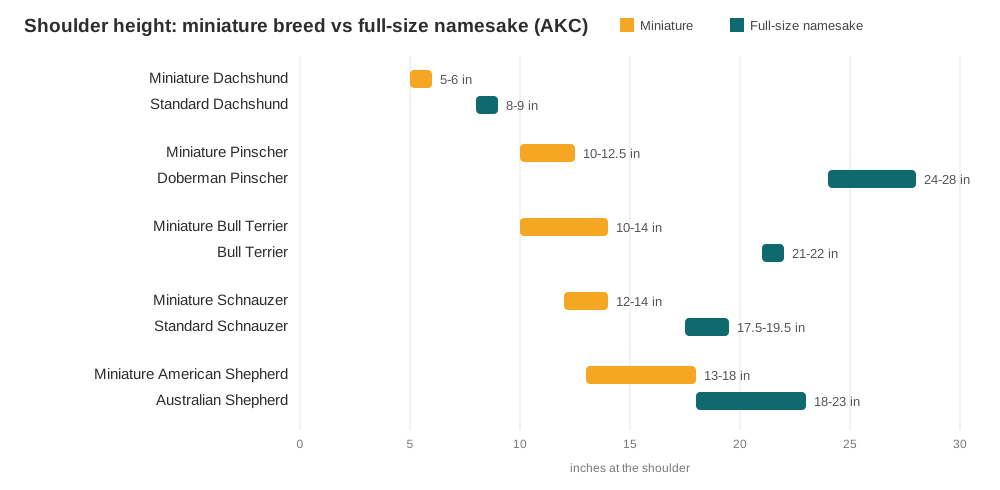
Height is the easier number to trust. Kennel club standards usually measure height at the shoulder, while weight depends on condition. When you meet a puppy's parents, ask for their measured height as well as their weight, and compare both with the ranges above.
Is the Miniature Schnauzer Just a Small Standard Schnauzer?
Answer: No. The Miniature Schnauzer is a separate breed with its own standard, even though it shares a German history with the Standard Schnauzer. Wikipedia says it may have come from the smallest Standard Schnauzers, or from crosses with smaller breeds such as the Affenpinscher, Miniature Pinscher and Poodle, to produce a compact farm ratter. Source: Wikipedia, Miniature Schnauzer.
Wikipedia places the origin in Germany in the late nineteenth century, and notes an 1888 illustration that already shows standard and miniature sized rough-haired pinschers side by side. Dogs of this type were kept in stables and on farms to catch rats, which explains the alert, busy temperament that both sizes still show. Source: Wikipedia, Miniature Schnauzer.
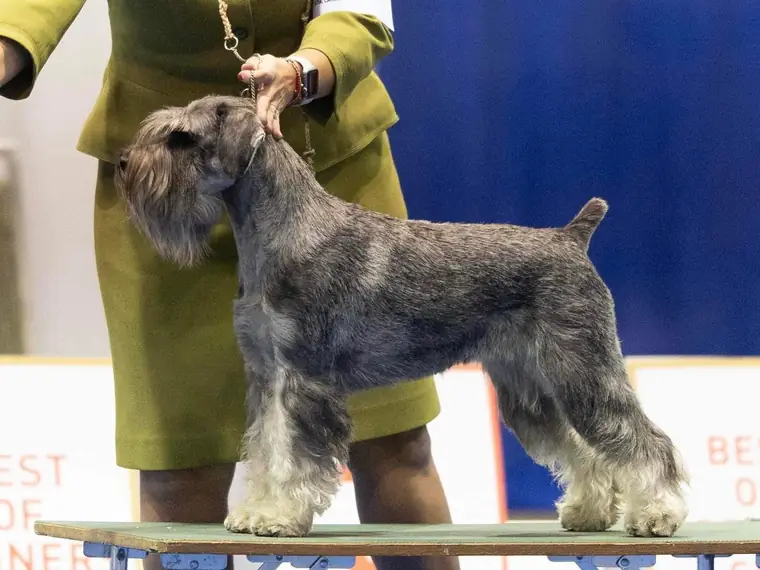
The two also sit in different AKC groups. The Miniature Schnauzer is shown with the terriers, while the Standard Schnauzer is a working breed. Both have the wiry coat that needs hand-stripping or clipping, so a slicker brush and the tools in our dog grooming tools guide matter for either size.
Is the Miniature Pinscher a Mini Doberman?
Answer: No. The Miniature Pinscher looks like a small Doberman, but its documented history is separate. Wikipedia describes it as a German ratting and hunting dog for mice, rabbits and other vermin, and cites genetic research from 2017 that found shared ancestry with the Toy Manchester Terrier, not with the Doberman. Source: Wikipedia, Miniature Pinscher.
The same article records an 1888 drawing that compares the Miniature Pinscher with the German Pinscher, its nearer relative, and notes that the FCI fully accepted the breed in 1955. The AKC lists the Min Pin at 10 to 12.5 inches and 8 to 10 pounds, which makes it the only miniature on this page that sits in the Toy Group. Source: Wikipedia, Miniature Pinscher. Source: AKC, Miniature Pinscher.
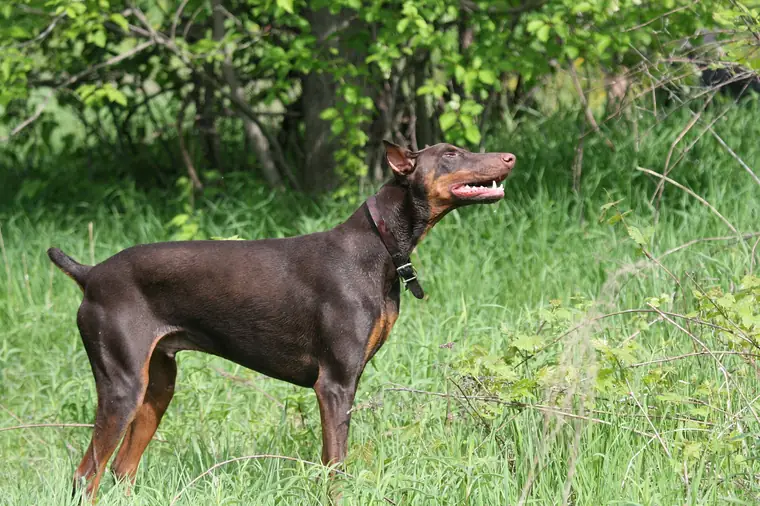
Wikipedia also notes that the breed is known to be prone to separation anxiety. In practice a Min Pin is fast, curious and good at escaping, so check fences and gates, keep it on a well-fitted dog harness outdoors, and give it puzzle play when you are out.
How Did the Miniature Bull Terrier Split From the Bull Terrier?
Answer: The two share an origin in the extinct English White Terrier, the Dalmatian and the Bulldog, and were first told apart by weight in the early twentieth century. Wikipedia says the weight limit was replaced by a height limit of under fourteen inches in the 1970s, and the AKC admitted the Miniature in 1991. Source: Wikipedia, Miniature Bull Terrier.
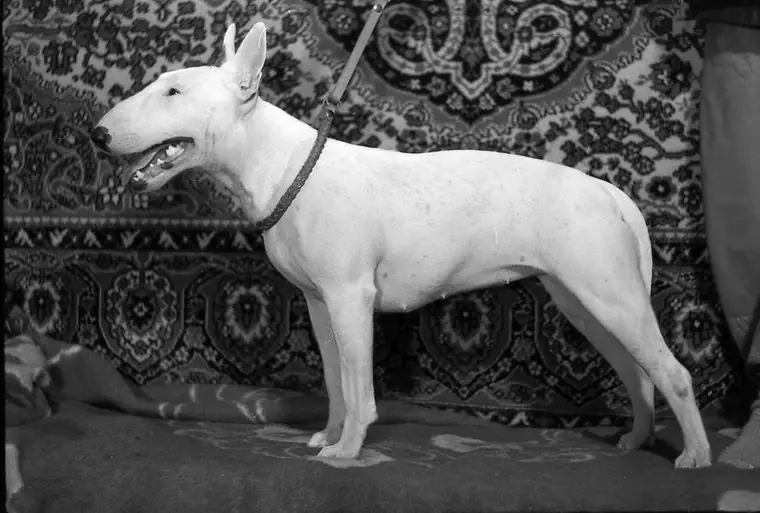
Wikipedia records that Miniature Bull Terriers were granted AKC membership on 14 May 1991, effective 1 January 1992, so the split is recent compared with the other breeds here. It also notes that deafness is hereditary in the breed and that deaf dogs should not be bred, a good reason to ask breeders about hearing tests. Source: Wikipedia, Miniature Bull Terrier.
On the AKC page the Miniature stands 10 to 14 inches and weighs 18 to 28 pounds, against 21 to 22 inches and 50 to 70 pounds for the Bull Terrier. It is still a strong, playful terrier, so choose sturdy chew toys over soft plush and supervise play with smaller pets. Source: AKC, Miniature Bull Terrier. Source: AKC, Bull Terrier.
Where Did the Miniature American Shepherd Come From?
Answer: It was bred down from small Australian Shepherds in the United States. Wikipedia says breeding began in the late 1960s and reached the desired size by the mid-1970s, first under the name Miniature Australian Shepherd. The AKC recognized it in 2015 as the Miniature American Shepherd, its 186th breed. Source: Wikipedia, Miniature American Shepherd.
The name changed along the way. Wikipedia explains that the dogs could no longer compete as Miniature Australian Shepherds because the name was too close to that of an AKC breed, and the line was renamed before AKC recognition. The FCI accepted the breed in 2019. Many people still call it a Mini Aussie. Source: Wikipedia, Miniature American Shepherd.
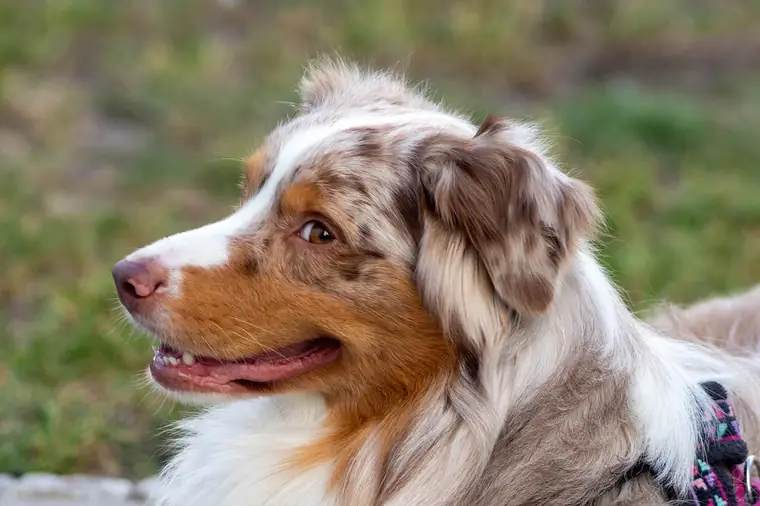
Of all the miniatures here it stays closest to its namesake. The AKC lists it at 13 to 18 inches and 20 to 40 pounds, while the Australian Shepherd is 18 to 23 inches and 40 to 65 pounds. It is a herding dog first, so it needs real daily work: long walks, fetch, training games and a job to do. Source: AKC, Miniature American Shepherd. Source: AKC, Australian Shepherd.
Why Is the Miniature Dachshund a Size, Not a Separate Breed?
Answer: Because the AKC treats the Dachshund as one breed in two sizes. The standard and miniature share one breed standard and differ by weight, with the miniature at 11 pounds and under. Wikipedia adds that the FCI also recognizes a third, smaller rabbit size, called kaninchen, which US and UK clubs do not. Source: AKC, Dachshund. Source: Wikipedia, Dachshund.
Wikipedia says the miniature Dachshund was bred to hunt small animals such as rabbits, while the full-size dog went after badgers. It also notes that many pet Dachshunds now fall between the two sizes, and that these "tweenies" are not an official class. On the AKC page the standard weighs 16 to 32 pounds and stands 8 to 9 inches, against 5 to 6 inches for the miniature. Source: Wikipedia, Dachshund. Source: AKC, Dachshund.
The long back is the same in both sizes, so the practical care is the same: avoid repeated jumping from furniture, use pet stairs for the bed or sofa, keep the dog lean, and pick toys from our toys for Dachshunds guide that suit a low, long body and a strong digging instinct.
Why Are Some Miniatures in the Toy Group and Others Not?
Answer: The American Kennel Club groups breeds by their original job, not their size. The Miniature Pinscher is a companion-sized ratter shown in the Toy Group, the Miniature Schnauzer and Miniature Bull Terrier are terriers, the Miniature American Shepherd is a herding breed and the Dachshund is a hound.
Group placement tells you more about daily life than the word miniature does. A terrier stays a terrier at any size, with a strong urge to dig, chase and bark. A herding dog wants to move and gather. A hound follows its nose. Read the group before you read the size, and plan your routine around the job the breed was made for.
Does a Smaller Size Mean a Calmer Dog?
Answer: Not usually. Breeders reduced size, not drive, so each miniature behaves much like its working ancestor. Miniature Schnauzers and Miniature Pinschers were bred to catch rats, the Miniature American Shepherd to herd, and the Miniature Dachshund to hunt rabbits. Expect a small dog with a full-size personality.
- Ratters (Miniature Schnauzer, Miniature Pinscher): alert, quick to bark, keen on chase games and squeaky toys.
- Bull-type terrier (Miniature Bull Terrier): playful and physical, needs firm chew toys and early social time with other dogs.
- Herder (Miniature American Shepherd): needs mental work every day and may try to herd children or other pets.
- Hound (Miniature Dachshund): independent, follows scent and loves to dig.
Small size helps with space, travel and carrying, but it does not remove the need for training. Short daily sessions with food rewards suit all of these breeds. Our small dog toys guide lists toys that fit a small mouth, and the guide to toys for small breed puppies covers the teething months.
Which Miniature Breed Suits Your Home?
Answer: Start with how much activity you can offer, then size. Pick the Miniature Pinscher or Miniature Dachshund if you need the smallest dog, the Miniature Schnauzer for a sturdy all-rounder, the Miniature Bull Terrier for a robust playmate, and the Miniature American Shepherd only if you can give a herding dog daily work.
Whichever breed you choose, plan the first weeks before the puppy arrives. Our new puppy essentials checklist covers bedding, a crate, grooming and safe toys, the small breed puppy food guide explains why small puppies need frequent meals, and a dog toothbrush helps with the dental crowding common in small mouths. If you are drawn to the very smallest dogs, read our toy breeds guide on health risks first.
What Do People Ask Most About Miniature Toy Breeds?
Answer: Most questions about miniature toy breeds come down to three things: whether a miniature is the same as a toy dog, whether it is a scaled-down copy of a larger breed, and how its size and temperament compare. The short answers below summarize this guide, with sources listed at the end.
Is a miniature breed the same as a toy breed?
No. Toy is an American Kennel Club group for the smallest companion breeds, while miniature is part of a breed name or a size variety. The Miniature Pinscher sits in the Toy Group, but the Miniature Schnauzer is a terrier and the Miniature American Shepherd is a herding dog.
Is the Miniature Pinscher a small Doberman?
No. The resemblance is real but the breeds are separate. Wikipedia traces the Miniature Pinscher to German ratting pinschers and cites genetic research showing shared ancestry with the Toy Manchester Terrier, not with the much larger Doberman.
Is a Miniature Schnauzer a puppy-sized Standard Schnauzer?
No. It is its own breed with its own standard and AKC group. Wikipedia says it may have come from the smallest Standard Schnauzers, or from crosses with smaller breeds such as the Affenpinscher, Miniature Pinscher and Poodle, to make a compact farm ratter.
What is the difference between a Mini Aussie and a Miniature American Shepherd?
They describe the same line of dogs. Small Australian Shepherds bred down in the United States were first called Miniature Australian Shepherds. The American Kennel Club later recognized them as a separate breed under the name Miniature American Shepherd.
Are miniature breeds healthier than full-size ones?
Not automatically. Smaller size changes some risks, such as joint load, but each miniature has its own breed-specific health concerns. Ask the breeder which screening the parent club recommends for that exact breed, and ask to see the results for both parents.
Which miniature breed is the smallest?
Among the breeds on this page, the Miniature Dachshund is the shortest, at five to six inches at the shoulder on its AKC page, and the Miniature Pinscher is the lightest, at eight to ten pounds. The Miniature American Shepherd is the largest miniature here.
Do miniature breeds still need a lot of exercise?
Yes. Most were bred for work: ratting, herding or hunting rabbits. A smaller body covers less ground, but the drive behind it is the same as in the full-size dog, so plan daily walks, play and short training sessions for every breed on this page.
Is a teacup dog a miniature breed?
No. Teacup is a sales word, not a breed or a recognized size. A miniature breed has a written standard with a height or weight range, while a teacup dog is usually an undersized member of a toy breed and may carry more health risk.
Sources
- American Kennel Club breed pages: Miniature Schnauzer, Standard Schnauzer, Miniature Pinscher, Doberman Pinscher, Miniature Bull Terrier, Bull Terrier, Miniature American Shepherd, Australian Shepherd, Dachshund
- Wikipedia: Miniature Schnauzer
- Wikipedia: Miniature Pinscher
- Wikipedia: Miniature Bull Terrier
- Wikipedia: Miniature American Shepherd
- Wikipedia: Dachshund (sizes)