Search for mini poodle breeds and most of the dogs you see are not purebred Poodles at all. They are small poodle crosses: the Cockapoo, Cavapoo, Maltipoo, Yorkipoo, Schnoodle, Shih-poo and the miniature doodles. Each one pairs a Toy or Miniature Poodle with a different breed, and that second parent decides most of what you will live with.
This guide compares those mixes side by side. It shows how to estimate a puppy's adult size from its parents, how the popular crosses differ in size, coat and energy, and which one suits which home. Size figures for each parent come from the American Kennel Club breed pages, cross details come from Wikipedia articles that cite their sources, and every source is listed at the end.
In This Article
- Quick Answer: What Are Mini Poodle Breeds?
- What Counts as a Mini Poodle Breed?
- How Can You Predict the Adult Size of a Poodle Mix?
- Which Poodle Size Goes Into Each Mix?
- How Do the Small Poodle Mixes Compare Side by Side?
- What Is a Cockapoo?
- What Is a Cavapoo?
- Maltipoo or Yorkipoo: Which Is Smaller?
- What Is a Schnoodle?
- What Is a Shih-poo?
- How Small Are Mini Goldendoodles and Mini Labradoodles?
- Are Mini Poodle Mixes Hypoallergenic?
- What Do F1, F1B and F2 Mean on a Puppy Listing?
- What Health Questions Should You Ask a Breeder?
- Which Mini Poodle Mix Fits Your Home?
- What Do People Ask Most About Mini Poodle Breeds?
- Sources
Quick Answer: What Are Mini Poodle Breeds?
Mini poodle breeds are small crosses between a Toy or Miniature Poodle and another compact breed, such as the Cockapoo, Cavapoo, Maltipoo, Yorkipoo, Schnoodle and Shih-poo. Kennel clubs do not recognize them as breeds. The other parent sets most of the difference in adult size, coat and energy, so compare parents first.
Updated November 1, 2026- Smallest: Yorkipoo and Maltipoo, bred from toy-sized parents.
- Small but sturdier: Cockapoo, Cavapoo, Schnoodle and Shih-poo.
- Biggest "mini": miniature Goldendoodle and Labradoodle, which are medium dogs.
- Coat: no cross is completely hypoallergenic, and first-generation crosses vary the most.
What Counts as a Mini Poodle Breed?
Answer: A mini poodle breed, in everyday use, is a crossbreed made from a Toy or Miniature Poodle and another small breed. These crosses get blended names such as Cockapoo or Maltipoo, and none has an official breed standard. The only recognized small poodles are the Toy and Miniature varieties of the purebred Poodle itself.
Encyclopaedia Britannica, as summarized on Wikipedia, traces the designer dog trend to the late twentieth century, when breeders began crossing purebred Poodles with other breeds to combine the Poodle coat with traits from the other parent. The puppies get portmanteau names built from both parent breeds, which is why so many small dogs end in "poo" or "doodle". Source: Wikipedia, Dog crossbreed.
Registration follows the same line. The American Kennel Club, the United Kennel Club and the Canadian Kennel Club do not recognize designer crosses as breeds, even when both parents are registered purebreds. A cross only becomes a breed after many documented generations and a breed club that tracks every dog back to its founders, a process most poodle mixes have not started. Source: Wikipedia, Dog crossbreed.
This page is about the mixes. If you already share your home with a purebred Miniature Poodle, our Miniature Poodle play and enrichment guide covers daily games and toys, the toy safety checklist for mini Miniature Poodles explains what to avoid, and our toy picks by life stage for poodle and mini poodle owners matches toys to puppies, adults and seniors. For the smallest purebred size, see the Toy Poodle guide.
How Can You Predict the Adult Size of a Poodle Mix?
Answer: Look at both parents. A first-generation cross usually finishes somewhere between the adult size of its poodle parent and its other parent, and Wikipedia notes that crosses do not breed true, so littermates can differ. Ask the breeder for the measured height and weight of both parents rather than trusting a size label on the listing.
The table makes the pattern easy to see. A Maltese is listed by the AKC at under 7 pounds and a Yorkshire Terrier at 7 pounds, so their crosses with a Toy Poodle stay in the toy range. A Cocker Spaniel is listed at 20 to 30 pounds, so a Cockapoo can be noticeably heavier than a Cavapoo, whose Cavalier parent is listed at 13 to 18 pounds. Source: AKC, Maltese. Source: AKC, Yorkshire Terrier. Source: AKC, Cocker Spaniel. Source: AKC, Cavalier King Charles Spaniel.
At the far end, the Golden Retriever and Labrador Retriever are listed at 55 pounds and up. That is why a "mini" Goldendoodle or Labradoodle is still a medium dog: even with a Miniature Poodle on one side, the other parent is several times its weight. Source: AKC, Golden Retriever. Source: AKC, Labrador Retriever.
Two practical rules follow. First, a puppy from two small parents is the safest bet if you need a dog under about fifteen pounds. Second, beware of listings that promise an exact adult size for a first-generation puppy, because the breeder cannot know it in advance.
Which Poodle Size Goes Into Each Mix?
Answer: Toy crosses such as the Maltipoo and Yorkipoo usually use a Toy Poodle, while the Cockapoo, Schnoodle and mini doodles usually use a Miniature Poodle. The AKC sets the Toy at 10 inches or less and the Miniature at over 10 up to 15 inches, and the FCI adds a Medium size between Miniature and Standard. Source: AKC, Toy Poodle. Source: AKC, Miniature Poodle.
The poodle size used matters because the same cross name covers very different dogs. Wikipedia notes that Schnoodles can come from Miniature, Standard or Giant Schnauzers crossed with Toy, Miniature or Standard Poodles, and that the offspring vary in size accordingly. A "Schnoodle" from two standard-sized parents is not a mini poodle breed in any useful sense. Source: Wikipedia, List of dog crossbreeds.
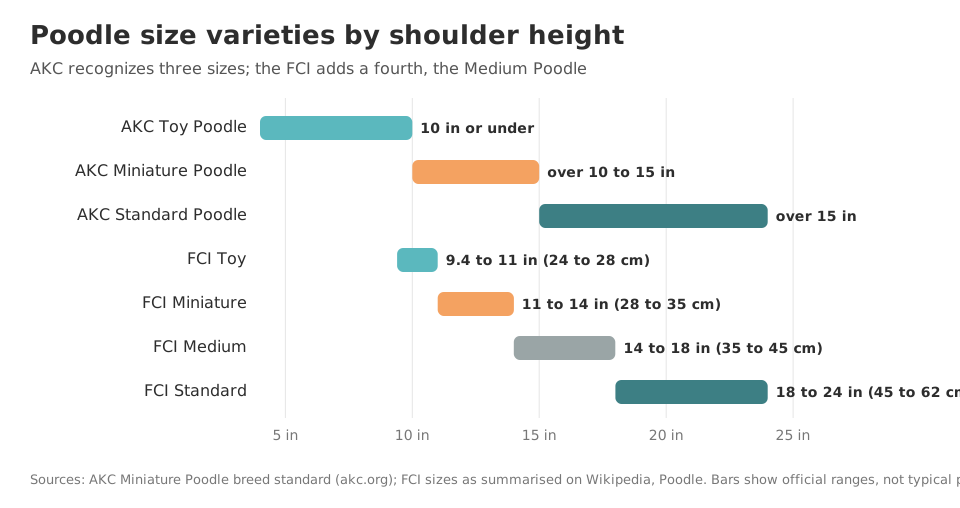
Country also matters. Under FCI rules a 36 centimetre poodle is a Medium, while under AKC rules a dog of the same height counts as a Miniature, so an imported parent described as "mini" may be larger than you expect. Source: Wikipedia, Poodle.
How Do the Small Poodle Mixes Compare Side by Side?
Answer: The common small poodle mixes differ mainly in their other parent. Toy crosses such as the Maltipoo, Yorkipoo and Shih-poo stay smallest, spaniel crosses such as the Cockapoo and Cavapoo sit in the middle, the Schnoodle varies with its Schnauzer parent, and mini doodles are the largest. None is AKC recognized, so individual dogs vary.
Read the table as a map, not a promise. Because there is no standard, two breeders can sell very different dogs under the same name. Some breed first-generation crosses from two purebred parents, others breed crosses together over several generations, and a few mix in a third breed. The sections below cover what is known about each name, starting with the most familiar.
What Is a Cockapoo?
Answer: A Cockapoo is a cross between a Cocker Spaniel and a Poodle, most often the Miniature Poodle. Cocker Spaniels and Poodles have been crossed deliberately in the United States since the 1960s. Its size and coat vary widely, and a dedicated club, the Cockapoo Club of America, promotes the cross. Source: Wikipedia, Cockapoo.
Wikipedia describes the Cockapoo, also called the Cockerpoo or Spoodle, as one of the earliest designer crosses. Breeders often sort Cockapoos by weight: dogs under 12 pounds are labelled toy, dogs between 13 and 18 pounds miniature, and dogs over 19 pounds standard. These are informal labels used by breeders, not a kennel club standard. Source: Wikipedia, Cockapoo.
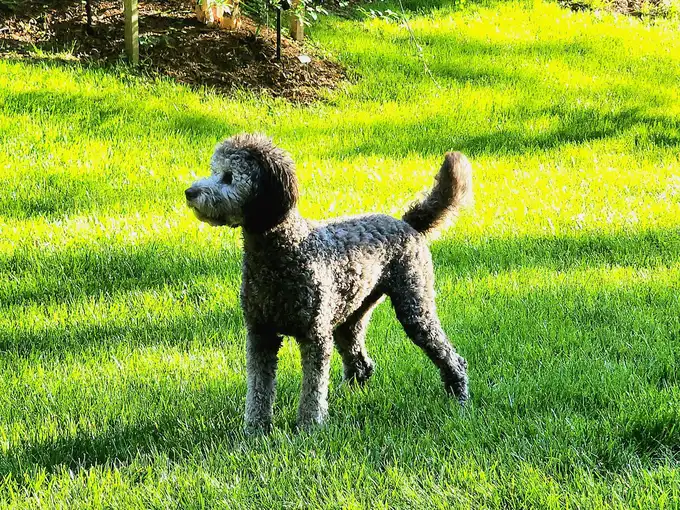
Compared with the other mixes on this page, the Cockapoo is usually the sturdiest of the spaniel crosses, because the Cocker Spaniel parent is the heaviest small breed in the size table. Wikipedia lists allergies, glaucoma, hip dysplasia and progressive retinal problems among the health concerns seen in Cockapoos, and notes that hybrid vigor raises the odds of good health without guaranteeing it for any one dog.
Day to day, a Cockapoo usually wants company and plenty of play, and its coat needs regular brushing and trimming. A good slicker brush and the other items in our dog grooming tools guide help keep curls from matting between grooming appointments.
What Is a Cavapoo?
Answer: A Cavapoo, called a Cavoodle in Australia, is a cross between a Cavalier King Charles Spaniel and a Poodle. It emerged during the late twentieth century designer dog trend and originated in Australia. Like other poodle crosses it has no AKC recognition and no breed standard, so individual dogs vary in size, coat and color. Source: Wikipedia, Cavapoo.
Breeders hoped to combine the Poodle's intelligence and coat with the friendly nature and small size of the Cavalier. Wikipedia points out a catch: the Cavalier does not share the Poodle's coat type, so individual Cavapoos can vary considerably, and while they are often marketed as hypoallergenic, no dog is completely hypoallergenic. Source: Wikipedia, Cavapoo.
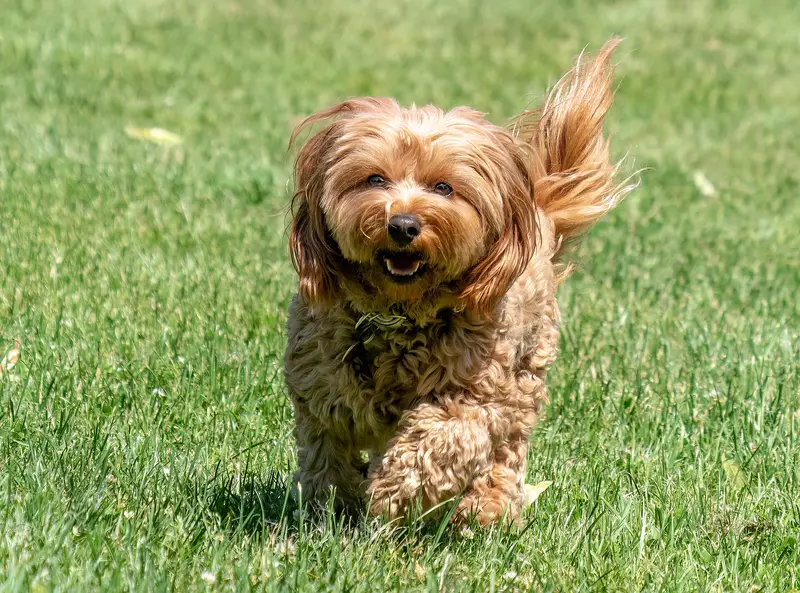
Set against the Cockapoo, the Cavapoo is often the lighter and softer-coated choice, since the Cavalier parent is smaller than the Cocker Spaniel. Because the Cavalier brings its own breed health concerns, ask the breeder what screening was done on both parents. Cavapoos are generally sociable, people-focused dogs, so plan for company during the day and short, frequent training sessions with plenty of praise.
Maltipoo or Yorkipoo: Which Is Smaller?
Answer: Both stay very small, but the Yorkipoo is usually the tinier of the two. The Maltipoo is a Maltese and Poodle cross, and the Yorkipoo a Yorkshire Terrier and Poodle cross, both usually from a Toy Poodle. Wikipedia describes the Yorkipoo as one of the smallest poodle crossbreeds produced by design, so handle puppies gently. Source: Wikipedia, List of dog crossbreeds.
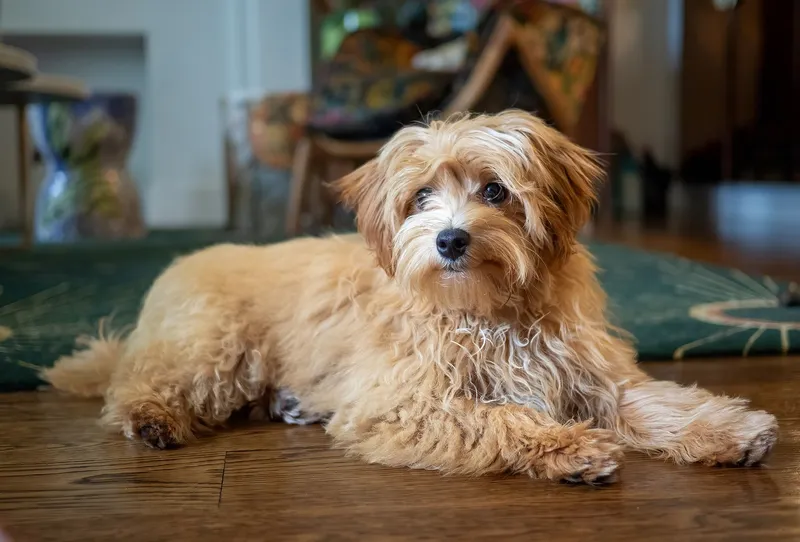
The difference between them is mostly coat and character. The Maltese contributes a long, silky white coat, so Maltipoos tend toward soft, wavy coats in pale colors. The Yorkshire Terrier contributes a finer, terrier-type coat and a bolder terrier temperament, which shows in many Yorkipoos as alertness and a readiness to bark at the door.
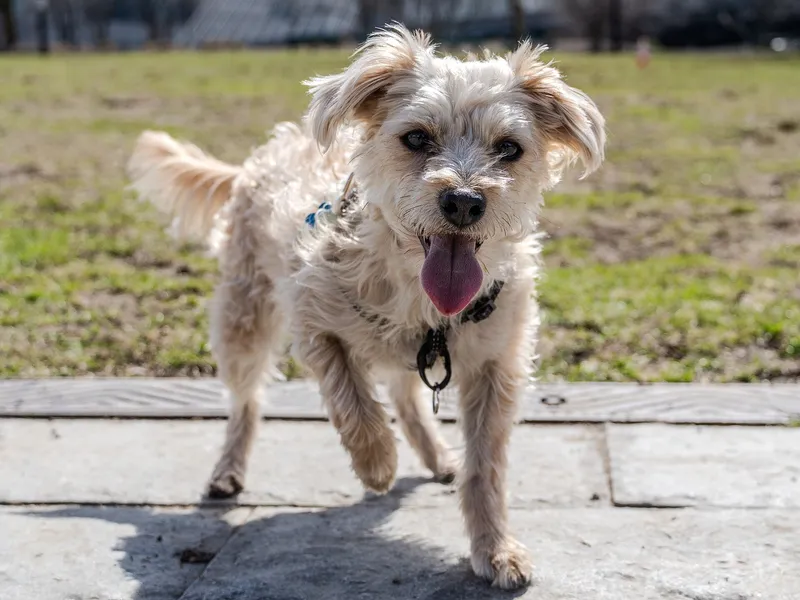
Both crosses bring the same practical cautions as any toy dog: support the body when you lift them, use a harness instead of a collar on walks, and supervise play with children. Our toy breeds guide explains why small dogs need extra care around knees, windpipes and teeth. Pick toys sized for a small mouth, such as the options in our small dog toys guide, and brush teeth often, since crowded small-dog mouths collect plaque quickly.
What Is a Schnoodle?
Answer: A Schnoodle is a cross between a Schnauzer and a Poodle. Wikipedia notes that Schnoodles have been bred as companion dogs since the 1980s and can come from a Miniature, Standard or Giant Schnauzer parent. Only a cross of a Miniature Schnauzer with a Toy or Miniature Poodle belongs among the mini poodle breeds. Source: Wikipedia, List of dog crossbreeds.
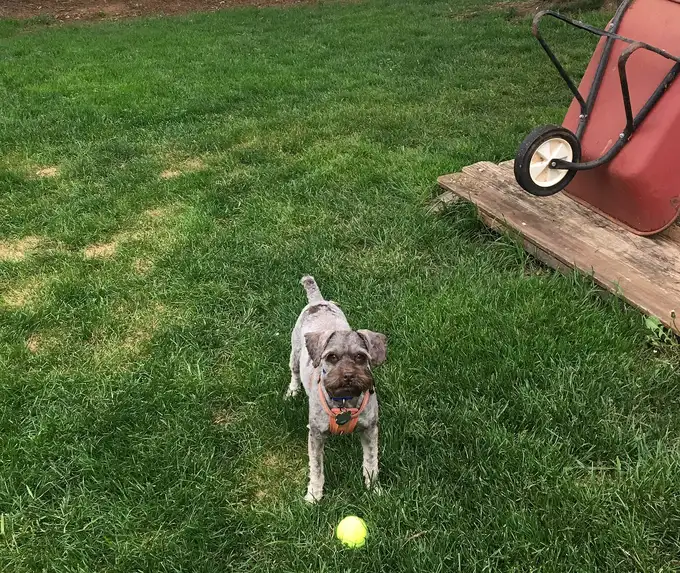
The Schnauzer side was bred as a farm ratter, so many Schnoodles are alert, quick and vocal, more like the Yorkipoo than the easygoing Cavapoo. They often enjoy fetch and puzzle toys, and they may announce visitors at the door. Because size depends so much on which Schnauzer and which Poodle were used, ask the breeder directly which sizes the parents are before assuming a puppy will stay small.
The beard and eyebrows that make the Schnauzer look so distinctive often carry over, and they collect food and water. Wiping the face after meals and trimming around the eyes keeps a Schnoodle comfortable between grooming visits.
What Is a Shih-poo?
Answer: A Shih-poo is a cross between a Shih Tzu and a Poodle, usually a Toy or Miniature. It is bred as a companion dog, and Wikipedia gives a height of about 9 to 14 inches and a weight of about 9 to 16 pounds, which places it between the toy crosses and the spaniel crosses. Source: Wikipedia, List of dog crossbreeds.
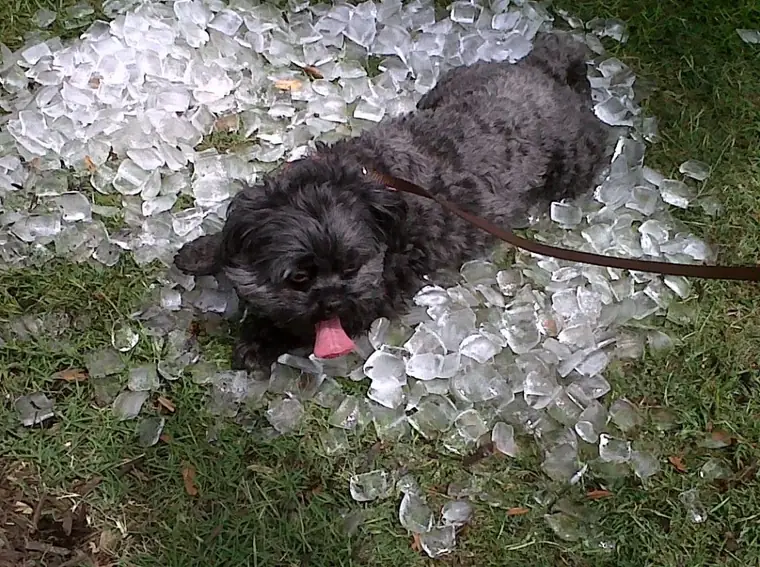
The Shih Tzu parent changes two things that buyers often miss. It has a short, flat face, so some Shih-poos inherit a shorter muzzle that copes less well with heat and hard exercise. It also has a long, dense coat, so a Shih-poo coat may need as much brushing as the Poodle's, especially around the ears and legs.
In return, the Shih Tzu brings a calm, lap-dog temperament that many owners in apartments value. The AKC lists the Shih Tzu at 9 to 16 pounds, close to the Miniature Poodle, so a Shih-poo bred from a Miniature Poodle will often be a sturdy little dog rather than a fragile one. Source: AKC, Shih Tzu.
How Small Are Mini Goldendoodles and Mini Labradoodles?
Answer: Mini doodles are the largest dogs sold under the mini poodle label. Wikipedia says a miniature Goldendoodle typically stands up to 20 inches and weighs 15 to 35 pounds, because its other parent is a Golden Retriever. The Labradoodle is bred from a Labrador Retriever and a Standard or Miniature Poodle, so mini versions use the smaller poodle. Source: Wikipedia, Goldendoodle. Source: Wikipedia, Labradoodle.
The Goldendoodle was first widely bred in the 1990s, and its size follows the size of the poodle parent. Wikipedia notes that early Goldendoodles were bred only from Standard Poodles, and that breeders later started using smaller poodles to create a smaller dog. If you want something smaller still, read our guide to the toy Goldendoodle before you buy. Source: Wikipedia, Goldendoodle.
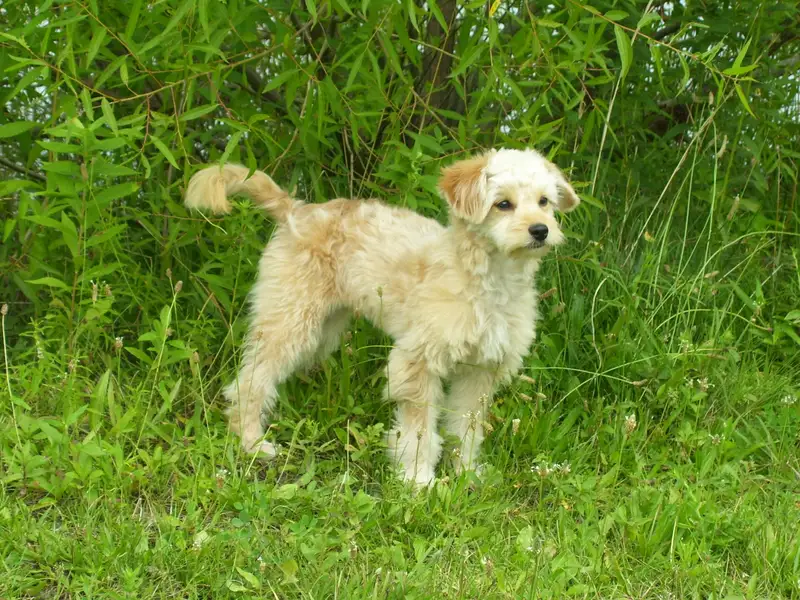
The Labradoodle has an unusual origin story. Australian breeder Wally Conron introduced the cross to the Royal Guide Dog Association of Australia, hoping to produce a guide dog for people with allergies. Wikipedia records that Conron later said he regretted starting the trend, mainly because of the genetic unpredictability of crosses and the rise of careless breeders. That is a useful reminder to judge the breeder, not the label. Source: Wikipedia, Labradoodle.
Are Mini Poodle Mixes Hypoallergenic?
Answer: No dog is completely hypoallergenic, and that includes every poodle cross. A low-shedding coat may help some people with allergies, but crosses inherit coat genes from both parents. A first-generation cross with a shedding breed, such as a Cavalier or Golden Retriever, can shed more than a purebred Poodle would. Meet the dog first. Source: Wikipedia, Goldendoodle. Source: Wikipedia, Cavapoo.
Wikipedia quotes the AKC directly on this point: there is no such thing as a completely hypoallergenic dog. The same Goldendoodle article notes that research has shown hypoallergenicity cannot be an official breed characteristic. Allergens come from skin flakes and saliva as well as hair, so even a curly, low-shedding dog will still produce them. Source: Wikipedia, Goldendoodle.
If allergies are a concern, spend time with the actual puppy and, ideally, with both parents before you commit. Bathing with a gentle product, such as the options in our hypoallergenic dog shampoo guide, and regular brushing outdoors can reduce loose hair in the house, but they will not make any dog allergen-free. Talk to your doctor if allergies are severe.
What Do F1, F1B and F2 Mean on a Puppy Listing?
Answer: These letters describe generations. Wikipedia explains that an F1 Cockapoo comes from a purebred Poodle and a purebred Cocker Spaniel, and that an F2 comes from two F1 parents. Other combinations breed back toward one parent breed, which is what labels such as F1B or F2B usually describe. The same logic applies to other crosses. Source: Wikipedia, Cockapoo.
- F1: purebred Poodle crossed with a purebred of the other breed. Coat and size are the least predictable.
- F1B: an F1 cross bred back to a Poodle, often chosen when buyers want more of the Poodle coat.
- F2: two F1 crosses bred together. Variation between puppies can be wide.
- Multigeneration: crosses bred together over several generations, sometimes called multigen.
Wikipedia's article on dog crossbreeds adds an important detail. Any extra health benefit from crossing two separate breeds is typically seen in the first generation, and it can be diluted when crosses are bred to each other in an attempt to create a new breed. Generation labels therefore tell you about expected looks, not about health, so always ask for health results on the parents. Source: Wikipedia, Dog crossbreed.
What Health Questions Should You Ask a Breeder?
Answer: Ask which health screening both parents had, what size each parent is as an adult, and whether you can meet at least the mother. A cross is only as healthy as its parents. Wikipedia notes that some problems uncommon in either parent breed can even appear more often in a cross, so documentation matters more than marketing. Source: Wikipedia, Dog crossbreed.
- Ask for the size and weight of both parents, and which poodle variety was used.
- Ask which breed-relevant health tests were done on each parent, and request copies of the results.
- Meet the mother, and the father if possible, to see temperament and coat.
- Ask about the puppy's vaccinations, deworming and vet check, with dates and records.
- Be wary of extra-small "teacup" pricing, rushed sales and breeders who cannot answer these questions.
Each mix carries the health history of two breeds, so the useful questions change with the other parent. A spaniel cross raises questions about the spaniel's eyes and heart, a Shih-poo about breathing and heat, and a mini doodle about hips. The AKC breed page of each parent links its parent club, which is the best place to see which screening that breed recommends.
Once your puppy is home, a simple routine covers the basics: regular vet checks, daily tooth brushing with a dog toothbrush, a light harness for walks, and age-appropriate chew toys like those in our guide to toys for small breed puppies.
Which Mini Poodle Mix Fits Your Home?
Answer: Match the mix to your space, your household and your tolerance for grooming. Toy crosses suit small homes and adults, spaniel crosses suit families who want a sturdier companion, and mini doodles suit active owners with room for a medium dog. When predictability matters most, a purebred Poodle is the safer choice than any mix.
Think about the life you can offer, too. Every dog on this page is smart and people-oriented, and none of them does well left alone all day. They need training, daily walks, grooming every few weeks and plenty of play. If you are still deciding between small sizes in general, our guide to mini toy breeds covers purebreds that come in official toy and miniature sizes, and types of toy dogs lists every AKC toy breed.
Finally, plan your first week before the puppy arrives. Our new puppy essentials checklist covers the bed, crate, food, grooming and safe toys a small poodle mix will need from day one.
What Do People Ask Most About Mini Poodle Breeds?
Answer: Most questions about mini poodle breeds come down to size, coat and registration: which mix stays smallest, how big a puppy will grow, how the Cockapoo and Cavapoo differ, whether any mix is hypoallergenic, and whether a cross can be registered. The short answers below summarize this guide, with sources listed at the end.
Are mini poodle breeds real breeds?
Mostly not. Nearly every dog sold as a mini poodle breed is a crossbreed, such as a Cockapoo, Maltipoo or Schnoodle, and the AKC, UKC and CKC do not recognize designer crosses as breeds. The purebred Miniature Poodle is a size variety of the Poodle, not a mix.
Which mini poodle mix stays the smallest?
Crosses between a Toy Poodle and a toy breed stay the smallest. The Maltese and the Yorkshire Terrier are both around seven pounds or less on AKC breed pages, and Wikipedia describes the Yorkipoo as one of the smallest poodle crosses produced by design.
How big will a mini poodle mix get?
Expect an adult that lands between its two parents. The poodle parent sets one end of the range and the other breed sets the other, which is why a Maltipoo stays tiny while a mini Goldendoodle can weigh several times more. Ask the breeder for both parents' adult weights.
What is the difference between a Cockapoo and a Cavapoo?
The other parent. A Cockapoo comes from a Cocker Spaniel, a cross bred in the United States for decades, while a Cavapoo comes from a Cavalier King Charles Spaniel and originated in Australia. The Cavalier is the smaller spaniel, so Cavapoos often finish a little lighter.
Is a mini Goldendoodle a mini poodle breed?
Only loosely. It uses a Miniature Poodle parent, but its other parent is a Golden Retriever, so it is much bigger than a Maltipoo or Yorkipoo. Wikipedia puts a typical miniature Goldendoodle at up to twenty inches tall, which makes it a medium dog for most homes.
Are mini poodle mixes hypoallergenic?
No dog is completely hypoallergenic. A low-shedding coat can help some people, but crosses inherit coat genes from both parents and some shed noticeably. Spend time with the puppy and its parents before deciding if you have allergies.
Can a poodle mix be registered with the AKC?
Not as a breed. The AKC, the United Kennel Club and the Canadian Kennel Club do not recognize designer crosses as breeds, even when both parents are registered purebreds. Some cross-specific clubs keep their own records.
Should I pick a poodle mix or a purebred Miniature Poodle?
Pick a mix when one trait from the other parent matters to you and you can accept more variation in size and coat. Pick the purebred when you want the most predictable adult. Either way, the parents and the breeder matter more than the name on the listing.
Sources
- American Kennel Club: Miniature Poodle
- American Kennel Club: Toy Poodle
- American Kennel Club: Standard Poodle
- American Kennel Club breed pages for the other parents: Maltese, Yorkshire Terrier, Shih Tzu, Miniature Schnauzer, Cavalier King Charles Spaniel, Cocker Spaniel, Golden Retriever, Labrador Retriever
- Wikipedia: Poodle (size varieties and FCI heights)
- Wikipedia: Dog crossbreed
- Wikipedia: List of dog crossbreeds
- Wikipedia: Cockapoo
- Wikipedia: Cavapoo
- Wikipedia: Goldendoodle
- Wikipedia: Labradoodle